
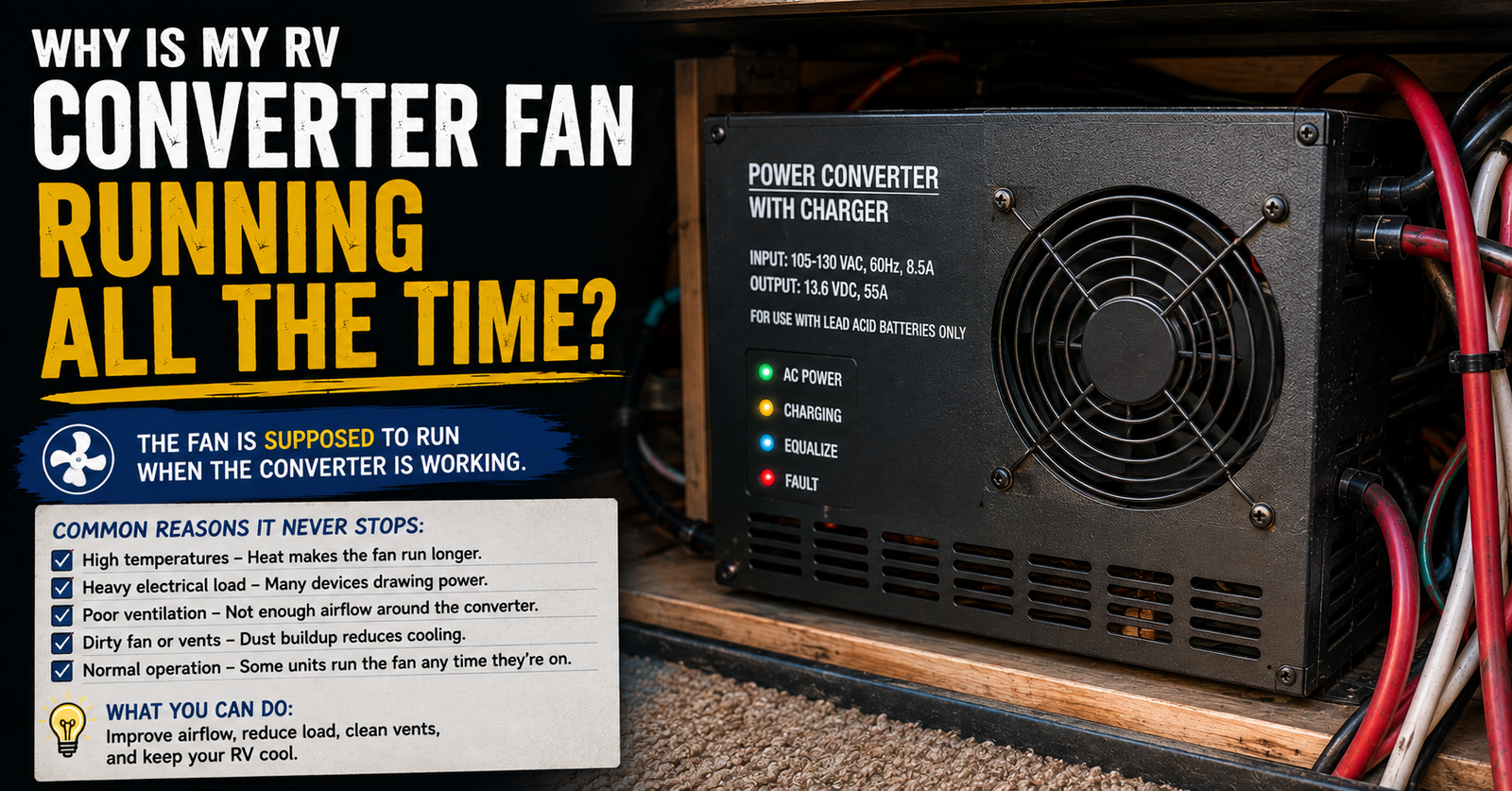
That little fan in your RV converter can be surprisingly annoying once you notice it. Maybe you’re sitting inside the camper at night with almost nothing turned on, yet the converter fan keeps humming away like it’s working overtime.
Sometimes that’s exactly what it’s doing.
An RV converter fan commonly runs because the converter is producing enough power and heat that it needs additional cooling. If your house battery is heavily discharged, several 12-volt loads are running, or the converter is sitting in a hot compartment with poor airflow, the fan may have plenty of reason to stay on.
What gets my attention is a fan that suddenly starts running almost constantly when it never did before, especially when the camper doesn’t seem to be using much 12-volt power.
That’s when I start looking for the reason rather than blaming the fan itself.
Is It Normal for an RV Converter Fan to Run?
Absolutely.
Converters produce heat while operating, and many modern units use a temperature-controlled cooling fan.
Progressive Dynamics, for example, says the fans used in its PD9100 and PD9200 converter series use electronic temperature sensing and operate as much as necessary, particularly during higher-current demand.
So hearing your converter fan isn’t automatically a sign that anything is wrong.
If you’ve been using a bunch of 12-volt equipment or just plugged the camper in with a discharged battery, I’d actually expect the converter to be working harder.
Working harder means more heat.
More heat can mean more fan.
Should the RV Converter Fan Run All the Time?
This is where I’d start asking questions.
Some converter designs and operating conditions can keep a fan running for extended periods. But with a temperature or load-controlled fan, I’d want to know why the converter needs that much cooling if it truly never seems to shut off.
Progressive Dynamics specifically says its intelligent fan typically doesn’t operate when RV owners have most 12-volt lights and appliances turned off at night.
That’s not a rule for every converter on the market, but it shows why constant fan operation can be useful diagnostic information.
If your converter used to get quiet and now it runs continuously, something may have changed.
A Low RV Battery Can Keep the Converter Working Hard
This is one of the first things I’d check.
Imagine you’ve been boondocking for a couple of days.
The house battery is significantly discharged.
Then you arrive at a campground and plug into shore power.
The converter now has a job to do.
It’s supplying whatever 12-volt loads you’re currently using and trying to recharge that depleted battery.
Depending on the converter and battery bank, charging current can be substantial.
That creates heat.
So the cooling fan runs.
In that situation, a fan running for quite a while doesn’t surprise me.
See What Happens as the Battery Charges
This can tell you a lot.
If the battery was heavily discharged when you plugged in, give the charging system time to do its job.
As charging progresses and demand eventually falls, I’d pay attention to the converter.
Does the fan slow down?
Does it cycle off?
Does the converter become quieter?
If so, what you heard may simply have been the converter working hard during battery recovery.
If it continues running aggressively long after the battery should be charged and the RV has very little DC demand, I’d investigate further.
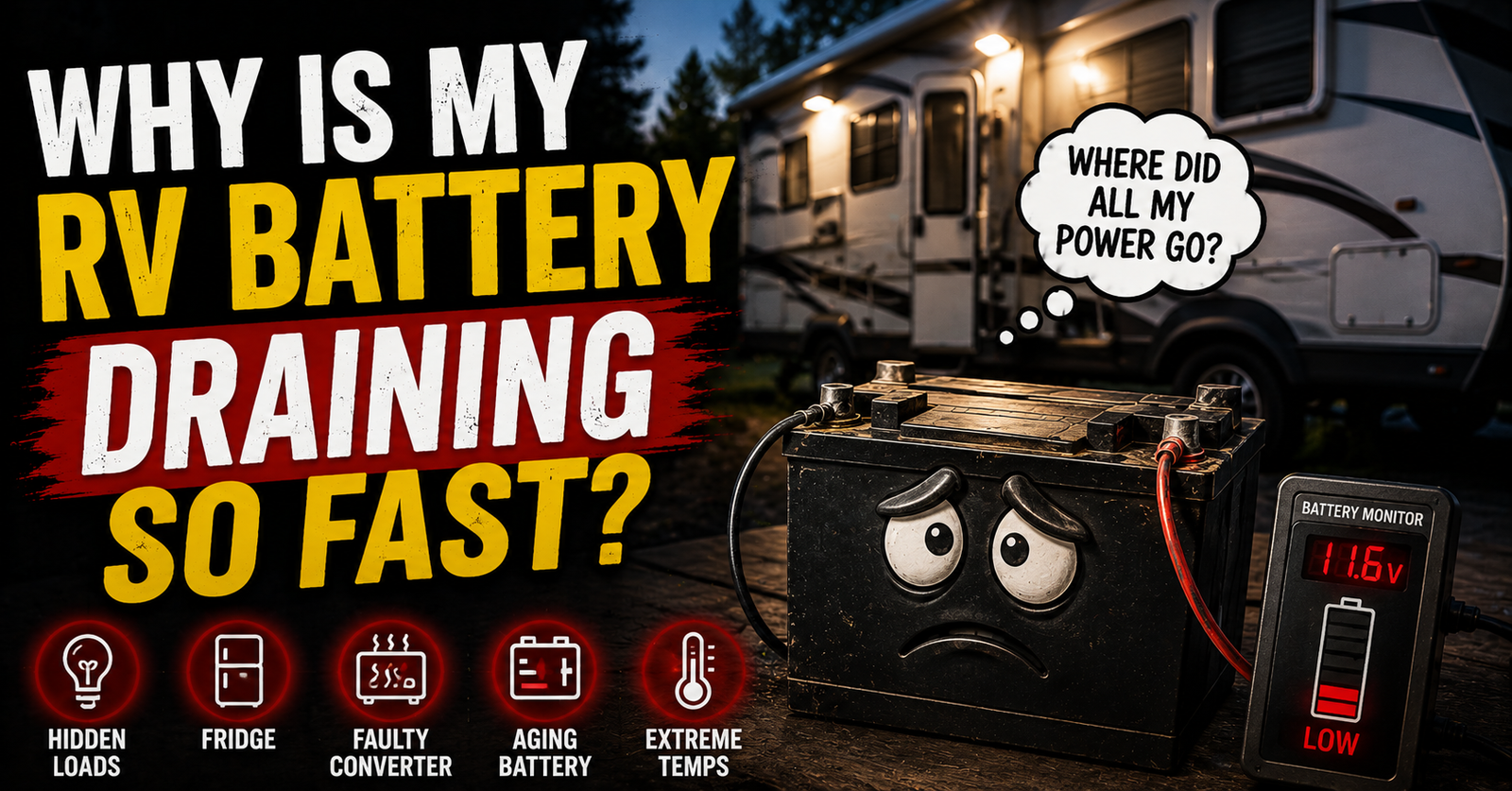
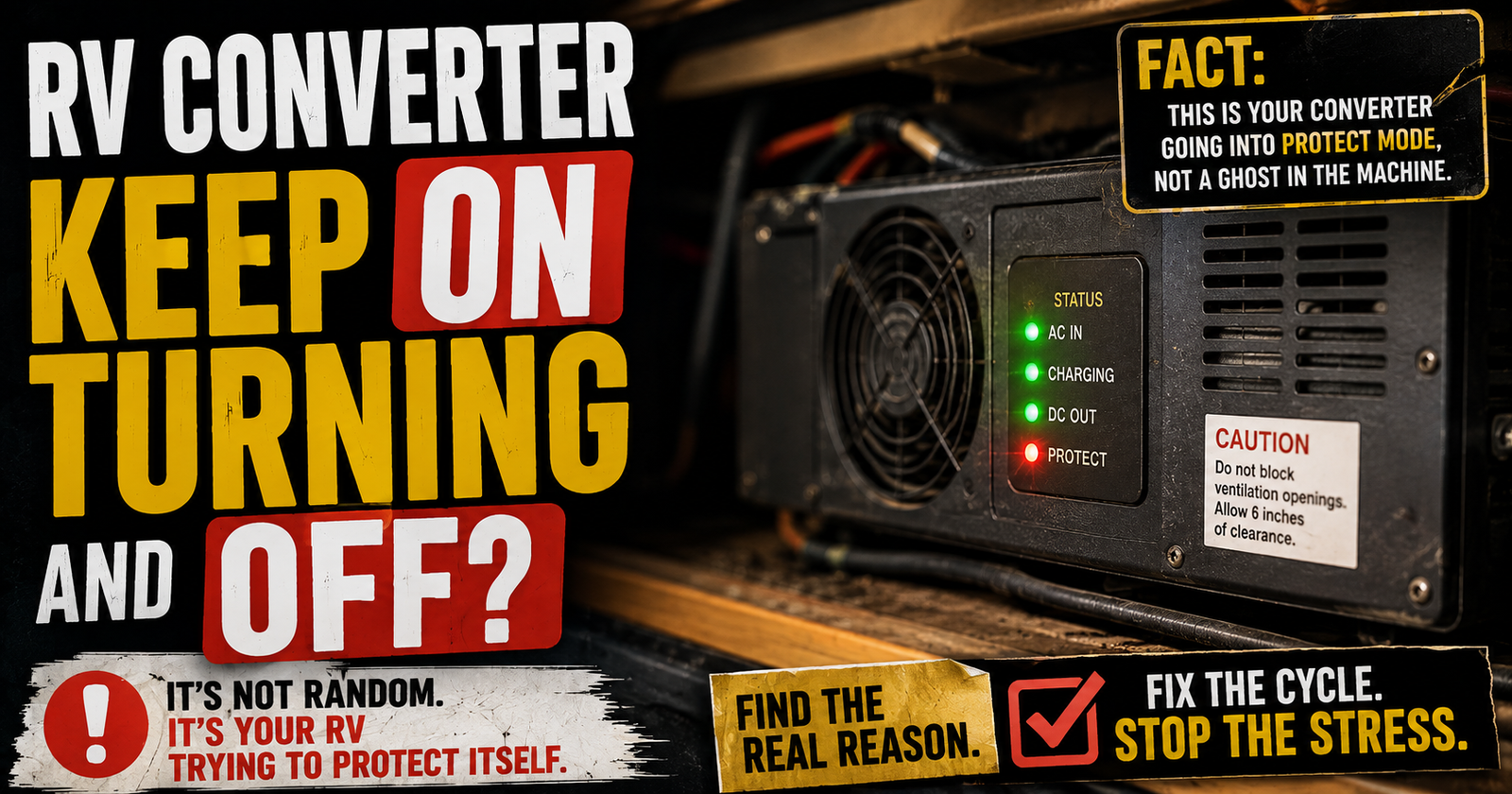

A Bad Battery Can Keep the Converter Busy
This is where a simple fan symptom can lead us somewhere completely different.
Suppose the battery is old or damaged.
The converter keeps trying to maintain or charge it.
But the battery isn’t behaving normally.
Now the converter may continue supplying charging current or operating under conditions that generate more heat than you’d expect.
So before replacing a noisy converter fan, I’d want to know whether the battery itself is healthy.
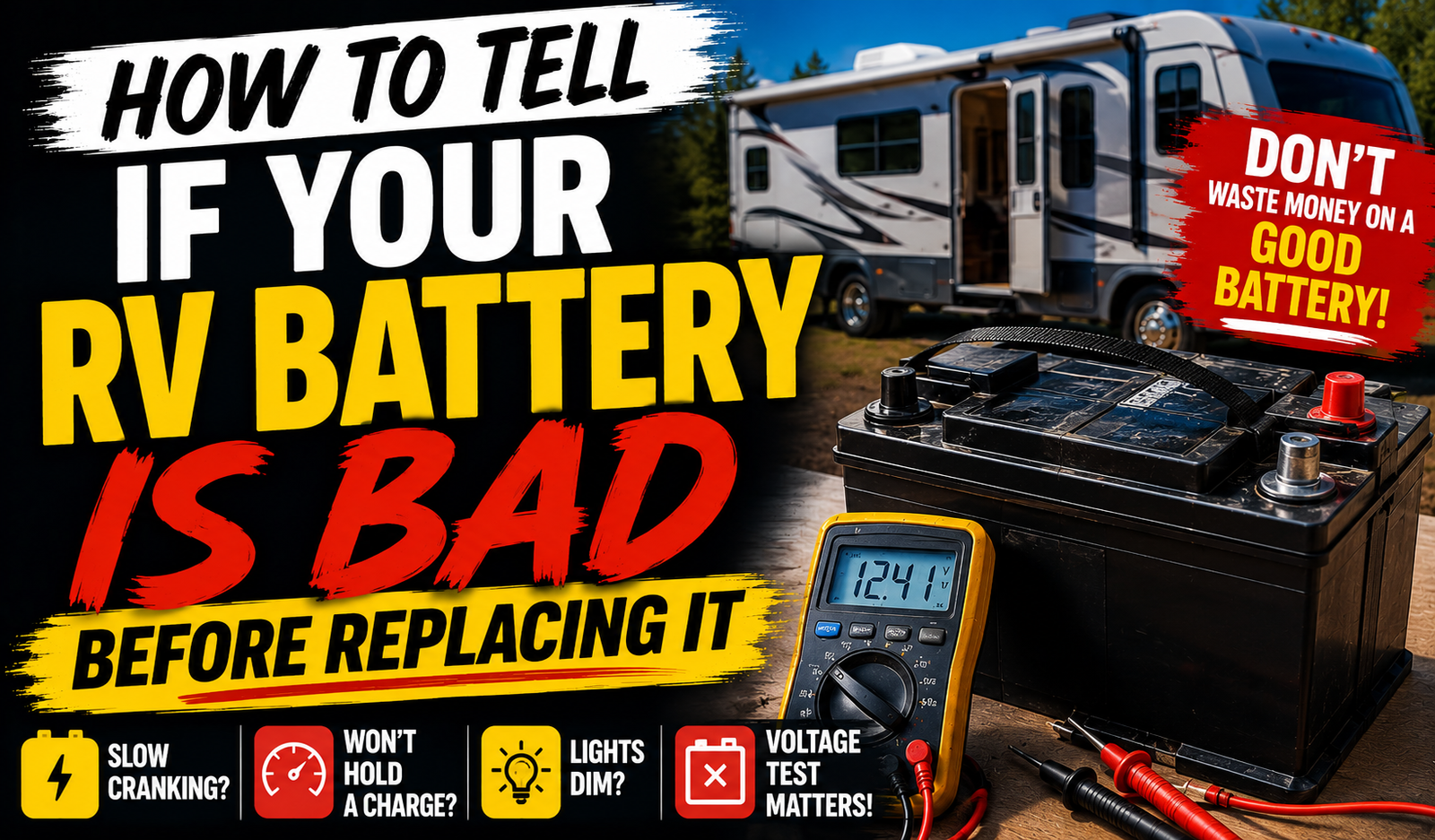
We’ve already built a complete guide showing how to tell if an RV battery is actually bad.
Sometimes the converter is simply reacting to the problem rather than causing it.
Check the Battery Voltage
Get the multimeter out.
I want to know what’s happening at the battery while the converter fan is running.
Is the battery being charged?
What voltage do you see?
Does it make sense for the converter and battery chemistry?
Does the voltage change as the system operates?
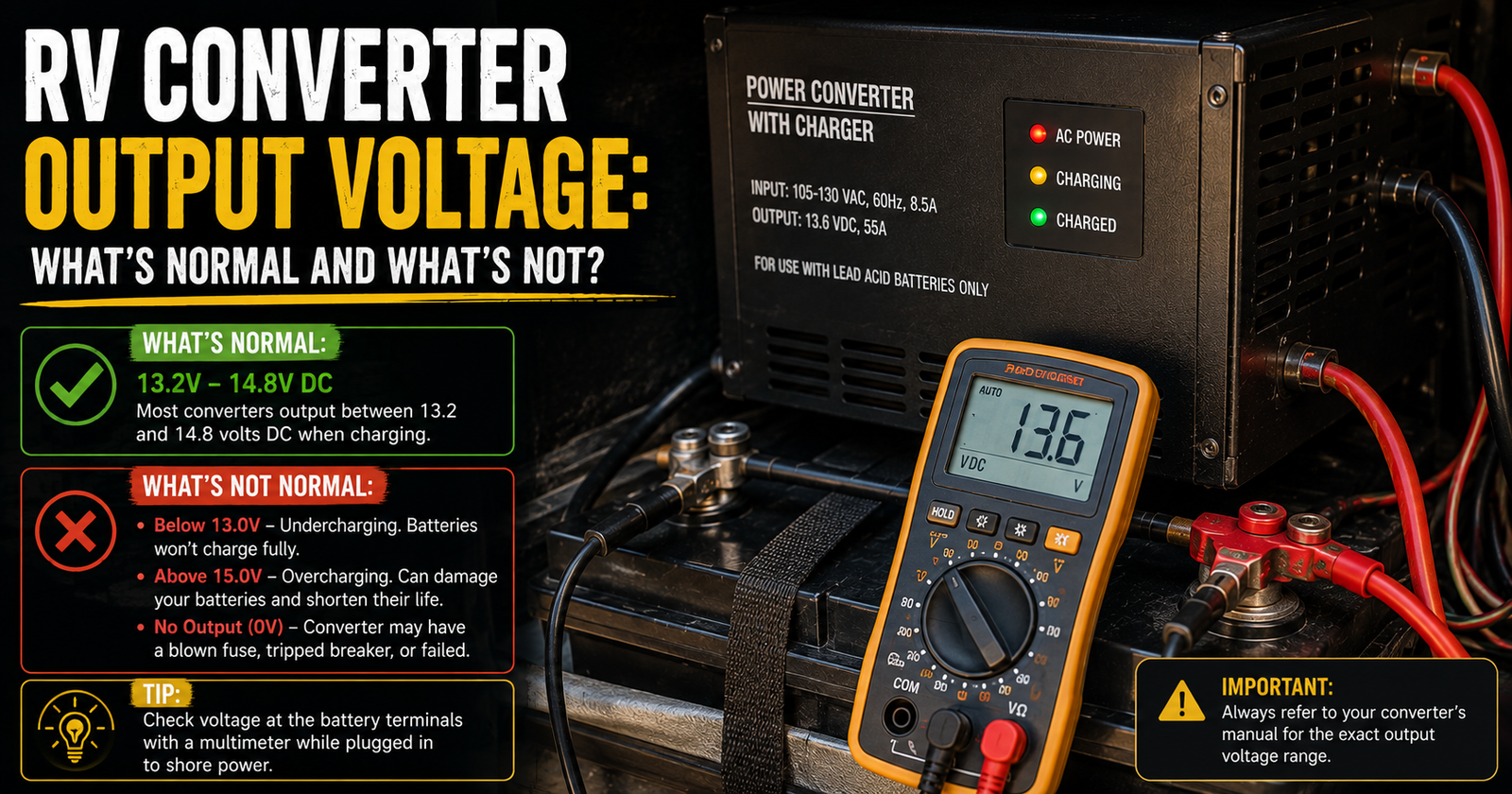
We’ve already covered normal RV converter output voltage and what different readings mean.
That article becomes especially useful here because the fan noise alone doesn’t tell us what the converter is electrically doing.
Measure it.
High 12-Volt Demand Can Keep the Fan Running
Don’t forget that the converter isn’t necessarily spending all its effort charging the battery.
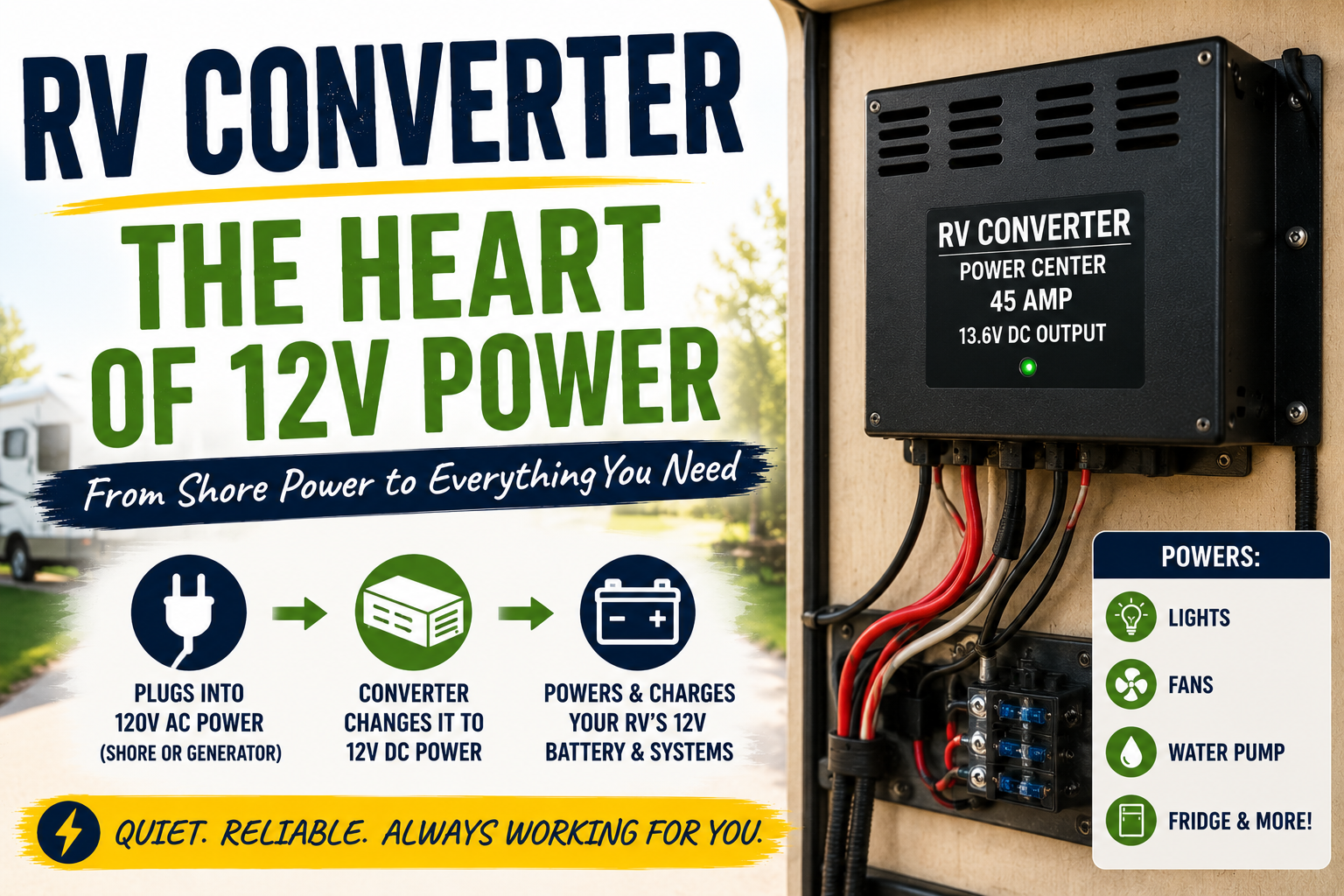
It can also be supplying the camper’s 12-volt electrical system.

Depending on the RV, that can include things like interior lights, furnace blower, water pump, vent fans, appliance controls, USB charging equipment, and plenty of other DC loads. Seeing how the major systems in an RV work together can make it easier to recognize why several seemingly unrelated devices affect converter demand.
Turn enough of those things on at once and the converter has to supply more current.
More current generally means more internal heat.
The cooling system responds accordingly.
The Furnace Can Be a Surprisingly Big Factor
This is especially worth thinking about during cold-weather camping.
The RV furnace may burn propane for heat, but its blower needs electricity.
Run the furnace repeatedly overnight and you’re adding a substantial 12-volt load.
If you’re plugged into shore power, the converter is helping supply that electrical demand.
Add lights, vent fans, charging devices, and other DC equipment, and the converter may be doing much more than you realize.
So before deciding the fan shouldn’t be running, figure out what’s actually turned on.
Try Reducing the 12-Volt Load
This is a simple observation that can give you a useful clue.
Turn off unnecessary 12-volt equipment.
Lights.
Fans.
Other optional DC loads.
Don’t shut down anything required for safety or proper appliance operation.
Then listen.
Does converter fan behavior change as the load drops?
If the fan eventually slows or stops, you’ve learned that system demand is influencing it.
That’s very different from a converter sitting there with essentially no load and still running its fan flat-out indefinitely.
Poor Ventilation Can Make the Converter Fan Run Longer
Now we’re getting into one of the easiest problems to overlook.
Your converter has to get rid of heat.
If it can’t move air effectively, internal temperature rises.
That means the fan may need to run longer or faster just to keep temperatures under control.
Progressive Dynamics specifies at least five inches of clearance or otherwise sufficient ventilation around its 9100 and 9200 converters to provide adequate airflow through the compartment.
Your converter may have different requirements, so check its installation manual.
But the basic idea applies broadly.
Converters need airflow.
Look Around the Converter Compartment
This takes about thirty seconds and can reveal something obvious.
Did somebody pack camping chairs around it?
Blankets?
Towels?
Bedding?
Paper products?
A toolbox?
Extra extension cords?
If the converter is installed in a storage compartment, it’s easy to forget there’s electrical equipment buried behind your gear.
Don’t block its ventilation openings.
And don’t pile flammable clutter against electrical equipment that generates heat.
Dust Can Hurt Cooling Too
Airflow isn’t only about open space around the converter.
Look at the ventilation openings themselves.
Dust, pet hair, debris, and other buildup can restrict airflow.
A fan trying to pull air through partially blocked openings has to deal with a cooling system that isn’t working as efficiently as intended.
Keep the area clean according to the converter manufacturer’s instructions.
I wouldn’t go blasting compressed air into electrical equipment without knowing the proper cleaning procedure, but visible airflow restrictions definitely deserve attention.
Hot Weather Makes a Difference
Sometimes there’s nothing mysterious happening.
It’s simply hot.
An RV converter mounted in a compartment on a 95-degree summer afternoon starts with a much higher ambient temperature than the same converter operating on a cool spring morning.
Now add battery charging and DC loads.
The fan has more cooling work to do.
So when you’re diagnosing constant fan operation, consider the environment.
Did this problem start when the weather got extremely hot?
Does the fan behave differently at night?
Does opening an appropriate compartment for inspection noticeably change temperature?
Those patterns matter.
Don’t Modify the Compartment Without Checking Requirements
If you discover poor airflow, don’t immediately start cutting random holes in your camper.
The converter manufacturer may specify mounting position, clearance, airflow, compartment size, and ventilation requirements.
Find the model number.
Read the installation manual.
Then correct anything that doesn’t match the intended installation.
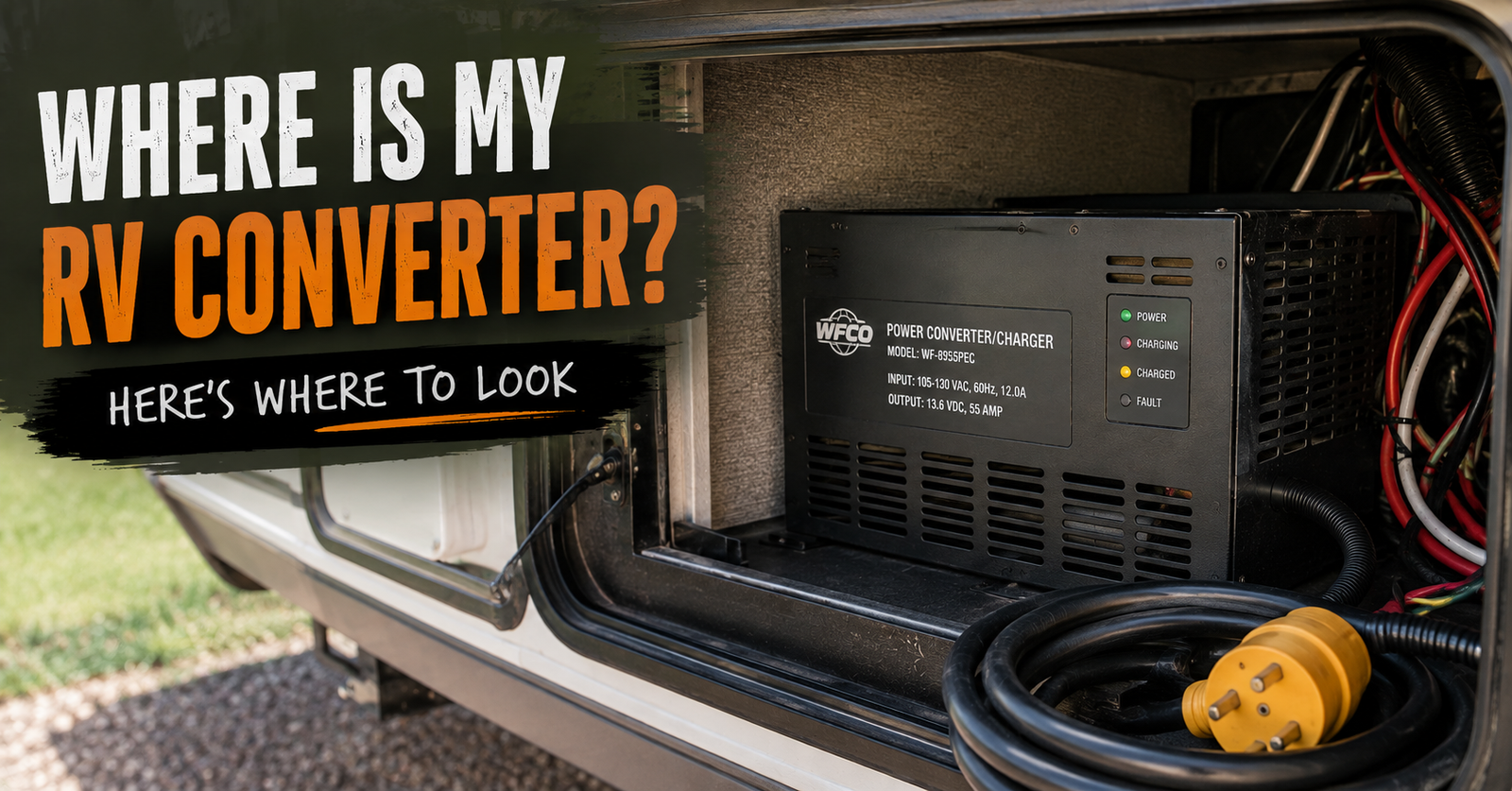
If you’re not sure where your converter is installed, our guide to finding an RV converter will help you track it down first.
What If the Converter Is Really Hot?
Converters normally generate heat.
But there’s a difference between warm electrical equipment and something that’s clearly overheating.
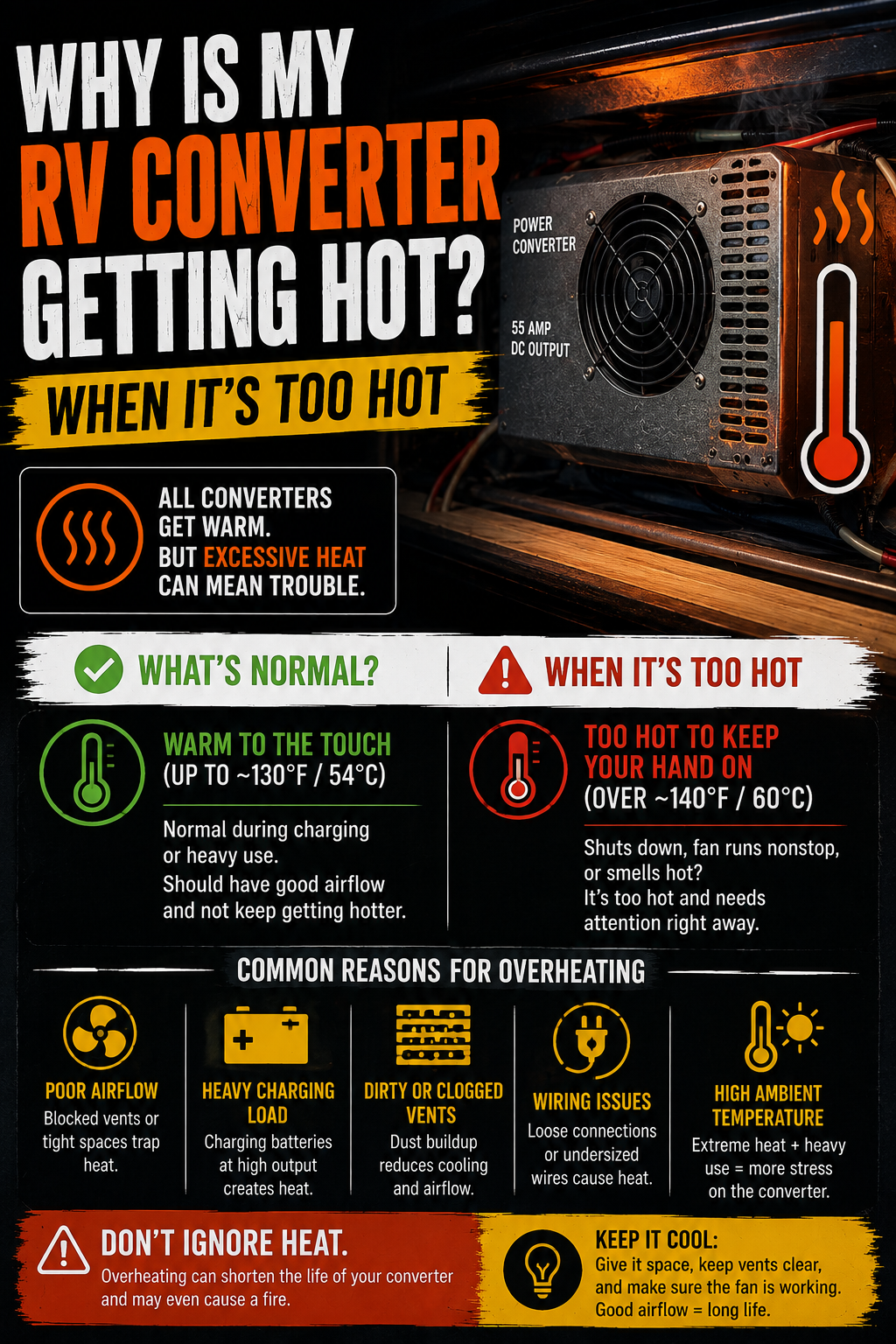
If the converter is excessively hot, smells unusual, repeatedly shuts down, shows discoloration, or has other signs of heat damage, stop treating the fan as the main problem. Those warning signs deserve a closer look at why an RV converter gets too hot, including possible airflow and load problems.
The fan may be trying to save the converter.
Some modern converters include automatic thermal protection. Progressive Dynamics’ current PD9300 troubleshooting information, for example, specifically tells owners investigating converter problems to check for overheating, fan operation, and proper ventilation.
Find out why it’s getting so hot.
Can a Failing Converter Cause the Fan to Run Constantly?
It’s possible for an internal converter problem to produce abnormal behavior, including unusual heat or fan operation.
But constant fan operation alone isn’t enough for me to call the converter bad.
I’d want more evidence.
Is output voltage correct?
Is the battery charging normally?
Is there excessive DC load?
Is the battery healthy?
Is ventilation adequate?
Does the converter have proper input power?
Are there any other symptoms?
Only after those questions start pointing back toward the converter do I get serious about replacement.
Don’t Replace the Converter Just Because the Fan Is Annoying
We’ve spent this entire cluster trying to avoid exactly that kind of parts swapping.
The converter fan is doing a job.
If it runs constantly, figure out why.
Maybe the battery is nearly dead.
Maybe there’s a huge DC load.
Maybe the compartment is too hot.
Maybe airflow is blocked.
Maybe the battery is failing.
Maybe the converter itself really does have a problem.
But you won’t know which one by listening to the fan.
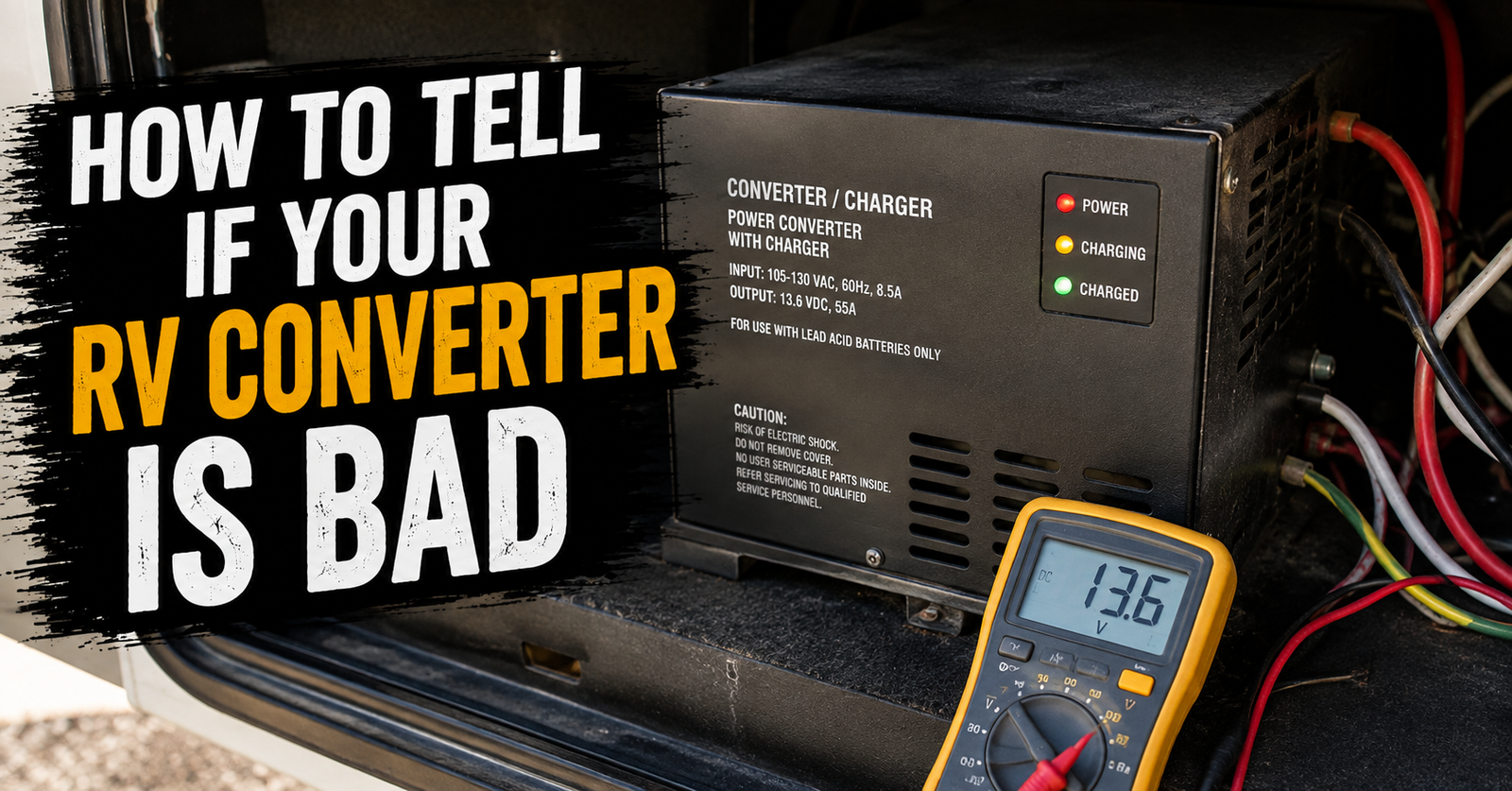
If you’re beginning to suspect an actual converter failure, use our RV converter testing guide before replacing it.
Could the Converter Be Too Small for the RV?
Potentially, but I’d be careful with this diagnosis.
A converter has a maximum output rating.
If the RV’s DC loads regularly demand a large percentage of that capacity while the converter is also trying to recharge a battery bank, the unit can spend a lot of time working hard.
Progressive Dynamics notes that its 9100 and 9200 converters include current limiting to protect the unit when demand exceeds its designed output.
That doesn’t mean you should immediately install a larger converter.
The RV’s wiring has to be capable of safely carrying the output too.
Bigger Isn’t Automatically Better
This becomes especially important during converter upgrades.
You might look at a 45-amp converter running hard and think:
“I’ll replace it with an 80-amp model.”
Not so fast.
Progressive Dynamics specifically warns owners doing lithium converter replacements not to install a converter with a higher DC output rating than the original unless the RV wiring is capable of safely handling that additional current.
Converter sizing, battery charging, and wiring capacity all need to work together.
We’ll tackle converter sizing separately later in this cluster.
Could the Fan Itself Be Bad?
Yes.
A cooling fan is a mechanical component.
Bearings wear.
Blades collect debris.
Motors fail.
A fan can become louder without necessarily running more often.
That’s an important distinction.
Maybe you’re thinking:
“My converter fan suddenly runs constantly.”
But what’s really happening is:
“My converter fan is suddenly so loud that I notice every time it runs.”
Those aren’t the same problem.
Listen to the Type of Noise
A normal rush of air is one thing.
Grinding is another.
Rattling.
Scraping.
Squealing.
A fan repeatedly struggling to start.
Those noises make me much more interested in the fan itself.
A clean-running cooling fan shouldn’t sound like it’s chewing gravel.
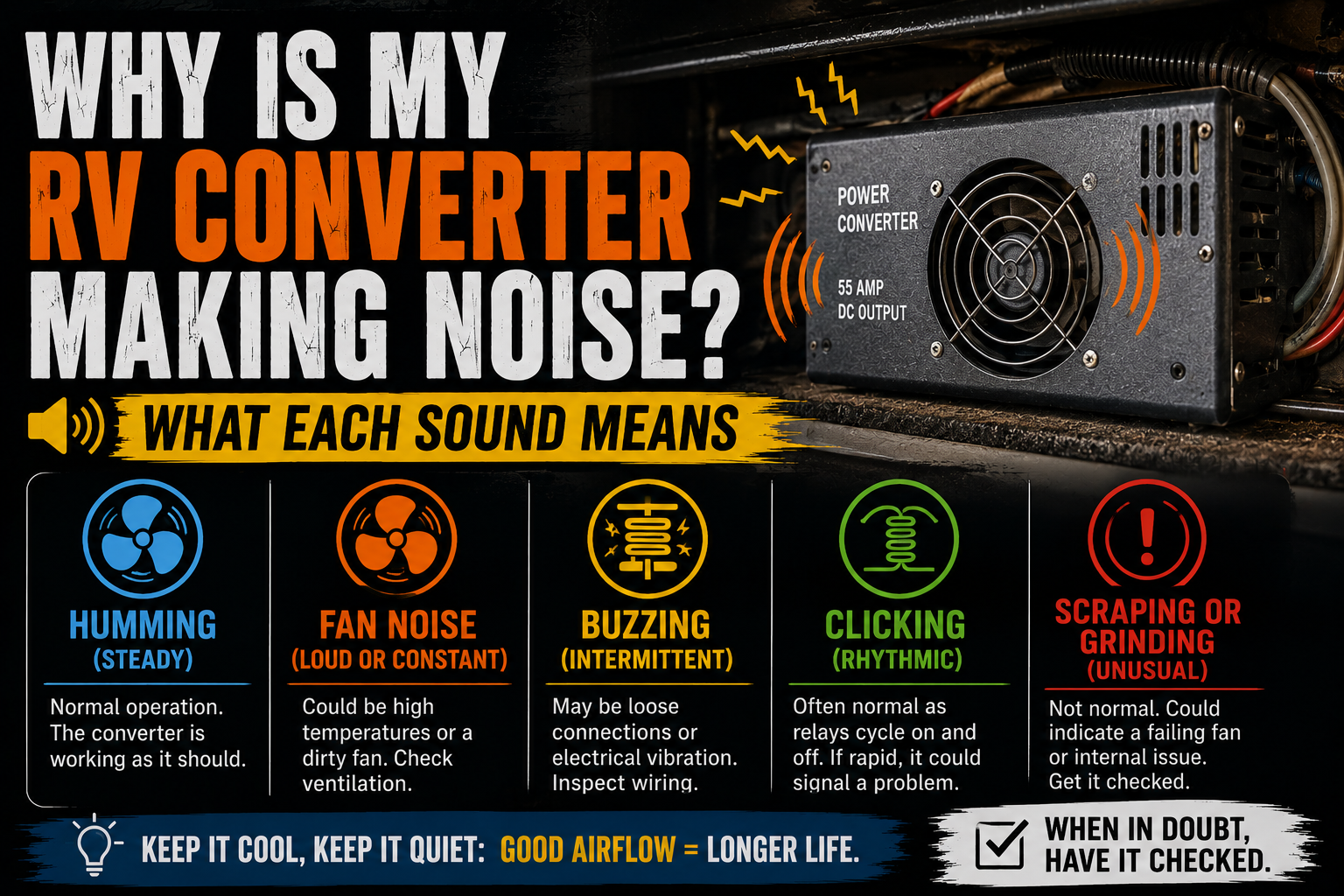
We’ll cover strange converter noises in a separate article because buzzing, humming, clicking, and fan noise can each point in different directions.
What If the Fan Never Turns Off Even With the Battery Full?
Now I’d reduce the variables.
Verify the battery condition rather than trusting the RV’s little “full” indicator.
Check charging voltage.
Reduce unnecessary DC loads.
Consider ambient temperature.
Check airflow.
Then see what the converter does.
Remember, a battery can show an encouraging voltage while still having poor usable capacity.

We’ve already seen that with an RV battery that says full but dies quickly.
Make sure “battery full” actually means what you think it means.
What If the Fan Starts as Soon as I Plug Into Shore Power?
That can make perfect sense.
Plugging into shore power wakes up the converter/charger.
If the battery is discharged, the converter may immediately begin supplying substantial charging current.
The fan may respond to the resulting temperature.
The better question is what happens afterward.
If the battery charges and demand decreases, does fan behavior eventually settle down?
If yes, you may simply be hearing normal charging operation.
What If It Runs for Hours After I Plug In?
How discharged was the battery?
How large is the battery bank?
How powerful is the converter?
How much 12-volt equipment is running?
Those questions determine whether “hours” is surprising.
Progressive Dynamics notes that battery recharge time depends on battery size, converter output rating, how deeply the battery was discharged, and how many 12-volt loads are operating during charging.
A heavily depleted battery bank isn’t going to recover instantly.
The converter may have legitimate work to do for quite a while.
What If the Battery Never Seems to Finish Charging?
Now I’d stop focusing on the fan and investigate the charging system.
Measure converter output.
Measure at the battery.
Check the charging path.
Evaluate battery condition.
If the battery never reaches a healthy charged state, the converter may remain under greater load because the charging job never really ends.
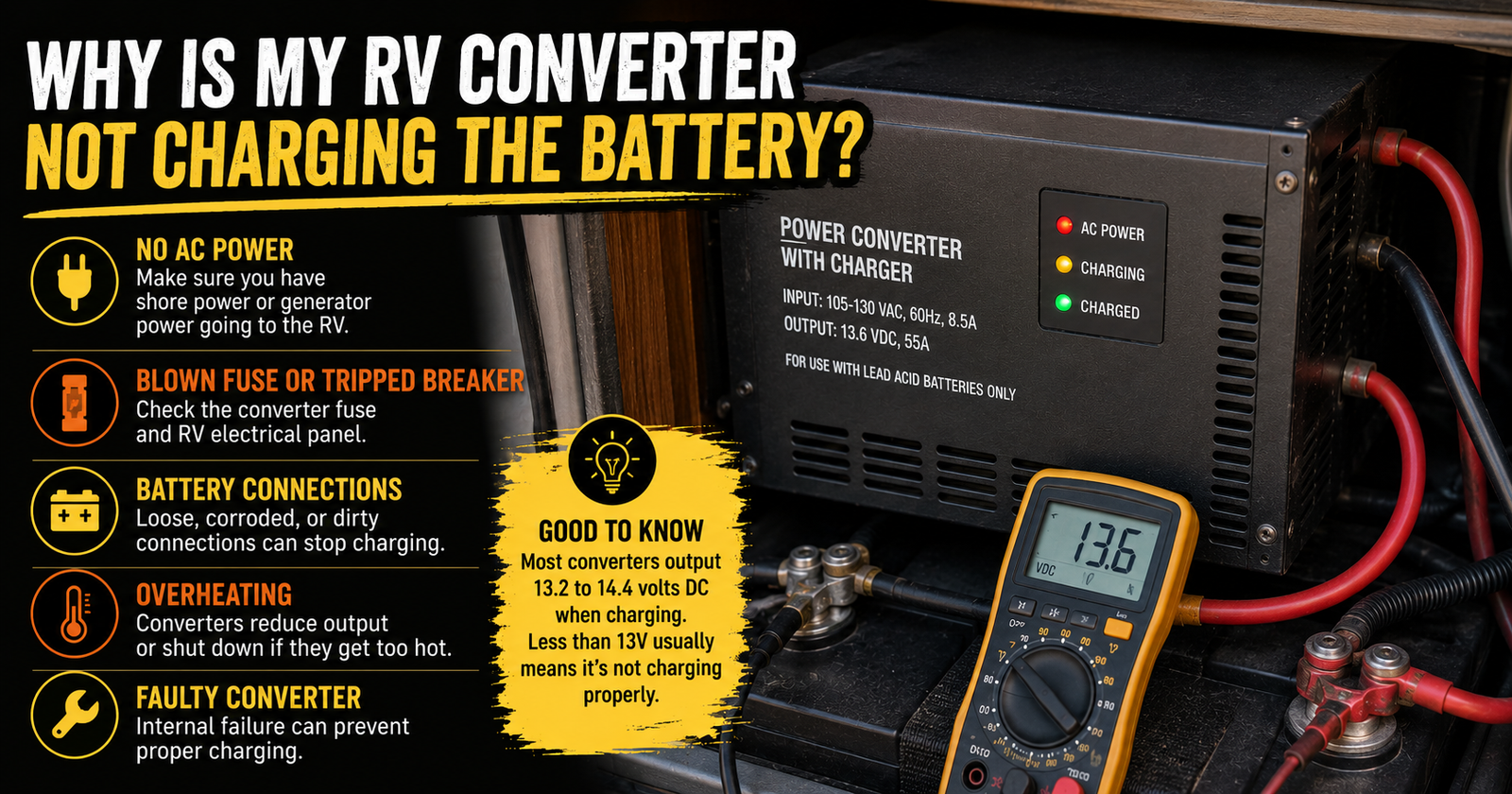
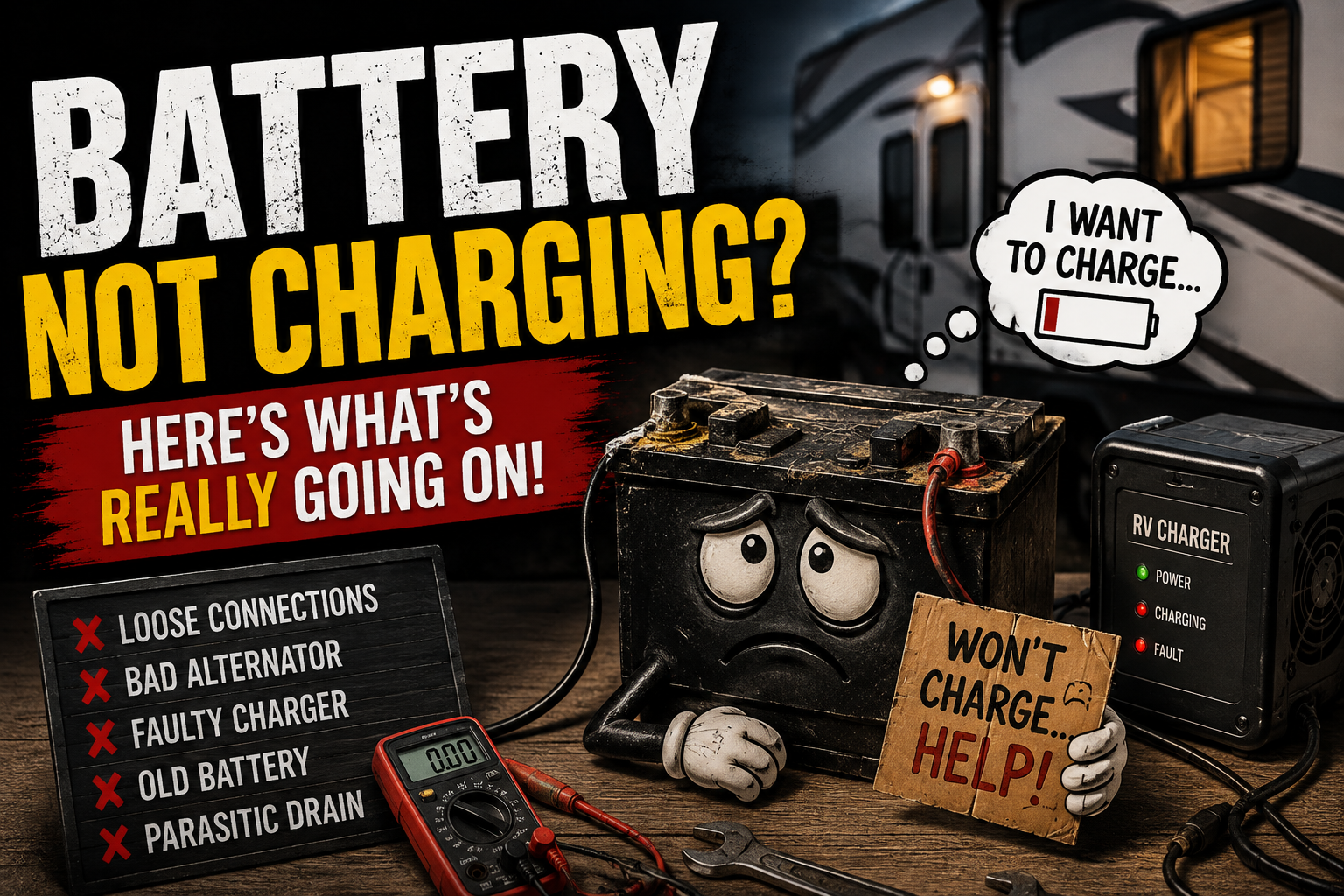
Our guide on what to check when the converter isn’t charging the battery is the better troubleshooting path for that situation.
What If the Fan Runs but My Battery Still Dies?
The fan only tells you the converter is doing something that creates enough heat for its cooling system to respond.
It doesn’t prove the battery is receiving a proper charge.
You can have converter activity and still have a charging-path problem.
That’s why voltage measurements matter.
If the converter produces proper output but the battery isn’t seeing it, start looking between the converter and battery.
Fuse.
Breaker.
Disconnect.
Wiring.
Connections.
Ground path.
Don’t let fan noise substitute for electrical testing.
Can a Parasitic Draw Keep the Converter Fan Running?
Potentially, if the draw is large enough to create meaningful ongoing DC demand while shore power is connected.
But a tiny parasitic load isn’t automatically going to make every converter fan run continuously.
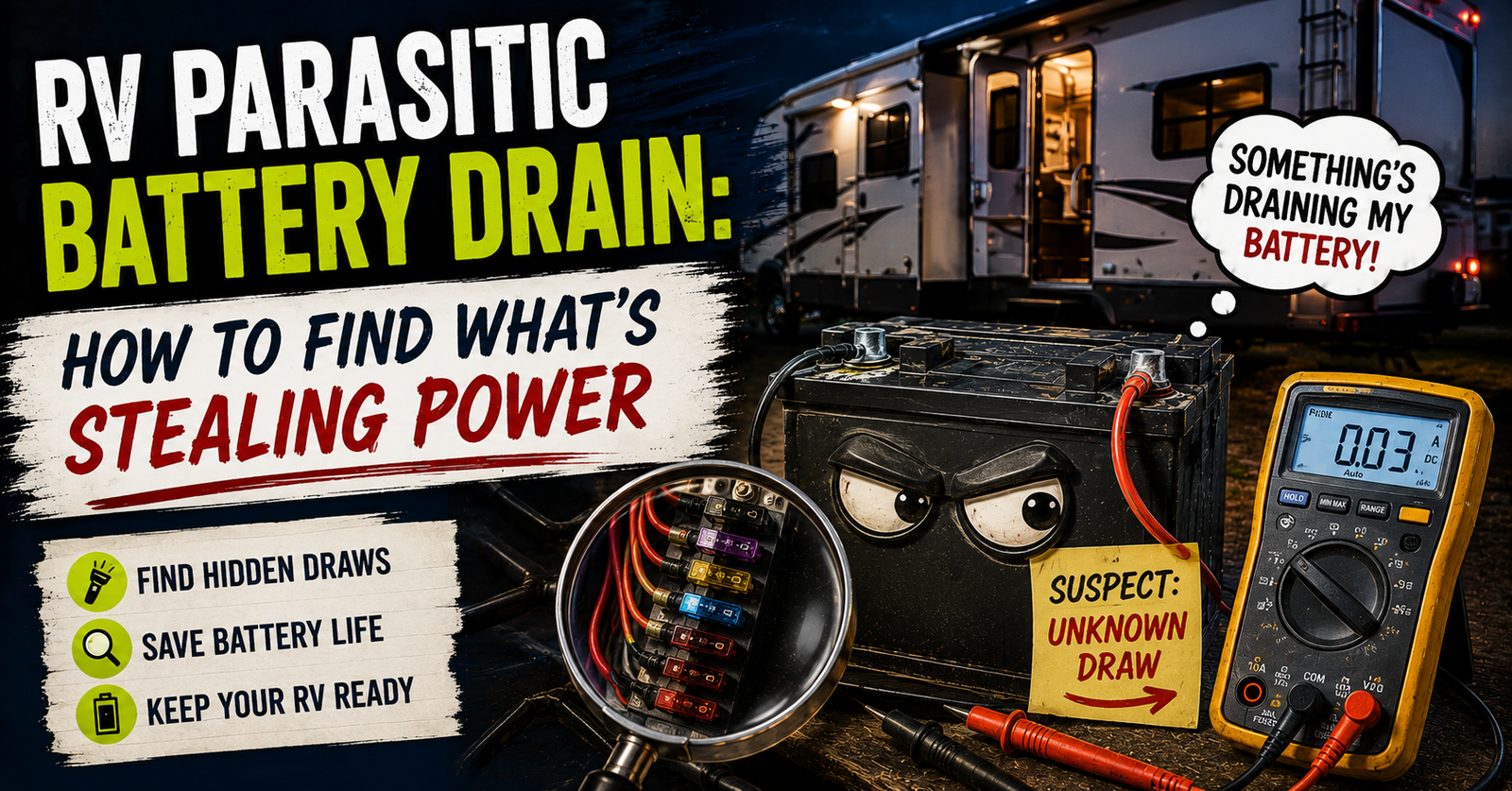
If you’re dealing with unexplained battery drain when unplugged, we’ve already built a separate guide for finding parasitic RV battery drain.
That’s where I’d investigate the hidden load directly.
Check for Something You Forgot Was Running
Before reaching for tools, walk through the camper.
Storage-bay lights.
Vent fans.
Furnace.
Tank heaters.
12-volt refrigerator.
USB chargers.
Aftermarket accessories.
Inverter controls.
Anything added by a previous owner.
Sometimes the mysterious “converter problem” is simply a load you didn’t realize was active.
Can the Fan Run When the Battery Is Disconnected?
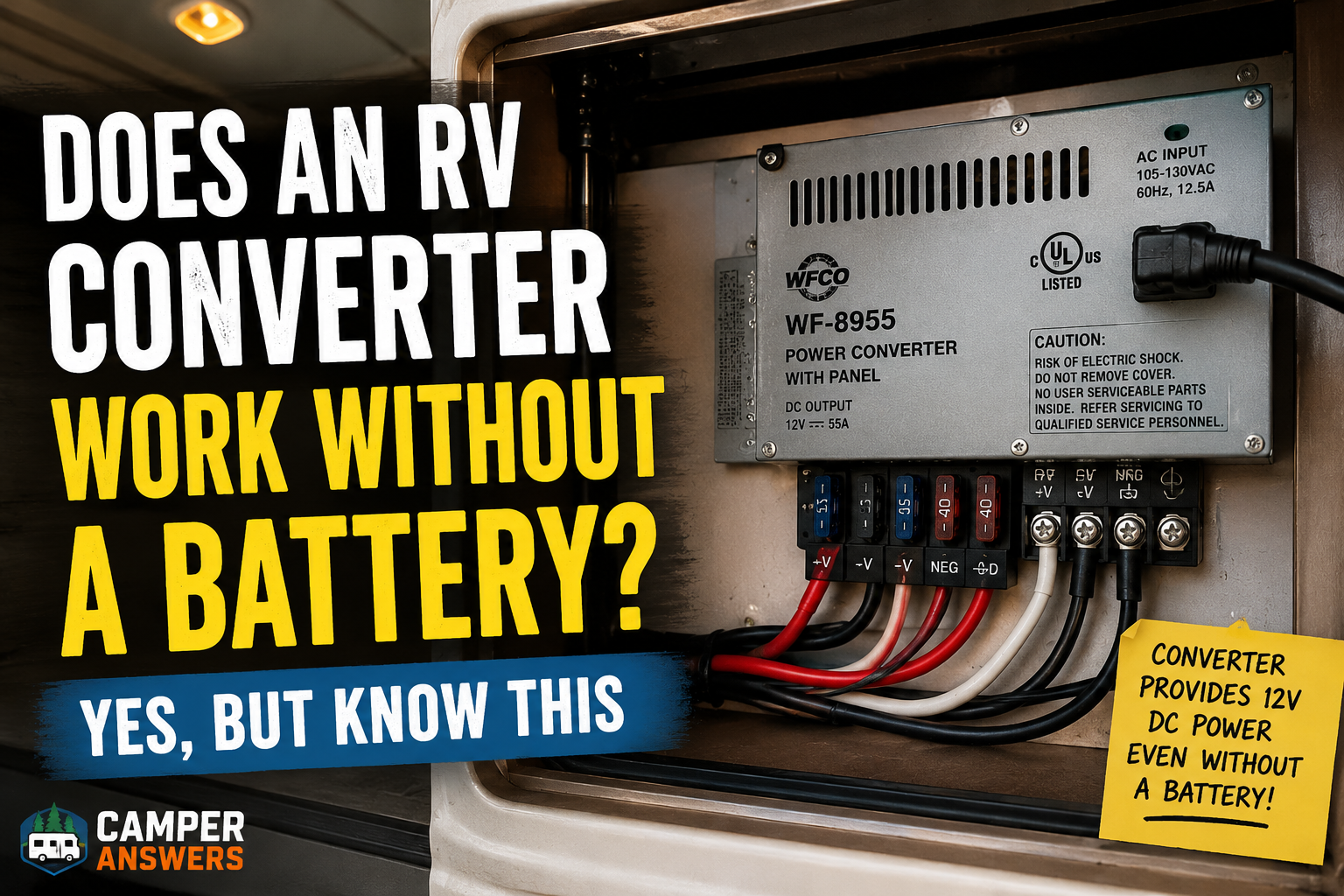
Depending on the converter and how the RV is configured, the converter can supply DC loads while shore power is available without relying on the battery for every moment of operation.
So fan activity isn’t proof that the battery itself is connected or charging.
Again, the fan responds to the converter’s operating conditions.
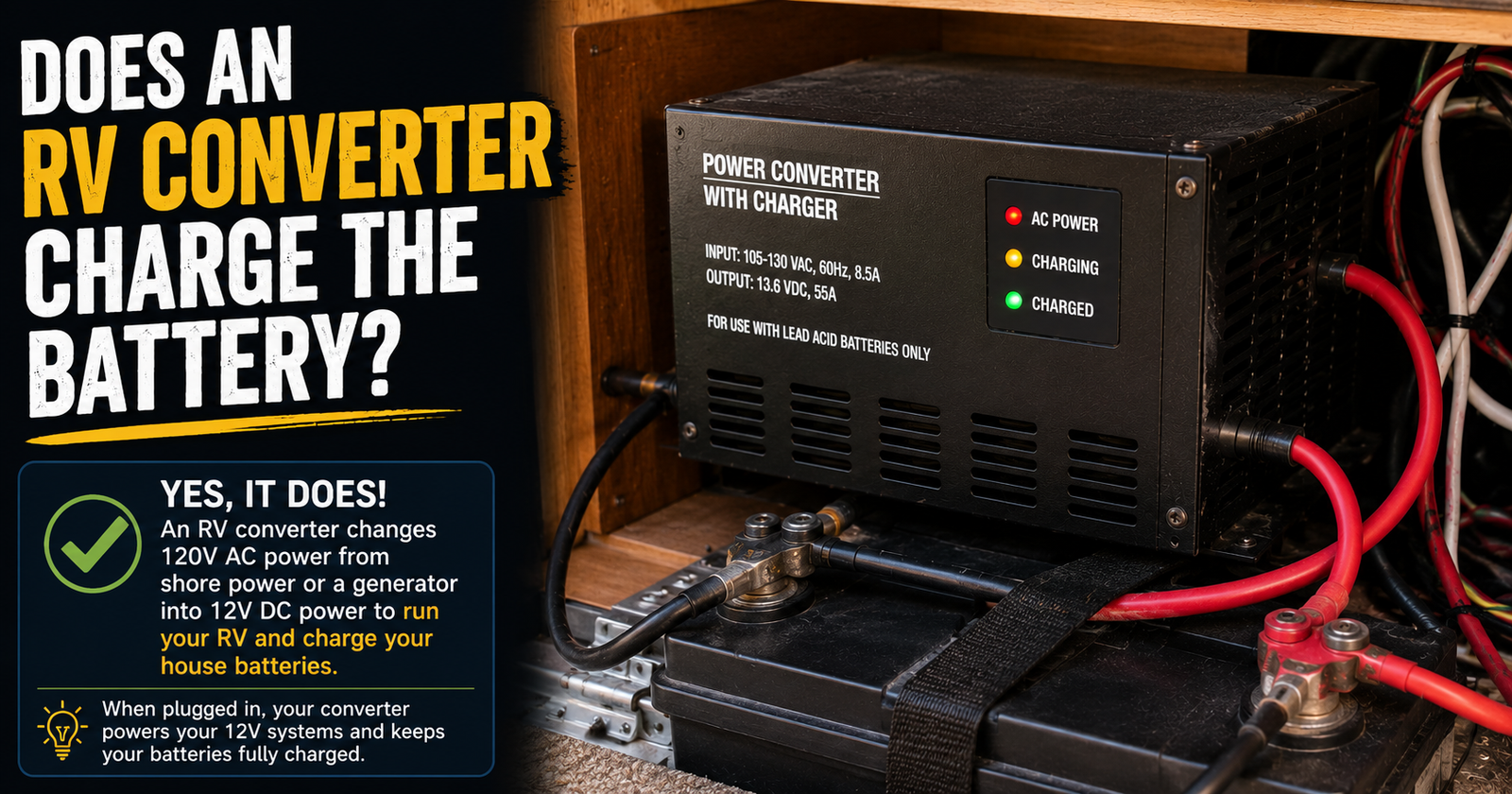
If you need to know whether the converter is actually charging the battery, our explanation of how an RV converter charges the house battery covers that path in detail.
What If the Fan Runs With Almost Everything Turned Off?
This is the situation I’d investigate most closely.
Battery supposedly charged.
Few DC loads operating.
Cool ambient temperature.
Plenty of ventilation.
Yet the fan runs hard continuously.
Now I want measurements.
Converter output voltage.
Battery voltage.
Battery condition.
Actual DC current if you have a properly installed shunt or suitable test equipment.
I’d also look for an unknown load.
The less obvious work the converter should be doing, the more interesting constant fan operation becomes.
A Battery Monitor Can Make This Much Easier
A good shunt-based battery monitor gives you information voltage alone can’t.
Instead of wondering whether the converter is supplying a lot of current, you can actually see current entering or leaving the battery.
That can help separate:
The converter is charging hard
from
The battery is barely accepting current
from
The RV has a large DC load running.
We’ll eventually build a dedicated battery-monitor guide because it’s one of the most useful tools for understanding what’s actually happening in an RV electrical system.
Don’t Ignore a Sudden Change in Behavior
This is one of my biggest rules with campers.
Learn what’s normal for your RV.
Maybe your converter fan has always run frequently on hot afternoons.
Fine.
But if you’ve owned the camper for three years and the converter suddenly starts running its fan nonstop during mild weather with almost nothing turned on, pay attention.
Something changed.
Maybe it’s the battery.
Maybe airflow got blocked.
Maybe a new DC load was added.
Maybe the fan is wearing out.
Maybe the converter has developed a problem.
The change itself is a clue.
When I’d Start Suspecting an Actual Problem
A constantly running converter fan gets more concerning to me when it’s accompanied by other symptoms.
The converter is excessively hot.
Battery charging voltage is abnormal.
Battery won’t charge.
Battery is getting unusually hot.
There’s a burnt electrical smell.
The converter repeatedly shuts down.
The fan sounds mechanically damaged.
The converter behaves this way even with minimal DC demand and good ventilation.
That’s when I’d move beyond “probably working hard” and start diagnosing the system.
Don’t Ignore a Burnt Smell
If you smell burning plastic, hot wiring, or that unmistakable overheated-electronics smell, stop treating this as a fan-noise problem.
Disconnect power safely as appropriate and investigate before continuing to use the system.
A cooling fan running continuously alongside evidence of serious overheating deserves attention.
We’re going to give burnt converter smells their own article because that’s a different level of urgency from an annoying fan.
Don’t Block the Fan to Make It Quiet
It sounds ridiculous, but people improvise when a noisy fan keeps them awake.
Don’t cover ventilation openings.
Don’t stuff insulation around the converter.
Don’t unplug or disable the cooling fan simply because it’s annoying.
That fan is protecting equipment that can produce substantial heat.
Find out why it’s running or fix the noisy fan if the fan itself is defective.
Don’t defeat the cooling system.
The Fan Is Usually Telling You Something
That’s how I look at this symptom.
The fan isn’t necessarily the problem.
It’s information.
A converter fan running frequently may be telling you:
I’m charging a depleted battery.
The RV is using a lot of 12-volt power.
It’s hot in here.
I can’t get enough airflow.
Something is making me work harder than usual.
Your job is figuring out which one applies.
Start with the easy stuff.
Check the battery’s state and condition.
Look at your active 12-volt loads.
Make sure the converter has plenty of ventilation.
Measure charging voltage.
Pay attention to whether the behavior changes as the battery charges or loads are switched off.
If the converter is producing the right voltage, the battery is healthy, DC demand is low, airflow is good, temperatures are reasonable, and that fan still suddenly runs flat-out all the time, then I’d start digging deeper into the converter itself.
Until then, don’t shoot the messenger.
That little fan may simply be telling you your converter has a whole lot more work to do than you realized.
Written by Evan Mercer
Evan Mercer writes about RV electrical systems, converter troubleshooting, batteries and practical camper ownership for CamperAnswers.com. His work focuses on helping RV owners understand what their campers are telling them so they can find the real problem before replacing parts.