
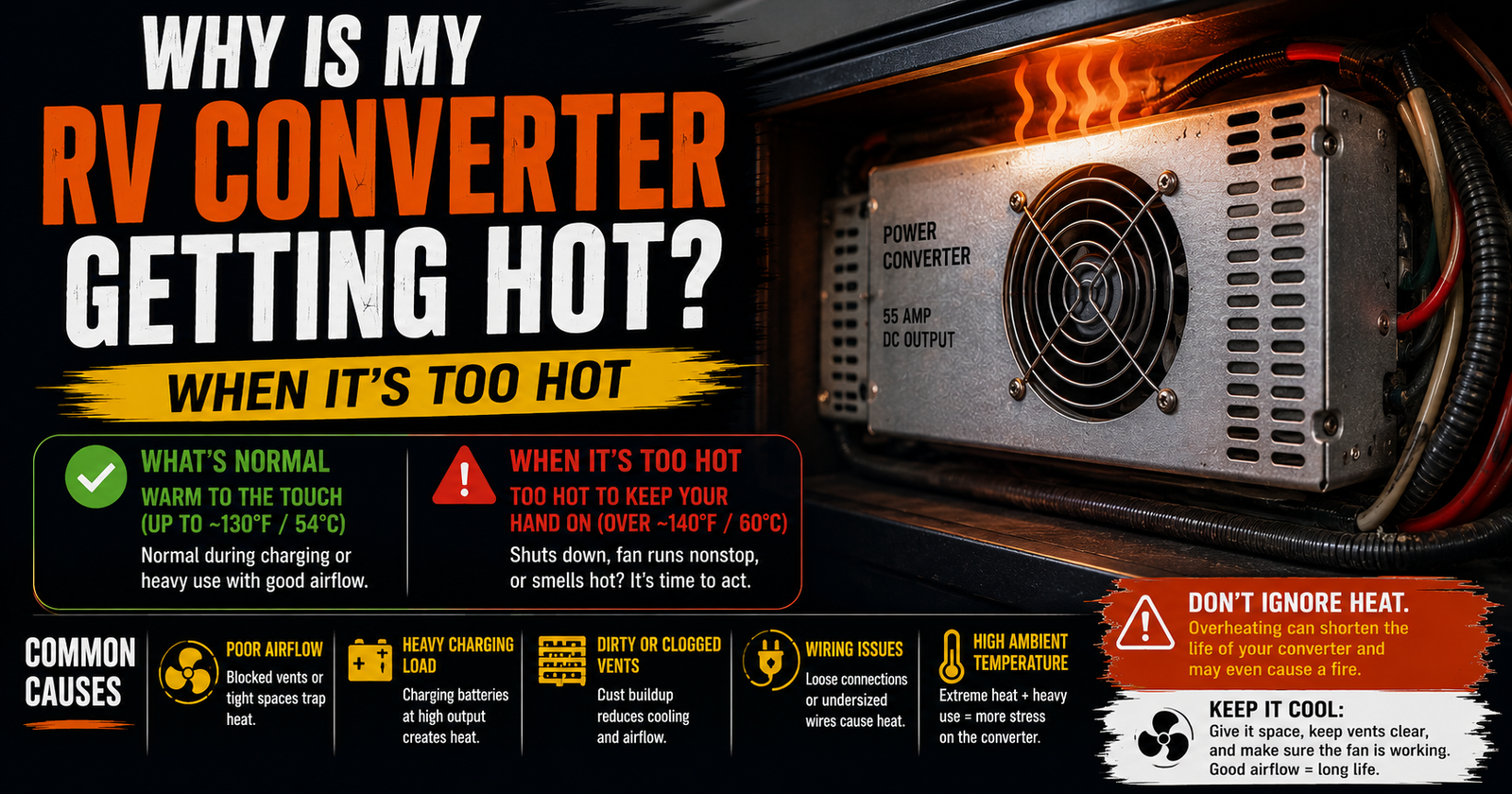
An RV converter getting warm doesn’t scare me.
An RV converter that’s so hot you immediately pull your hand away, smells strange, keeps shutting itself down, or suddenly runs much hotter than it used to?
Now I want to know what’s going on.
Converters aren’t magically turning 120-volt AC shore power into 12-volt DC power without creating any heat along the way. They’re electrical equipment, they’re doing real work, and some warmth during normal operation should be expected.
But there’s a point where “my converter feels warm” becomes “why in the world is this thing cooking?”
That’s what we need to figure out.
Is It Normal for an RV Converter to Get Hot?
Yes, to a point.
Your converter is taking incoming AC electricity and providing DC power for the camper while also handling battery charging in a typical converter/charger system.
That process isn’t 100 percent efficient.
Some energy becomes heat.
The harder the converter works, the more important cooling becomes.
That’s why many RV converters have ventilation openings and automatic cooling fans.
So I wouldn’t touch a warm converter case and immediately assume it’s failing.
I’d look at everything happening around it.
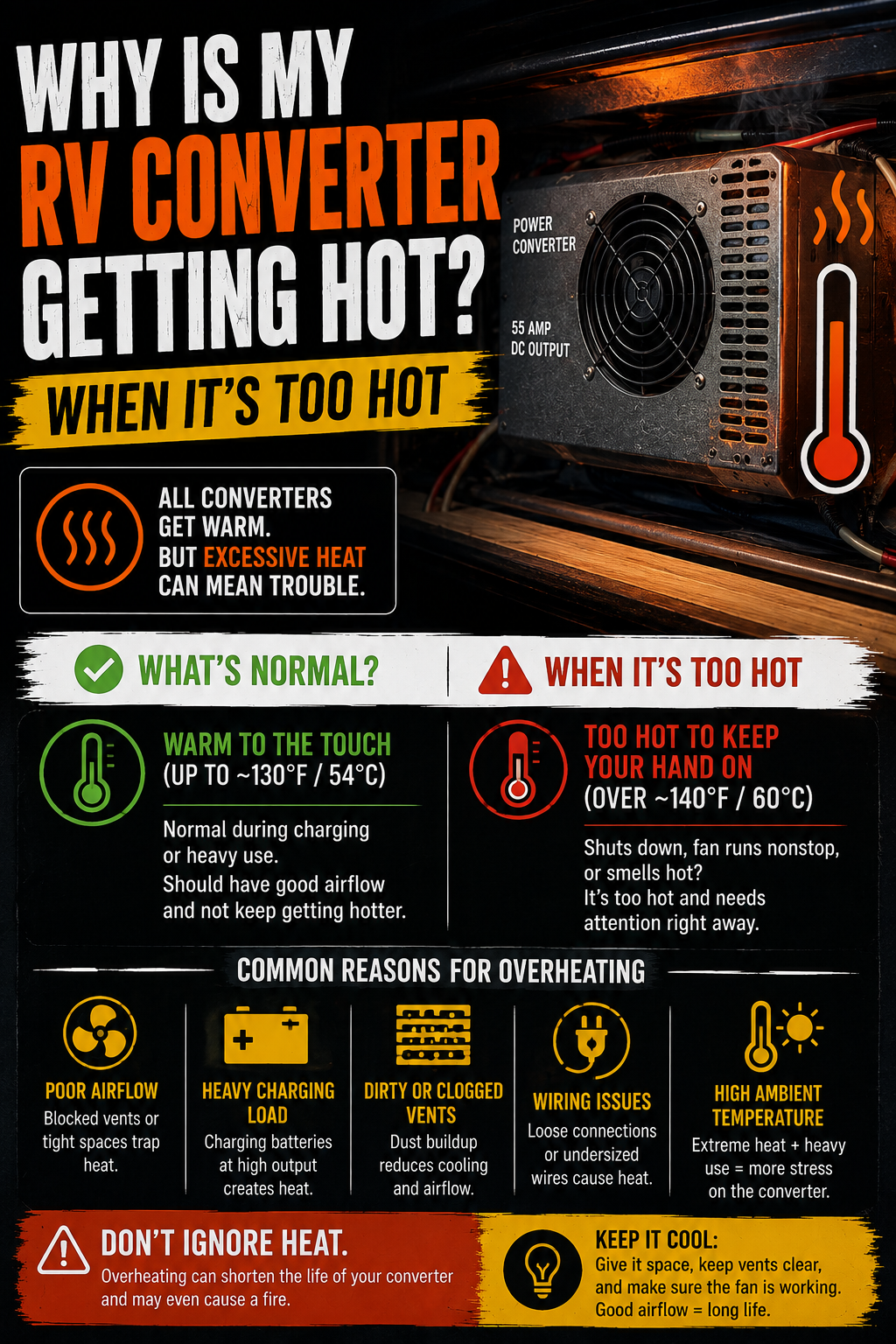
How Hot Is Too Hot for an RV Converter?
This is where I don’t like giving people one magic case-temperature number.
Different converter models have different designs, temperature limits, fan controls, thermal protection, and installation requirements.
For example, Progressive Dynamics’ PD9300 troubleshooting documentation says its fan automatically operates at around 140°F and tells owners to check overheating and ventilation when diagnosing no or low output.
That does not mean every RV converter should have a 140°F case temperature.
It means we need to use the specifications for the converter actually installed in your camper.
What matters to me even more are the symptoms surrounding the heat.
Warm and Working Normally Is Different From Overheating
Let’s separate these two situations.
Your converter is warm.
The battery is charging.
Output voltage looks normal.
The fan cycles as needed.
There’s no strange smell.
Nothing is shutting down.
Ventilation is clear.
That sounds a whole lot different from:
The converter is extremely hot.
The fan is screaming constantly or isn’t running at all.
Output keeps disappearing.
The battery won’t charge correctly.
You smell hot plastic.
The converter works again only after it cools.
Those are not the same “hot converter.”
The second one needs attention.
A Low Battery Can Make the Converter Run Hotter
This is one of the first things I’d think about.
Let’s say you’ve been camping without hookups.
Your house battery is heavily discharged.
Then you plug the RV into shore power.
The converter suddenly has a big job.
It’s supplying the camper’s active 12-volt loads while also trying to put energy back into that discharged battery.
Depending on the battery bank and converter, that can mean significant charging current.
More work means more heat to get rid of.
So if the converter feels warmer shortly after plugging in with a low battery, there may be a perfectly reasonable explanation.
Watch What Happens as the Battery Charges
This is a simple observation I really like.
Don’t judge the converter at one random moment.
See what happens over time.
As the battery recovers, charging demand should eventually change.
Does the converter cool down?
Does the fan run less?
Does everything settle into quieter operation?
If so, the converter may simply have been working hard.
If it remains extremely hot long after the battery should be charged and there’s little 12-volt demand, I’d keep digging.
A Bad Battery Can Make the Converter Work Hard
This is another reason I don’t immediately blame a hot converter.
A battery with a bad cell or another internal problem may not charge normally.
In fact, Progressive Dynamics lists a bad battery cell as one possible cause to investigate when diagnosing low converter output on some of its equipment.
So we need to look at the entire charging system.
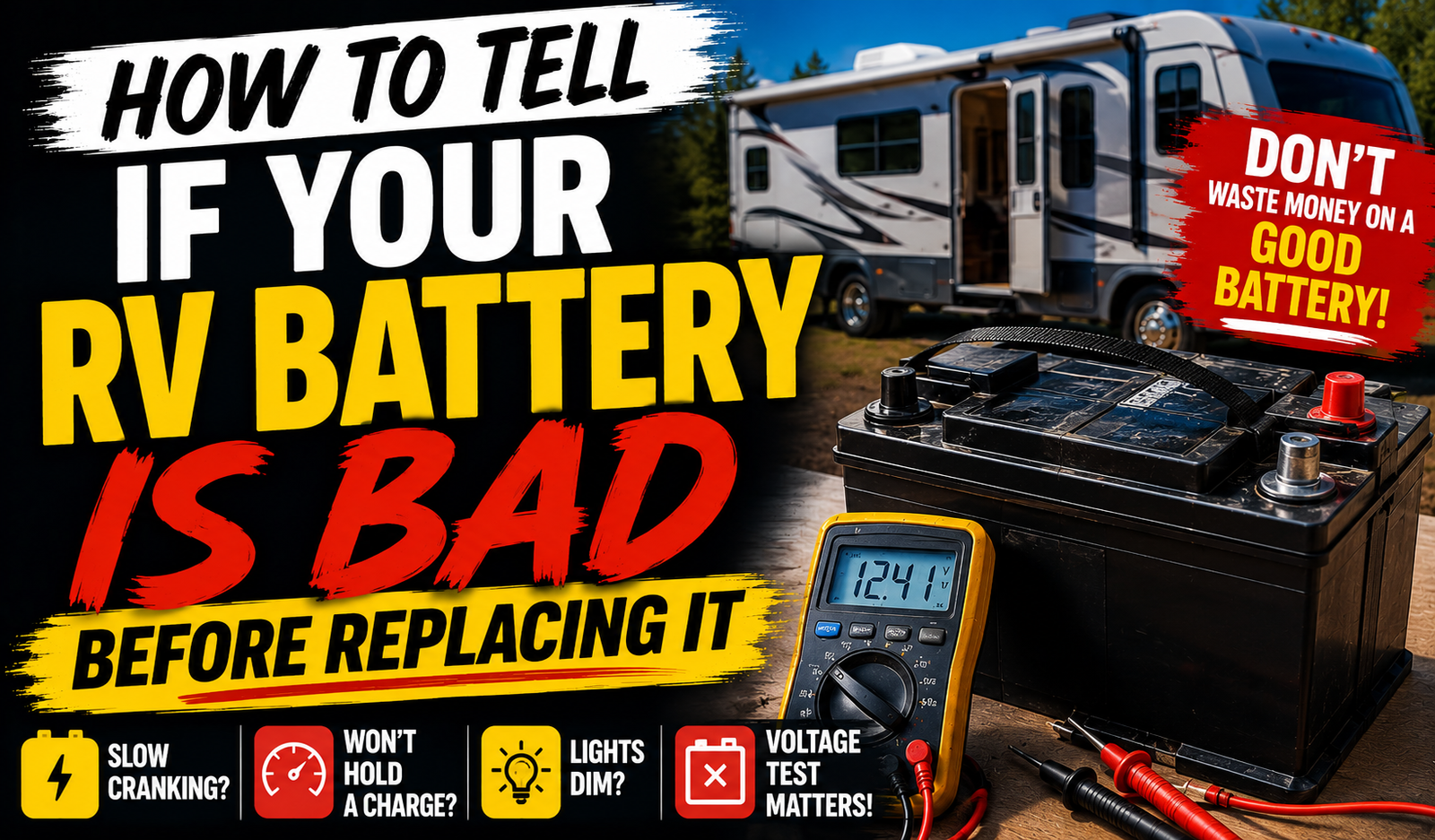
If the battery is questionable, use our guide showing how to tell whether an RV battery is actually bad before assuming the converter itself has failed.
The thing getting hot may be reacting to another problem.
Check the Battery Itself for Heat Too
Don’t only put your attention on the converter.
Look at the battery.
A battery becoming unusually hot during charging deserves attention.
So does swelling, leaking, a strong rotten-egg odor from a lead-acid battery, or other obvious signs that something isn’t right.
If the converter and battery are both behaving strangely, stop treating this as an isolated cooling issue.
We need to know what the charging system is actually doing.
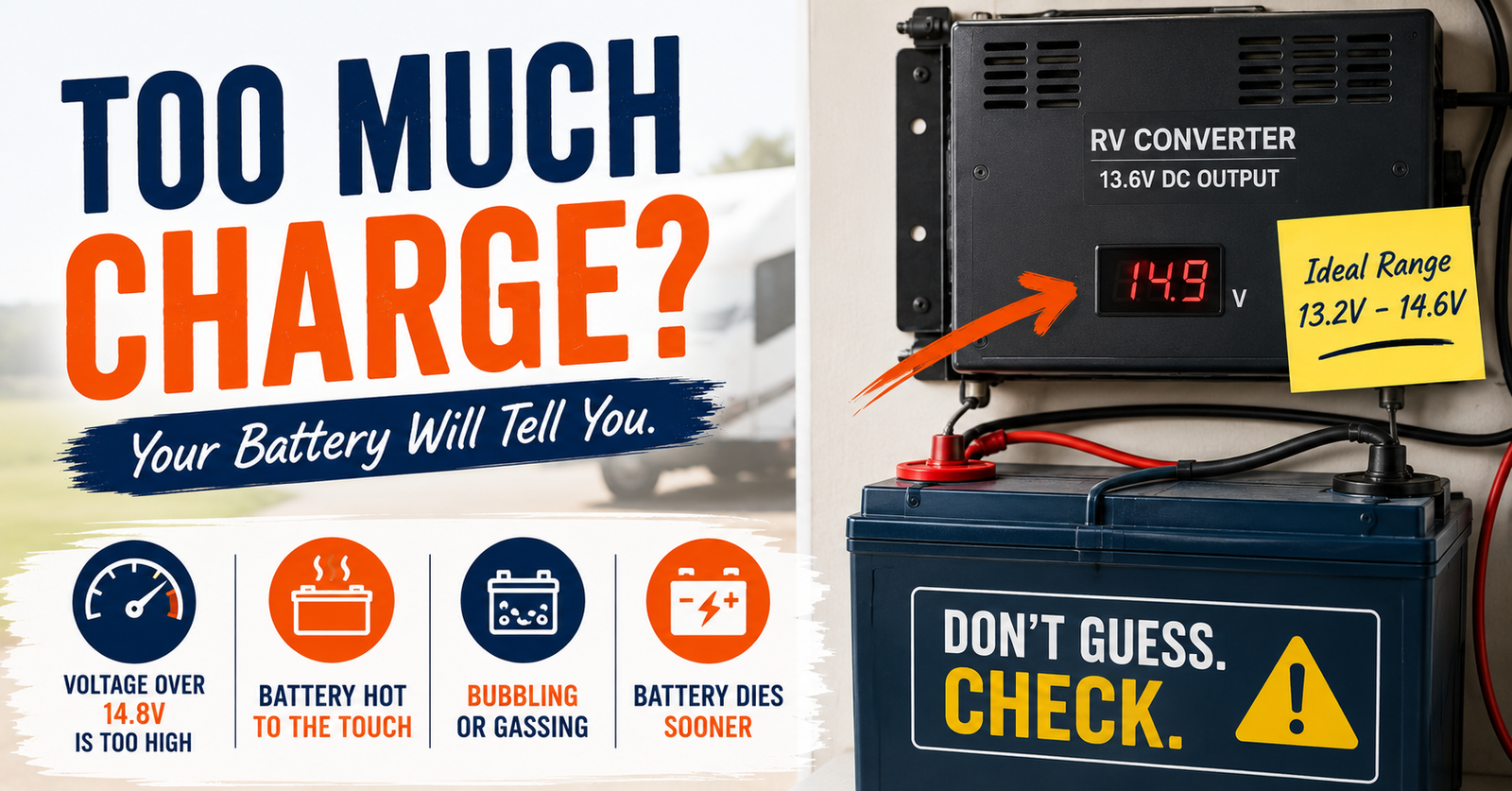
Check Your Charging Voltage
This is where I want a multimeter involved.
Don’t diagnose an electrical system entirely by temperature.
Measure the voltage.
What is the converter producing?
What voltage is reaching the battery?
Does it make sense for your converter, battery chemistry, and current charging stage?
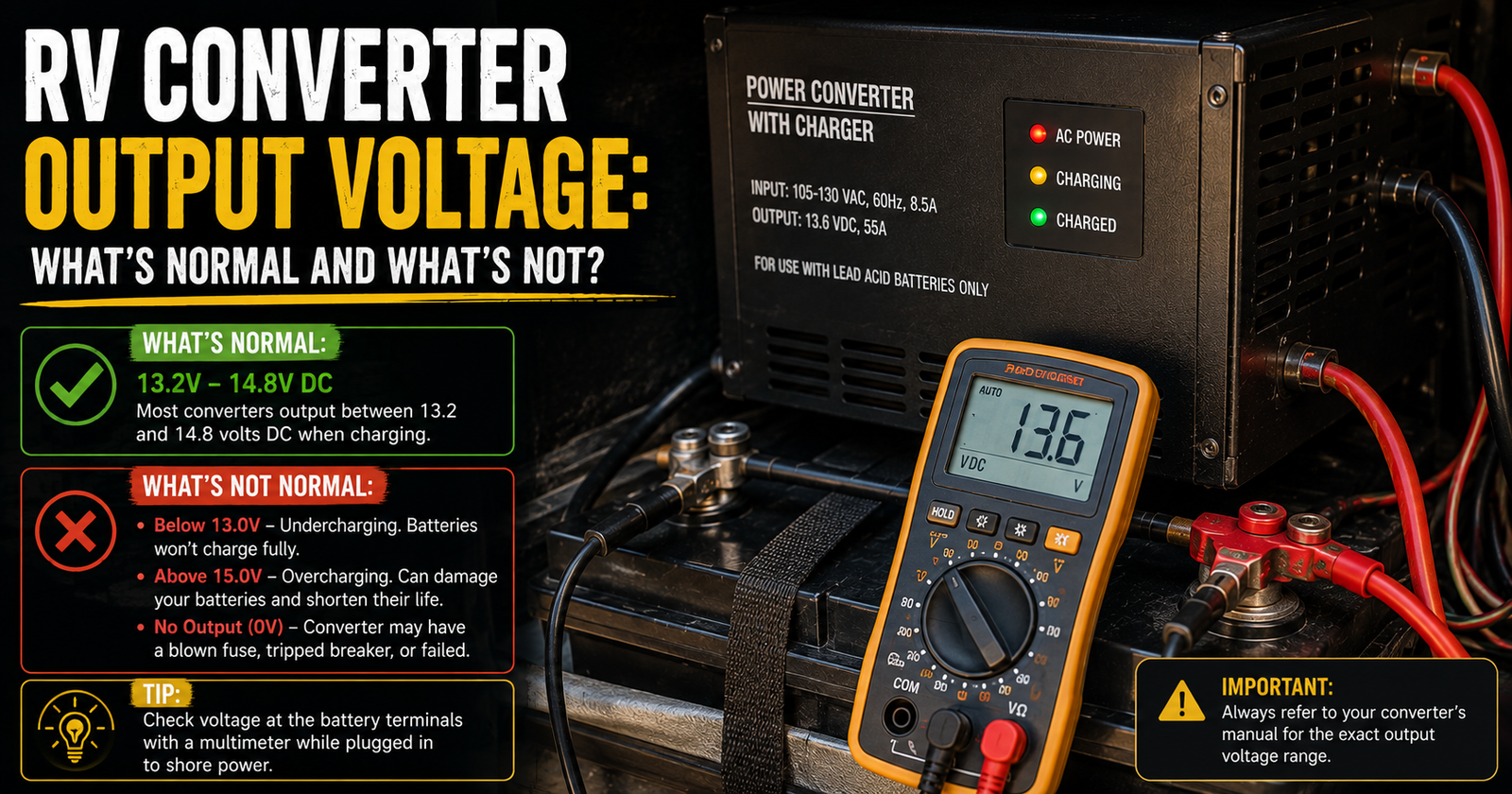
We’ve already gone through the numbers in our RV converter output voltage guide.
A hot converter producing completely normal output gives us one picture.
A hot converter producing wildly abnormal voltage gives us another.

Heavy 12-Volt Loads Can Heat the Converter
Battery charging isn’t the converter’s only job.
While you’re plugged into shore power, the converter can also be supplying the RV’s 12-volt equipment.
Interior lights.
Furnace blower.
Water pump.
Vent fans.
Appliance controls.
12-volt refrigerator loads, depending on the RV.
USB outlets.
Aftermarket equipment.
Turn enough DC equipment on at once and the converter can be asked to supply a substantial amount of current.
That creates heat.
Think About What’s Running
Before taking anything apart, walk through the camper.
What is actually turned on?
This matters especially if the converter gets hot only at certain times.
Maybe it’s cool most of the day but gets hot at night when the furnace cycles repeatedly.
Maybe it happens when you’re using a bunch of 12-volt equipment.
Maybe it happens right after arriving at a campsite with a discharged battery.
Patterns are useful.
A converter that gets hot only under heavy load is telling us something very different from one that gets scorching hot while practically nothing is happening.
The Converter May Be Overloaded
Converters have maximum output ratings.
You can’t ask a 45-amp converter to endlessly behave like an 80-amp converter.
Progressive Dynamics says its PD9100 and PD9200 converters incorporate current limiting and can shut down when demand exceeds their designed output. Once excessive demand is removed, normal operation can resume.
Other converters may handle overload conditions differently.
That’s another reason the model number matters.
Find the Converter’s Amp Rating
Look at the label.
You may see ratings such as:
30 amps.
45 amps.
55 amps.
60 amps.
70 amps.
80 amps.
Those numbers aren’t decoration.
They tell you something about how much DC output that converter was designed to provide.
Progressive Dynamics notes that common RV converter ratings include roughly 30 through 80 amps depending on the unit.
Don’t assume every camper has the same size converter.
Don’t Solve Overheating by Installing a Huge Converter
This deserves special attention.
Suppose you discover your converter frequently works near its limit.
The tempting solution is:
“I’ll just install the biggest converter I can find.”
That’s not how I’d approach it.
The RV wiring must be capable of safely handling the converter’s output.
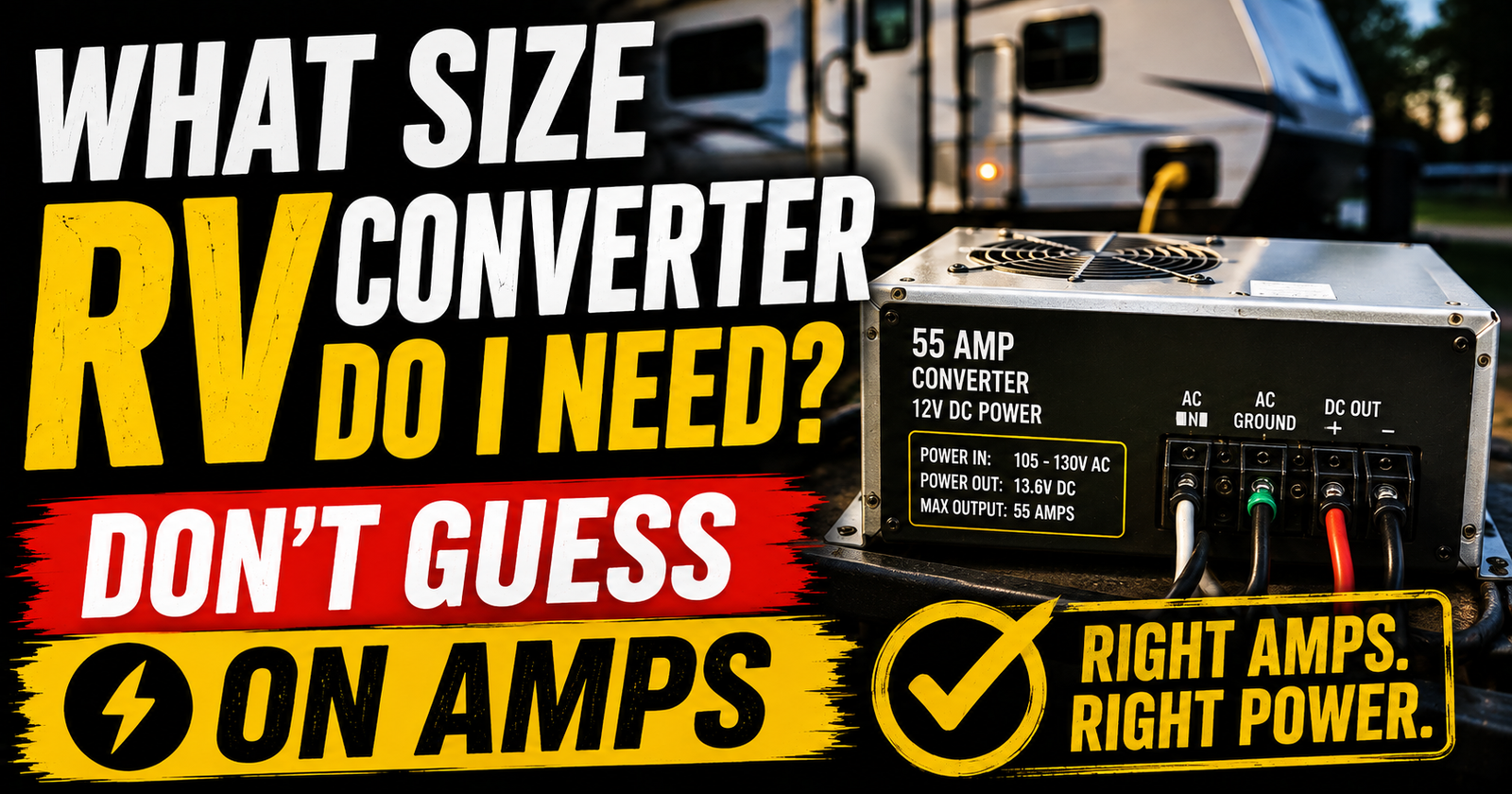
Progressive Dynamics specifically warns against replacing a converter with a higher-output model unless the RV’s wiring is capable of safely carrying the additional current. Its general FAQ goes further and advises against installing a higher-amperage converter than the original application because wiring could overheat. That warning is part of the larger question of matching converter amperage to RV wiring before ordering a replacement.
Bigger isn’t automatically safer or better.
Poor Ventilation Is One of the First Things I’d Check
Now we’re getting to a really common-sense cause.
Converters need to get rid of heat.
If you trap that heat around the converter, temperatures rise.
Progressive Dynamics specifies a minimum of five inches of clearance or otherwise sufficient ventilation for its PD9100 and PD9200 installations to provide adequate airflow through the converter compartment.
Your converter may specify something different.
Check its manual.
But the basic lesson is universal:
Don’t suffocate electrical equipment that was designed to breathe.
Look Around the Converter Compartment
This is one of those checks that costs nothing.
Did someone pack blankets around it?
Camping chairs?
Paper towels?
Extra clothes?
Extension cords?
Dog supplies?
A tool bag?
It’s easy to forget that the little storage compartment you’re stuffing full of gear also contains electrical equipment.
If something is blocking the converter’s cooling openings, move it.
Dust and Pet Hair Don’t Help
Converters move air.
Moving air brings dust with it.
Over time, dust and pet hair can collect around cooling openings and fans.
That can restrict airflow and reduce cooling effectiveness.
Inspect the area with power safely disconnected according to the manufacturer’s instructions.
Don’t start spraying cleaners into electronics or jamming tools through ventilation openings.
We’re cleaning the cooling path, not giving the converter a bath.
The Cooling Fan Matters
If the converter is getting hot, I absolutely want to know what the fan is doing.
Is it running?
Does it cycle?
Does it sound normal?
Is it grinding?
Is it completely dead even while the converter gets hotter and hotter?
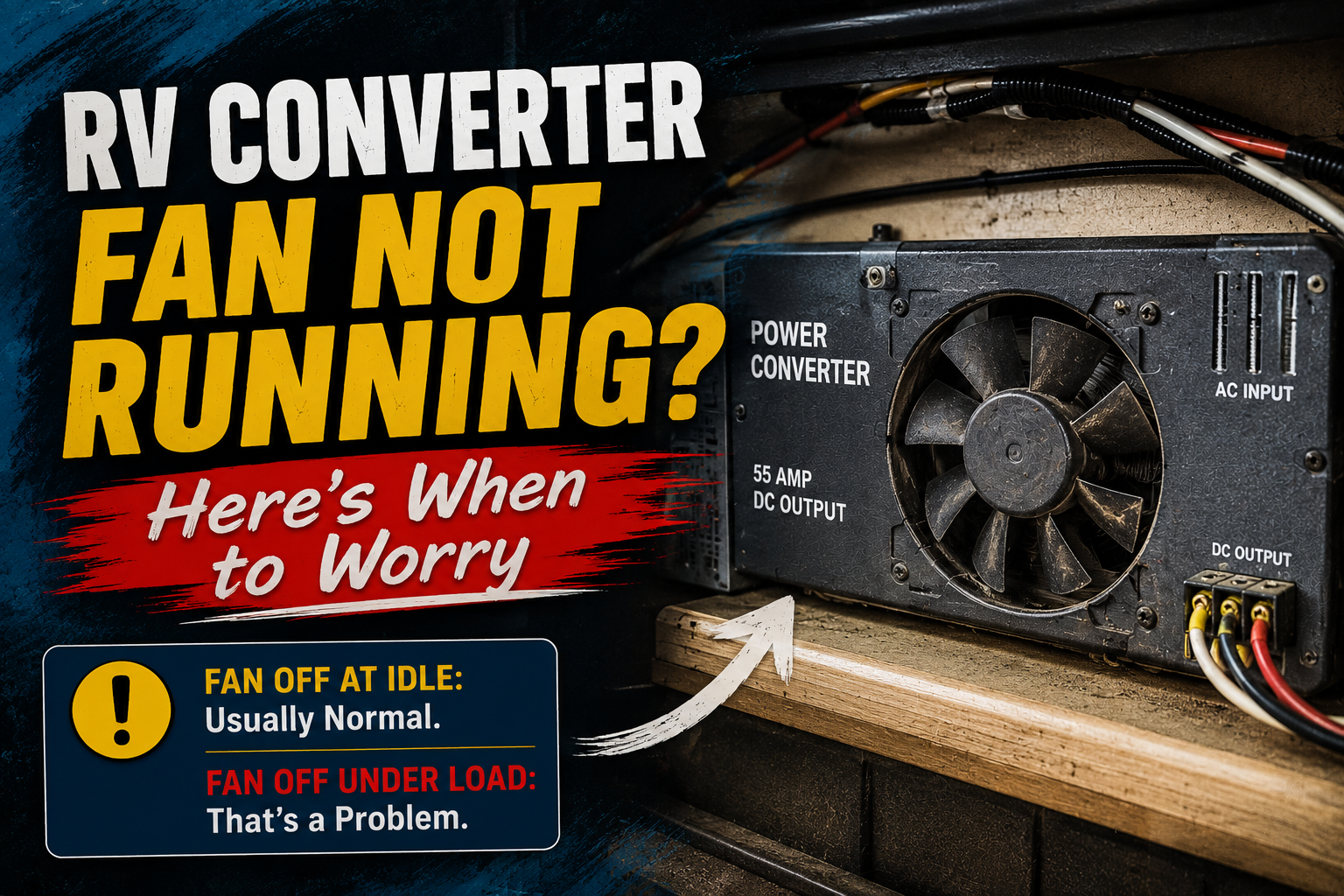
We’ve already covered the last situation in our guide to an RV converter fan that isn’t running.
A failed cooling fan can turn what started as a small mechanical problem into an overheating problem.
What If the Fan Runs Constantly?
That gives us information too.
A fan running continuously may simply mean the converter is working hard or dealing with high ambient temperature.
But it can also make me investigate heavy DC load, battery condition, and airflow.
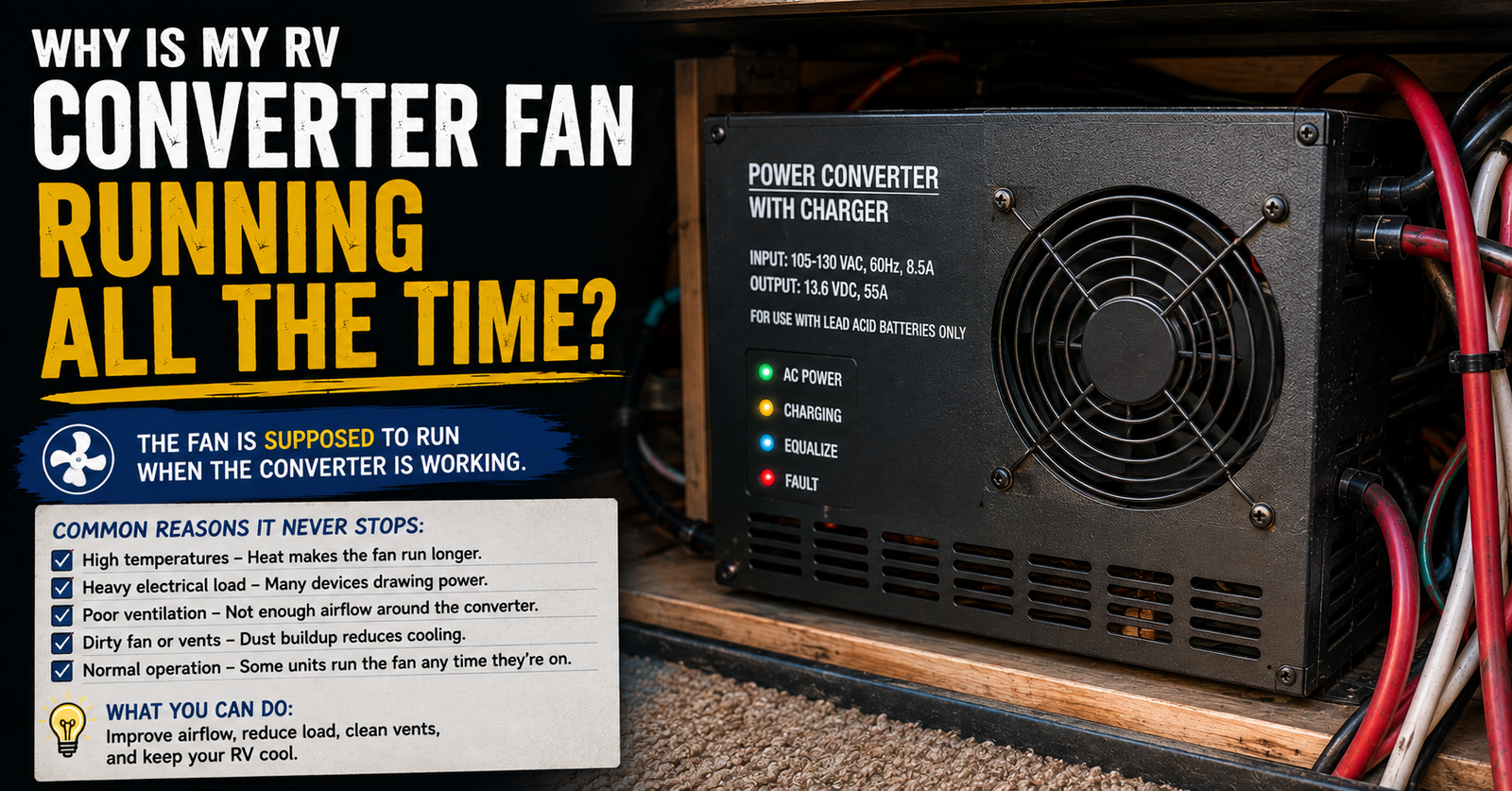
Our companion article explains why an RV converter fan may run all the time and how I’d narrow that down.
The fan is often the messenger.
Find out why it’s working so hard.
Hot Weather Can Push Converter Temperature Higher
Don’t forget about ambient temperature.
A converter operating inside a camper on a cool 55°F morning has a much easier cooling environment than one sitting in a hot compartment during a 100°F afternoon.
Now add a discharged battery.
Then add the furnace, lights, fans, refrigerator controls, or other DC loads.
The converter still has to dump its heat somewhere.
If the surrounding air is already extremely hot, cooling becomes harder.
Does Opening the Compartment Change Anything?
I wouldn’t modify the RV based on this experiment, but observation can be useful.
If the converter operates much cooler when it has better access to airflow, that tells you ventilation deserves closer attention.
Then find the manufacturer’s actual installation requirements.
Don’t cut holes into cabinets based on guesswork.
There may be fire separation, airflow routing, structural components, wiring, plumbing, or other reasons the compartment is designed the way it is.
Follow the installation requirements.
Why Does My Converter Get Hot Only While Charging?
Because charging can be one of its heaviest jobs.
A deeply discharged battery can accept significant current.
The converter has to produce that power.
As the battery reaches a higher state of charge, charging behavior changes.
Modern multi-stage converter/chargers can alter their voltage according to charging mode.
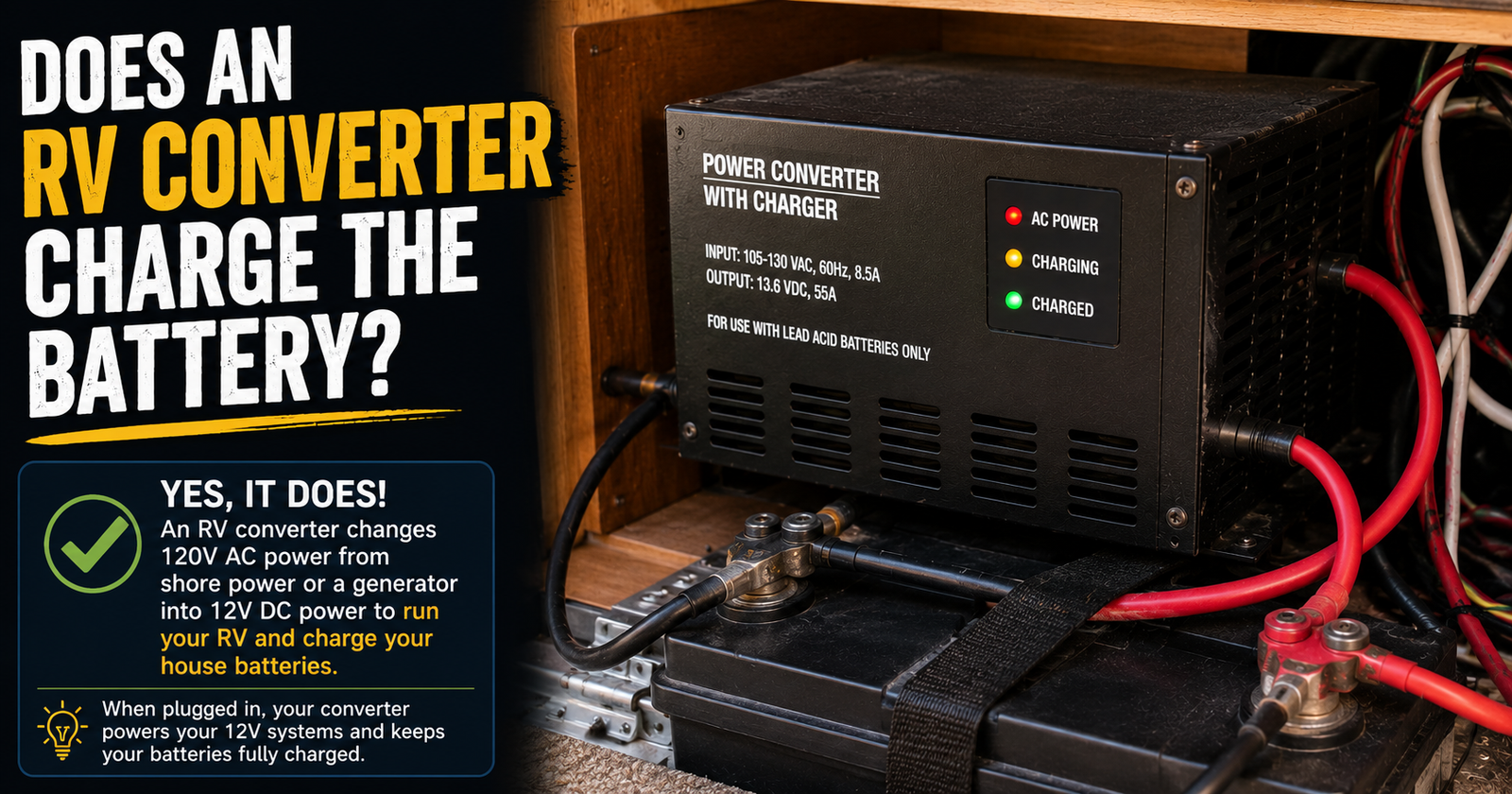
If you’re wondering what the converter is actually doing to the battery during this process, our guide explaining how an RV converter charges the battery walks through it.
What If the Converter Gets Hot With No Battery Connected?
Now battery charging isn’t explaining all of the heat.
The converter may still be supplying DC loads, depending on the system and test conditions.
So determine how much DC demand exists.
If you’re performing diagnostic tests with the battery disconnected, follow the manufacturer’s procedure for your exact converter.
Don’t randomly disconnect battery cables from a live system just to see what happens.
Can a Short Make the Converter Overheat?
Potentially, although modern converters may have protective circuitry designed to limit or shut down output during a short or overload.
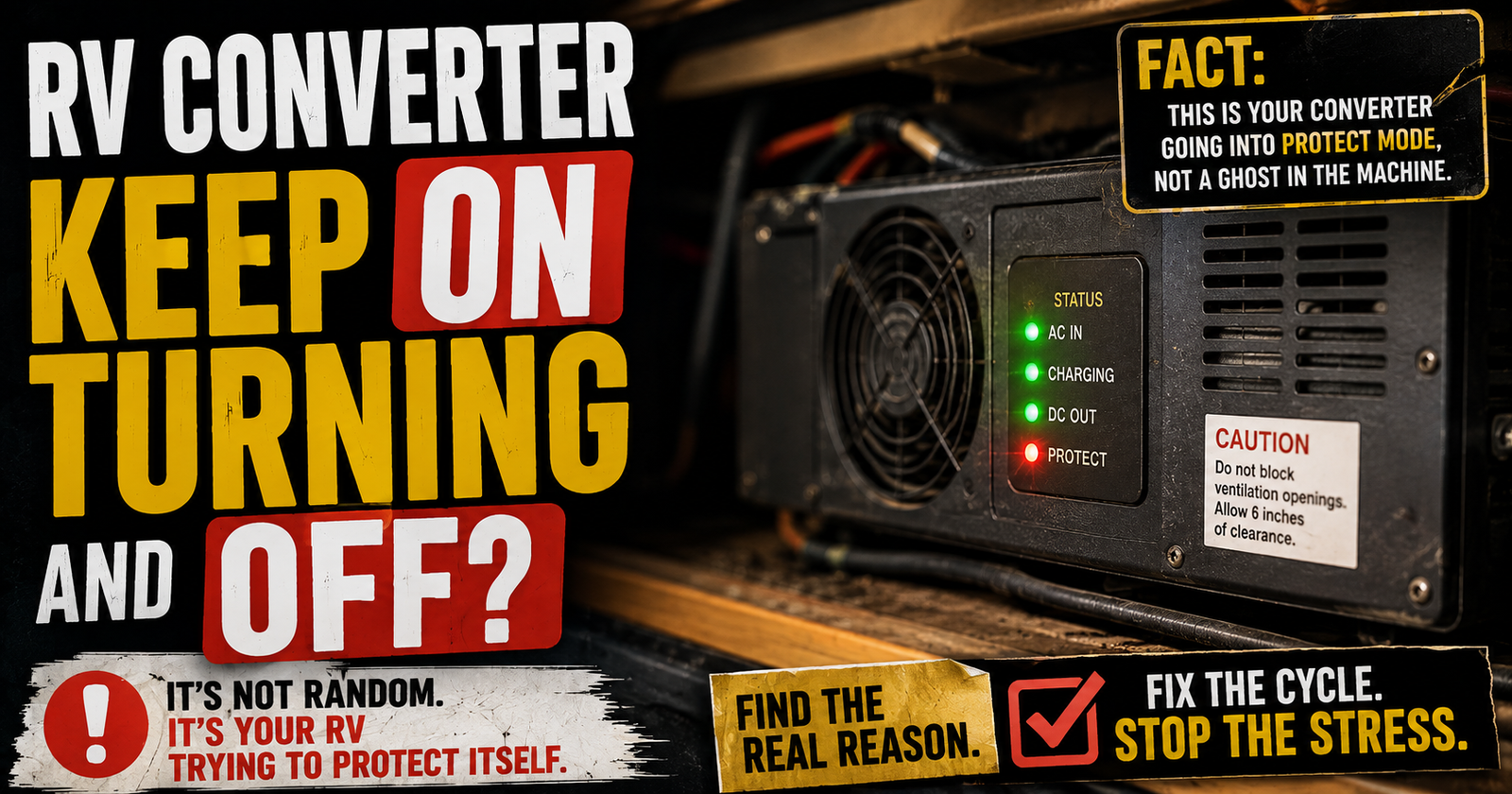
For example, Progressive Dynamics says its PD9100 and PD9200 converters automatically shut down rapidly during a short or current-overload condition and reset after the condition is removed. That shutdown-and-reset pattern is also central to understanding converter shutdown and reset behavior.
The PD9300 troubleshooting documentation also tells owners to look for damaged or loose wiring that could cause a short and converter shutdown.
So abnormal heat plus repeated shutdown deserves more investigation.
Inspect for Damaged Wiring
With the system properly de-energized, look for anything obviously wrong.
Burned insulation.
Discolored terminals.
Loose connections.
Damaged cables.
Melted plastic.
Wiring pinched against metal.
Previous-owner modifications.
Evidence of arcing.
Anything that looks overheated deserves attention.
And if you’re seeing melted electrical connections, we’re beyond “is my converter supposed to feel warm?”
Loose Connections Can Create Heat
This one matters throughout electrical systems.
A poor electrical connection can create resistance.
Resistance creates heat.
That means a hot spot may not necessarily originate inside the converter electronics.
It could be at a terminal or connection.
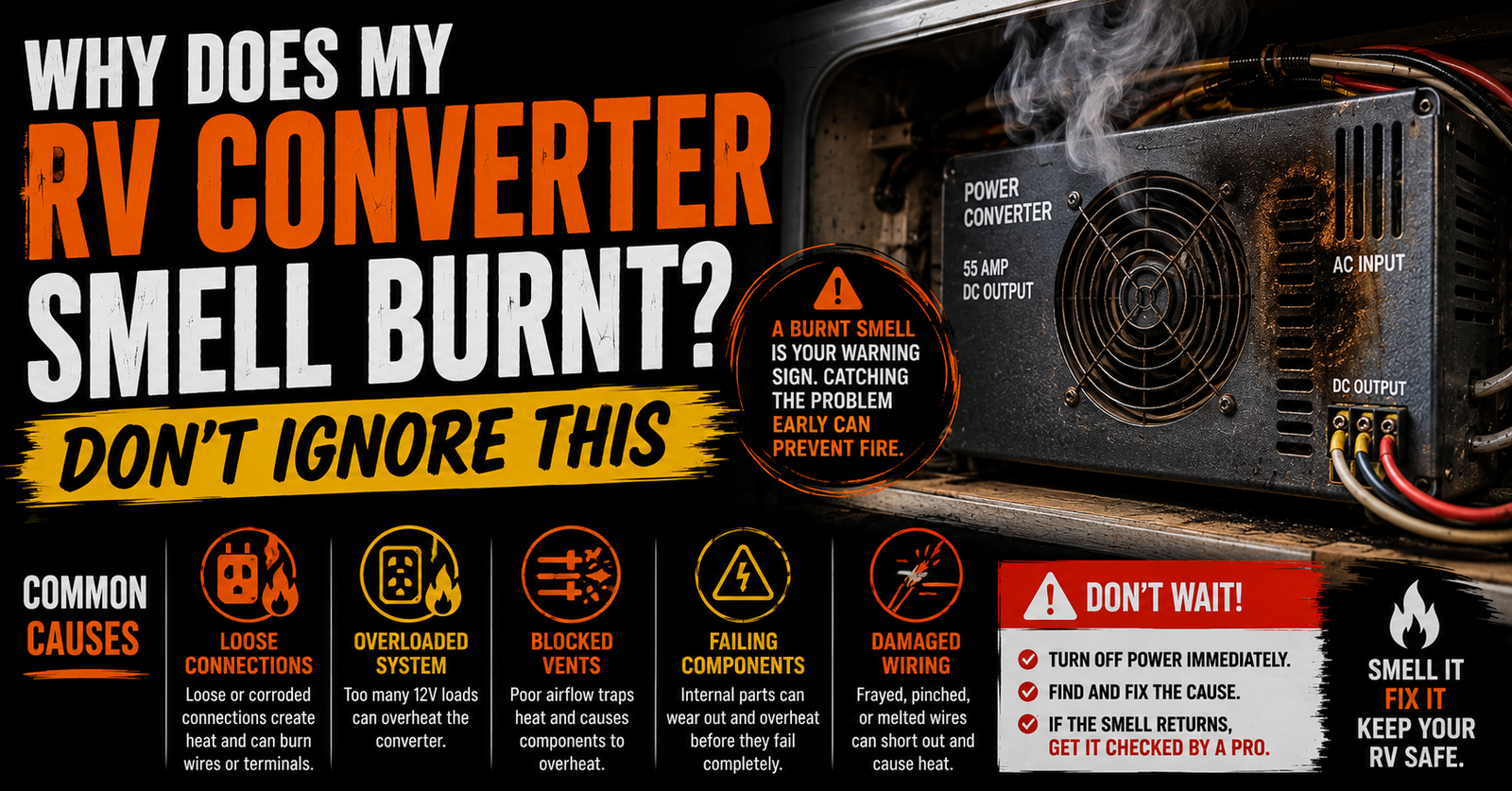
If you see discoloration around a connection or one terminal is dramatically hotter than everything around it, don’t ignore that clue. Those warning signs can accompany the burnt smell discussed in RV converter overheating and burning clues.
Have the connection inspected and repaired correctly.
Don’t Tighten Live Electrical Connections
This shouldn’t need saying, but troubleshooting curiosity gets people into trouble.
Don’t reach into an energized power center with a screwdriver because something looks loose.
RV converters interact with both low-voltage DC systems and 120-volt AC systems.
Progressive Dynamics explicitly warns that troubleshooting procedures involving live 120 VAC should only be performed by qualified people who understand the risks.
If you aren’t comfortable and qualified around energized AC circuits, that’s where DIY troubleshooting stops.
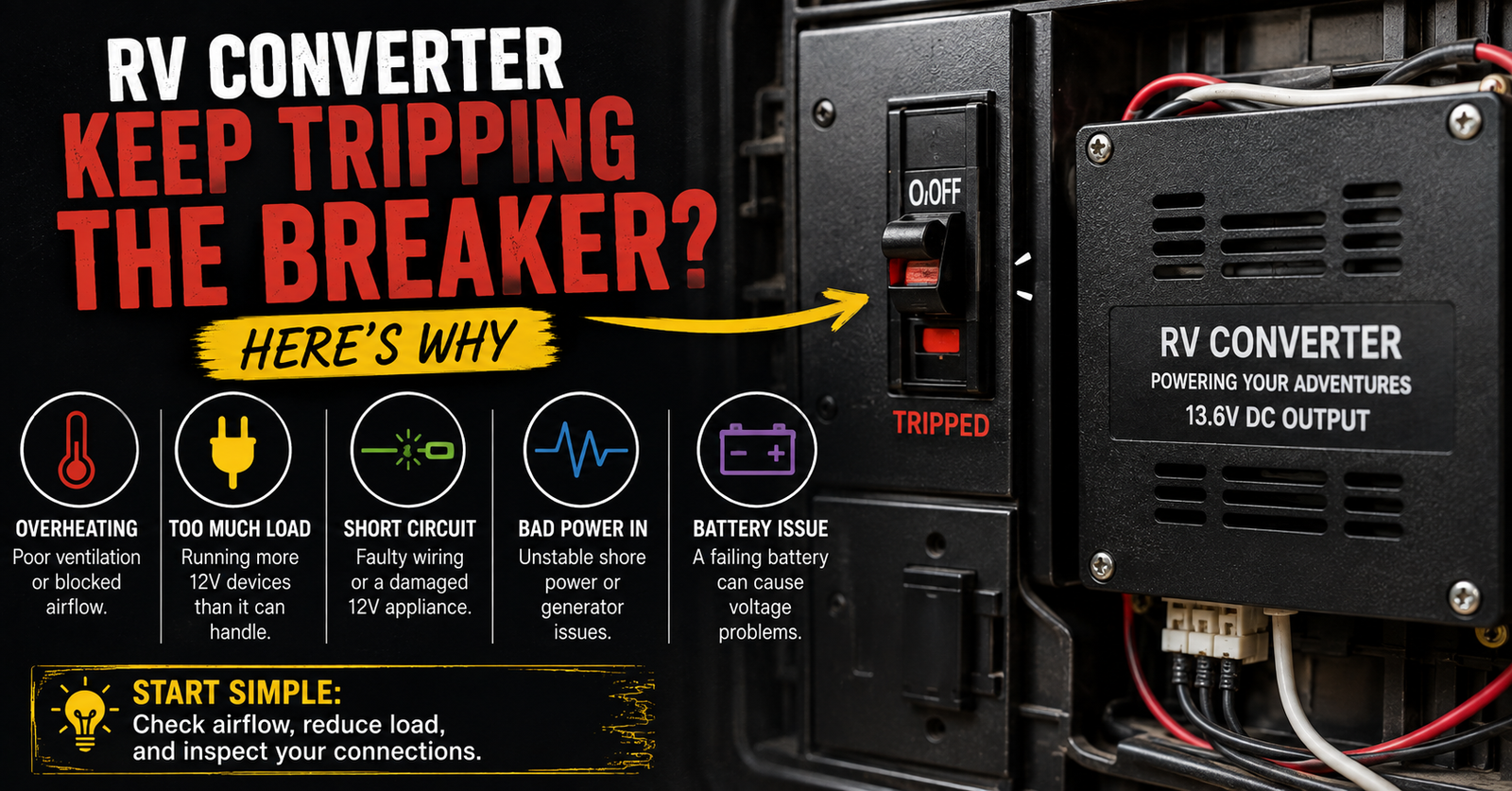
What If the Converter Gets Hot and Shuts Off?
This is one of the strongest signs that overheating may actually be affecting operation.
Some converters have thermal protection.
Progressive Dynamics’ older troubleshooting flow charts specifically describe a converter potentially shutting down due to overheating and tell technicians to allow the unit to cool and increase compartment airflow if it cycles from heat.
Its current PD9300 documentation also lists overheating among the conditions to check when output disappears.
So pay attention to the sequence.
Converter works.
Converter gets hotter.
Output disappears.
Converter cools.
Output comes back.
That repeating pattern is a huge clue.
Don’t Keep Running It Until It Shuts Down
Thermal protection isn’t an operating strategy.
It’s protection.
If the converter repeatedly overheats enough to shut itself down, find out why.
Blocked ventilation?
Dead cooling fan?
Excessive DC demand?
Bad battery?
Internal converter problem?
Extremely high compartment temperature?
Something is causing it.
Fix that rather than relying on the converter to save itself every time.
What If My 12-Volt Lights Go Out When It Gets Hot?
Now measure what’s happening.
If converter output disappears when the unit overheats, your 12-volt system may behave differently depending on whether the battery can carry the load.
A healthy connected battery may temporarily hide a converter shutdown because the battery starts supplying DC power.
A dead or disconnected battery won’t provide that backup.
This is one reason RV electrical problems can seem so inconsistent.
The battery and converter work together in ways that can mask each other’s failures.
What If the Battery Keeps Dying Even Though I’m Plugged In?
That’s another clue that we shouldn’t focus only on temperature.
Maybe the converter is overheating and shutting down.
Maybe it isn’t charging.
Maybe the charging path is open.
Maybe the battery itself is failing.
We’ve already built a troubleshooting guide for an RV battery that dies while the camper is plugged in.
Use the symptoms together.
Hot converter plus dying battery tells us more than either symptom by itself.
Could Low Shore-Power Voltage Cause Problems?
Yes, depending on the converter.
Converters are designed to operate within an acceptable AC input range.
The PD9300 documentation, for example, specifies a 105 to 130 VAC operating range and says the converter shuts down if input voltage falls outside that range.
Other models have their own specifications.
If converter problems happen only at one campground, incoming power deserves attention.
Generator Power Can Be Another Clue
Same idea.
Suppose the converter works normally on campground shore power.
Then you run the generator and it starts behaving strangely.
Getting hot.
Cycling.
Losing output.
Don’t automatically condemn the converter.
Progressive Dynamics specifically tells owners experiencing intermittent or no PD9300 output on generator power to verify AC voltage and make sure the generator is operating smoothly.
Changing the power source and changing the symptom is useful diagnostic information.
Could a Bad Converter Itself Run Too Hot?
Absolutely.
Eventually we have to consider the converter.
Internal electronic failures can cause abnormal operation.
But I don’t want to jump there before checking the things around it.
Battery condition.
DC load.
Ventilation.
Fan operation.
Input power.
Output voltage.
Wiring.
Connections.
If all of those look right and the converter still suddenly runs dramatically hotter than it historically has, then the converter itself becomes much more suspicious.
Strange Noise Plus Excessive Heat Gets My Attention
We’ve now got another symptom to combine with temperature.
A converter that’s slightly warm and humming the same way it has for ten years isn’t particularly interesting.
A converter that’s extremely hot and suddenly buzzing, grinding, clicking repeatedly, or making a new electrical noise?
Different story.
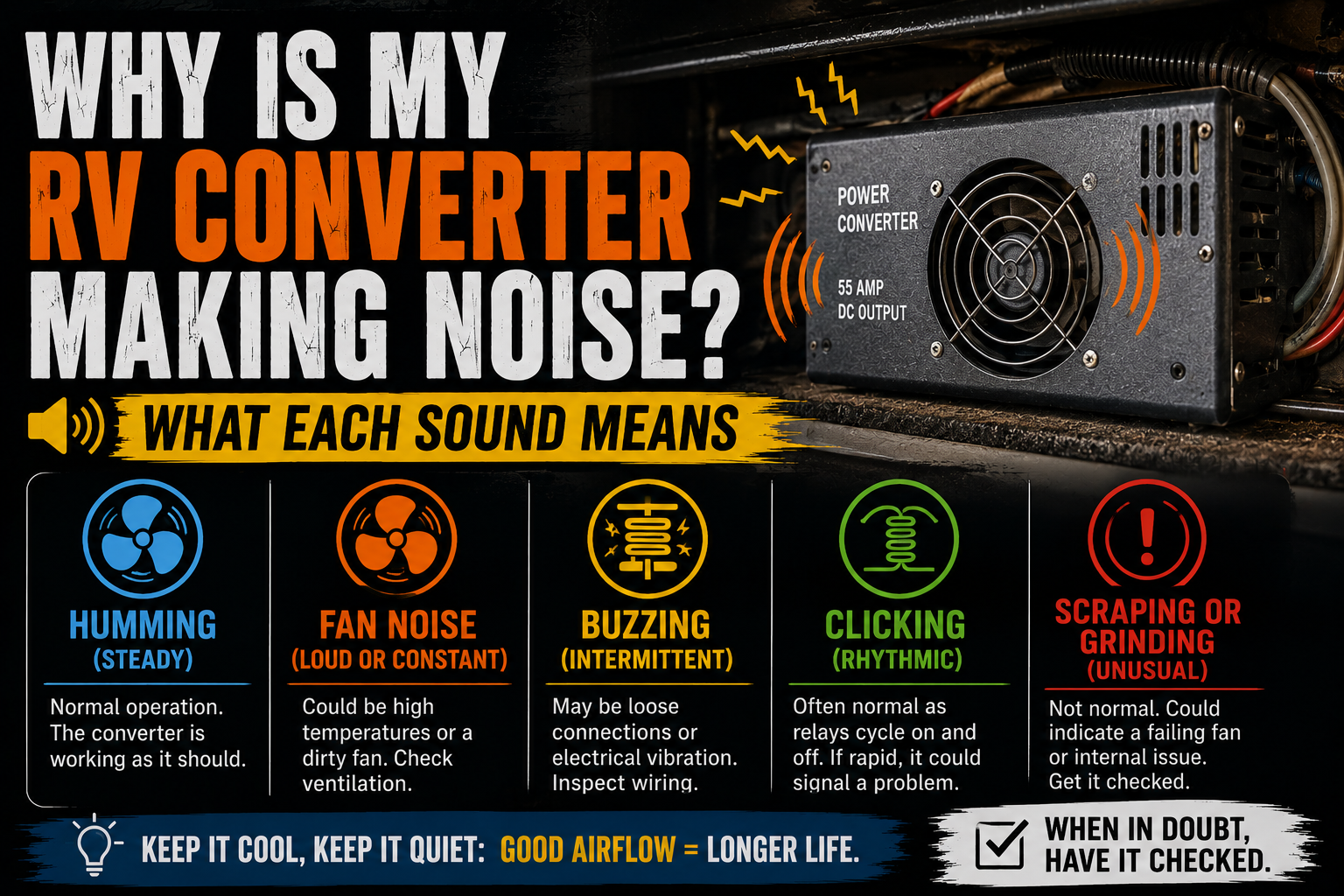
We’ve got a whole guide explaining what different RV converter noises can mean.
When symptoms stack together, take them more seriously.
What About a Burnt Electrical Smell?
This is where I’d stop normal operation until I know what’s happening.
A hot converter is one thing.
A converter accompanied by a burnt-plastic or overheated-electronics smell is another.
Don’t wait until you see smoke.
Safely disconnect the appropriate electrical sources and inspect the system or have a qualified RV technician diagnose it.
Our next article in this cluster is going to tackle this exact symptom because “my RV converter smells burnt” deserves a much more urgent answer than “my converter feels warm.”
Can I Put a Bigger Fan on My RV Converter?
I wouldn’t modify the converter’s cooling system as my first response.
If the converter is overheating, determine why.
A larger fan doesn’t fix a bad battery.
It doesn’t fix an overloaded converter.
It doesn’t fix burned wiring.
It doesn’t fix poor installation.
It doesn’t fix an internal electrical failure.
And modifying equipment can introduce new problems.
Restore the converter to the manufacturer’s intended operating conditions instead of engineering around an unknown fault.
Should I Replace an RV Converter That’s Running Hot?
Not based on heat alone.
I want evidence.
Does it produce the correct output voltage?
Does it charge the battery normally?
Is the battery healthy?
Is ventilation correct?
Does the fan operate?
Are the DC loads within the converter’s capability?
Is incoming AC power within specification?
Does the converter repeatedly enter thermal shutdown?
Are there signs of physical or electrical damage?
If those tests point back toward the converter, then replacement makes sense.
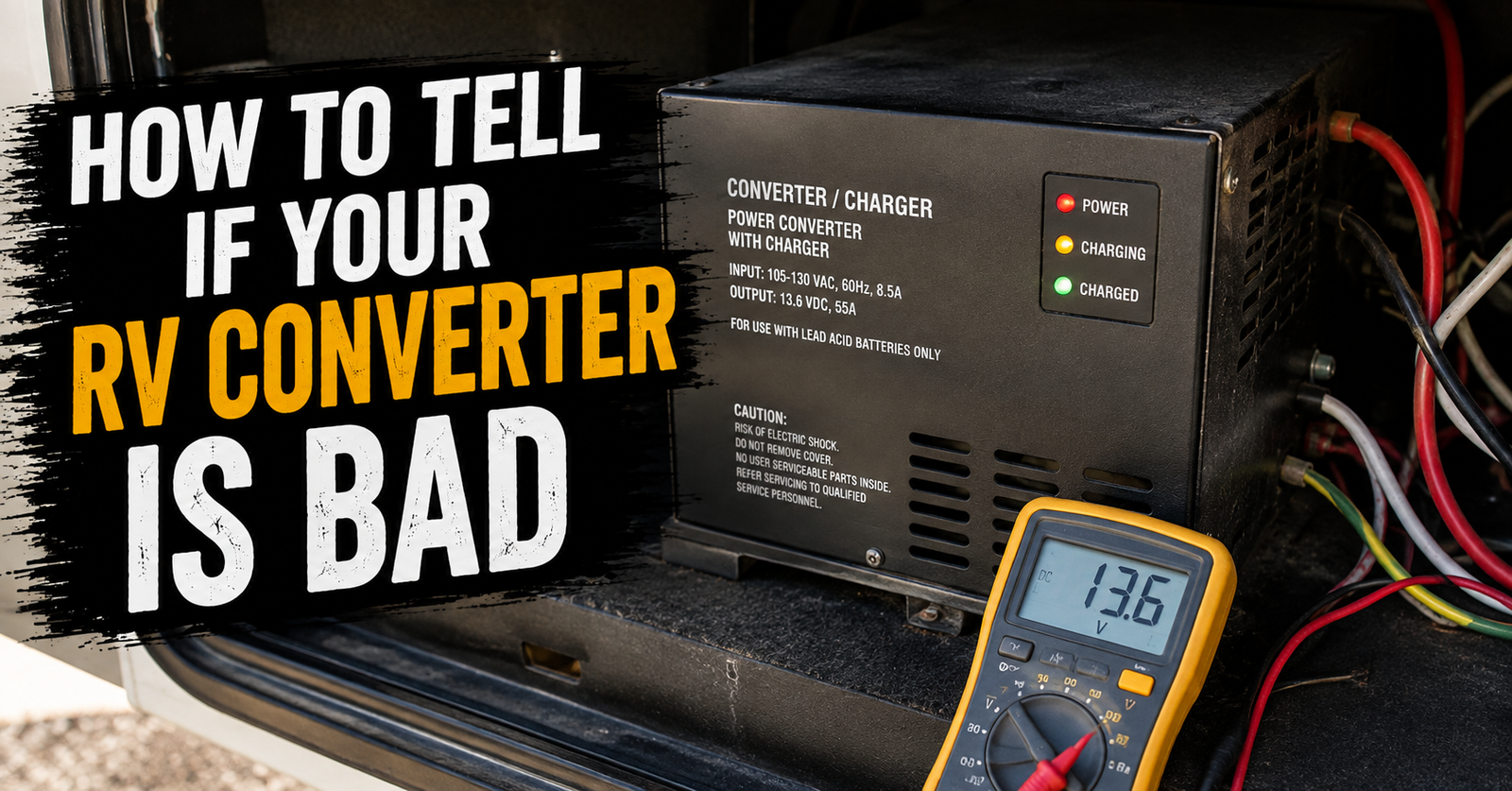
We’ve already built our full RV converter failure checklist specifically to keep you from buying one based on a single symptom.
Pay Attention to What Changed
This is one of my favorite troubleshooting questions because it’s so simple.
When did it start getting hot?
After installing a new battery?
After switching to lithium?
After adding another 12-volt appliance?
After packing the storage compartment?
After the fan started making noise?
Only during hot weather?
Only at one campground?
Only while using the generator?
Only when the battery is nearly dead?
Every one of those answers points us in a slightly different direction.
Warm Doesn’t Automatically Mean Bad
That’s really where I’d leave this.
Your converter does real electrical work.
It’s allowed to get warm.
It’s allowed to run its fan.
And it may become noticeably warmer when it’s supplying substantial DC power or charging a depleted battery.
What I don’t want you ignoring is a change.
Suddenly much hotter than normal.
Fan not working.
Repeated thermal shutdown.
Abnormal output.
Battery problems.
Melted wiring.
New electrical noises.
Burning smell.
Those are the clues that turn ordinary converter heat into something worth troubleshooting.
Start with airflow and ventilation because they’re easy to check. Look at battery condition and 12-volt demand. Measure converter output rather than guessing. Pay attention to the fan. Then compare what you’re seeing with the specifications for your exact converter.
Because there’s a big difference between a converter that’s warm because it’s working and one that’s hot because something is wrong.
Written by Evan Mercer
Evan Mercer writes about RV electrical systems, converter troubleshooting, batteries and practical camper ownership for CamperAnswers.com. His work focuses on helping RV owners understand what’s normal, recognize when something has changed, and troubleshoot the actual problem before replacing expensive parts.