
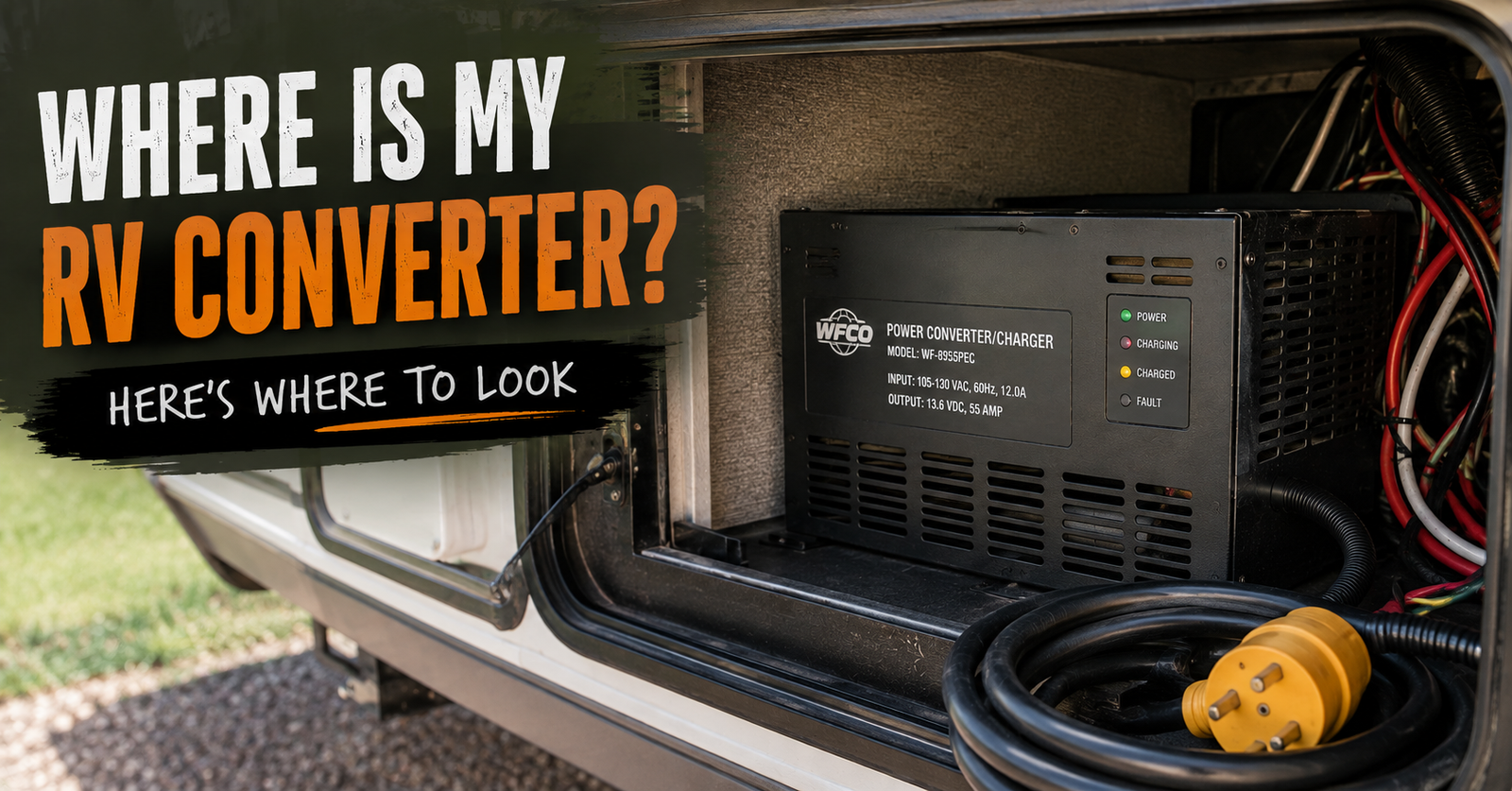
You know what’s surprisingly hard to find in some campers? The electrical box everybody online keeps telling you to check.
You’re troubleshooting a battery that won’t charge, somebody says, “Check your converter,” and suddenly you’re crawling around under the bed with a flashlight wondering what an RV converter even looks like. Before assuming the converter is the only problem, compare the symptoms with why an RV battery can die while plugged in.
I’ve been around enough campers to know there isn’t one universal answer like, “It’s always under the kitchen sink.”
Sometimes the converter is basically right in front of you as part of the RV’s electrical power center. Other times it’s a separate metal box tucked into a cabinet, storage compartment, under furniture, or somewhere near the electrical distribution equipment.
So instead of tearing half the camper apart, here’s where I’d start looking.
Where Is the RV Converter Usually Located?
In many RVs, the converter is located inside or directly behind the main electrical power center.
That’s the panel where you find your 120-volt circuit breakers and 12-volt DC fuses.
If your camper has an all-in-one power center, the converter section may be incorporated into that assembly rather than looking like a completely separate box.
Progressive Dynamics, for example, describes its power centers as all-in-one units containing the converter, DC fuse panel, and space for AC breakers.
So that’s my first stop.
Find the fuse and breaker panel.
Then figure out what kind of power center you actually have.
Start With Your Breaker and Fuse Panel
Look around the camper for a rectangular electrical panel with a removable or opening cover.
Depending on the RV, you might find it:
- Near the floor in a cabinet or wall.
- Under the refrigerator.
- Beneath a dinette or seating area.
- Under a bed.
- Inside a kitchen cabinet.
- In a hallway or bedroom cabinet.
- Near an interior storage compartment.
I’m not saying your converter will definitely be in one of those places.
I’m saying the electrical distribution panel is the first thing I want to locate.
Once you’ve found that, you’re much closer.

Your Converter May Be Built Into the Power Center
This is where a lot of the confusion comes from.
People hear “RV converter” and picture a standalone box somewhere in the camper.
That isn’t always what you’ve got.
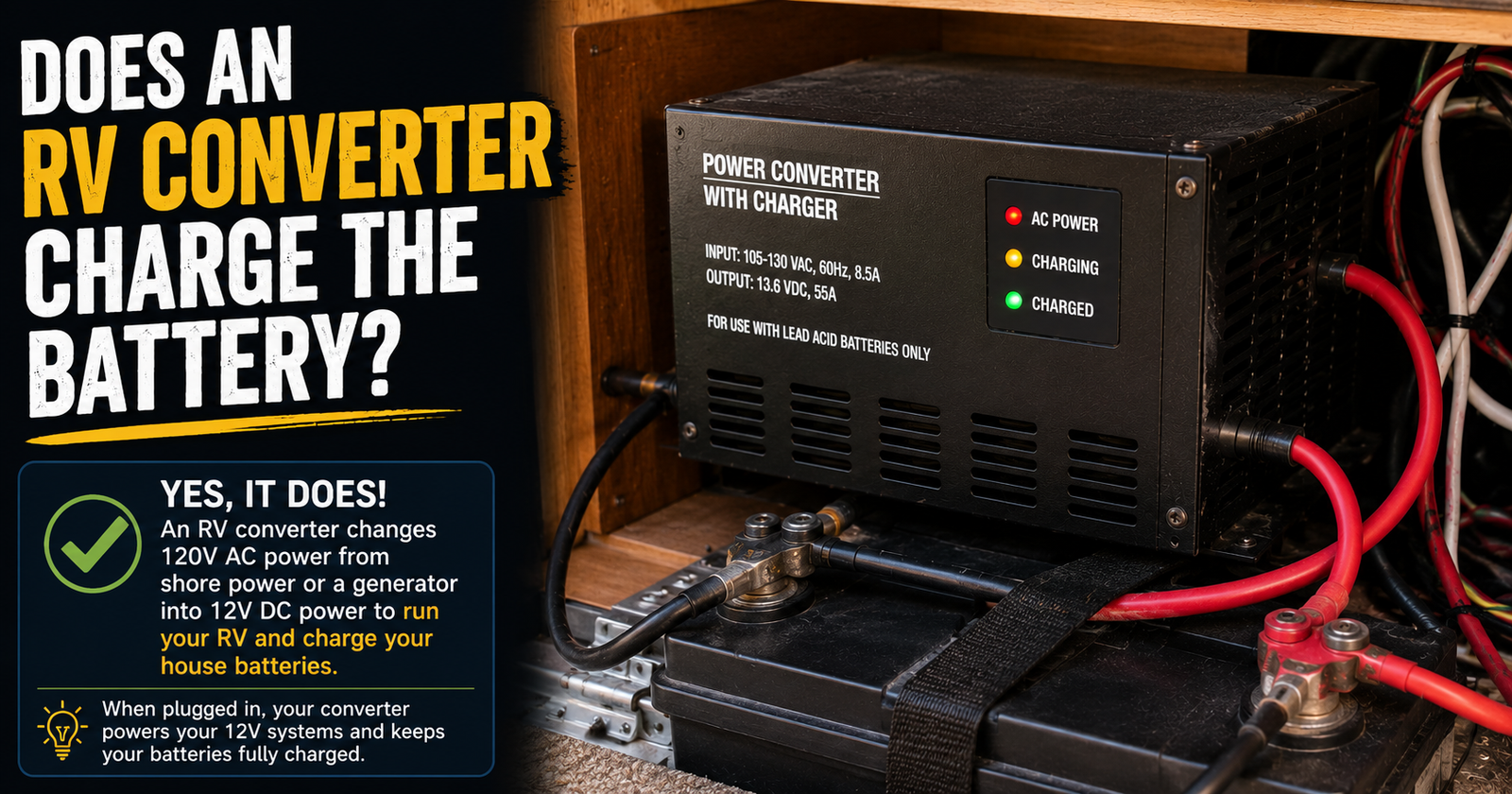
An integrated RV power center can contain your AC breakers, DC fuses, and converter/charger section in one overall assembly.
For example, Progressive Dynamics’ PD4000, PD4100, and PD4500 product families are power-center designs with converter sections incorporated into the unit.
In that situation, you might have already found the converter without realizing it.
Look for the Model Number
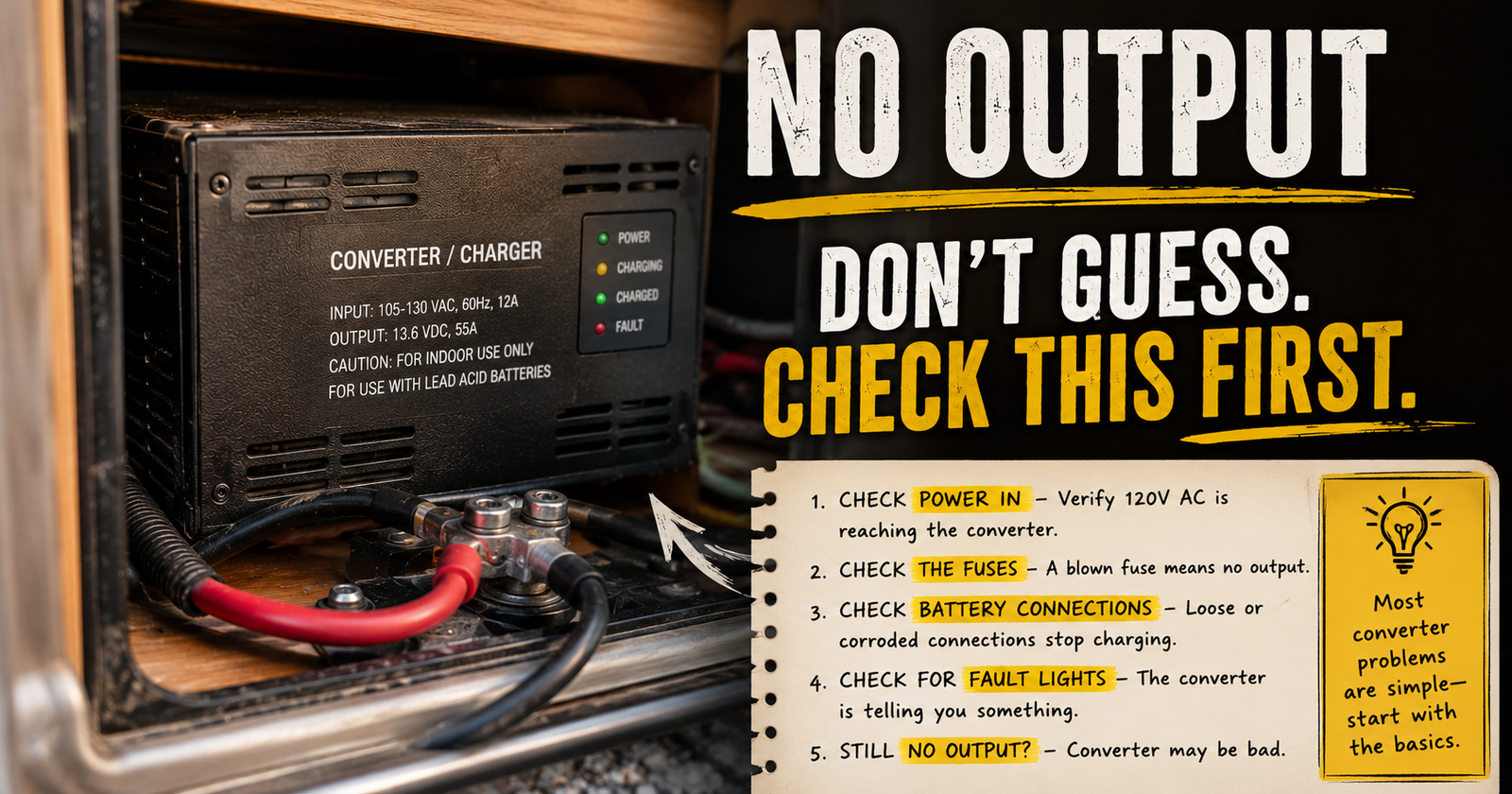
Once you find the power center, look for its manufacturer and model information. With that information in hand, RV converter troubleshooting steps can help you investigate a converter that is not producing DC output.
Don’t start removing covers from energized electrical equipment just because you’re hunting for a label.
Often, the model information is accessible without getting into dangerous areas.
Progressive Dynamics says its power-center model number is located on a label behind the door, while its deck-mount converter model numbers are located on top of the converter case.
Once you have a model number, search the manufacturer’s documentation.
That can tell you exactly what type of equipment you’re looking at.
What Does an RV Converter Look Like?
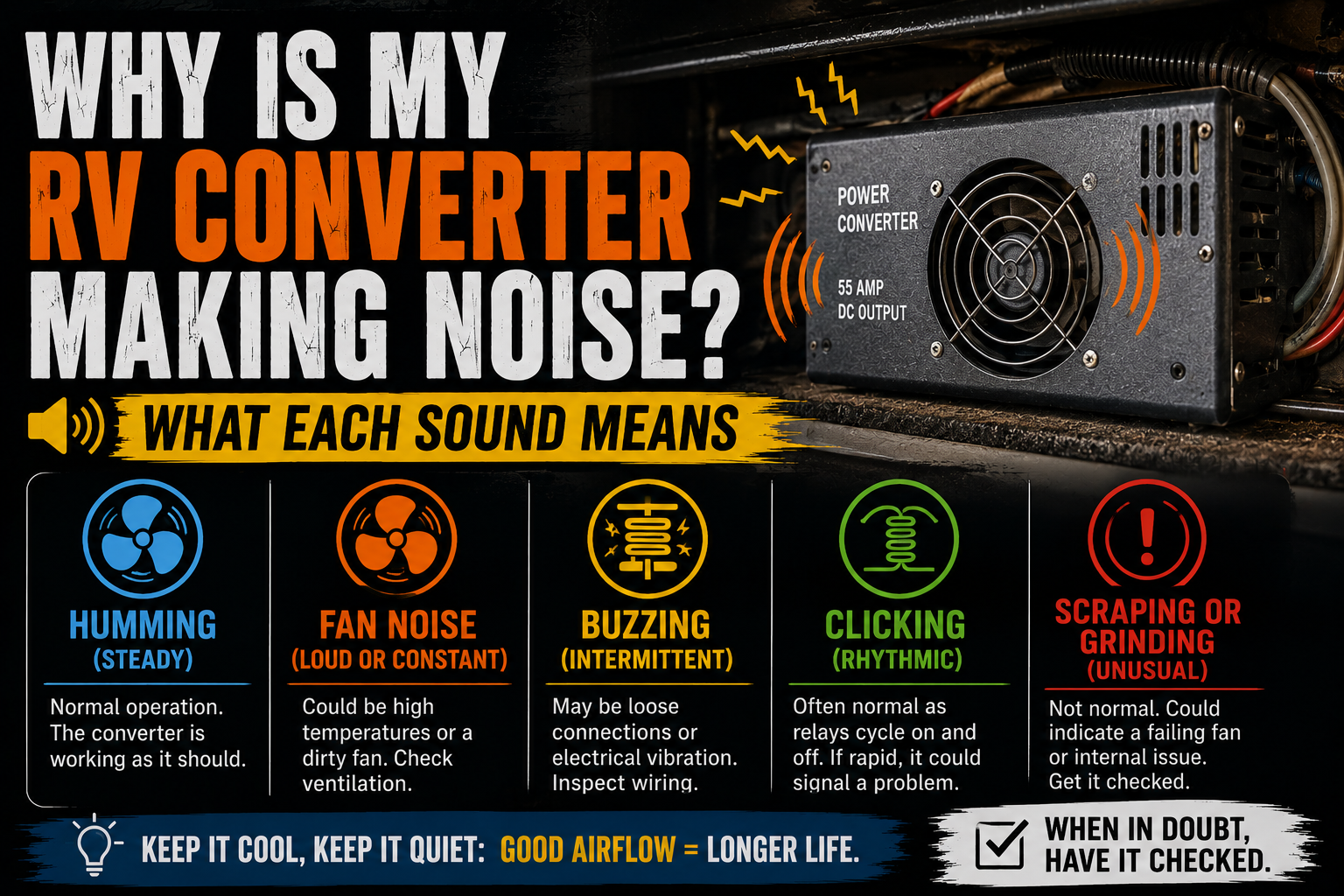
If you have a standalone or deck-mount converter, it often looks like a rectangular metal electrical box with ventilation openings and wiring connections.
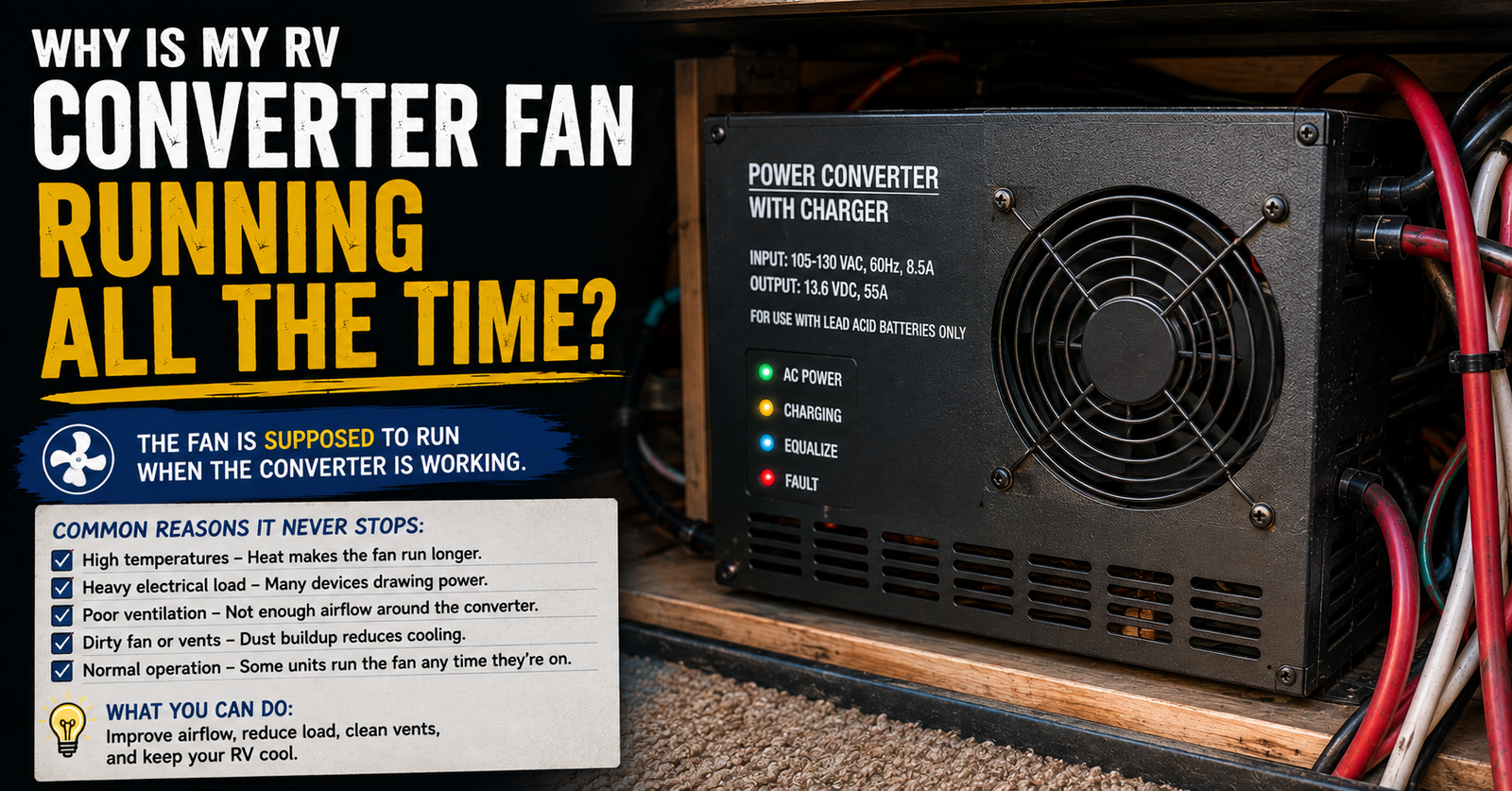
Some have visible cooling fans.
Some plug into a 120-volt receptacle.
Others may be wired differently depending on the installation.
Don’t identify a component based purely on appearance, though.
RV electrical compartments can contain transfer switches, solar equipment, inverter equipment, junction boxes, fuse panels, and other components that all look vaguely “electrical-box-ish” if you don’t know what you’re looking at. Readers who are getting familiar with these systems can also see Camper Answers' broader RV resources.
Read the label.
The model number beats guessing every time.
A Separate Converter May Be Near the Power Center
If the converter isn’t integrated into the electrical panel, I’d start looking nearby.
There is a practical reason for that.
The converter needs AC input and connects into the RV’s DC electrical system. Manufacturers also have ventilation requirements for converter installations.
So although RV manufacturers can get creative with component placement, the converter generally isn’t randomly installed at the opposite end of the camper for no reason.
Start close to the electrical distribution equipment and work outward.
Listen for the Converter Fan
Here’s a trick that sometimes helps.
Some converters use cooling fans that operate depending on temperature or electrical load.
If you’re plugged into shore power and the converter is working hard, you may be able to hear a fan running.
Follow the sound.
This isn’t foolproof because the fan may not be running at that particular moment, and plenty of other things in an RV have fans.
But I’ve used sound plenty of times to narrow down where equipment is hiding.
Sometimes your ears are easier to fit into a cabinet than your head.
Look Behind Removable Panels
RV manufacturers love using otherwise wasted spaces for equipment.
That means the converter may not be sitting somewhere completely exposed.
Look for accessible panels around the electrical center, lower cabinets, beds, dinettes, and storage spaces.
But there’s an important distinction here.
Accessible service panel does not mean start unscrewing everything you can find while the RV is energized.
If you aren’t sure what a panel covers, shut down the appropriate power sources before opening anything.
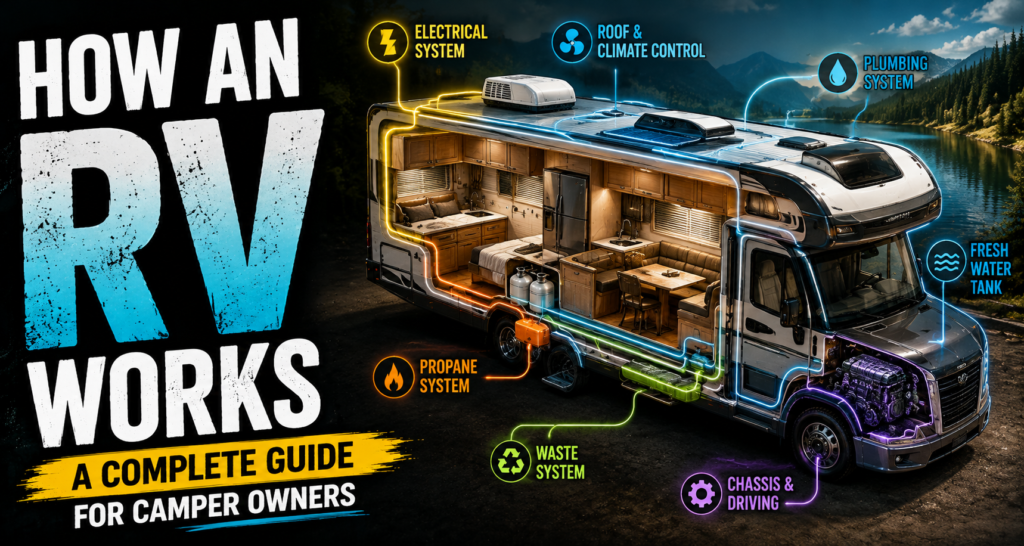
An RV can have shore power, generator power, battery power, and solar power present at the same time. The way these sources interact is explained in how the different systems in an RV actually work.
Check Under the Bed
The space beneath an RV bed often contains mechanical or electrical equipment because it’s a large area manufacturers can use without taking away visible living space.
If your electrical panel is near the bedroom, checking accessible under-bed compartments makes sense.
I’ve also seen water equipment, heating ducts, storage, wiring, and other systems under there, so don’t assume every metal box is your converter.
Again, labels are your friend.
Check Around the Dinette and Seating
Dinette benches and built-in seating create another convenient equipment cavity.
Remove the normal storage access panel or seat cushion and look inside.
You’re looking for electrical equipment, wiring, ventilation openings, or a converter label.
If you find the main electrical panel mounted into the side of the dinette, there’s an especially good reason to investigate that general area.
Look Under or Near the Refrigerator
Another fairly common location for RV electrical distribution equipment is low on a wall or cabinet around the refrigerator area.
If your breaker and fuse panel is there, your converter section may be there too.
Don’t confuse refrigerator access panels with electrical service panels, especially from the exterior.
We’re following the RV’s electrical distribution system, not randomly opening appliance compartments.
Check Interior Storage Compartments
A standalone converter needs somewhere to live.
Interior storage areas can provide that space while keeping the equipment protected.
Progressive Dynamics installation instructions for certain power centers specifically require installation in an interior, dry location and state that the equipment isn’t designed for wet or damp locations.
So if you’re looking for one of these units, think dry electrical equipment area, not “maybe they stuck it outside next to the sewer connection.”
Could My RV Converter Be in an Exterior Compartment?
Depending on the RV design, electrical equipment can certainly be accessible through storage or service compartments.
But don’t assume every converter is suitable for any exterior location.
The installation requirements depend on the actual equipment.
For example, Progressive Dynamics specifies interior, dry locations for several of its power-center products.
That’s another reason identifying the model is so valuable.
Once you know what converter or power center you have, you can look up how it was intended to be installed.
Don’t Look in the Propane Compartment
This is worth mentioning because somebody will eventually wonder about it.
Certain converter/power-center equipment is specifically not ignition protected and must not be installed in an LP gas or battery compartment. Progressive Dynamics states this directly in installation documentation for its PD4100 and PD4500 power centers.
So don’t go digging around the propane compartment expecting to find one of those power centers.
And definitely don’t relocate electrical equipment into a compartment simply because there’s room.
Is the Converter Near the RV Battery?
Sometimes electrical equipment is located reasonably close to the battery system because shorter DC cable runs can be beneficial.
But “follow the battery cable and you’ll definitely find the converter” isn’t a rule I’d rely on.
There can be disconnects, fuse blocks, breakers, distribution panels, inverter equipment, solar equipment, and junction points along the way.
Your converter might be nowhere near the physical battery compartment.
That’s why I usually start with the electrical distribution panel instead.
Don’t Confuse the Converter With the Inverter
This is probably the most common identification mistake.
The names sound similar.
The jobs are almost opposite.
The converter takes AC electricity and provides DC electricity for the RV’s 12-volt system and battery charging.
An inverter takes DC battery power and creates AC electricity.
And then, just to keep RV ownership interesting, some campers use an inverter/charger that combines functions.
So if you find a big electrical box connected to heavy battery cables, don’t immediately declare:
“Found the converter!”
Read the label first.
What If I Have an Inverter/Charger?
Then you may not have the separate converter arrangement you’re expecting.
Larger motorhomes, fifth wheels, and upgraded electrical systems may use an inverter/charger.

That device can handle battery charging when AC power is available while also providing inverter functionality from the battery bank. If the battery still dies despite having an inverter/charger system, battery isn't being properly recharged explains the other charging and power-use patterns worth checking.
This is why I don’t like troubleshooting an RV based solely on generic diagrams.
Find out what your camper actually has.
Your Owner’s Manual Can Save You a Lot of Crawling Around
I know.
Reading the manual isn’t nearly as exciting as taking the camper apart.
But if you’ve got the owner’s documentation, use it.
Look for sections covering:
Electrical system
Converter/charger
Power center
12-volt system
Battery charging
Distribution panel
If your RV manufacturer provides wiring diagrams, those can be even more useful.
Search Using the RV Model and Year
If you don’t have the original documentation, search for it.
Use the manufacturer, exact RV model, model year, and words like:
converter location
or
power center location
Just be careful with forum answers.
The person answering may own something that looks nearly identical to your camper but has a completely different electrical layout.
Factory documentation is much better when you can find it.
Search the Power Center Model Too
Sometimes this is even better than searching the RV.
If you’ve found the fuse panel and can read something like:
WFCO WF-xxxx
or
Progressive Dynamics PDxxxx
you now have something very specific.
Manufacturer manuals can show whether the converter is built into that power center, where its converter section sits, how it’s serviced, and what replacement section it uses.
Progressive Dynamics, for example, publishes replacement converter-section information based directly on the power-center model number.
That’s much more reliable than identifying components from somebody’s blurry forum photo.
Why Is the Converter Usually Ventilated?
Converters create heat.
That’s why airflow matters.
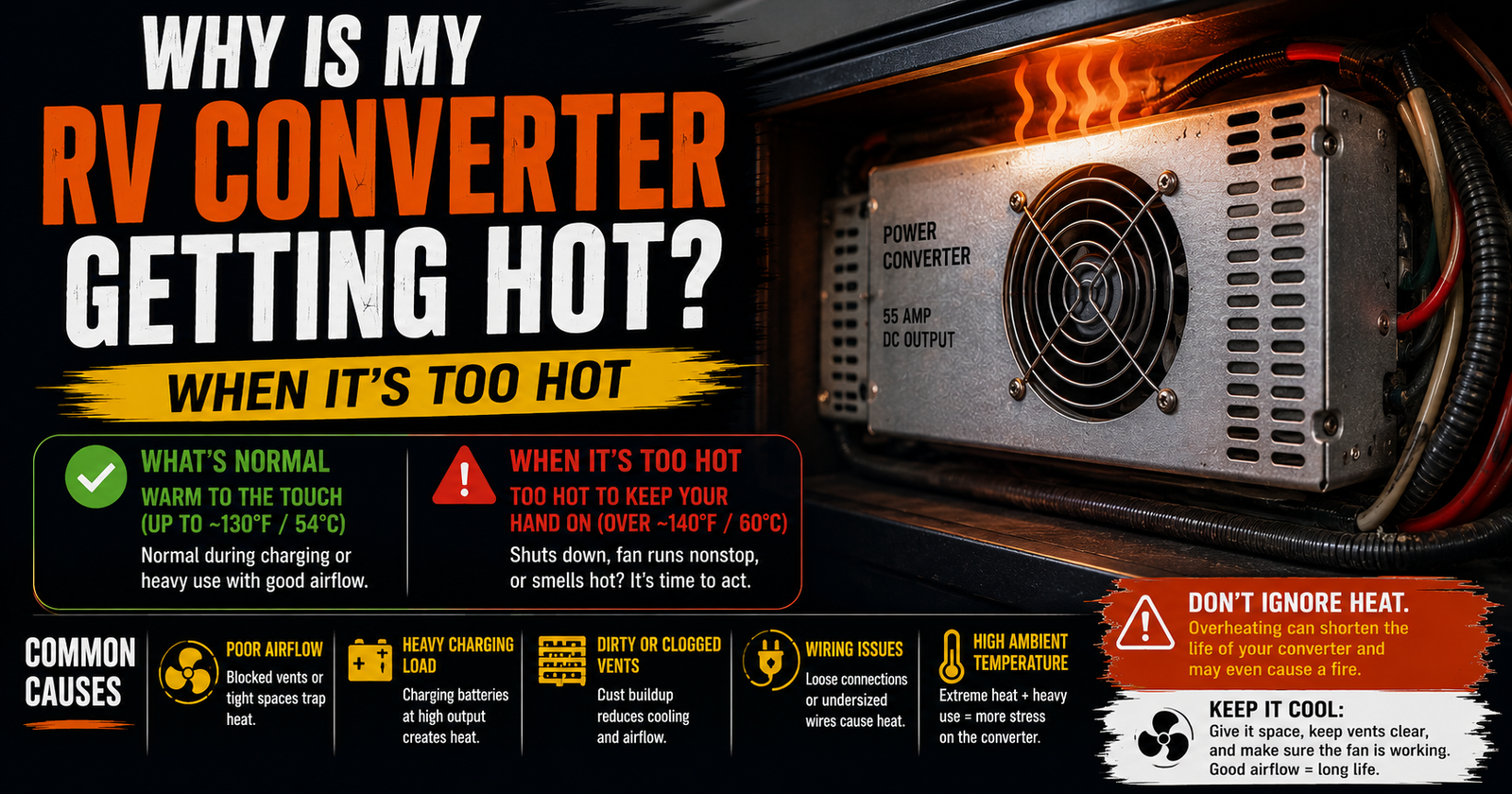
Progressive Dynamics specifies ventilation requirements for its deck-mount PD9100/PD9200 converters and warns that adequate airflow is necessary around the unit. Poor airflow is one of the installation-related causes covered in RV converter ventilation and overheating.
This gives you another visual clue.
If you’re searching inside a compartment, look for ventilation openings, fans, or an equipment space that allows airflow.
And once you find it, don’t bury it under blankets, camping chairs, towels, dog beds, or everything else that somehow migrates into RV storage compartments.
What If I Hear a Fan but Can’t Find It?
Start narrowing the area down.
Listen near the fuse panel.
Then nearby cabinets.
Under the bed.
Inside accessible storage.
Turn unnecessary fans and appliances off so you’re not following the furnace blower for twenty minutes.
You can also have someone else plug the RV in or switch a significant 12-volt load on while you listen, provided you’re doing so safely and not opening energized electrical compartments.
Just remember that converter fan operation varies.
No fan noise does not mean there’s no converter there.
Why Do I Even Need to Find the Converter?
Usually because something has already gone wrong.
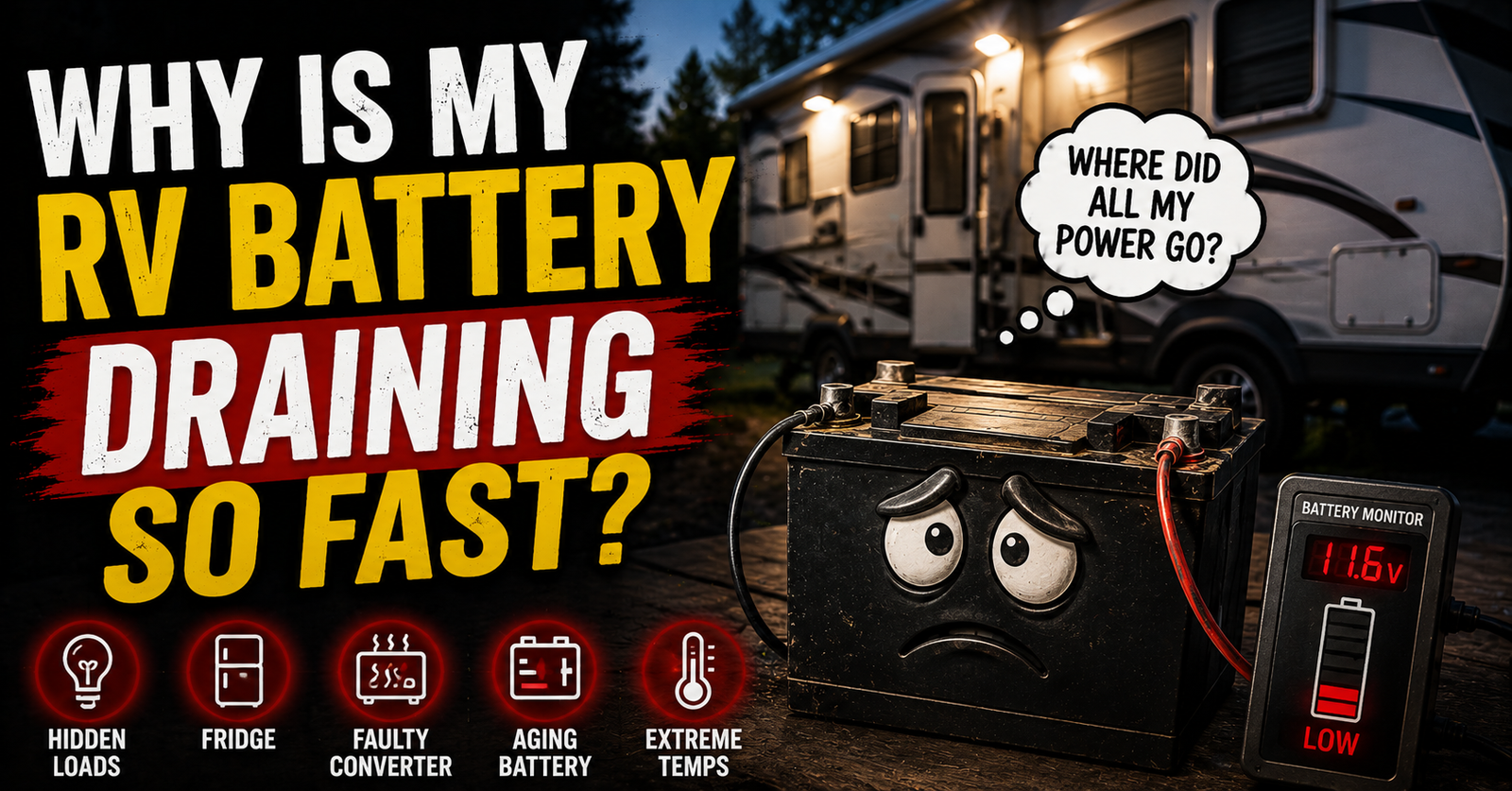
The battery won’t charge.
The 12-volt lights are acting strange.
The battery keeps dying while plugged in.
You’re upgrading to lithium.
You need the converter model number.
Or you’re trying to figure out whether the converter is failing.
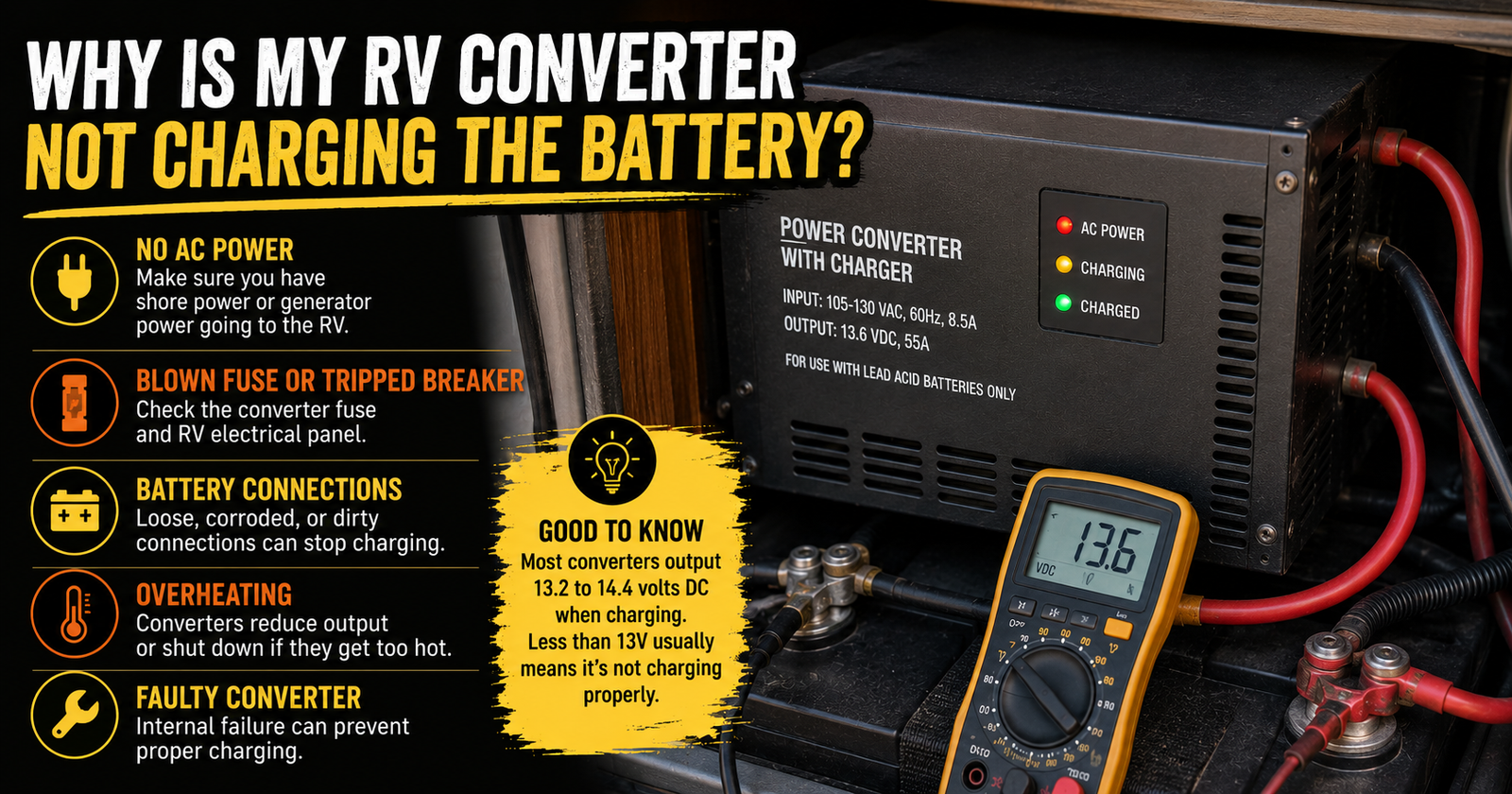
If you’re hunting for yours because of a charging problem, our RV converter not charging the battery guide is where I’d go once you’ve found it.
That article walks through the charging path rather than assuming the converter itself has failed.
Finding It Doesn’t Mean You Should Open It
This distinction matters.
Locating the converter is a homeowner-level task in many campers.
Opening energized electrical equipment and performing live tests is something else entirely.
Progressive Dynamics explicitly warns in its PD4000 troubleshooting documentation that procedures involving live 120-volt AC exposure should only be attempted by a qualified technician.
I’m perfectly comfortable telling someone how to locate a converter.
I’m not going to pretend 120-volt electrical work becomes harmless because it’s inside a camper.
If You Think the Converter Is Bad
Once you’ve found it, write down the manufacturer and exact model number.
Then don’t immediately order a replacement.
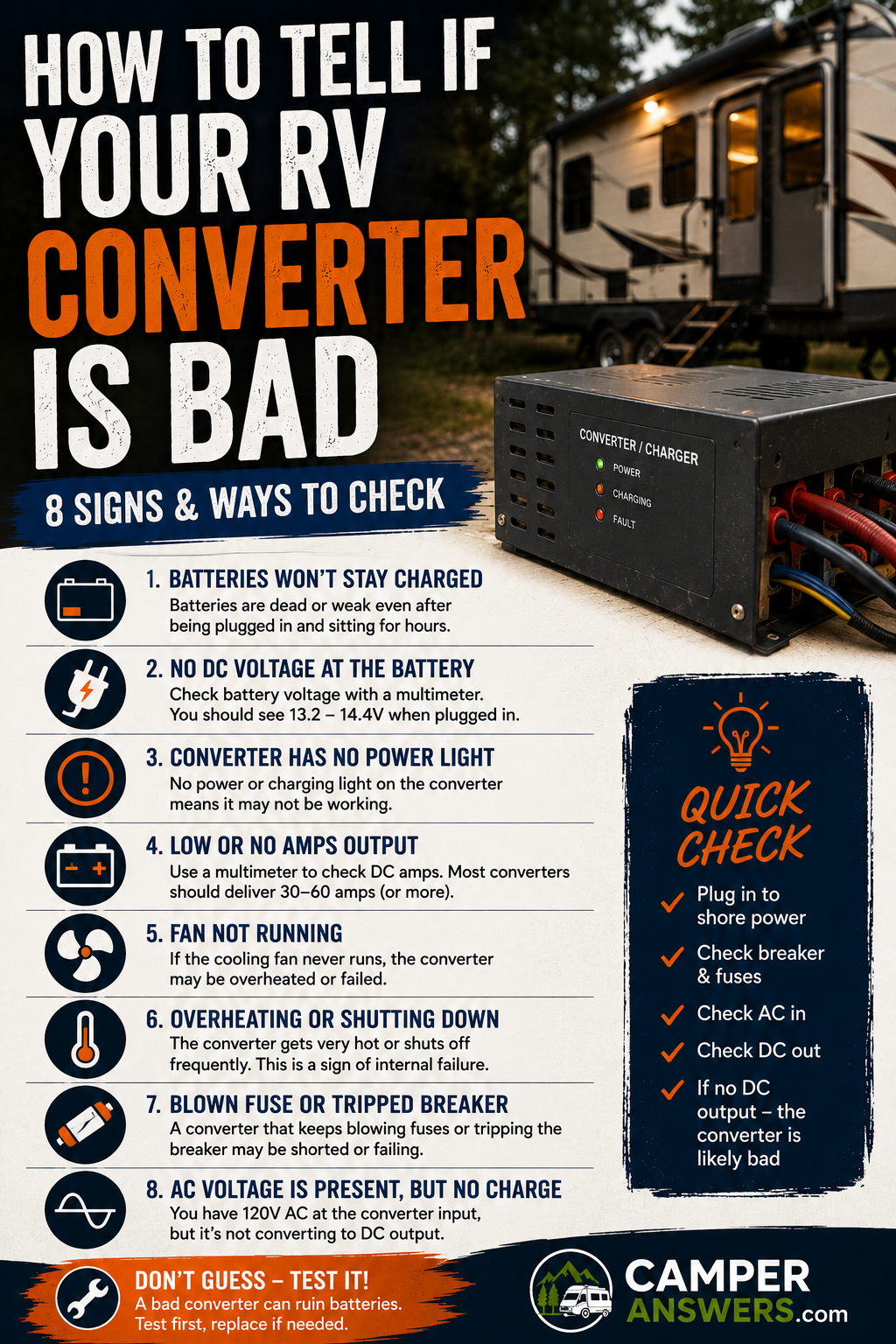
We already have a complete guide showing how to tell if an RV converter is actually bad before spending money on one.
That’s the next step I’d take.
Because finding the converter and proving the converter failed are two completely different jobs.
Take a Picture of the Label
This little trick is worth remembering.
Sometimes the label is facing a cabinet wall or sitting where you can barely get your head.
Progressive Dynamics actually recommends using a cellphone to photograph model information when the converter is mounted where the label is difficult to read.
I’ve done this with all kinds of equipment.
Stick the phone in.
Take several pictures.
Pull it back out.
Zoom in.
Much easier than trying to read upside down with one eye while your shoulder is wedged against a cabinet door.
Once You Find It, Save the Information
Take pictures of:
The converter.
Its label.
Model number.
Amp rating.
The power center.
Any battery-chemistry selector setting if applicable.
I’d keep those photos with the rest of your RV information.
The next time you’re troubleshooting from a campground, you won’t have to rediscover everything.
And once you know whether your camper has an integrated power-center converter, a separate deck-mount converter, or an inverter/charger system, a lot of the electrical system starts making more sense.
Instead of searching the camper for some mysterious box called “the converter,” you’ll know exactly which component is responsible for turning incoming AC power into the DC power your camper and house battery depend on.
Written by Evan Mercer
Evan Mercer writes about RV electrical systems, converter troubleshooting, batteries and everyday camper ownership for CamperAnswers.com. His work focuses on making RV systems easier to understand so owners can find the right component and diagnose the actual problem before replacing parts.