
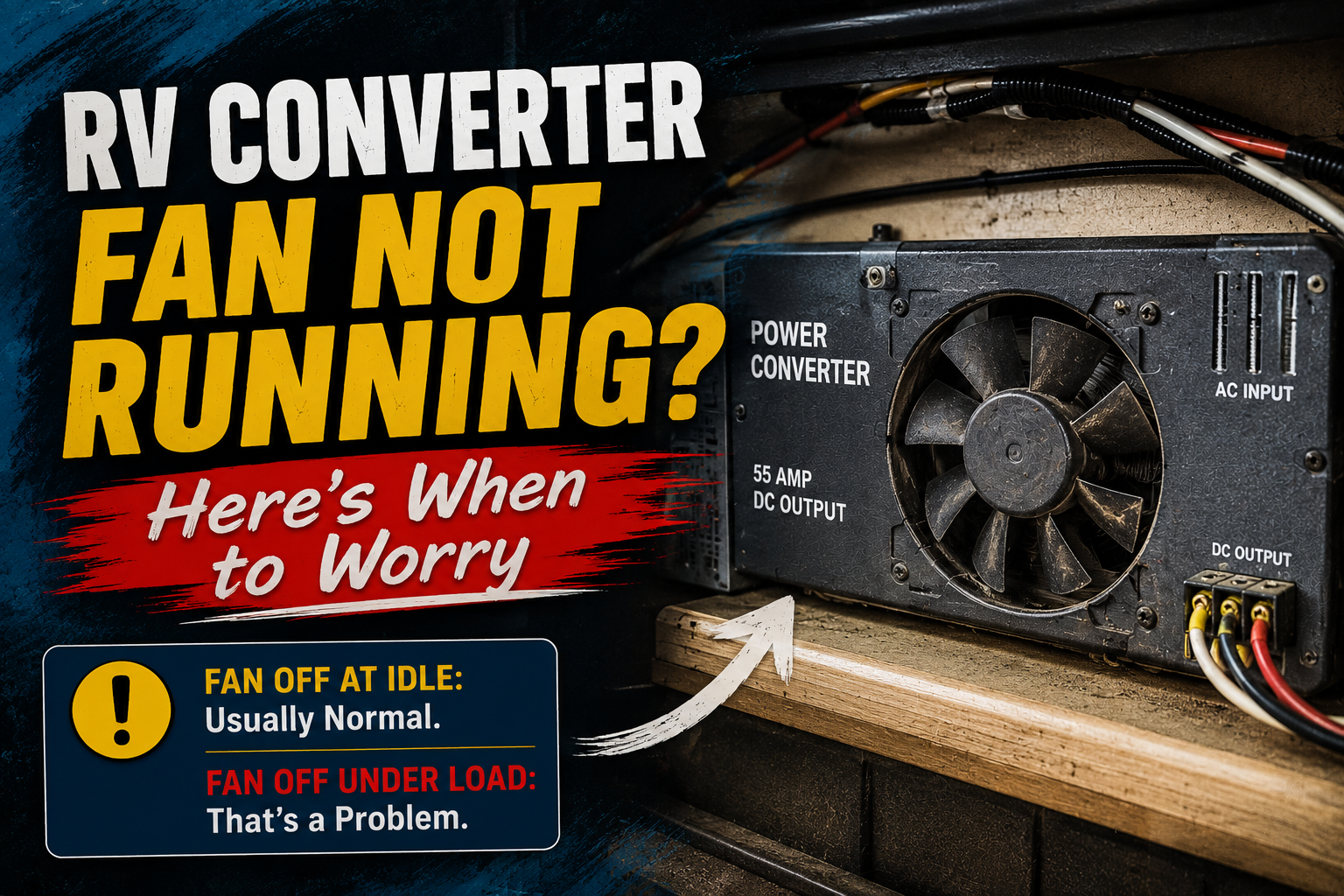
You walk past your RV’s converter and notice something strange. The converter is powered, the camper is plugged into shore power, but the cooling fan isn’t spinning at all.
It’s easy to assume the fan has failed.
But before you start taking anything apart, here’s the first thing I’d want you to know:
An RV converter fan does not necessarily run all the time.
In fact, depending on the converter, a fan sitting completely still can be exactly what it’s supposed to be doing.
The real question isn’t whether the fan is running. It’s whether the converter needs cooling and the fan still refuses to run.
That’s when I start paying attention.
Should an RV Converter Fan Run All the Time?
Usually, no.
Many RV converters use fans that operate according to temperature, electrical load, or a combination of operating conditions.
That means the fan may sit completely still when the converter is cool and isn’t working particularly hard.
Progressive Dynamics converter fans, for example, are designed to operate intermittently as cooling is needed rather than simply running continuously whenever shore power is connected.
So if you just plugged the camper in, the battery is already charged, and very little 12-volt equipment is running, silence from the converter fan doesn’t bother me much.
The Fan Isn’t an “On” Indicator
This is one of the easiest mistakes to make.
You hear no fan.
You assume:
“The converter isn’t running.”
Those aren’t the same thing.
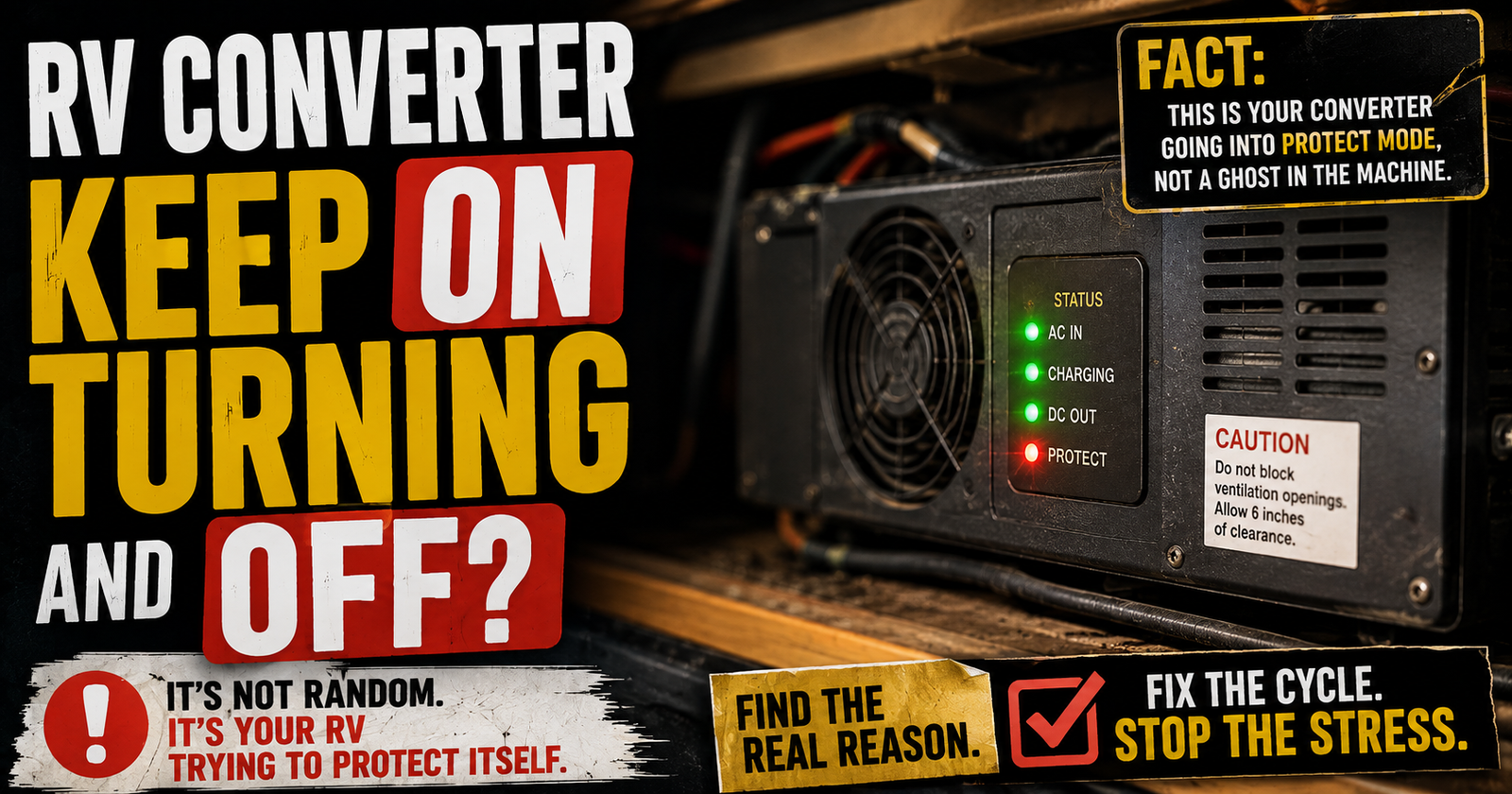
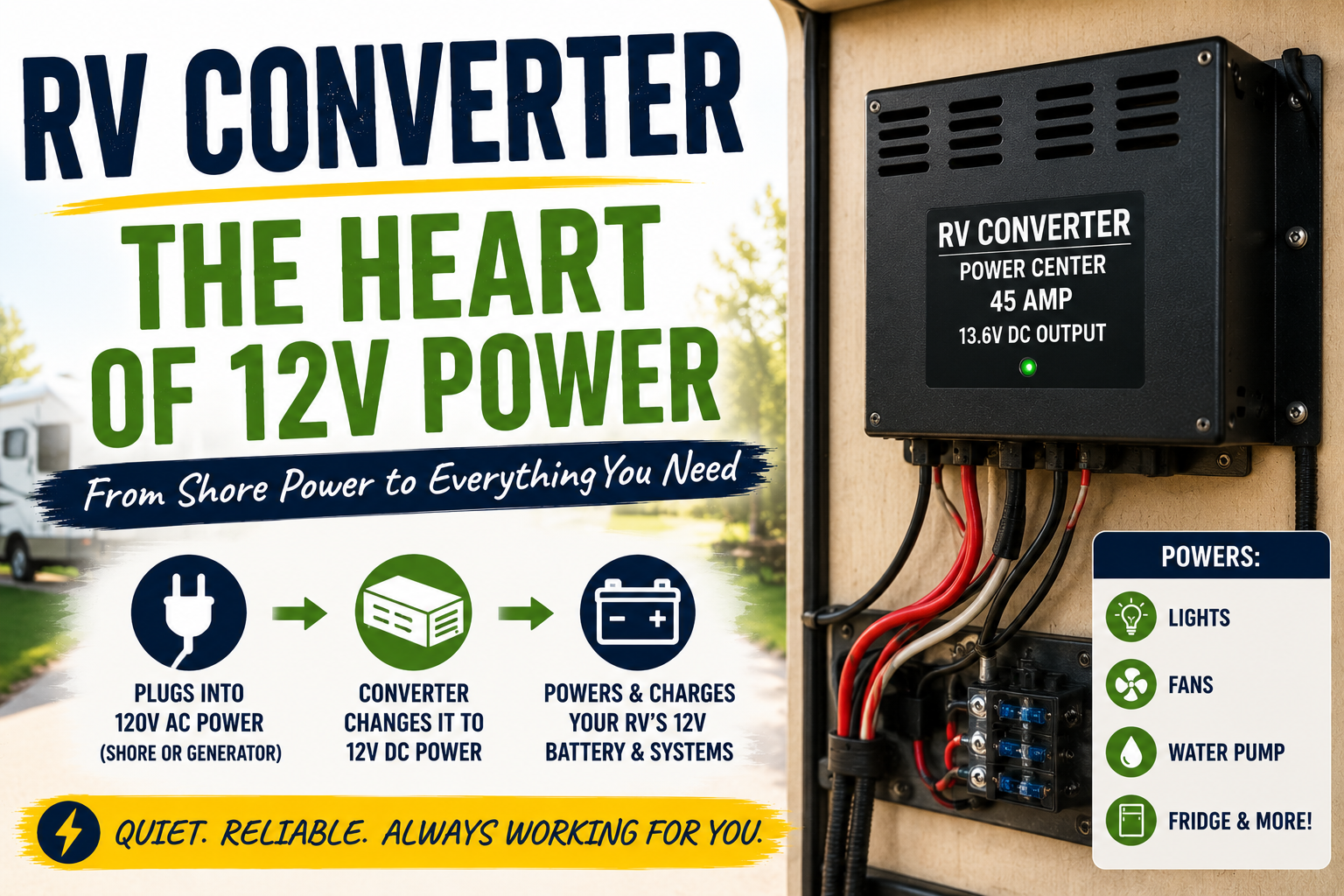
The fan is part of the converter’s cooling system. It isn’t necessarily an indicator telling you whether the converter is producing DC power. If the converter's output itself is disappearing and returning, see why a converter cycling on and off may be cycling between normal operation and protective shutdown.
Your converter can potentially be operating perfectly normally while the fan sits still.
If you want to know whether the converter is actually working, measure its electrical output instead of listening for the fan.
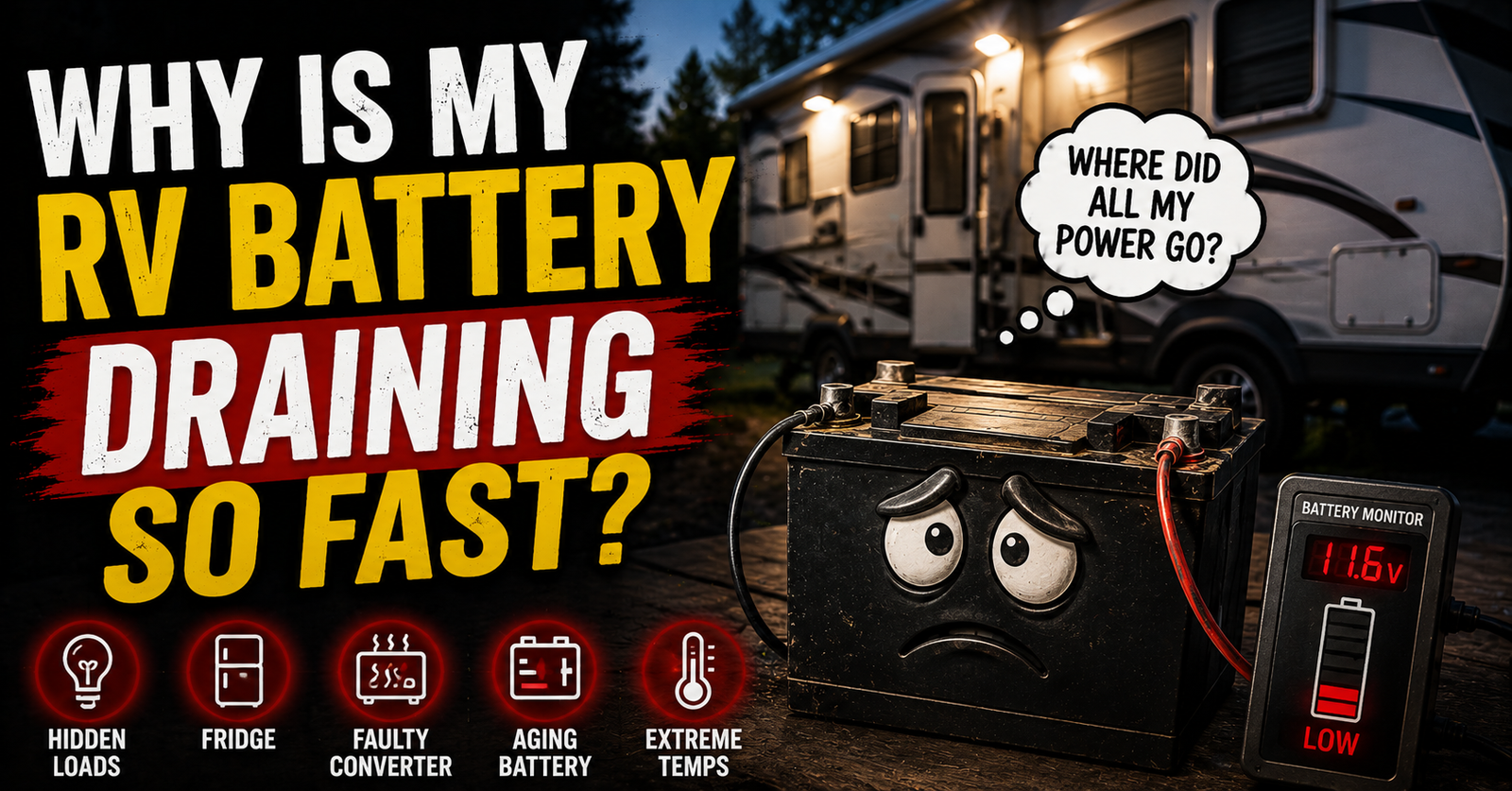
Check Whether the Converter Is Charging the Battery
This is much more useful.
Measure the house-battery voltage under appropriate conditions.
Then connect the RV to shore power and see what happens.
If the battery terminal voltage rises into the appropriate charging range for your converter and battery system, you’ve got evidence that the charging system is operating.
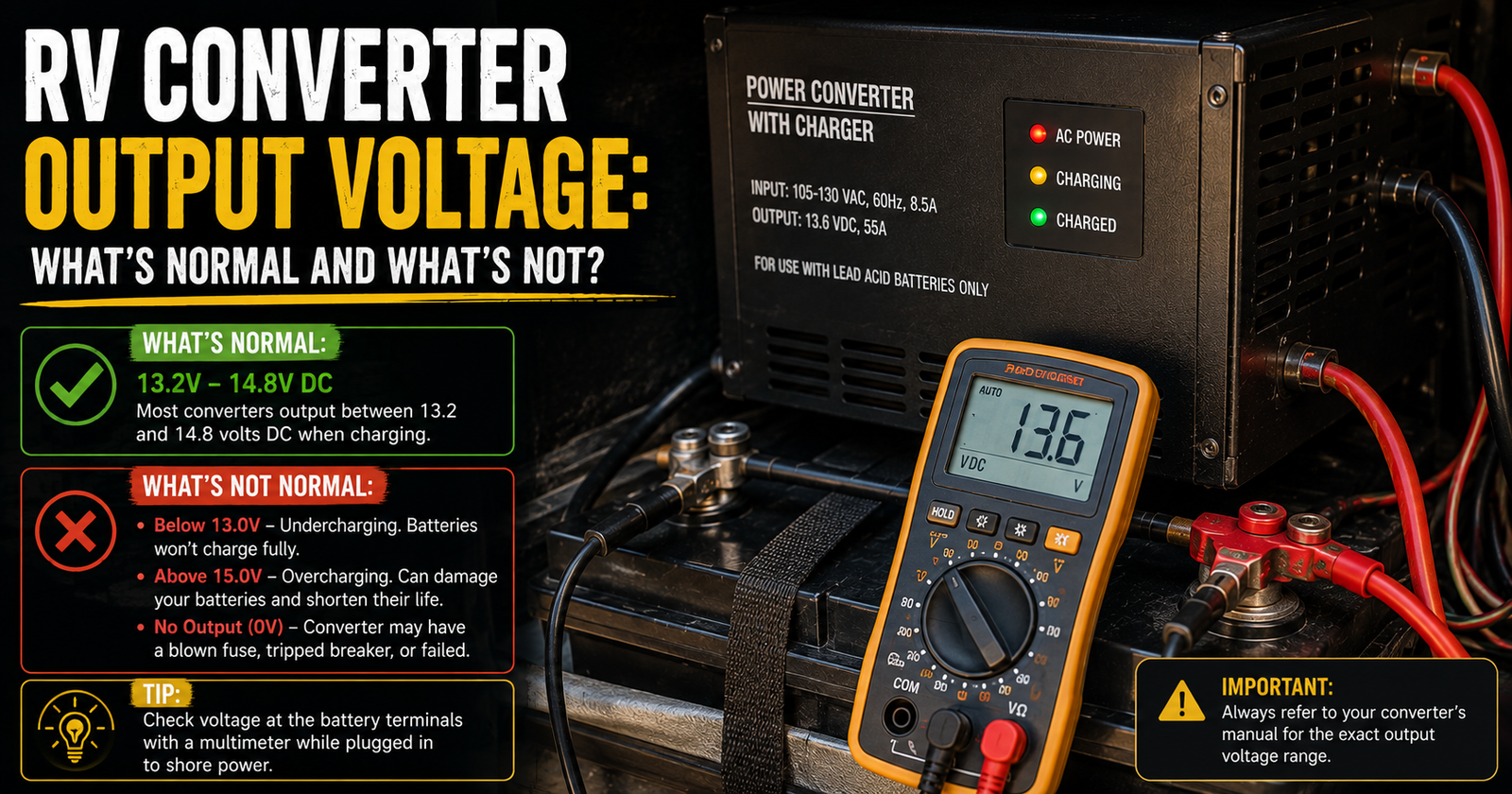
We’ve already covered what normal RV converter output voltage should look like, including why you might see different voltages during different charging stages.
That’s much better evidence than whether you hear a little fan spinning.
A Fully Charged Battery May Mean Very Little Fan Activity
Think about what the converter is doing.
If you arrive home with a heavily discharged battery bank and immediately plug the camper in, the converter may have substantial charging work ahead of it.
That creates heat.
The fan may run.
Now compare that with a camper that’s been plugged in for several days.
The battery is charged.
Very few 12-volt loads are operating.
The converter isn’t being asked for much.
It may simply stay cool enough that the fan doesn’t need to operate.
That’s normal behavior on converters designed to control their fans according to operating conditions.

Try Turning On Some 12-Volt Loads
If you’re curious whether the fan operates at all, increasing legitimate 12-volt demand can give you more information.
Turn on several interior 12-volt lights.
Run a vent fan.
Use other normal DC equipment.
As converter load increases, heat generation can increase too.
Depending on the converter’s fan-control design and temperature, the fan may eventually start.
Don’t expect it to happen instantly just because you switched on one light.
The converter may still be nowhere near the point where additional cooling is necessary.
Don’t Deliberately Overload the Converter to Test the Fan
There’s no reason to torture the electrical system.
Use normal RV loads.
You’re not trying to see whether you can make the converter beg for mercy.
You’re simply observing whether fan behavior changes under realistic operating conditions.
And remember that different converters control their fans differently.
Some respond more directly to temperature.
Others may respond to load.
Always check the documentation for your particular model.
What If the Converter Gets Hot but the Fan Never Starts?
Now I’m interested.
A cool converter with a stationary fan doesn’t worry me.
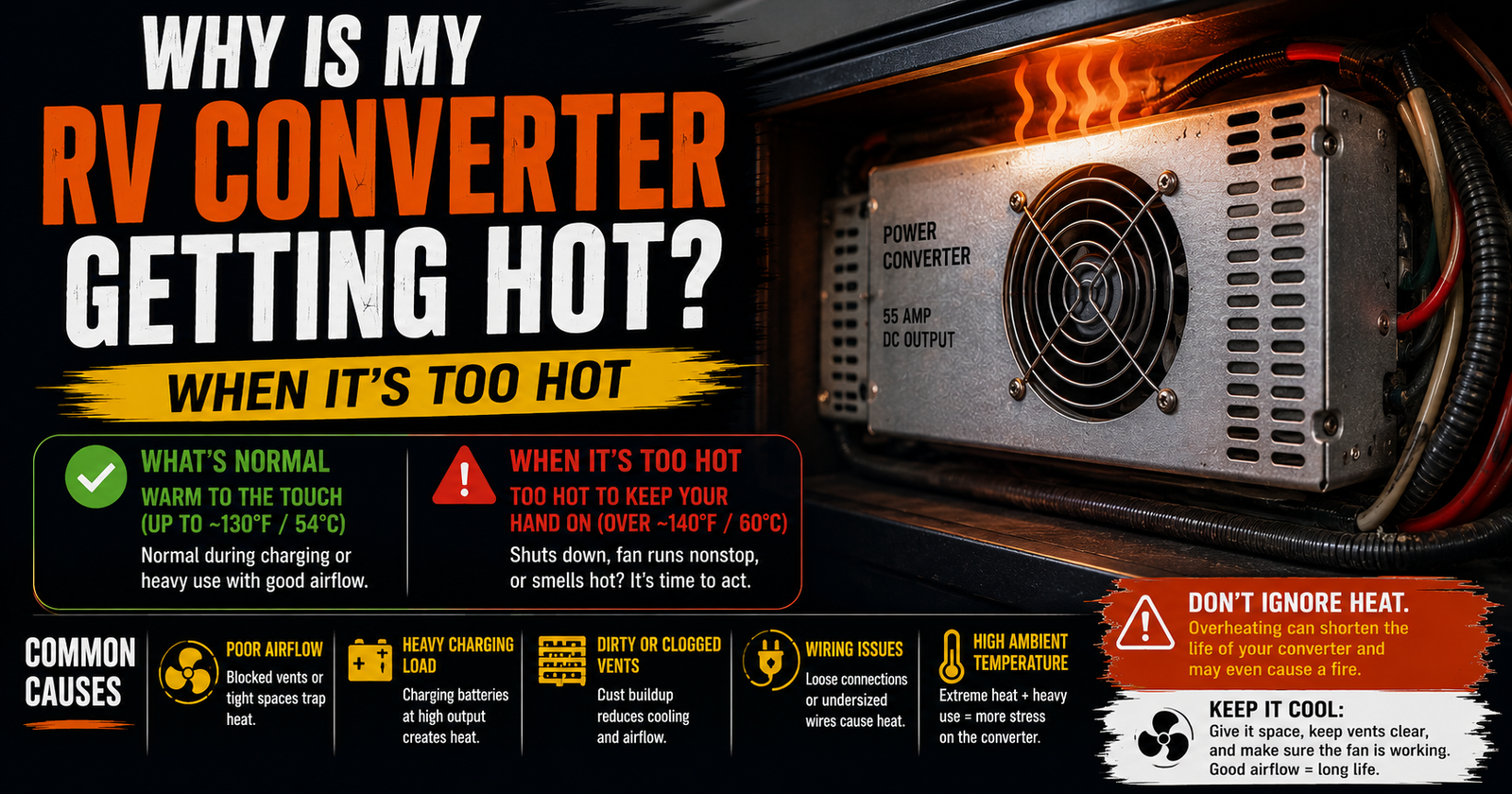
A converter getting noticeably hot while working hard and still receiving no fan cooling is a different situation. That combination is explained in when RV converter heat is dangerous, which helps separate normal temperature-controlled fan behavior from a real overheating concern.
Recent troubleshooting guidance for Progressive Dynamics replacement converters makes the same distinction. A fan that isn’t operating under light load can be normal, but if the converter is heating up and the fan still won’t activate, the fan or its control system deserves investigation.
At that point, don’t just assume everything is fine because the battery is still charging.
Cooling is there for a reason.
Make Sure the Fan Isn’t Physically Blocked
Before assuming an electronic failure, inspect the fan area with the RV safely de-energized according to the manufacturer’s instructions.
Look for obvious problems.
Dust.
Pet hair.
Debris.
Something pushed against the fan opening.
A loose object interfering with the blades.
Storage items blocking ventilation.
Electrical compartments have an amazing ability to collect stuff over the years.
Sometimes the problem isn’t complicated at all.

Don’t Stick Your Fingers Into a Powered Fan
It sounds obvious until somebody is trying to figure out whether a fan blade is stuck.
De-energize the equipment properly before physically inspecting moving components.
Remember that an RV can potentially have several electrical sources:
Shore power.
Generator.
House battery.
Solar.
Inverter.
Simply unplugging the shore cord doesn’t automatically mean every electrical circuit in the camper is dead.
Know what you’re isolating before putting your hands into electrical equipment.
Check the Ventilation Around the Converter
The fan can’t do much if the converter can’t move air.
Make sure ventilation openings aren’t covered.
If the converter is installed in a storage compartment, make sure somebody hasn’t packed the compartment full of blankets, towels, camping chairs, extension cords, or other gear.
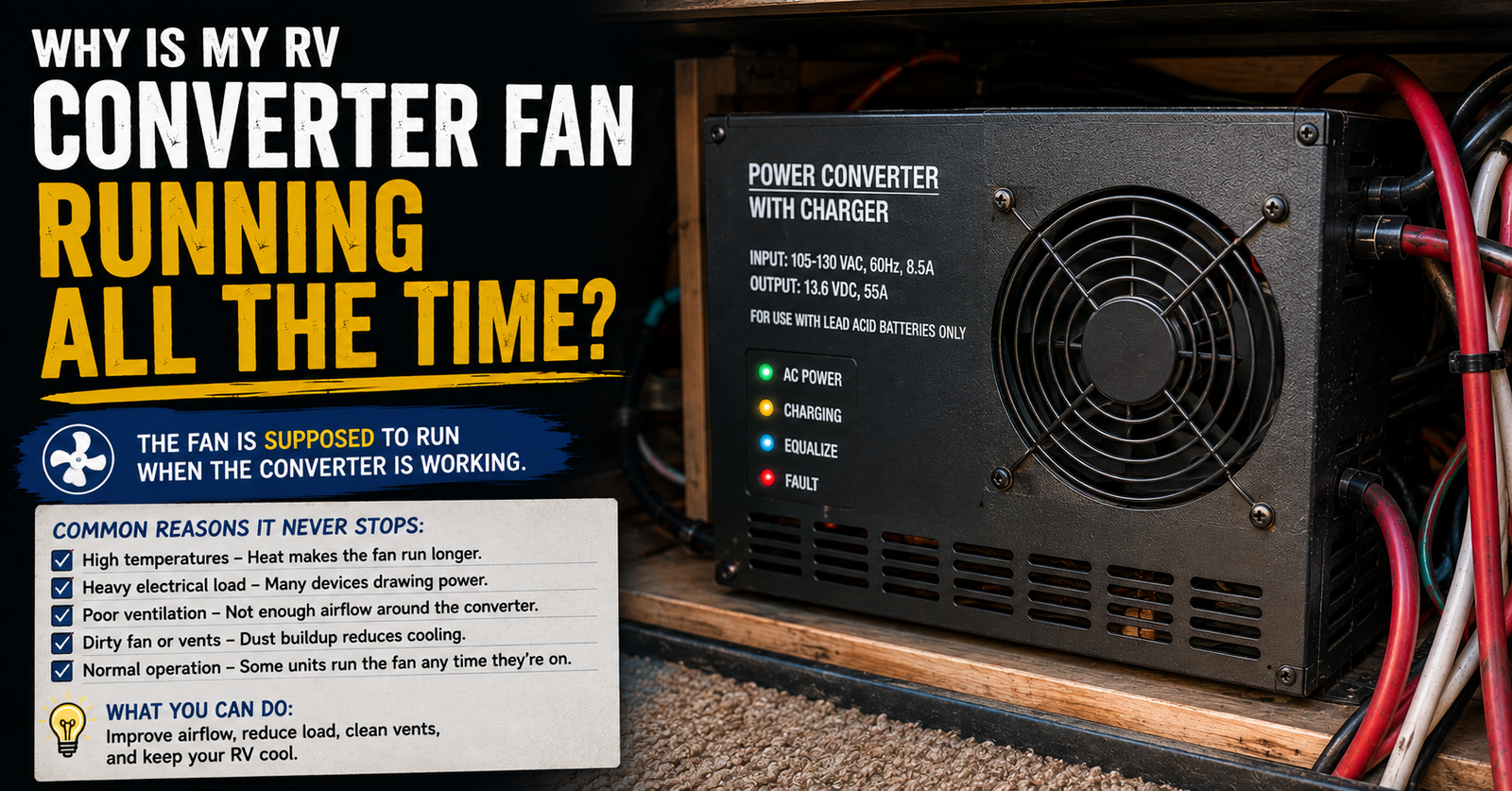
We’ve already talked about airflow from the opposite direction in our guide to why an RV converter fan runs constantly.
Poor ventilation can make a converter run hotter and force the cooling system to work harder.
If the fan isn’t functioning properly on top of that, heat can become a much bigger concern.
Is There a Separate Fuse for the Converter Fan?
Don’t assume there is.
Fan circuitry depends on the converter design.
For example, troubleshooting guidance for the Progressive Dynamics PD4645V notes that its cooling fans don’t use a separate inline fan fuse. The fans are controlled from the converter electronics and activate as needed.
Your converter may be different.
That’s why I wouldn’t start randomly pulling fuses because the fan isn’t spinning.
Find the model number and check the documentation.
Find Your Converter Model Number
This keeps coming up in our converter articles because it’s genuinely important.
Look for a label on the converter or power center.
You want the manufacturer and exact model.
Once you know what you’ve got, you can determine:
How the fan is controlled.
When it’s supposed to operate.
What ventilation it requires.
Whether there are fan-specific troubleshooting procedures.
What output voltage is expected.
What protection features the converter uses.
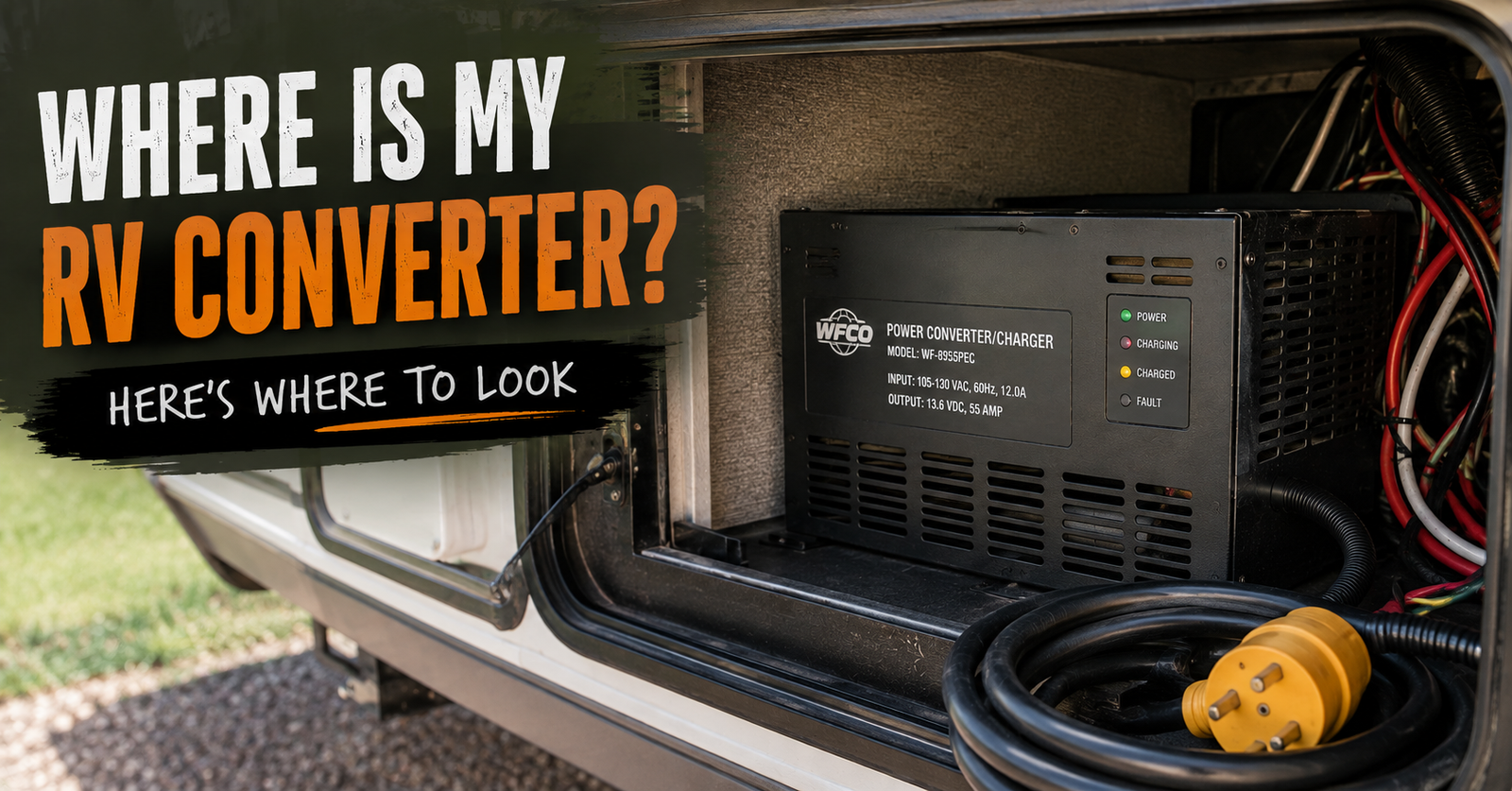
If you’re still trying to find the actual converter, we’ve got a separate guide showing where RV converters are usually located.
Don’t troubleshoot an unidentified box.
What If the Fan Used to Run but Suddenly Stopped?
This gets my attention more than a fan you’ve simply never noticed.
Maybe you’ve owned the camper for years.
Every time you plugged in after boondocking, you’d hear the converter fan.
Now the battery is heavily discharged, the converter is working hard, the unit is warm, but the fan is silent.
Something changed.
That’s useful information.
The fan motor may have failed.
The fan-control circuitry may have a problem.
Something could physically be preventing the blades from turning.
Or the converter itself may not be operating the way you think it is.
Now we need measurements.
Make Sure the Converter Actually Has Output
Suppose the fan isn’t running because the converter isn’t doing anything at all.
That’s a completely different problem.
Maybe the converter lost AC input.
Maybe a breaker tripped.
Maybe reverse-polarity fuses blew.
Maybe the converter has internally failed.
Measure the DC output according to the manufacturer’s troubleshooting procedure.
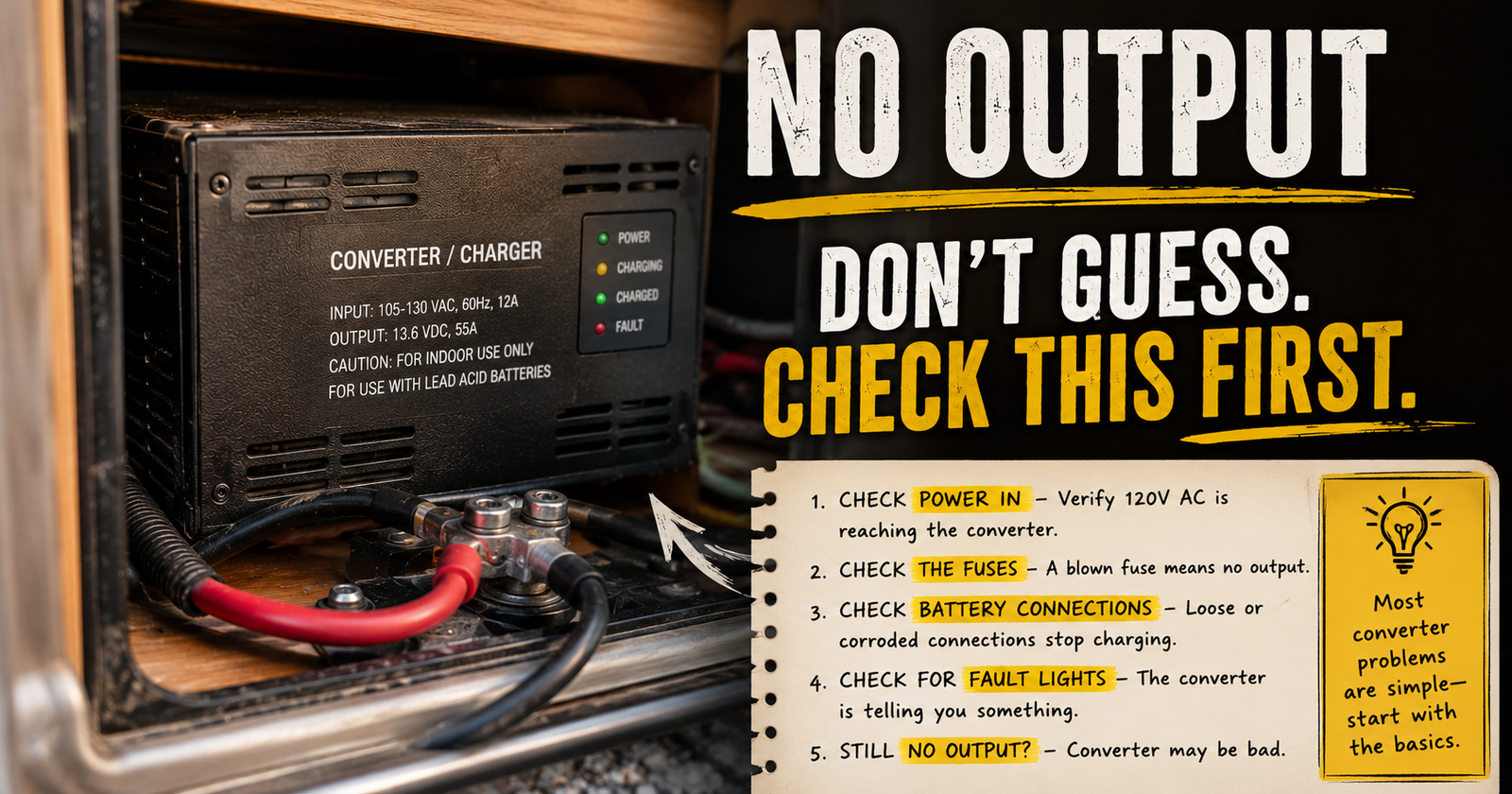
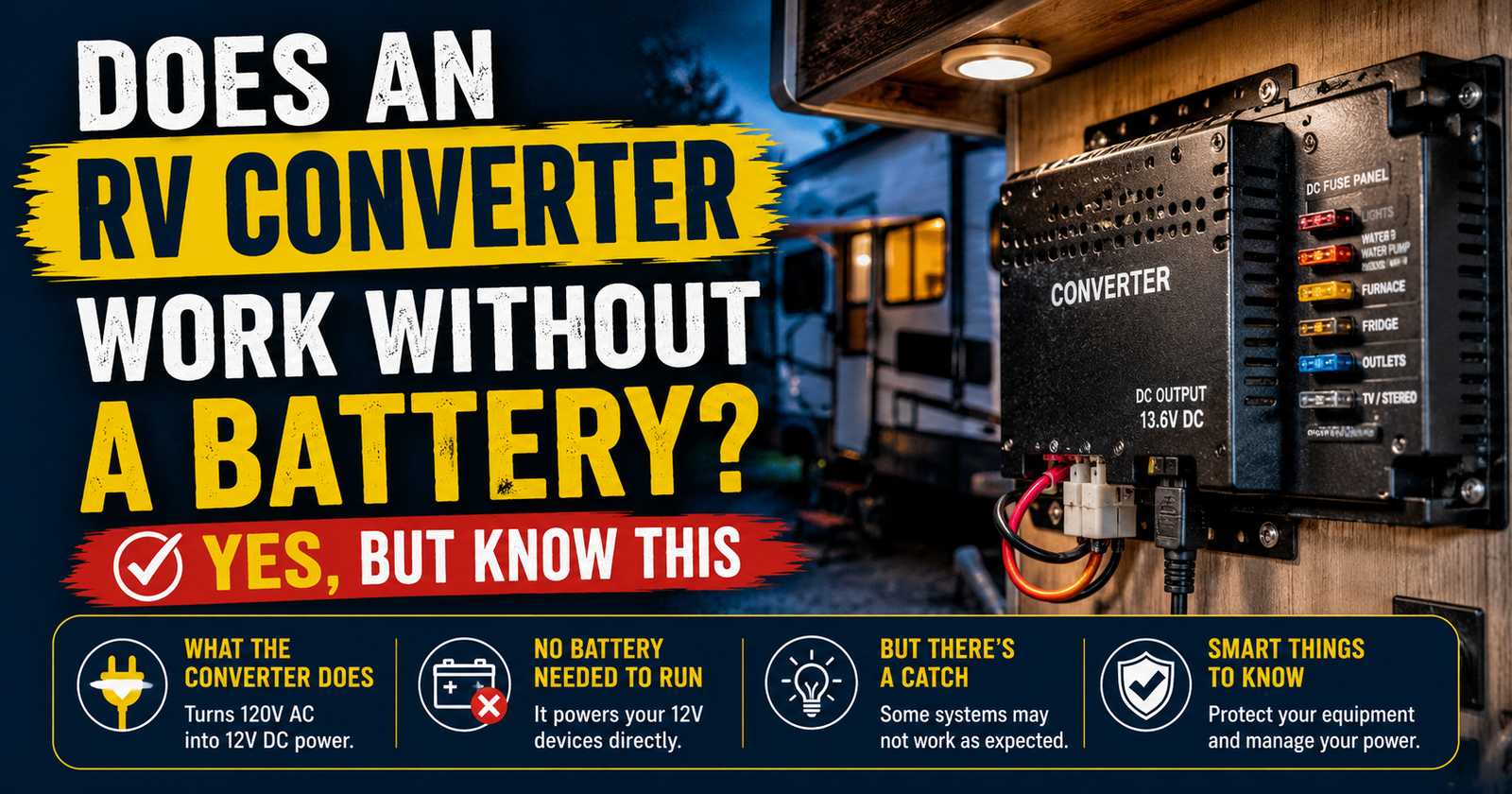
If you’re getting zero converter output, don’t spend all afternoon diagnosing the fan. Follow our RV converter no-output troubleshooting steps instead.
A dead converter obviously isn’t going to behave like a healthy converter that simply doesn’t need its fan yet.
What If the Converter Has Normal Output but No Fan?
Now temperature and load become much more important.
Normal converter output.
Battery charging normally.
Converter relatively cool.
Low 12-volt demand.
Fan stationary.
That doesn’t sound particularly alarming to me.
Now change the picture.
Normal output.
High charging demand.
Converter getting very hot.
Fan never moves.
That’s when I’d start suspecting the cooling system.
Same stationary fan.
Completely different circumstances.
Can the Fan Motor Fail?
Of course.
It’s a mechanical and electrical component.
Fan bearings can wear.
Motors can fail.
Blades can become obstructed.
Connections can fail.
But don’t diagnose a failed motor simply because the fan isn’t spinning at this exact moment.
First establish that the converter is actually calling for cooling.
Otherwise you might replace a perfectly good fan that was doing exactly what it was designed to do.
What Does a Bad Converter Fan Sound Like?
Sometimes you get warning before total failure.
Grinding.
Squealing.
Scraping.
Rattling.
A fan that repeatedly tries to start.
A blade that barely moves.
A fan that starts only after something vibrates.
Those symptoms are much more interesting than a fan that’s simply sitting quietly while the converter is cool.
If you’ve noticed the converter becoming increasingly noisy over time and then the fan suddenly stops altogether, I’d inspect it sooner rather than later.
Could Dust Stop the Fan?
Heavy contamination certainly isn’t helping anything.
Dust and pet hair can collect around cooling openings and fan blades.
That can restrict airflow and potentially interfere with fan operation.
Keep the converter area clean according to its manufacturer’s maintenance instructions.
But I wouldn’t spray liquids into it or blindly blast debris deeper into the electronics.
Electrical equipment deserves a little more care than cleaning the dashboard.
What If the Fan Starts and Immediately Stops?
That can be normal on some equipment.
For example, owners of certain Progressive Dynamics converters may notice a brief fan movement when power is first applied before the fan stops until cooling is actually needed.
So one little twitch doesn’t necessarily mean the motor is dying.
Again, model-specific behavior matters.
The question is what happens when the converter actually gets warm enough to require cooling.
What If the Fan Keeps Starting and Stopping?
Cycling itself can be normal.
The converter heats up.
Fan starts.
Temperature drops.
Fan stops.
Converter warms again.
Fan starts again.
That’s exactly what you’d expect from some controlled cooling systems.
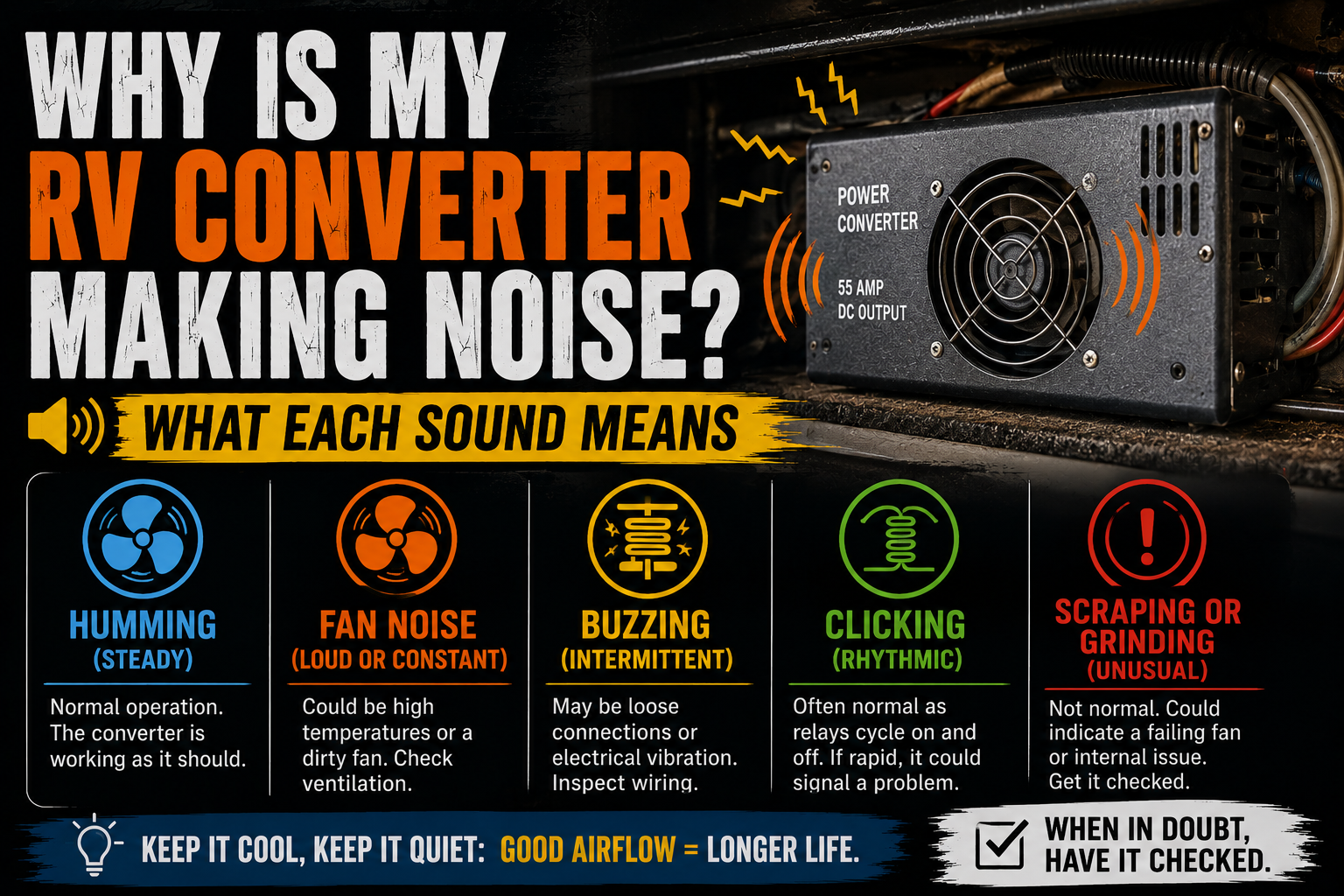
What would concern me more is extremely rapid abnormal cycling accompanied by overheating, strange noises, unstable converter output, or other electrical symptoms.
Then we’re dealing with more than ordinary fan cycling.
Can I Replace Just the RV Converter Fan?
Sometimes replacement of the fan itself may be possible, but I wouldn’t assume it’s the correct repair for every converter.
The fan may be integrated with the converter electronics.
The problem could be the fan motor.
It could also be the fan-control circuitry.
And if the converter is older and showing additional signs of failure, replacing only the fan may not make much sense.
Identify the model and check manufacturer service options before modifying the unit.
Don’t Wire the Fan to Run Constantly as a Shortcut
I wouldn’t bypass the converter’s fan controls just because the automatic fan isn’t working.
The cooling system was designed to operate a certain way.
If the fan-control circuit has failed, fix the actual problem rather than improvising around the protection system.
You also don’t know whether the fan is the only thing wrong.
If converter temperature control isn’t behaving correctly, I want to understand why.
Can a Converter Overheat Without the Fan?
Yes.
That’s the reason we’re taking this seriously once the converter becomes hot.
Many converters use forced-air cooling because the electronics generate heat under load.
If the cooling fan should be operating and isn’t, internal temperature can rise.
Some converters have thermal protection that may reduce output or shut the unit down when temperature becomes excessive.
That protection is a backup.
It isn’t an excuse to operate indefinitely with a failed cooling system.
What If the Converter Keeps Shutting Off?
If you have this combination:
Converter gets hot
Fan doesn’t run
Converter shuts down
Converter cools
Converter starts working again
I’d be very suspicious of a thermal problem.
Check ventilation and fan operation.
Don’t immediately replace batteries or chase unrelated wiring.
The repeating heat-and-recovery pattern is giving you a pretty strong clue.
Check for a Burnt Smell
A fan that isn’t running plus a burnt electrical smell is no longer something I’d casually monitor.
If you smell overheated wiring, melting plastic, or burned electronics, safely disconnect the appropriate power sources and stop using the equipment until the cause is identified.
We’re going to cover why an RV converter smells burnt separately because that’s an urgent symptom deserving its own troubleshooting path.
Don’t wait for smoke to decide something got too hot.
What If the Fan Doesn’t Run but My Battery Won’t Charge Either?
Then don’t assume the fan caused the charging failure.
The converter may not have AC power.
A fuse may be blown.
The converter may have failed.
There may be an open charging circuit.
The battery itself may be bad.
The fan and charging failure may simply be two symptoms of the converter not operating.
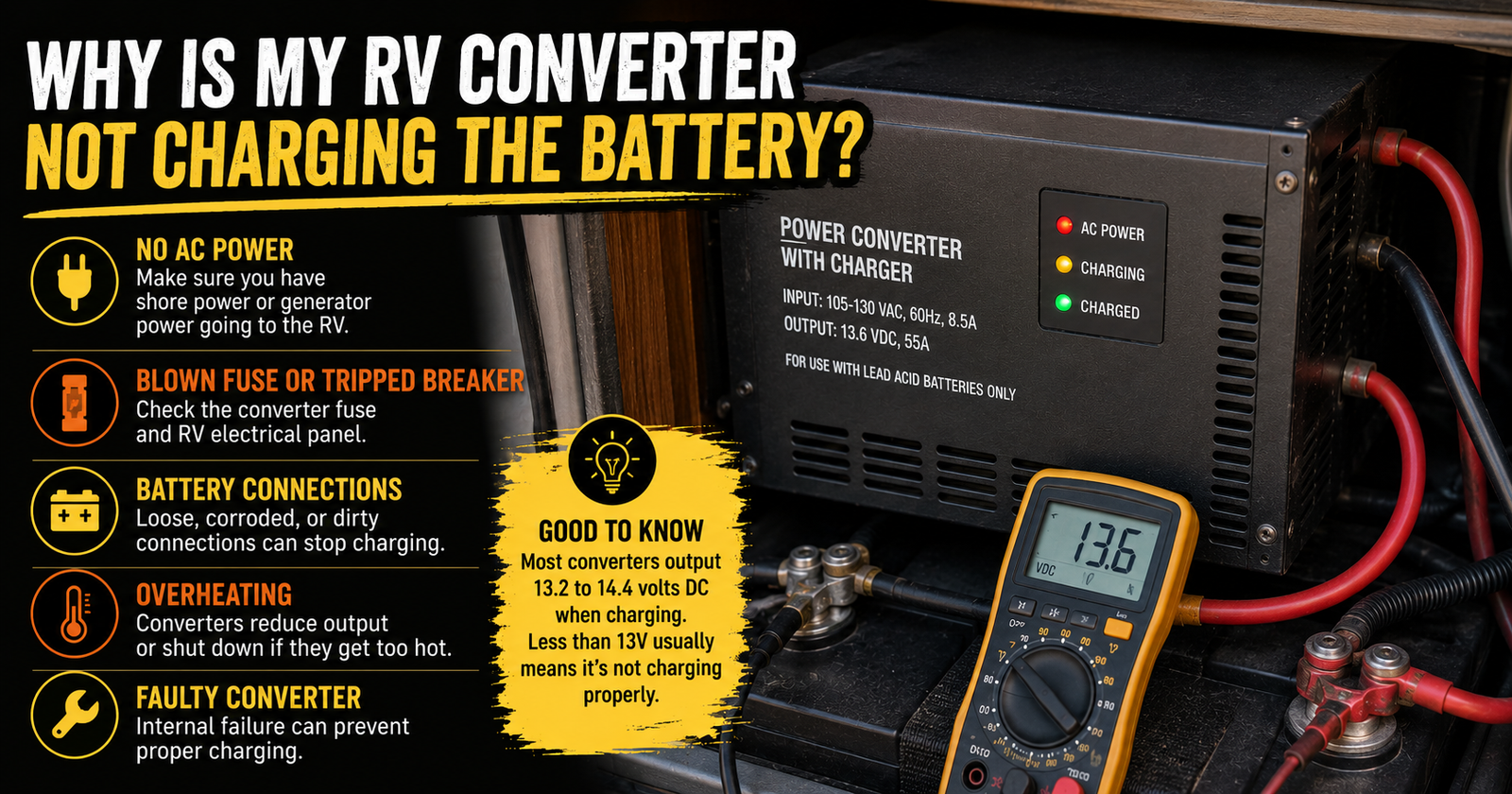
Our converter-not-charging-battery guide walks through that entire charging path.
Start there instead of focusing only on the fan.
What If Everything Works Perfectly?
Then I wouldn’t create a problem where there isn’t one.
Let’s say:
Battery charges properly.
Converter output is within specification.
12-volt equipment works.
Converter isn’t excessively hot.
No burnt smell.
No strange noises.
Ventilation is clear.
Fan doesn’t happen to be running.
That’s probably fine.
You don’t need to hear a fan to prove your converter is alive.
How Can I Test Whether the Fan Will Come On?
I prefer observation over intentionally stressing the system.
If your battery is naturally somewhat discharged, plug the RV into shore power and observe converter operation while it charges.
Use normal 12-volt equipment.
Monitor the converter.
If it warms up substantially, see whether the fan eventually activates.
If the fan runs when cooling is actually needed, great.
If the converter becomes excessively hot and the fan remains completely dead, now you’ve found something worth addressing.
Don’t Use the Fan as Your Converter Tester
This is probably the biggest point in this entire article.
A spinning fan doesn’t prove the converter is producing the correct output.
A stationary fan doesn’t prove the converter is dead.
Use a meter.
Check battery charging.
Measure converter output.
Compare your readings with the specifications for the converter and battery system.
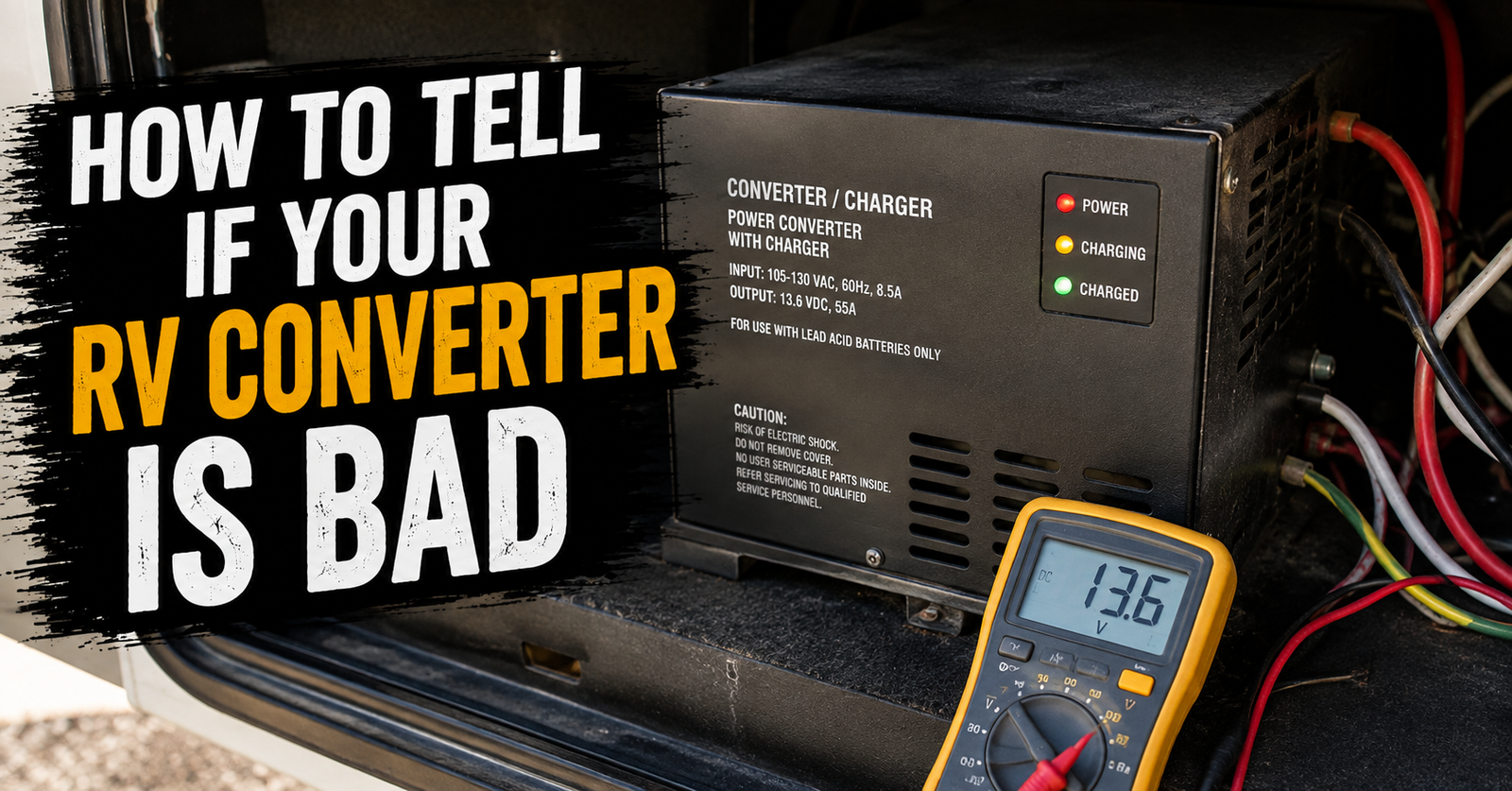
If those tests start looking bad, then investigate the converter itself using our guide for telling whether an RV converter has actually failed.
Electrical measurements beat fan-watching every time.
When Would I Actually Worry About the Fan?
I wouldn’t worry just because it’s quiet.
I’d worry when the converter is clearly working hard and getting hot but isn’t receiving the cooling it should.
I’d worry if the fan previously worked under the same conditions and suddenly stopped.
I’d worry about grinding, scraping, or a fan struggling to start.
I’d worry if the converter repeatedly overheats or shuts down.
And I’d definitely worry if you smell overheated electrical components.
That’s the difference.
Fan off and converter cool? Probably normal.
Fan off and converter cooking itself? Start investigating.
A silent RV converter can be a perfectly happy converter.
The trick is knowing whether it’s quiet because it doesn’t need the fan or because the fan can’t do its job anymore.
Written by Evan Mercer
Evan Mercer writes about RV electrical systems, converter troubleshooting, battery charging and practical camper ownership for CamperAnswers.com. His work focuses on helping RV owners separate normal electrical behavior from the symptoms that actually deserve attention.