
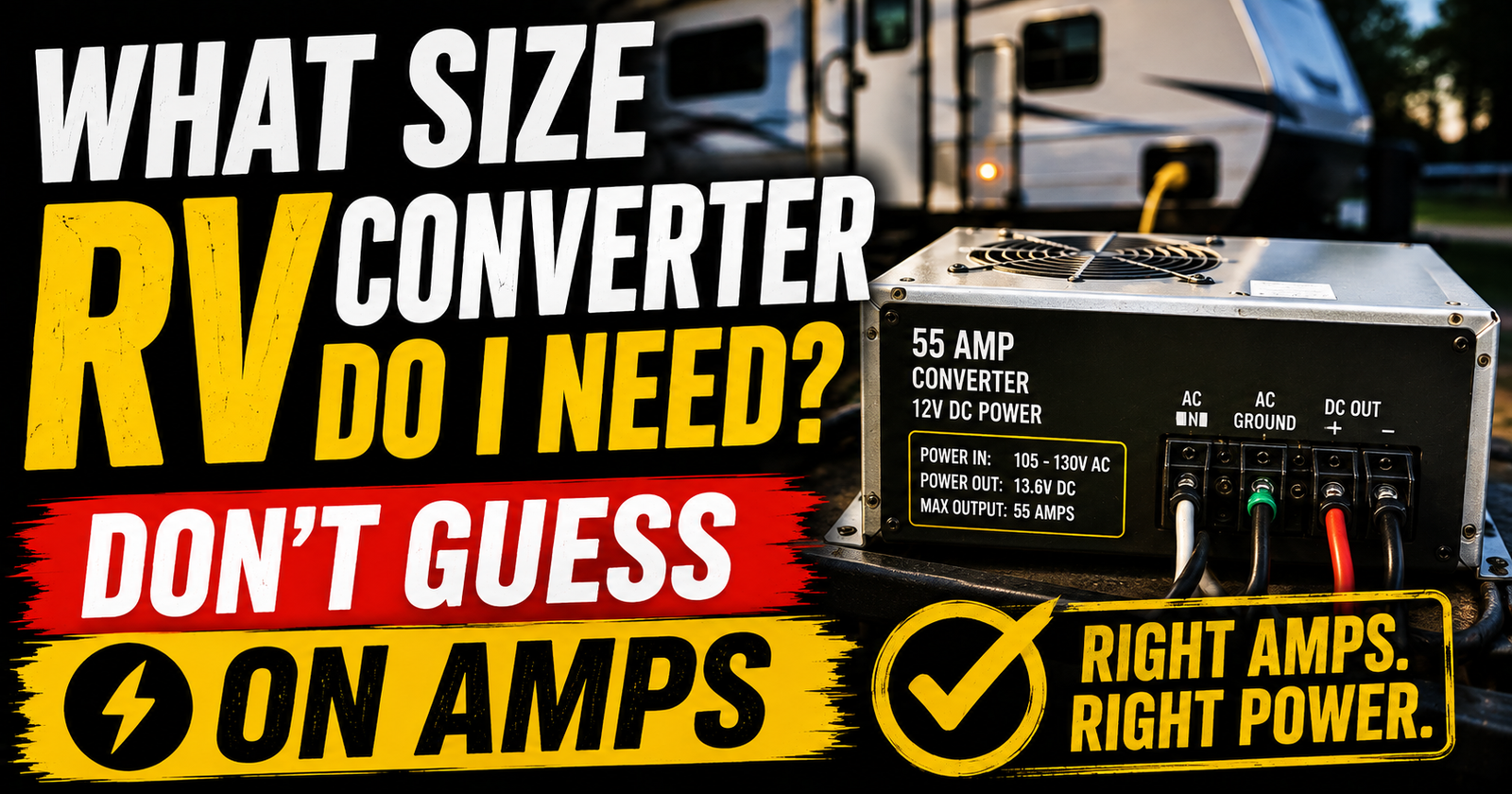
Shopping for an RV converter gets confusing fast because you’ll see 35-amp, 45-amp, 55-amp, 60-amp, 75-amp, 80-amp, and even larger models that all seem to do basically the same job. That makes it tempting to think a bigger converter must be an upgrade. Understanding what RV converters actually do is a useful first step before comparing amperage ratings.
I wouldn’t choose one that way.
If you’re simply replacing a failed RV converter, the safest starting point is usually the same DC amp rating as the converter the RV was originally designed to use.
That’s not just me being conservative. Progressive Dynamics specifically warns against replacing an existing converter with one that has a higher DC output rating unless the RV wiring is capable of safely handling that additional current. Its replacement guidance actually tells owners to identify the existing converter’s model and amp rating first.
So if you pull out a 45-amp converter, don’t automatically order a 75-amp model because it looks better on paper.
There are situations where changing converter size makes sense, particularly after major battery-bank or electrical upgrades. But then we’re no longer talking about a simple replacement. We’re talking about making sure the converter, battery bank, wiring, fuses, charging profile, AC supply, and entire DC charging path work together. That distinction is explained in this guide to replacing an RV converter with higher amperage.
Let’s make this much easier to understand.
What Does the Amp Rating on an RV Converter Mean?
The amp rating tells you the converter’s maximum DC output current.
A 45-amp converter can provide up to approximately 45 amps of DC output under its designed operating conditions.
A 60-amp converter can provide more.
That DC output has two big jobs in a typical RV:
Powering the camper’s 12-volt loads.
Charging the house battery.
Those two jobs share the converter’s available output.
That’s an important detail.
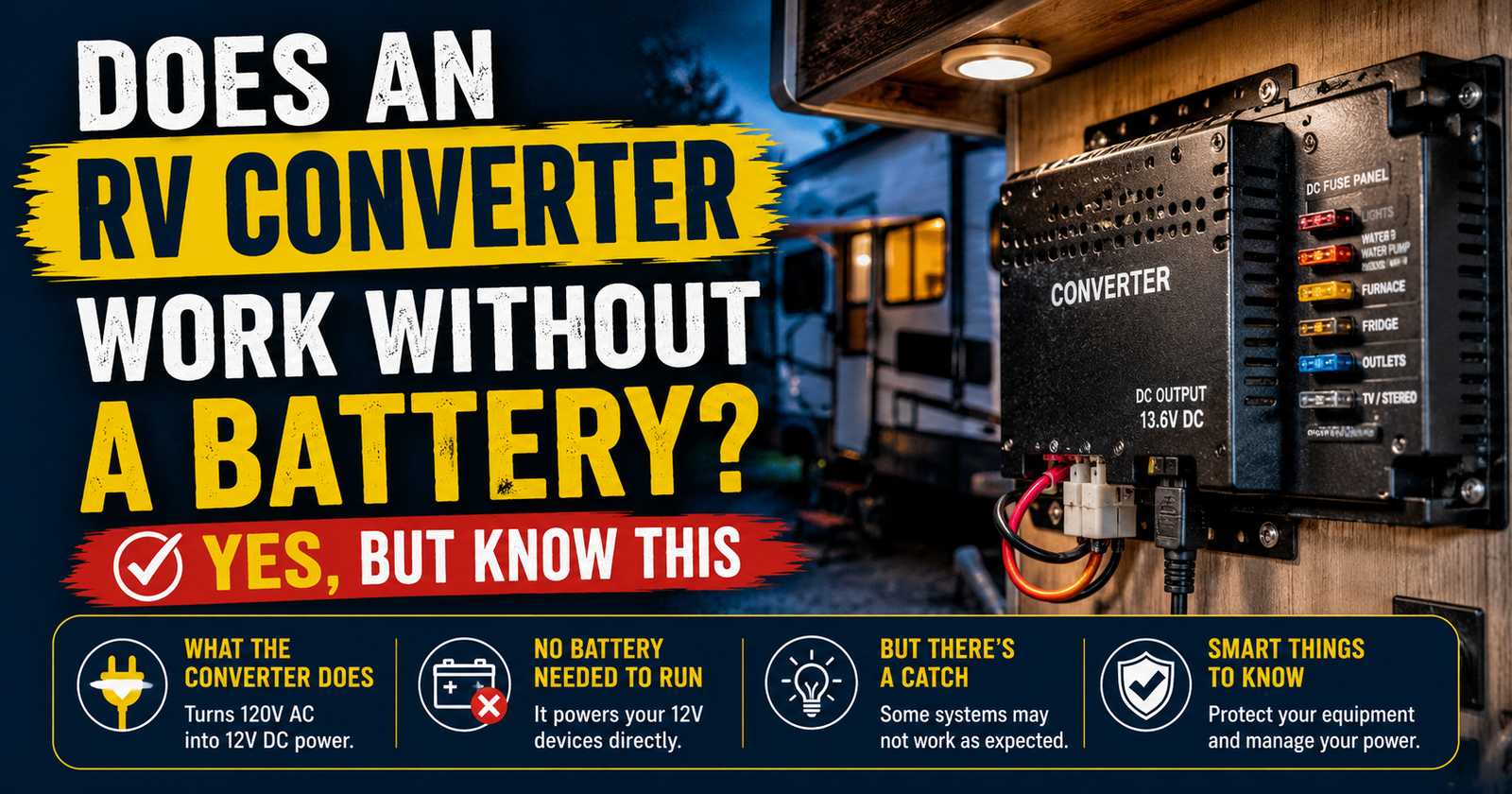
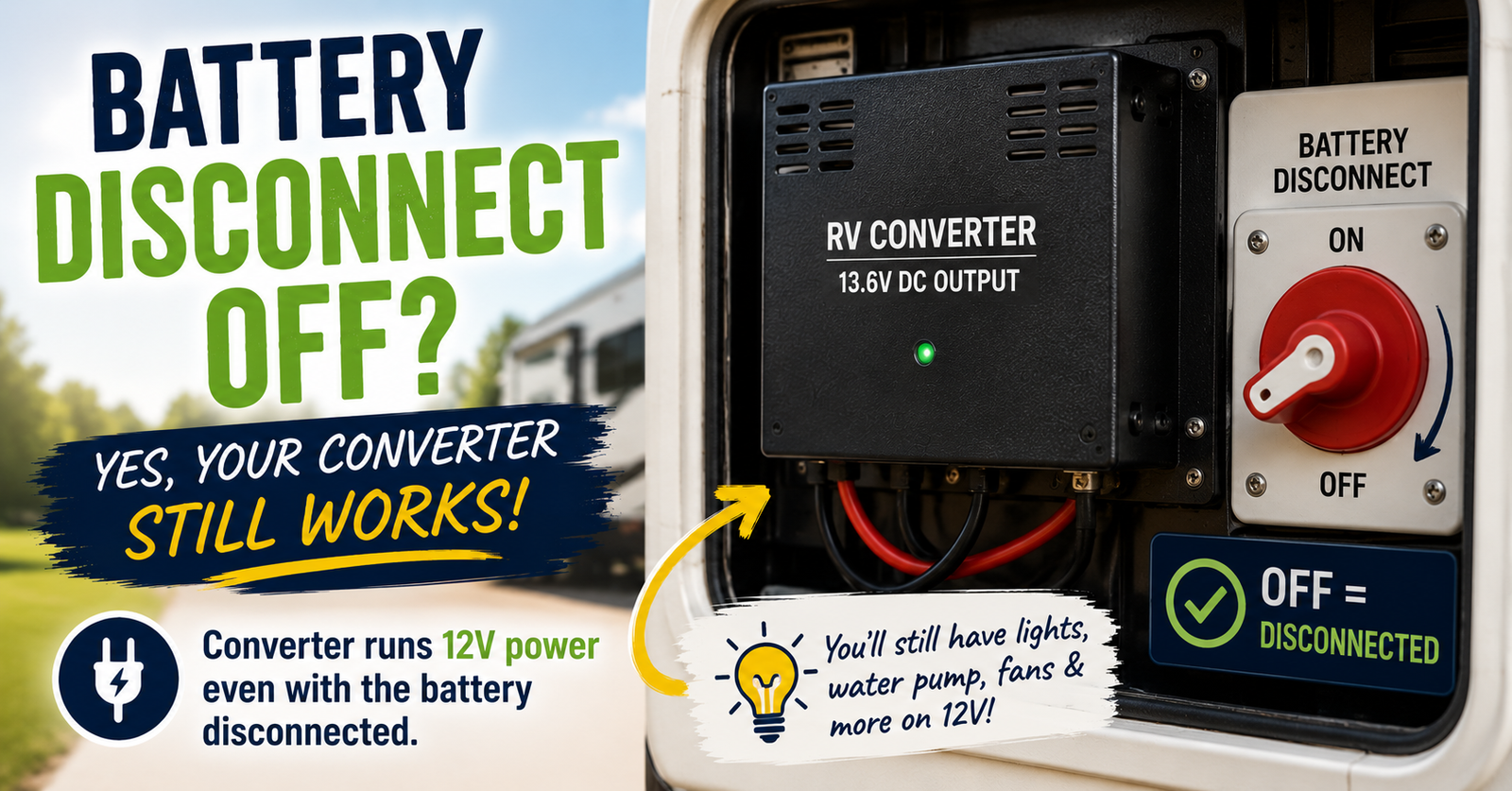
If your converter is capable of 55 amps and the camper’s active 12-volt equipment is consuming a substantial portion of that capacity, less is available for battery charging at that moment. That same relationship between converter capacity and active loads matters in converter power with the battery disconnected.
Converter Amps Are Not the Same as Your RV’s 30-Amp or 50-Amp Service
This confused me the first time I really dug into RV electrical systems because the same word, amps, gets thrown around everywhere.
You might have:
A 30-amp RV.
A 55-amp converter.
A 100Ah battery.
Those numbers are describing different parts of the electrical system.
Your 30-amp or 50-amp RV service describes the AC electrical service coming into the camper.
Your converter’s 55-amp rating describes its DC output capability.
So no, putting a 55-amp converter in a 30-amp camper isn’t automatically some impossible mismatch.
They’re not referring to the same thing.

If that AC side is still fuzzy, our guide explaining what shore power means in an RV makes this distinction much easier.
What Are Common RV Converter Sizes?
You’ll find quite a range.
Progressive Dynamics lists common converter ratings including 30, 35, 40, 45, 55, 60, 70, and 80 amps in its replacement guidance. Its current power-center lineup also includes 60, 75, and 90-amp configurations in some larger units.
So seeing a 35-amp converter in one camper and a 60-amp converter in another doesn’t mean somebody installed the wrong part.
Different RVs have different DC loads, battery systems, wiring, and electrical designs.
The Easiest Replacement Is Usually the Original Size
Let’s say your converter finally dies.
You find the label and it says:
45 amps DC output
If you’re keeping the camper essentially stock and simply want to replace the failed converter, I’d first look for the manufacturer’s correct 45-amp replacement or an approved equivalent.
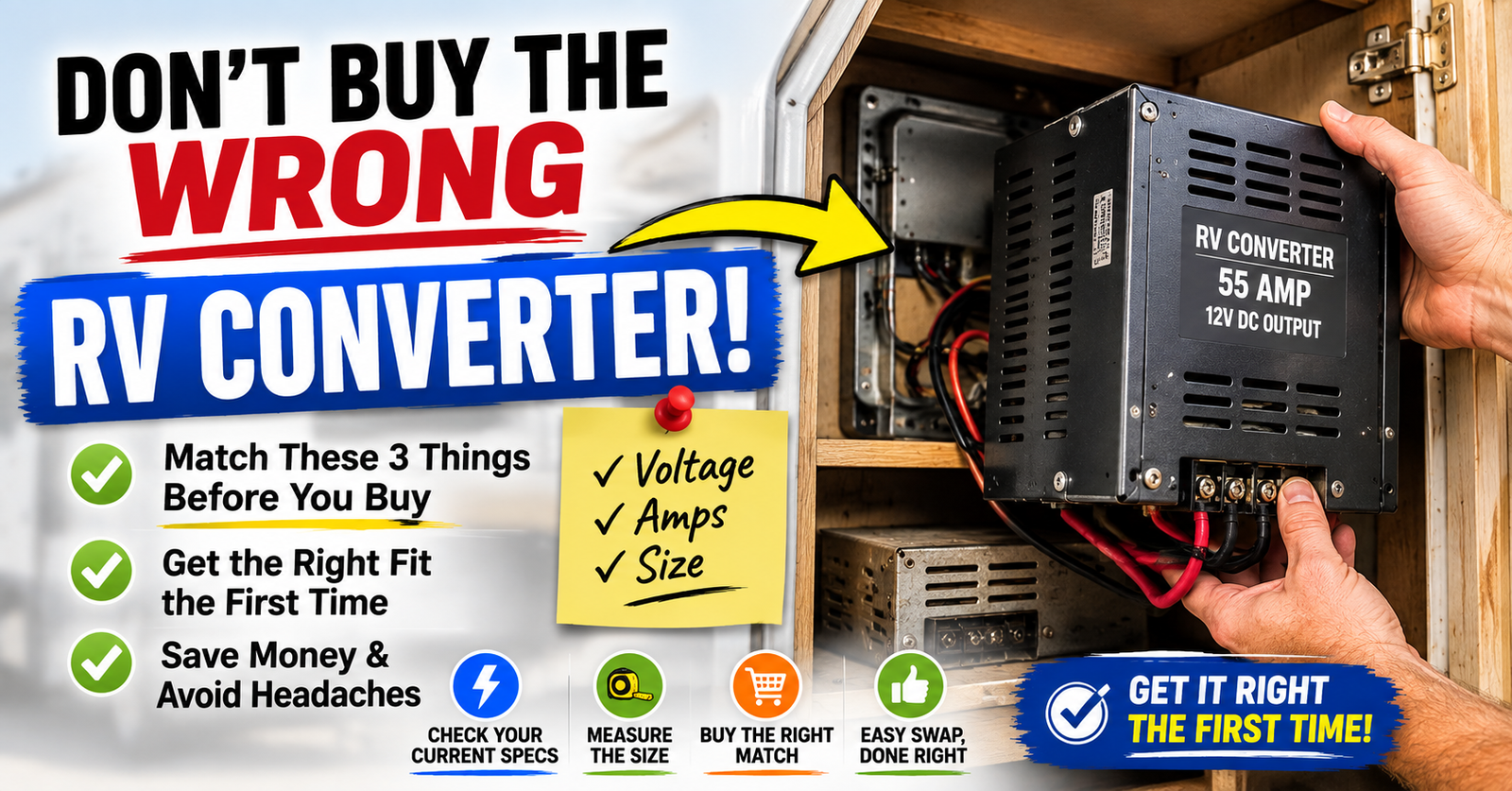
Progressive Dynamics takes this same approach in its converter cross-reference information. It tells owners to identify the existing converter make and model, determine battery type, find the recommended replacement, and verify physical dimensions. Those checks are also central to identify the right replacement converter, especially when the replacement must fit an existing power center.
That’s a much better strategy than shopping by price and amp rating alone.
Find the Label on Your Existing Converter
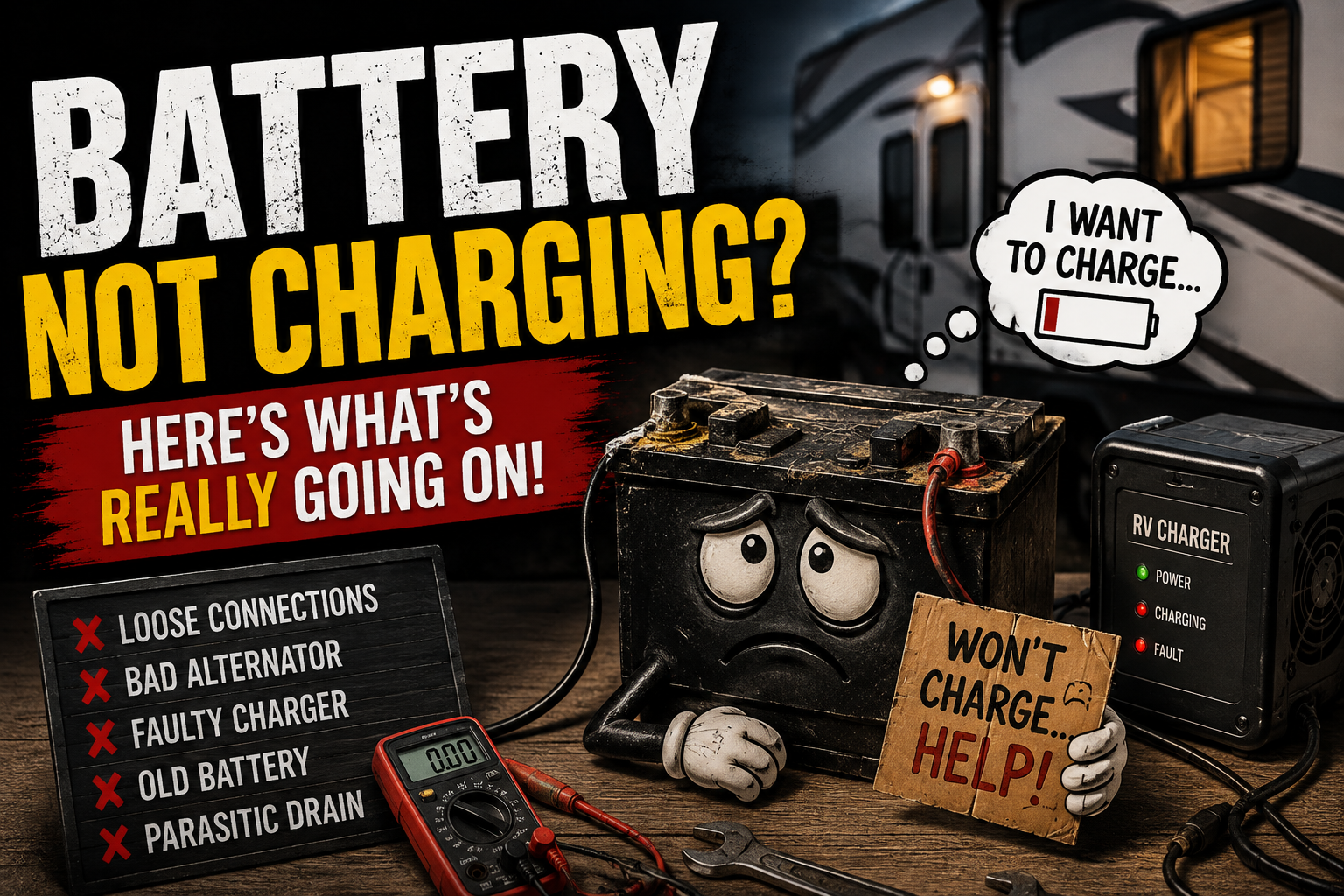
Before buying anything, find out what you already have.
Look for:
Manufacturer.
Model number.
DC output amperage.
Input requirements.
Battery compatibility or charging profile.
Part number.
If the converter is built into a power center, the label may be inside the power-center door or on the converter section itself.
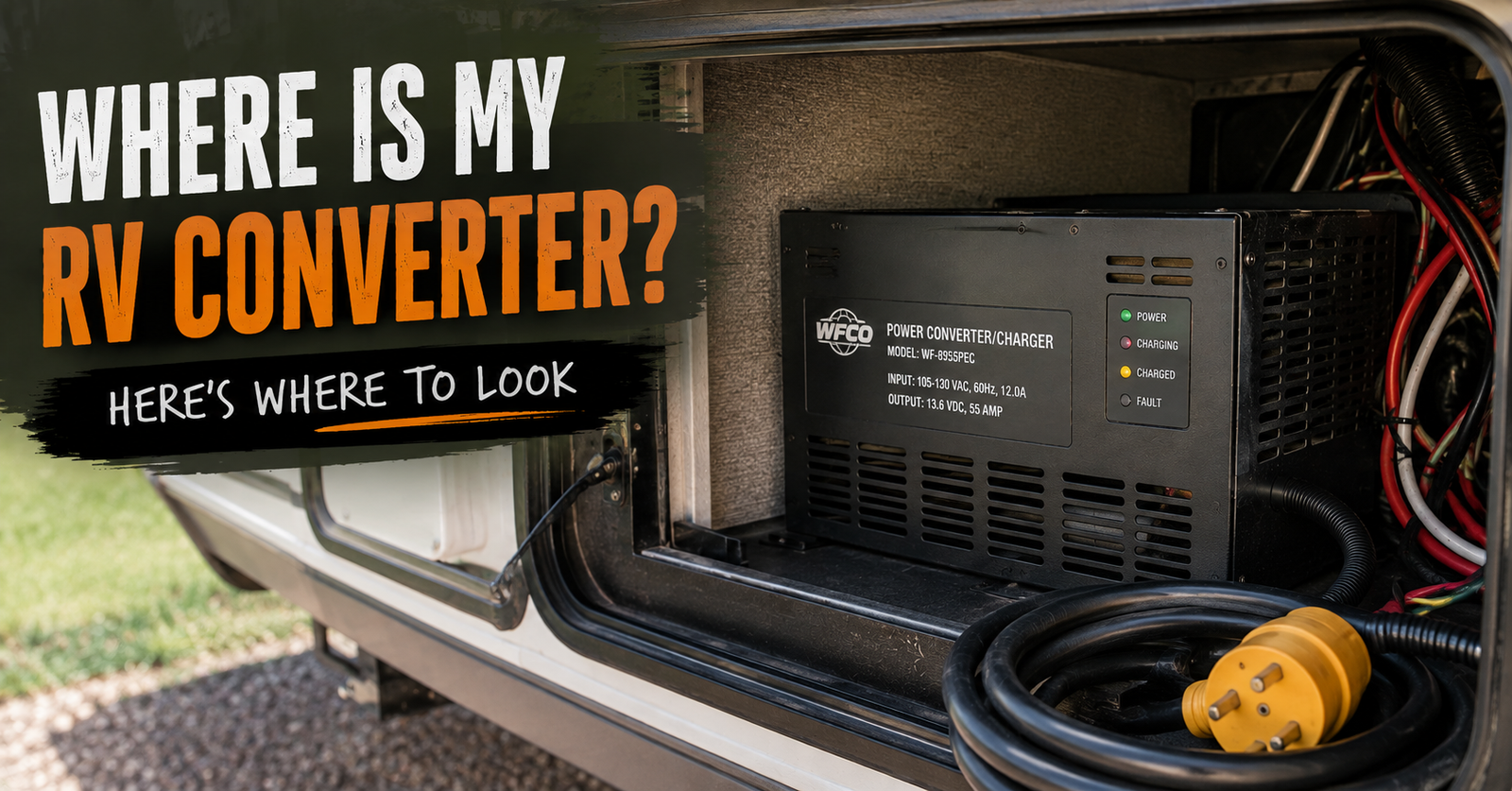
If you can’t even find the thing, start with our guide showing where an RV converter is usually located.
Take a clear picture of the label before you start shopping.
You’ll be glad you did.
Why Did the RV Manufacturer Choose That Converter Size?
It wasn’t necessarily random.
WFCO’s technical information explains that RV manufacturers size converters around the expected connected 12-volt load while accounting for continuous and momentary loads. Its published explanation references the ANSI/RVIA low-voltage load calculation, which considers continuous loads differently from intermittent loads.
Think about everything the 12-volt system might need to support.
Lights.
Water pump.
Furnace.
Vent fans.
Control boards.
Power jacks.
Other DC equipment.
Then remember the converter may also be charging the battery.
The manufacturer has to provide enough DC capacity for the camper to function normally.
Why Not Just Buy the Biggest Converter Available?
Because the converter isn’t operating by itself.
Its output travels through wiring.
That wiring has limits.
Progressive Dynamics explicitly warns that installing a higher-amperage converter than the original can cause wiring to overheat, potentially damaging components or creating a fire hazard.
That’s a pretty good reason not to treat converter amperage like horsepower.
More isn’t automatically better.
The DC Wiring Has to Carry the Converter’s Output
Imagine replacing a 35-amp converter with an 80-amp unit.
You’ve more than doubled the converter’s potential output.
Can the existing wiring safely carry that current?
That’s not something I’d guess about.
Progressive Dynamics says the positive and negative wiring must be capable of handling the converter’s full output for the distance between the converter and battery.
Wire gauge and wire length both matter.
So does circuit protection.
Wire Length Matters More Than People Realize
Longer wire runs create more opportunity for voltage drop.
That’s especially important when you’re trying to push substantial charging current from a converter to a battery bank.
You can have a perfectly good high-output converter and still get disappointing charging performance if the wiring between it and the battery isn’t appropriate.
Progressive Dynamics even recommends keeping certain high-current charging runs short when optimizing charging performance.
So converter size isn’t just about what fits in the cabinet.
Where it sits in relation to the battery matters too.
Your Battery Bank Matters
Now we get into the other side of converter sizing.
A tiny battery bank and a huge battery bank don’t necessarily benefit from exactly the same charging setup.
Battery chemistry matters.
Battery capacity matters.
The battery manufacturer’s recommended charging current matters.
How deeply you discharge the batteries matters.
And how quickly you need them recharged matters.
WFCO notes in its current technical material that larger converter/chargers can be useful with larger battery banks, while smaller converters may simply take longer to recharge them.
That’s where converter sizing becomes more interesting than just matching the old label.
A Bigger Battery Doesn’t Automatically Require a Bigger Converter
This distinction is important.
Suppose you increase battery capacity.
A smaller converter may still be capable of charging the bank.
It may simply take longer.
WFCO gives an example involving a 400Ah battery bank and a 25-amp converter, explaining that the converter can charge the bank but that larger wiring and converter capacity may improve charging efficiency, particularly when generator runtime matters.
So the question isn’t always:
Will it charge?
Sometimes the better question is:
How long will it take?
Think About How You Actually Camp
This is where I’d size a custom system around real use rather than bragging rights.
Imagine two campers with identical battery banks.
The first owner stays almost exclusively at full-hookup campgrounds.
The second boondocks, runs the batteries down significantly, then uses a generator to recharge them.
Charging speed matters much more to the second owner.
Nobody wants to listen to a generator run for half the day because the charging system can’t move much current into a large battery bank.
That’s a legitimate reason to evaluate converter capacity.
Converter Size Can Affect Generator Runtime
This is especially relevant for boondockers.
If you’re using a generator primarily to recharge batteries, a converter capable of delivering an appropriate higher charging current can potentially reduce the time needed to put energy back into the bank.
But there’s a catch.
The battery has to accept that charging current.
The wiring has to carry it.
The converter has to have appropriate AC power.
And everything needs to be compatible.
Simply bolting in the biggest converter you can buy doesn’t guarantee fast charging.
Battery Chemistry Matters Too
Lead-acid, AGM, and LiFePO4 batteries don’t all have identical charging requirements.
That’s why I wouldn’t buy a replacement converter based only on amperage.
You also need the correct charging profile for the battery you’re using.
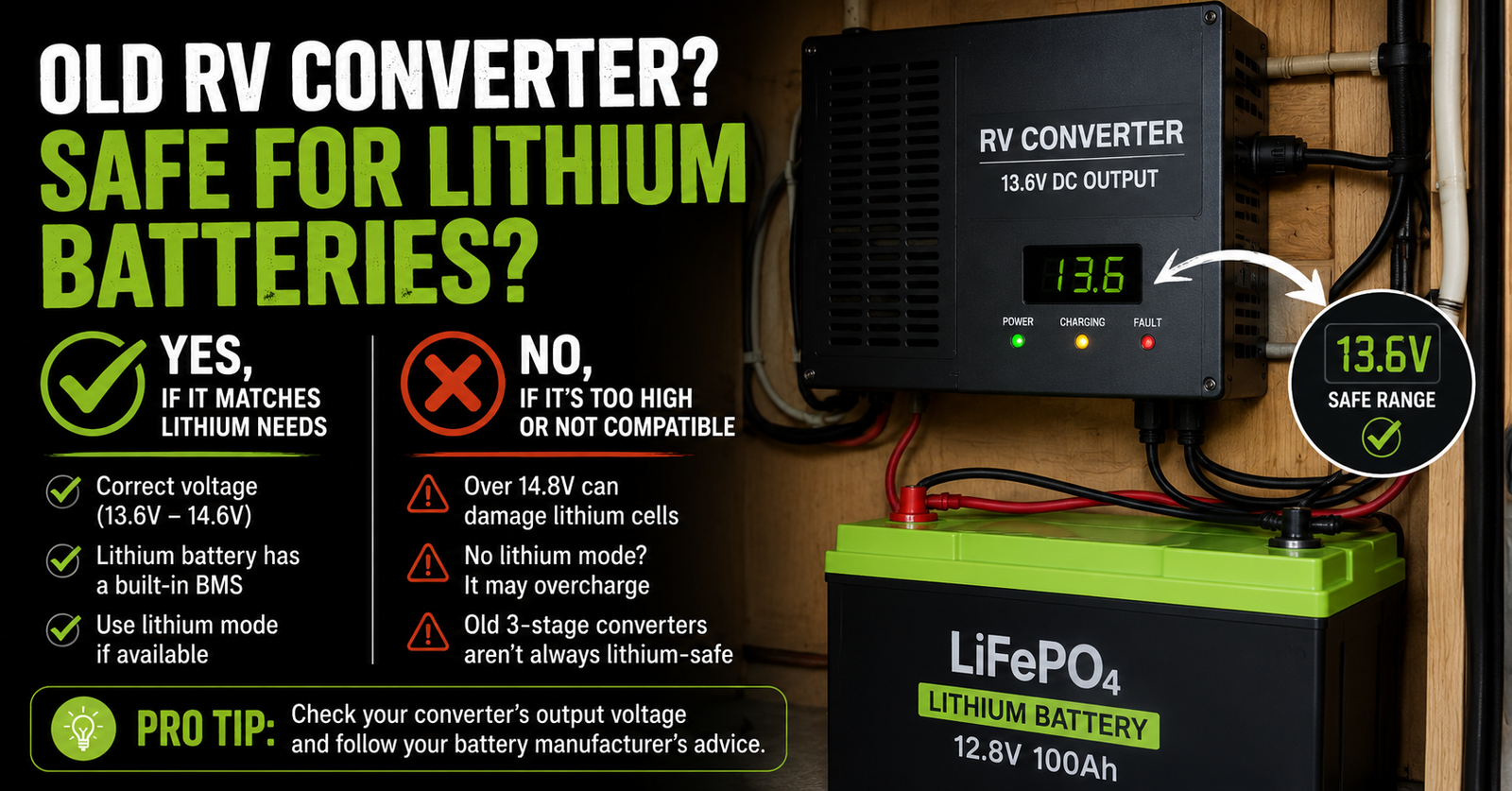
Modern converters increasingly support multiple battery chemistries. Progressive Dynamics’ current replacement information, for example, specifically distinguishes converter options for lead-acid, AGM, and lithium batteries. That chemistry distinction is also central when checking lithium converter compatibility, since an older unit may not provide the charging profile the battery requires.
If you’re upgrading batteries at the same time, converter compatibility belongs on the checklist.
What Size Converter Do I Need for a Lithium Battery?
There isn’t one universal answer.
A 100Ah lithium battery from one manufacturer may have different recommended charging limits than another battery.
A bank made from several batteries connected in parallel changes things again.
Start with the battery manufacturer’s recommended and maximum charging specifications.
Then consider:
Battery-bank capacity.
Desired charging speed.
Existing converter size.
DC wiring.
Fuse or breaker protection.
Cable length.
Available AC power.
Converter charging profile.
That’s why I’d never tell every person with a 200Ah lithium bank that they automatically need a specific converter amperage.
The rest of the system matters.
Don’t Assume Lithium Means You Need Maximum Charging Current
Lithium batteries can often accept substantial charging current, but that doesn’t mean you need to charge them at the maximum possible rate every time.
Maybe you’re plugged into shore power for three days.
Who cares if the battery takes a little longer to reach full charge?
On the other hand, if you’re running a generator specifically to recharge the battery while boondocking, charging speed becomes much more valuable.
Your camping style matters.
What About a 100Ah Battery?
Again, I wouldn’t size the converter from battery capacity alone.
Check the battery manufacturer’s charging recommendations.
Then consider the RV’s normal DC loads.
Remember that the converter isn’t exclusively a battery charger.
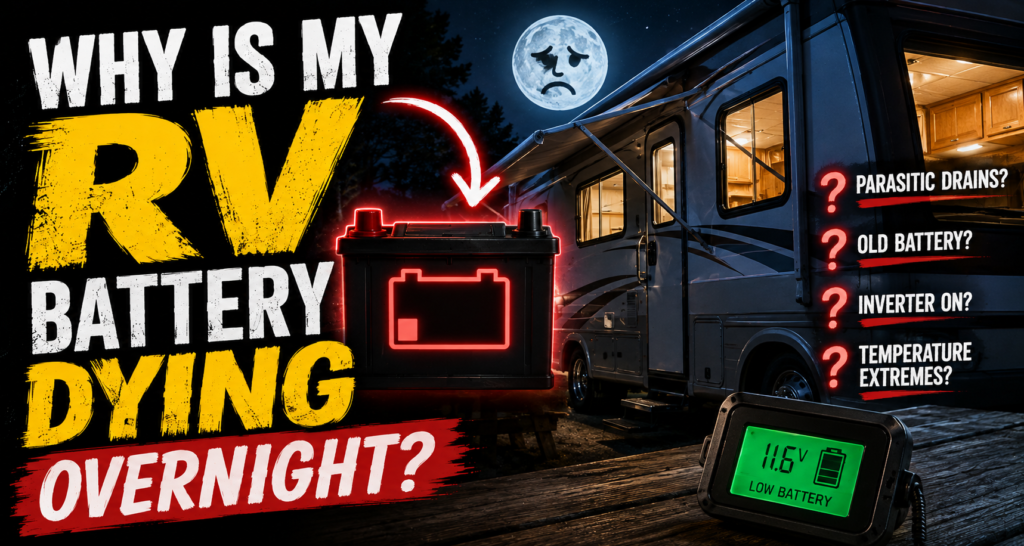
If the camper is using 15 amps of DC power while the converter is operating, that load is consuming part of the converter’s available output. Understanding that available charging capacity is being used elsewhere can clarify why an RV battery can still die with the disconnect off.
That’s why an RV converter has to be considered as part of the whole 12-volt system.
What About a 200Ah Battery Bank?
Same idea.
Doubling battery capacity doesn’t automatically mean you must double converter amperage.
A larger bank stores more energy.
That can mean longer recharge times with the same converter.
Whether that matters depends on how you use the camper.
If you’re connected to shore power overnight, slower charging may be perfectly acceptable.
If you’re trying to restore a heavily depleted battery bank during a short generator run, it may not be.
What About a 400Ah Battery Bank?
Now charging time can become a much bigger consideration.
This is similar to the example WFCO discusses in its current technical information. A relatively small converter can still charge a large bank, but the time required can become significant, and WFCO specifically discusses considering converter and wire upgrades when charging larger banks, especially from a generator.
That’s a much better way to think about sizing:
Capacity + charging time + wiring + battery limits + RV loads.
Not simply “400Ah means X amps.”
Your 12-Volt Loads Still Count
Suppose you have a 45-amp converter.
The battery can theoretically accept plenty of charging current.
But the furnace is running.
Lights are on.
Vent fans are running.
The water pump cycles.
Other 12-volt equipment is operating.
The converter has to support those loads too.
WFCO’s converter-sizing explanation specifically accounts for the camper’s connected low-voltage loads when manufacturers determine converter capacity.
Battery charging isn’t happening in a vacuum.
What Happens If My Converter Is Too Small?
A converter that’s undersized for the actual DC demand may struggle when a lot of 12-volt equipment operates at once.
Some converters include current-limiting protection.
Progressive Dynamics says its PD9100 and PD9200 converters can shut down when demand exceeds their designed output, then resume normal operation after the excessive demand is removed.
An undersized converter may also mean slower battery charging.
But again, diagnose why demand is excessive before assuming you need an upgrade.
What Happens If My Converter Is Too Big?
The big concern isn’t that the converter will somehow force its maximum amperage into everything all the time.
The concern is whether the system was designed to safely support the converter’s potential output.
Wiring.
Connections.
Fuses.
Breakers.
Battery charging limits.
AC input requirements.
That’s why converter manufacturers warn against blindly installing higher-output replacements.
The number on the converter isn’t the only number that matters.
Does a 60-Amp Converter Always Put Out 60 Amps?
No.
Think of 60 amps as available output capacity, not something the converter continuously forces into the battery.
Actual current depends on system demand, battery condition, charging stage, converter design, voltage, and other factors.
A nearly full battery isn’t necessarily going to sit there accepting 60 amps simply because you own a 60-amp converter.
That’s an important distinction.
Why Is My Converter Only Putting Out a Few Amps?
That doesn’t automatically mean something is wrong.
A battery near full charge may accept considerably less current than a deeply discharged battery.
The charging mode can matter.
Battery temperature and battery-management systems can matter with some battery types.
DC loads can affect what you’re measuring.
Don’t diagnose converter capacity based on one amperage reading without understanding the conditions.
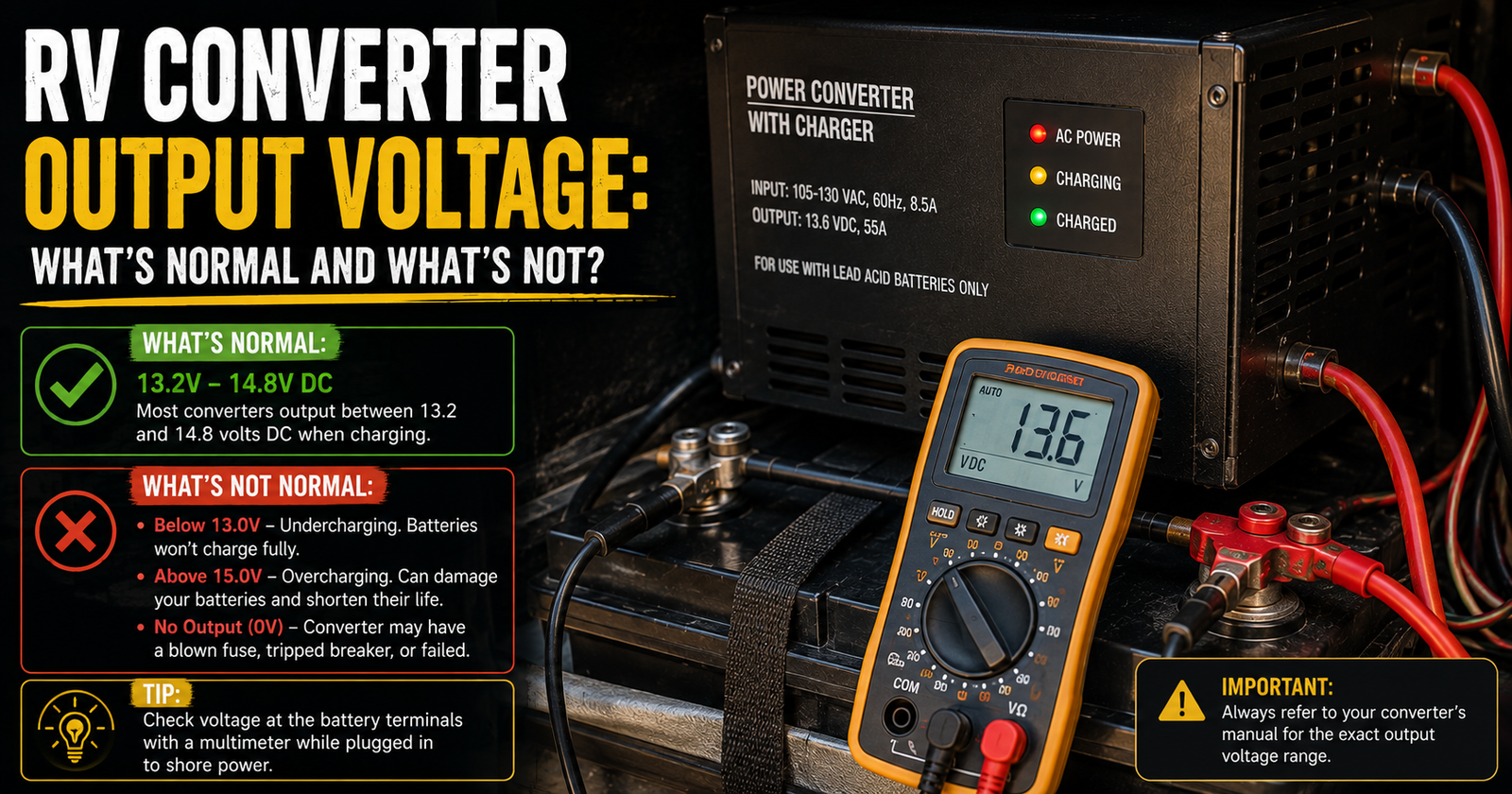
Voltage measurements are useful too, which is why we built a separate guide explaining normal RV converter output voltage.
Converter Wattage Matters on the AC Side Too
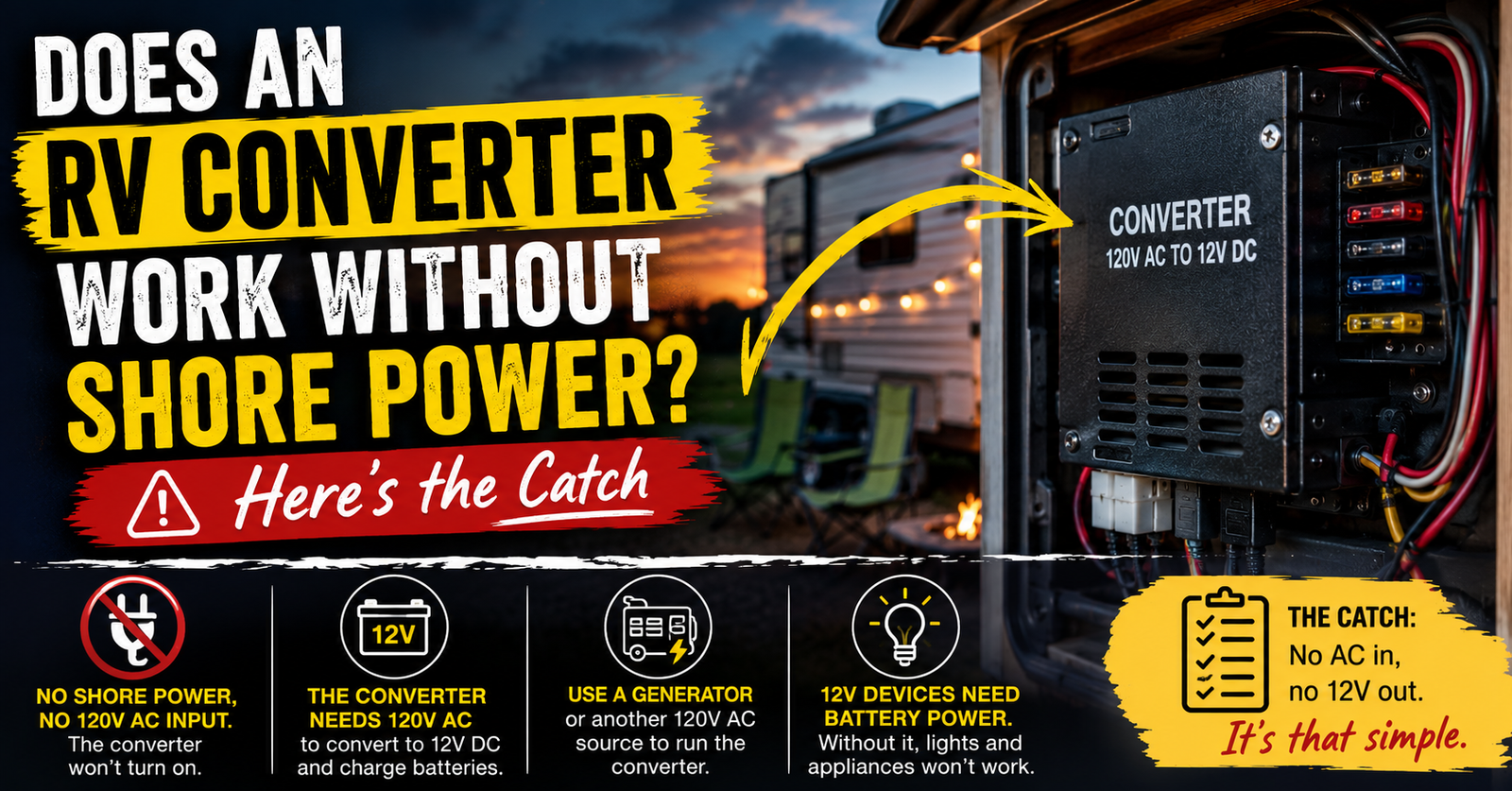
A larger converter can demand more AC input when operating at high output.
Progressive Dynamics’ published specifications illustrate this nicely.
Its PD4635, PD4645, and PD4655 replacement converters are rated for maximum DC outputs of 35, 45, and 55 amps respectively, while their listed maximum continuous AC input power increases from 550 watts to 725 watts to 950 watts.
So increasing converter output capability affects more than the DC side.
Again, the entire system needs to make sense.
Can I Replace a 35-Amp Converter With a 45-Amp Converter?
Maybe, but I wouldn’t make that call based solely on the fact that the new converter physically fits.
If the RV was originally designed around a 35-amp converter, verify whether the wiring, protection, battery system, power center, and manufacturer-approved replacement allow a higher output.
Progressive Dynamics’ retrofit documentation is quite explicit that its replacement models should not exceed the amperage rating originally installed unless the system is properly designed for it.
For a straightforward replacement, matching the original rating is the cleaner approach.
Can I Replace a 45-Amp Converter With a 55-Amp Converter?
Same answer.
Don’t assume a ten-amp increase is insignificant.
Check the wiring and manufacturer’s approved replacement information.
There may be RVs where an electrical upgrade makes this perfectly reasonable.
There may be others where it isn’t.
That’s why our next converter article needs to tackle this exact question in depth:
Can I Replace My RV Converter With a Higher Amp Converter?
There’s enough involved that I don’t want to bury the whole subject inside this sizing guide.
Can I Replace a 55-Amp Converter With a 60-Amp Converter?
Again, verify it.
This is where cross-reference guides become extremely useful.
Progressive Dynamics publishes replacement recommendations based on existing converter models and battery chemistry rather than telling everybody to simply move up to the next amperage.
Look up the actual model you’re replacing.
Don’t shop entirely by amp number.
Physical Size Matters Too
Here’s an easy thing to forget until the new converter arrives.
Will it fit?
Power-center converter sections aren’t universally interchangeable.
Deck-mount converters have different dimensions.
Mounting arrangements vary.
Connections vary.
Cooling requirements vary.
Progressive Dynamics specifically tells owners using its cross-reference guide to compare the dimensions of the existing installation with the replacement.
Measure before ordering.
There Are Different Types of RV Converters
You may encounter a deck-mount or floor-mount converter that’s physically separate from the main distribution panel.
Or you may have a power center with a replaceable converter section built into the assembly.
Progressive Dynamics describes both styles in its replacement information.
That means “I need a 45-amp converter” still isn’t enough information to order the correct part.
You need to know what style you’re replacing.
Sometimes You Don’t Need to Replace the Whole Power Center
This can save a lot of unnecessary work.
Some RV power centers have removable converter sections.
If that converter module fails, you may be able to replace the converter section while keeping the existing AC breaker and DC fuse distribution portions of the power center.
Progressive Dynamics currently offers replacement converter sections for several of its power-center families.
So find out what you actually have before tearing the entire panel out of the wall.
Make Sure the Converter Is Actually Bad First
This might sound obvious after all the converter troubleshooting we’ve done, but it deserves saying.
Don’t size a replacement until you know you need a replacement.
A converter that isn’t charging the battery could actually have:
A blown fuse.
A tripped breaker.
A battery-disconnect problem.
A bad battery connection.
A failed battery.
No AC input.
Damaged wiring.
Another charging-path problem.
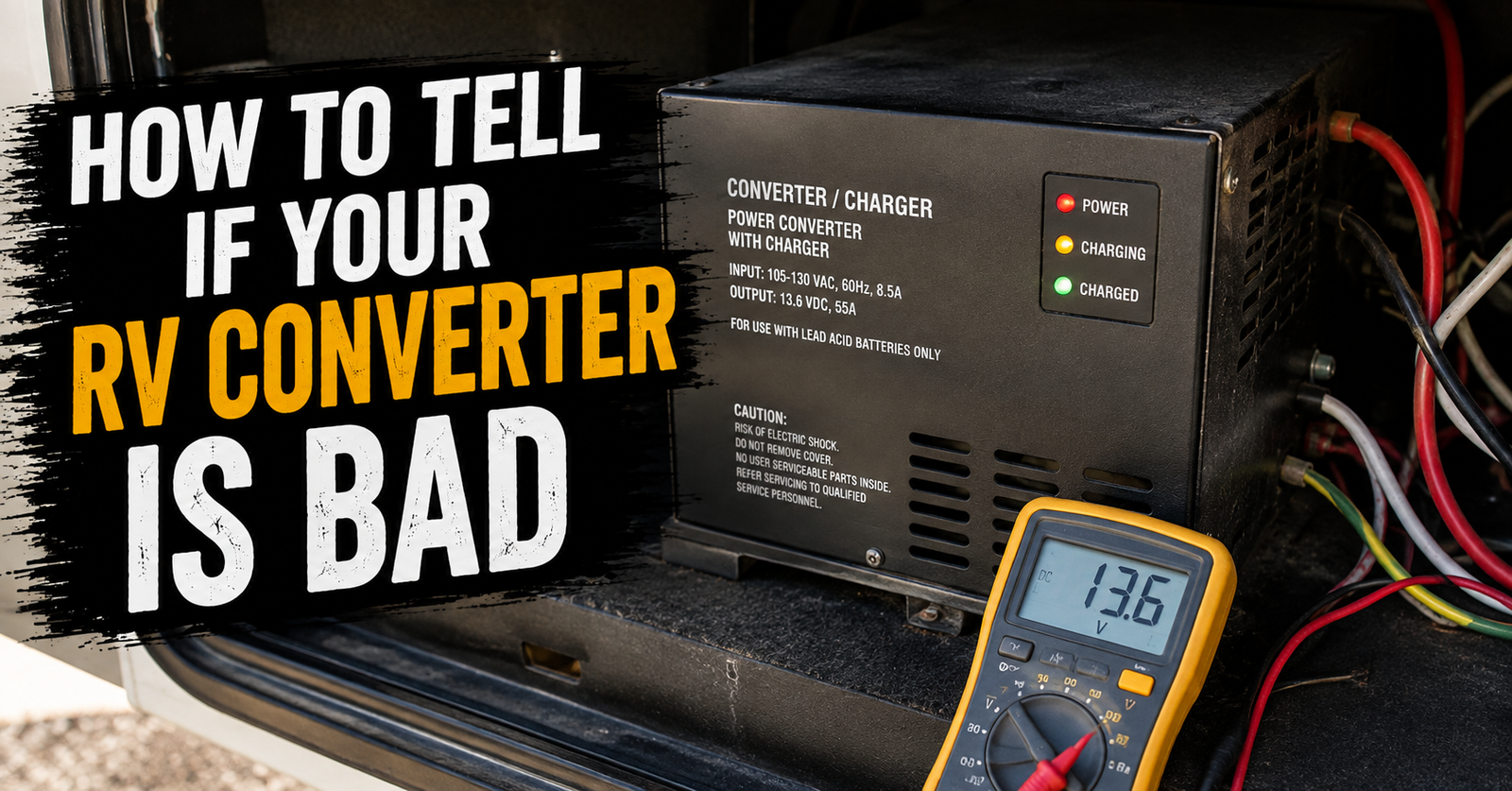
We’ve already built a complete guide for telling whether an RV converter is actually bad.
Use it before spending money.
A Bigger Converter Won’t Fix a Bad Battery
This is another trap.
Battery takes forever to charge.
Owner assumes converter isn’t big enough.
Owner buys giant converter.
Battery still behaves terribly.
Why?
Because the battery was worn out.
If your battery has poor capacity, a damaged cell, or another internal problem, throwing more charging capability at it doesn’t restore lost battery health.
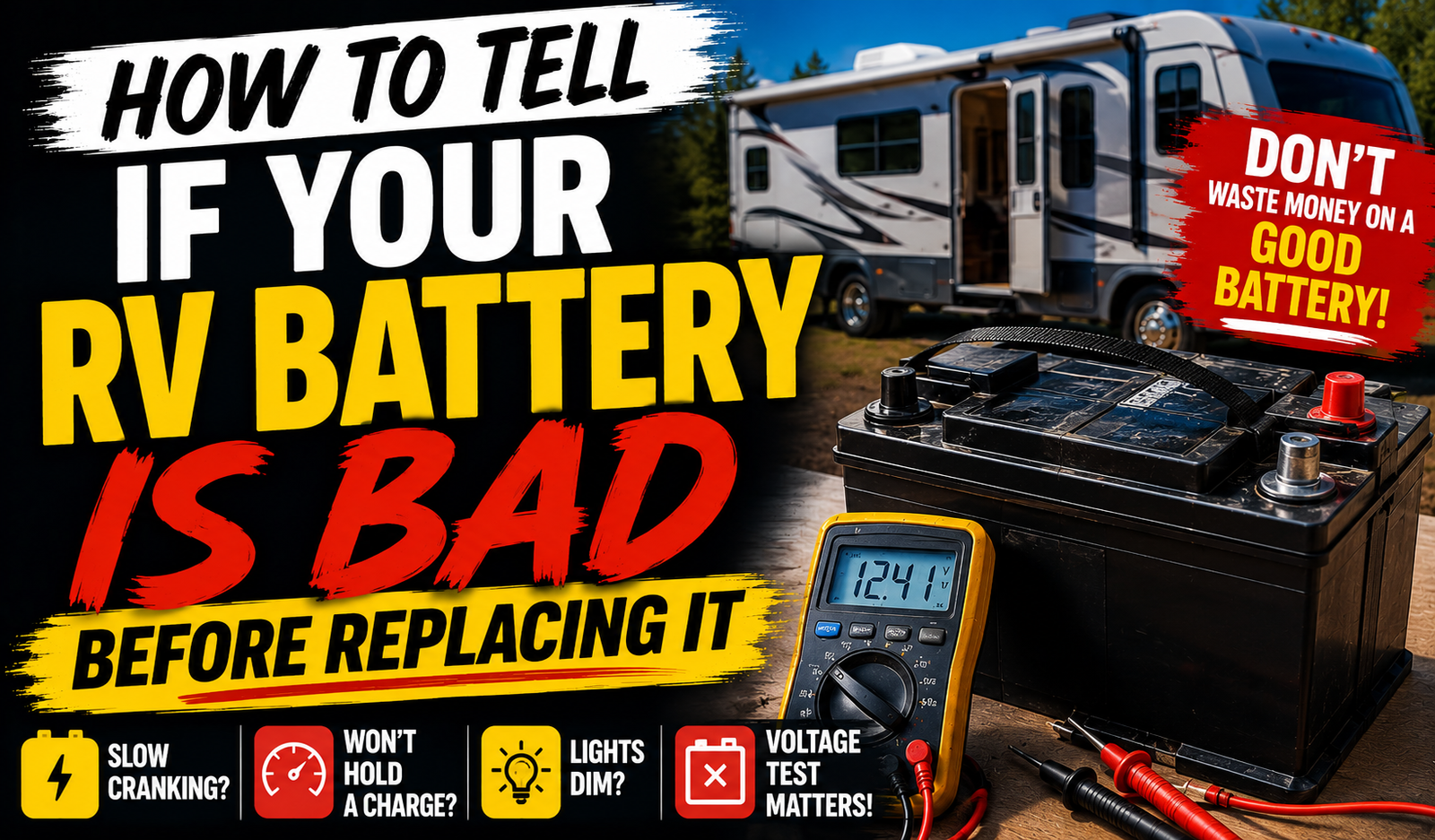
If you’re unsure about the battery, go through our guide showing how to tell if an RV battery is bad first.
A Bigger Converter Won’t Fix Voltage Drop Either
Let’s say the converter is mounted far from the battery.
The wiring is marginal.
Connections aren’t great.
You’re losing meaningful voltage between converter and battery.
Installing an even larger converter without addressing the charging path isn’t the solution I’d choose.
Fix the actual bottleneck.
Good charging performance requires the converter’s output to actually reach the battery.
Don’t Forget Fuses and Circuit Protection
Higher current means protection matters.
Progressive Dynamics says positive wiring connected to the battery needs appropriate fuse protection, and its FAQ specifies protection close to the battery for applicable wiring arrangements.
Don’t copy fuse sizes from a random RV forum.
Protection has to make sense for the conductor and equipment.
If you’re changing converter output enough to require redesigning high-current wiring and circuit protection, you’re well beyond a simple plug-and-play replacement.
What Size Converter Would I Buy for a Stock RV?
If I were replacing a converter in an otherwise stock camper, I’d start here:
Find the original converter’s model and DC amp rating.
Then I’d find the manufacturer’s approved replacement or a reputable cross-reference for that exact unit.
I’d match the battery chemistry.
I’d verify physical fit.
I’d verify charging compatibility.
And unless the manufacturer or a properly designed electrical upgrade says otherwise, I’d stay with the original DC output class.
That’s boring advice.
It’s also a lot better than melting wiring.
What Size Converter Would I Use After a Lithium Upgrade?
That’s where I’d slow down and evaluate the system rather than simply matching the old converter.
I’d want to know:
Battery manufacturer.
Battery-bank capacity.
Recommended charging current.
Maximum charging current.
Existing converter output.
Existing cable gauge.
Cable length.
Fuse or breaker protection.
How quickly I actually need to recharge.
Whether I’m commonly using shore power or generator charging.
Then I’d select a compatible converter/charger as part of that system.
Lithium gives you opportunities to improve charging performance, but it doesn’t erase the electrical limits of everything between the converter and battery.
Do I Need a Bigger Converter After Adding Another Battery?
Not necessarily.
Adding battery capacity primarily gives you more stored energy.
Your existing converter may still charge the larger bank.
It may simply take longer.
If you’re satisfied with the charging time, there may be no reason to increase converter output.
If charging time becomes unacceptable, then I’d evaluate an upgrade properly.
That’s a much better reason to change converter size than “bigger sounds better.”
Is a Higher-Amp Converter Better for Boondocking?
It can be, particularly when generator charging time matters.
If your battery bank can safely accept higher charging current and the rest of the system supports it, getting more charging accomplished during a shorter generator run can be extremely useful.
But the battery’s ability to accept current is part of the equation.
So is the converter’s charging profile.
So is wiring.
So is generator capacity.
It’s a system.
I keep coming back to that because that’s really the answer to converter sizing.
Is a Higher-Amp Converter Better for Campground Camping?
Not necessarily.
If you’re almost always connected to shore power for long periods, charging speed may not matter nearly as much.
If the existing converter adequately supplies the camper’s 12-volt loads and charges the battery normally, what exactly are you gaining by doubling its size?
Sometimes the best upgrade is leaving a properly functioning system alone.
How Do I Know If My Current Converter Is Too Small?
I’d look for evidence rather than assuming.
Does the converter routinely reach its output limit during ordinary use?
Do DC loads exceed what it can supply?
Is battery charging unacceptably slow even though the battery, wiring, connections, and charging profile are correct?
Did you add substantial new 12-volt equipment?
Did you dramatically increase battery-bank capacity and now need faster generator charging?
Those are legitimate reasons to evaluate sizing.
A noisy fan by itself isn’t.
Neither is the converter getting reasonably warm while working.
What If My Converter Keeps Shutting Off Under Heavy Load?
Then I’d troubleshoot that before upsizing.
Some converter designs include current limiting or protective shutdown when demand exceeds their capability.
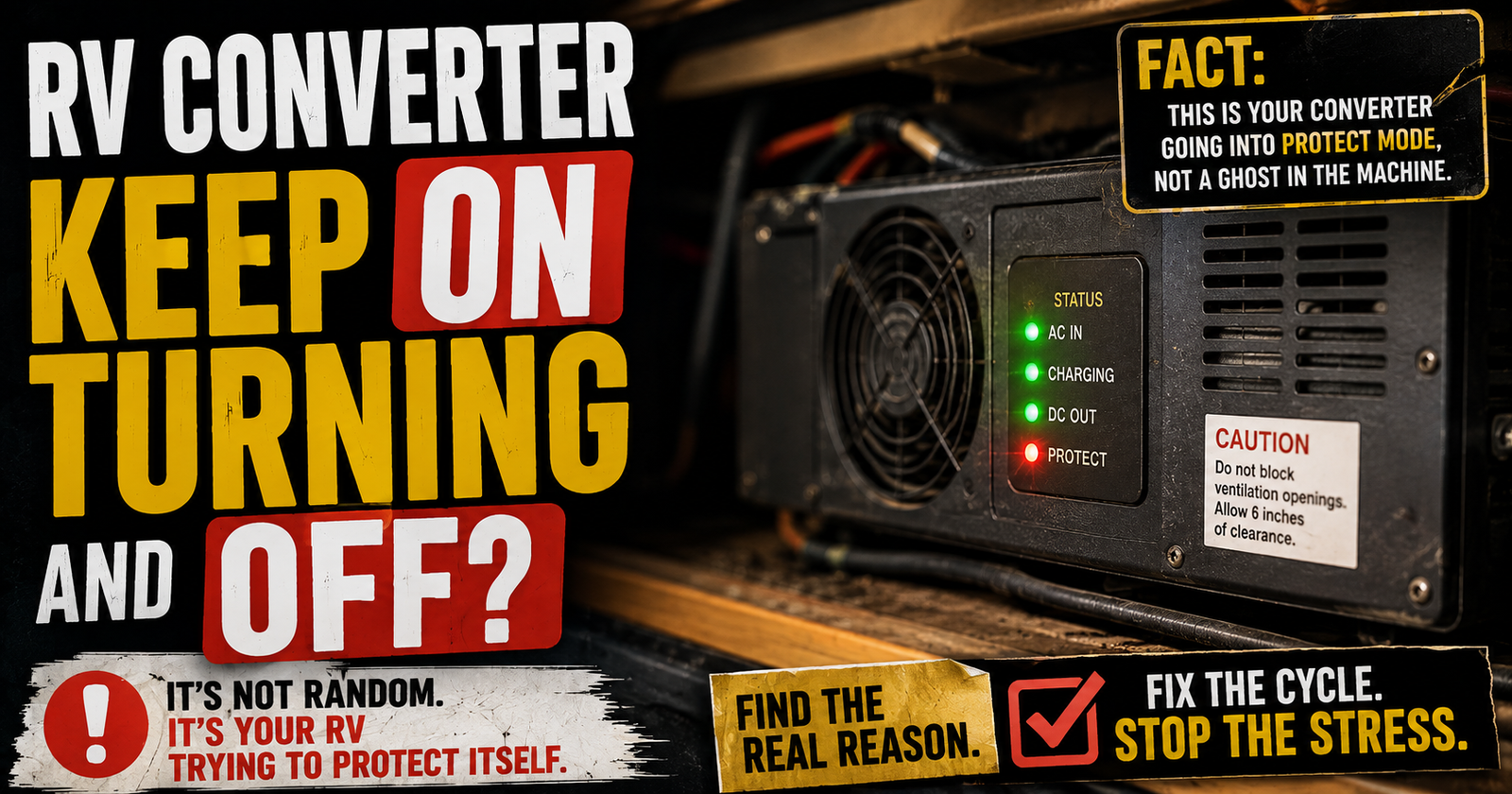
We’ve already built a guide specifically for an RV converter that keeps turning on and off.
Maybe the converter is undersized.
But it could also be overheating, dealing with a short, seeing unstable AC input, or responding to another electrical problem.
Find the cause first.
What If My Converter Gets Really Hot?
Same thing.
Heat doesn’t automatically mean you need a larger converter.
Check ventilation.
Cooling fan operation.
Battery condition.
DC load.
Connections.
Incoming power.
Converter output.
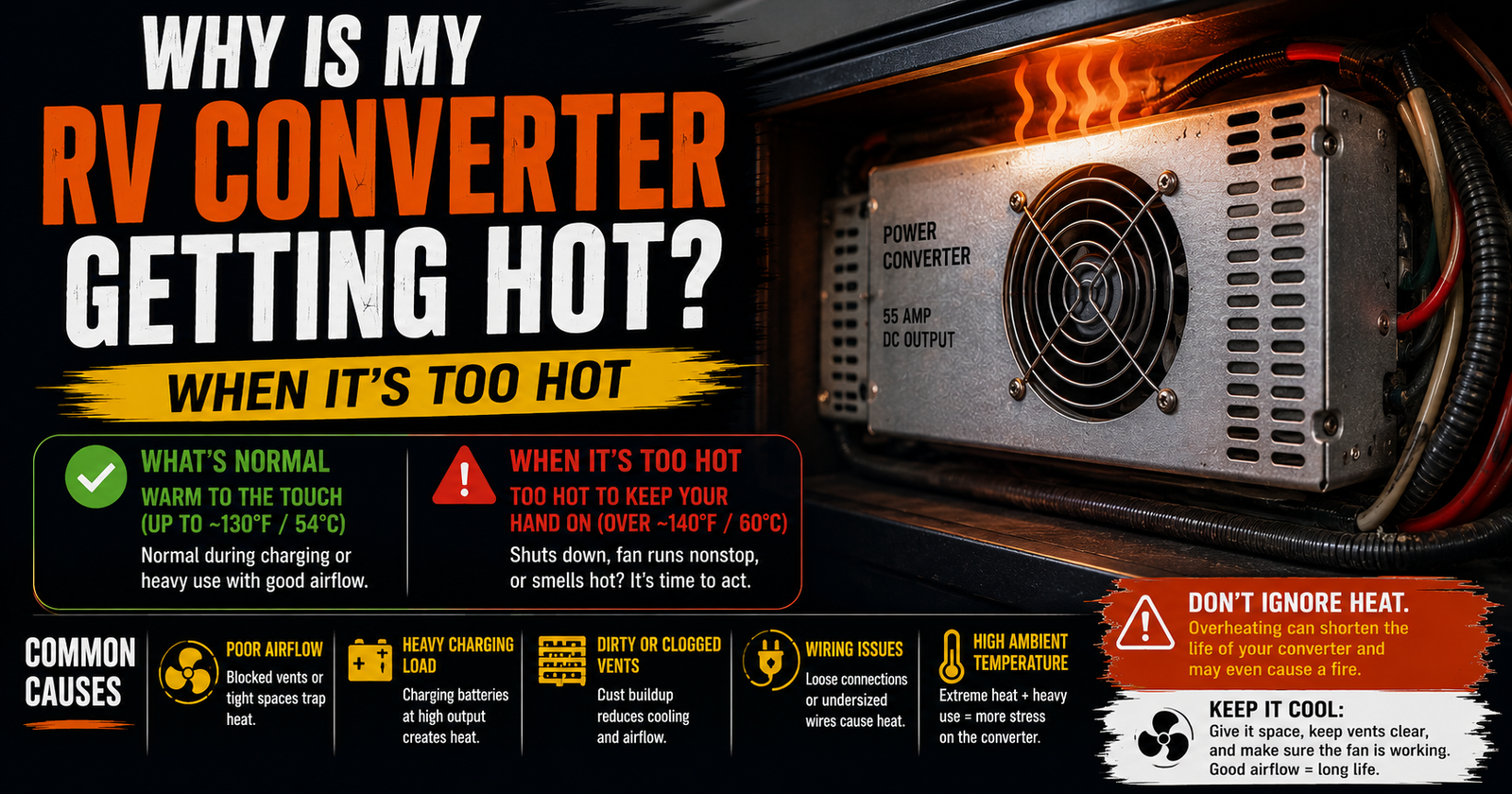
We’ve covered those possibilities in our guide to an RV converter that’s getting too hot.
Don’t redesign the charging system to compensate for blocked ventilation.
What If I Don’t Know What Converter the RV Originally Had?
Used campers can make this interesting.
Maybe somebody replaced it years ago.
Maybe the power center was modified.
Maybe there’s an aftermarket converter stuffed into a compartment.
In that situation, I’d identify:
Current power center.
Converter model.
RV manufacturer specifications if available.
Battery bank.
DC distribution and loads.
Wiring size.
Circuit protection.
Then I’d use manufacturer cross-reference information or have a qualified RV electrical technician determine the appropriate replacement.
Don’t assume the mystery converter currently installed is automatically correct just because it’s there.
When I Would Get an RV Technician Involved
A same-size, manufacturer-approved converter module can be fairly straightforward conceptually.
But once we’re talking about increasing amperage, changing wire gauge, changing circuit protection, modifying the power center, altering AC wiring, or redesigning the charging system, I’d be much more comfortable having somebody qualified verify the installation.
Progressive Dynamics’ own PD4600 replacement instructions say installation should be completed by a licensed electrician or certified RV technician and warn that all power sources must be disconnected before replacement work begins.
An RV can have shore power, battery power, generator power, solar, and inverter equipment all interacting in the same electrical system.
“Unplugged” doesn’t always mean everything is dead.
So What Size RV Converter Do You Actually Need?
For a normal replacement, the answer is refreshingly simple:
Start with the converter size your RV was designed to use.
If you currently have a properly sized 45-amp converter and you’re replacing it because it failed, look for the correct 45-amp replacement or manufacturer-approved equivalent.
Don’t jump to 60 or 80 amps just because more output sounds better.
If you’re changing the electrical system, that’s different.
A larger battery bank, lithium conversion, substantial new DC loads, or a need for much faster generator charging can justify reevaluating converter size. But at that point, look at the entire charging system, especially the battery’s charging limits, DC wiring, wire length, circuit protection, converter compatibility, and available AC power.
That’s the part I want RV owners to remember.
Your converter doesn’t get to be sized by itself.
It’s one piece of the RV’s electrical system.
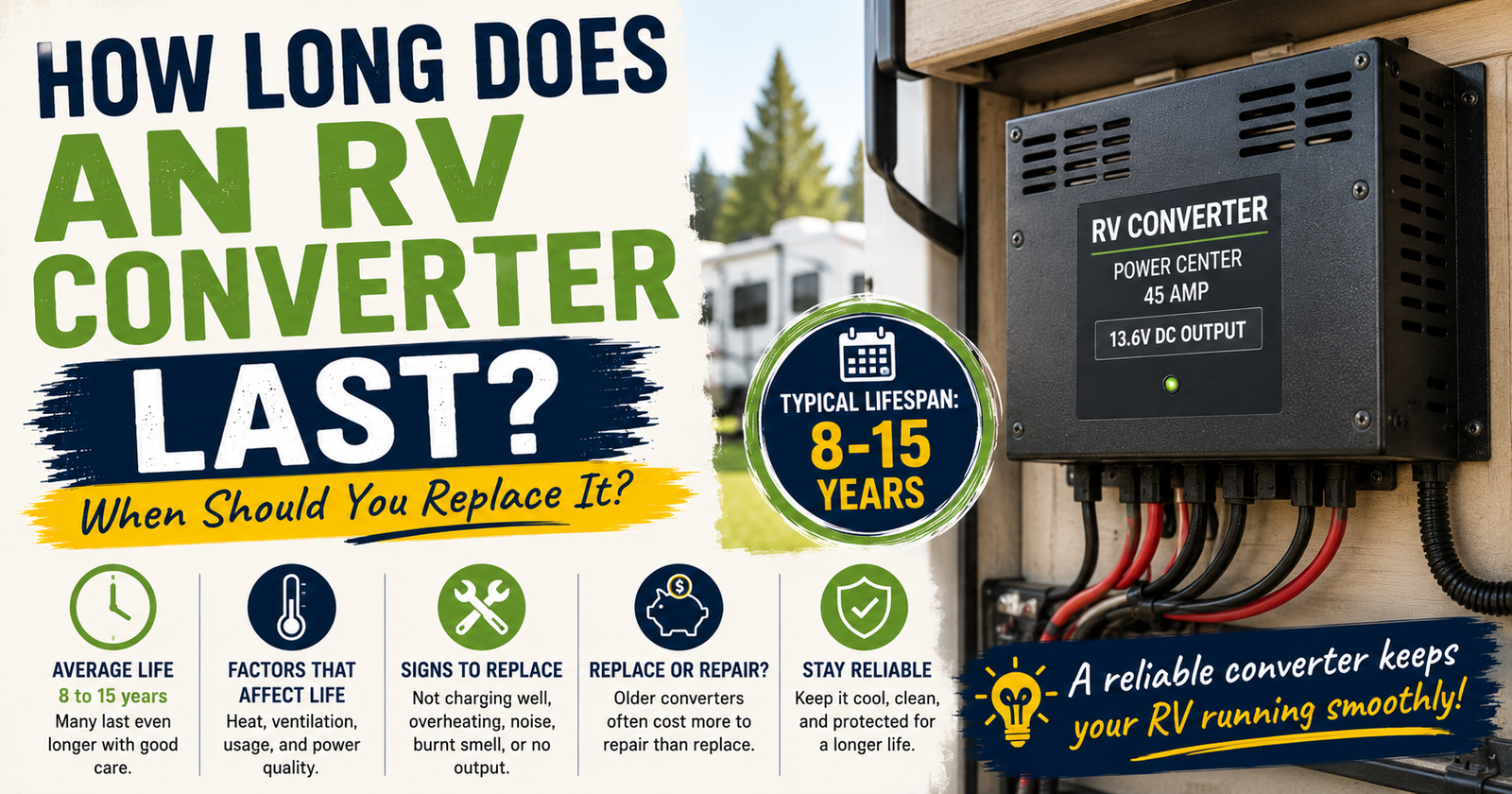
And if all you’re doing is replacing a failed converter in a stock camper, matching what the RV was already designed to safely use is usually a much smarter starting point than buying the biggest converter that will fit. Before choosing that replacement, consider whether an RV converter needs replacing and confirm that the old unit is actually at the end of its service life.
Written by Evan Mercer
Evan Mercer writes about RV electrical systems, converters, batteries, shore power, and practical camper troubleshooting for CamperAnswers.com. His work focuses on making confusing RV electrical decisions understandable without turning every repair into an electrical-engineering lesson.