

If you replace a fuse in your RV converter and it immediately blows again, stop putting fuses in it.
Seriously.
A fuse isn’t something you need to convince to stay alive. It’s opening because something in that circuit isn’t right, and repeatedly feeding the problem new fuses isn’t fixing whatever caused the first one to blow. If repeated fuse failures are accompanied by heat or odor, check the other warning signs of converter trouble in other warning signs of converter trouble.
The tricky part is figuring out which fuse is actually blowing.
An RV power center can contain a whole collection of fuses protecting individual 12-volt circuits. The converter itself may also have larger reverse-polarity protection fuses. Those two situations can point you in very different directions.
So before buying a converter, replacing a battery, or installing another fuse, let’s figure out what that blown fuse is trying to tell us.
First, Which RV Converter Fuse Keeps Blowing?
This is where I’d start.
Don’t just tell yourself:
“The converter fuse blew.”
Identify it.
Is it one of the large reverse-polarity protection fuses associated with the converter?
Is it the fuse protecting the battery charging circuit?
Or is it a smaller branch fuse in the DC distribution panel labeled for something like lights, furnace, water pump, refrigerator, or another 12-volt circuit?
That distinction changes the entire diagnosis.
If one individual branch fuse keeps blowing, I’d be looking hard at that particular circuit.
If the converter’s reverse-polarity fuses blew, battery polarity moves much higher on my list.
What Are the Large Fuses on an RV Converter For?
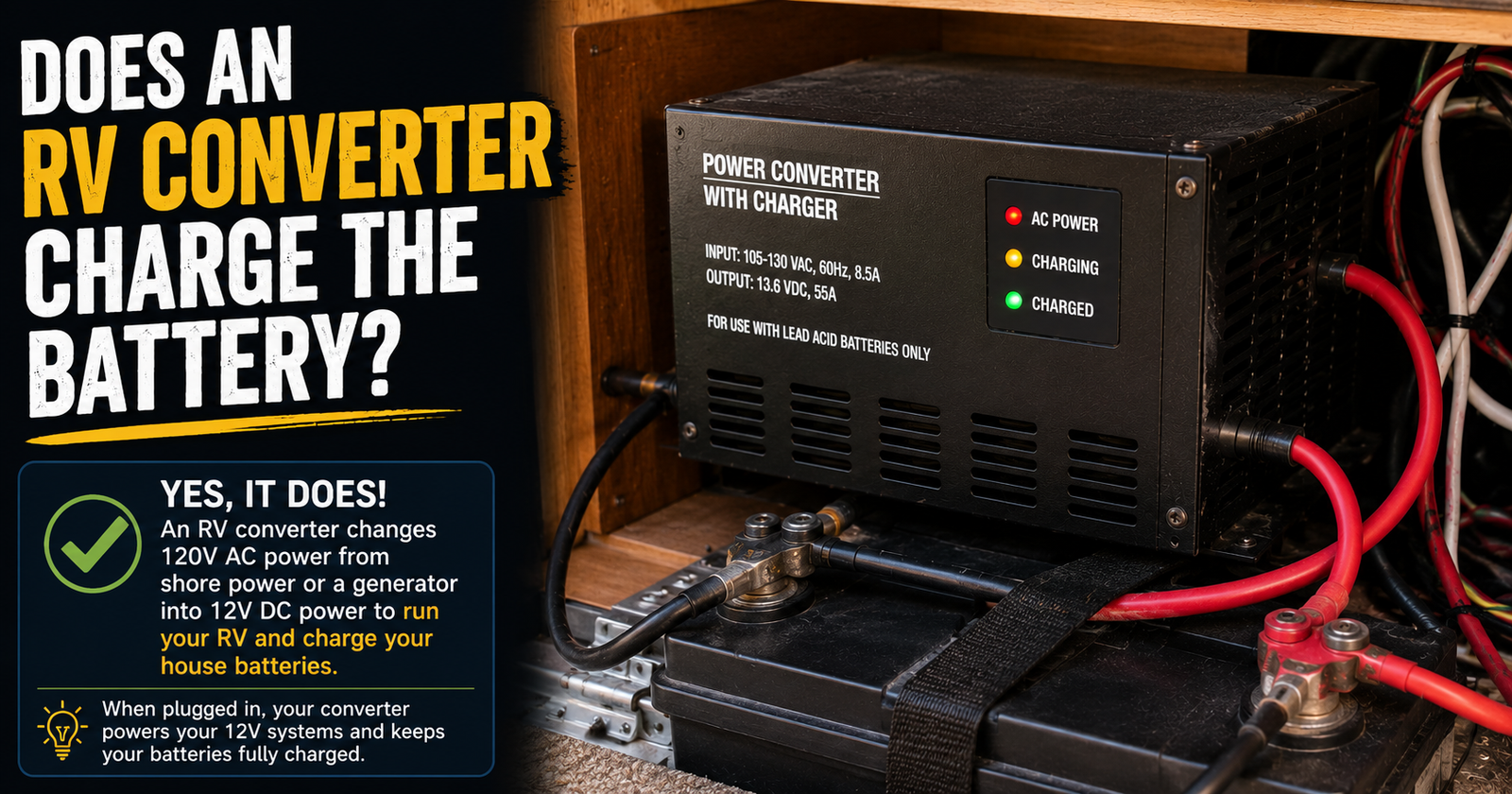
On many converter designs, you’ll find large automotive-style fuses associated with reverse-polarity protection.
They’re there to protect the converter if the battery is connected backward.
Progressive Dynamics specifically says the reverse-battery protection fuses on its PD9100 and PD9200 converter series are designed to protect the converter if battery polarity is reversed. Its troubleshooting documentation says reversing the battery leads, even for a second, can blow those fuses.
That’s a pretty specific clue.
If those are the fuses you’re replacing, the first question I want answered is:
Has anybody touched the battery cables recently?

Did the Fuses Blow Right After a Battery Change?
Timing matters tremendously with electrical problems.
Maybe you replaced the house battery.
Maybe you removed it for winter storage and just reinstalled it.
Maybe you upgraded the battery bank.
Maybe someone disconnected the cables while working on something else.
Then suddenly the converter stops charging and you discover blown reverse-polarity fuses.
That sequence immediately makes me suspicious of a momentary reversed connection.
Even if everything is connected correctly now, that doesn’t prove it was connected correctly the entire time.
A brief mistake may have already blown the protection fuses.
Check Battery Polarity Before Replacing the Fuse
Don’t install another fuse until you’ve verified the battery connections.
Positive battery terminal to the correct positive cable.
Negative battery terminal to the correct negative cable.
And I wouldn’t rely exclusively on cable color in an older camper.
Normally red indicates positive and black or white may be used differently depending on the RV wiring system, but previous owners can change cables, make repairs, add equipment, and generally make your afternoon much more interesting.
Trace and verify.
Don’t assume.
Why Does the New Fuse Blow Immediately?
If you’ve confirmed battery polarity is correct now, but every replacement fuse immediately blows, don’t keep replacing them.
Something else needs diagnosis.
There could be damaged wiring.
A short circuit.
Incorrect wiring from a recent modification.
An internal equipment problem.
A cable connected to the wrong point.
Something touching ground that shouldn’t be.
At this stage, the fuse is protecting the electrical system from a fault that hasn’t been corrected.
Your job isn’t to defeat the fuse.
Your job is to find the fault.
Never Install a Bigger Fuse Just to Stop It From Blowing
This is one of the worst shortcuts you can take.
Let’s say the converter calls for a certain fuse rating.
It keeps blowing.
Someone says:
“Put a bigger fuse in there.”
No.
The fuse rating is selected to protect the circuit and equipment.
Installing a larger fuse can allow more current to flow through wiring or components than the system was designed to handle.
That can turn an annoying electrical problem into overheated wiring, damaged equipment, or a fire hazard.
Use only the type and rating specified by the equipment manufacturer.
A Fuse Is Usually the Messenger
I think about fuses differently than some people do.
The fuse itself often isn’t the problem.
It’s the messenger.
Something happened that caused excessive current through the protected circuit.
The fuse opened.
Now the electricity stopped.
Replacing the fuse restores the circuit, but if the original fault is still there, the exact same thing happens again.
Pop.
That’s not a defective fuse.
That’s repeatable evidence.
Could the RV Converter Itself Be Bad?
Yes, an internal converter failure is possible.
But I wouldn’t jump there first.
Especially if you’re dealing with reverse-polarity protection fuses.
Progressive Dynamics specifically tells owners to check those fuses before replacing a converter suspected of being inoperative.
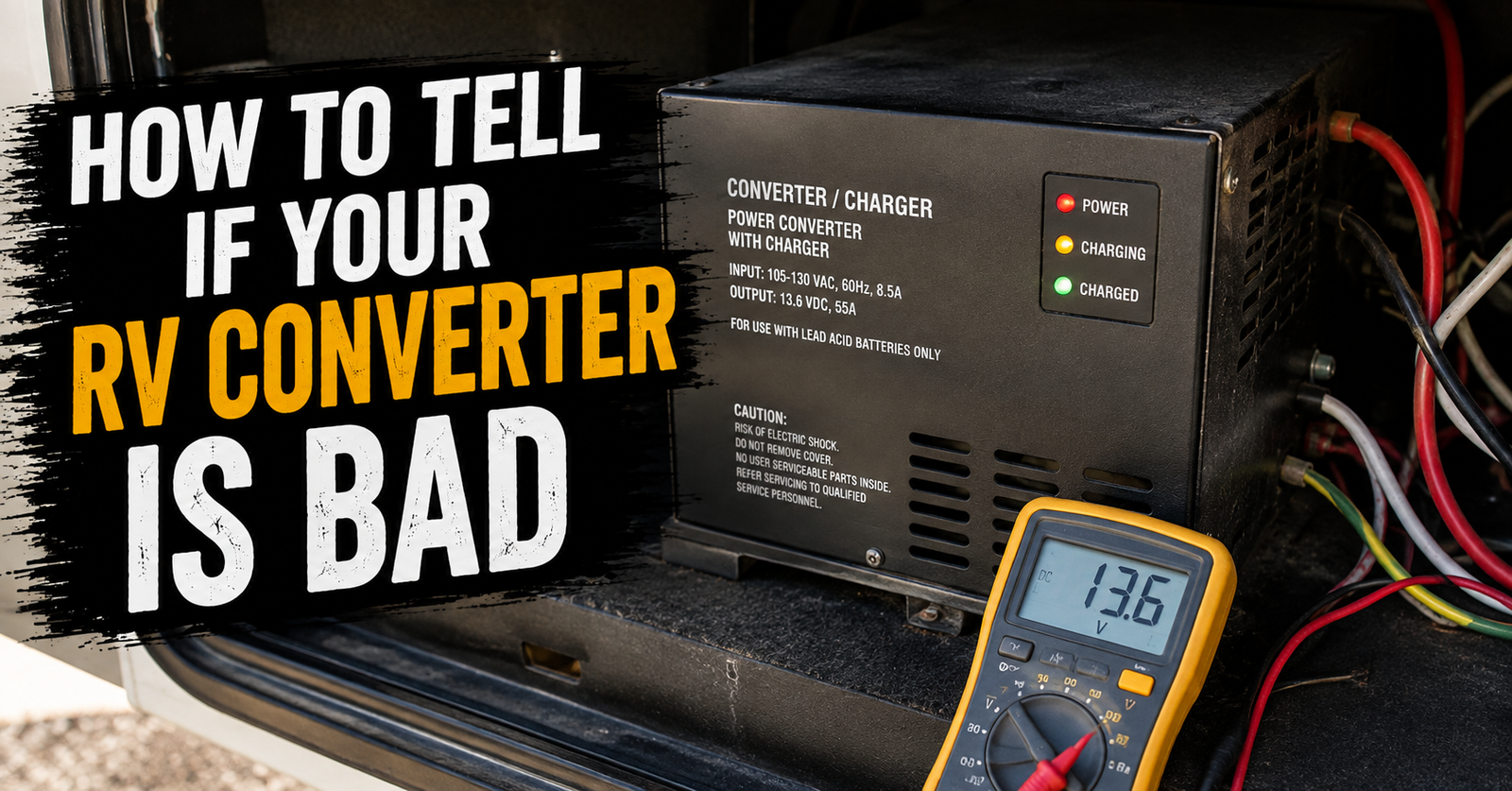
We’ve already built a much broader guide for determining whether an RV converter is actually bad.
I want evidence before spending money on the converter.
What If the Converter Fuse Blows With the Battery Disconnected?
Now we’ve learned something.
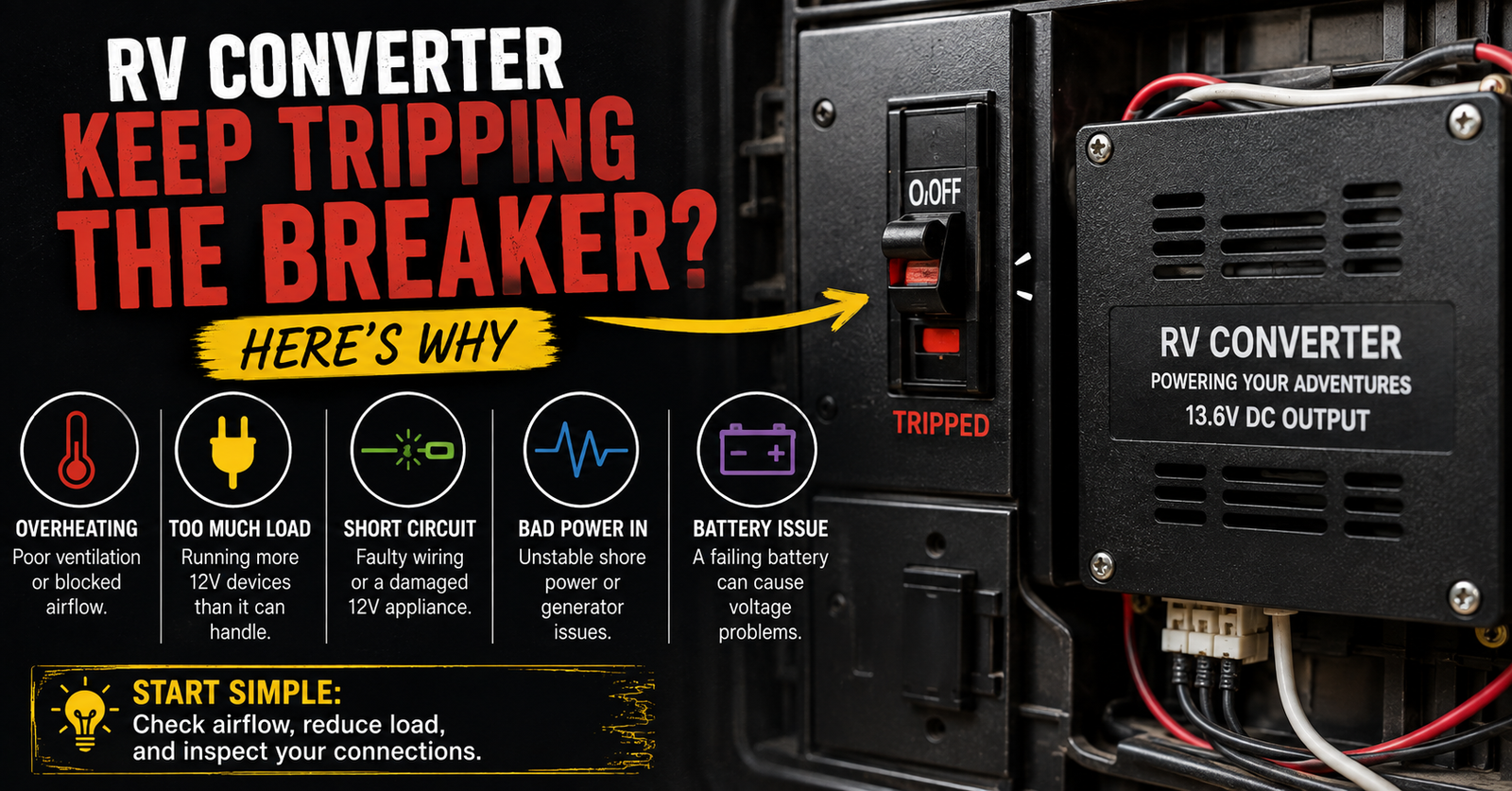
If you’re following an appropriate manufacturer troubleshooting procedure and the problem persists even after you’ve isolated the battery as instructed, that can move suspicion away from a simple battery-polarity problem and toward the converter, wiring, or another part of the system. If the protective device opening is a breaker rather than a fuse, RV converter breaker trips follows a different diagnostic path.
But don’t improvise isolation tests on energized RV electrical equipment.
Use the procedure for your exact converter.
Different converters and power centers aren’t necessarily tested the same way.
Identify Your Converter Model First
Before troubleshooting further, get the model number.
This matters more than people realize.
Progressive Dynamics, for example, publishes different troubleshooting documentation for its PD4000, PD4100, PD4500, PD9100, PD9200, PD9300, and other converter families. Its support documentation specifically tells owners to identify their model before selecting the appropriate diagnostic guide.
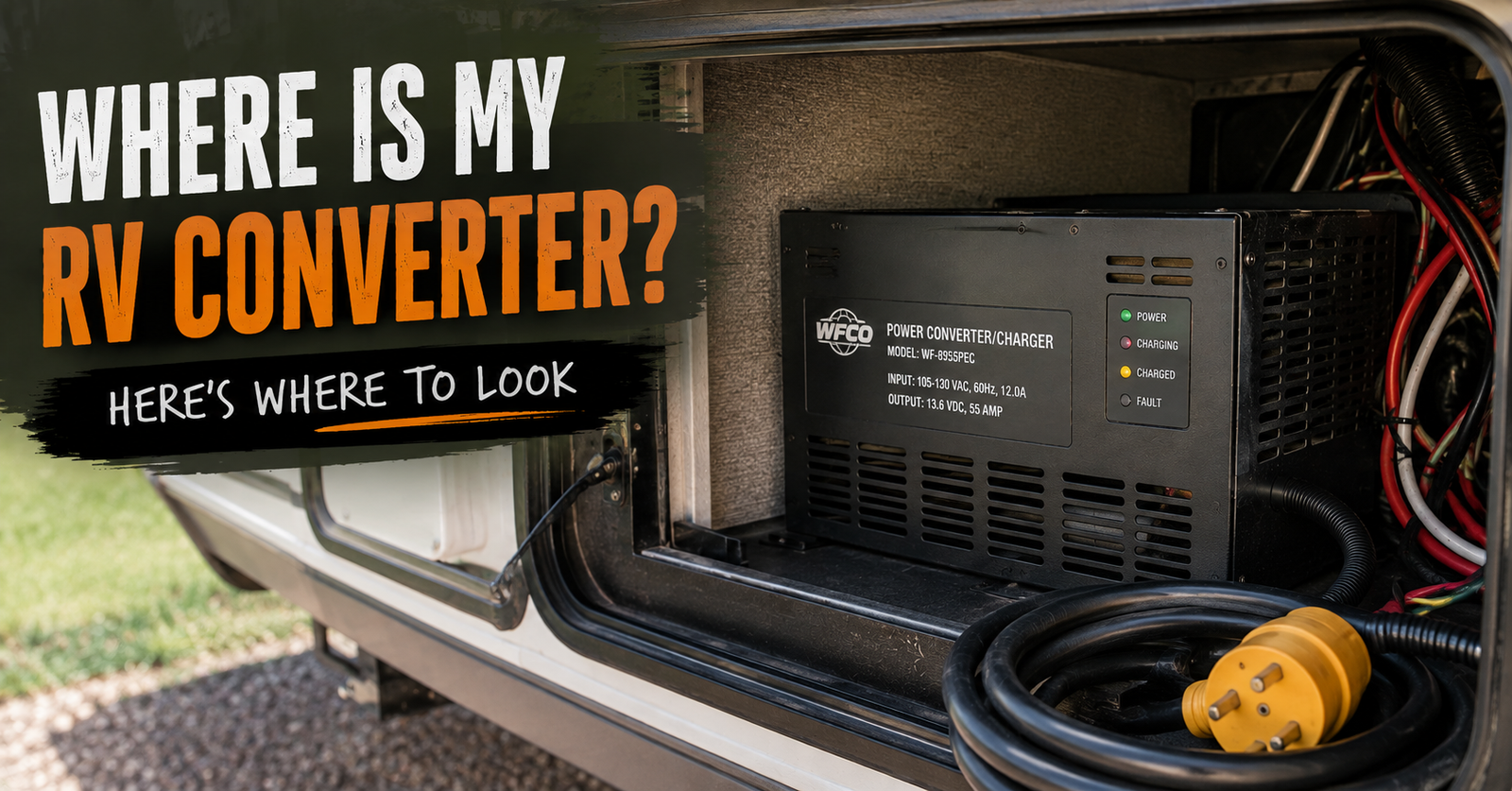
If you can’t even find the converter, we’ve already covered the most common RV converter locations.
Find it.
Photograph the label.
Then troubleshoot the equipment you actually own.
Don’t Confuse Reverse-Polarity Fuses With Branch Fuses
This distinction is huge.
Suppose the fuse labeled WATER PUMP keeps blowing.
That’s not the same diagnosis as a pair of large converter reverse-polarity fuses opening.
The water-pump fuse protects that branch circuit.
Now I’d be interested in the pump, wiring, connectors, and anything else on that circuit.
Maybe a wire rubbed through.
Maybe the pump motor is failing.
Maybe somebody added something else to the circuit.
Different fuse.
Different problem.
What If One 12-Volt Fuse Keeps Blowing?
Start with what that fuse powers.
That’s your clue.
Let’s say the furnace fuse blows every time the furnace tries to start.
I’m not immediately shopping for a converter.
I’m looking at the furnace circuit.
Same with the water pump.
Same with lights.
Same with a slide-control circuit.
A converter supplies DC power, but it doesn’t mean every blown DC fuse is caused by the converter.
What If Several Fuses Keep Blowing?
Now I’d step back and look at what changed.
Was electrical work recently performed?
Was a battery replaced?
Was an inverter installed?
Was solar added?
Was a new appliance connected?
Was there water intrusion near the electrical equipment?
Did somebody accidentally short something while working on another component?
Multiple unrelated failures occurring immediately after one modification make that modification very interesting.
Electrical problems often leave a timeline.
Follow it.
Can a Short Circuit Blow RV Fuses?
Absolutely.
A short creates a low-resistance path that can allow excessive current to flow.
That’s exactly the kind of condition overcurrent protection is intended to interrupt.
A wire with damaged insulation touching ground can do it.
A failed component can do it.
Incorrect wiring can do it.
A screw driven through a wire can do it.
An aftermarket modification can do it.
If a particular fuse blows the instant a certain circuit is energized, I’d be looking for a short or excessive load on that circuit.
But Some Converter Shorts Don’t Blow the Converter Fuse
Here’s where converter design matters.
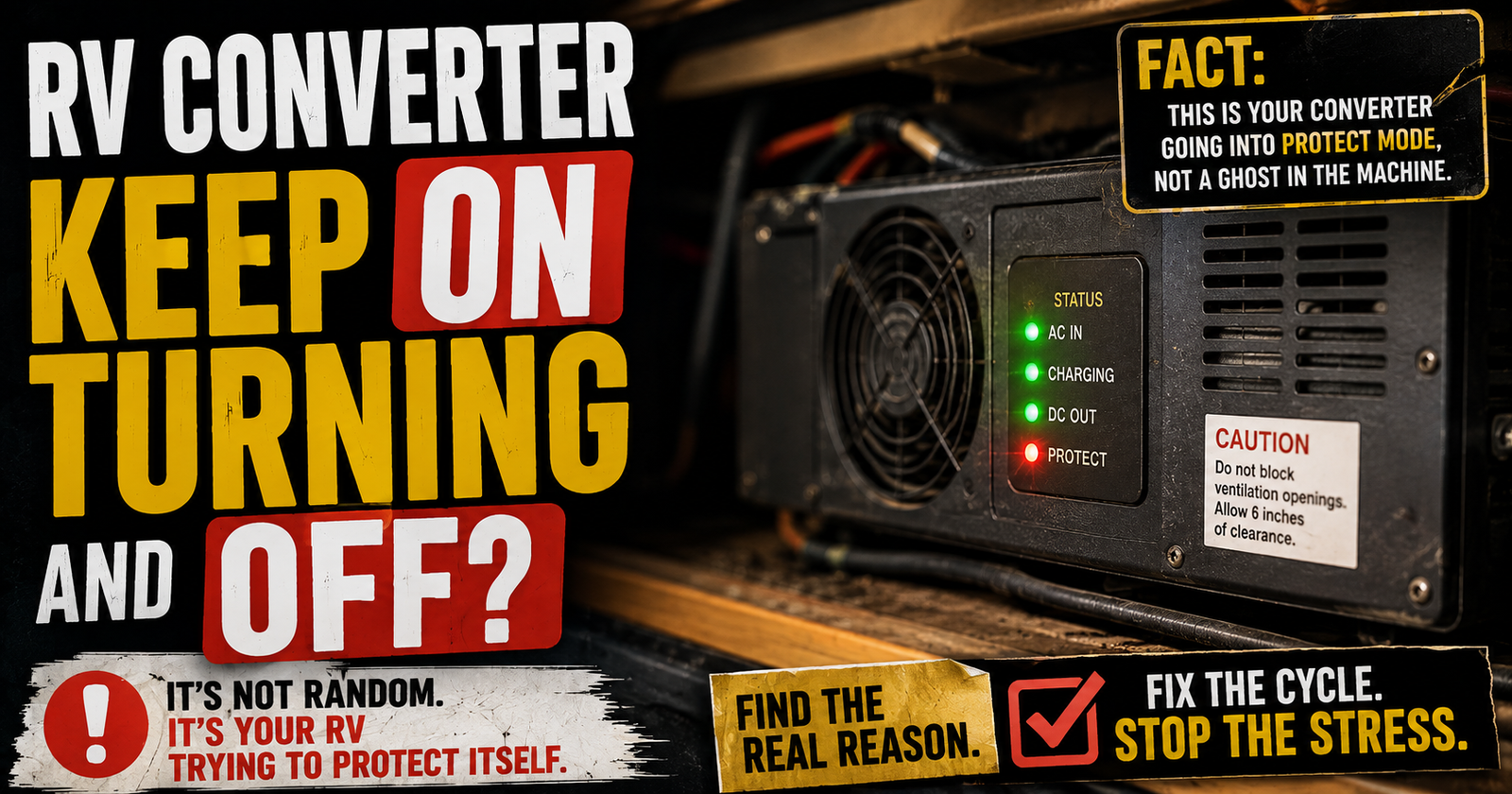
On the Progressive Dynamics PD9100 and PD9200 series, the manufacturer says an electronic current-limiting circuit can rapidly shut down converter output during a short or current overload without blowing the reverse-polarity fuses. Once the short or overload is removed, the protection can automatically reset. That automatic reset pattern is also central to understanding converter overload protection when an overload or short interrupts DC output.
That’s important because people sometimes assume:
“There’s a short somewhere, so that must be why these reverse-polarity fuses blew.”
Not necessarily.
On those particular converters, the manufacturer says those front protection fuses are associated specifically with reversed battery polarity.
Again, know your equipment.
What If My Converter Has No Output After the Fuse Blows?
That makes sense if the protection fuse is part of the affected circuit.
But don’t immediately assume the converter electronics are destroyed.
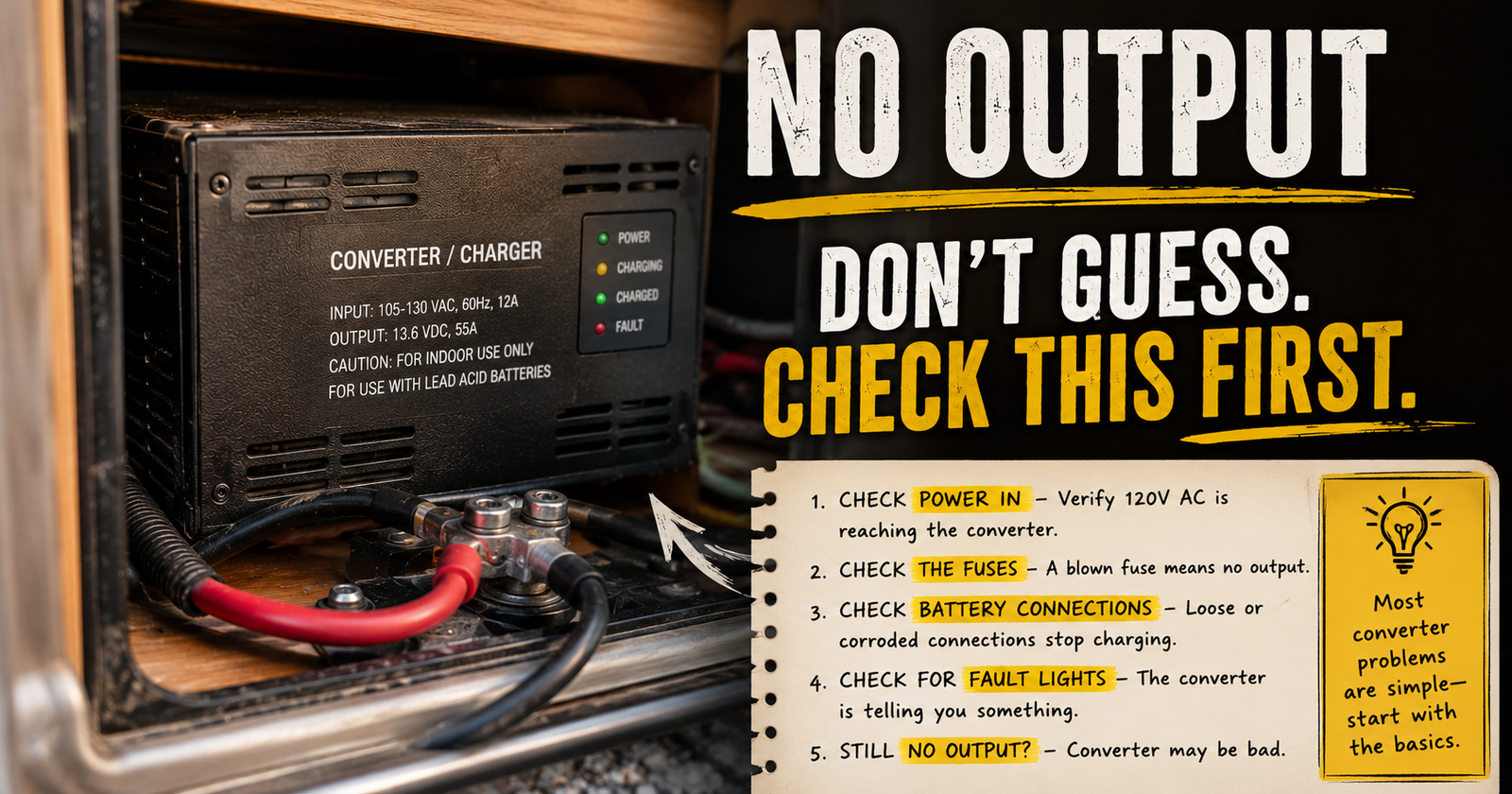
We just built a complete guide for an RV converter with no DC output.
Reverse-polarity fuses are one of the first things I’d check in that situation.
If the fuses did their job, replacing them after correcting the underlying problem may restore normal converter operation.
Could the Battery Be Shorted Internally?
Battery failures can create unusual electrical behavior, although I wouldn’t diagnose an internal battery short simply because a fuse blew.
Test the battery.
Look for abnormal heat.
Inspect for swelling or physical damage.
Check voltage.
Have it load-tested when appropriate.
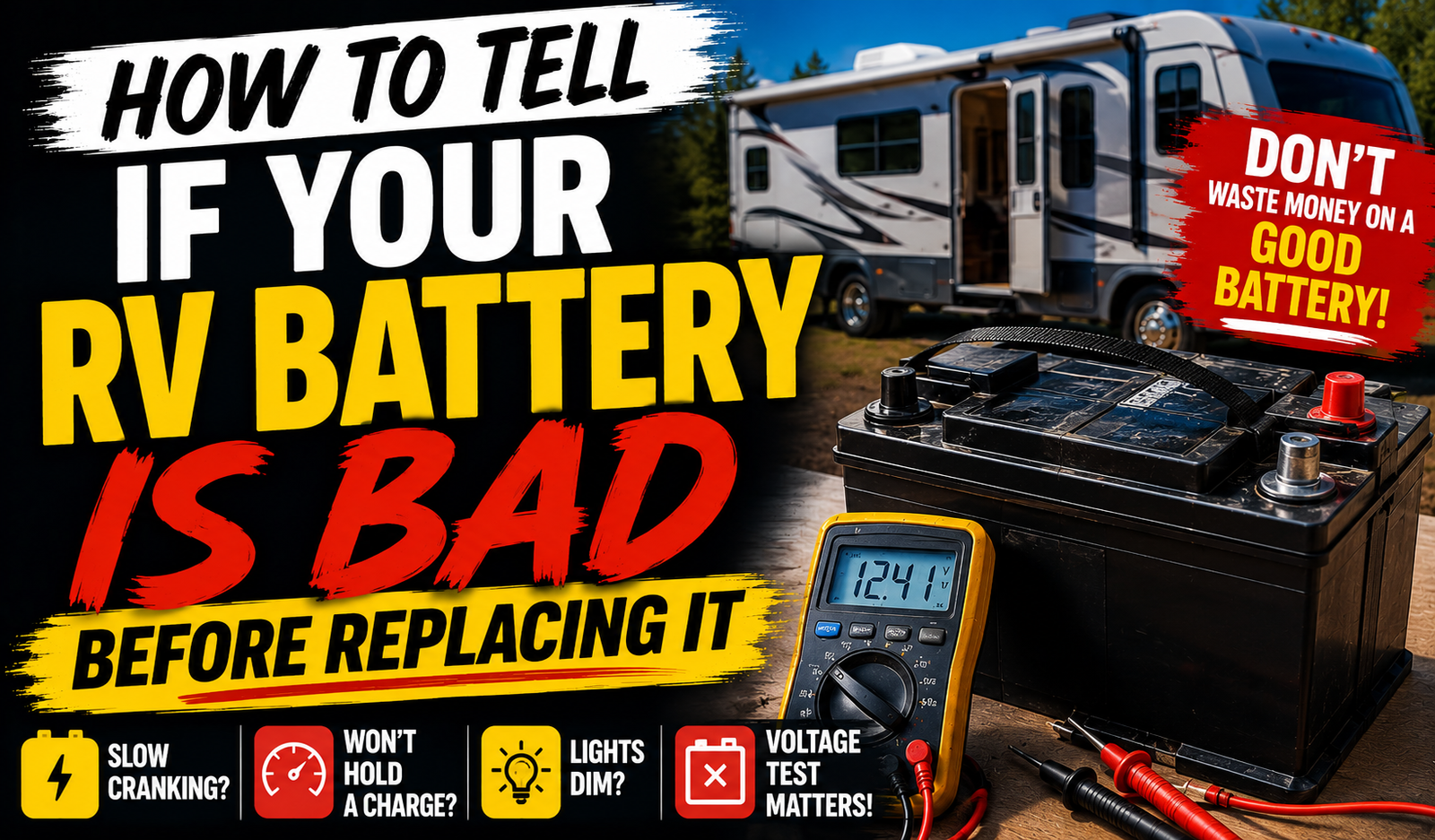
If the battery itself is questionable, our guide to checking whether an RV battery is bad is a much better path than guessing.
Check Battery Cables for Damage
Follow the cables as far as reasonably accessible.
You’re looking for things like:
Crushed insulation.
Rubbed-through insulation.
Burn marks.
Loose terminals.
Corrosion.
Damaged lugs.
Wiring pinched against metal.
Places where the cable passes through a wall, floor, frame, or compartment edge deserve particular attention.
Vibration and movement aren’t kind to wiring over the years.
Look Closely at Recent Repairs
This is one of my favorite troubleshooting shortcuts.
Ask:
What did we touch?
If everything worked Tuesday, somebody installed a battery monitor Wednesday, and fuses started blowing Thursday, I’m inspecting Wednesday’s work.
That doesn’t mean the new equipment is defective.
A cable could simply be misplaced.
A terminal could be touching something.
A wire could have been pinched during reassembly.
Start with what changed.
Aftermarket Electrical Work Deserves Extra Attention
Used campers can be especially interesting.
Maybe a previous owner added:
Solar.
An inverter.
A second battery.
A battery disconnect.
USB outlets.
A DC refrigerator.
A battery monitor.
A powered jack.
Extra lighting.
Any of those additions can be perfectly fine when installed correctly.
But modifications also create more wiring and more connection points.
If something looks homemade, understand what it does before assuming the original RV wiring diagram still tells the whole story.
Check Around the Battery Disconnect
The battery disconnect is another point where high-current DC wiring may be routed.
Look for loose terminals, damaged cables, incorrect connections, or aftermarket modifications.
If the fuse problem appeared after someone installed or replaced a disconnect switch, that work deserves inspection.
And remember that an RV battery disconnect doesn’t necessarily isolate every electrical device in every camper.
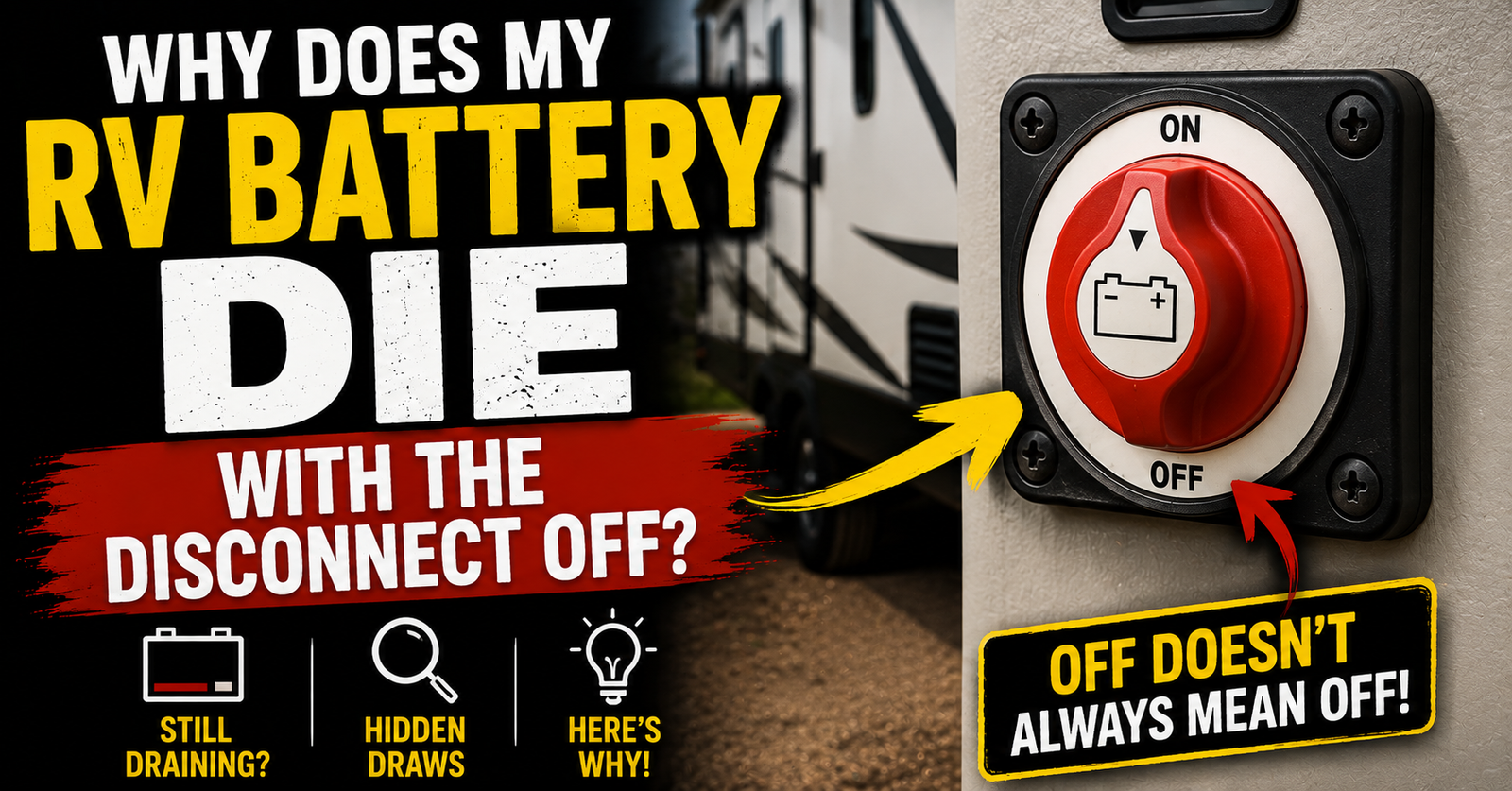
We’ve already covered why an RV battery can still die with the disconnect off for exactly that reason.
Could Corrosion Cause a Fuse to Blow?
Corrosion usually gets my attention because it creates poor connections and increased resistance rather than because it’s the classic cause of an immediate overcurrent fuse failure.
Still, badly corroded or damaged electrical connections absolutely deserve repair.
Battery compartments are harsh environments.
Moisture and battery gases can attack terminals and wiring.
If you’re already troubleshooting, inspect the entire connection instead of looking only at the fuse.
Could a Loose Connection Blow a Fuse?
Again, a loose connection more commonly causes resistance, voltage drop, intermittent operation, and heat.
But damaged or moving conductors can create shorts under the right conditions.
For example, a loose positive cable terminal that can physically contact grounded metal is a completely different problem from a slightly loose screw terminal causing voltage drop.
Look at the physical situation.
Don’t reduce every electrical problem to one generic cause.
Watch for Heat
Heat is information.
If a fuse holder is getting unusually hot, don’t ignore it.
If a cable terminal is hot, investigate.
If the converter smells hot or looks discolored, stop.
High resistance connections can generate heat.
Excessive current can generate heat.
Failed components can generate heat.
Electrical equipment shouldn’t be melting itself while you repeatedly replace fuses.
A Melted Fuse Holder Is a Different Problem
If the fuse itself is intact but the holder is browned, melted, loose, or burned, you’ve got another issue to address.
Poor contact between a fuse and its holder can create resistance and heat.
That can damage the holder without necessarily producing the same clean overcurrent failure you’d expect from a fuse element opening.
Don’t simply jam another fuse into a damaged holder.
Repair the damaged connection correctly.
What If the Fuse Only Blows When I Plug Into Shore Power?
That’s a useful pattern.
Now we’re interested in what changes when shore power becomes available.
The converter starts operating.
Battery charging begins.
Different electrical equipment may energize.
If a fuse blows consistently at that exact moment, document which fuse it is and follow the affected circuit.
If we’re talking about converter protection fuses, battery polarity and converter wiring deserve particular attention.
If it’s a branch fuse, investigate that branch.
What If It Only Blows When I Disconnect Shore Power?
That’s a different clue.
Now the battery becomes the primary source for the 12-volt system.
If something changes electrically at that moment and a fuse opens, I want to understand which circuit is transitioning and how it’s wired.
This is where generic internet troubleshooting starts becoming less useful.
The actual RV wiring diagram and equipment documentation become much more valuable.
What If the Fuse Blows When the Water Pump Starts?
Follow the water-pump circuit.
Don’t replace the converter.
The pump motor may be drawing excessive current.
Wiring could be shorted.
A connection could be damaged.
Something could be mechanically wrong with the pump.
The fact that the converter supplies DC electricity to the system doesn’t make it responsible for every DC fault.
What If It Blows When the Furnace Starts?
Same principle.
The furnace blower motor and controls use the 12-volt system.
If the furnace branch fuse repeatedly blows when the furnace tries to start, investigate the furnace circuit and compare actual current draw with the equipment specifications.
The converter is just the source while shore power is available.
Follow the failing branch.
What If the Converter Fuse Blows After Installing a New Battery?
Now we’re right back to polarity.
This is one of the strongest patterns in the whole article.
Battery replaced.
Converter suddenly dead.
Reverse-polarity fuse blown.
Before doing anything else, verify how that battery was connected.
Progressive Dynamics’ troubleshooting guidance specifically states that reversing battery leads even momentarily can blow its reverse-battery protection fuses.
Sometimes the simplest explanation really is the right one.
What If Everything Is Connected Correctly?
Then keep investigating.
Was it always correct?
Is the fuse actually the reverse-polarity fuse you think it is?
Is there damaged wiring?
Was the converter replaced with a different model?
Was the power center modified?
Does the converter manufacturer identify another condition that can blow that specific fuse?
This is where having the exact model number matters.
Don’t apply Progressive Dynamics troubleshooting instructions to an unrelated converter and assume every internal protection circuit works identically.
Can the Wrong Battery Wiring Blow Converter Fuses?
Absolutely.
Series and parallel battery-bank wiring creates more opportunities for mistakes when multiple batteries are involved.
Two 12-volt batteries wired in parallel still provide a nominal 12-volt bank.
Two 6-volt batteries wired in series can create a nominal 12-volt bank.
But wire things incorrectly and you can create a very different electrical situation.
If fuse problems began immediately after changing the battery-bank configuration, stop and verify the entire bank wiring before reconnecting the converter.
Be Extra Careful With Lithium Upgrades
Lithium upgrades often involve more than swapping one battery.
Owners may also change:
The converter.
Battery monitor.
Shunt.
Disconnect.
Bus bars.
Solar controller.
Inverter.
DC-to-DC charger.
Cabling.
Circuit protection.
That’s a lot of opportunities for one connection to end up somewhere it shouldn’t.
If the fuse problem started during a lithium conversion, inspect the whole change rather than assuming the lithium battery itself is somehow “blowing converter fuses.”
Don’t Bypass the Fuse to See What Happens
Please don’t.
The fuse is there to protect equipment and wiring.
Bypassing it with wire, foil, metal, or another improvised conductor removes that protection.
If there’s a short or wiring fault, you’ve just allowed the circuit to continue carrying current without the intended safety device.
That’s not troubleshooting.
That’s creating a more dangerous failure.
Turn Off Every Power Source Before Digging Into Wiring
Remember that an RV can have several sources of electricity.
Shore power.
Generator.
House battery.
Solar.
Inverter.
Disconnecting the shore cord doesn’t necessarily de-energize the DC system.
Turning the battery disconnect off doesn’t necessarily isolate every direct battery connection.
Solar may remain active.
Understand the system before servicing it.
120-Volt Work Is a Different Level of Risk
If troubleshooting leads you into the AC side of the converter or power center, be careful.
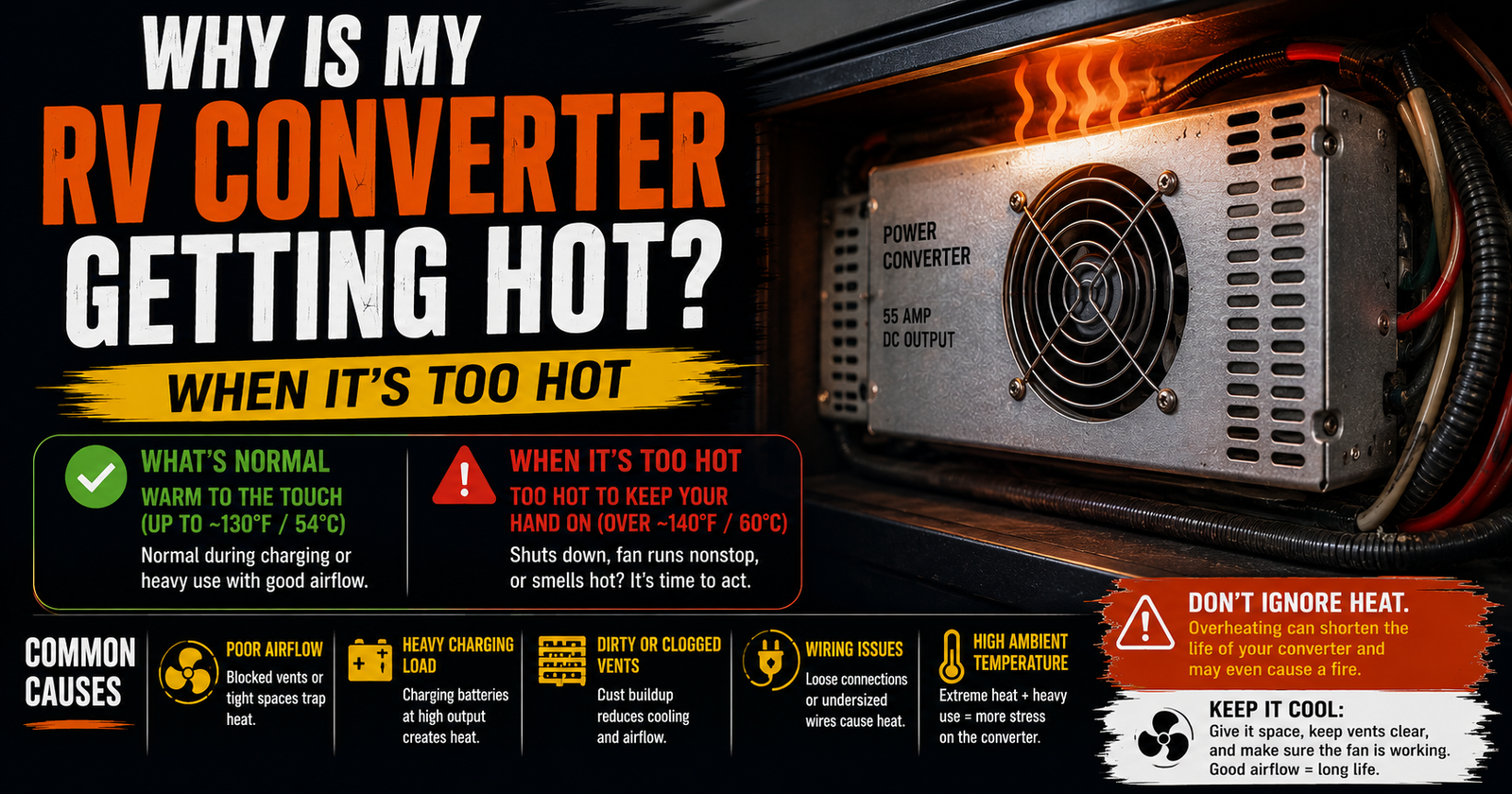
Progressive Dynamics warns that troubleshooting some of its power centers involves exposure to live 120-volt AC and should only be attempted by a qualified technician. Heat, shutdowns, and other symptoms can help determine when this troubleshooting should stop, as outlined in RV converter overheating symptoms.
That’s where I’d stop DIY testing if you’re not qualified.
You don’t need to expose yourself to energized AC equipment to save a service call.
When I Would Suspect the Converter Itself
The converter moves higher on my list when:
Battery polarity is correct.
The correct fuse type and rating are installed.
Wiring checks out.
There’s no external short or obvious fault.
The converter has proper input power.
And the specified protection fuse still repeatedly opens under the manufacturer’s test conditions.
At that point, internal failure becomes much more believable.
But we’ve arrived there by eliminating other causes.
We didn’t start there.
Don’t Let a $2 Fuse Sell You a $300 Part
That’s really what I want you to take away from this.
A blown fuse is useful information.
Identify which fuse failed.
Find out what it protects.
Ask what happened immediately before it failed.
If it’s a reverse-polarity protection fuse, verify the battery wiring.
If it’s an individual DC branch fuse, follow that circuit.
If a replacement immediately blows again, stop replacing fuses and find the fault.
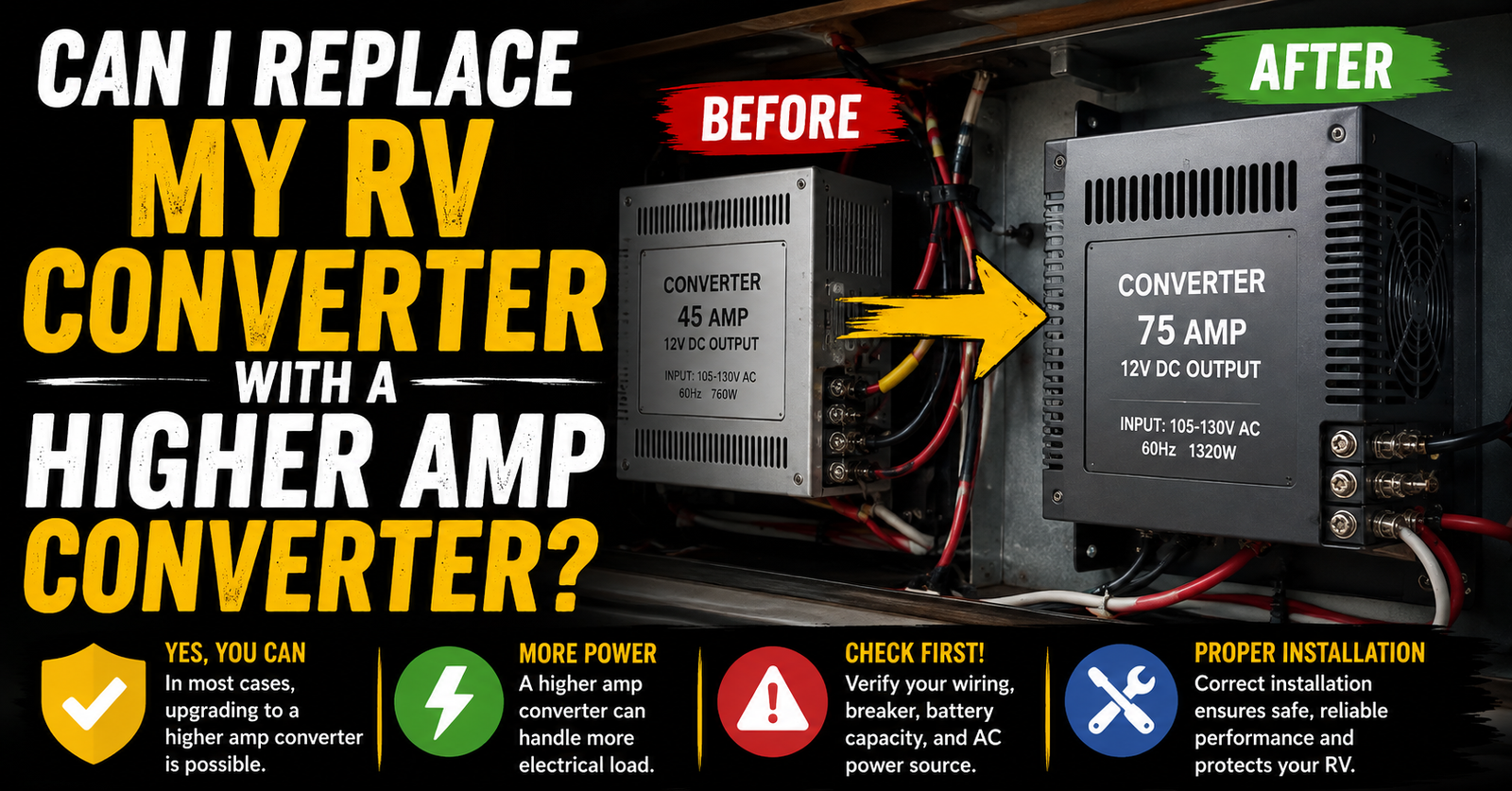
And only after the wiring, polarity, protection devices, input power, and manufacturer’s tests point toward the converter itself would I start shopping for another one. If a replacement also involves increasing output, see this guide to choosing a higher-output replacement converter before buying.
The fuse isn’t ruining your camping trip just to be difficult.
It’s probably the one part of the electrical system trying its hardest to tell you where you should start looking.
Written by Evan Mercer
Evan Mercer writes about RV electrical systems, converter troubleshooting, batteries and real-world camper problems for CamperAnswers.com. His work focuses on helping RV owners understand what an electrical failure is actually telling them before they start replacing parts.