
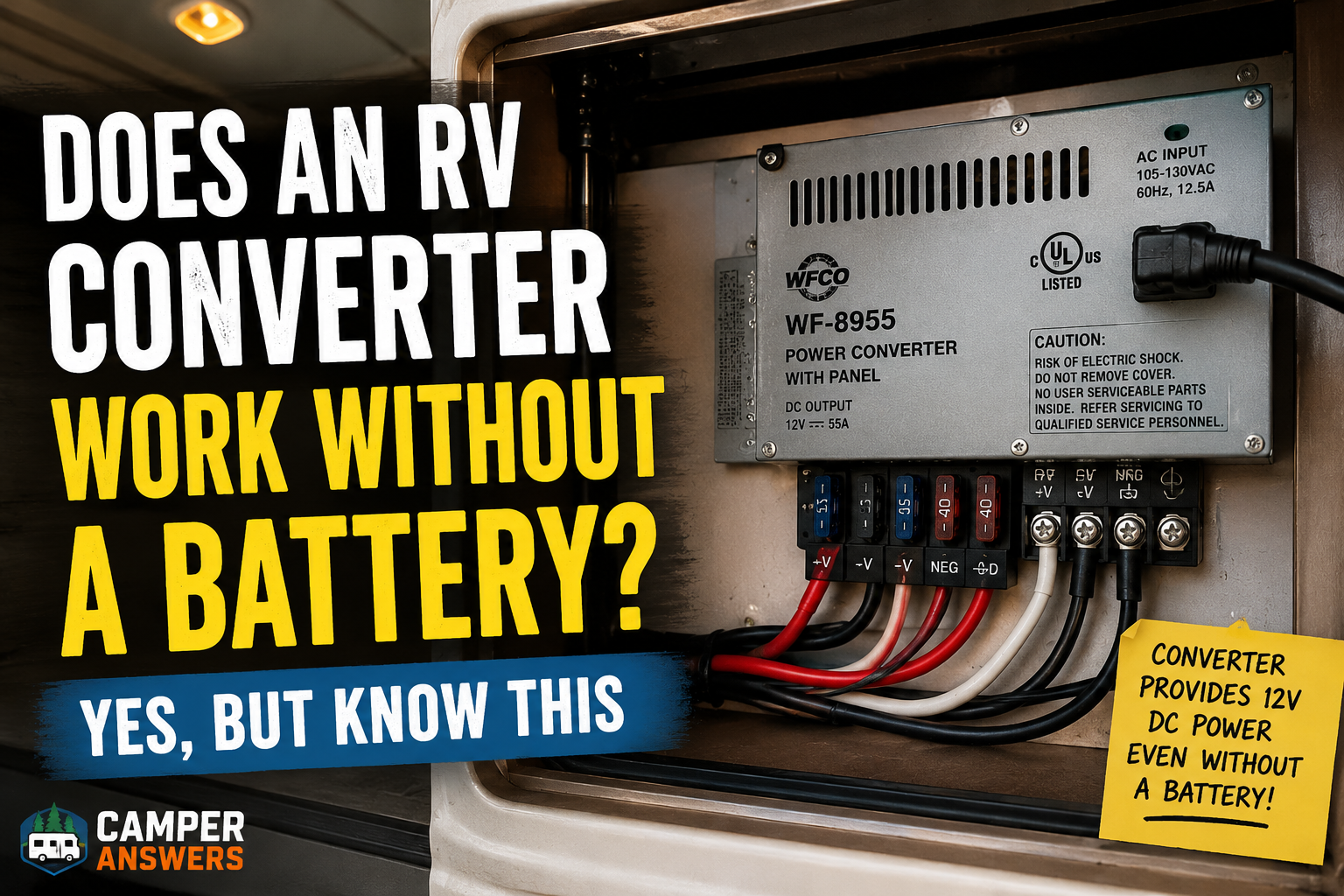
You disconnect the house battery from your camper, plug the RV into shore power, and the lights still come on. That can make you wonder what the battery was doing there in the first place.
Here’s the short answer:
Yes, many modern RV converters can operate without a battery connected and supply 12-volt DC power while the RV is connected to shore power or another proper AC source. But that does not mean every RV should be operated without a battery, or that every 12-volt device will behave exactly the same way. For a fuller explanation of the conditions and limitations, see RV converter operation without a battery.
WFCO answers this question directly in its converter documentation. According to the company, its converter does notrequire a battery to operate. Progressive Dynamics similarly states that a battery doesn’t have to be connected while its converter is on.
That sounds simple enough.
The interesting part is what happens to the rest of the camper once that battery disappears.
What Does the RV Converter Do When There’s No Battery?
The converter doesn’t suddenly become useless just because the battery is disconnected.
When your RV receives 120-volt AC electricity, the converter takes that AC power and produces the DC power used by the camper’s 12-volt electrical system.
Progressive Dynamics describes a converter/charger as supplying 12-volt power to RV lights and appliances whenever 120-volt AC power is available.
So picture your camper sitting at a campground.
You’re plugged into the pedestal.
Shore power enters the RV.
The converter receives AC electricity.
The converter produces DC electricity.
Your 12-volt circuits can then use that DC power.
The battery isn’t necessarily required for that basic process on a modern converter designed to operate without one.
The Battery and Converter Are Two Different Power Sources
This distinction makes the whole thing easier to understand.
Your converter creates usable DC power from an AC source.
Your battery stores DC energy.
When shore power is available, the converter can supply DC power.
When shore power disappears, the converter loses the AC energy it needs to do that.
That’s when the battery becomes incredibly important.
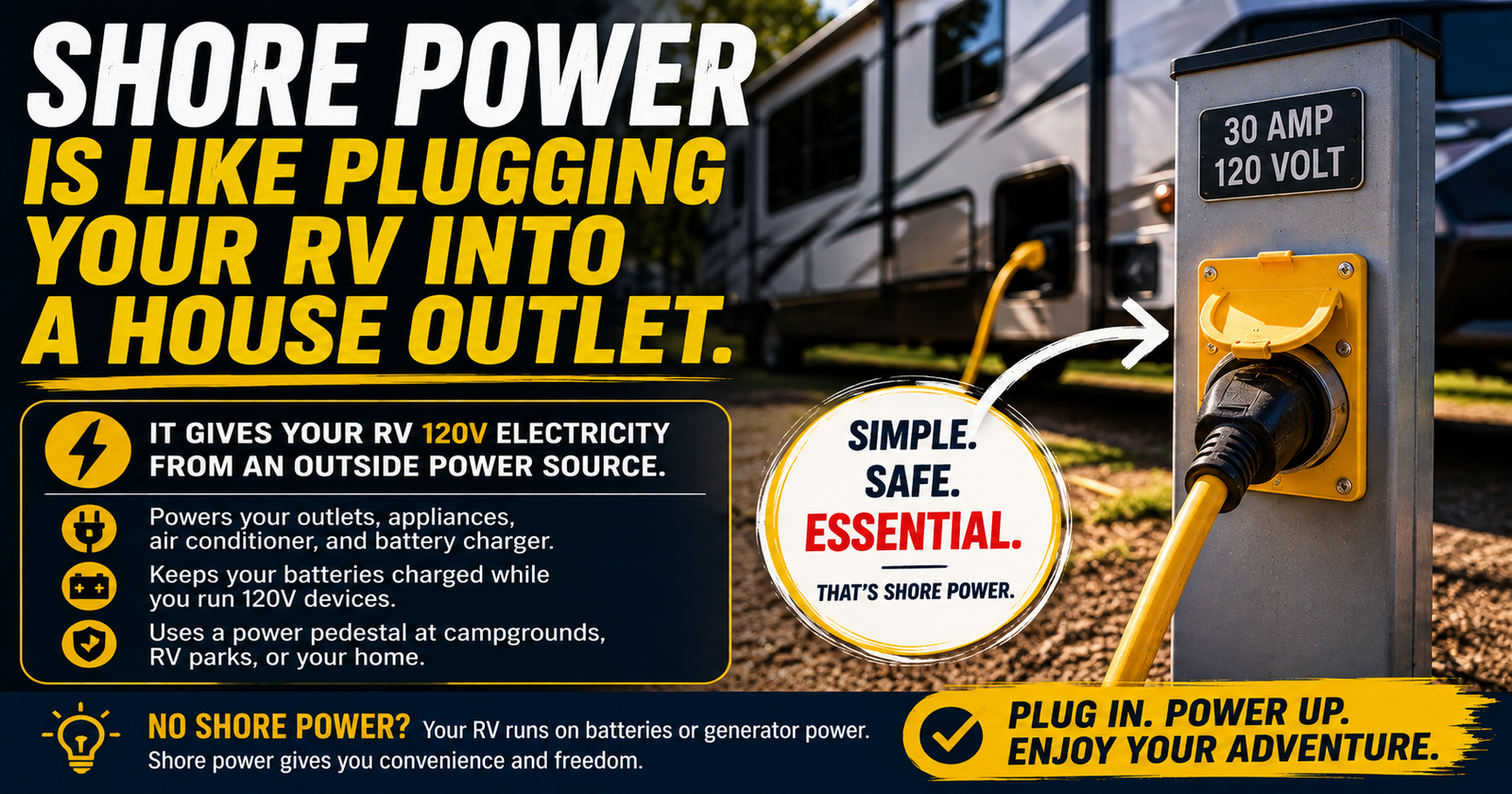
If the difference between those power sources is still confusing, our guide explaining what shore power actually means in an RV is worth reading first.
Once you understand where the electricity is coming from, converters and batteries make much more sense.
What Happens If I Disconnect the Battery While Plugged Into Shore Power?
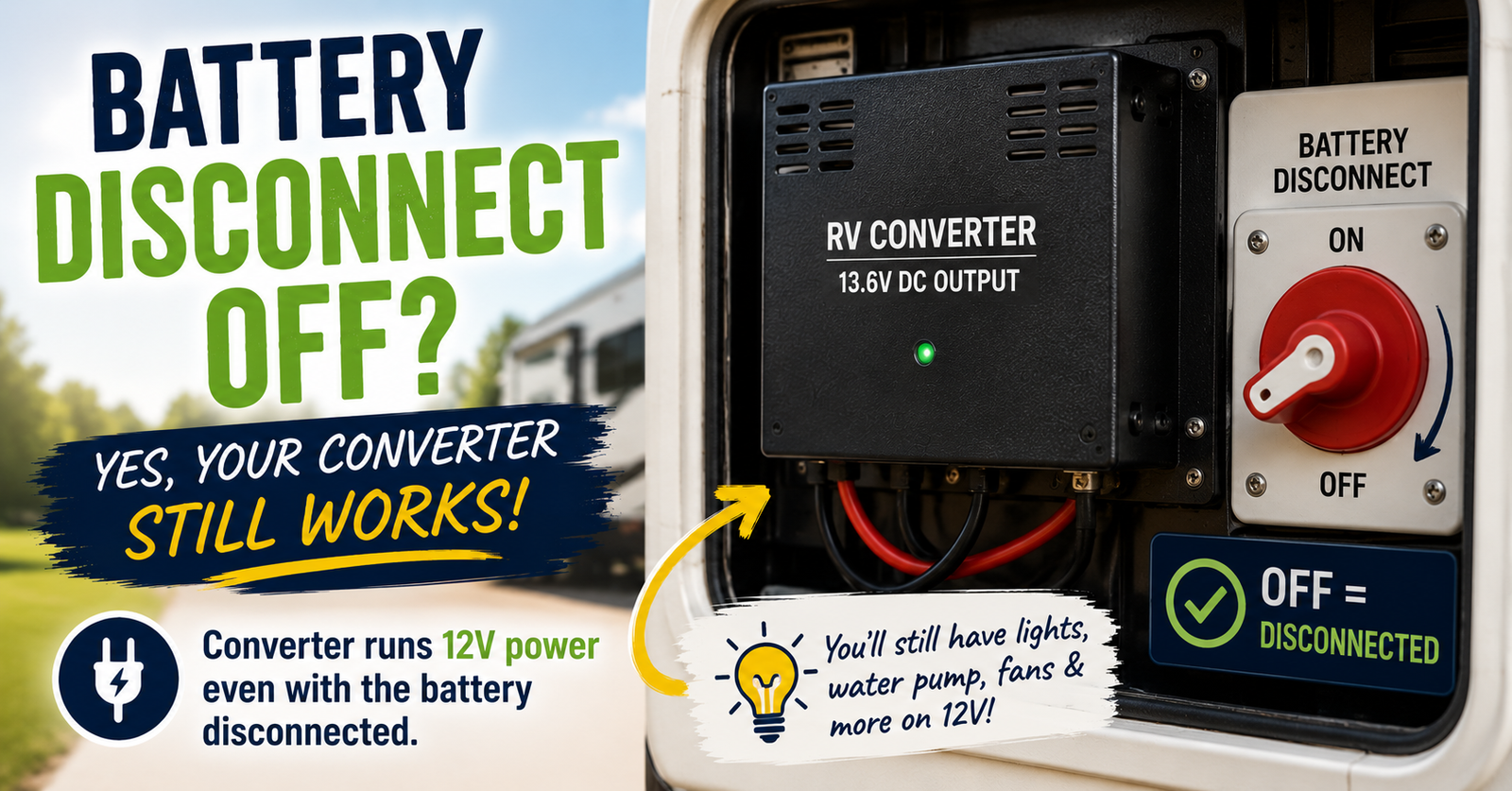
With a compatible modern converter and a properly functioning RV electrical system, many of your normal 12-volt loads may continue operating.
Your lights may still work.
Vent fans may still work.
Your furnace controls may still have DC power.
Your water pump may still operate.
Other 12-volt circuits may continue working.
That’s because the converter is now supplying the DC power those circuits need.
WFCO describes its converters as being sized to provide DC output for the RV’s everyday DC loads while connected to AC power.
But I wouldn’t take that to mean you should immediately remove the battery from every camper.
There are several important catches.
What Happens When Shore Power Goes Out?
This is where the difference becomes obvious.
Imagine you’re camping with no battery connected.
Your converter is happily supplying 12-volt DC power because you’re plugged into shore power.
Then the campground loses electricity.
The converter stops receiving its AC input.
Now what supplies the 12-volt system?
Without another appropriate source, nothing does.
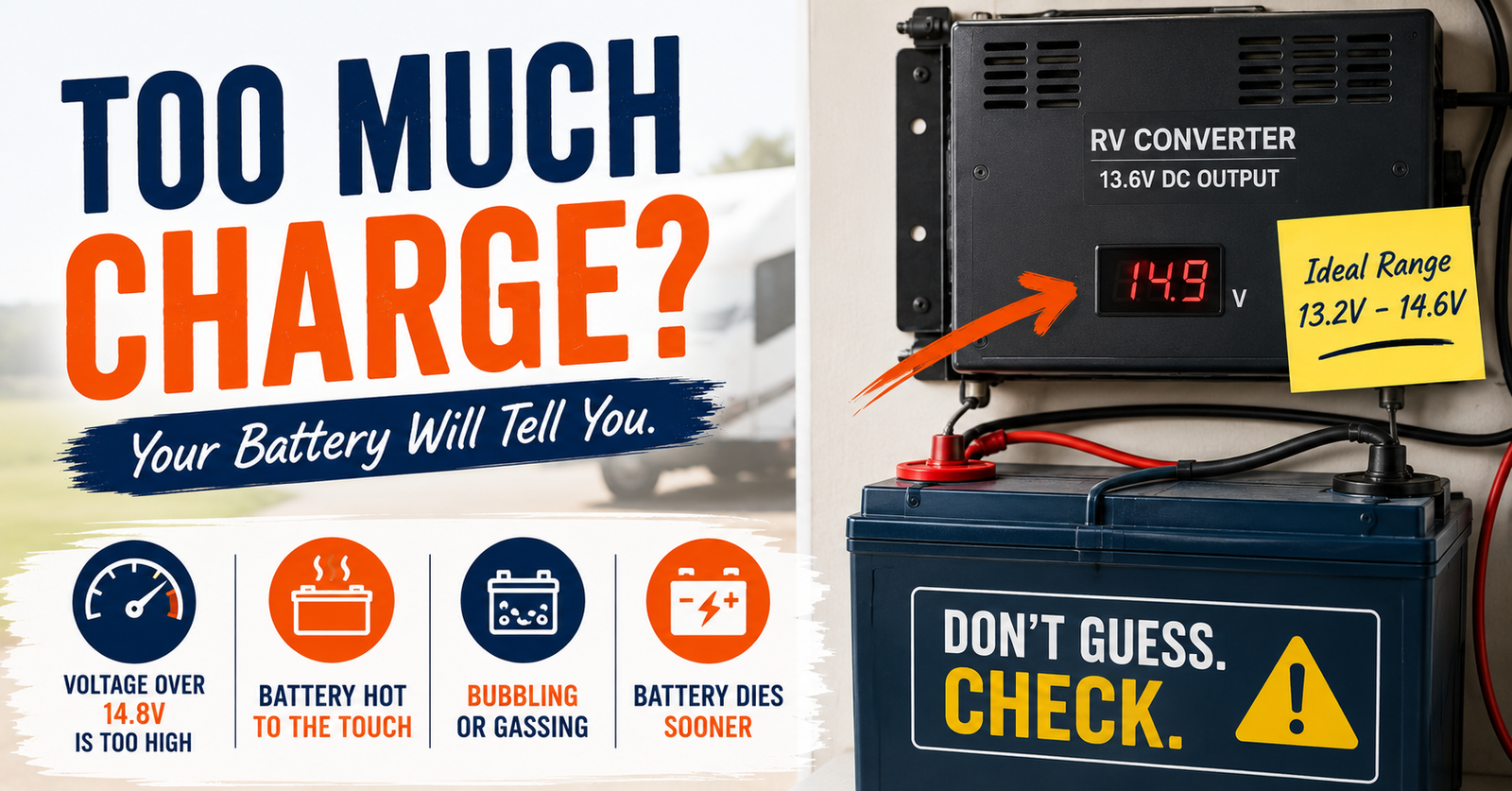
Progressive Dynamics puts it plainly: without a battery, there will be no 12-volt power when shore or generator power isn’t available.
With a battery installed, the transition is much different.
The battery can continue supplying DC power after shore power disappears.
That’s one of its most important jobs.


Think of the Battery as Stored Backup Energy
Here’s an easy way I like to picture it.
The converter is useful when AC electricity is available.
The battery is useful because it already has energy stored inside it.
The converter needs an outside energy source.
The battery doesn’t.
If the campground pedestal quits supplying power at 2 a.m., your converter can’t reach out and find more electricity.
Your charged house battery can keep supplying appropriate 12-volt loads.
That’s why saying “the converter doesn’t need the battery” isn’t the same as saying “the RV doesn’t need the battery.”
Those are two very different statements.
Will My RV Lights Work Without a Battery?
On many modern RVs, yes, while the converter is operating from shore power or generator-supplied AC power.
Most RV interior lighting is part of the 12-volt DC system.
The converter can supply that DC power.
So you could disconnect the battery and still walk inside to find the ceiling lights working perfectly normally.
Then unplug shore power.
The lights go out.
That’s actually a pretty good demonstration of where the power was coming from.
Will My RV Water Pump Work Without a Battery?
Potentially, yes, if the converter is supplying sufficient DC power and the RV is designed to operate that way.
The water pump is typically a 12-volt load.
It doesn’t necessarily care whether the DC electricity originated from the battery or converter.
But the pump can have a meaningful startup and operating current draw, which brings us to another reason batteries can still be useful even when you’re plugged in.
A Battery Can Help With Short High-Current Loads
The converter has a maximum output rating.
Maybe yours is 35 amps.
Maybe it’s 45 amps.
Maybe 55 amps.
Whatever the number is, there is a limit to how much DC current the converter is designed to provide.
Progressive Dynamics explains that some of its converters use current limiting and can shut down if connected 12-volt loads exceed the converter’s designed output. It also says that when a battery is installed, the battery can supply additional current during periods of high demand.
That’s an important detail.
The battery isn’t only there waiting for the campground electricity to fail.
It can work alongside the converter.
Why the Battery Can Act Like a Buffer
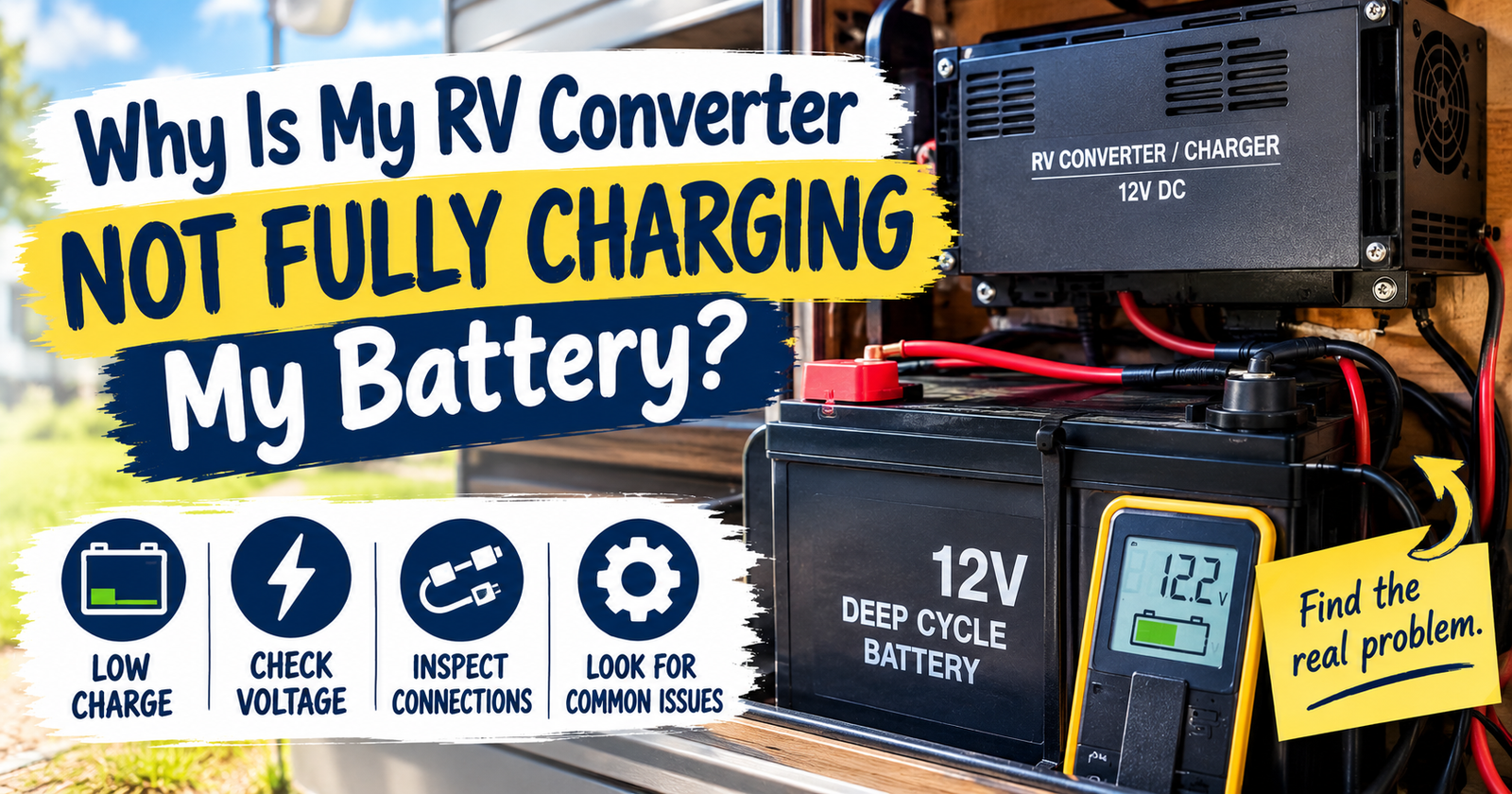
Suppose several 12-volt loads operate simultaneously.
The converter supplies what it can within its design.
A connected battery can contribute additional current when necessary.
Remove the battery and you’ve removed that extra source.
Whether you’ll ever notice depends on the camper, converter size, and equipment you’re operating.
A simple travel trailer with modest DC loads may behave differently from a large RV with numerous motorized systems.
What About RV Slide-Outs?
This is where I’d be careful.
WFCO specifically notes that a battery is typically necessary when an RV has equipment such as slide-outs or a leveling system.
Those systems can demand substantial DC current.
So I wouldn’t tell someone:
“Your converter works without a battery, so go ahead and operate your slides with the battery removed.”
That’s taking a general statement about converter operation and applying it to equipment that may have much higher current requirements.
Check the RV and equipment manufacturer’s instructions.
What About Electric Leveling Jacks?
Same concern.
Leveling equipment can be a heavy DC load.
WFCO specifically includes leveling systems among the reasons an RV may need a battery even though the converter itself doesn’t require one to operate.
If your RV manufacturer expects a battery to be installed for leveling operation, leave the battery in the system.
The fact that your ceiling lights work without it doesn’t prove your hydraulic or electric leveling equipment should be operated the same way.
Does My RV Furnace Need the Battery?
The furnace normally depends on 12-volt DC power for things such as its blower and controls.
If the converter is supplying proper DC power, the furnace may have the electricity it needs.
But remember what happens if shore power fails.
No battery means you’ve lost your backup DC source.
That’s a bigger deal on a freezing night than it is on a warm afternoon when you’re experimenting with the lights.
If I’m camping somewhere cold, I personally want a healthy house battery available even when I’m connected to shore power.
What About the Refrigerator?
This depends heavily on the refrigerator.
Traditional absorption RV refrigerators often use 12-volt DC electricity for controls even when propane or AC is handling the actual cooling process.
Other RVs have 12-volt compressor refrigerators.
Others have residential AC refrigerators.
So there’s no useful universal statement like “the refrigerator doesn’t need the battery.”
You need to know what refrigerator you actually have and what power its controls and cooling system require.
Does the Converter Charge Anything If There’s No Battery?
Obviously there’s no house battery to charge if you’ve disconnected it.
But the converter can still perform its other primary job, supplying DC electricity to the RV’s 12-volt circuits.
This is something that’s easy to miss because we constantly call these devices converter/chargers.
Charging the battery is only part of what they do.
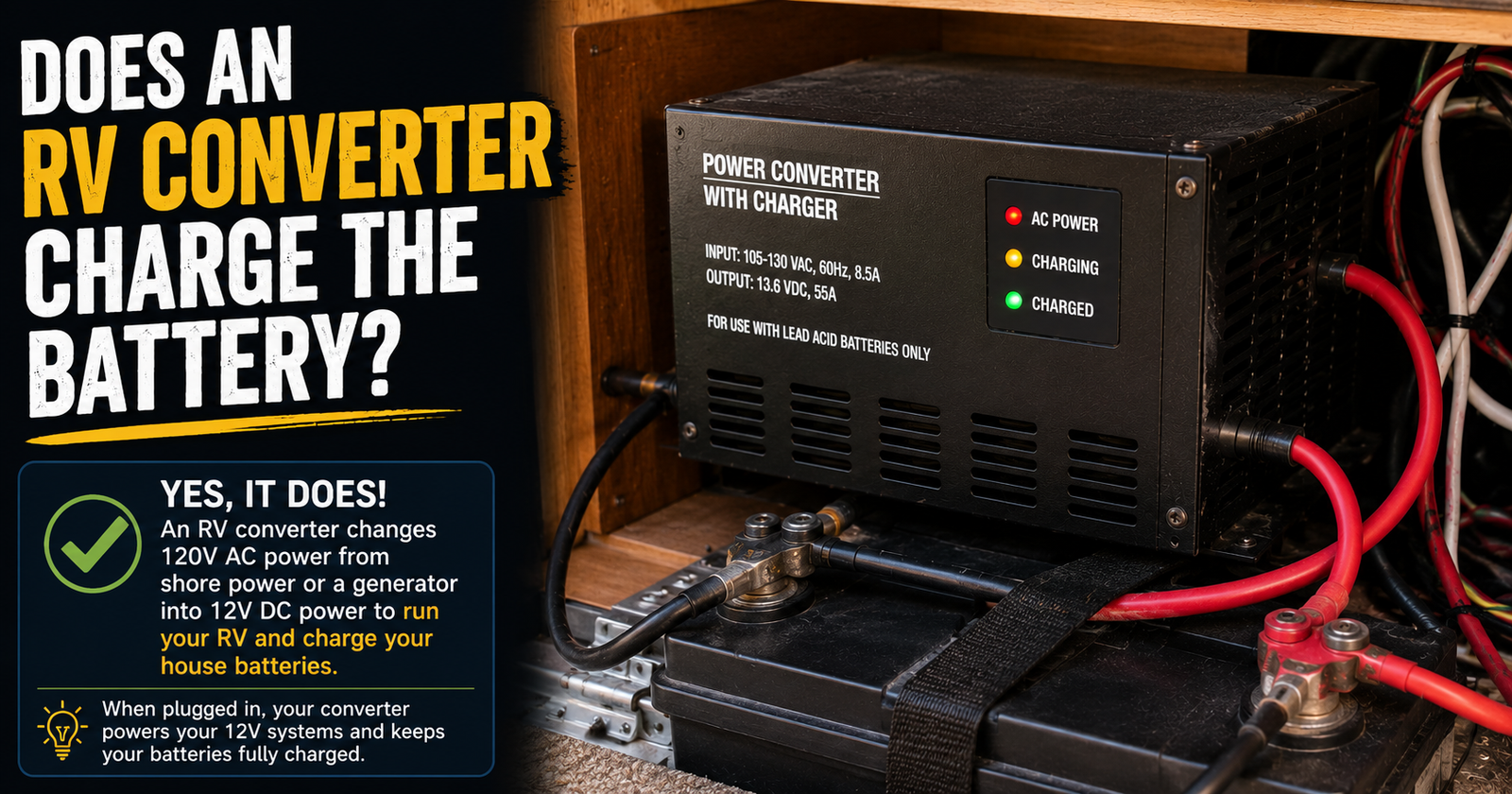
We’ve gone much deeper into the charging side in our guide explaining how an RV converter charges the battery.
Can I Remove a Bad Battery and Still Use My Camper?
Potentially, and this is one situation where the question comes up frequently.
Maybe the battery has failed.
Maybe it’s swollen.
Maybe it won’t hold a charge.
Maybe you’re replacing it and won’t have the new one until tomorrow.
If your converter is designed to operate without a battery, you may still be able to use many of the camper’s 12-volt systems while connected to shore power.
But I’d check the RV and converter manufacturer’s requirements before assuming every system can be used normally.
And I’d be particularly careful with high-current equipment such as slides and leveling systems.
A Bad Battery Can Sometimes Cause Problems of Its Own
This is another reason somebody might temporarily disconnect one.
A battery with an internal failure can place an abnormal load on the charging system.
You may see strange voltage behavior.
The converter may work unusually hard.
Charging may never finish normally.
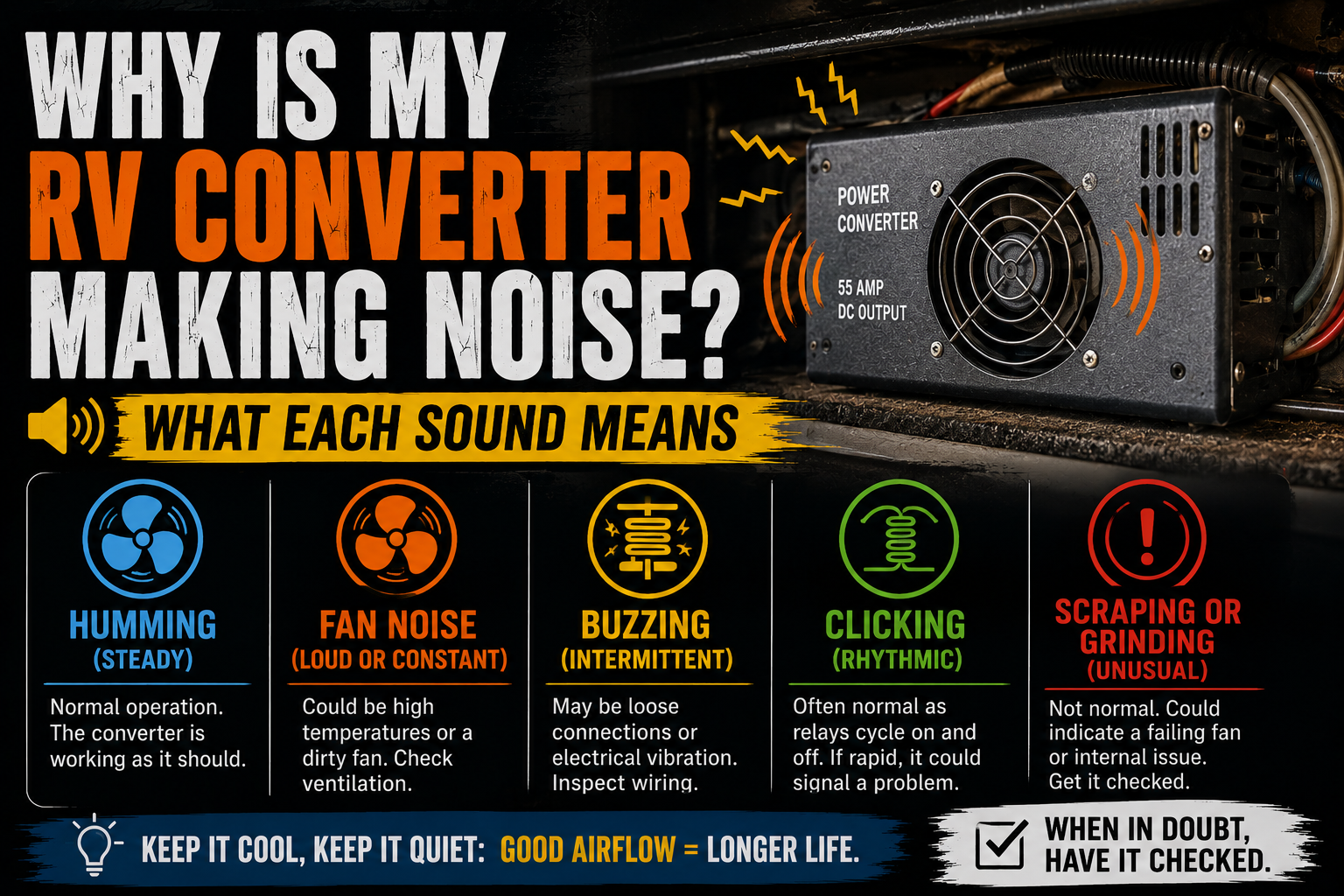
The converter fan may run frequently.
You may even start blaming the converter when the battery is actually the problem.
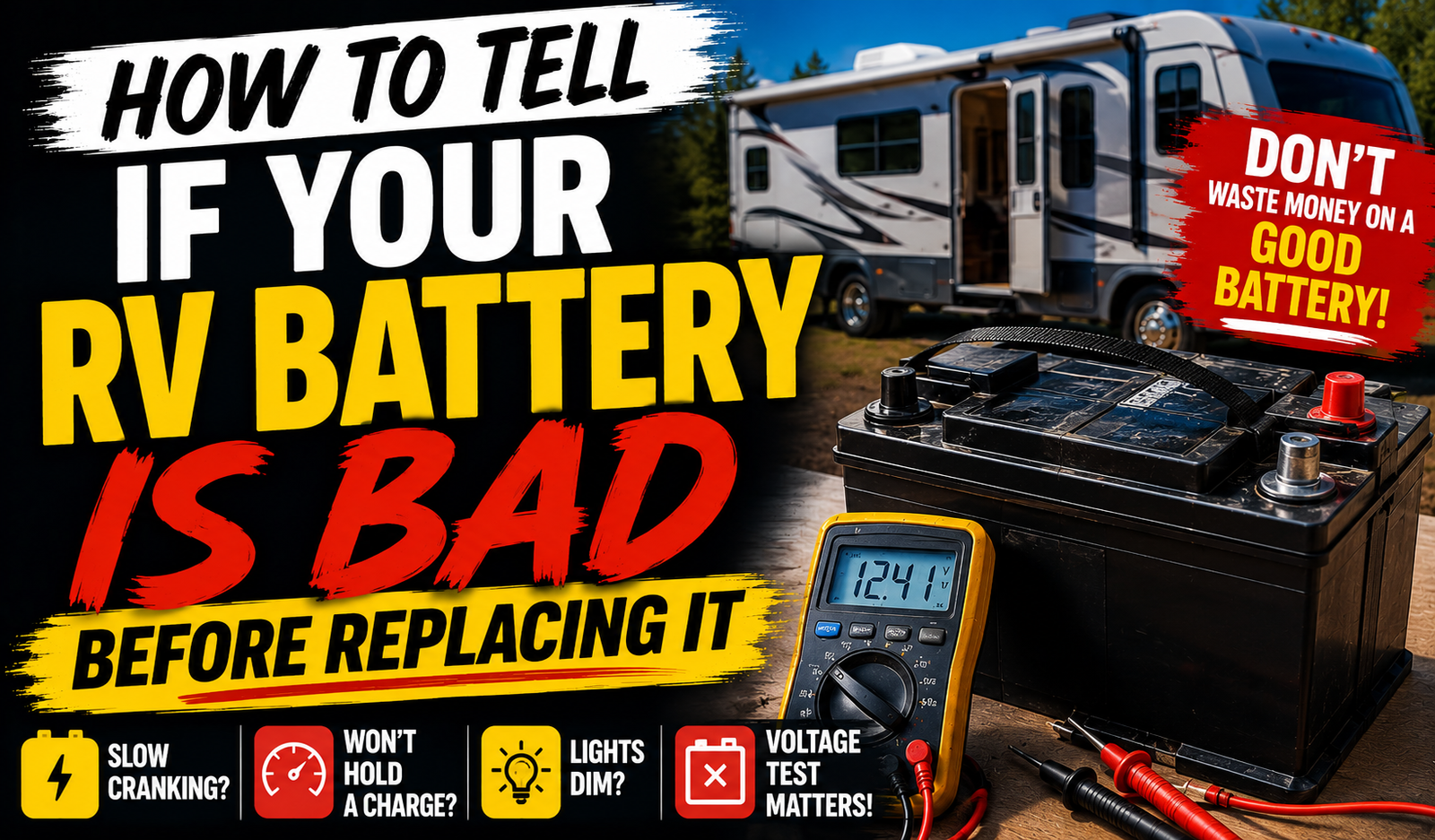
If that’s what brought you here, use our guide to tell whether your RV battery is bad before buying a converter.
Can Removing the Battery Help Test the Converter?
It can be part of manufacturer-specified converter testing.
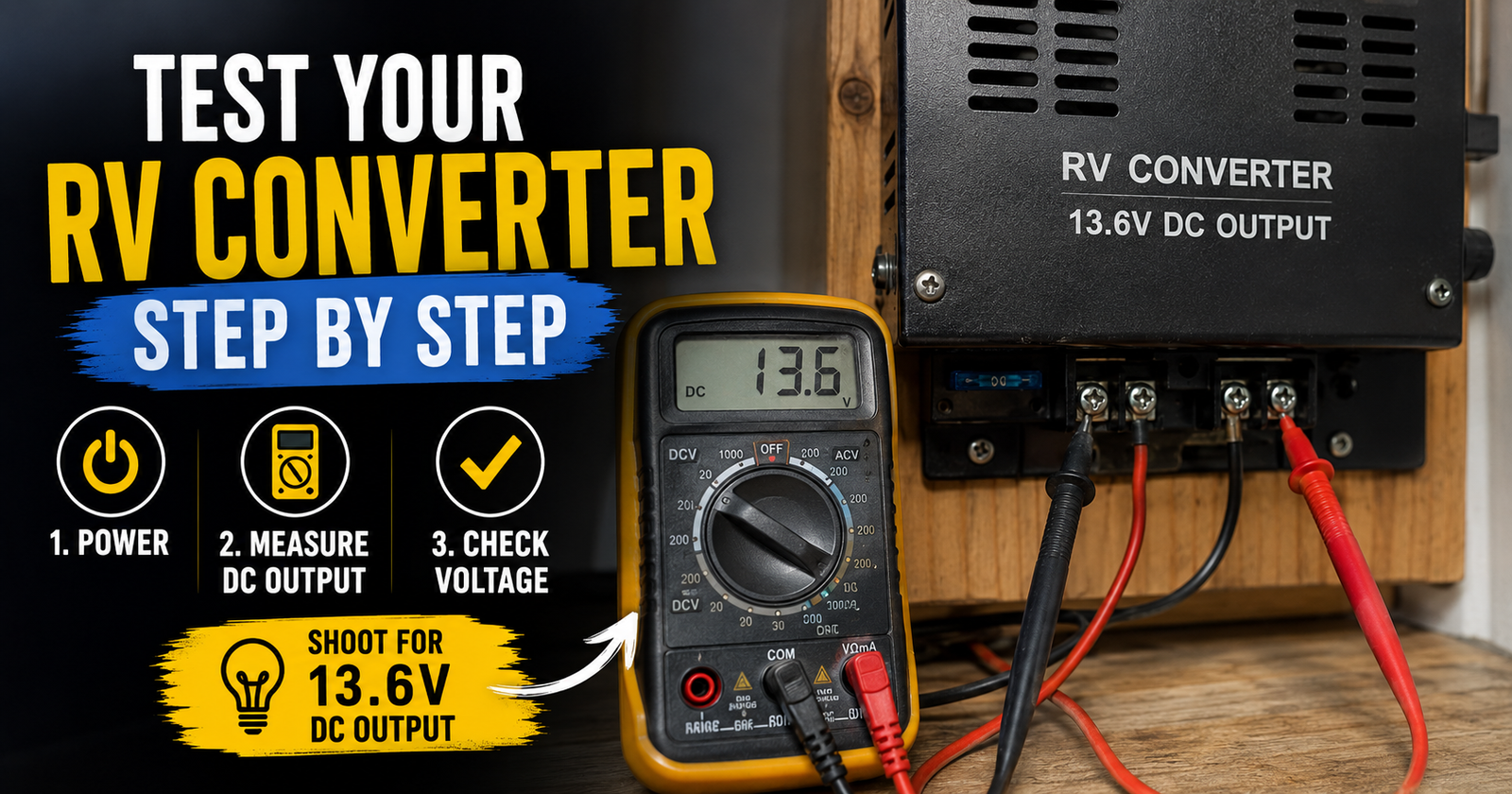
Progressive Dynamics’ troubleshooting procedure for its PD9100 and PD9200 converters, for example, instructs technicians to disconnect the negative battery wire from the converter, connect 120-volt shore power, and measure converter output directly. The expected output for the referenced standard models is around 13.6 volts DC, with different specifications for certain lithium models. The step-by-step guide for testing an RV converter with a multimeter adds the meter settings, connection points, and interpretation steps for this kind of output check.
That’s useful because it lets you evaluate converter output without the battery influencing the measurement.
But follow the troubleshooting procedure for your specific converter.
Don’t assume every converter is tested exactly the same way.
My RV Works Better After Disconnecting the Battery. What Does That Mean?
Now I’d become suspicious of the battery or something in the battery circuit.
Suppose your 12-volt system behaves strangely with the battery connected.
Then you isolate the battery according to the manufacturer’s troubleshooting procedure and converter output looks normal.
That doesn’t automatically prove the battery is bad, but it gives you a direction to investigate.
I’d look at:
Battery condition.
Battery voltage.
Battery connections.
Cable condition.
Ground connections.
Battery polarity.
Charging wiring.
Circuit protection.
Don’t immediately replace the converter if it produces proper output when isolated.
What If the Converter Works but the Battery Won’t Charge?
That’s another important distinction.
A converter can potentially produce perfectly good DC output while the battery receives little or none of it.
Progressive Dynamics specifically says that if converter output voltage tests correctly but the batteries aren’t charging, the fuse or breaker in the battery positive lead should be checked.
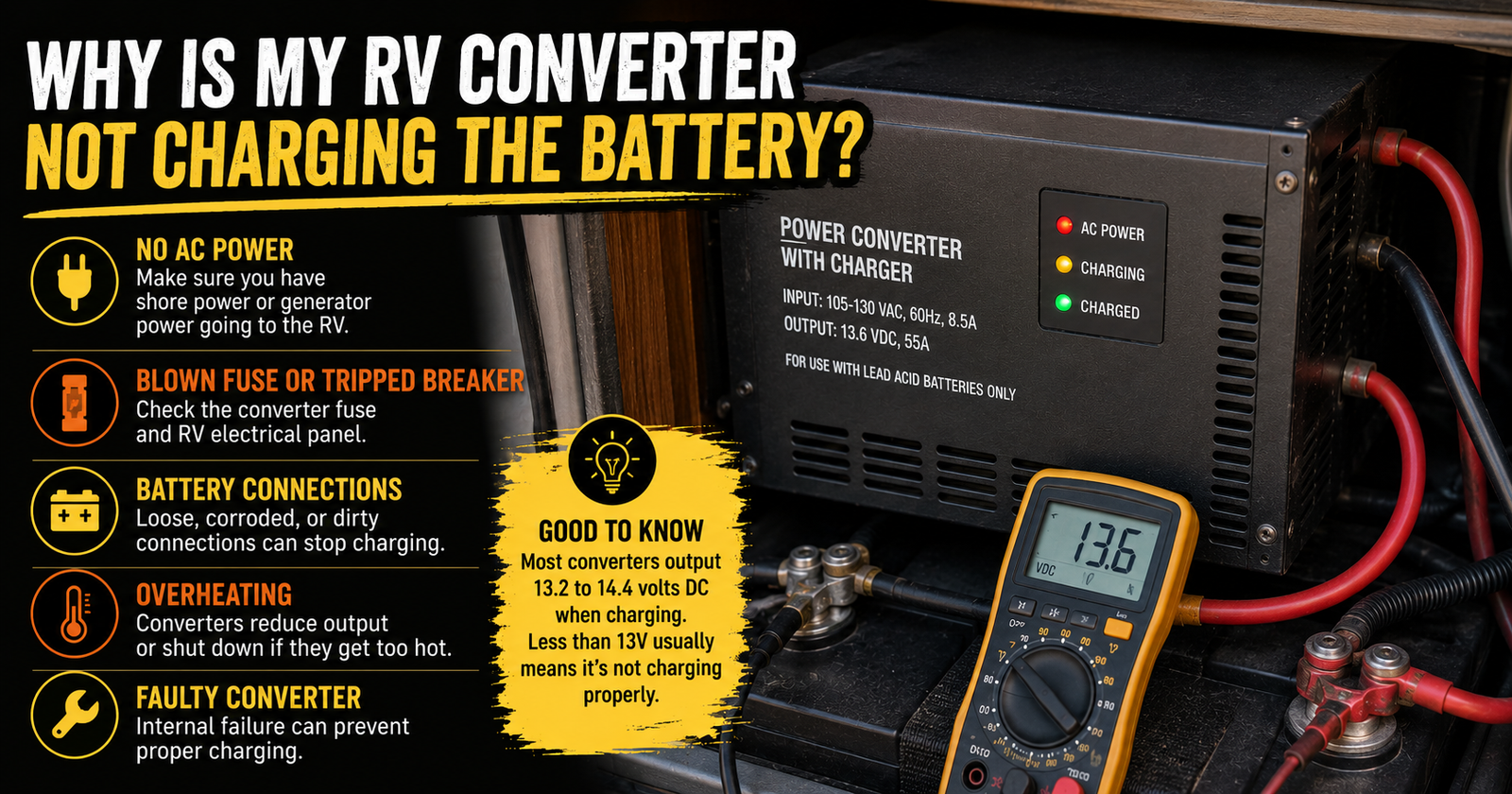
We’ve got a separate troubleshooting guide for an RV converter that isn’t charging the battery because there are several places charging power can get interrupted.
Converter works doesn’t automatically mean charging system works.
What If Everything Dies When I Disconnect the Battery?
If you’re connected to known-good shore power and a modern converter that’s supposed to operate without a battery, but every 12-volt circuit dies as soon as the battery is removed, I’d investigate the converter and DC distribution system.
Is the converter actually receiving 120-volt AC?
Is its breaker on?
Does it have DC output?
Are reverse-polarity fuses intact?
Is there a blown fuse or failed connection?
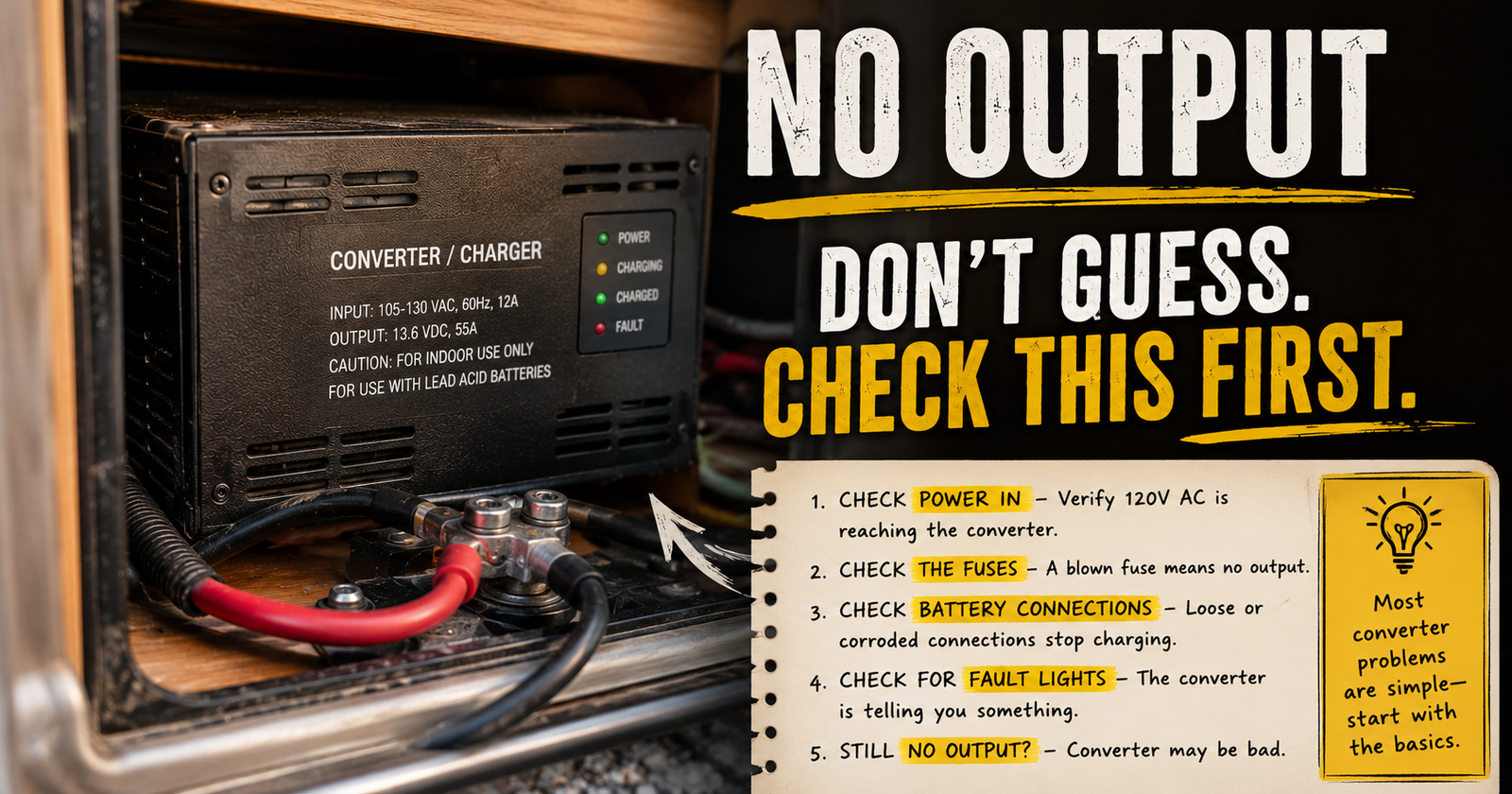
Progressive Dynamics’ troubleshooting sequence starts by checking converter DC output and then verifying that the converter actually has 120-volt AC input. That sequence is explained in more detail in these RV converter no-output troubleshooting steps.
Don’t automatically conclude that the RV “requires a battery” just because the 12-volt system dies without one.
Find out whether the converter is actually working.
What If the Outlets Still Work but the Lights Go Out?
That’s a classic AC-versus-DC clue.
Your standard outlets may be receiving 120-volt AC shore power normally.
Meanwhile, the lights are typically running on the 12-volt DC system.
If the battery is disconnected and the converter isn’t producing DC power, you can end up with:
Working AC outlets
but
Dead 12-volt lights
That feels bizarre until you understand that an RV contains two interconnected electrical systems.
Then it makes perfect sense.
Does the Battery Power the RV Outlets?
Normally, not directly.
A typical RV house battery supplies DC electricity.
Your ordinary household-style receptacles use AC electricity.
If you’re disconnected from shore power and want battery energy to operate AC loads, you generally need an inverter.
That’s different from the converter.
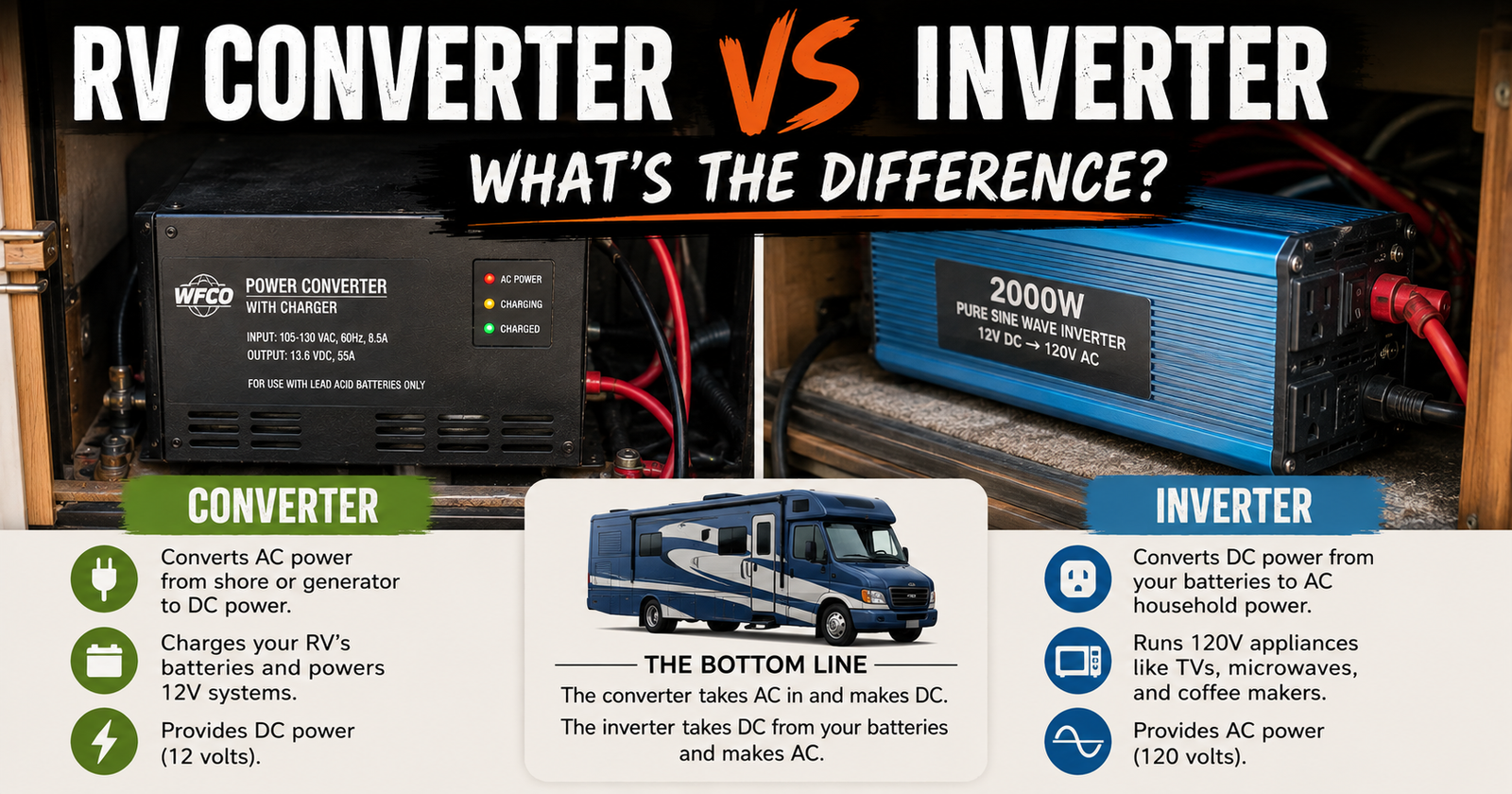
Our RV converter vs. inverter guide explains the difference without making it unnecessarily complicated.
Converter Means AC to DC
This is the easiest memory trick I’ve found.
Converter: AC → DC
Inverter: DC → AC
The converter takes the AC electricity available from shore power or another appropriate AC source and supplies DC electricity.
The inverter takes stored DC energy, normally from batteries, and creates AC electricity.
That’s why removing the battery affects an inverter setup very differently than it affects a converter running from shore power.
Does an RV Converter Work From a Generator Without a Battery?
Potentially, yes.
A generator can provide the AC electricity that the converter requires.
The converter doesn’t specifically care that the AC came from a campground pedestal. What matters is that it receives proper AC input within its specifications.
Progressive Dynamics specifically describes converter operation when either shore or generator power is available.
So:
Shore power → converter → DC power
or
Generator AC → converter → DC power
Both can supply the converter.
The battery isn’t what makes the converter operate.
AC input is.
Does an RV Converter Work From Solar Without a Battery?
This is where terminology matters.
Solar panels normally produce DC electricity and feed a solar charge controller.
That’s a different charging path from your AC-powered converter.
A conventional RV converter isn’t normally being powered directly from the solar panels.
If your RV has a more elaborate inverter/charger, integrated power system, or other equipment, the architecture can become much more complicated.
But in a traditional RV setup, solar charging and converter charging are separate systems that can both ultimately interact with the battery.
What Happens to Solar If I Disconnect the Battery?
Don’t assume it’s safe to simply disconnect the battery while the solar system remains active.
Some solar charge controllers have specific connection and disconnection sequences, and equipment requirements vary.
If your camper has solar, check the controller manufacturer’s instructions before removing the battery.
This is one of those situations where an RV can have more than one active electrical source even though you’ve unplugged the shore cord.
Unplugging Shore Power Doesn’t Mean the RV Is Electrically Dead
This deserves repeating whenever we’re talking about RV electrical work.
Your RV may have:
House batteries.
Solar panels.
Generator power.
An inverter.
A tow-vehicle charging connection.
Other electrical equipment.
Progressive Dynamics’ converter replacement instructions specifically call for disconnecting shore power, generator power, and battery power before converter replacement.
That’s a good reminder that RV electrical systems can have multiple sources.
Don’t assume pulling one plug makes everything safe to touch.
Can I Leave the Battery Disconnected Permanently?
Maybe your specific RV and converter can operate that way while connected to AC power, but I wouldn’t automatically recommend it.
You’re giving up stored DC power.
You’re giving up backup power when shore power fails.
You may affect high-current equipment that expects battery assistance.
You may affect other systems designed around having a battery installed.
And you’ll obviously have no battery power when dry camping.
WFCO’s own guidance says the converter doesn’t require the battery, but notes that a battery is typically necessary for dry camping and RVs with slide-outs or leveling systems.
That pretty much captures how I look at it.
Can the converter run without the battery? Yes.
Does that mean the battery serves no purpose? Absolutely not.
What About Older RV Converters?
Here’s where I wouldn’t apply modern advice blindly.
Older converters can be designed differently.
Progressive Dynamics’ documentation for older converter designs shows systems that used transfer relays to switch the RV’s 12-volt branch circuits between battery power and converter-produced DC power when shore power was connected.
There have been many converter designs over the years.
If you’ve got a decades-old camper with original electrical equipment, identify the converter model before deciding how it should behave without a battery.
The owner’s manual beats a generic internet answer.
Some Very Old RVs May Be Different
Progressive Dynamics documentation for an older PD-707/708 converter even notes that RVs weren’t necessarily supplied with batteries or internal battery chargers and that some configurations didn’t need them.
That illustrates why RV electrical history gets messy.
“RV converter” describes equipment that has changed considerably over the decades.
For a newer electronic converter, manufacturer documentation is what I’d trust.
For an old converter from a vintage camper, identify it before making assumptions.
Does Removing the Battery Hurt the Converter?
For a modern converter specifically designed to operate without a battery, simply having no battery connected doesn’t inherently mean you’re hurting it.
Both WFCO and Progressive Dynamics explicitly state that their applicable converters can operate without a battery connected.
But that’s not permission to disconnect batteries randomly while equipment is operating.
Follow the manufacturer’s shutdown and disconnection procedures.
Battery cables can carry substantial current.
Polarity matters.
Other charging sources may still be active.
Treat the system accordingly.
What About Reverse Polarity Fuses?
These are particularly relevant around battery work.
WFCO explains that reverse-polarity fuses protect the converter if the battery is connected backward.

Progressive Dynamics similarly identifies blown reverse-battery-protection fuses as something to check when converter output is zero, noting that reversing the battery leads can blow them. If those fuses keep failing, this guide to reverse-battery protection fuses explains what to check before installing another one.
That’s why I don’t casually reconnect battery cables based on memory.
Confirm polarity.
Then confirm it again.
Could I Test an RV Before Buying a Battery?
If you’re looking at a used camper with no house battery installed, shore power may still allow you to test quite a bit if the installed converter is designed for battery-free operation.
You may be able to test:
Interior lights.
Vent fans.
Water pump.
Some appliance controls.
AC outlets.
Air conditioner.
Microwave.
Other equipment.
But I wouldn’t assume you’re testing every system under normal conditions.
Slides, leveling systems, and other heavy DC loads deserve particular caution.
And obviously you haven’t tested whether the camper’s battery charging system actually charges a battery.
Can I Use the RV While Waiting for a Replacement Battery?
Often, yes, provided the converter and RV are designed for it and you’re connected to reliable AC power.
For basic campground use, you may find that most of the camper behaves normally.
Just remember what you’re missing.
If shore power disappears, your DC backup disappears with it.
And equipment that depends on battery assistance or requires a battery shouldn’t be operated contrary to the manufacturer’s instructions.
I’d consider it a temporary arrangement rather than automatically deciding the RV no longer needs a battery.
Do I Need a Battery If I Always Camp With Full Hookups?
I would still keep one.
Even if you spend nearly every night plugged into campground electricity, the battery provides benefits.
It gives you 12-volt power when the campground loses electricity.
It lets you operate appropriate DC equipment while traveling or setting up.
It can assist with high-current DC demand.
It supports dry camping when needed.
And certain RV equipment may require it.
A battery isn’t obsolete just because you normally have shore power.
Does Converter Size Matter More Without a Battery?
Potentially.
Remember that a connected battery can help supply additional current during short periods of high DC demand.
Without that battery, the converter has to carry the DC loads by itself.
Progressive Dynamics specifically notes that its current-limiting converters can shut down if loads exceed their designed output, while an installed battery can supply additional current during high-demand periods.
So converter capacity becomes particularly relevant if you’re trying to run a lot of DC equipment without a battery connected.
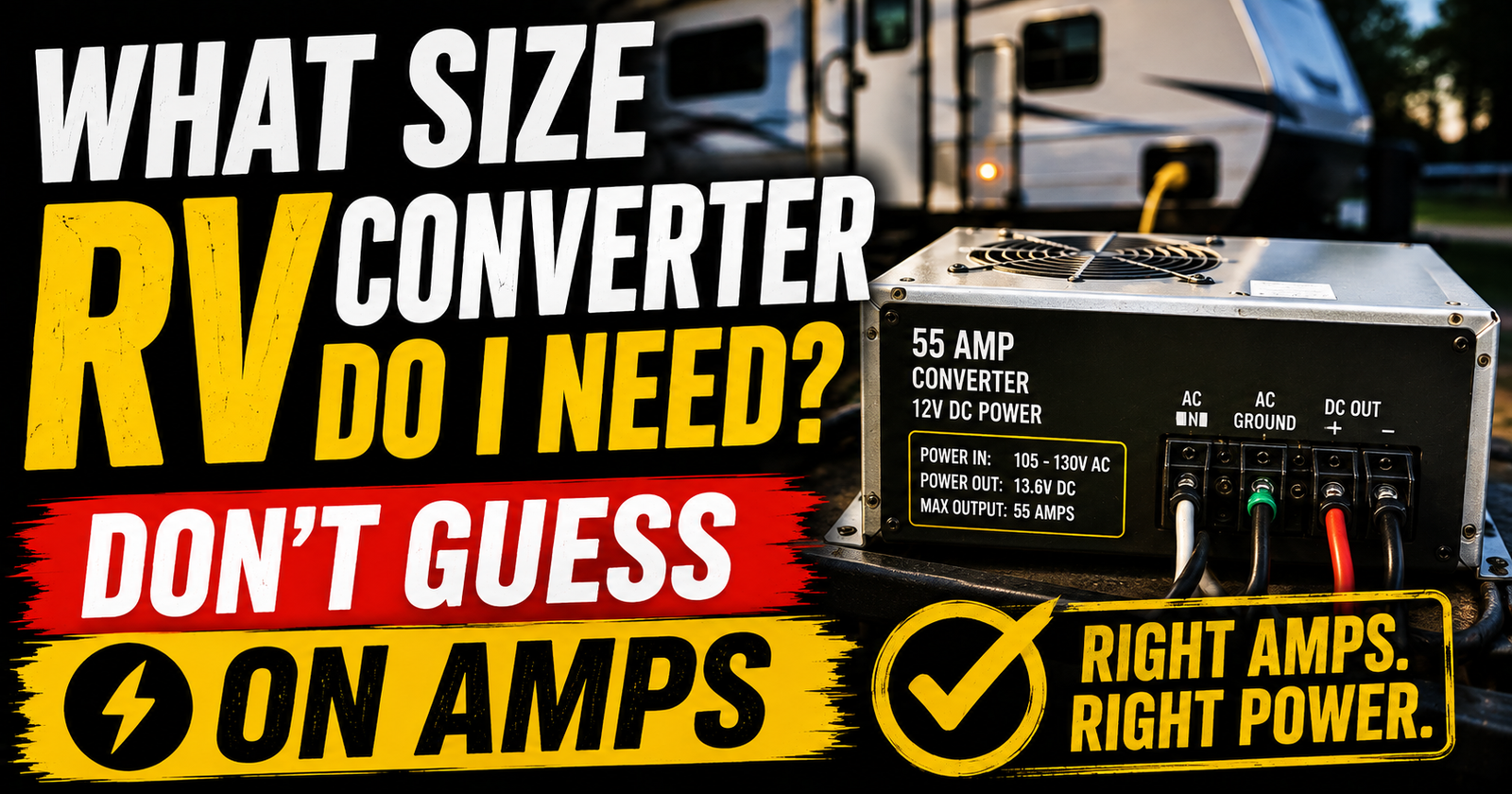
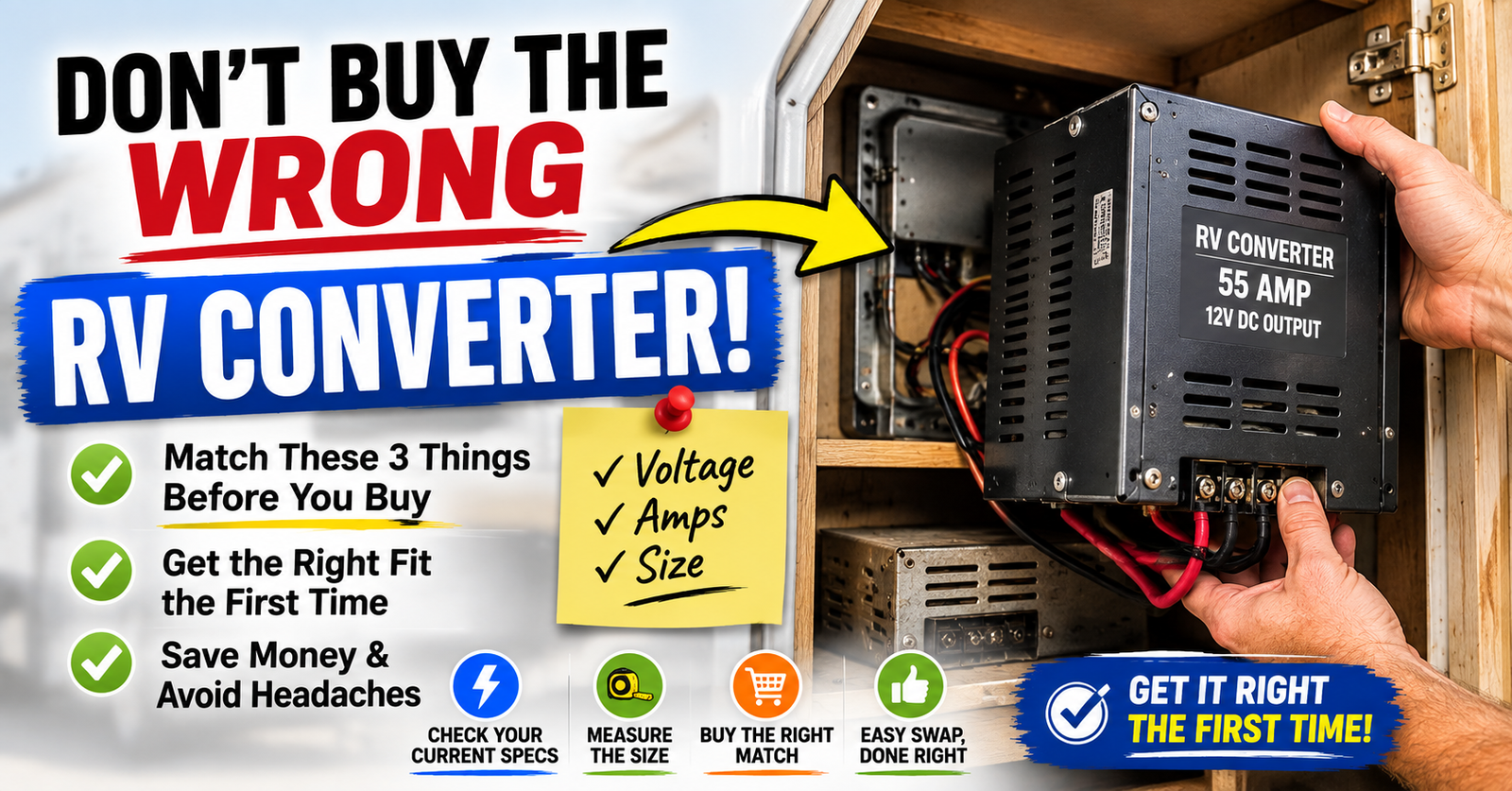
If you’re unsure what converter capacity actually means, our guide to choosing the correct RV converter size explains it in detail.
Should I Install a Bigger Converter So I Don’t Need a Battery?
I wouldn’t.
That’s solving the wrong problem.
A larger converter can provide more DC output while AC electricity is available.
It doesn’t store energy.
The moment its AC source disappears, the converter stops providing that power.
A battery solves a completely different problem.
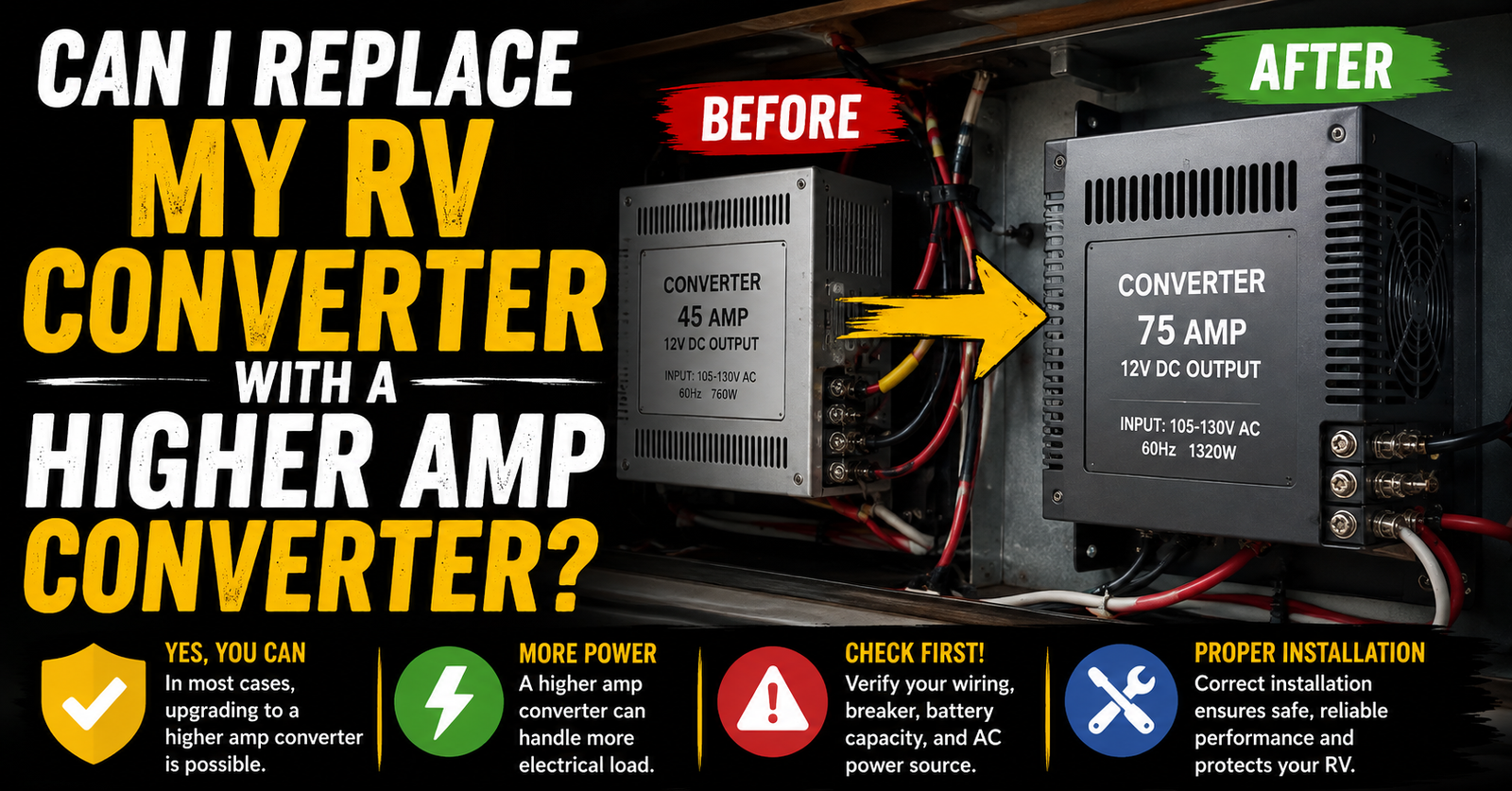
And as we covered in our guide to installing a higher-amp RV converter, increasing converter amperage isn’t something I’d do without verifying that the RV’s wiring and electrical system can safely support it.
Bigger converter and battery aren’t interchangeable concepts.
Can I Run an RV With Only a Converter?
While connected to a proper AC source, many modern RV electrical systems can operate their ordinary 12-volt circuits from the converter without a house battery connected.
That’s the most accurate simple answer.
But I’d add three big conditions.
The converter must be designed for battery-free operation.
The converter must have enough capacity for the loads you’re using.
And none of the equipment you’re operating should require the battery or depend on it for additional current.
That’s why I’d always check the documentation for the specific RV and converter rather than removing the battery based solely on a general rule.
The Battery Isn’t What Makes the Converter Work
This is probably the biggest takeaway.
A lot of owners picture the electrical system like this:
Shore power charges battery → battery powers everything
That’s not necessarily what’s happening.
With a modern converter operating from AC power, the converter can supply DC electricity to the RV while also charging a connected battery.
WFCO describes converter output as supplying the RV’s DC load first, with remaining available current going toward battery charging.
That explains why the RV can still have 12-volt power after the battery is removed.
The converter was already an active DC power source.
So Does Your RV Converter Need a Battery?
Many modern RV converters do not need a battery connected in order to operate.
If the converter receives proper AC electricity from shore power or a generator, it can supply DC electricity to the RV’s 12-volt system.
But the battery still has important jobs.
It stores energy for when AC power isn’t available.
It can help supply current during periods of high DC demand.
It may be necessary for slides, leveling equipment, or other systems depending on your RV.
And without it, losing shore power can mean immediately losing your 12-volt electrical supply too.
So I wouldn’t look at a working camper with the battery disconnected and think:
“Well, apparently I don’t need that thing.”
What you’ve actually proven is that your converter is doing its job while AC power is available.
And that’s exactly what it’s supposed to do.
Written by Evan Mercer
Evan Mercer writes about RV electrical systems, converters, batteries, shore power, and practical camper troubleshooting for CamperAnswers.com. His goal is to explain what each part of an RV electrical system actually does so owners can troubleshoot problems without replacing perfectly good equipment.