

Nothing makes an RV battery gauge lose my trust faster than watching it say FULL and then seeing the battery fall on its face a few hours later. I’ve seen this confuse plenty of camper owners because it seems impossible. If the battery was full, where did all that power go?
Sometimes it didn’t go anywhere.
The battery may never have contained as much usable energy as the display made you think it did.
That’s the first thing I want to get straight with this problem. A voltage reading, a row of little indicator lights, and the actual amount of usable energy stored in your battery are not always telling you exactly the same thing.
If your RV battery shows full but dies quickly, I wouldn’t immediately start hunting for something secretly draining it. First, I’d make sure the battery is truly getting charged, determine whether it can still hold useful capacity, and figure out what that “full” reading actually means.
A Full Reading Doesn’t Always Mean a Full Battery
This is the mistake that sends a lot of RV owners down the wrong troubleshooting path.
You plug the camper in.
Wait a while.
Look at the battery indicator.
FULL.
Perfect.
Then you unplug, start using the camper, and suddenly that reassuring battery reading starts dropping.
The immediate reaction is usually:
Something must be draining my battery.
Maybe.
But there’s another possibility.
The battery gauge may have been showing you a voltage condition that looked like a charged battery without actually proving how much usable energy the battery could deliver.
That’s a very different problem.
Voltage and Battery Capacity Aren’t the Same Thing
This is probably the most important concept in this entire article.
Voltage is one measurement.
Capacity is another.
A battery can produce a voltage reading that looks fairly normal while having substantially less usable capacity than it had when it was healthy.
Think of it like having good water pressure coming out of a nearly empty tank.
The pressure tells you something useful.
It doesn’t tell you exactly how many gallons are left.
Your RV battery can fool you in a similar way.


The RV’s Factory Battery Gauge Is Usually a Rough Indicator
Those little battery-level lights in many campers are convenient.
I use them for what they are.
A quick glance.
What I don’t do is treat them like a precision fuel gauge.

Many basic RV battery indicators rely heavily on voltage. That becomes tricky because battery voltage can change depending on whether the battery is being charged, resting or supporting a load. Understanding RV battery voltage readings helps separate a normal charging reading from a sign of low battery condition.
So when that panel says FULL while you’re plugged into shore power, I don’t automatically assume the battery itself has reached a true full state of charge.
I want more evidence.
Shore Power Can Make the Battery Look Better Than It Is
This is a big one.

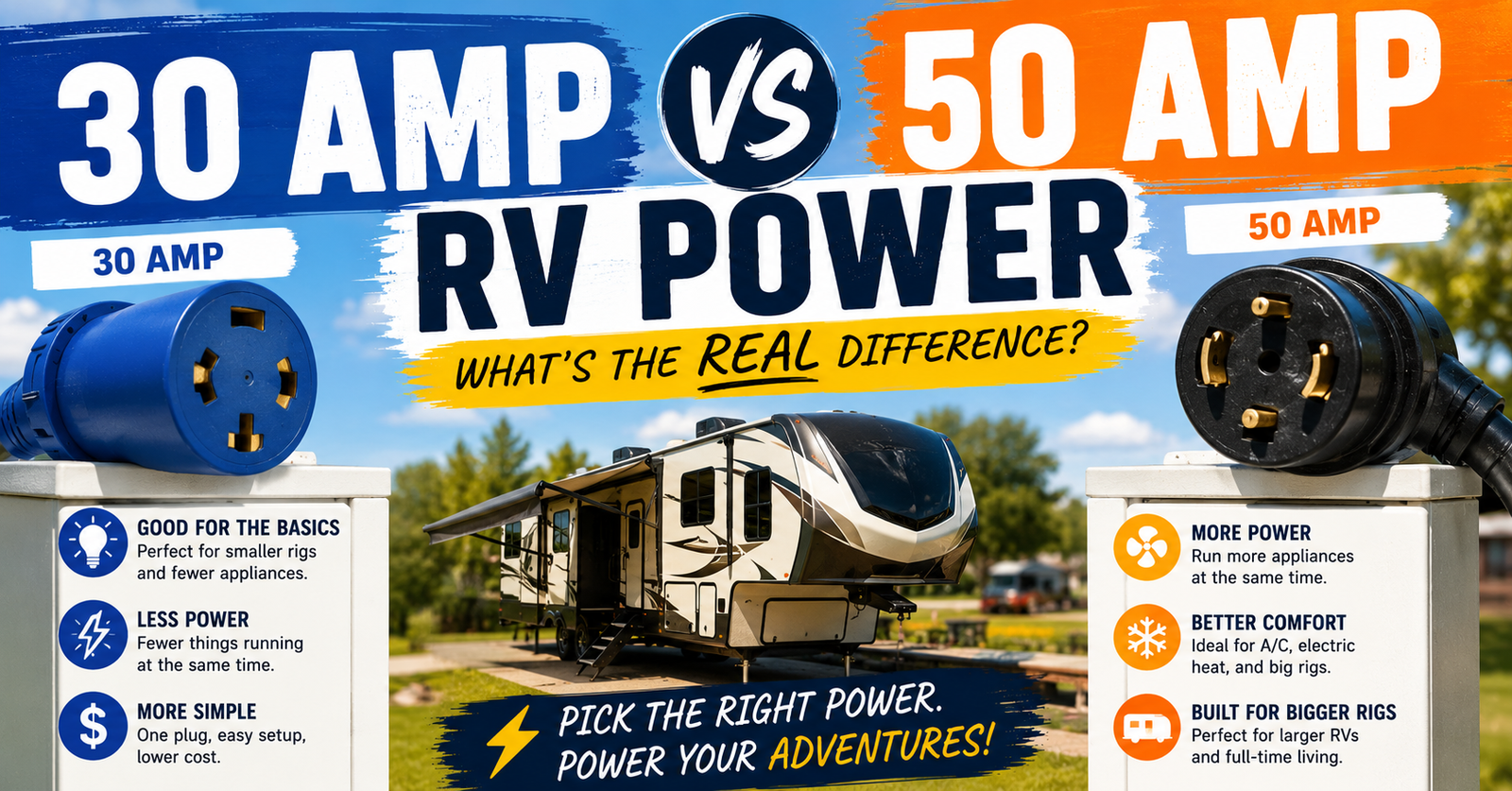
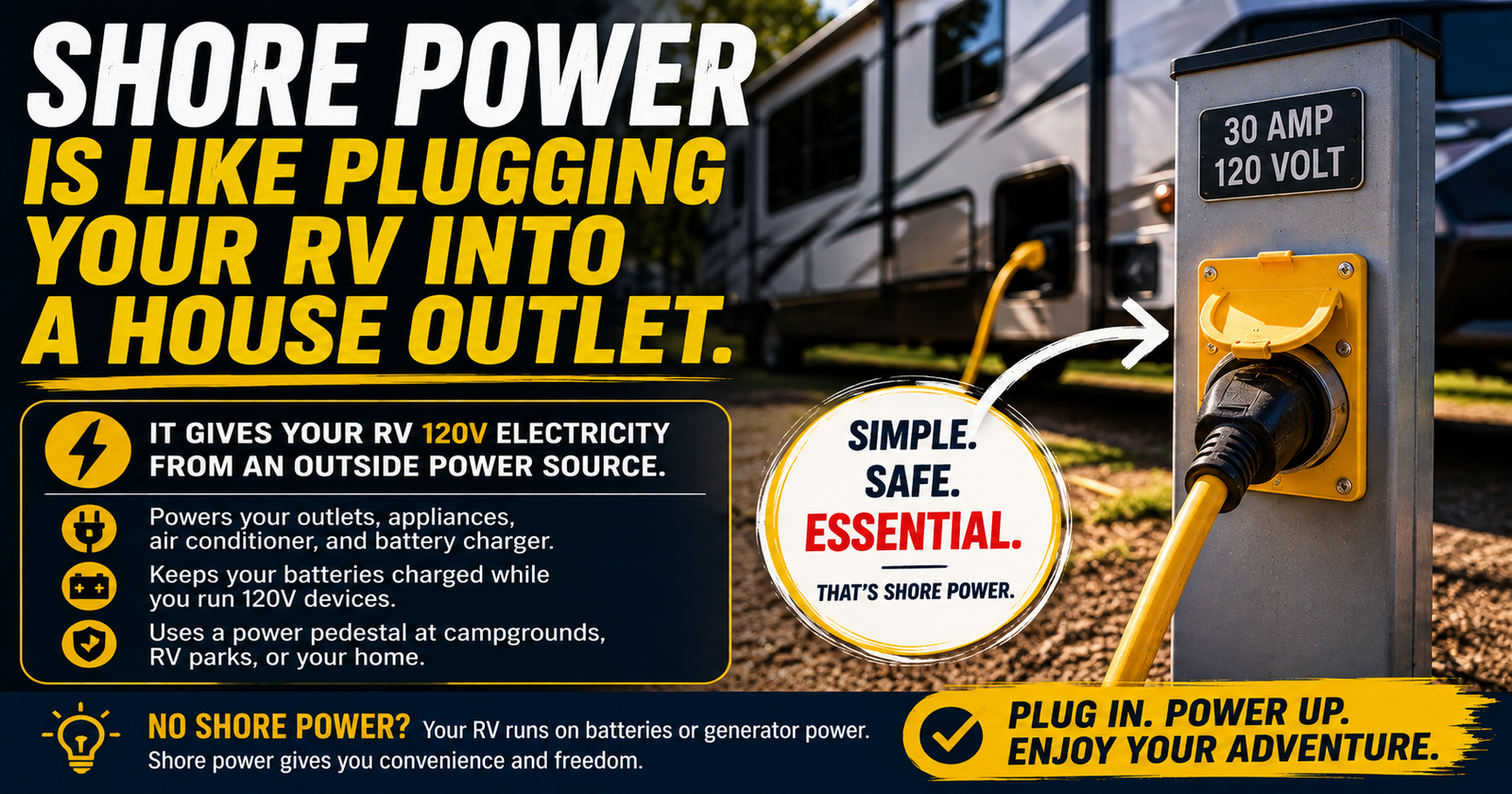
When your RV is plugged into shore power, the converter or inverter/charger can raise the DC-system voltage while supplying 12-volt equipment and charging the battery. The distinction becomes clearer when you understand the RV's electrical systems and how shore power supports the living-area equipment.
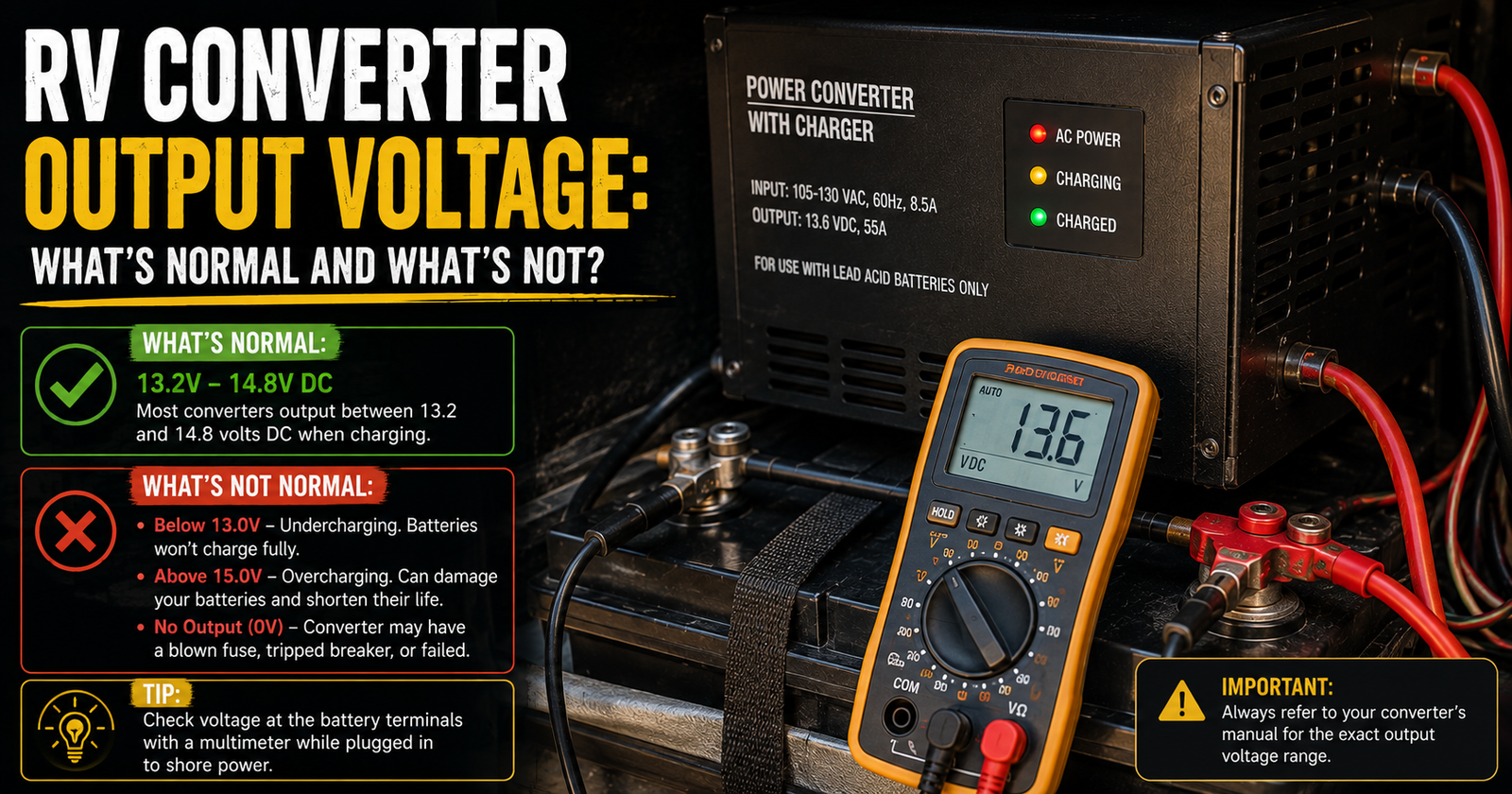
Progressive Dynamics, for example, describes charging modes on some of its converter/chargers around 14.4 volts during boost charging, 13.6 volts during normal charging and 13.2 volts during storage maintenance. Those figures are easier to interpret when you understand the normal 14.4, 13.6 and 13.2 volts associated with each charging stage.
Those voltages are higher than the resting voltage you’d expect from a typical 12-volt lead-acid battery.
So if your monitor is essentially looking at system voltage while the charger is operating, everything can look wonderful.
Then you unplug the camper.
Charging voltage disappears.
Now you finally start seeing what the battery itself can do.
This Is Why the Battery Can Drop Right After You Unplug
A voltage drop immediately after disconnecting shore power doesn’t automatically mean you just lost a huge amount of stored energy.
You may simply be watching the electrical system transition from charging voltage to battery voltage.
That’s normal to a point.
What gets my attention is when the battery continues falling quickly once a reasonable load is applied.
If the battery appears great while plugged in but immediately becomes weak once it has to support the camper, I start asking two questions:
Was it actually being charged?
And:
Can it still store meaningful capacity?
Those questions take us much farther than staring at the FULL light.
A Battery Can Accept Voltage Without Having Much Capacity Left
This is especially important with an older or damaged battery.
You can connect a charger and see the voltage rise.
That proves the charger is affecting battery voltage.
It doesn’t necessarily prove the battery has regained all the capacity it had when it was new.
A deteriorated battery can reach an apparently encouraging voltage and then collapse much sooner under load.
That’s why I don’t condemn or approve a battery based solely on one voltage measurement.
How it behaves when asked to do work matters.
Surface Charge Can Make a Reading Look Better
After charging, a lead-acid battery can temporarily show an elevated voltage condition commonly referred to as surface charge.
If you take your reading immediately after charging and use that number as proof the battery is completely healthy, you can fool yourself.
Letting the battery rest appropriately before evaluating resting voltage gives you a more useful reading.
The exact testing procedure depends on battery chemistry, which is another reason I don’t apply lead-acid testing rules blindly to lithium batteries.
Know what battery you’re testing first.
The Battery Might Never Have Finished Charging
This one is incredibly common.
People tend to think charging is binary.
Plugged in equals charging.
Not plugged in equals not charging.
Real life isn’t that neat.
The charger needs time.
Its output matters.
The battery’s state of charge matters.
The RV may be consuming electricity at the same time.
Battery chemistry matters.
Charging settings matter.
A large depleted battery bank can take a while to replenish.
If you unplug before the charging process is actually complete, you may start your camping day with considerably less energy than you thought you had.

A Bigger Battery Bank Can Take Longer to Refill
This becomes especially important after an upgrade.
Suppose you had a relatively small battery bank and installed substantially more capacity.
Great.
Now you’ve got more stored energy available.
But if you deeply discharge that larger bank, you also have more energy to put back.
Your charger doesn’t magically become more powerful because you bought bigger batteries.
And while charging, some of the converter’s available output may also be supporting active RV loads.
So a battery bank can spend hours connected to power without necessarily reaching full charge.
Your Converter May Not Be Charging the Battery at All
Here’s where the symptom gets deceptive.
The RV can have shore power.
The 12-volt lights can work.
Everything can look normal.
And you can still have a battery-charging problem.
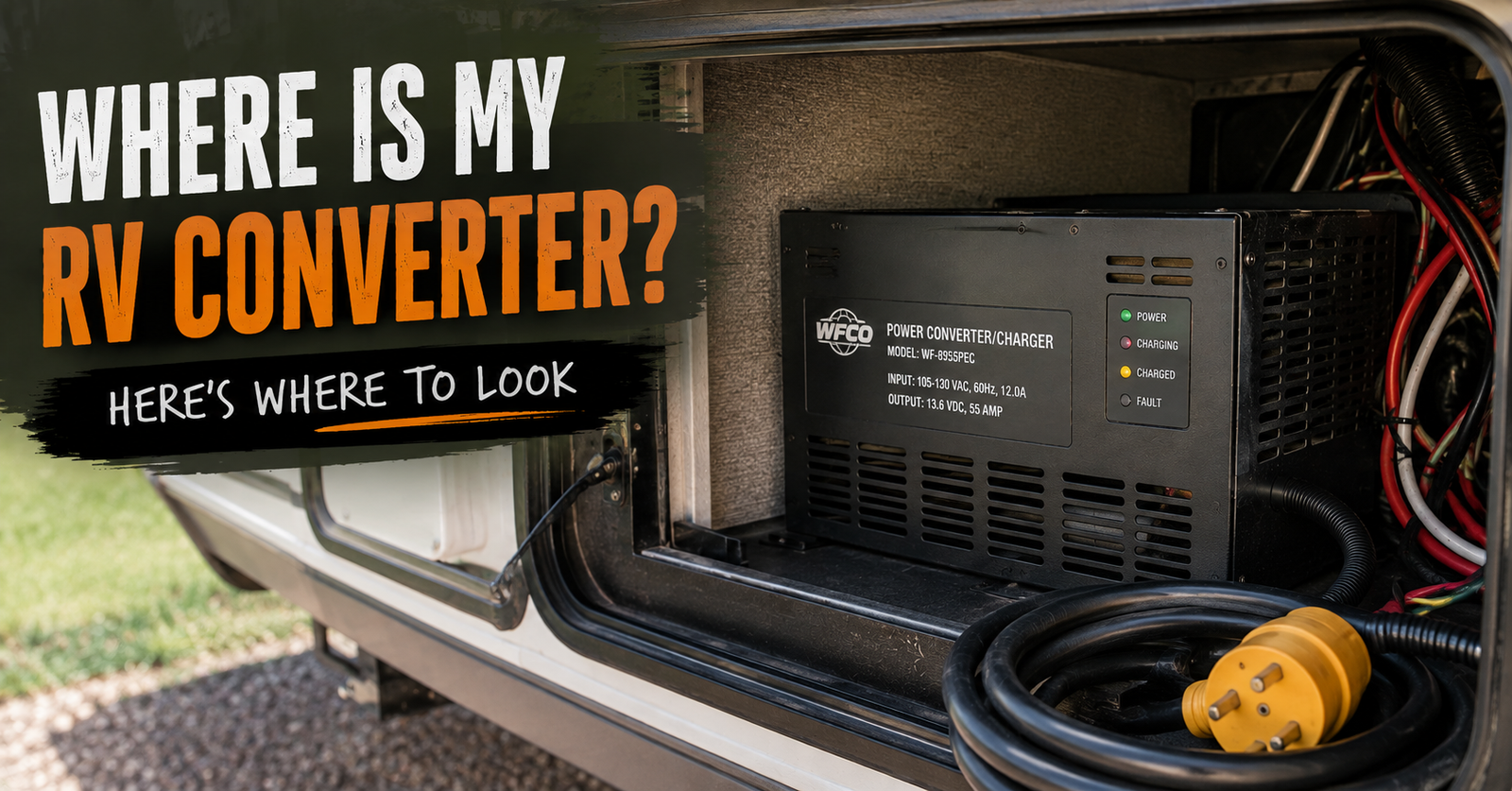
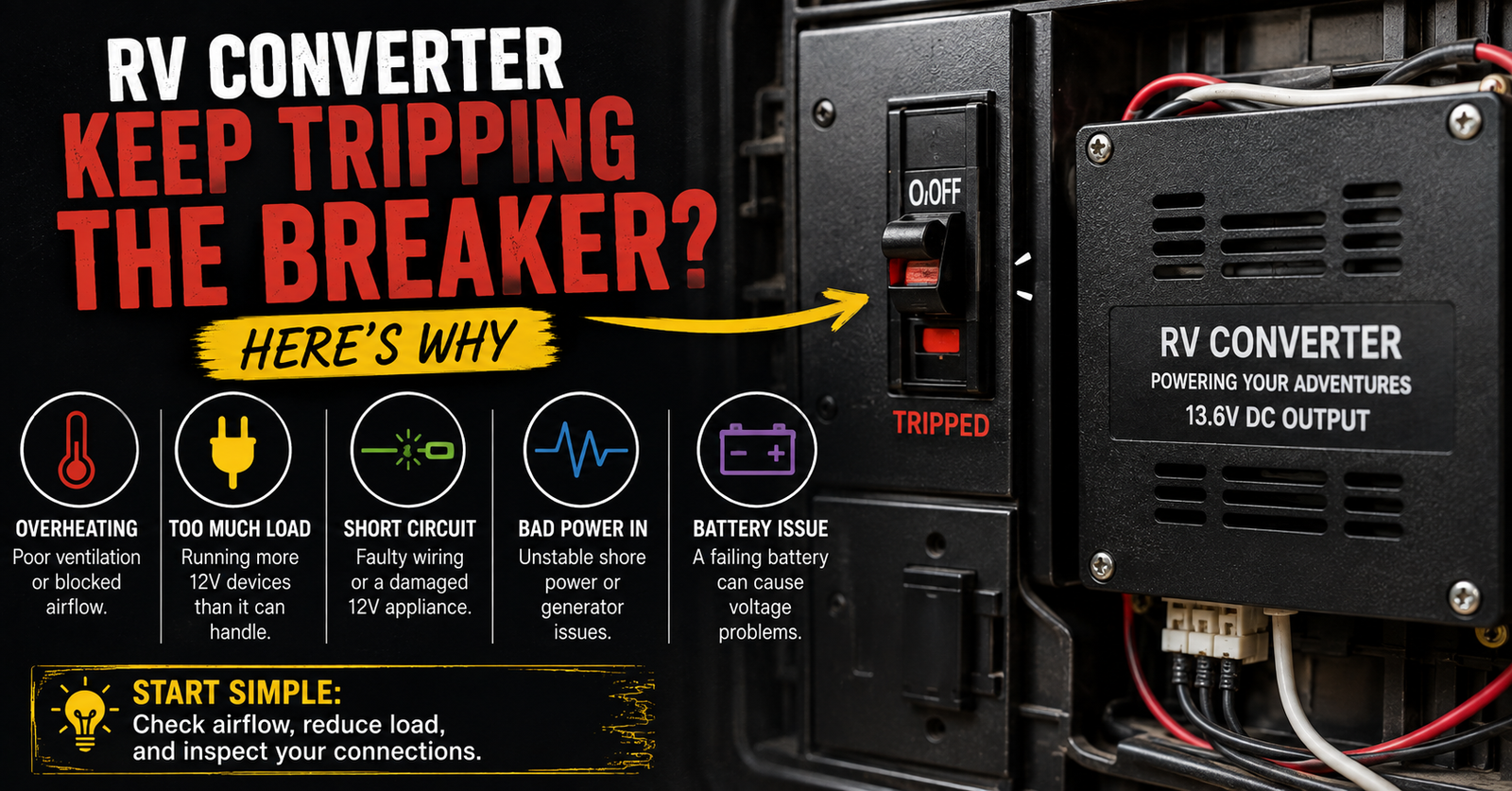
Depending on the electrical system, the converter can support the RV’s 12-volt equipment while the battery isn’t receiving the charge it should. Knowing where RV converters are commonly located can help you identify the equipment that may be supporting the 12-volt system.
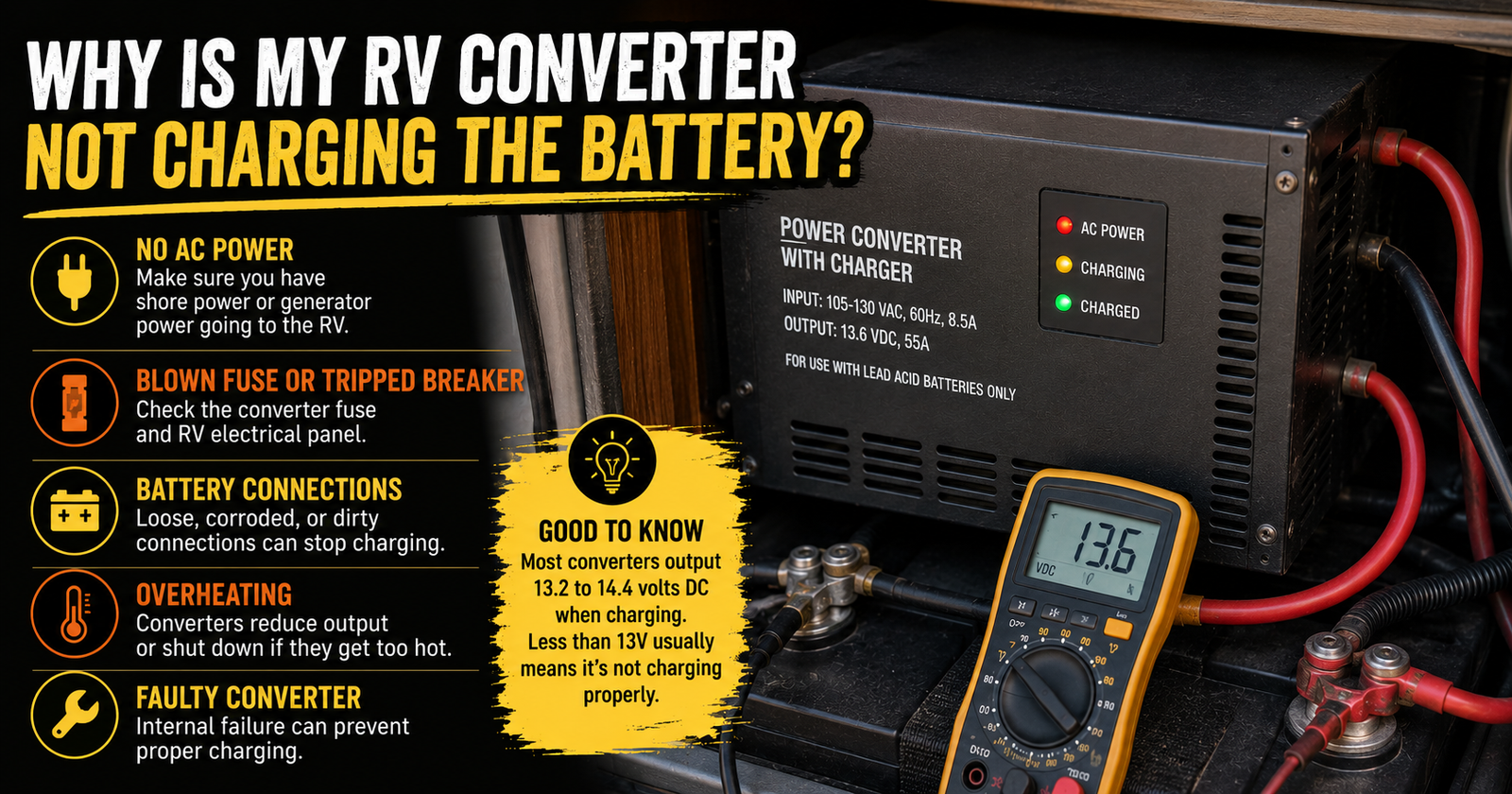
Progressive Dynamics’ own converter troubleshooting instructions tell owners to verify converter output and, if output is correct but the batteries aren’t charging, inspect the fuse or breaker in the battery’s positive lead. The broader battery still isn't charging guide applies that same logic by checking the converter, wiring, protection devices, and battery in sequence.
That’s exactly why I don’t use “the lights work while plugged in” as proof the battery is healthy or properly charging.
Verify Charging Before Blaming Battery Capacity
If you haven’t already confirmed the charging system, do that early.
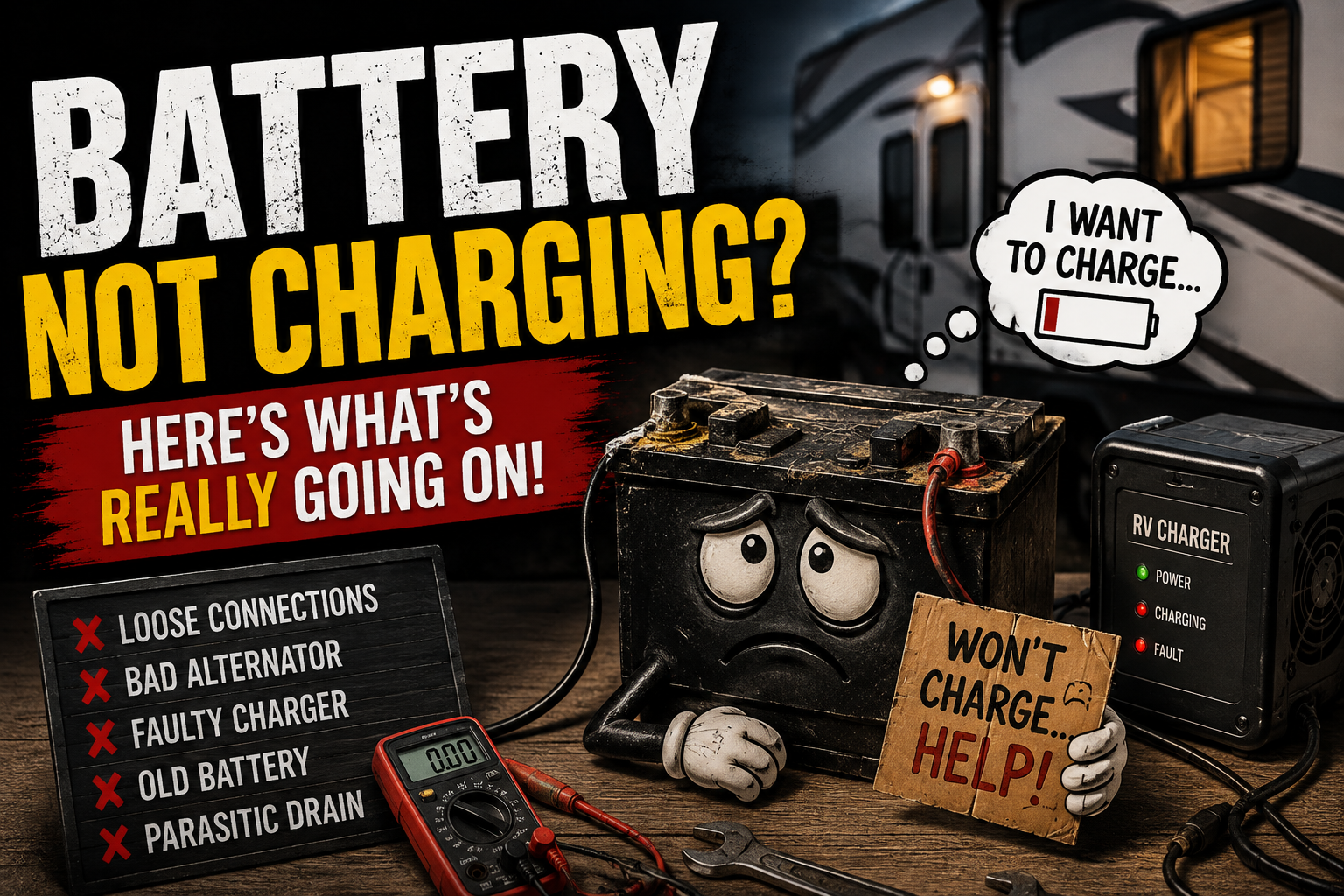
We’ve put together a complete walkthrough for an RV battery that won’t charge properly because there are several places that charging path can fail.
The converter needs AC power.
It needs to produce the appropriate DC output.
That output needs a good electrical path to the battery.
The battery disconnect and protection devices need to be accounted for.
Connections need to be sound.
And finally, the battery needs to be capable of accepting the charge.
Don’t skip straight to that last step.
A Blown Fuse Can Create a Very Convincing Illusion
This is one of my favorite examples because it explains such weird behavior.
Imagine shore power is connected and the converter is supplying your 12-volt distribution system.
Interior lights work.
Fans work.
Everything seems alive.
But a fuse or breaker between the charging equipment and battery has opened.
The camper works because the converter is carrying the load.
The battery isn’t necessarily being replenished.
Then you unplug.
Suddenly the battery seems nearly dead.
From your perspective, it went from FULL to dead in seconds.
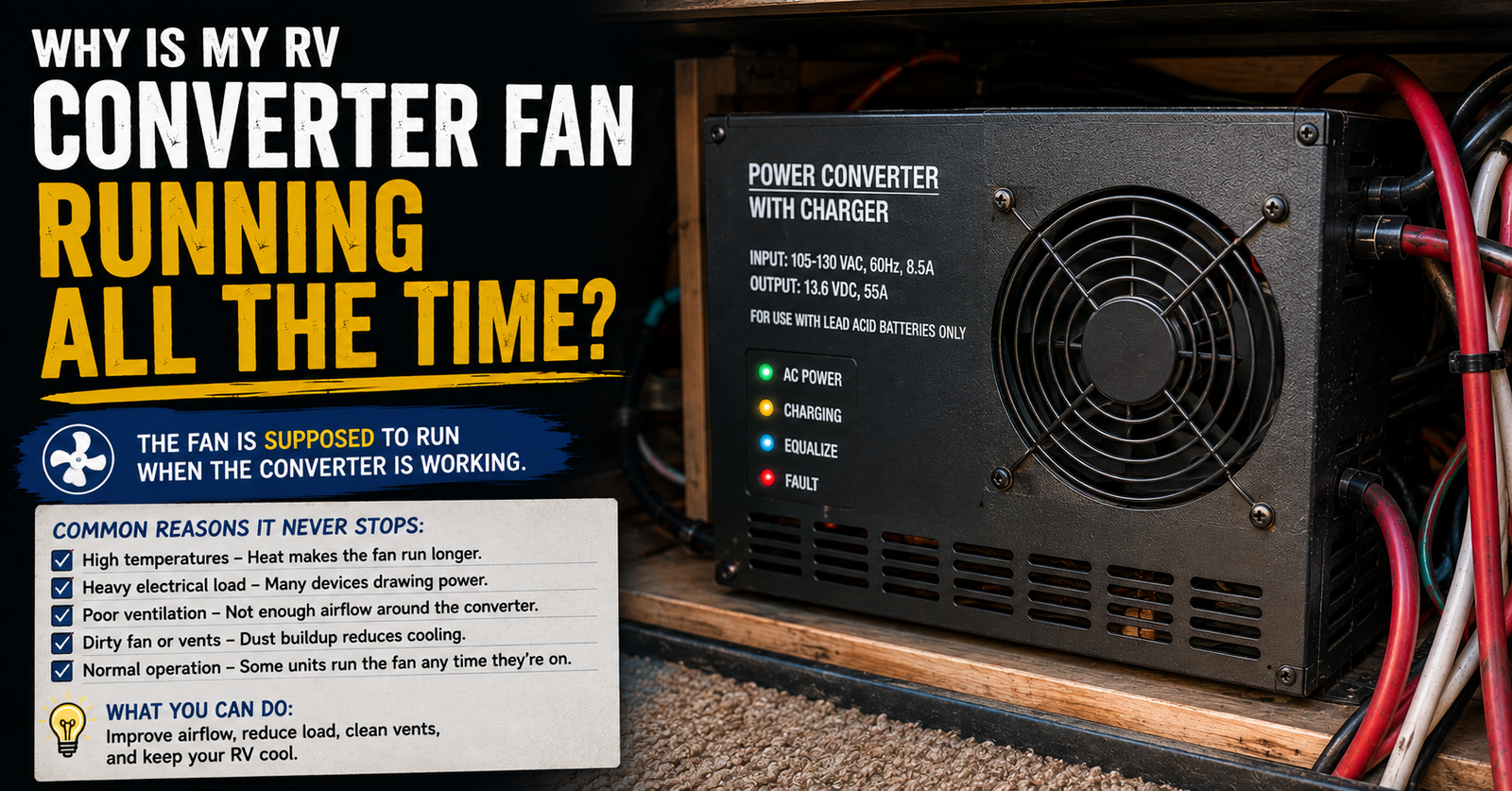
In reality, you may have been looking at converter-supported system voltage rather than a properly charged battery. If the converter is carrying more of the system demand than expected, its cooling fan behavior can provide another useful clue in converter-supported voltage and fan activity.
The Battery Disconnect Can Create Similar Confusion
The battery disconnect is another thing I’d check if the behavior makes no sense.
Depending on the RV’s design and switch position, you can end up with the battery isolated from parts of the system.
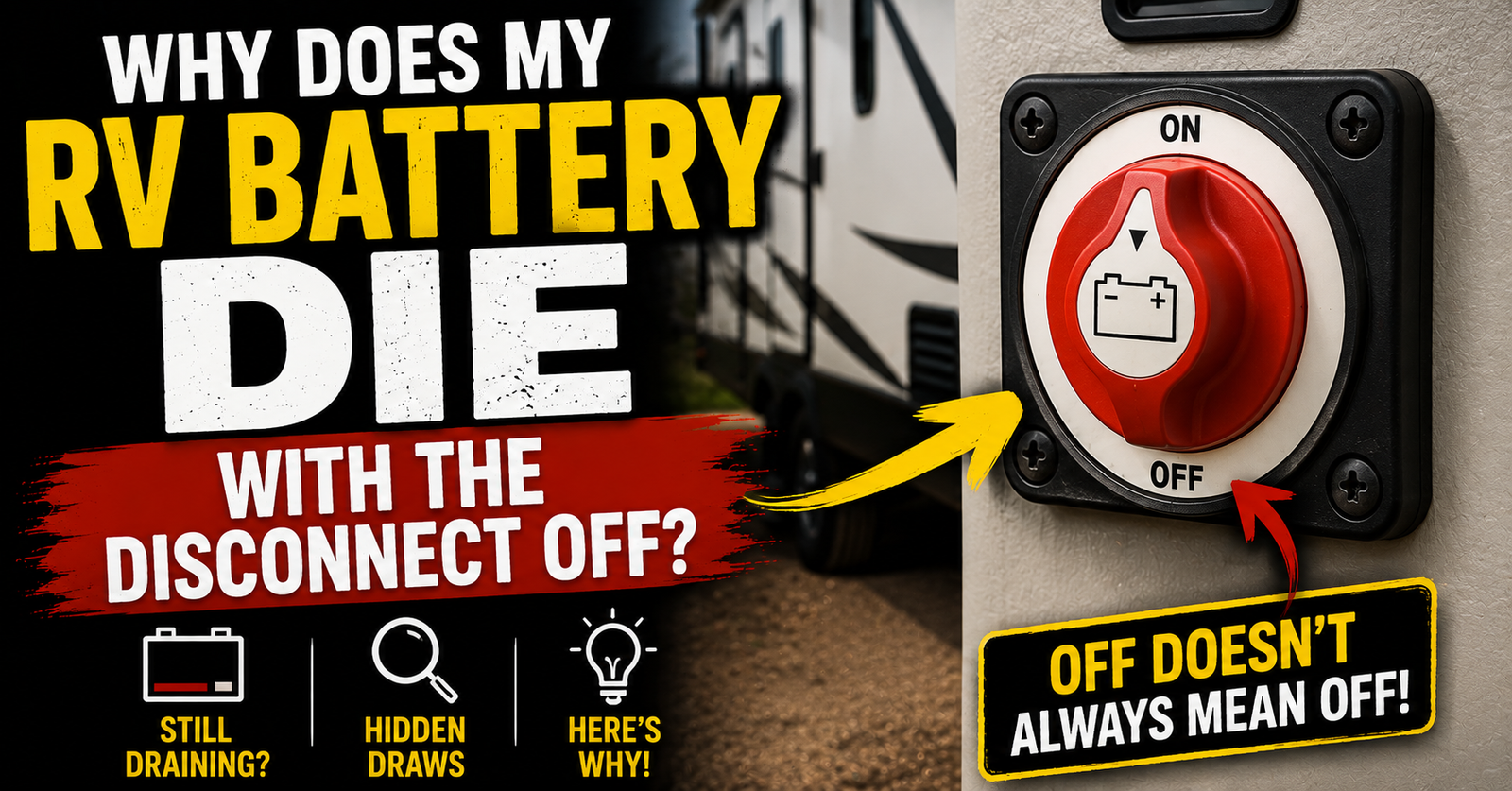
We’ve already covered the opposite problem, where an RV battery can die even with the disconnect switched off because certain loads can remain connected on some campers.
But the disconnect can matter on the charging side too.
You need to understand what your particular switch actually isolates and whether the battery can receive charge in the position you’re using.
Don’t assume every RV is wired identically.
Battery Chemistry Matters a Lot Here
Before interpreting voltage, identify the battery.
Flooded lead-acid?
AGM?
Lithium iron phosphate?
Something else?
These batteries don’t have identical voltage behavior, charging requirements or usable-capacity characteristics.
Lithium is particularly important because its voltage can remain relatively flat through a large portion of the discharge cycle.
That means voltage-based state-of-charge estimates can be especially misleading compared with a properly configured battery monitor.
This is one reason I don’t like universal battery charts that pretend every 12-volt RV battery behaves the same way.
They don’t.
Lead-Acid Batteries Can Lose Capacity From Poor Charging History
A lead-acid battery doesn’t have to be completely dead internally to become disappointing.
It can simply lose usable capacity.
Progressive Dynamics notes that leaving a discharged lead-acid battery without prompt recharging can contribute to sulfation, which can reduce battery capacity.
That’s a nasty problem for RV owners because it can build over time.
Battery gets deeply discharged.
Doesn’t get fully recharged.
Sits discharged.
Gets used again.
Eventually you have a battery that still seems to take a charge but doesn’t deliver anything close to the runtime you remember.
Repeatedly Running the Battery Dead Can Catch Up With You
This is where our battery articles start connecting together.

If you’ve been dealing with an RV battery that keeps going dead, the repeated discharges themselves can eventually become part of the problem, particularly with lead-acid batteries.
Maybe the original problem was a parasitic load.
Maybe the converter wasn’t charging correctly.
Maybe the battery was simply undersized.
Whatever started it, repeated poor battery treatment can leave you with reduced capacity even after the original problem is repaired.
Sometimes you fix one issue and discover it created another.
An Old Battery Can Look Fine Until You Put a Load on It
This is the test that matters in the real world.
The battery is sitting there doing almost nothing.
Voltage looks decent.
Turn on meaningful loads.
Now what happens?
A weak battery may experience a much more dramatic voltage drop under load than a healthy battery.
That’s why load testing and capacity testing can tell you things a simple resting-voltage reading cannot.
A battery doesn’t exist to look good while nothing is connected to it.
It exists to supply electricity.
I care about how it performs when asked to do that.
Voltage Sag Under Load Is a Valuable Clue
All batteries experience some voltage change under load.
What we’re looking for is behavior that’s excessive for the battery, its state of charge and the load being applied.
Suppose the battery looks healthy with almost nothing running.
Then the furnace starts and voltage falls dramatically.
Or you turn on an inverter load and everything collapses.
That makes me interested in battery condition, state of charge, cable connections and whether the load itself is reasonable for the battery system.
Don’t assume the battery is bad until you’ve checked those other pieces.
A Loose Connection Can Look Like a Weak Battery
This is why I hate replacing parts before doing basic inspection.
A poor connection creates resistance.
Under a light load, everything may appear fairly normal.
Increase the current and suddenly the voltage reaching the RV can fall much more noticeably.
Now the battery looks weak even though the problem may be between the battery and the camper.
Inspect accessible battery terminals and cable connections.
Look for looseness, corrosion, damage, overheating or other obvious problems.
And remember the negative side.
The positive cable doesn’t get to do all the work.
The Ground Connection Matters Too
A complete DC circuit needs a good return path.
A poor negative connection can create strange symptoms that owners naturally blame on the battery.
Depending on the RV, that may include battery-negative connections, frame grounds and other portions of the return path.
I don’t assume a connection is good just because a bolt is present.
If you’re seeing unusual voltage drop under load, connection quality belongs in the diagnosis.
Cable Size Matters on High-Current Loads
This becomes much more noticeable when inverters enter the picture.
High-power inverter loads can require substantial DC current from the battery.
Undersized cables, excessive cable length or poor connections can create voltage drop.
Then the inverter may report low battery voltage even though the battery’s resting condition seemed acceptable.
The bigger the current, the more important good battery cabling becomes.
That’s why a system that runs lights perfectly can still struggle when asked to supply a large inverter.
The Inverter Can Make a Healthy Battery Look Small
Let’s say the battery really is fully charged and healthy.
That still doesn’t mean it can run anything you want for as long as you want.
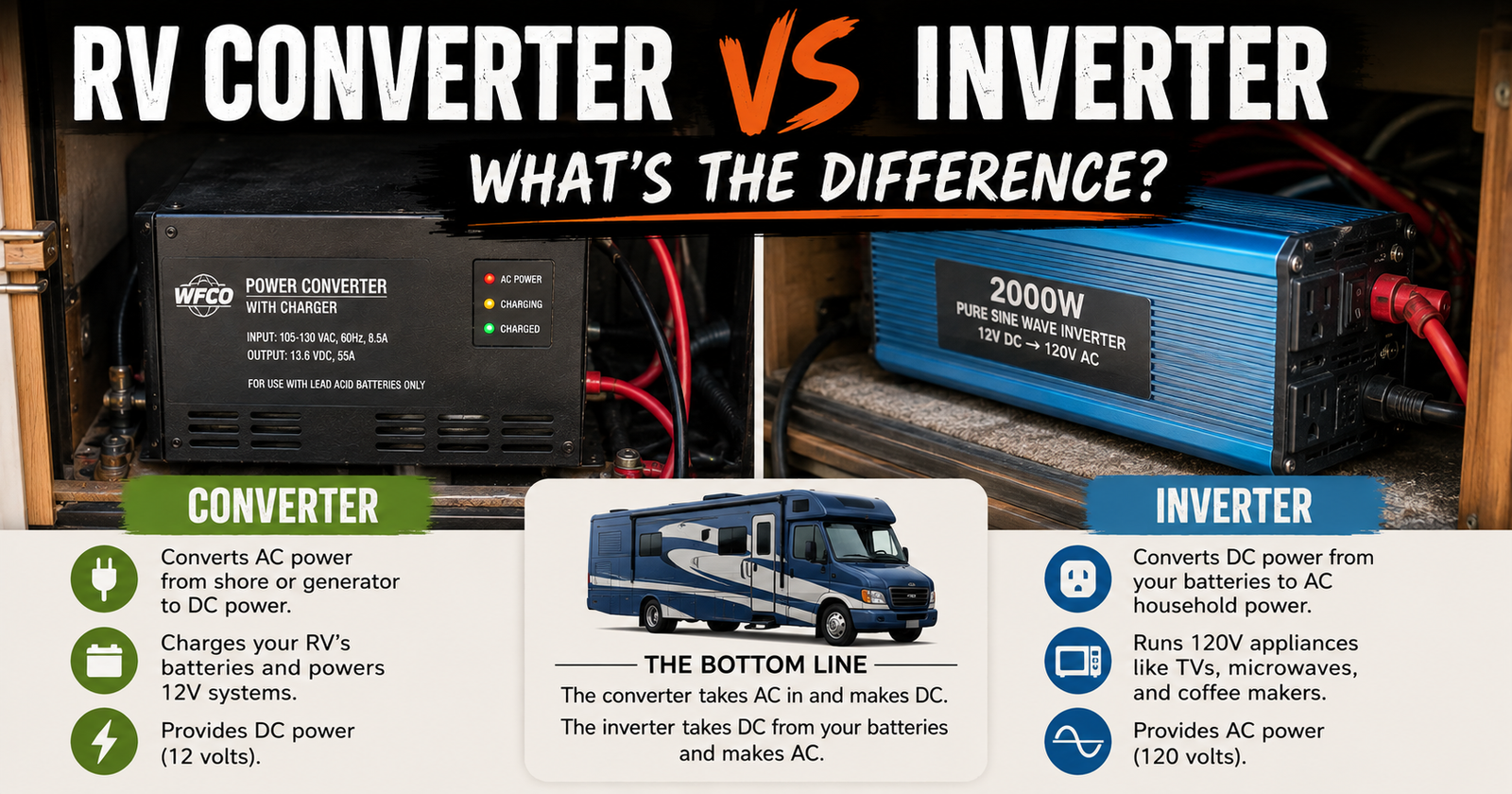
An inverter-powered microwave, coffee maker or other high-wattage appliance can pull a substantial amount of energy from the battery bank. The distinction between battery-powered AC loads and the RV’s normal DC loads is explained in powering AC equipment.
This is where people sometimes say:
“My battery was full and now it’s already down!”
Yes, because you used it.
The question is whether the amount of energy consumed matches the battery’s capacity.
If it does, you don’t have a battery problem.
You have an energy-budget problem.
Amp-Hours Tell Only Part of the Story
Battery capacity is often advertised in amp-hours.
That’s useful, but you also need to know how much of that capacity is realistically usable for the battery chemistry and system you’re operating.
Two batteries with the same advertised amp-hour rating don’t necessarily behave identically.
Voltage matters.
Chemistry matters.
Discharge rate matters.
Battery condition matters.
Manufacturer recommendations matter.
That’s why I avoid telling every camper owner, “You have 100Ah, so you can use exactly X.”
Real systems aren’t that clean.
Watt-Hours Can Make Inverter Loads Easier to Understand
When I’m comparing battery energy with AC appliance consumption, I often find watt-hours easier to visualize.
A battery bank stores a certain amount of energy.
Your appliances consume energy.
The inverter introduces some conversion loss.
Once you think in terms of energy instead of simply watching a four-light battery gauge, boondocking starts making much more sense.
You stop asking, “Why did my battery lose a bar?”
You start asking, “How much energy did I actually use?”
That’s a much better question.
The Furnace Can Expose a Marginal Battery Overnight
This is another classic scenario.
Battery looks full in the evening.
You go to bed.
Temperature drops.
The furnace cycles repeatedly.
Morning comes and the battery is struggling.
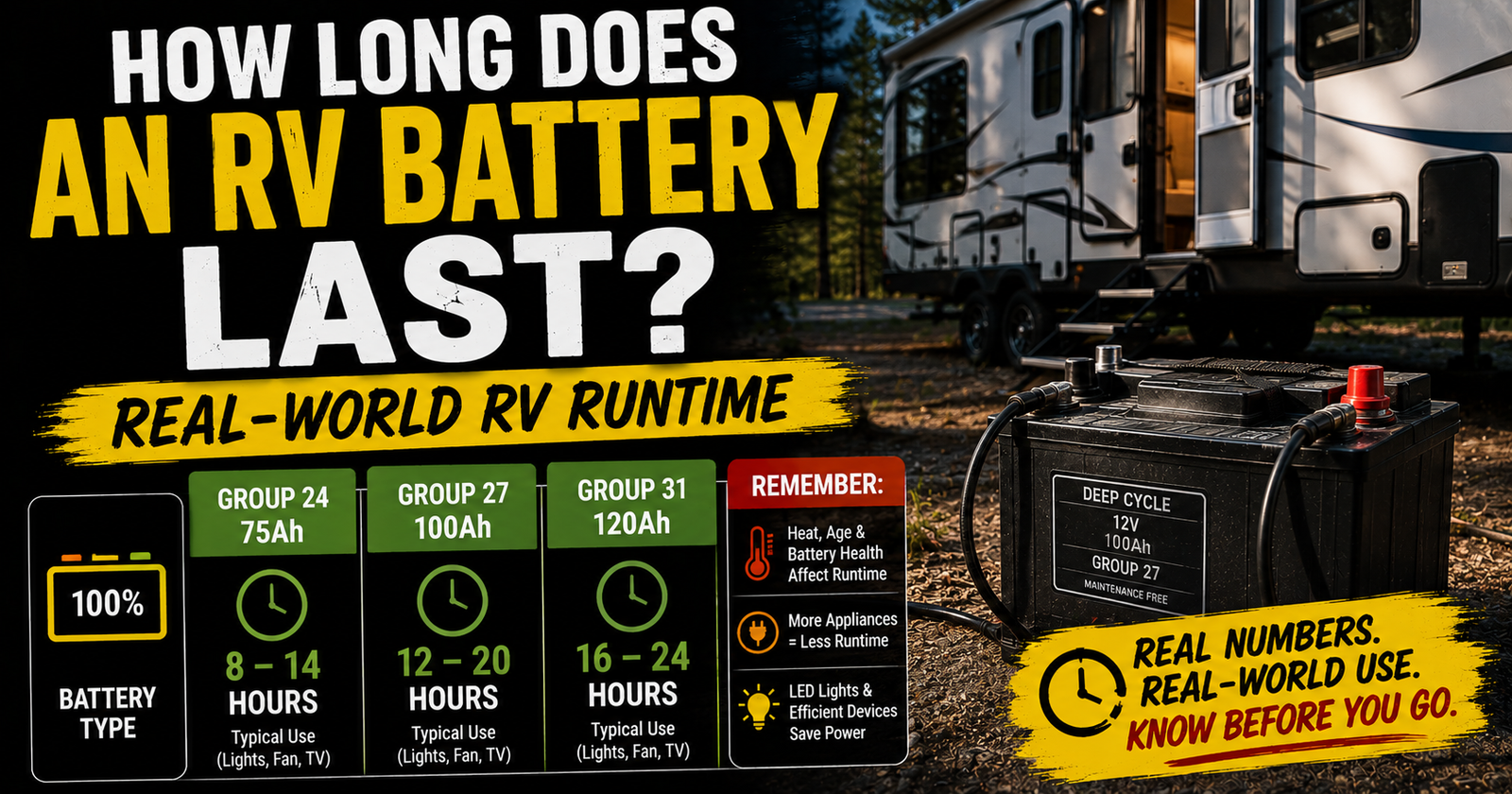
If the battery was truly full and healthy, maybe the battery bank simply isn’t large enough for the overnight furnace demand and everything else you’re running. Comparing that load with your battery's usable capacity gives a more realistic overnight furnace demand estimate.
But if the battery dies much sooner than expected, capacity and charging deserve investigation.
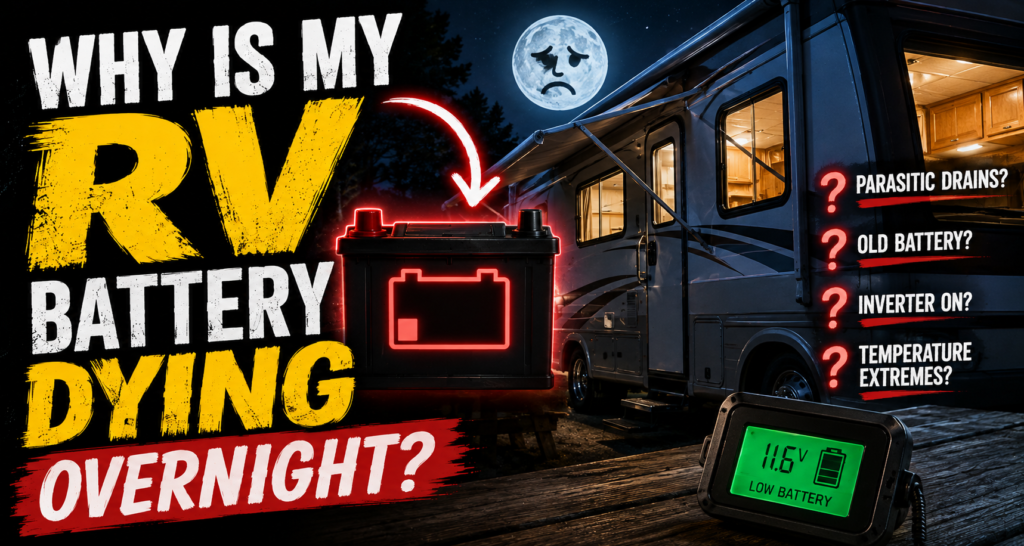
Our guide to why RV batteries die overnight digs much deeper into that particular pattern.
Nighttime behavior is often one of the best battery clues you’ll get.
Cold Weather Can Change Battery Performance Too
Temperature matters.
Battery performance and available capacity can change in cold conditions, with the exact behavior depending on battery chemistry.
Cold weather also tends to increase RV energy demand because the furnace runs more.
So you can get hit from both sides.
More electricity being consumed.
Battery performance affected by temperature.
That’s why I don’t automatically compare a battery’s January runtime with what I got out of it on a mild September weekend.
The operating conditions aren’t the same.
Lithium Batteries Can Stay Looking “Full” Longer
Lithium iron phosphate batteries have become popular for good reasons, but they can confuse anyone accustomed to judging lead-acid batteries by voltage.
Their voltage curve can remain relatively flat through much of the usable charge range.
That means the voltage can look reassuring for quite a while before reaching the lower end of the battery’s usable charge.
A basic voltage-only RV gauge may not give you the kind of state-of-charge information you expect.
A properly configured shunt-based monitor is much more useful here.
The Lithium BMS Can Make Shutdown Feel Sudden
Lithium batteries commonly have a battery management system, or BMS.
Its job includes protecting the battery under certain conditions.
Depending on the battery, the BMS may disconnect output when a protective limit is reached.
From inside the camper, that can feel dramatic.
Things work.
Then suddenly they don’t.
That doesn’t necessarily mean the battery went from completely full to completely empty in one instant.
You may have reached a BMS protection threshold.
Check the battery manufacturer’s documentation and, if available, BMS status information before guessing.
A Shunt-Based Battery Monitor Changes Everything
If you’re serious about knowing what’s happening with your RV batteries, this is one of my favorite upgrades.
A properly installed and configured shunt measures current entering and leaving the battery bank.
That gives you much more useful information than a few illuminated battery bars.
You can see charging current.
Discharge current.
Energy use.
And, depending on the monitor and setup, a calculated state of charge.
It’s not magic and it still needs to be installed and configured correctly.
But once you can see what actually enters and leaves the battery, electrical troubleshooting becomes far less mysterious.
A Battery Monitor Can Be Wrong Too
Don’t blindly trust fancy equipment just because it has a digital screen.
Shunt-based monitors rely on correct installation and configuration.
Battery capacity needs to be entered correctly.
The monitor needs to synchronize appropriately according to its instructions.
All battery current needs to pass through the shunt in the intended way.
If an accessory bypasses the shunt, the monitor may not see that load.
So if your expensive monitor says 100 percent but the battery behavior makes no sense, verify the monitor setup before assuming you’ve discovered a violation of physics.
Solar Can Make the Reading Bounce Around
Solar adds another moving part.
During the day, your panels may be supplying some or all of the RV’s electrical demand while also charging the battery.
Cloud passes.
Solar output drops.
Load stays the same.
Now the battery supplies more.
Sun comes back.
Charging increases again.
A quick glance at voltage during one sunny moment doesn’t tell you the battery’s entire daily energy story.
This is why off-grid campers benefit so much from looking at energy over time rather than one snapshot.
Solar Can Also Make a Weak Battery Seem Fine During the Day
Here’s a pattern I’ve seen catch people.
Everything works great in daylight.
Battery voltage looks good.
No problems.
Then the sun goes down and the electrical system struggles.
Solar may have been carrying much of the daytime load and keeping system voltage elevated.
Once solar production disappears, the battery finally has to do the work by itself.
That’s when reduced battery capacity becomes obvious.
If your problem reliably appears after sunset, pay attention to that pattern.
A Battery Can Charge and Discharge at the Same Time From Your Perspective
Technically, what you’re seeing at the battery is the net flow of current.
Your charger might be producing power while RV loads consume power.
If the charger produces more than the RV is using, the remainder can go toward charging the battery.
If the loads consume most of the available charging output, the battery may recharge slowly.
If consumption exceeds available charging, the battery can still lose ground.
This is why “the charger is on” doesn’t automatically mean “the battery is filling quickly.”
Why a Battery Can Say Full After Only a Short Charge
This gets back to voltage.
A deeply depleted or weak battery may see its terminal voltage rise during charging.
A simple voltage-based indicator can interpret that elevated voltage as a high state of charge.
But the battery may still need substantially more charging time.
Or it may have reduced capacity and reach charging voltage quickly because there isn’t much usable capacity left to replenish.
Either way, “FULL after 20 minutes” deserves skepticism if the battery was deeply discharged beforehand.
If It Charges Suspiciously Fast and Dies Suspiciously Fast
This pattern really gets my attention.
A battery that seems to go from dead to full incredibly quickly and then from full back to dead incredibly quickly may have substantially reduced capacity.
Think about filling containers.
A one-gallon bucket fills faster than a five-gallon bucket.
If your battery has effectively lost much of its usable storage capacity, it can appear to “fill” quickly because there’s less useful capacity available.
Then it empties quickly for the same reason.
That’s when proper battery testing becomes worthwhile.
How I’d Test the Problem Without Guessing
First, I identify the battery type.
Then I verify the charging system is working.
I give the battery an appropriate opportunity to reach full charge.
Next, I remove charging influence as appropriate and evaluate the battery according to the manufacturer’s recommended testing procedure.
Then I apply normal RV loads and watch what happens.
If the battery voltage or state of charge collapses much faster than the actual energy consumption should cause, battery condition becomes much more suspicious. To separate a worn battery from a charging or load problem, check battery condition and usable capacity before replacing it.
If consumption is enormous, I look at the RV.
If charging never completed, I look at the charger.
Follow the evidence.
Don’t Forget Parasitic Draws
Sometimes the gauge really was telling the truth.
The battery started full.
Something is simply using power you didn’t know about.
Inverters, electronics, direct-to-battery accessories, safety equipment and other connected loads can continue consuming energy.
We’ve put together a separate process for tracking down hidden RV battery draws because that troubleshooting path can get pretty detailed.
But I don’t start there unless the battery itself and charging system have passed basic checks.
Otherwise, you can spend hours hunting a tiny draw while standing beside a worn-out battery.
If the Battery Dies Fast Only While Boondocking
This pattern often comes down to one of three things.
You aren’t starting with as much charge as you think.
You’re consuming more energy than you realize.
Or the battery bank doesn’t have enough usable capacity for the way you’re camping.
Our broader guide to why an RV battery drains so fast walks through those loads in more detail.
Boondocking exposes battery problems that shore power can hide beautifully.
That’s one reason I learn so much about an electrical system the first time I camp without hookups.
If It Says Full While Plugged In but Dies After Unplugging
This is the scenario where I investigate charging and battery condition immediately.
Don’t trust the gauge while charging voltage is present.
Verify the battery itself.
Does it receive charging current?
Does it reach an appropriate state of charge?
Does it hold that charge?
Can it support a normal load?
If the answer starts falling apart as soon as shore power disappears, the battery wasn’t doing what you thought it was doing while plugged in.
If It Shows Full but Dies Overnight
Look at the furnace.
Look at inverter loads.
Look at the battery’s actual capacity.
Look at the starting state of charge.
Look at nighttime temperatures.
Look at anything that runs continuously after solar stops producing.
The time of day is part of your diagnosis.
Don’t throw that clue away.
If It Shows Full but Dies When the Furnace Starts
Now I’m watching voltage under load.
A furnace blower isn’t normally some outrageous RV load, but it can expose a marginal battery or poor electrical connection.
If voltage drops dramatically when the blower starts, check battery condition and cable connections.
If everything behaves normally except the battery simply runs out after many hours of furnace cycling, capacity may be the bigger issue.
Same appliance.
Different symptoms.
Different diagnosis.
If It Dies When You Turn the Inverter On
Find out what the inverter is powering.
The inverter itself consumes some energy, but the connected AC load can be far more important.
A large appliance can demand substantial DC current from the battery.
If voltage immediately collapses, I’d consider battery state of charge, battery capacity, battery condition, cable size, cable connections and the size of the load.
Don’t automatically blame the inverter.
It may simply be exposing a weakness elsewhere.
If It Dies Even With Almost Nothing Running
Now the battery becomes much more interesting.
A healthy, properly charged battery with adequate capacity shouldn’t behave as though it’s empty immediately under tiny normal loads.
Verify there isn’t a hidden load.
Then test the battery.
If it can’t provide reasonable capacity even though charging and connections are correct, replacement may finally be justified.
Notice how far into the diagnosis I got before saying “replace the battery.”
That’s intentional.
Don’t Buy Another Battery Because the Gauge Looks Weird
This is probably the biggest money-saving lesson here.
A weird battery reading can be caused by charging voltage.
A charging-system problem.
A weak battery.
A bad connection.
A high load.
An inaccurate monitor.
An improperly configured shunt.
Battery chemistry.
Or actual excessive battery drain.
That’s too many possibilities to diagnose with a credit card.
Measure first.
Replace parts second.
When I Start Blaming the Battery
I become suspicious of the battery when it has been properly charged using appropriate equipment, the charging system and connections check out, there isn’t an unreasonable load, and the battery still delivers far less usable capacity than it should.
A proper capacity or load test can provide much stronger evidence than a dashboard indicator.
Battery age and history add context.
But performance is what ultimately matters.
When I Start Blaming the Charging System
I look harder at charging when the battery appears full only while shore power is present, doesn’t receive appropriate charging current, never reaches the expected charging behavior for its chemistry and equipment, or repeatedly begins camping partially charged despite spending adequate time connected to a functioning power source. That pattern is examined in why an RV battery can die while plugged in, including why shore power may not be recharging the battery as expected.
That’s when I’d follow the charging path instead of replacing the battery.
Progressive Dynamics’ troubleshooting guidance follows this same general logic by separating converter output testing from the battery-side fuse or breaker and AC-input checks.
When I Start Blaming the RV’s Power Consumption
If the battery tests well, charging works and the measured energy leaving the battery matches what your equipment should be consuming, the battery may be innocent.
You’re using the energy.
That isn’t a fault.
At that point, your options are practical ones.
Reduce consumption.
Increase usable battery capacity.
Increase charging capability where appropriate.
Add solar if it fits the way you camp.
Run the generator when needed.
The solution depends on how you actually use the camper.
Stop Asking Whether the Gauge Says Full
Ask a better question:
How much usable energy is actually in my battery?
That’s the question I care about.
A glowing FULL light can’t run your furnace.
A pretty voltage reading can’t power an inverter.
The battery has to store energy and then deliver it when the camper asks for it.
So if your RV battery says full but dies quickly, don’t let that contradiction send you into random troubleshooting. Verify the charge, remove charging voltage from the equation, watch what happens under load, check your connections, measure your actual consumption, and test the battery’s usable capacity.
Sometimes the battery really is worn out.
Sometimes the camper is simply using a lot of power.
And sometimes that little FULL light was never telling you what you thought it was telling you in the first place.
Written by Evan Mercer
Evan Mercer writes about RV systems, camper troubleshooting, maintenance and everyday ownership questions for CamperAnswers.com. His work focuses on turning technical information and manufacturer guidance into practical answers ordinary RV owners can actually use.