
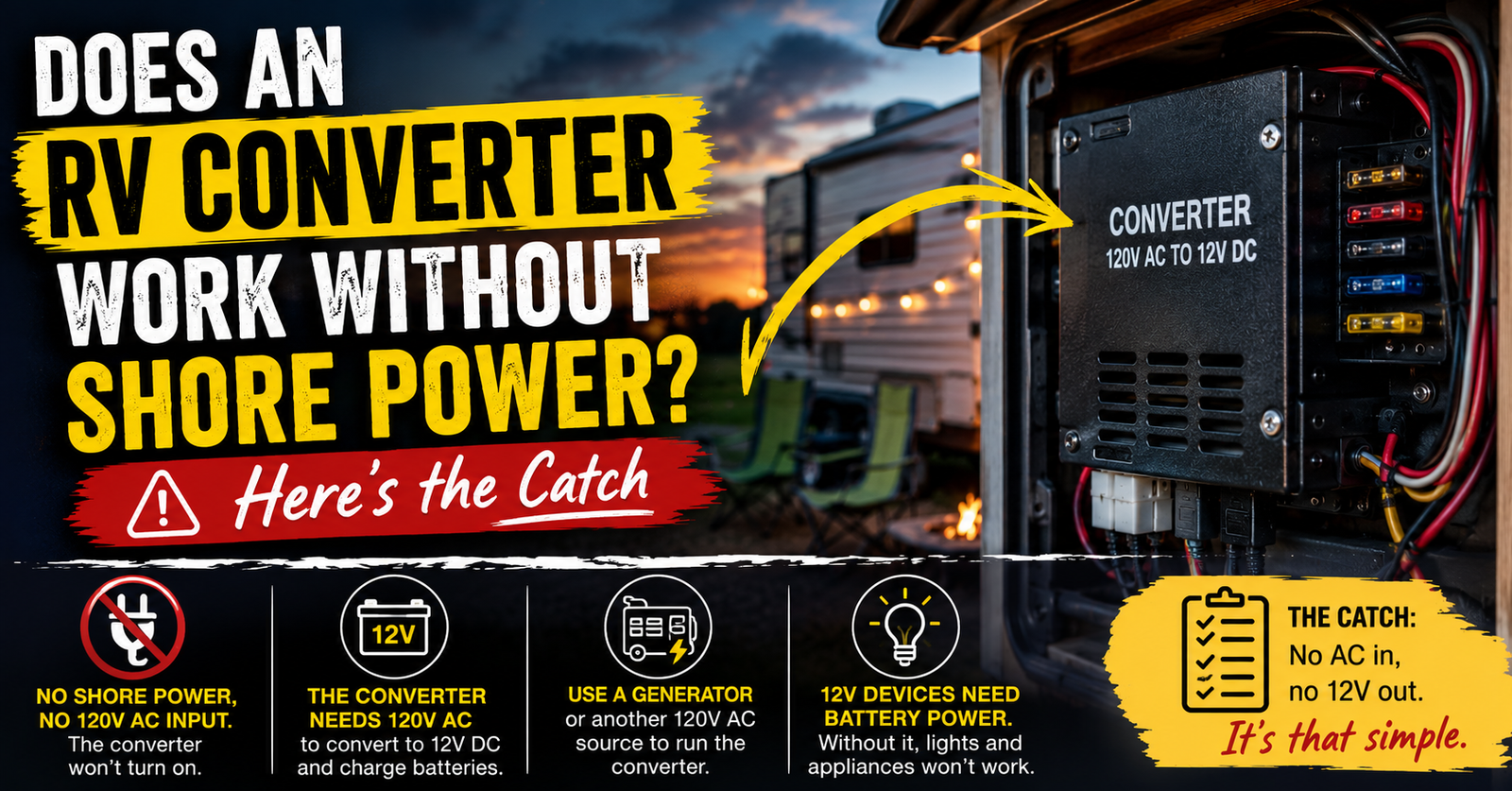
You unplug your camper from the campground pedestal, but the lights stay on, the water pump still runs, and everything seems perfectly normal. So is the RV converter somehow still working without shore power?
Usually, no.
An RV converter needs an AC power source to do its job. Shore power is one way to provide that AC electricity, but it isn’t the only way. A generator can power the converter too. If there’s no AC source at all, the converter normally stops converting power and your battery takes over the 12-volt side of the camper. That distinction is easier to understand after reviewing the basic job of an RV converter.
That last part causes a lot of confusion because you can unplug an RV and still have working lights, fans, pumps, and appliance controls. It certainly looks like the converter is still doing something.
What you’re usually seeing is the battery doing its job instead.
WFCO puts the basic requirement very plainly in its converter information: the converter will not work without AC input.
Let’s follow the electricity through the camper because once you see where it actually goes, this gets much easier.
What an RV Converter Actually Needs to Work
A converter needs incoming AC electricity.
In a typical RV, the converter takes approximately 120-volt AC electricity and turns it into the lower-voltage DC electricity used throughout the camper.
Progressive Dynamics describes RV converters as equipment that converts 120 VAC into 12-volt DC power for RV appliances and electrical circuits.
That means the converter isn’t a power source by itself.
It changes one kind of electricity into another.
No incoming AC power means there’s nothing for the converter to convert.
That’s the key to this entire question.
Shore Power Is Only One Possible AC Source
This is where the answer gets more interesting.
When I say an RV converter won’t normally operate without AC power, that does not mean it absolutely requires a campground shore-power pedestal.
Your converter can potentially receive AC electricity from:
A campground pedestal.
A household outlet when the RV is properly connected.
An onboard generator.
A portable generator properly connected to the RV. A portable generator can provide the AC input your converter needs when shore power is unavailable.
Other properly designed AC power equipment in more complex RV electrical systems.
So the more accurate question isn’t:
“Does my converter have shore power?”
It’s:
“Does my converter have AC input?”
That’s what actually determines whether it can operate.
What Happens When You’re Plugged Into Shore Power?
This is the normal situation most RV owners become familiar with.
You plug the RV into the campground pedestal.
AC electricity enters the camper.
The RV’s AC distribution system supplies the appropriate circuits.
The converter receives AC power.
The converter produces DC power.
That DC output supplies the RV’s 12-volt loads and, when a battery is connected, can also charge the battery.
WFCO describes its converter/chargers as using an AC source to power DC components while simultaneously charging the RV batteries.
So while you’re sitting at the campground, your converter may be quietly doing a surprising amount of work.
What Happens the Second I Unplug My RV?
Here’s where people understandably get confused.
You unplug the shore-power cord.
The converter loses its normal AC input.
But your ceiling lights stay on.
Your water pump still runs.
Your furnace controls may still operate.
Your vent fan keeps spinning.
It feels like nothing happened.
Something very important happened.
Your battery became the source of DC electricity.
Progressive Dynamics specifically explains that when there is no shore or generator power, the converter is off and the battery bank supplies the RV’s 12-volt requirements.
The camper can make that transition seem almost invisible.

The Battery Does Not Keep the Converter Running
This is probably the misconception I most want to clear up.
In a normal RV electrical setup, the battery doesn’t feed DC electricity into the converter so the converter can continue powering the 12-volt system.
That wouldn’t make much sense.
The battery already produces DC electricity.
There would be no reason to convert DC into the same basic type of DC power just to run ordinary 12-volt loads.
Instead, once the AC source disappears, the battery itself supplies those DC loads.
Think of the normal relationship like this:
AC power available → converter supplies DC power and charges battery
AC power unavailable → battery supplies DC power
That’s the basic handoff.
This Explains Why Your Lights Still Work
Most RV ceiling lights operate from the 12-volt DC system.
When you’re connected to shore power, the converter can supply that system.
Disconnect shore power and the battery can supply it.
From your perspective, the light doesn’t care much.
You flip the switch and it comes on.
But the electricity may be coming from a completely different source than it was five seconds earlier.
That’s one of the reasons RV electrical systems can seem mysterious until you understand the AC and DC sides separately.
What Happens If I Don’t Have a Battery?
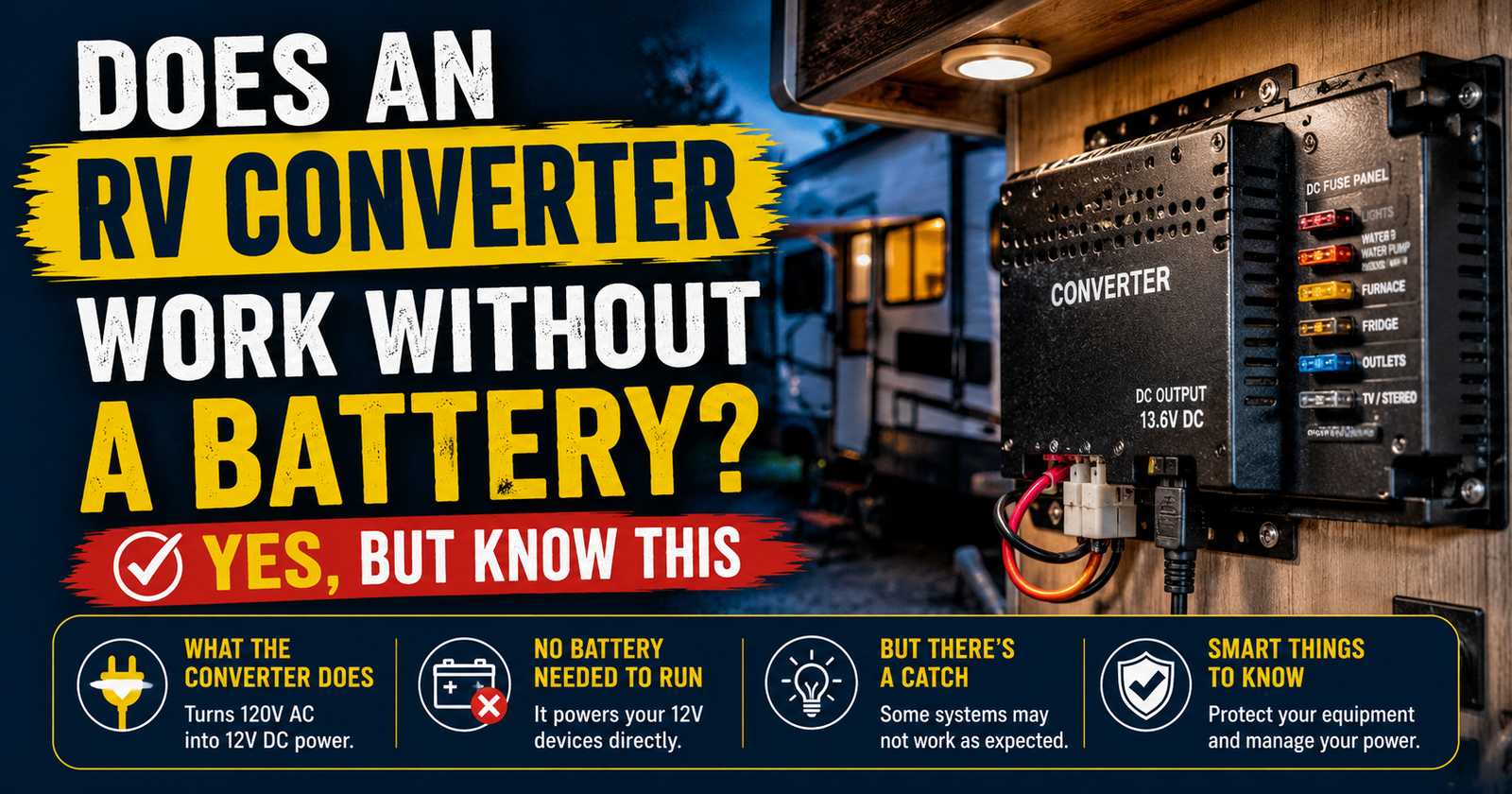
Our last guide covered whether an RV converter can work without a battery, and this is where these two questions fit together perfectly.
A compatible modern converter can often supply the RV’s DC circuits while no battery is connected.
But it still needs AC power.
Now imagine that same camper has:
No battery.
No shore power.
No generator.
What’s supplying the 12-volt system?
Nothing.
Progressive Dynamics specifically says that its converter doesn’t require a battery while the converter is operating, but without a battery there will be no 12-volt power when neither shore nor generator power is available.
That’s the distinction.
The converter may not need the battery.
But it absolutely needs an appropriate source of AC electricity.
Can a Generator Run My RV Converter?
Yes, absolutely, provided the generator supplies the proper AC power to the RV.
This is extremely important for anyone who boondocks.
You don’t need a campground pedestal just to operate the converter.
Start an appropriately sized generator.
Properly connect it to the RV.
Now the RV has an AC source again.
The converter can operate.
The converter can supply DC loads.
And it can charge the battery.
Progressive Dynamics specifically refers to both shore and generator power as sources that allow the converter to operate.
So when somebody says:
“My converter only works when the RV is plugged in.”
I want to know what they mean by “plugged in.”
If the generator is properly supplying AC electricity to the camper, the converter should have another potential source of input power.

Generator Power and Shore Power Do the Same Basic Job Here
They aren’t identical systems, obviously.
But from the converter’s point of view, both can provide the AC input it needs.
At a campground:
Pedestal → RV AC system → converter → DC
While generator camping:
Generator → RV AC system → converter → DC
That’s why your generator can recharge the house battery even though generators normally produce AC electricity.
The generator isn’t necessarily charging the 12-volt house battery directly.
The converter is often the piece doing the conversion and charging.
Does My Generator Charge the RV Battery?
Usually, if the generator is supplying the RV’s AC electrical system and the converter/charger is operating normally, the converter can charge the house battery.
This is an important concept because people sometimes expect the generator itself to somehow pump charging current directly into the battery.
The actual path is commonly:
Generator produces AC → converter receives AC → converter produces charging DC → battery charges
That’s also why converter performance can matter so much when boondocking.
If you’re running a generator specifically to recharge a large battery bank, the converter is an important part of how quickly that happens.
Why Converter Size Matters When Using a Generator
Suppose you have a large battery bank that’s significantly discharged.
You start the generator.
The converter begins charging.
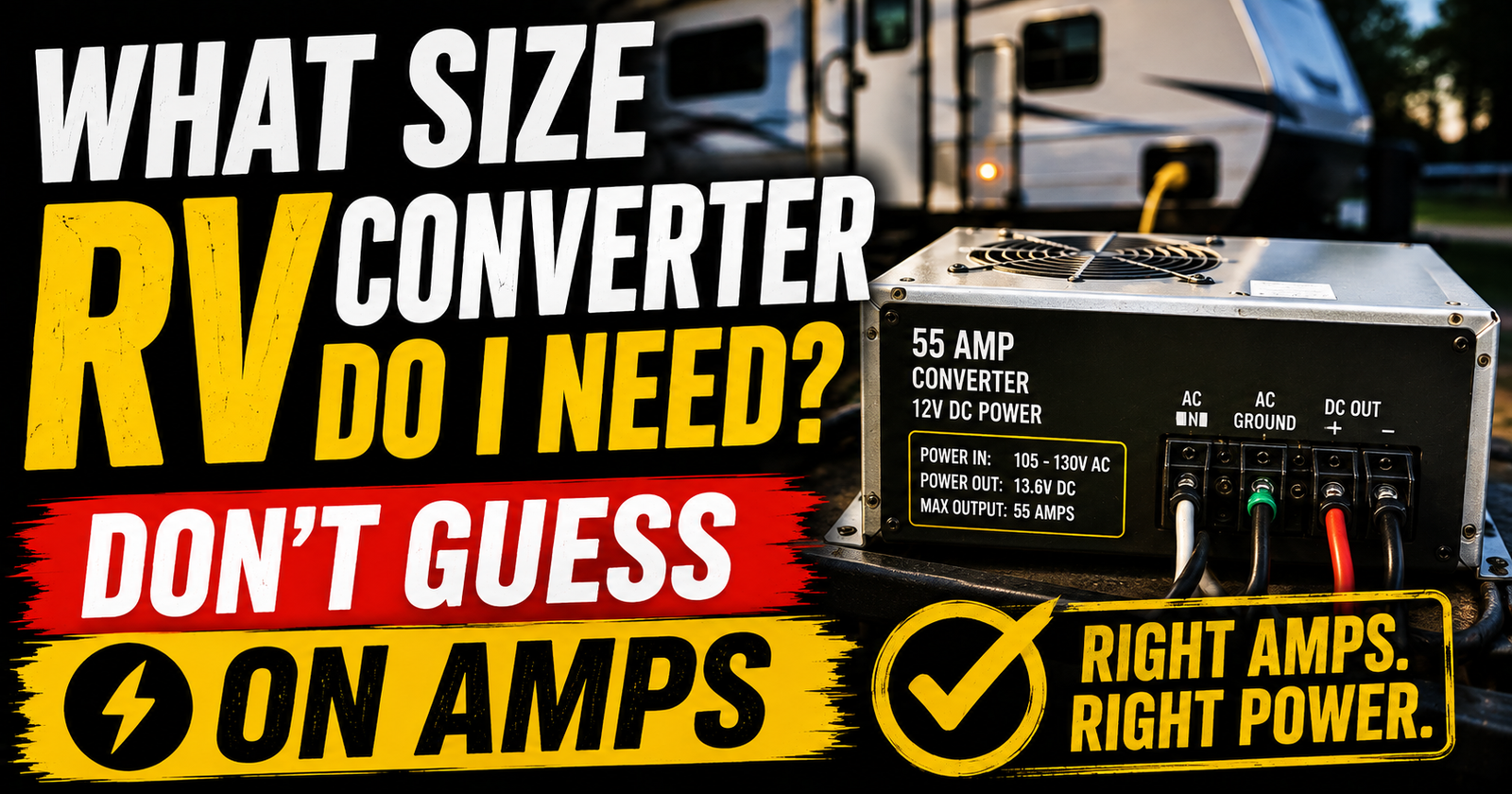
A higher-capacity properly matched converter may be able to deliver more charging current than a smaller converter, assuming the batteries, wiring, circuit protection, and rest of the system support it. The key is understanding how to choose the right converter amperage before treating higher output as an upgrade: how to choose the right converter amperage.
That can affect generator runtime.
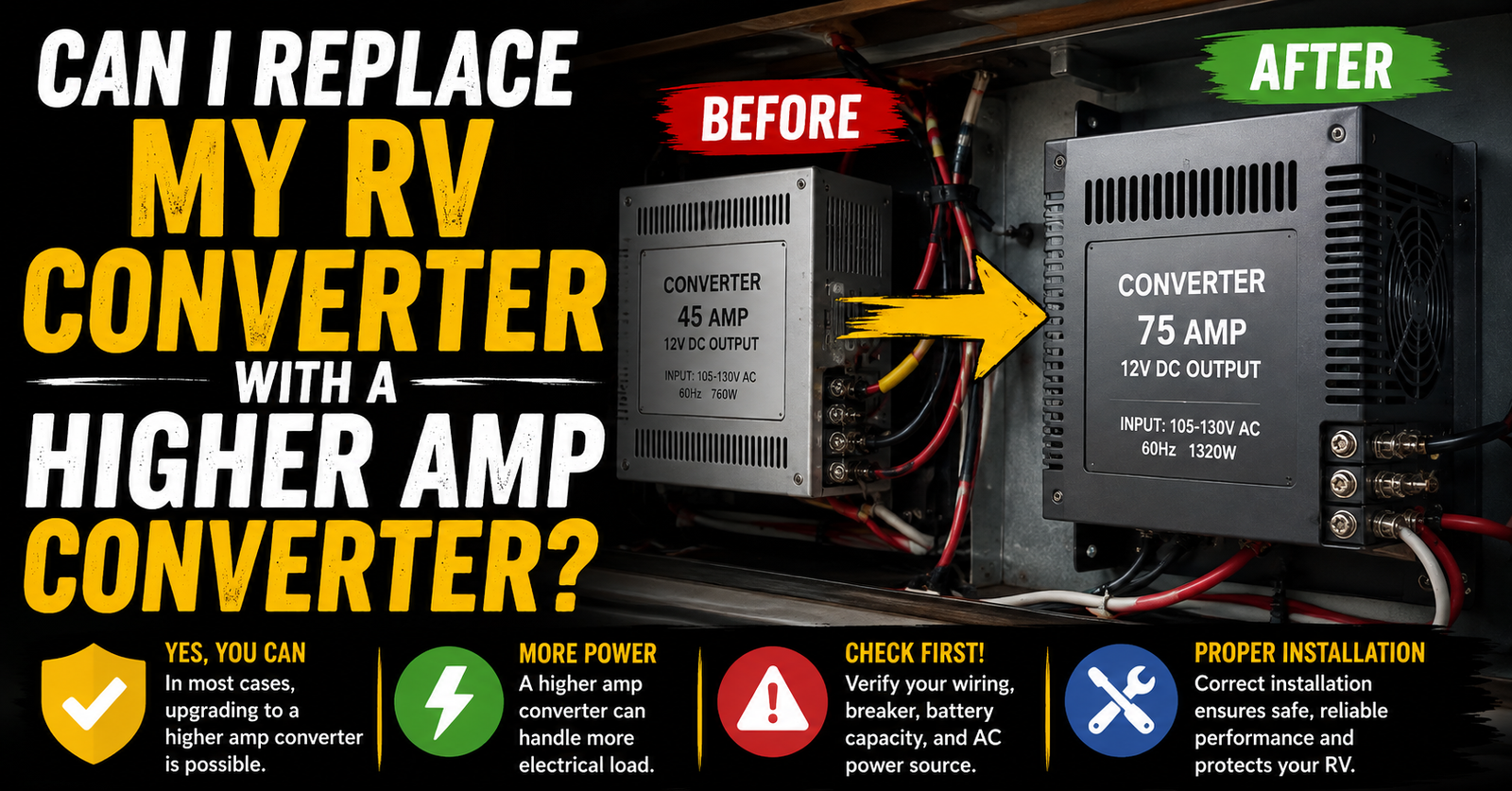
This is one of the legitimate reasons we discussed for considering a higher-amp RV converter.
But don’t blindly install the biggest converter available just because you want shorter generator runs.
The whole charging system has to support it.
Can a Portable Generator Power the Converter?
Potentially, yes.
If a suitable portable generator is properly connected to the RV and supplying acceptable AC electricity, the converter can operate from that AC source.
The converter doesn’t know whether the electricity came from a campground pedestal twenty feet away or a generator sitting outside.
It needs proper AC input.
That’s the important part.
Of course, generator capacity matters because the converter may not be the only AC load operating in the camper.
Your Converter Uses Some of the Generator’s Available Power
This is easy to forget.
Start your generator and your converter may immediately begin charging a depleted battery.
At the same time, you might try running:
Air conditioning.
Microwave.
Electric water heater.
Coffee maker.
Other AC appliances.
The converter is another load on that generator.
A converter working hard to recharge depleted batteries can consume meaningful AC power.
So if your generator seems more heavily loaded shortly after you start it with low house batteries, the charging system may be part of the reason.
What If My Generator Runs but the Converter Doesn’t Work?
Now we troubleshoot the AC path.
First question:
Is AC electricity actually reaching the converter?
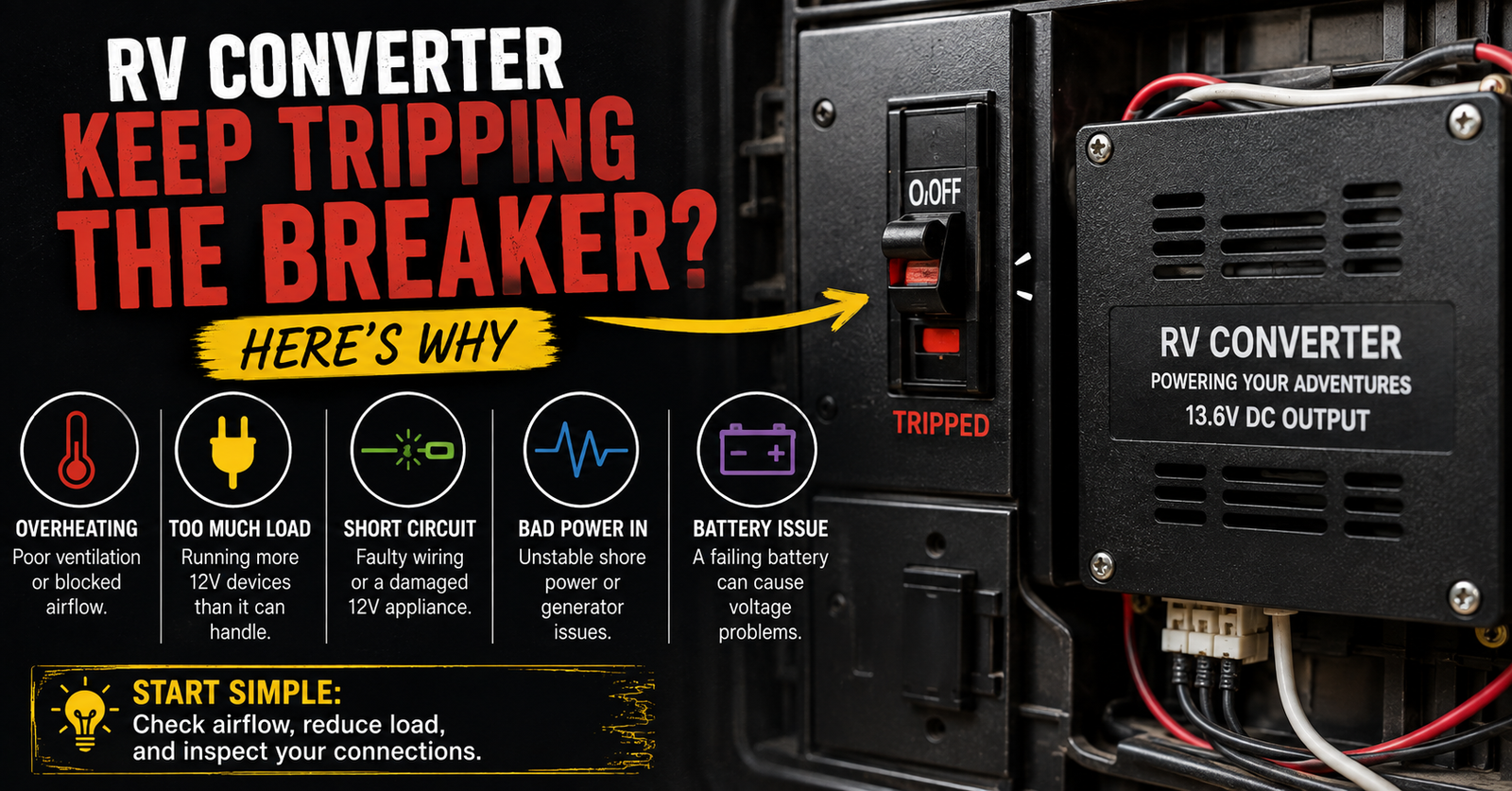
Progressive Dynamics’ converter troubleshooting procedure says to check the 120 VAC circuit breaker supplying the converter and then verify that approximately 120 VAC is present at the converter’s outlet. If proper AC is present but converter output remains zero, the converter itself may be bad. If that breaker keeps opening instead of simply staying on, use converter breaker troubleshooting to separate a converter fault from an AC supply problem.
So don’t assume:
“Generator is running = converter has power.”
There may be a problem between them.
The Generator Can Run While the RV Still Has No AC Power
This happens.
The generator engine running only tells you that the engine is running.
It doesn’t prove usable AC electricity is reaching the RV’s distribution panel.
Depending on the RV, problems could involve the generator’s breaker, wiring, transfer equipment, or another part of the AC path.
Some motorhomes and larger RVs use an automatic transfer switch to select between shore and generator power.
Progressive Dynamics’ transfer-switch troubleshooting information specifically deals with situations where a generator runs but AC power fails to reach the RV distribution panel.
So if your converter works beautifully on shore power but doesn’t seem to work from the generator, I wouldn’t immediately condemn the converter.
That’s Actually a Valuable Troubleshooting Clue
Think about it.
Converter works on shore power.
Converter doesn’t work on generator power.
What changed?
The converter didn’t.
The AC source and the path supplying it changed.
That pushes me toward investigating the generator side before replacing the converter.
On the other hand:
Converter doesn’t work on shore power.
Converter doesn’t work on generator power.
Now the converter, its breaker, AC receptacle, wiring, fuses, or DC output side deserve more attention.
This is why understanding how the system works makes troubleshooting so much easier.
What About an Automatic Transfer Switch?
Some RVs with onboard generators use an automatic transfer switch, commonly called an ATS.
Its job is essentially to manage which AC source supplies the RV.
Shore power may be available.
Generator power may be available.
The transfer equipment makes sure the RV’s AC distribution system is connected appropriately.
Progressive Dynamics offers RV transfer switches specifically for switching AC sources, including models with time delays that allow generator voltage to stabilize before transfer.
We’ll eventually give transfer switches their own complete article because they create their own set of troubleshooting problems.
Can an Inverter Run the RV Converter?
Technically, certain electrical configurations can create AC power from the battery through an inverter, but running a conventional converter from an inverter that’s drawing from the same battery is generally not a useful charging strategy.
Think about what you’d be doing.
Battery produces DC.
Inverter changes DC into AC.
Converter takes that AC and changes it back into DC.
Converter attempts to charge the battery that supplied the energy in the first place.
Every conversion has losses.
You haven’t created energy.
You’ve just sent the battery’s own energy around in a wasteful circle.
In a properly designed RV with an inverter/charger and transfer equipment, the electrical architecture may be considerably more sophisticated. But don’t confuse an inverter with a free AC source for battery charging.
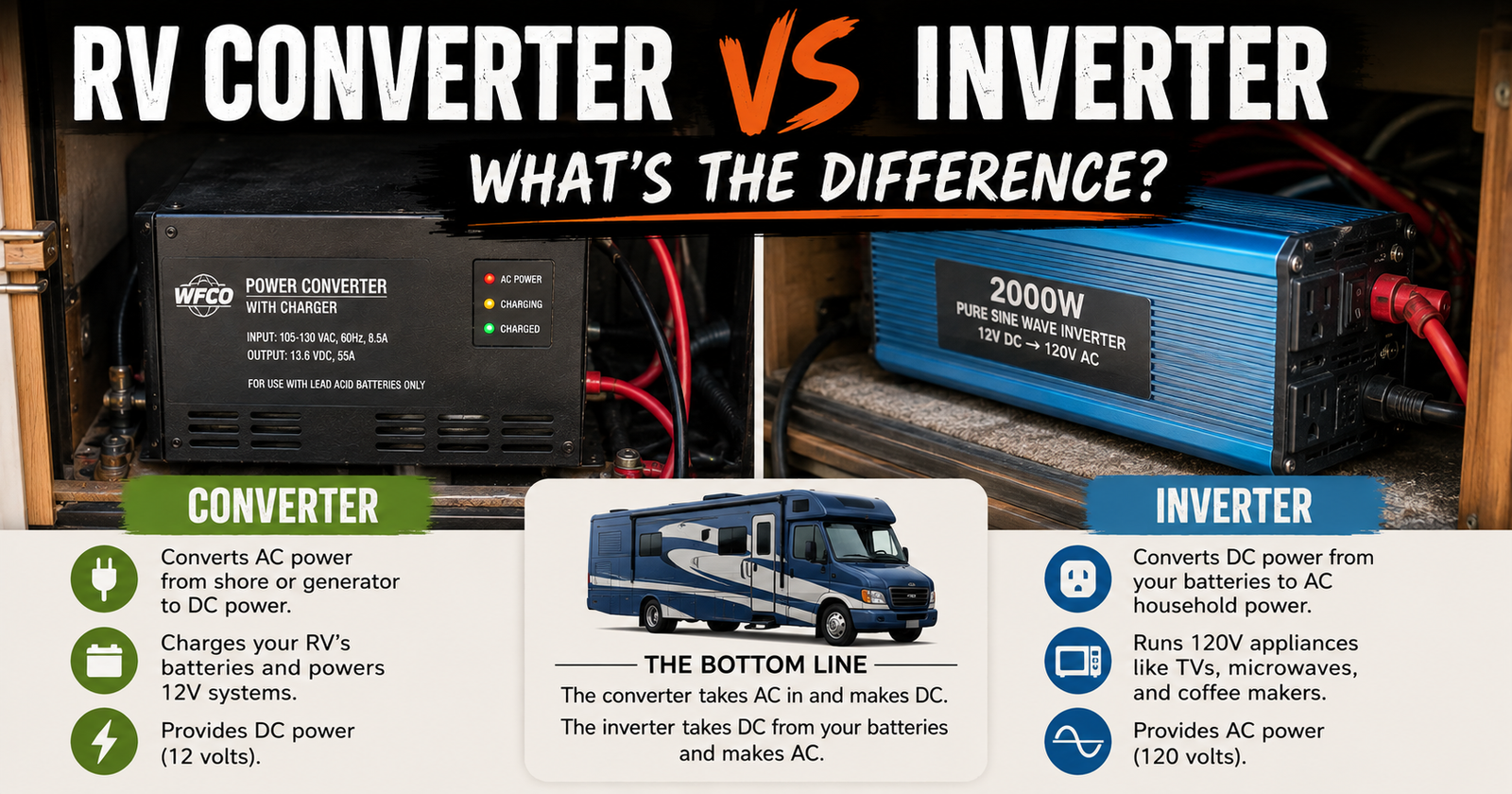
Our converter vs. inverter explanation goes deeper into what each device actually does.
Converter Means AC to DC
If you remember nothing else, remember this.
Converter: AC to DC
That’s why the converter needs AC input.
If there’s no shore power, generator, or another legitimate AC source feeding it, the conventional converter has nothing to convert.
Meanwhile:
Inverter: DC to AC
That’s why an inverter can use battery energy to run certain AC equipment when you’re camping without shore power.
The names sound annoyingly similar.
Their jobs are almost opposite.
Does Solar Power My RV Converter?
Normally, not directly.
This is another common misunderstanding.
Solar panels produce DC electricity.
A typical RV solar setup sends that electricity through a solar charge controller, which regulates the power used to charge the battery.
That’s a separate charging path from the conventional AC-powered converter.
So you may have:
Solar panel → charge controller → battery
while elsewhere in the camper you have:
Shore/generator AC → converter → battery
Both systems can ultimately charge the same battery bank, but they do it differently.
So Can Solar Keep My RV Running Without the Converter?
Absolutely, depending on the system and available solar energy.
This is where people sometimes say:
“My converter is working off solar.”
What may actually be happening is that the converter isn’t operating at all.
The solar charging system is supplying energy to the battery.
The battery is supplying the 12-volt RV loads.
Everything inside seems normal.
But the energy path is completely different.
That’s why I always want to know where the electricity is actually coming from.
What Happens When I’m Boondocking?
Let’s walk through a typical day because this makes everything click.
You’re camping somewhere with no hookups.
No shore cord.
No generator running.
Your converter isn’t receiving AC input.
The battery supplies the 12-volt system.
If you have solar, the solar charge controller may replenish some of the battery energy during daylight.
Later, the battery gets low.
You start your generator.
Now AC electricity enters the RV.
The converter wakes up and begins supplying DC power and charging the battery.
You shut the generator down.
The converter loses AC input again.
The battery resumes supplying the 12-volt system.
That’s normal operation.
Your Converter Can Be Off for Most of a Boondocking Trip
And that’s perfectly okay.
The converter doesn’t need to run continuously for the RV to have DC electricity.
That’s what the battery bank is for.
Progressive Dynamics’ battery-sizing guidance specifically describes periods without shore or generator power as times when the converter is off and the battery bank supplies the 12-volt equipment.
So don’t mistake “converter off” for “RV electrical system off.”
They’re not the same thing.
How Do I Know Whether the Converter Is Running?
One clue is battery voltage.
With the battery resting and no charging source active, you’ll generally see a voltage corresponding to the battery’s state of charge and chemistry.
When the converter begins charging, battery-terminal voltage may rise toward the converter’s current charging voltage.
The exact number depends on converter design, charging mode, battery chemistry, load, wiring, and other factors.
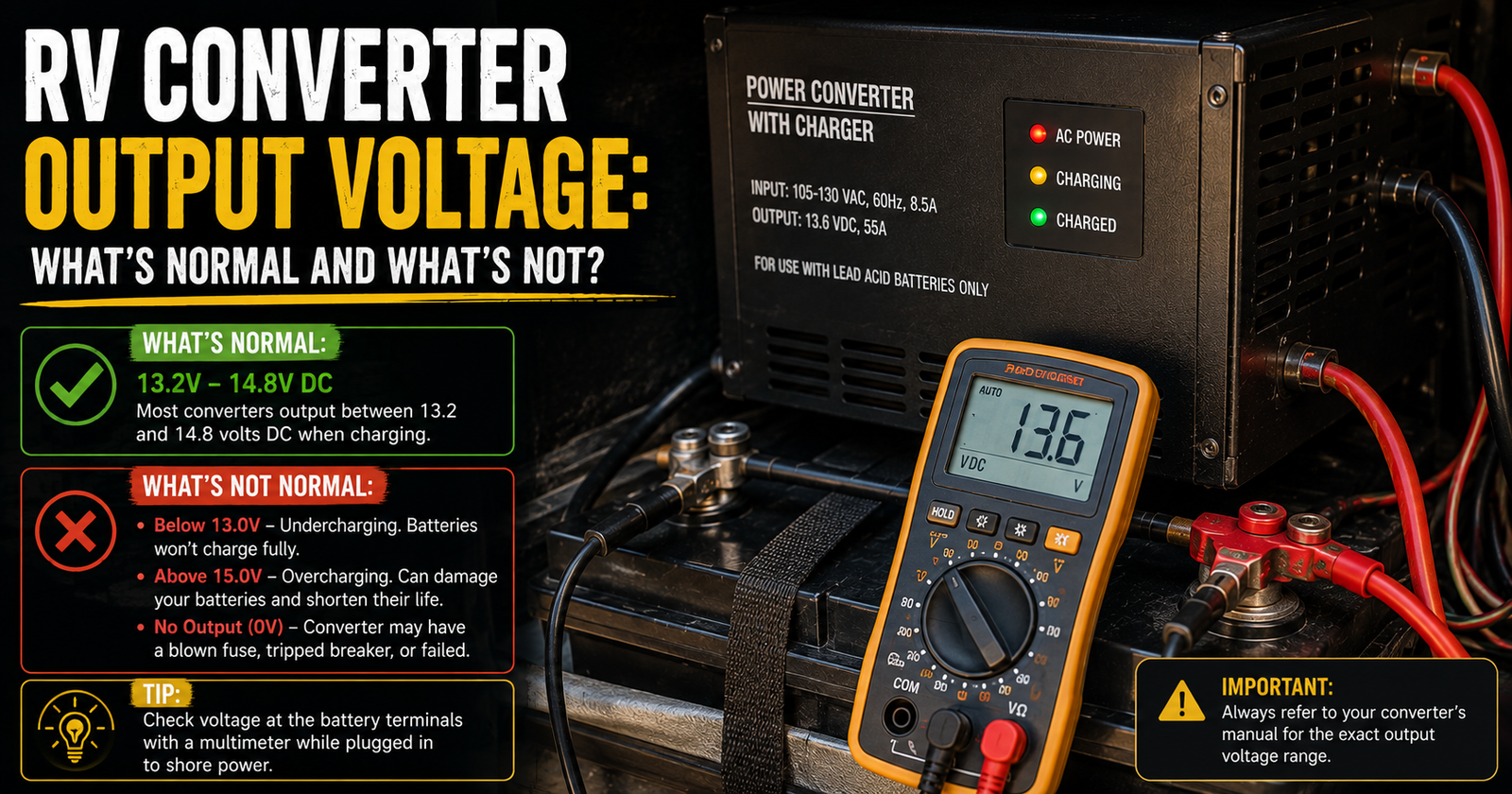
We’ve built a separate guide explaining normal RV converter output voltage because voltage readings are one of the most useful ways to understand what’s happening.
Don’t Diagnose It From One Voltage Number
This matters.
Suppose you measure 12.6 volts at the battery.
Is the converter bad?
Maybe the converter isn’t powered.
Maybe shore power is disconnected.
Maybe the generator isn’t supplying AC.
Maybe there’s a charging-path problem.
Maybe you’re simply reading battery voltage because the converter isn’t supposed to be running right now.
Before condemning anything, establish whether the converter actually has AC input.
Progressive Dynamics makes checking that AC input one of the fundamental steps in converter troubleshooting.
Why Doesn’t My Converter Work After I Plug Into Shore Power?
Now we’re dealing with a different problem.
If you have confirmed shore power entering the camper but the converter produces no DC output, check the converter’s AC supply.
Progressive Dynamics recommends checking the converter’s circuit breaker and verifying approximately 120 VAC at the outlet supplying the converter.
WFCO similarly recommends checking whether AC power is entering the RV, whether the converter breaker is on, and whether reverse-polarity fuses are intact when diagnosing a loss of DC power.
Don’t replace the converter until you’ve established that it was actually being powered.
What If My Outlets Work but the Converter Doesn’t?
That’s possible.
The fact that one AC circuit works doesn’t prove the converter’s particular circuit has power.
Maybe the converter breaker tripped.
Maybe the receptacle feeding a deck-mounted converter has a problem.
Maybe there’s a wiring issue.
That’s why testing at the converter matters.
“I have AC somewhere in the RV” and “the converter has proper AC input” are not identical statements.
What If My Lights Work but the Converter Has No AC?
Then there’s a good chance you’re simply running those lights from the battery.
That’s one of the easiest mistakes to make.
You see working lights and assume the converter must be operating.
Not necessarily.
Disconnect shore power with a charged battery and your lights can continue working normally.
Meanwhile, the converter is doing absolutely nothing.
How Can I Tell If the Battery Is Being Charged?
You’ll want to compare battery voltage with and without a charging source, while accounting for battery chemistry and charging stage.
If the converter is producing proper output but the battery isn’t receiving a charge, the problem may lie between converter and battery.
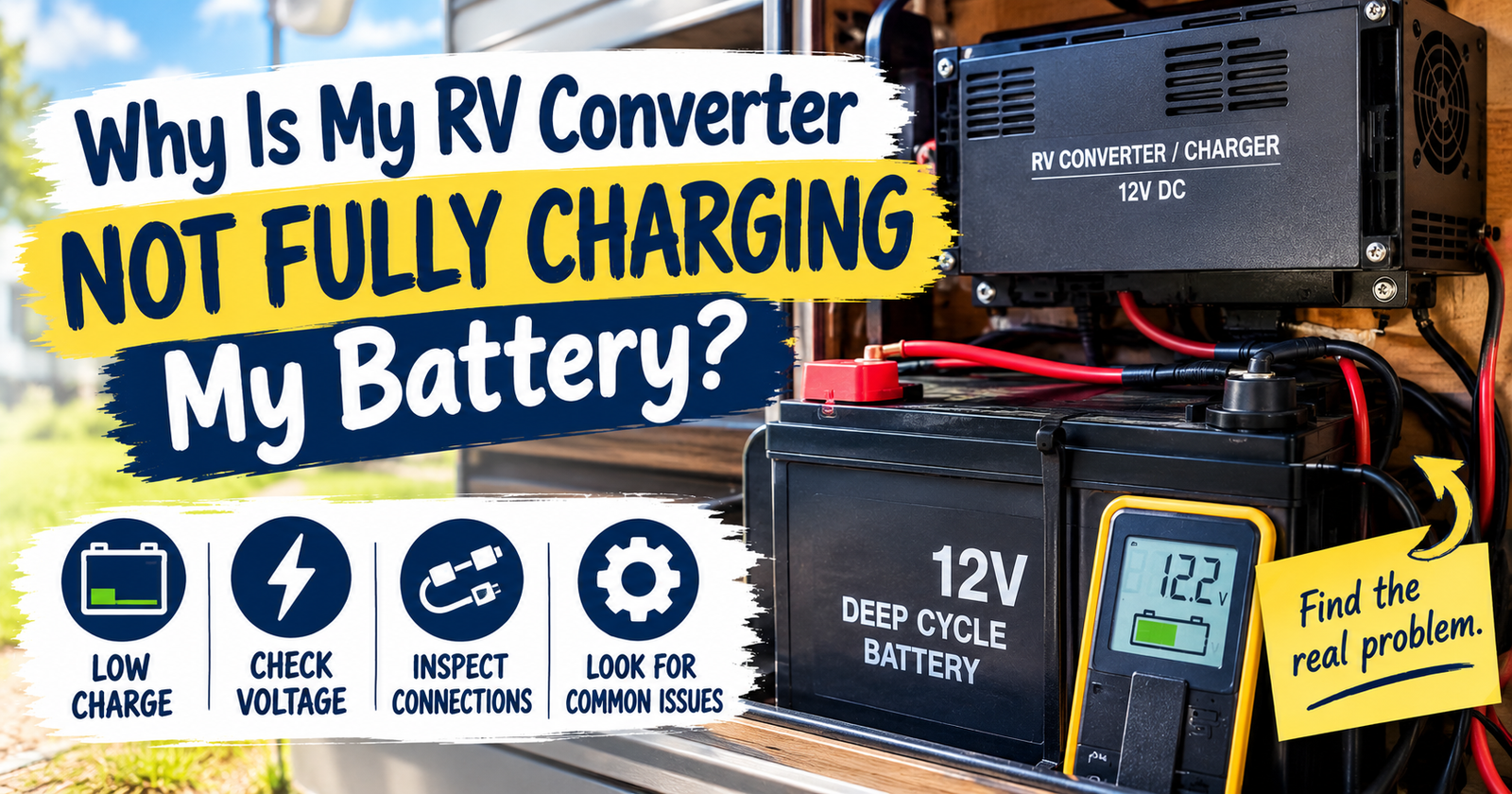
Progressive Dynamics specifically recommends checking the fuse or breaker in the battery positive lead when converter output tests correctly but the battery doesn’t charge.
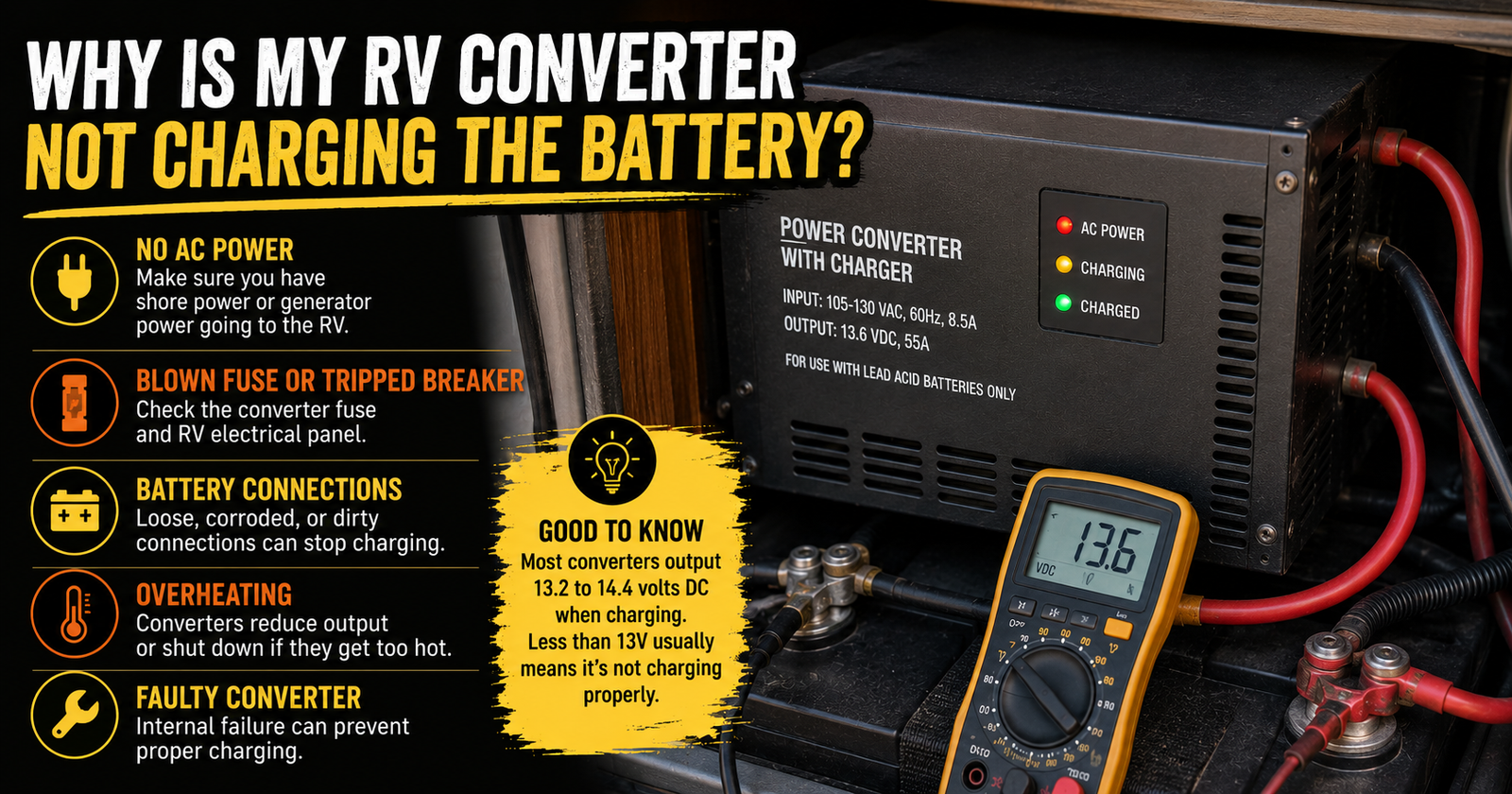
Our guide to an RV converter that isn’t charging the battery walks through that entire problem separately.
Can I Camp Without Shore Power?
Of course.
That’s one of the great things about an RV.
But you need another way to supply the electrical loads you intend to use.
For 12-volt equipment, that’s normally the house battery bank, potentially replenished by solar, generator charging, the tow vehicle, or another charging source depending on the RV.
For 120-volt appliances, you’ll need an appropriate AC source such as a generator or an inverter system capable of supporting those loads.
The converter itself doesn’t make off-grid energy.
It only converts energy supplied to it.
Will My RV Battery Eventually Die Without Shore Power?
If you’re consuming battery energy and not replacing it, yes.
Maybe the battery lasts a few hours.
Maybe it lasts several days.
That depends on battery capacity and electrical use.
Lights, furnace blower, water pump, refrigerator controls, vent fans, electronics, parasitic loads, and inverter use can all consume stored energy.
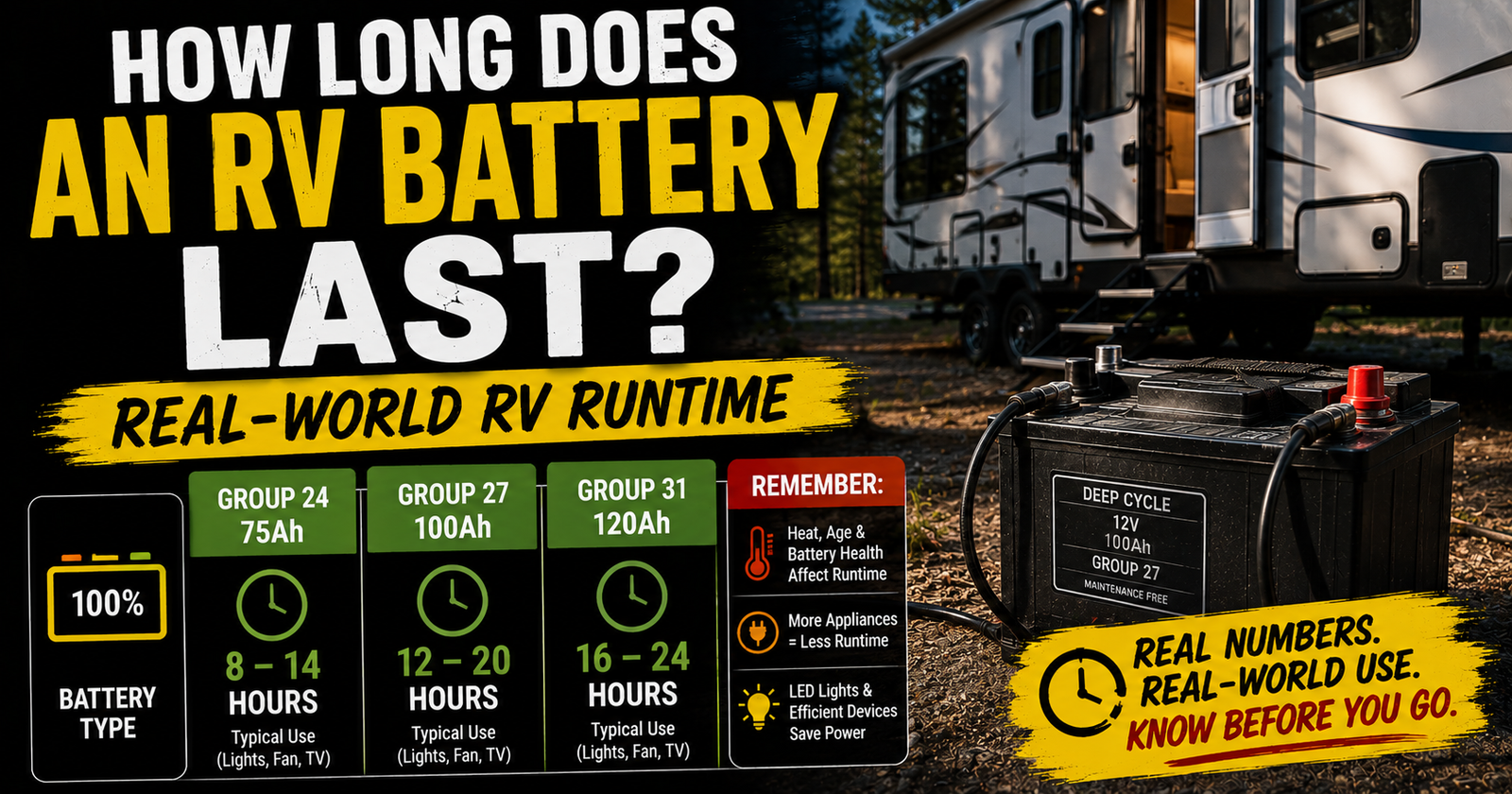
We’ve already covered how long an RV battery can realistically last because “How long can I camp unplugged?” doesn’t have one universal answer.
Solar Changes How Long You Can Stay Unplugged
A properly sized solar system can put energy back into the batteries while you’re camping without shore power.
If daily solar production roughly keeps up with daily electrical consumption, you may be able to remain off-grid for much longer.
But cloudy weather, shade, season, panel angle, battery capacity, and electrical use all matter.
We’ll eventually build out our entire Solar & Off-Grid Power section because that’s where the battery, converter, inverter, and charging systems really start coming together.
A Generator Is Basically Your Temporary AC Source
For understanding converter operation, this is a useful way to think about a generator.
At a campground, the pedestal gives your RV AC power.
Off-grid, a generator can temporarily give your RV AC power.
Once that AC is available, the converter can resume doing what it normally does:
Supplying DC loads.
Charging the battery.
That’s why generator runtime and converter charging performance are closely connected for boondockers.
What If My Converter Fan Doesn’t Run on Battery Power?
That can be completely normal.
If the converter has no AC input, it isn’t actively converting power.
There’s no reason to expect its cooling fan to operate merely because the battery is powering the camper.
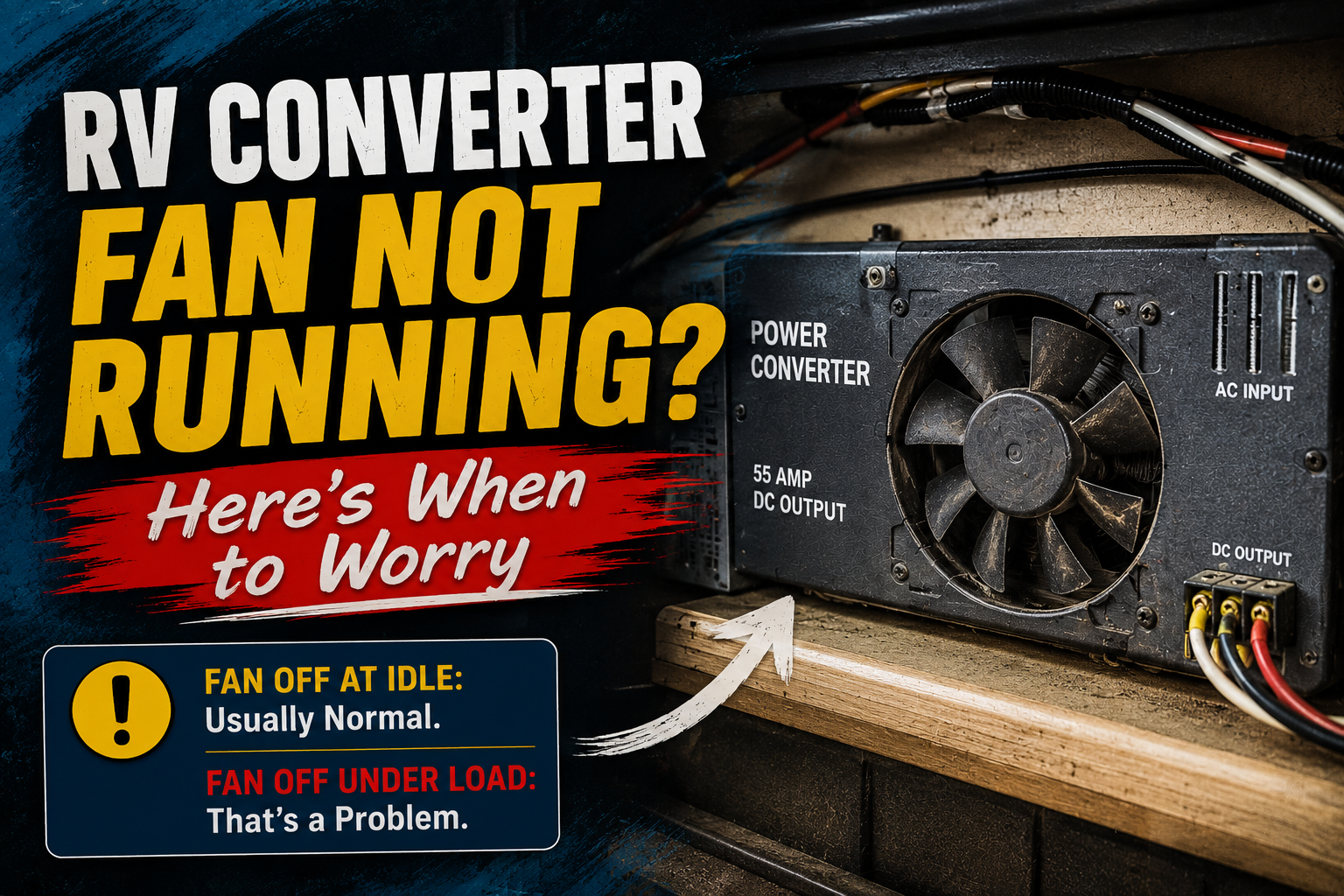
Even while the converter is operating, many converter fans are load or temperature controlled and don’t run constantly. That operating pattern is explained in why converter fans do not run constantly.
So a silent converter while you’re unplugged isn’t evidence that something failed.
It’s probably exactly what you’d expect.
What If the Converter Fan Starts When I Start the Generator?
That makes sense too.
Now the converter has AC input.
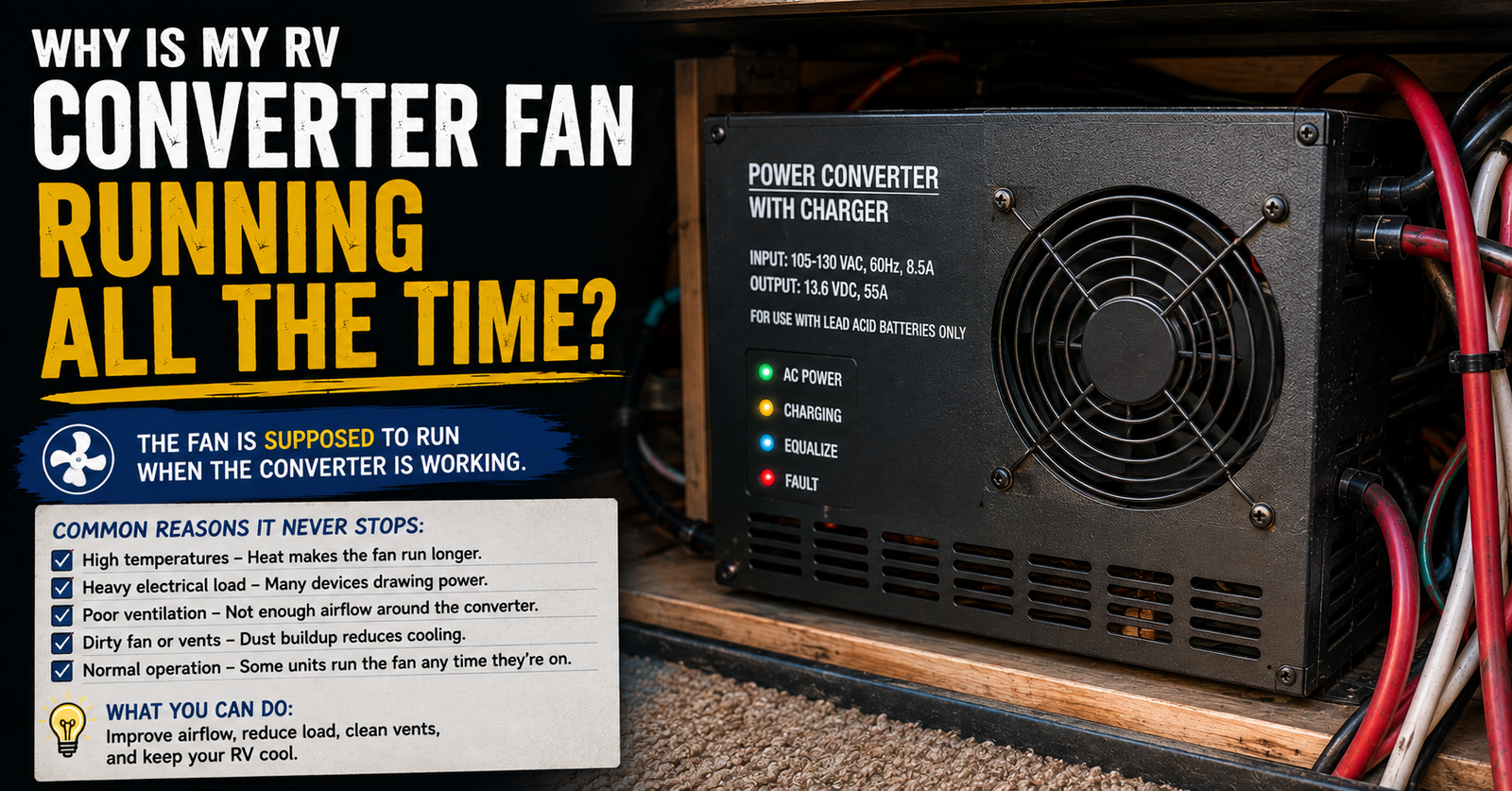
If the battery is depleted, the converter may immediately begin working fairly hard to recharge it while also supplying active DC loads. That heavier workload also helps explain why you may hear the converter fan for an extended period, as outlined in converter fan during battery recovery.
That creates heat.
The cooling fan may run.
Again, understanding the energy path makes seemingly strange behavior completely logical.
Can I Run the Converter With No Battery and a Generator?
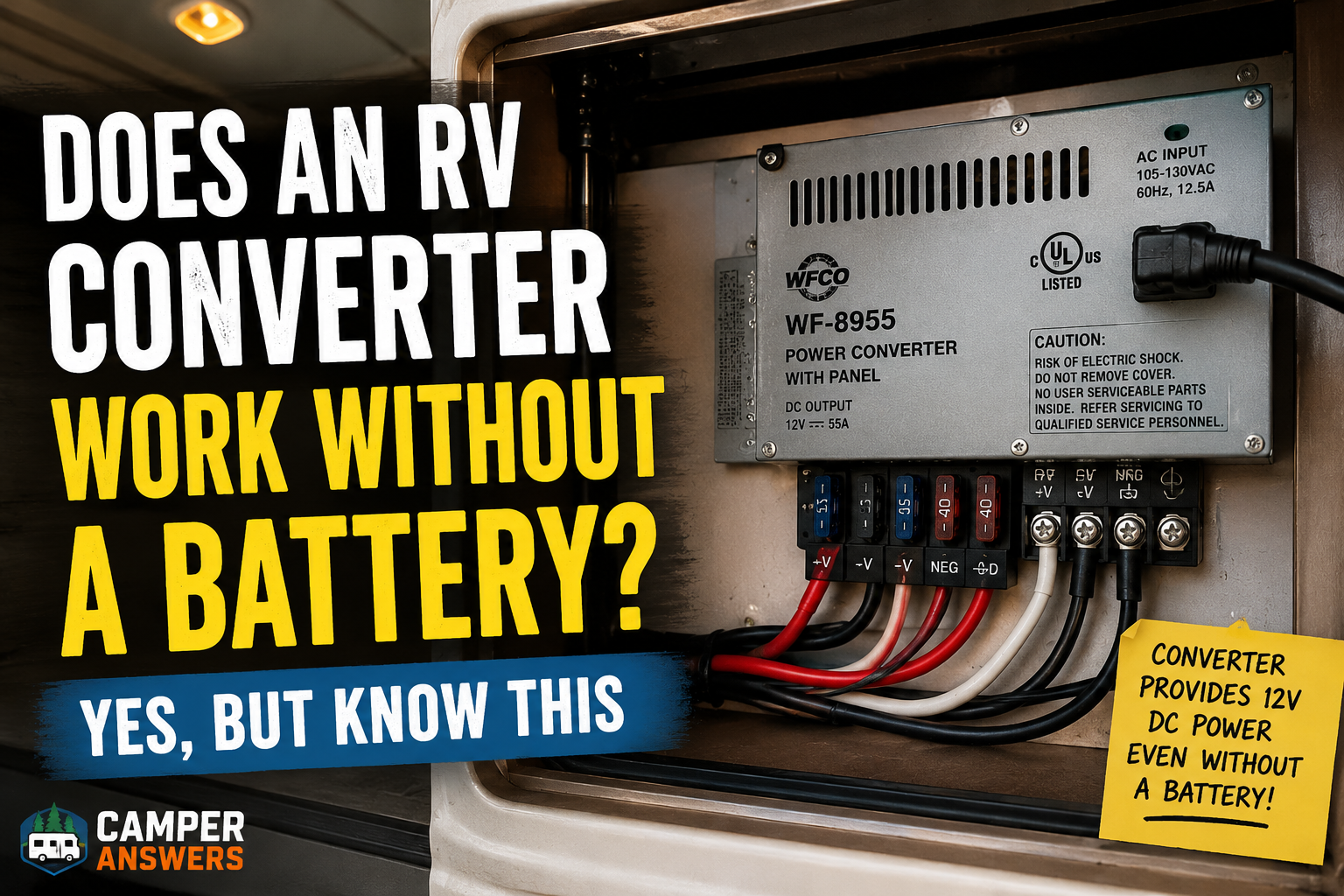
For converters specifically designed to operate without a battery, yes, an appropriate generator-supplied AC source can allow the converter to supply DC power even with no battery connected. The related question of RV converter operation without a battery explains why this works only when a suitable AC source is available.
Progressive Dynamics explicitly says its converter does not have to have a battery connected while operating and separately identifies generator power as an AC source that can allow the converter to operate.
But remember the limitations we discussed in the battery-free article.
Some high-current equipment may depend on battery assistance or manufacturer requirements.
And when you shut the generator off, you immediately lose the battery backup that would normally keep the DC system alive.
Can I Run the Converter From a Household Outlet?
Potentially, yes, when the RV is properly connected to a suitable household circuit using appropriate equipment.
Again, the converter needs AC electricity.
It doesn’t inherently require a 30-amp or 50-amp campground pedestal simply to turn on.
However, plugging an entire RV into a household circuit introduces a different question:
How much of the RV can you safely operate from that circuit?
That’s a topic we’re going to cover separately because it’s much bigger than converter operation alone.
A household outlet may power the converter just fine while being completely inadequate for simultaneously running several major RV appliances.
Does a 30-Amp or 50-Amp RV Change How the Converter Works?
The basic converter job remains the same.
It receives the AC power specified for the converter and produces DC output.
Your RV’s 30-amp or 50-amp service rating describes the AC service available to the RV, not the converter’s DC output rating.
That’s why you can have something like:
30-amp RV service.
55-amp DC converter.
100Ah battery.
Those aren’t contradictory numbers.
They’re describing different things.
We’ll get much deeper into 30-amp versus 50-amp RV service when we move fully into our shore-power section.
What If I Unplug and My Battery Dies Immediately?
Now I’d investigate the battery.
If the RV operates normally while connected to shore power but everything quickly dies when you disconnect, the converter may actually be doing its job perfectly.
It was supplying DC electricity while AC power was available.
Then the battery failed to take over properly.
Possible causes include:
A discharged battery.
A worn-out battery.
Poor battery connections.
A battery disconnect issue.
A blown fuse or breaker.
Damaged charging wiring.
A battery that appears charged but has very little usable capacity.
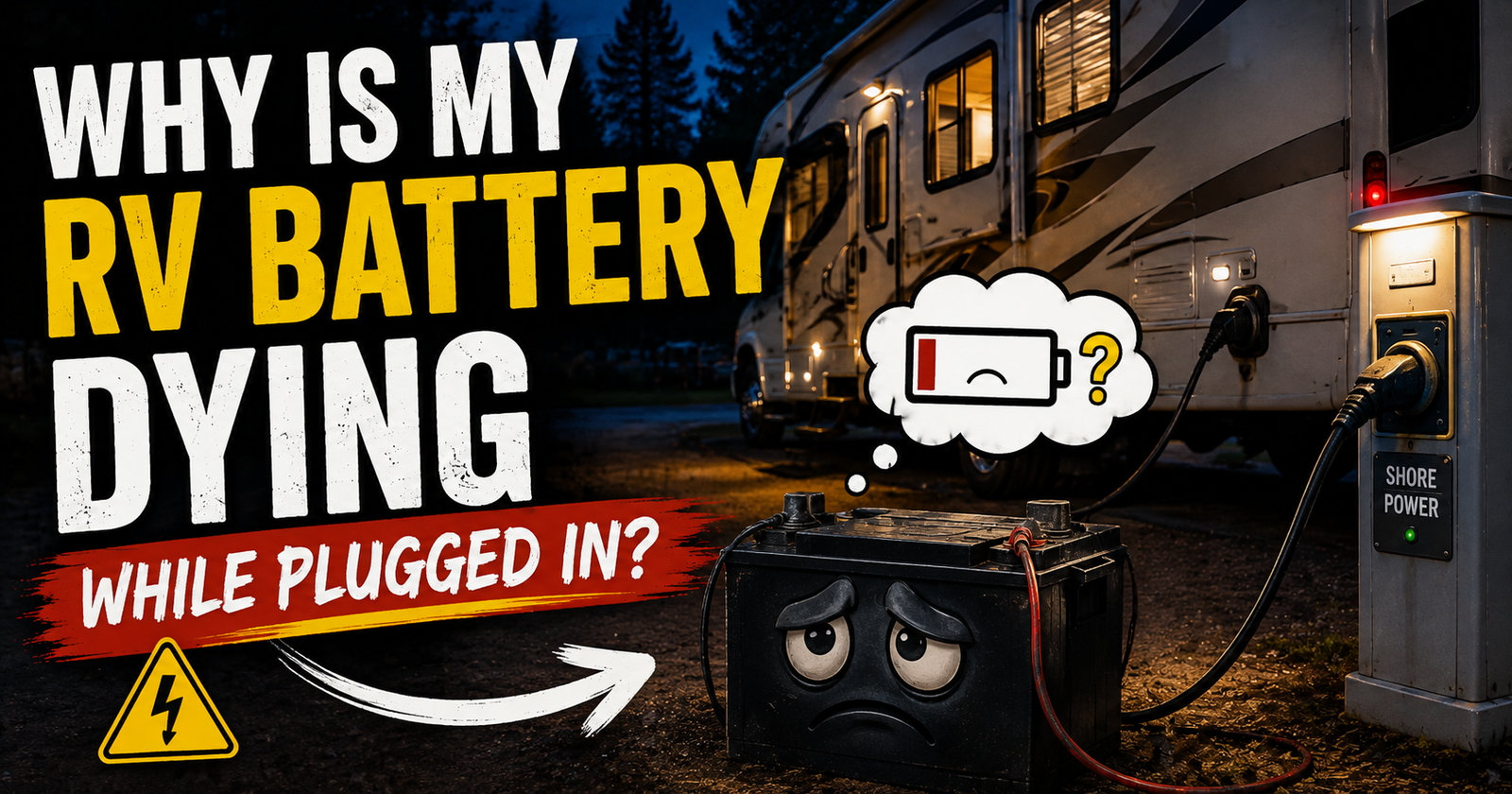
That’s why our guide about an RV battery dying while plugged in and the rest of our battery troubleshooting section connect so closely with converter problems.
What If Everything Works on Battery but Not Shore Power?
That’s almost the opposite clue.
Your battery and at least part of the DC distribution system are clearly capable of powering the camper.
Now I’d want to know whether the converter is receiving AC and producing DC output.
Maybe the converter breaker is off.
Maybe its reverse-polarity protection is blown.
Maybe the converter failed.
Maybe there’s no AC at its receptacle.
This is where our guide to telling whether your RV converter is bad becomes useful.
Don’t Replace the Converter Just Because It Stops When You Unplug
That’s normal.
I want to make this crystal clear because it’s an easy misunderstanding for a first-time camper owner.
You unplug shore power.
Converter stops operating.
That alone is not a converter failure.
It lost the energy source it needs.
Your battery should normally take over appropriate 12-volt loads.
The converter comes back into the picture when a suitable AC source returns.
And Don’t Assume the Converter Runs Because the RV Still Has Power
That’s the flip side.
You unplug.
Lights remain on.
Water pump works.
Furnace blower runs.
That doesn’t prove the converter is operating without shore power.
It more likely proves your battery has energy.
If you have solar, the battery may also be receiving energy from the solar charge controller.
Several parts of the electrical system can be active while the converter sits completely idle.
The Simplest Way to Understand It
Think of the converter as a bridge.
On one side:
120-volt AC electricity
On the other:
12-volt DC electricity
The converter bridges those two electrical systems.
Take away the AC side and there’s nothing for that bridge to carry across.
That’s where the battery becomes important because it already stores DC electricity on the side of the system where your lights, pump, furnace controls, and many other RV components operate.
So Does an RV Converter Work Without Shore Power?
Not unless it has another appropriate source of AC electricity.
A conventional RV converter needs AC input.
Shore power is one source.
A properly connected generator can be another.
Without shore power, generator power, or another legitimate AC source feeding the converter, the converter normally stops operating.
Your camper may still have plenty of working 12-volt equipment because the battery has taken over, not because the converter somehow learned to run without AC electricity. Once shore power returns, how long an RV converter should stay on becomes a separate question from whether the battery is supplying the loads.
And that’s the part that makes the entire RV electrical system much easier to understand:
The converter doesn’t create electricity. It converts it.
Give it AC power and it can supply DC power and charge the battery.
Take away AC power and the battery becomes the source that keeps the 12-volt side of your camper alive.
Once you understand that handoff, a whole lot of strange RV electrical behavior suddenly stops being strange.
Written by Evan Mercer
Evan Mercer writes about RV electrical systems, converters, batteries, shore power, and practical camper troubleshooting for CamperAnswers.com. He focuses on explaining where RV electricity actually comes from so owners can understand their camper before they start replacing parts.