
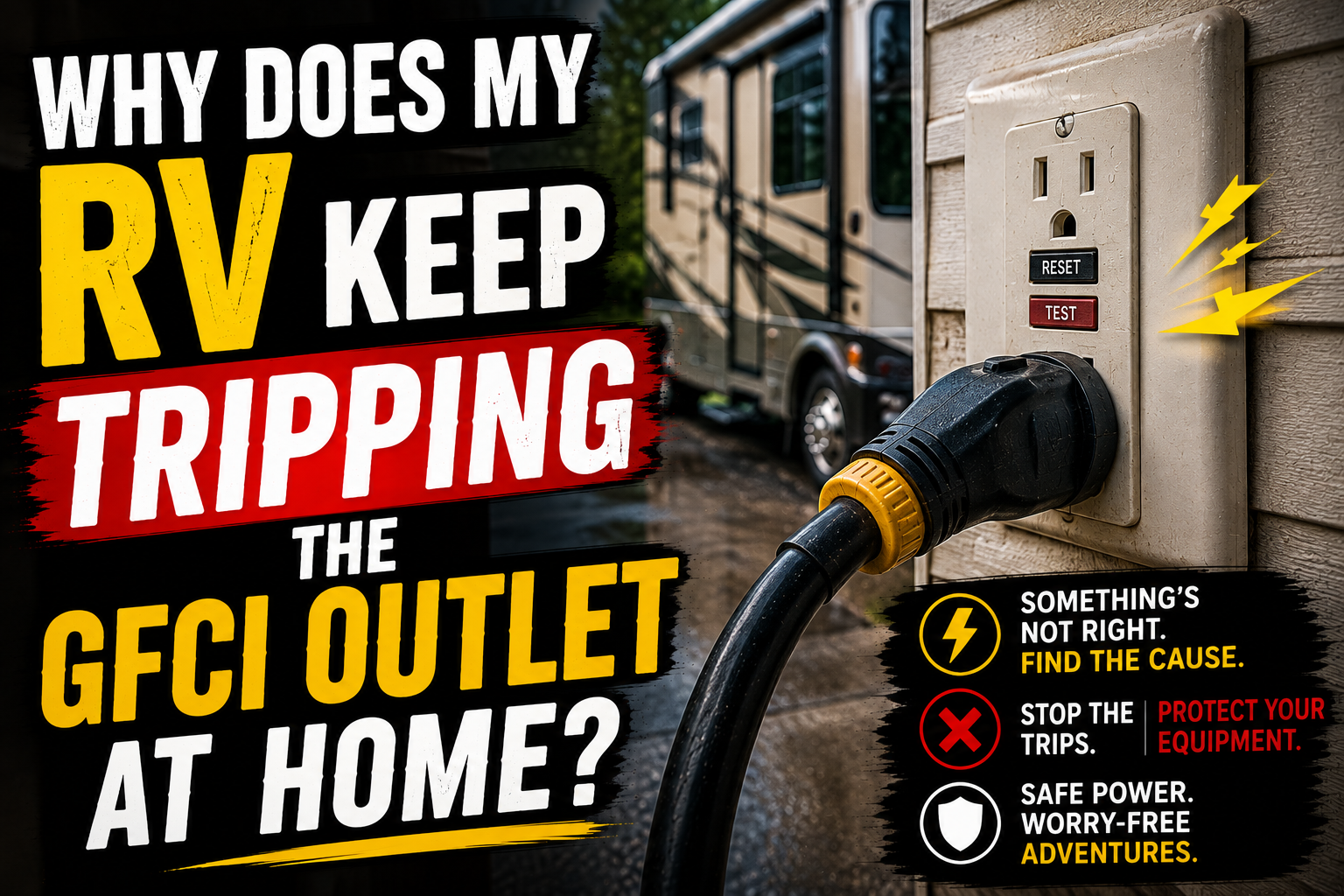
You bring the RV home, grab the proper adapter, plug the shore cord into the garage or outside outlet and immediately hear:
Click.
The house GFCI trips.
You reset it, plug the camper in again and:
Click.
Same thing.
This can be especially confusing when the RV plugs into a campground pedestal or a regular non-GFCI outlet without any obvious problem.
If your RV keeps tripping a GFCI outlet at home, don’t assume the camper is simply pulling too much power. A GFCI trip is different from an overloaded breaker. The RV may have small amounts of electrical leakage from several components adding together, or there may be an actual fault involving an appliance, converter, water heater, wiring, moisture, or another part of the RV’s 120-volt system. Knowing how the RV's AC and DC sides are organized can provide useful context, as explained in how the different RV power systems work together.
The good news is that we can narrow this down without randomly replacing half the electrical system.
First, Make Sure It’s Actually the GFCI Tripping
This is important because two different electrical problems get described the same way.
Someone says:
“My RV keeps tripping the outlet at home.”
But what’s actually tripping?
If the 15 or 20 amp circuit breaker in the house electrical panel trips, excessive electrical load moves much higher on my list.
If the RESET button on the GFCI receptacle pops out, we’re looking at ground-fault protection.
Those aren’t the same thing.
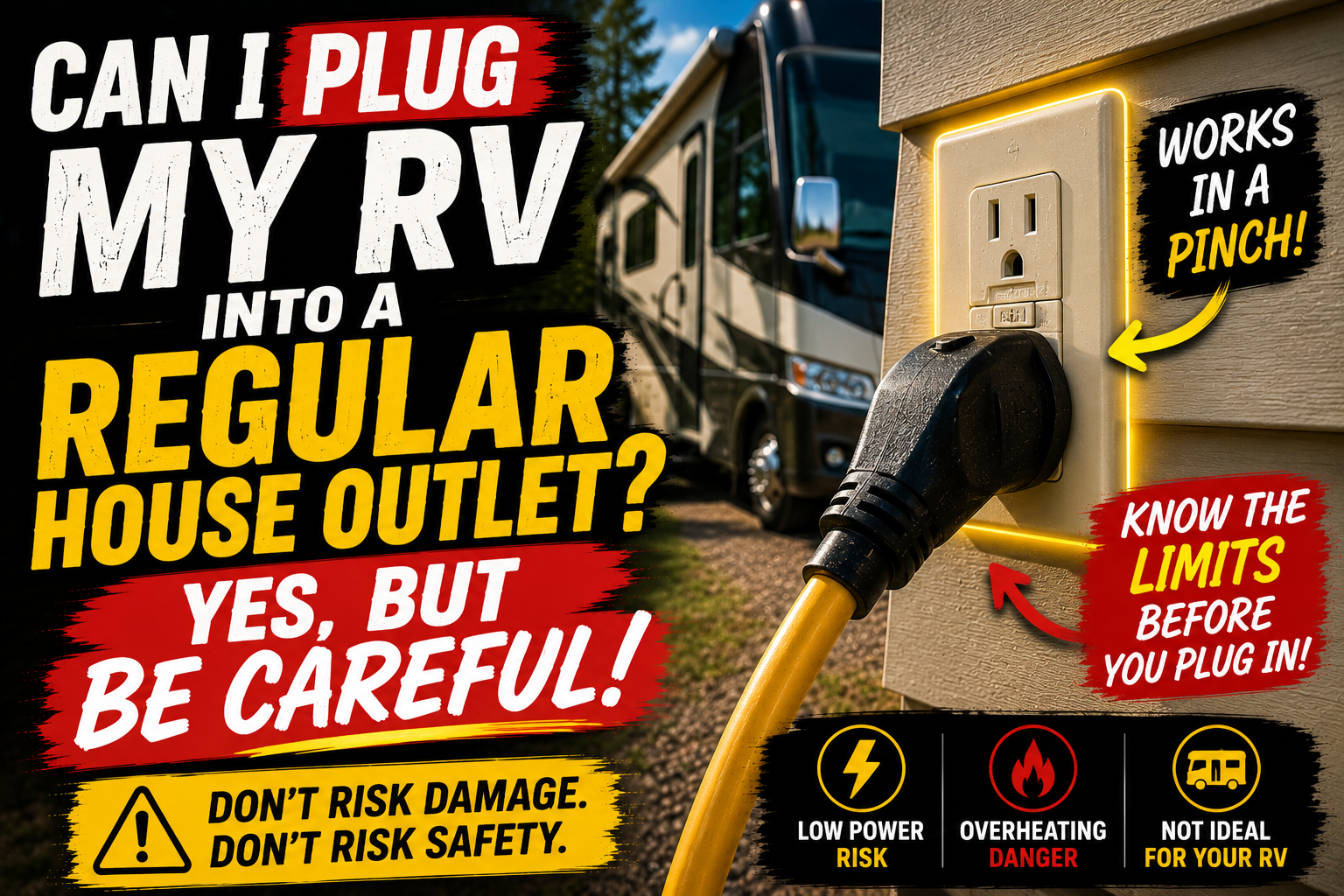
We just covered how to plug an RV into a regular household outlet, including the limited amount of power available from a normal home circuit.
If you’re trying to run the air conditioner, refrigerator, converter, water heater and microwave from one 15 amp circuit, a tripped breaker shouldn’t be terribly surprising.
But a GFCI can trip with nowhere near 15 amps flowing.
Why Does a GFCI Trip?
A GFCI isn’t primarily watching how much total electricity your RV uses.
It’s comparing the current traveling out through the hot conductor with the current returning through the neutral.
Those numbers should essentially match.
If enough current is taking another path, the GFCI sees that imbalance and disconnects the circuit.
U.S. GFCI protection is designed to respond to a very small imbalance, around 5 milliamps. That’s only 0.005 amp.
That’s why:
“But I’m barely running anything!”
doesn’t necessarily mean the GFCI shouldn’t trip.
You could be well below the circuit’s amperage limit and still have enough leakage current to trigger GFCI protection.
An RV Has a Lot of Electrical Equipment Connected at Once
This is where RVs become interesting.
When you plug in the shore cord, you aren’t necessarily connecting one simple appliance to the house.
You’re connecting an entire camper.
Depending on the RV, that can include the:
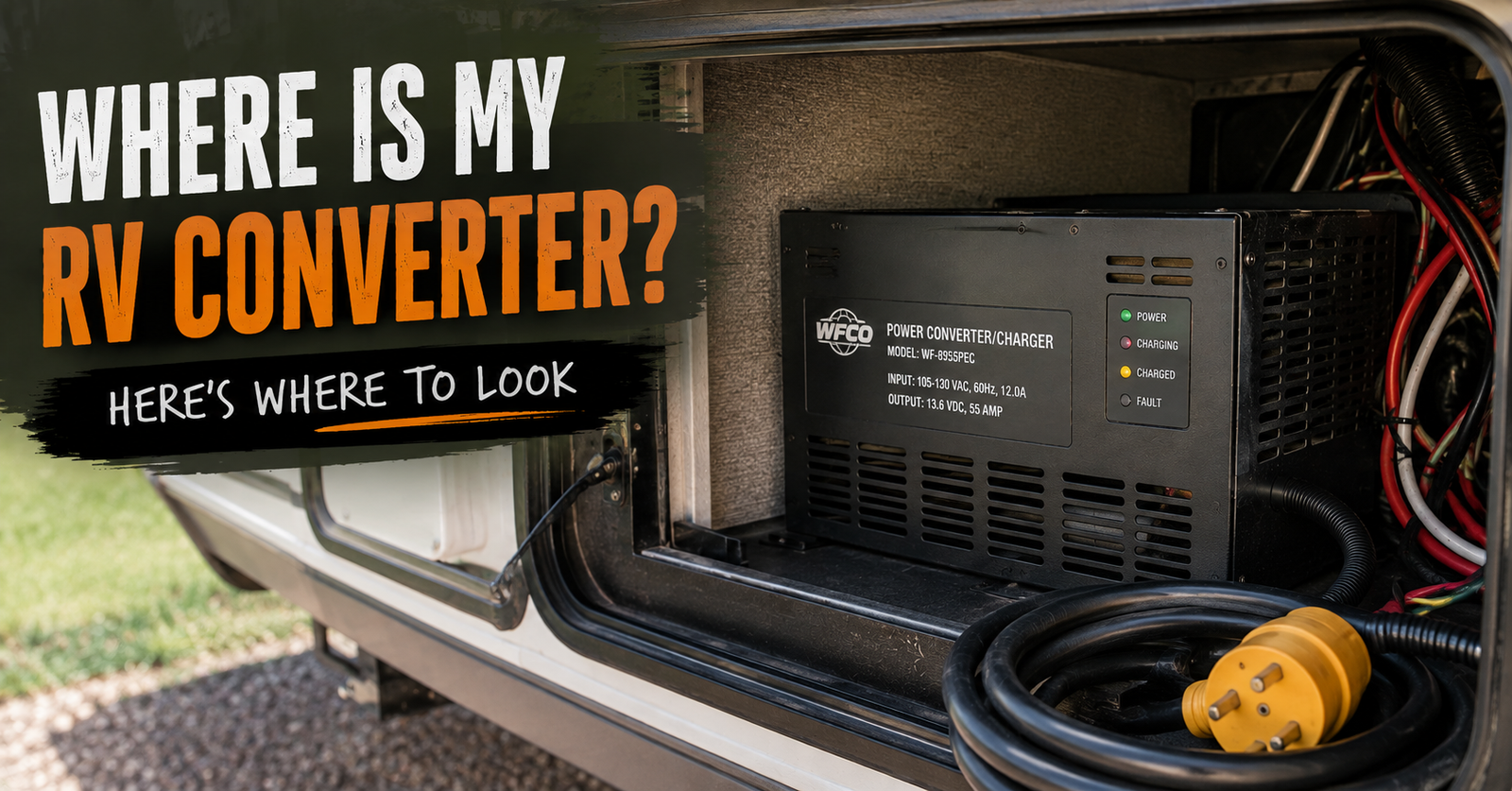
Converter/charger
Refrigerator
Microwave
Water heater
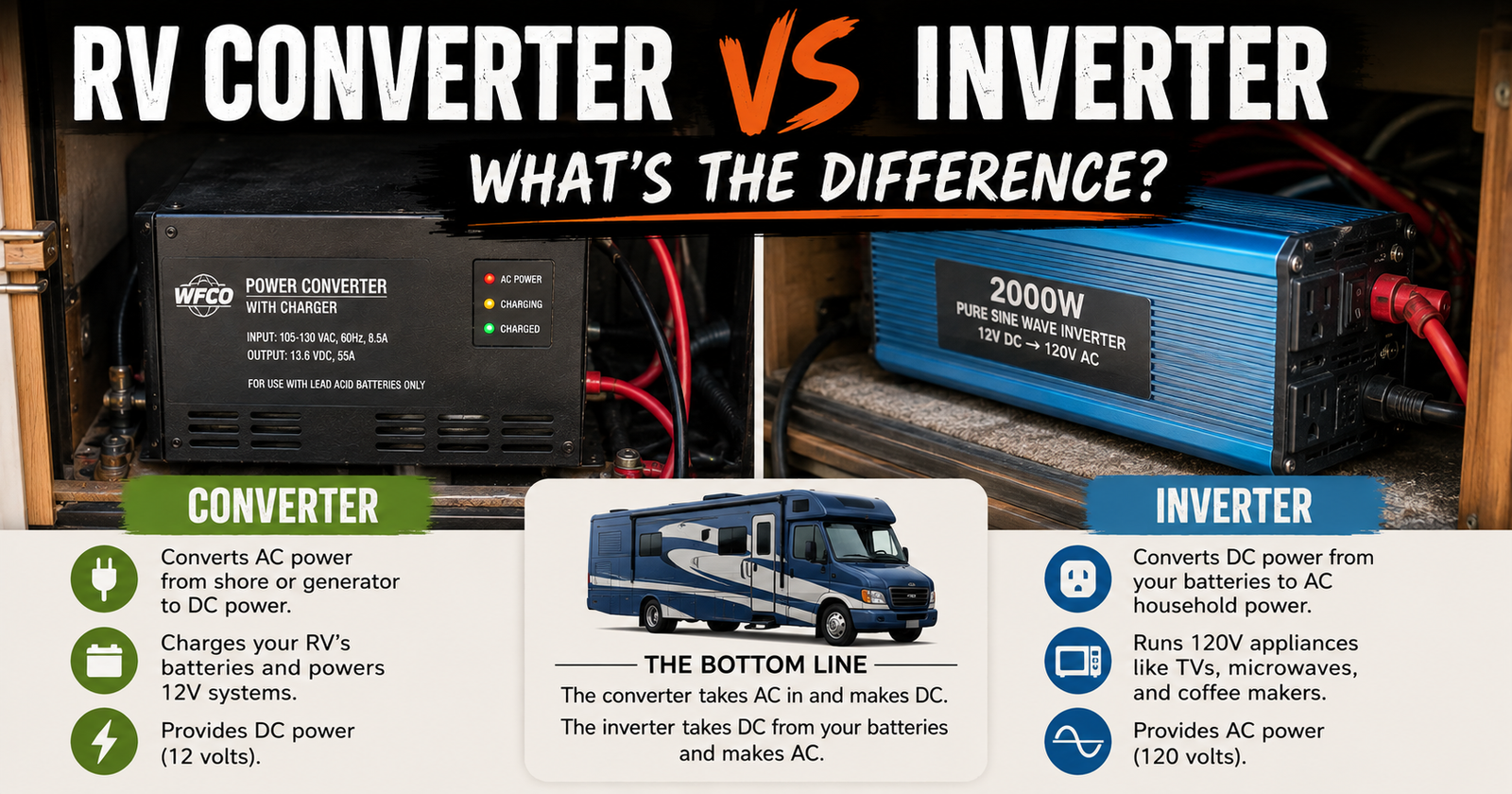
Inverter or inverter/charger
Surge-protection equipment
Air conditioner
Entertainment equipment
Various receptacle circuits
And other electrical components.
Some electrical equipment can have tiny amounts of normal leakage current to ground. Individually, those amounts may not cause trouble.
But leakage can be additive.
RV electrical expert Mike Sokol notes that converters/inverters, microwaves, surge-protection equipment and other devices can each contribute small amounts of leakage. Enough combined leakage can exceed a GFCI’s trip threshold.
That gives us two broad possibilities.
Your RV has accumulated enough normal leakage to make a sensitive GFCI unhappy.
Or something actually has a fault.
We need to figure out which.
Start With Every RV Breaker Turned Off
This is one of the cleanest ways to begin narrowing down the problem.
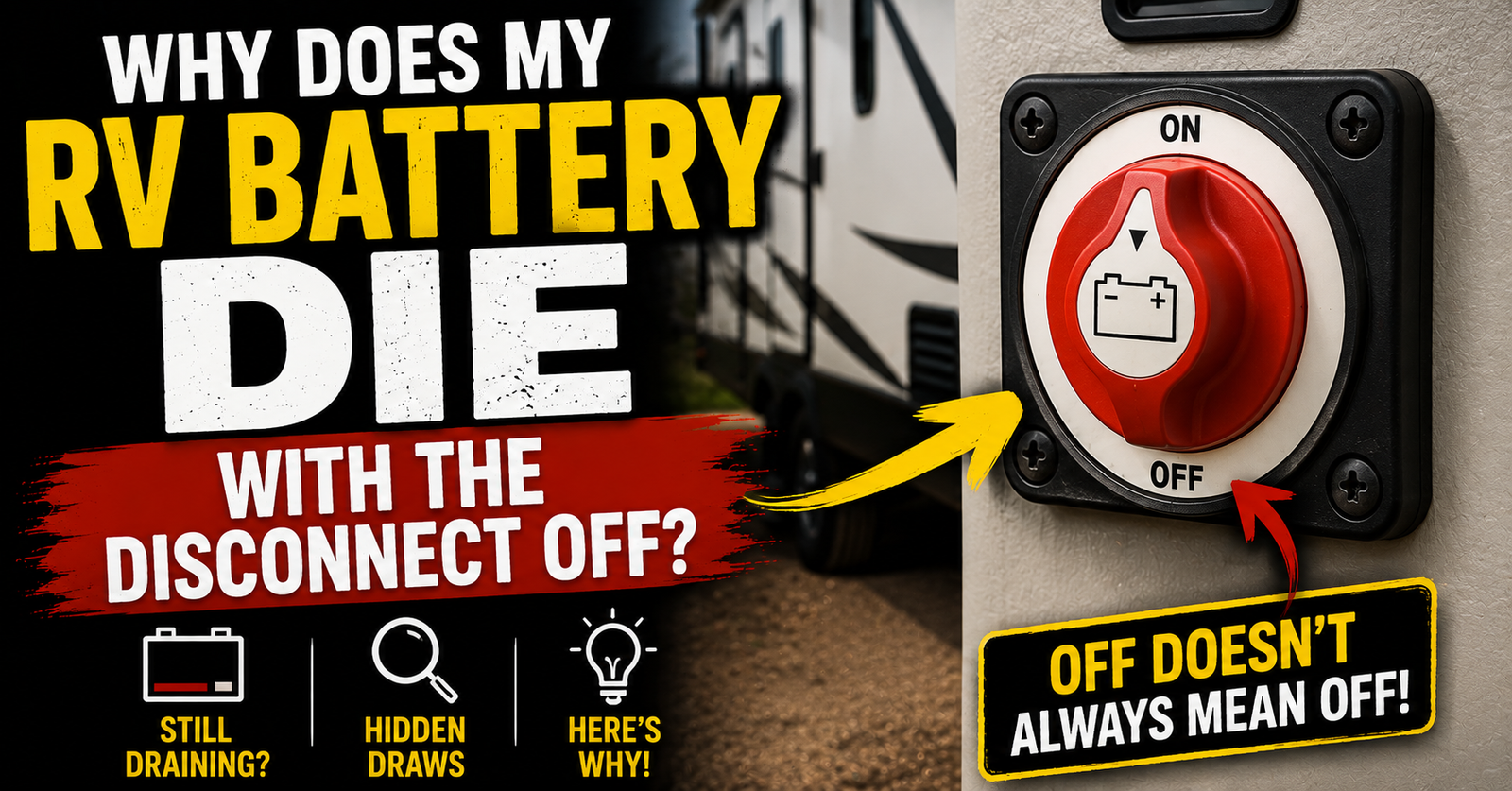
Before connecting the RV, turn off the individual 120-volt branch breakers in the RV’s distribution panel.
Then connect the camper to the home GFCI using the proper adapter and connection.
Now you can start determining which circuit introduces the problem.
RV electrical troubleshooting guidance commonly recommends this divide-and-conquer approach because turning circuits on individually can identify the circuit associated with the GFCI trip.
Don’t turn everything back on at once.
That defeats the purpose.
Turn the RV Circuits Back On One at a Time
Suppose the house GFCI stays on with the RV’s branch circuits turned off.
Good.
Now turn one RV breaker on.
Still good?
Turn on another.
Still good?
Continue.
Then you turn on the converter breaker and:
Click.
The house GFCI trips.
That’s a huge clue.
It doesn’t automatically prove the converter is defective, but we’ve narrowed an entire RV down to one circuit.
Maybe instead it happens when you energize the water heater.
Or refrigerator.
Or receptacle circuit.
That’s why this method is so useful.
The Converter Is One Circuit I’d Watch Closely
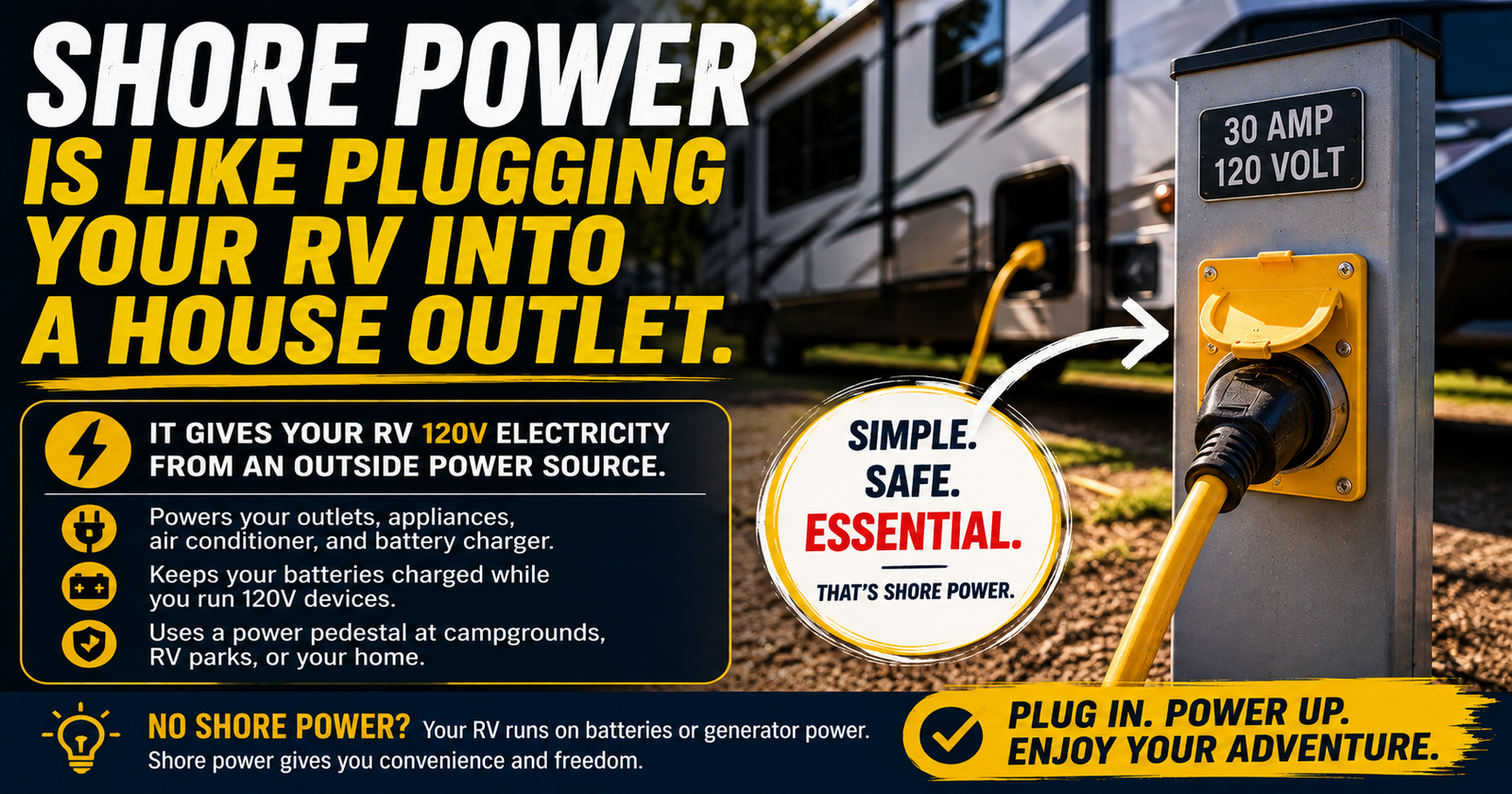
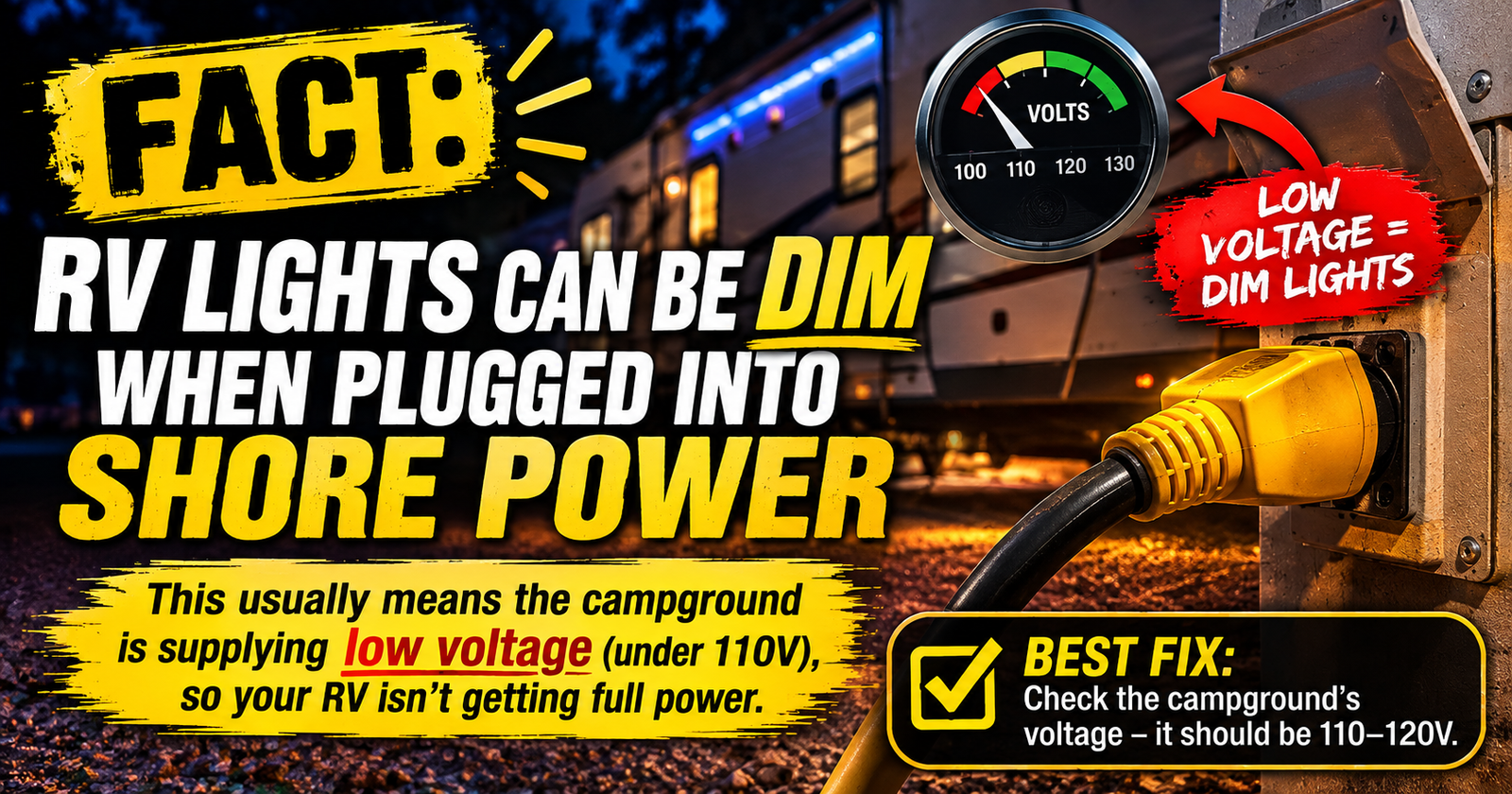
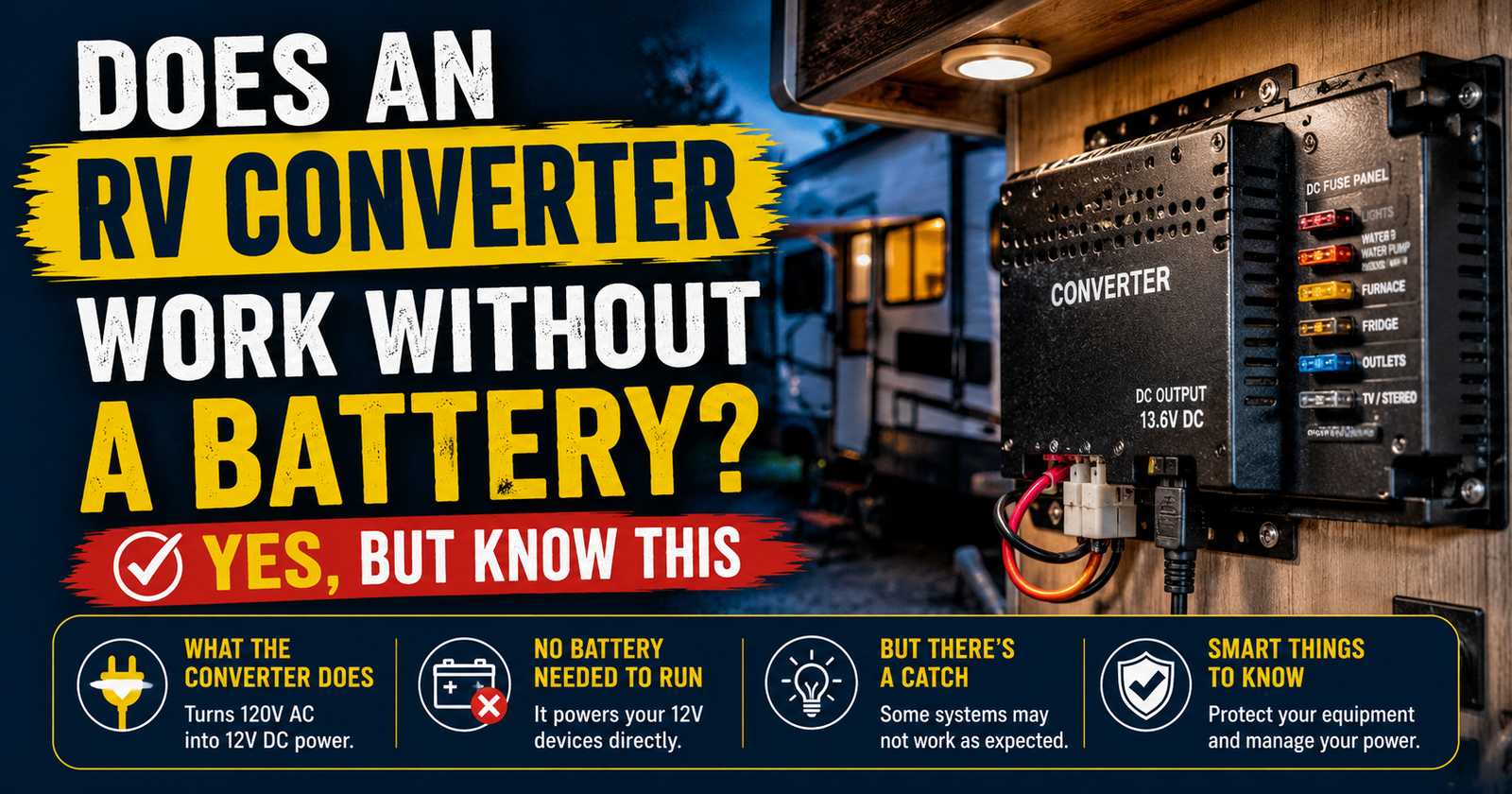
The converter starts operating whenever shore power becomes available and the battery charging system needs it. For the larger picture, how shore power supports an RV shows how that incoming AC power supports both the converter and other RV circuits.
That means you can plug in an RV with every visible appliance turned off and still have an electrical load.
This catches people because they’ll tell me:
“Nothing in the camper is turned on.”
Maybe not intentionally.
But the converter may be charging the house batteries.
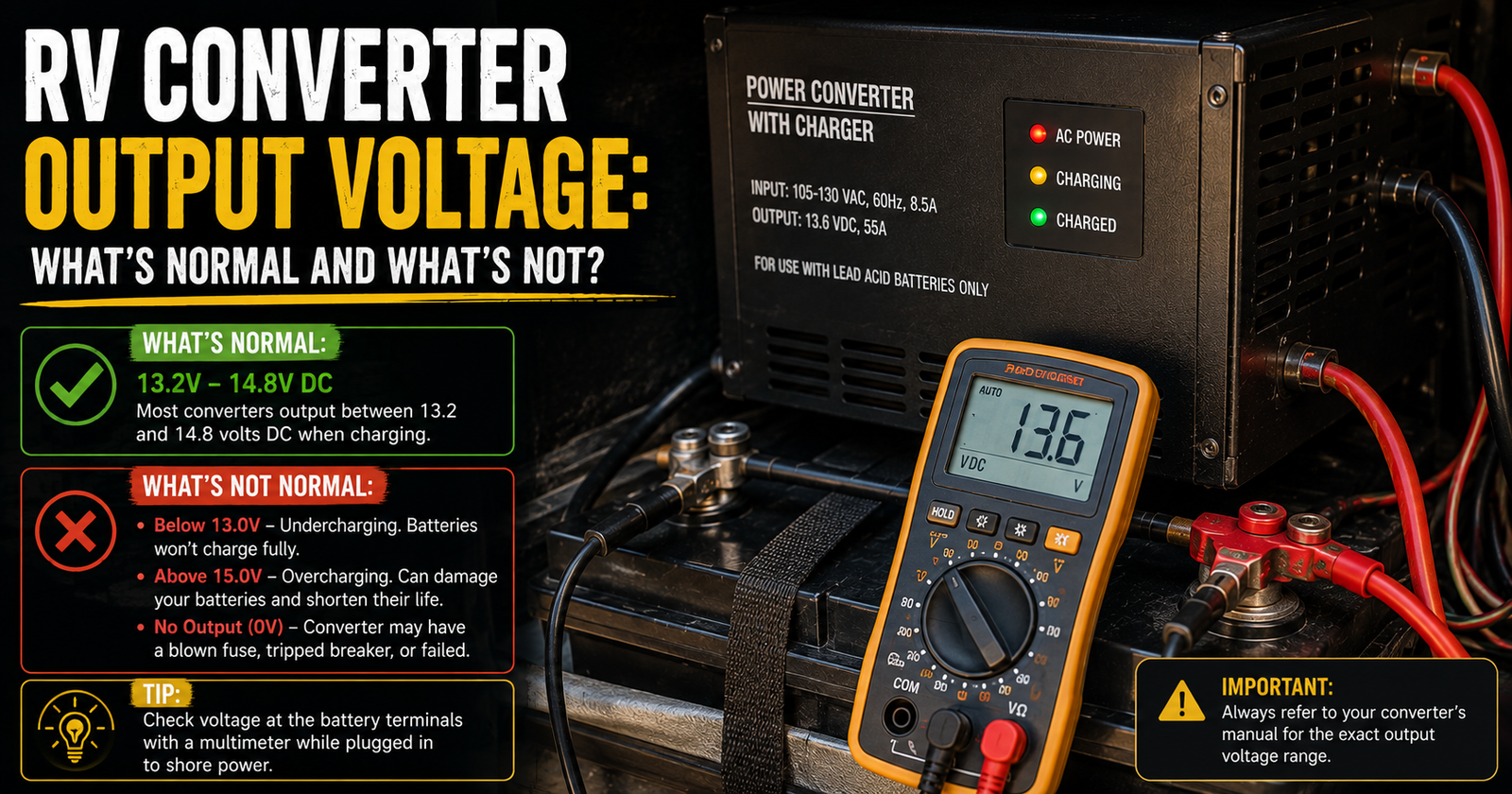
Modern converters and chargers can also contribute a small amount of leakage current through their internal filtering components. In some situations, that can become part of an additive leakage problem that trips an upstream GFCI.
If turning on the converter circuit consistently trips the home GFCI, that’s worth investigating.
Don’t Immediately Replace the Converter
We’ve spent enough time building our converter cluster that you already know my feelings about replacing expensive electrical parts based on one symptom.
A GFCI trip doesn’t automatically mean:
Bad converter.
Maybe another component on that circuit is involved.
Maybe the total leakage from several devices is pushing the system over the threshold.
Maybe there’s a wiring issue.
Maybe the home GFCI itself has a problem.
Diagnose before buying.
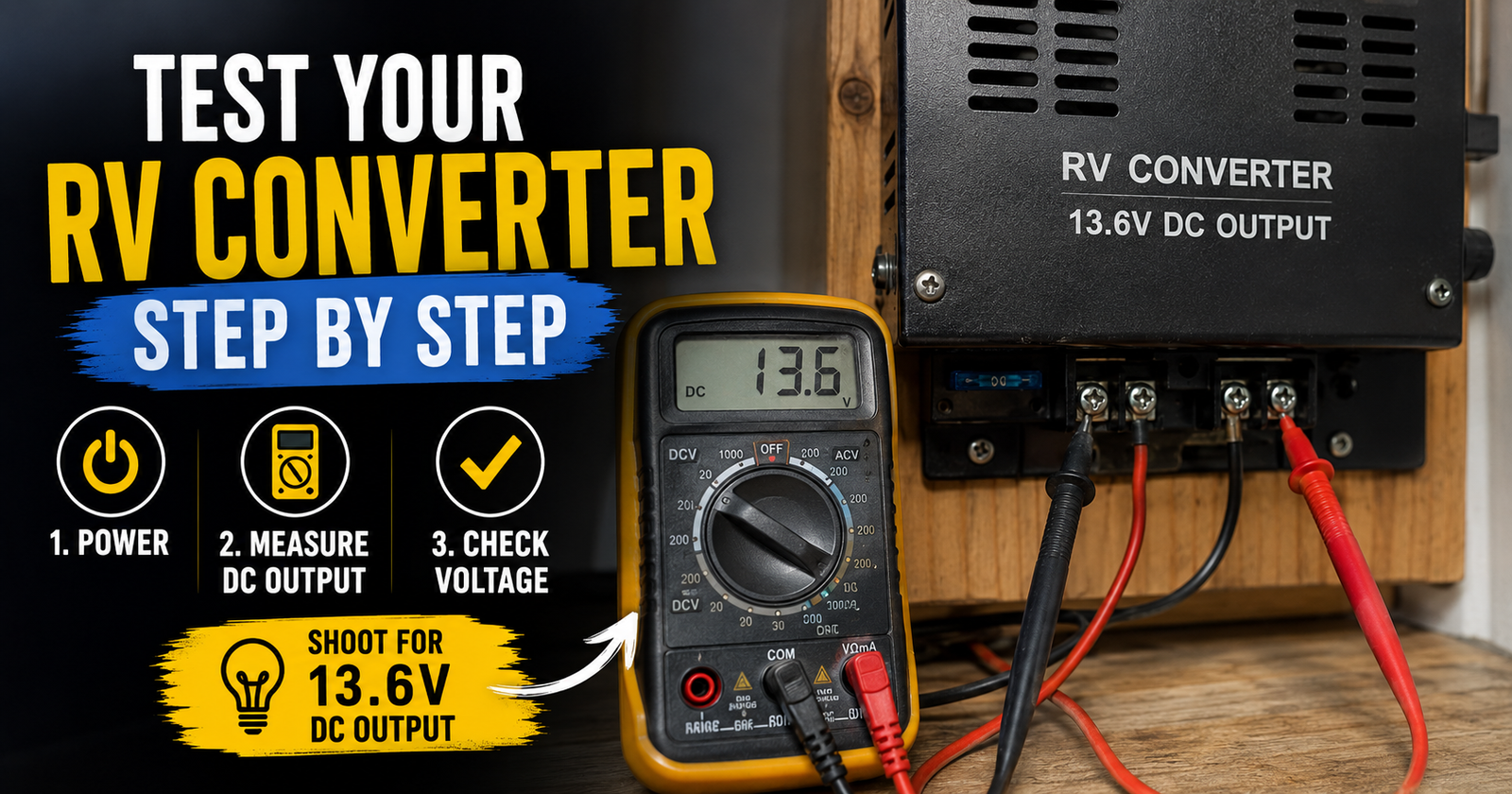
If you need to verify the converter independently, our step-by-step RV converter multimeter testing guide covers that troubleshooting process separately.
The Electric Water Heater Is Another Big One to Check
This is one I definitely don’t want overlooked.
An electric water-heater element can develop a fault that allows current to leak where it shouldn’t.
That’s exactly the type of condition a GFCI can detect.
Sokol specifically identifies a damaged electric water-heater element as one possible source of substantial leakage current in an RV.
So imagine your troubleshooting looks like this:
Main RV power on.
Converter circuit on.
Receptacles on.
Everything fine.
Turn on the water-heater circuit.
GFCI trips.
Now I’ve got somewhere useful to look.
Don’t just keep resetting the house outlet.

The Refrigerator Can Be Involved Too
Depending on the type of refrigerator and how the particular RV is wired, the refrigerator can also become part of the troubleshooting.
If the GFCI stays set until the refrigerator circuit is energized, that’s information.
It doesn’t automatically mean the refrigerator needs replacing.
We still have to determine whether the problem involves the appliance, receptacle, wiring, or something else associated with that circuit.
But we’ve narrowed the search considerably.
That’s the goal.
Your Microwave Can Contribute Leakage Too
Microwaves are another appliance worth considering, particularly older ones.
RV electrical guidance notes that microwave ovens can contribute measurable leakage current, which can add to leakage from other equipment and eventually push the total past a GFCI’s trip point.
Again, this is why an RV can behave differently than one little appliance plugged into your garage.
There may be numerous components connected behind that shore cord.
Check Your Surge Protector or EMS
Here’s another interesting possibility.

If you’re using portable or built-in electrical protection equipment, don’t forget that it’s part of the system too. Understanding the capabilities of RV electrical protection equipment can help you account for its role in the shore-power system.
There have been documented RV cases where older surge-protection equipment contributed to GFCI tripping, and removing that component from the test changed the result.
I am not suggesting that you permanently remove electrical protection from your RV.
We’re troubleshooting.
If changing one component changes the symptom, that’s valuable information.
And we’re going to cover RV surge protectors and electrical management systems in their own article because they’re important enough to deserve it.
What If the GFCI Trips With Every RV Breaker Off?
Now I’m much more interested.
We’ve removed most of the branch loads and the home GFCI still won’t hold.
At this point I’d start thinking about things closer to the incoming AC electrical system.
That can include the:
Shore cord
Adapter
Electrical management equipment
Transfer equipment
Distribution panel
Neutral and ground wiring
Incoming connections
Other equipment ahead of the individual branch breakers
This is where troubleshooting can move beyond beginner territory fairly quickly.
Neutral and Ground Shouldn’t Be Bonded Together Inside the RV
This is an important piece of RV electrical design.
The RV is essentially treated as a subpanel when connected to shore power.
Neutral and equipment ground aren’t supposed to be casually tied together somewhere inside the camper.
A neutral-to-ground connection downstream can create a parallel path for return current and cause GFCI problems.
So if somebody “fixed” wiring in the camper by connecting neutral and ground together because that’s how they remembered seeing a house panel wired, that can create trouble.
This is one reason I get nervous around mystery electrical modifications in used campers.
Previous Owner Wiring Can Make This Fun
Buy a used RV and you don’t always know what happened before you owned it.
Someone may have:
Replaced an outlet.
Installed an inverter.
Changed a converter.
Added a transfer switch.
Modified the electrical panel.
Added an appliance.
Installed solar equipment.
Repaired damaged wiring.
Maybe they did beautiful professional work.
Maybe they watched six minutes of a video and decided electricity looked easy.
If your RV has always tripped a GFCI since you bought it, previous electrical work becomes something I’d keep in the back of my mind.
A Screw Through a Wire Can Cause a Real Fault
Not every GFCI trip is nuisance leakage.
Sometimes something is actually wrong.
A damaged conductor, failed insulation, pinched wire, or fastener through wiring can allow current to take an unintended path.
RV electrical troubleshooting sources identify damaged wiring and conductor-to-ground faults as legitimate causes of repeated GFCI trips.
That’s why I don’t like telling people:
“Oh, RVs just trip GFCIs. Don’t worry about it.”
Maybe.
But we need to prove that before dismissing a safety device.
Moisture Can Create a Ground Fault
RVs have exterior electrical equipment.
They also have plumbing everywhere.
So moisture deserves consideration.
If the problem started after:
Heavy rain.
Washing the RV.
A plumbing leak.
Water entering an exterior receptacle.
Condensation.
I’d inspect the affected areas carefully.
An outside outlet doesn’t have to be visibly full of water to have moisture where it shouldn’t.
And remember, one protected circuit can contain several receptacles.
What If the RV Trips the Home GFCI Only When It Rains?
That’s an especially strong clue.
I would start looking at exterior receptacles and other exposed electrical equipment.
Don’t bypass the GFCI so you can prove the RV works when wet.
The fact that the problem appears with moisture is exactly why I’d want GFCI protection functioning correctly.
Dry conditions can hide electrical faults that become obvious once moisture creates another conductive path.
Don’t Confuse This With the GFCI Inside the RV
We’ve now covered both situations, so let’s separate them clearly.
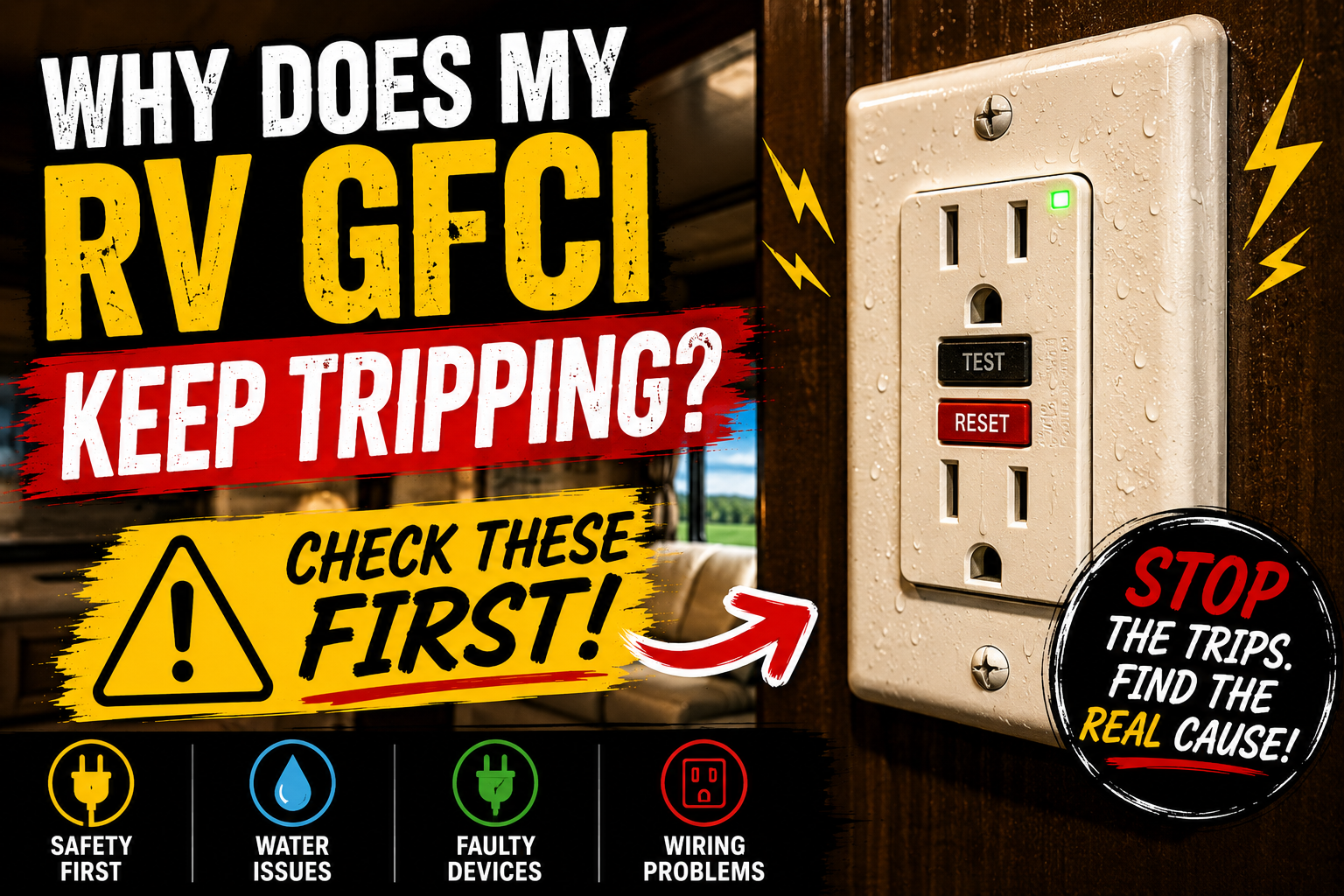
If the bathroom or kitchen GFCI inside your camper keeps tripping, use our guide to why an RV GFCI keeps tripping.
This article is about something different:
The GFCI at your HOUSE trips when the entire RV is plugged into it.
That’s why the troubleshooting starts farther upstream and considers the whole camper.
Why Does My RV Work Fine at a Campground?
This is the part that makes people assume the home outlet must be defective.
Maybe it is.
But don’t jump there.
If the campground connection you’re using isn’t protected by a GFCI in the same way, a small ground-leakage condition may not disconnect the camper there.
Then you bring the RV home, connect it to a GFCI-protected garage outlet, and suddenly that protection detects the imbalance.
The fact that the RV “works fine” somewhere else doesn’t automatically prove there’s nothing worth investigating.
What If It Works on Another GFCI Outlet?
That’s useful too.
Suppose the RV trips your garage GFCI every time.
You connect it properly to another suitable GFCI-protected circuit and it doesn’t trip.
Now I’d have the original household GFCI and its circuit inspected.
GFCI devices can fail.
Connections can develop problems.
The house circuit itself can have issues.
Troubleshooting works both directions.
Don’t blame the camper automatically, and don’t blame the house automatically.
Change one variable at a time.
Don’t Replace the Home GFCI With a Regular Outlet Just to Stop the Tripping
This is not my solution.
If the location requires GFCI protection, removing that protection to make the camper stop tripping is exactly backwards.
Likewise, never remove or defeat the grounding connection on the RV shore cord or adapter to stop a GFCI from opening.
RV electrical safety guidance explicitly warns against removing the grounding pin or replacing required GFCI protection simply to eliminate trips.
You may make the symptom disappear while leaving the underlying electrical condition untouched.
That’s not a repair.
Don’t Use a Cheater Plug
Same idea.
If somebody tells you:
“Just use one of those adapters that gets rid of the ground and it’ll stop tripping.”
No.
The equipment grounding conductor is there for a reason.
If an electrical fault energizes the RV’s metal chassis and there’s no proper grounding path, you can create what’s commonly called hot skin, where the RV body develops dangerous voltage relative to earth.
A functioning equipment ground is an important part of preventing that hazard.
I don’t trade shock protection for convenience.
Can the RV Battery Cause the Home GFCI to Trip?
The 12-volt battery itself isn’t connected to the house GFCI in the same way as a 120-volt appliance.
But battery condition can affect how hard the converter/charger works after you connect to shore power.
Suppose the battery is deeply discharged.
You plug in.
Converter goes into a higher-output charging mode.
Now the converter is doing more work.
That doesn’t automatically mean a low battery causes a ground fault, but it can change what the electrical system is doing immediately after connection.
That’s why I pay attention to whether the GFCI trips instantly or after equipment begins operating.
Does Overloading the House Circuit Trip the GFCI?
This needs a little nuance.
If you’re using a GFCI receptacle on a circuit that’s also protected by a normal breaker, excessive current should normally be handled by the circuit’s overcurrent protection.
A GFCI is detecting current imbalance.
That’s different.
Some modern breakers combine multiple protection functions, which can make the thing that “tripped” less obvious to the average homeowner.
So identify the actual device opening before diagnosing the cause.
If it’s the normal 15 or 20 amp house breaker, start looking closely at total load.
If it’s GFCI protection, ground leakage becomes the bigger question.
What If It Trips Only When the Air Conditioner Starts?
First determine exactly what’s tripping.
If it’s the house breaker, the air conditioner may simply be asking too much from the small household circuit, especially with other RV loads already operating.
If it’s specifically the GFCI protection, I wouldn’t automatically call that normal startup behavior.
I’d investigate the air-conditioner circuit and equipment rather than repeatedly resetting it.
This distinction prevents a lot of bad diagnoses.
Your Extension Cord Matters Too
If you’re running from the garage to an RV parked 75 feet away, the extension cord becomes part of the system.
Use a properly rated, heavy-duty cord appropriate for the load.
Don’t use:
Damaged cords.
Missing ground pins.
Loose connectors.
Burned plugs.
Improvised adapters.
And don’t leave questionable connections operating simply because they haven’t tripped anything yet.
If the plug or adapter starts getting unusually hot, our RV shore power cord overheating guide explains why that’s a separate warning worth taking seriously.
My Troubleshooting Order Would Look Like This
I’d first verify whether the GFCI or circuit breaker is actually tripping.
Then I’d turn off the RV’s individual AC branch circuits and reconnect.
If the GFCI holds, I’d bring circuits online individually until the problem returns.
Once I’ve identified the circuit, I’d investigate the equipment on that circuit.
If the GFCI trips with essentially all branch circuits isolated, I’d move upstream toward the shore cord, protection equipment, distribution system, neutral/ground relationship, and incoming AC wiring. Once a GFCI is ruled out, RV shore-power breaker troubleshooting can help separate an overload from an incoming-power or wiring fault.
And throughout all of this, I’d watch for obvious clues such as moisture, electrical smell, heat, melted components, or previous wiring modifications.
That’s a much better process than replacing the converter because somebody on Facebook said theirs did the same thing.
When I’d Stop Troubleshooting It Myself
Flipping breakers and isolating circuits is one thing.
Opening energized 120-volt electrical equipment is another.
I’d bring in a qualified RV technician or electrician familiar with RV electrical systems when the troubleshooting points toward:
Neutral-to-ground problems.
Damaged internal wiring.
Distribution-panel faults.
Transfer-switch problems.
Inverter wiring.
Persistent unexplained leakage.
Burned connections.
Or anything requiring live AC measurements I wasn’t comfortable performing.
The information you’ve already gathered can make their diagnosis much faster.
Tell them:
“The house GFCI holds until I turn on the water-heater breaker.”
That’s useful.
So is:
“It trips even with every RV branch breaker turned off.”
Those are much better clues than:
“My camper hates my garage outlet.”
The Home GFCI May Be Showing You a Problem You Didn’t Know You Had
That’s probably the biggest takeaway.
If your RV plugs into a regular outlet or campground pedestal without complaint but repeatedly trips GFCI protection at home, don’t immediately assume the GFCI is being ridiculous.
It might be nuisance tripping from several small leakage currents adding together.
But it can also expose an actual problem.
The fastest way to find out is to isolate the RV’s AC circuits one at a time.

Once one particular breaker consistently causes the GFCI to trip, you’ve taken a problem involving an entire camper and narrowed it to one section of the electrical system. That same circuit-level approach is useful when you are finding which RV outlets share a circuit and need to trace where power stops.
And if it trips with the branch circuits isolated, that’s when I stop blaming individual appliances and start looking farther upstream.
Either way, I wouldn’t defeat the GFCI just to keep the camper plugged in.
I’d rather figure out why that little RESET button keeps popping than remove the device that’s trying to tell me something.
Written by Evan Mercer
Evan Mercer writes about RV electrical systems, shore power, batteries, converters, campground hookups, and everyday camper troubleshooting for CamperAnswers.com. He focuses on helping RV owners isolate electrical problems logically so they can find the actual fault without replacing good parts or bypassing important safety equipment.