

Replacing an RV battery feels pretty good right up until the new one goes dead too. That’s usually the point where I stop blaming the battery and start looking at the camper. If your RV battery keeps going dead over and over, something is either using the stored power, preventing the battery from being properly recharged, or the battery itself can no longer hold the energy you expect it to.
The good news is that a repeating dead battery actually gives us something useful to work with.
I don’t want to know only that the battery is dead.
I want to know when it dies, what the RV was doing before it died, and what was supposed to be charging it at the time.
Those three things can narrow this problem down surprisingly fast.
A Dead Battery Is the Result, Not the Diagnosis
This is where I see RV owners waste money.
Battery goes dead.
Buy battery.
Battery goes dead again.
Buy charger.
Battery still goes dead.
Replace converter.
And pretty soon several hundred dollars have disappeared without anyone actually figuring out what was wrong.
I’d rather start with the pattern.
Does your battery keep going dead while the camper is parked?
Does it happen every time you boondock?
Does it happen overnight?
Does it happen after a week or two in storage?
Does it happen even though you’re plugged into shore power?
Does the battery seem fully charged and then collapse as soon as you start using it?
Each answer points us somewhere different.
If It Keeps Dying Overnight, Look at What Runs After Dark
An RV battery that repeatedly survives the day and struggles overnight gives us a pretty strong clue.
Solar production disappears after sunset.
Temperatures fall.
The furnace may begin cycling.
Lights stay on longer.
People watch television and charge phones.
An inverter may remain on for hours.
The refrigerator and various control boards continue doing their jobs.
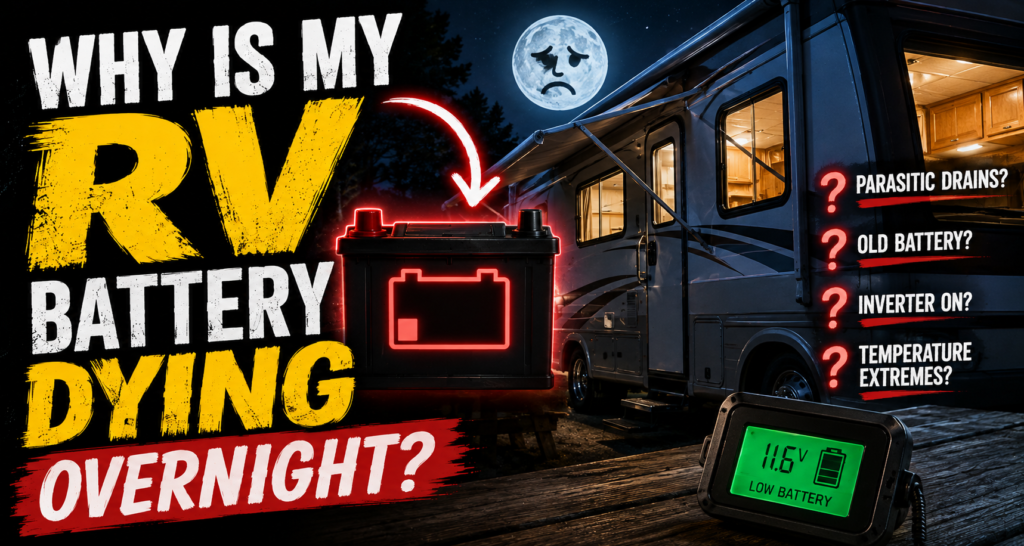
If nighttime is consistently when your trouble happens, I’ve put together a separate walkthrough of the things that can kill an RV battery overnight because that pattern deserves to be diagnosed on its own.
The furnace is one of the first things I’d pay attention to on cold nights.
It may burn propane to make the heat, but the blower and controls still need 12-volt electricity.
That can turn a battery setup that seemed perfectly adequate in September into one that struggles badly on a freezing night.
If It Keeps Dying During Normal Camping, Look at Your Actual Power Use
Sometimes there isn’t a mystery load.
You’re simply using the battery.
That’s an important distinction.
Lights, fans, water pumps, appliance controls, furnaces, electronics, tank heaters and inverter-powered equipment all consume energy.
A battery bank has a limited amount available.
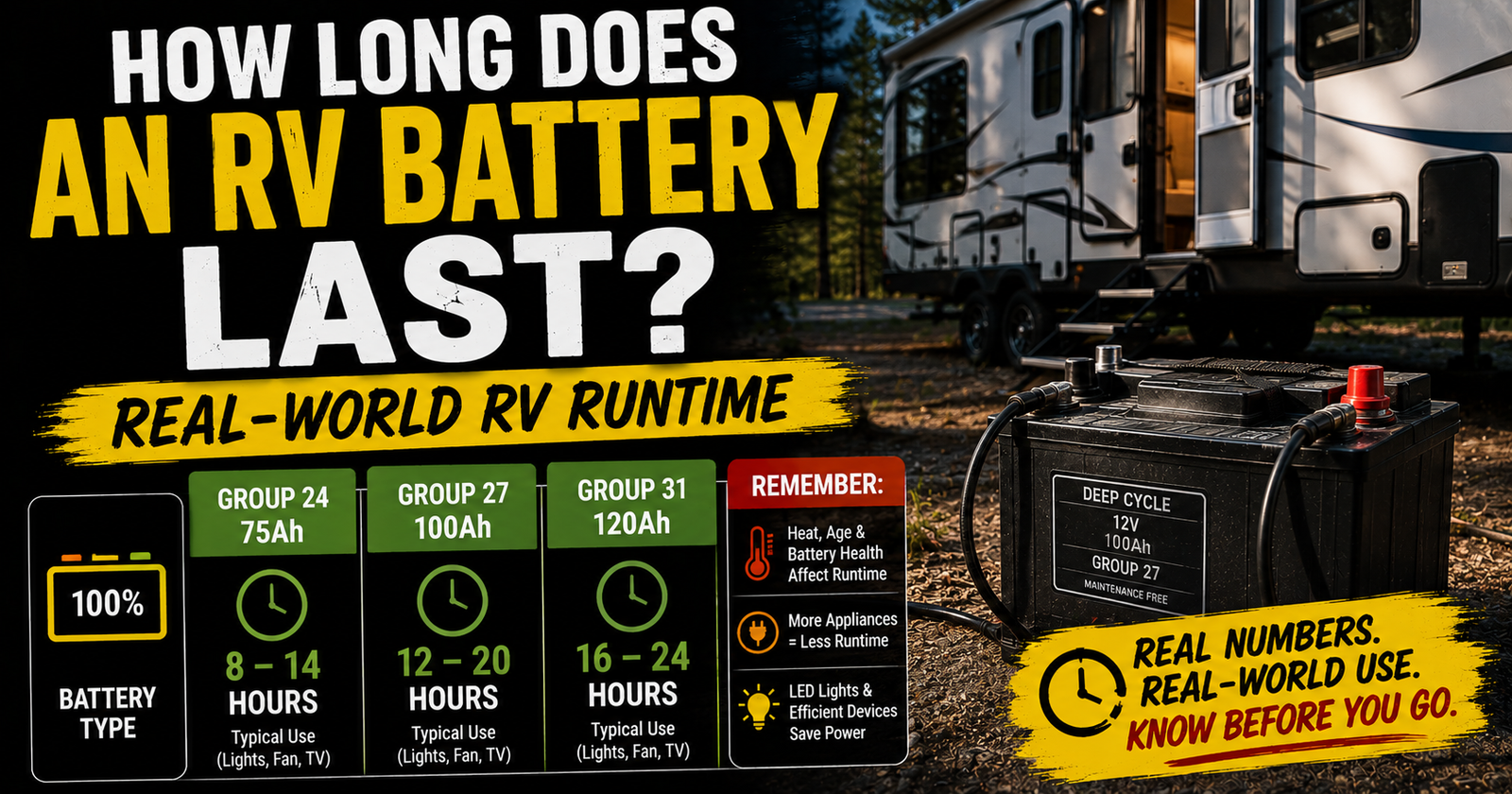
If your normal daily use is larger than the usable capacity of the battery bank, the battery is eventually going dead no matter how healthy it is.
That’s especially noticeable when you move from campground camping to boondocking.
At a full-hookup site, the charging system can continually support the RV.
Away from hookups, every amp-hour suddenly matters.
If It Seems to Drain Way Too Fast, Don’t Assume the Battery Is Bad
There’s a difference between a battery eventually going dead and one losing power much faster than it reasonably should.
That’s when I start looking more closely at big loads, battery capacity, inverter use, furnace use and abnormal draws.
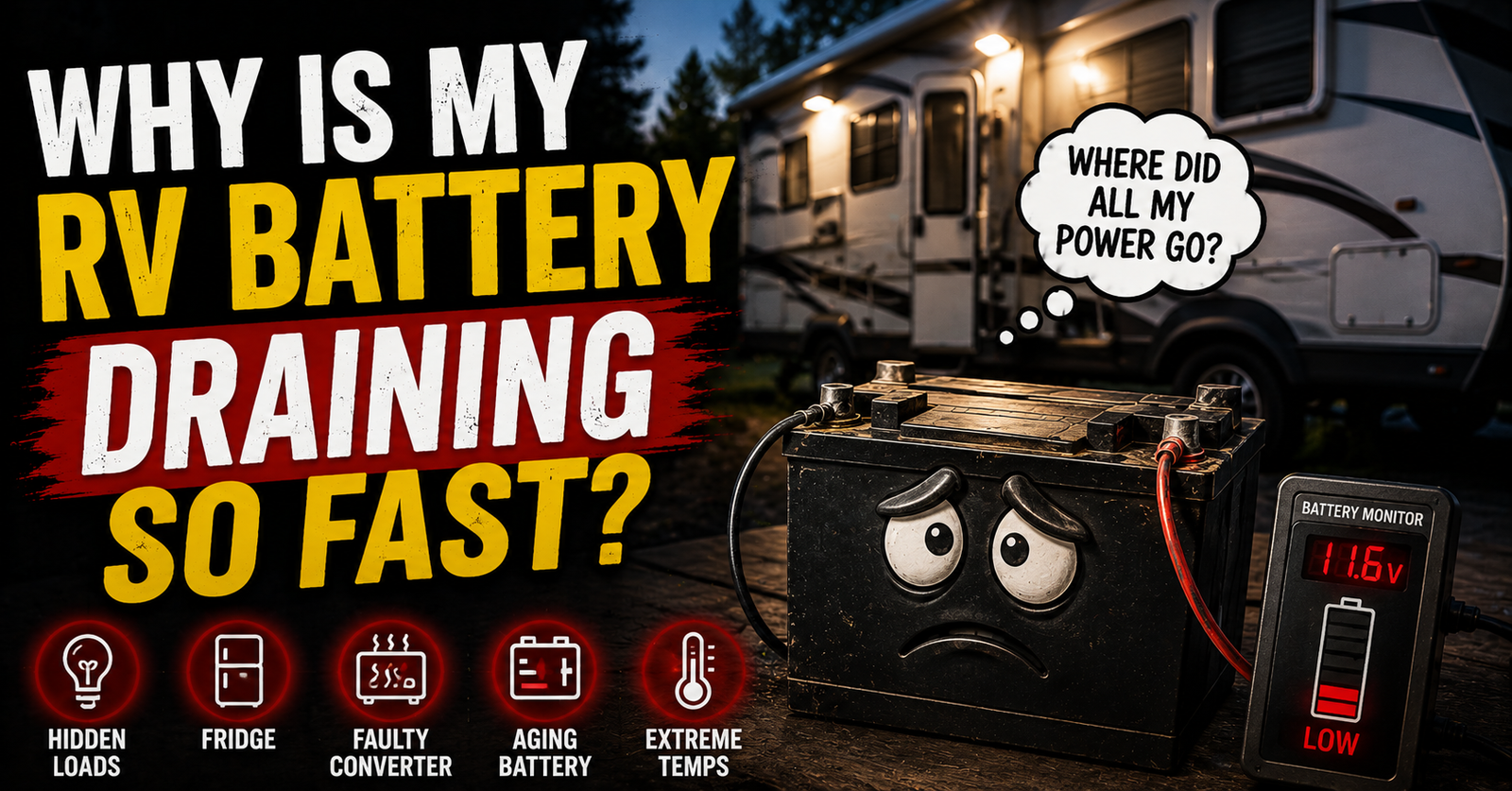
Our guide to an RV battery that’s draining unusually fast goes deeper into that side of the problem.
For this article, the bigger clue is repetition.
Something keeps bringing the battery back to the same dead condition.
We need to figure out what part of the cycle is failing.

Your Camper May Be Using Electricity When You Think It’s Off
This surprises a lot of people the first time they store an RV.
You turn the lights off.
Turn the thermostat off.
Shut down the television.
Lock the door.
Come back a few weeks later and the battery is dead.
What happened?
The RV may never have been completely electrically inactive.
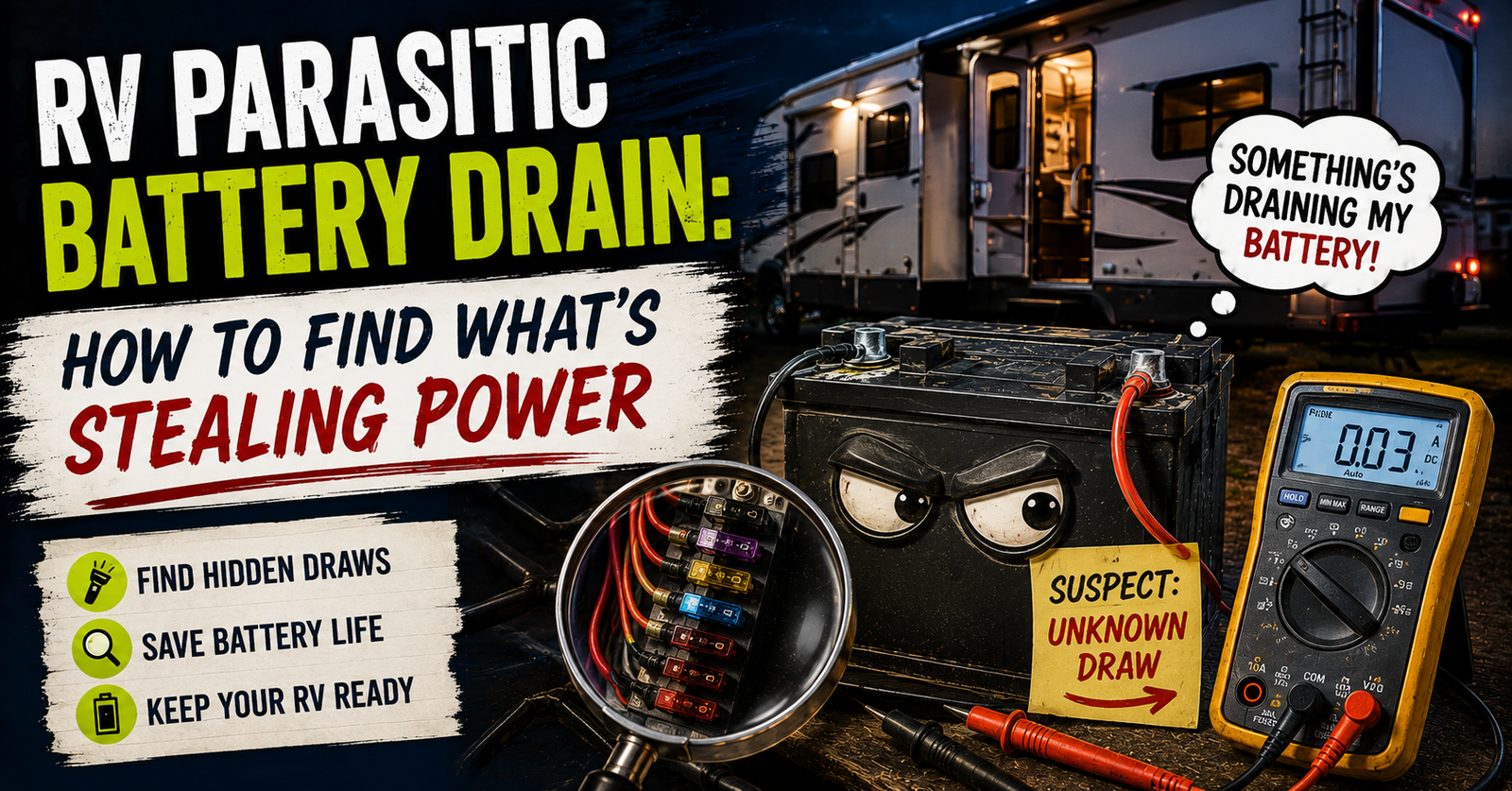
Keystone specifically warns in its owner documentation that parasitic loads can remain in an RV even when it isn’t being used. Depending on the camper, examples can include LP/CO detectors, radio memory, leveling equipment, slide systems, control systems, antenna boosters and other electronics. Some equipment may even be connected ahead of the main battery disconnect.
That’s why “I turned everything off” and “nothing is drawing power” aren’t necessarily the same thing.
Tiny Loads Become Big Loads When You Give Them Enough Time
A small continuous draw may not matter much over dinner.
Leave it connected for three weeks and the story changes.
That’s why storage problems can be so deceptive.
Nothing dramatic happens.
There’s no smoking wire.
No motor runs all night.
No giant appliance is obviously left on.
The battery simply loses a little energy hour after hour until there’s not enough left.
Lead-acid batteries also naturally self-discharge over time even without external RV loads. Progressive Dynamics notes that this self-discharge is another reason stored batteries need appropriate maintenance charging.
So if your battery keeps dying only during storage, I’d treat that as a storage problem first, not a camping-load problem.
Your Battery Disconnect May Not Be the Whole Story
I wouldn’t automatically trust the word “disconnect” to mean every single electrical load in every RV has been removed from the battery.
Wiring layouts vary.
Keystone’s documentation specifically notes that some electronics can be wired ahead of the battery disconnect, and it separately calls out inverter disconnects on equipped RVs.
That means you can put the main disconnect into its storage position and still have something drawing electricity.
Know what the switch actually controls on your camper.
That’s much more useful than assuming every RV disconnect works exactly the same way.
An Inverter Left On Can Keep Taking Power
If your camper has an inverter, I always want to know what it’s doing.
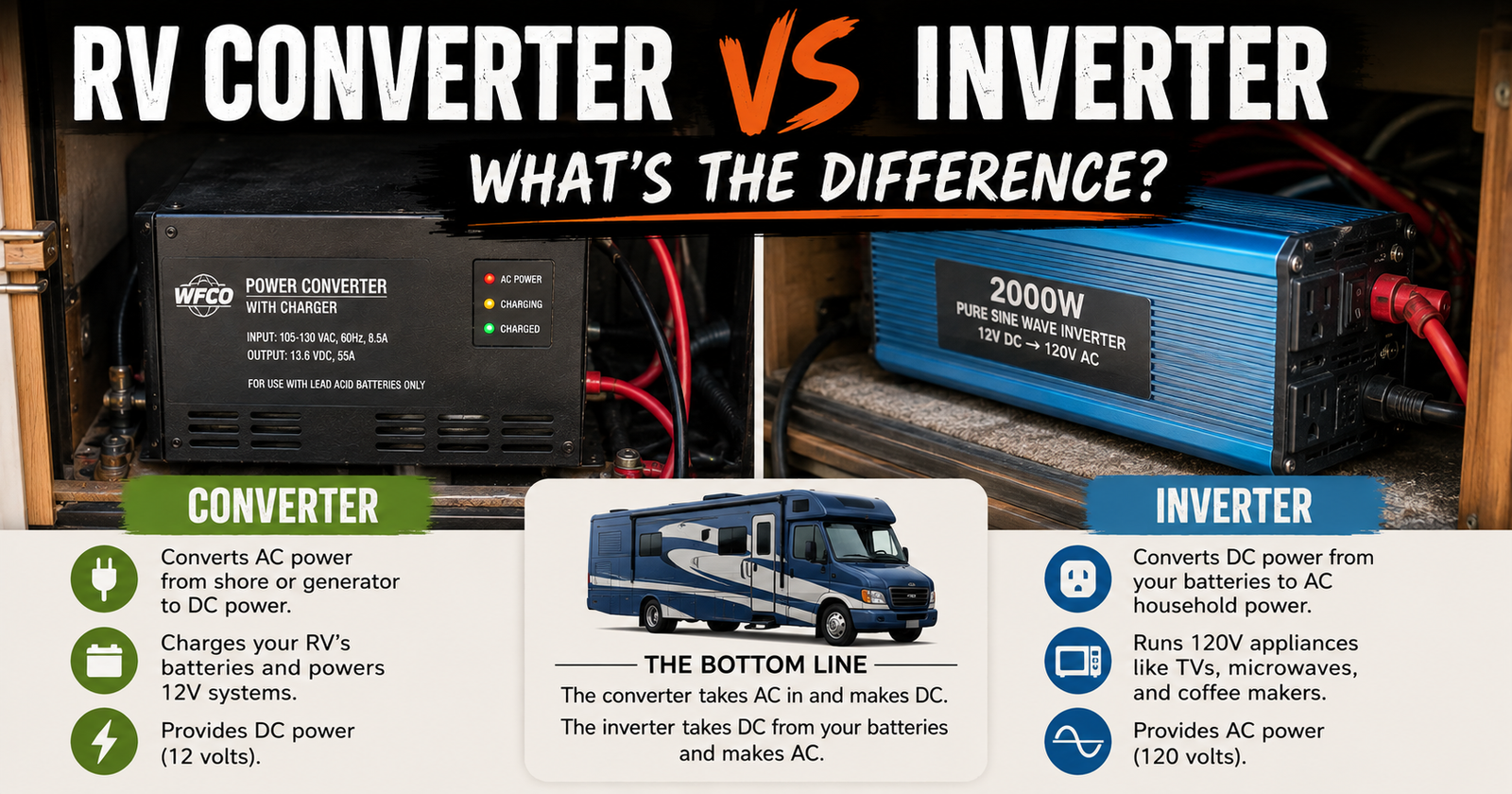
An inverter takes DC battery energy and turns it into AC electricity for whatever circuits or equipment it’s designed to supply.
That’s incredibly useful off-grid.
It’s also another place stored energy can disappear.
The inverter itself may consume power while operating, and anything receiving AC power through it adds another load.
If the RV is going into storage, don’t assume turning off the main lights takes care of the inverter too.
Check the actual inverter controls and your manufacturer’s storage instructions.

Tank Heaters Are Easy to Forget
Tank heaters are another switch I like to physically check rather than relying on memory.
They’re particularly easy to overlook after cold-weather camping.
You turn them on because temperatures are dropping.
A few days later the weather warms up, and nobody thinks about them again.
Anything designed to make heat deserves attention when you’re chasing unexplained electrical consumption.
The same principle applies to other heating accessories installed in a particular camper.
A Propane Appliance Can Still Use Battery Power
This trips people up because it sounds contradictory.
“I’m running the refrigerator on propane, so it can’t be draining my battery.”
It may still need 12-volt electricity for its controls.
The furnace is another obvious example. Propane supplies the heat, but electricity is still part of the operating process.
The water heater may also depend on 12-volt controls depending on its design.
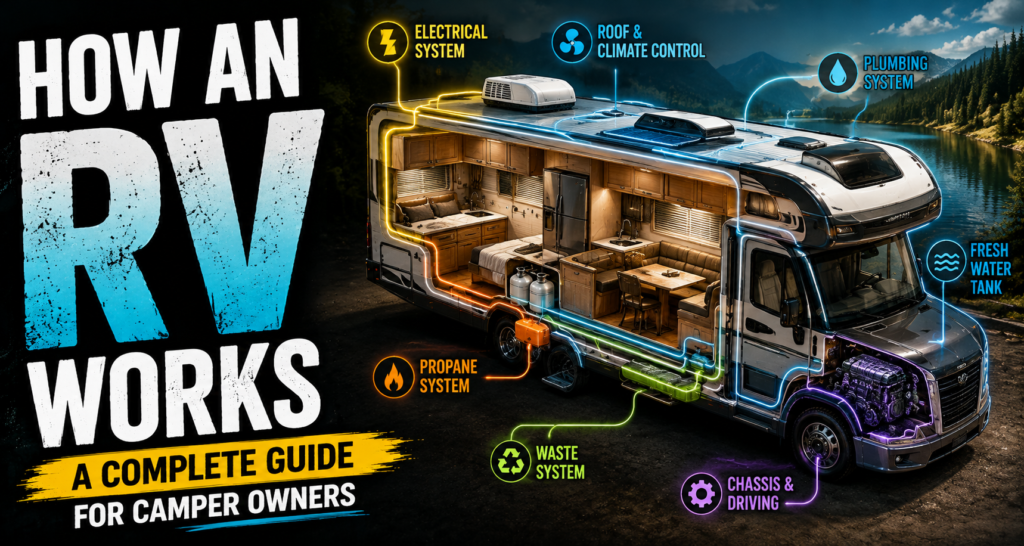
If you want the bigger picture of why RV appliances can depend on several systems at once, our guide to how an RV works from the batteries to the holding tanks explains how those systems overlap.
That’s one of the biggest differences between understanding an RV and simply memorizing what each switch does.
The Battery May Never Be Getting Fully Recharged
Now we get to the other half of this problem.
Maybe your battery isn’t going dead because the RV consumes some outrageous amount of electricity.
Maybe it keeps going dead because you never put back everything you took out.
Picture this.
You use a chunk of the battery overnight.
The next day you charge it a little.
Then you use another chunk.
Charge it a little again.
Repeat that cycle.
Eventually the battery is badly discharged even though you’ve technically been “charging it” every day.
Charging happened.
Complete replenishment didn’t.
Plugging the Camper In Doesn’t Prove the Battery Is Charging
This is probably one of the most important lessons in RV electrical troubleshooting.
Your shore-power cord can be connected and the battery can still fail to receive a proper charge.
The converter may not have AC input.
Its breaker may have tripped.
A fuse or breaker between the charging equipment and battery may be open.
A disconnect may be in the wrong position.
A cable connection may be poor.
The converter or inverter/charger itself may have a problem.
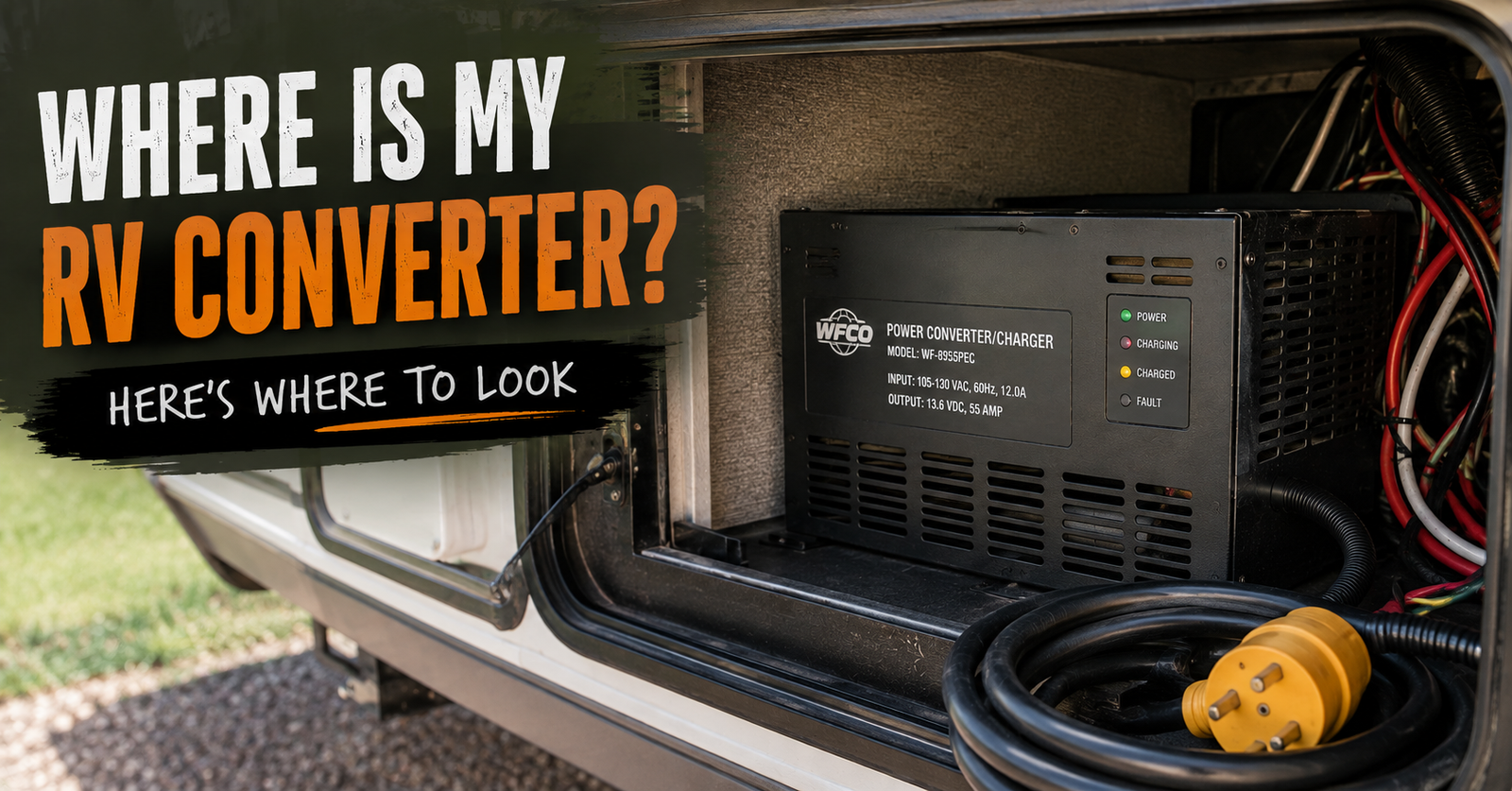
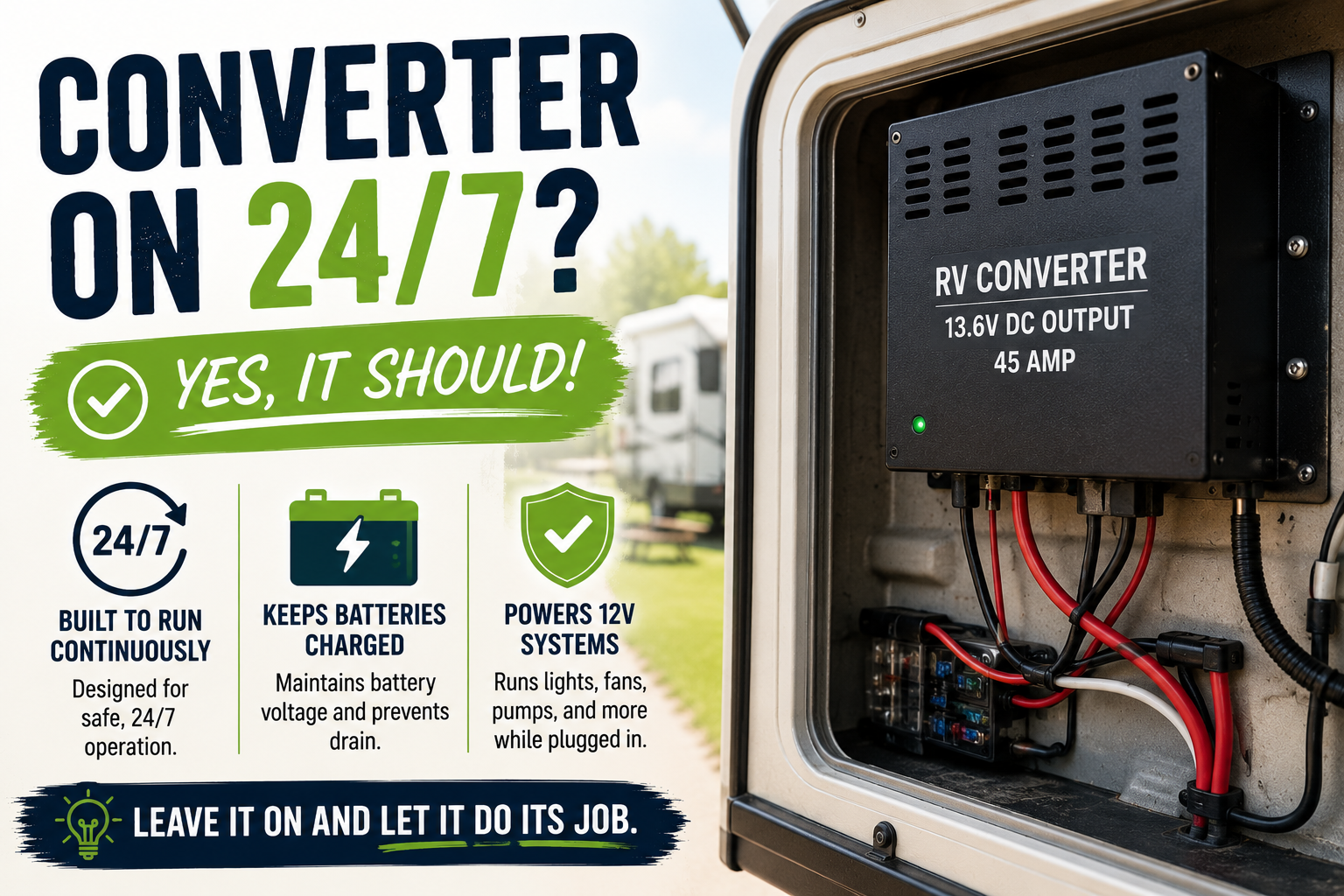
Progressive Dynamics’ troubleshooting instructions for its PD9100 and PD9200 converters specifically tell owners that if converter output is correct but the battery isn’t charging, the fuse or breaker in the positive battery lead should be checked. Before checking that circuit, it helps to know where to find your RV converter in the first place.
That is exactly why I don’t condemn the battery just because it’s dead.
If It Keeps Dying While Plugged In, Follow the Charging Path
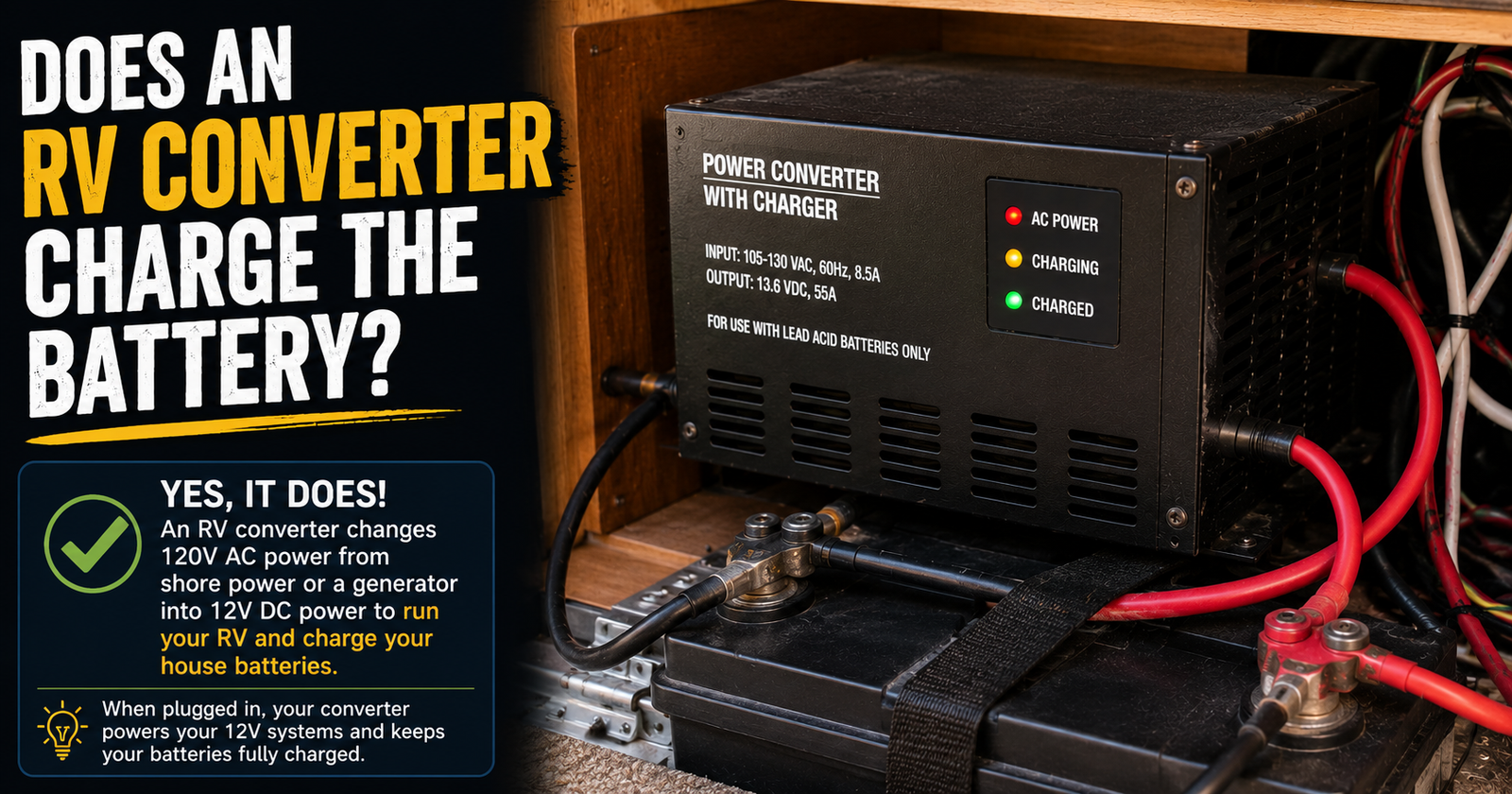
A battery repeatedly going dead while you’re connected to shore power is a much stronger charging-system clue. The explanation of how battery isn't being properly recharged helps clarify which part of the charging system to check next.
We’ve covered the full diagnostic path for an RV battery that dies even while plugged in, but the basic idea is simple.
Start with the source.
Does the RV actually have AC power?
Does the charging equipment receive that power?
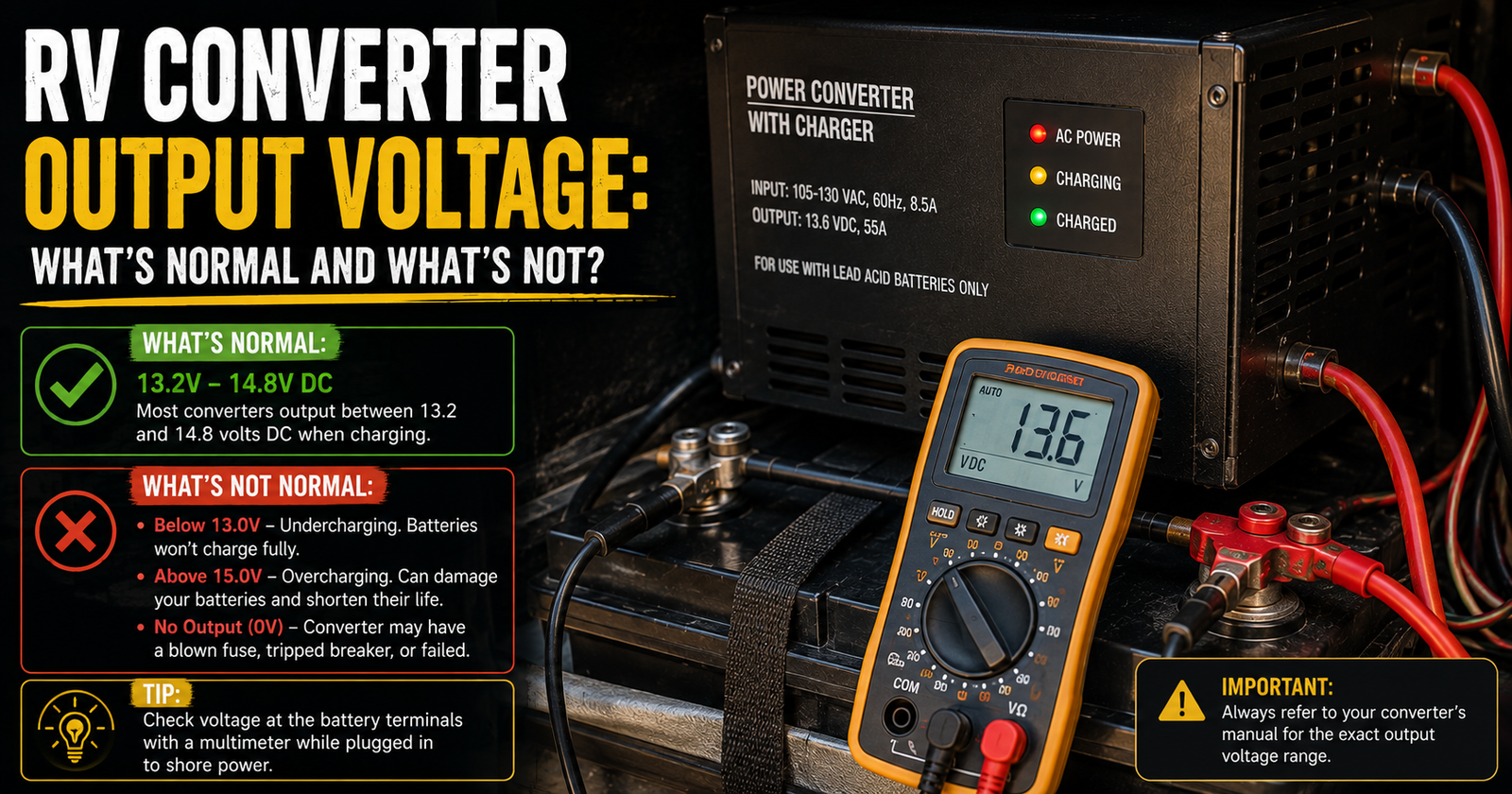
Does the charger produce appropriate DC output?
Does that output reach the battery?
Can the battery accept and store it?
Find where the answer changes from yes to no.
That’s where your problem lives.
A Converter Can Work While the Battery Still Doesn’t Charge
This is one of those RV electrical quirks that makes people feel like they’re going crazy.
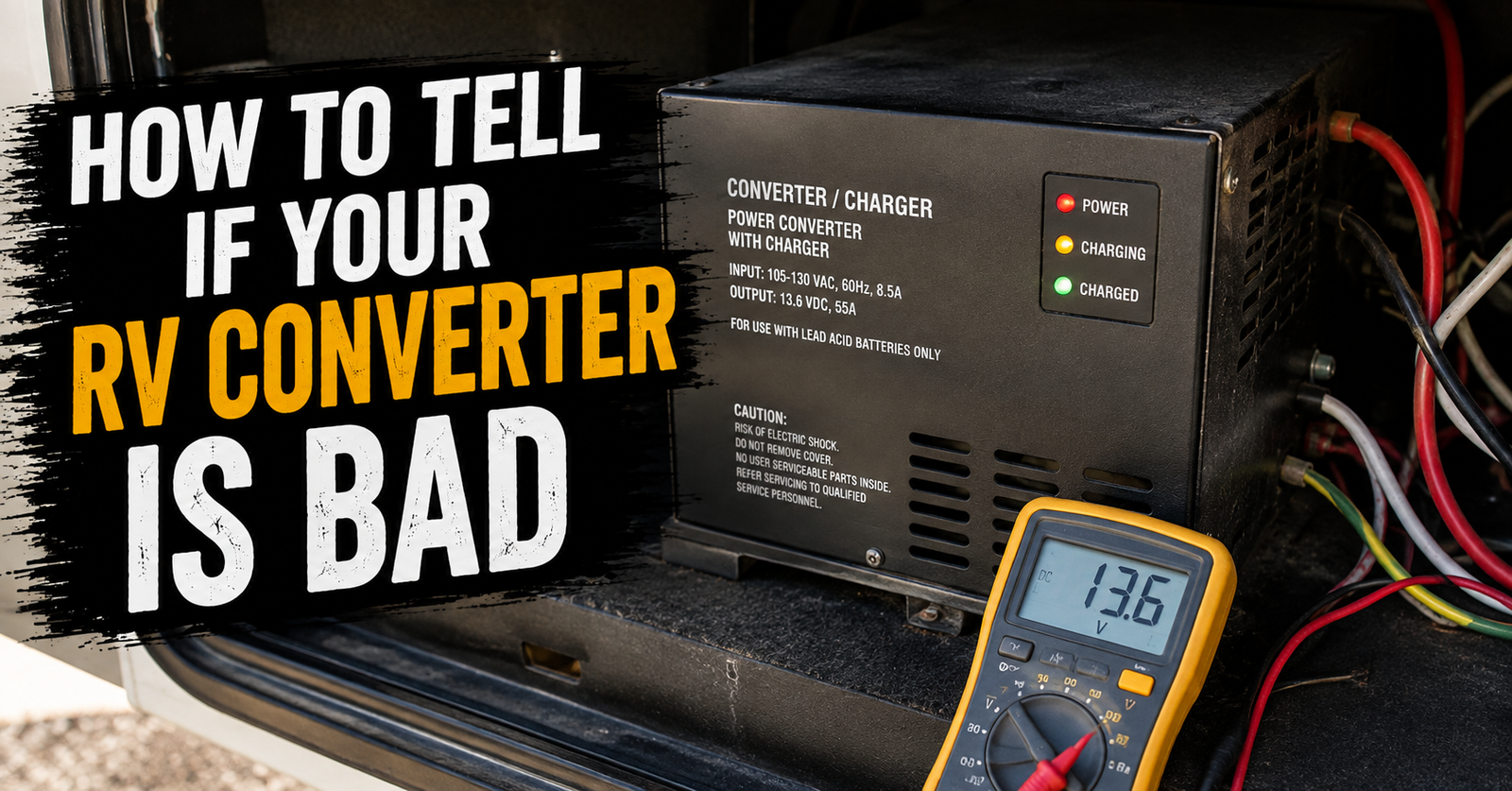
The converter can potentially support 12-volt equipment while a problem prevents the battery itself from charging properly. When that happens, test the RV converter can help determine whether the converter or the battery-side charging circuit is responsible.
You may have bright lights.
The water pump works.
The furnace works.
Everything seems fine when the shore cord is plugged in.
Then you unplug.
Everything dies.
That’s a fantastic clue.
The 12-volt equipment proved it can operate when the converter is supplying the system.
Now we need to know why the battery isn’t taking over.
Check the Battery-Side Fuse or Breaker
Depending on the RV, there may be a fuse or DC circuit breaker protecting the positive battery circuit.
If that device opens, the connection between the battery and the rest of the charging system can be interrupted.
Some of these devices are located relatively close to the battery and don’t look like the household-style breakers many owners expect.
Progressive Dynamics specifically identifies the battery positive fuse or breaker as a place to investigate when converter output is correct but charging isn’t happening.
Don’t bypass the protection device to make the problem disappear.
If it opened, figure out why.
Check Reverse-Polarity Protection After Battery Work
Did the battery problem begin immediately after replacing or reconnecting the battery?
That’s important.
Some converters have reverse-polarity protection fuses.
Progressive Dynamics states that on its applicable converter models, those fuses can blow if the battery leads are connected in reverse, even briefly.
You could correct the cable orientation five seconds later and still be left with a charging problem.
That’s why I pay special attention to timing.
If something changed immediately before the failure, start there.
Loose Battery Connections Can Make Everything Look Worse
Battery terminals live in a rough environment.
Vibration, moisture, corrosion and previous service work can all affect connections.
Look at both positive and negative cables.
A loose connection can interfere with charging and power delivery.
A poor negative connection can create trouble just as easily as something wrong on the positive side.
If the battery keeps dying after someone recently replaced it, I’d inspect the connections before assuming the new battery is defective.
Don’t Forget the Ground
I’ve seen people spend all their time following the positive cable while barely glancing at the negative side.
Electricity needs a complete circuit.
Depending on the RV’s design, negative connections and chassis grounds can become part of the troubleshooting path.
Progressive Dynamics’ documentation for some converter systems specifically directs troubleshooting toward battery terminals and the negative connection to the RV frame when 12-volt equipment works from the converter but not from the battery.
A cable being physically present doesn’t automatically mean the connection is electrically good.
Your Battery Could Simply Be Worn Out
Eventually we have to talk about the battery itself.
Batteries don’t last forever.
Age, temperature, charging history, discharge history and maintenance can all affect usable capacity.

A worn battery may appear to charge and then lose usable voltage much faster than expected under load.
That’s why I don’t judge battery condition from one quick glance at a voltage display.
A battery can look encouraging while charging and behave terribly once it has to support the camper.
Lead-Acid Batteries Don’t Like Sitting Discharged
This is particularly important if the battery has repeatedly been allowed to go dead.
Progressive Dynamics explains that a discharged lead-acid battery should be recharged promptly because sulfation can become harder to reverse and reduce battery capacity.
So repeated dead-battery events can become a vicious cycle.
Something causes the battery to discharge.
The battery stays discharged.
Its usable capacity deteriorates.
Now it goes dead even faster.
Eventually you can fix the original drain and still have a battery that no longer performs well.
A New Battery Doesn’t Automatically Rule Out Battery Trouble
New parts can fail.
But when someone tells me the old battery and brand-new battery both go dead the same way, I become much more interested in the camper.
Two batteries.
Same symptom.
Same RV.
That pattern deserves attention.
Was the new battery properly charged before use?
Is the charging equipment compatible with it?
Are the connections correct?
Is something drawing power continuously?
Does the charging system work at all?
I’d answer those questions before buying battery number three.
Changing to Lithium Can Change the Charging System Too
Lithium batteries have become incredibly popular in campers, especially for owners who spend time off-grid.
But swapping battery chemistry isn’t always as simple as physically installing a new battery.
Charging equipment and settings matter.
Progressive Dynamics, for example, specifically instructs owners considering lithium conversion to identify their existing converter/charger and its DC output rating before changing equipment, and warns against installing charging equipment with output beyond what the existing RV wiring can safely handle.
So if your recurring battery problem began after a lithium conversion, inspect the system as a whole rather than assuming lithium itself is the problem.
A Bigger Battery Doesn’t Fix a Charging Failure
This is an easy trap.
Battery keeps going dead.
Install twice the capacity.
Problem seems fixed because it now takes twice as long to go dead.
That’s not necessarily a fix.
If the RV has an abnormal draw or the charging system isn’t replenishing the battery, more capacity can simply hide the problem longer.
A larger battery bank makes sense when your normal energy consumption exceeds the capacity you have.
It doesn’t repair a failed charging circuit.
Your Charger Also Has Limits
The opposite situation can happen after a large battery upgrade.
You install a much bigger battery bank and expect the existing charger to refill it just as quickly as the old small battery.
That may not happen.
Charging equipment has a finite output.
RV loads can also consume part of the available charging current.
Progressive Dynamics notes in documentation for one of its lithium charging systems that a large battery bank or high RV current demand can prevent a bank from becoming full within an expected charging period because some charger output is being used by the RV itself.
So “it charges too slowly” and “it doesn’t charge” aren’t necessarily the same diagnosis.
If It Goes Dead Only in Storage
Now I’d focus on storage conditions.
Confirm the battery is properly charged before storage.
Determine what the battery disconnect actually isolates.
Check inverter shutdown.
Look for equipment intentionally wired outside the main disconnect.
Follow the battery manufacturer’s storage recommendations.
Consider whether a maintenance charging strategy is appropriate for your battery chemistry and storage situation.
If the battery behaves perfectly during camping but is always dead after sitting for a month, don’t spend your first afternoon tearing apart the furnace.
Follow the pattern.
If It Goes Dead Only When Boondocking
Now I’d look closely at energy use and battery capacity.
How much usable capacity do you actually have?
How much are you consuming each day?
How much solar or generator charging are you putting back?
Does the furnace run heavily?
Is an inverter operating around the clock?
Are you powering a residential refrigerator?
Do you have tank heaters running?
A battery that repeatedly dies at roughly the point your energy math says it should isn’t malfunctioning.
You need either more stored energy, less consumption, more charging, or some combination of the three.
If It Goes Dead Every Few Days
This pattern often makes me think about a moderate continuous load or incomplete charging.
A huge load can kill a battery quickly.
A tiny load can take weeks.
Something in between may take several days.
Don’t get hung up on finding one giant mystery appliance.
Measure what’s happening.
The rate of discharge itself is information.
If It Goes Dead Immediately After Unplugging
This is a very different problem.
If everything operates normally on shore power and the 12-volt system collapses almost immediately after unplugging, I want to know whether the battery is actually connected and whether it contains usable energy.
Check battery condition.
Check disconnect position.
Check the battery fuse or breaker.
Check connections.
Verify that the battery was actually charging while plugged in.
That’s not the same symptom as a healthy battery gradually discharging over three days.
If It Goes Dead While Driving
Now the vehicle-charging side deserves attention.
Towable RVs may receive some charging through the tow vehicle connection depending on the setup.
Motorhomes can use various arrangements to charge house batteries from the vehicle’s electrical system.
If the battery charges normally from shore power but loses ground while traveling, you’ve already learned something valuable.
The battery can charge.
At least one charging source works.
Now focus on what is supposed to happen while the RV is moving.
Solar Doesn’t Guarantee the Battery Will Stay Charged
I love solar for RVs, but panels on the roof don’t create unlimited electricity.
The battery still goes backward whenever consumption exceeds incoming charging energy.
Clouds matter.
Shade matters.
Season matters.
Sun angle matters.
Panel capacity matters.
Your daily electrical use matters.
If the battery loses 100 units of energy and solar replaces only 60, you’re still down 40.
Repeat that every day and eventually the battery is dead even though the solar controller showed charging current every afternoon.
Your Battery Monitor Can Tell a Better Story Than the Factory Gauge
A simple RV battery indicator can be useful for a quick glance, but I don’t like relying on it for serious energy troubleshooting.
A properly installed shunt-based monitor can show current moving into and out of the battery and help track actual energy use.
That’s when battery troubleshooting becomes much less mysterious.
Turn the inverter off and watch what happens.
Furnace starts, watch the current.
Solar comes up in the morning, watch the direction change.
Plug into shore power, see whether charging current appears.
Now we’re working with evidence instead of guesses.
Here’s the Order I’d Use to Track Down a Battery That Keeps Dying
I start with when it happens.
Camping, storage, overnight, driving or plugged in?
Then I make sure the battery is actually being fully charged.
Next I look at the obvious high-consumption equipment.
After that I consider battery capacity and condition.
Then I investigate persistent draws and the battery disconnect arrangement.
If the battery should be charging but isn’t, I follow the charging path from the source to the charger and from the charger to the battery.
If none of that explains the problem, actual current testing becomes much more valuable than another round of guessing.
Don’t Randomly Pull Battery Cables Looking for the Problem
RV batteries may operate at relatively low voltage, but they can deliver enormous current during a short circuit.
A tool accidentally bridging positive power to ground can create serious heat and sparks.
Incorrectly using a multimeter in current mode can also create a short.
And converter troubleshooting can involve 120-volt AC electricity in addition to the battery system.
If you aren’t comfortable with electrical testing, there’s no shame in having an RV technician perform the current-draw and charging tests.
I’d rather pay for one accurate diagnosis than buy three batteries and a converter I never needed.
When I Blame the Battery
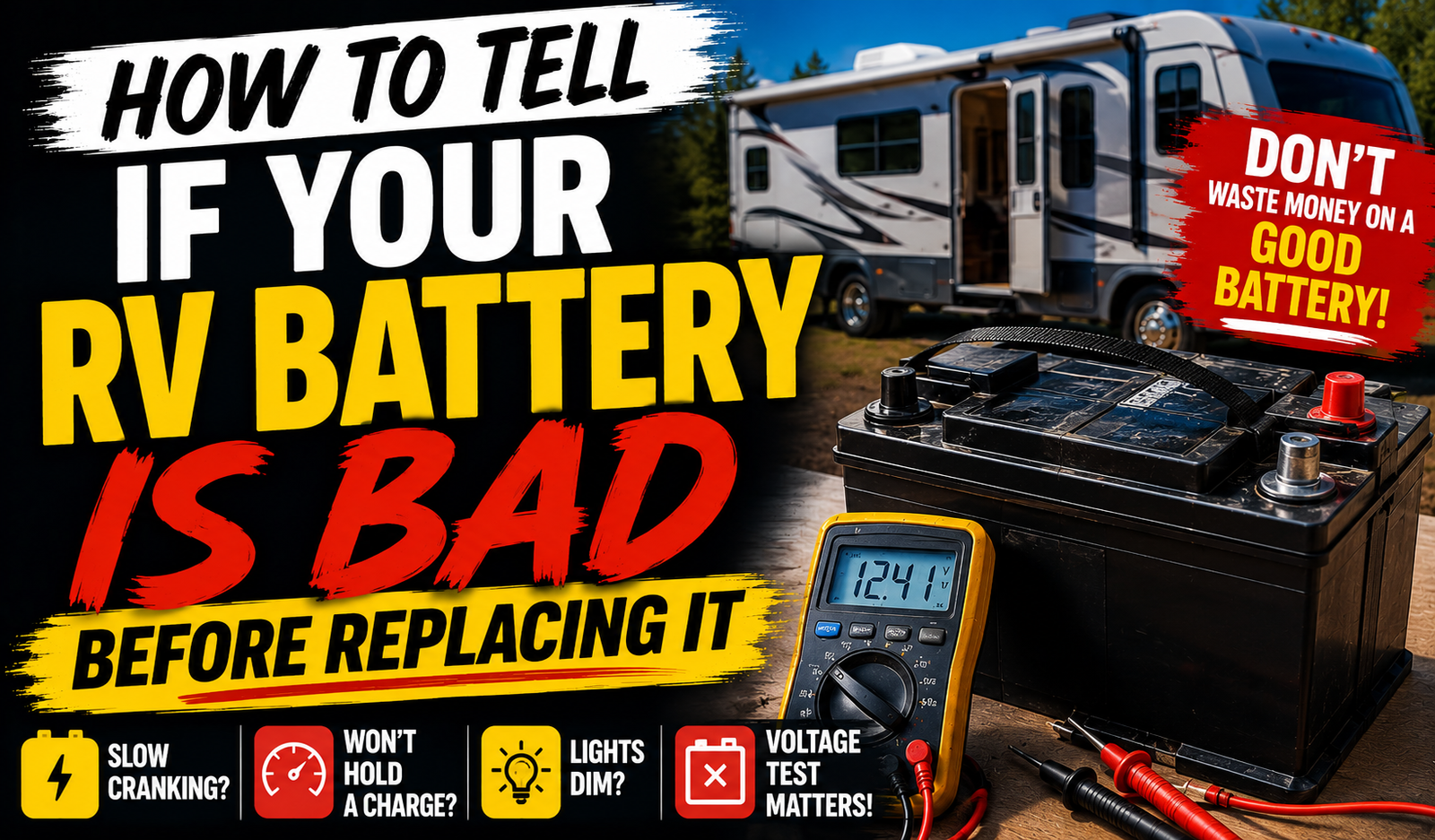
I become much more suspicious of the battery when it won’t retain a proper charge even while genuinely isolated from RV loads, its tested usable capacity is substantially reduced, it behaves abnormally under a reasonable load, or it shows physical signs of failure. These symptoms are easier to interpret with a guide that helps you determine whether the battery is failing.
Age and history strengthen that suspicion.
But I still want evidence.
“Battery is dead” isn’t evidence that the battery caused the problem.
When I Blame the Camper
The camper moves to the top of my list when a known-good battery repeatedly dies only while connected to the RV, measured current draw is higher than it should be, charging current isn’t reaching the battery, a particular circuit is responsible for a large unexpected load, or the problem started immediately after electrical work. The Electrical & Batteries section groups related guidance for tracing measured current draw alongside other RV power problems.
That’s when replacing the battery again is treating the victim instead of the cause.
The Repeating Pattern Is Your Best Clue
If your RV battery keeps going dead, don’t look at each dead battery as a separate event.
Connect them.
Every cold night?
Think furnace and overnight energy use.
Every month in storage?
Think persistent loads, disconnect behavior and storage charging.
Every time you unplug from shore power?
Think battery connection, condition and charging.
Even while plugged in?
Think charging system.
Only while boondocking?
Think capacity, consumption and available charging.
After installing new equipment?
Start with what changed.
The camper is giving you a pattern. Once you identify that pattern, you can stop treating a dead battery like a mystery and start narrowing down the system that’s actually responsible.
Written by Evan Mercer
Evan Mercer writes about RV systems, camper troubleshooting, maintenance and everyday ownership questions for CamperAnswers.com. His work focuses on turning technical information and manufacturer guidance into practical answers ordinary RV owners can actually use.