
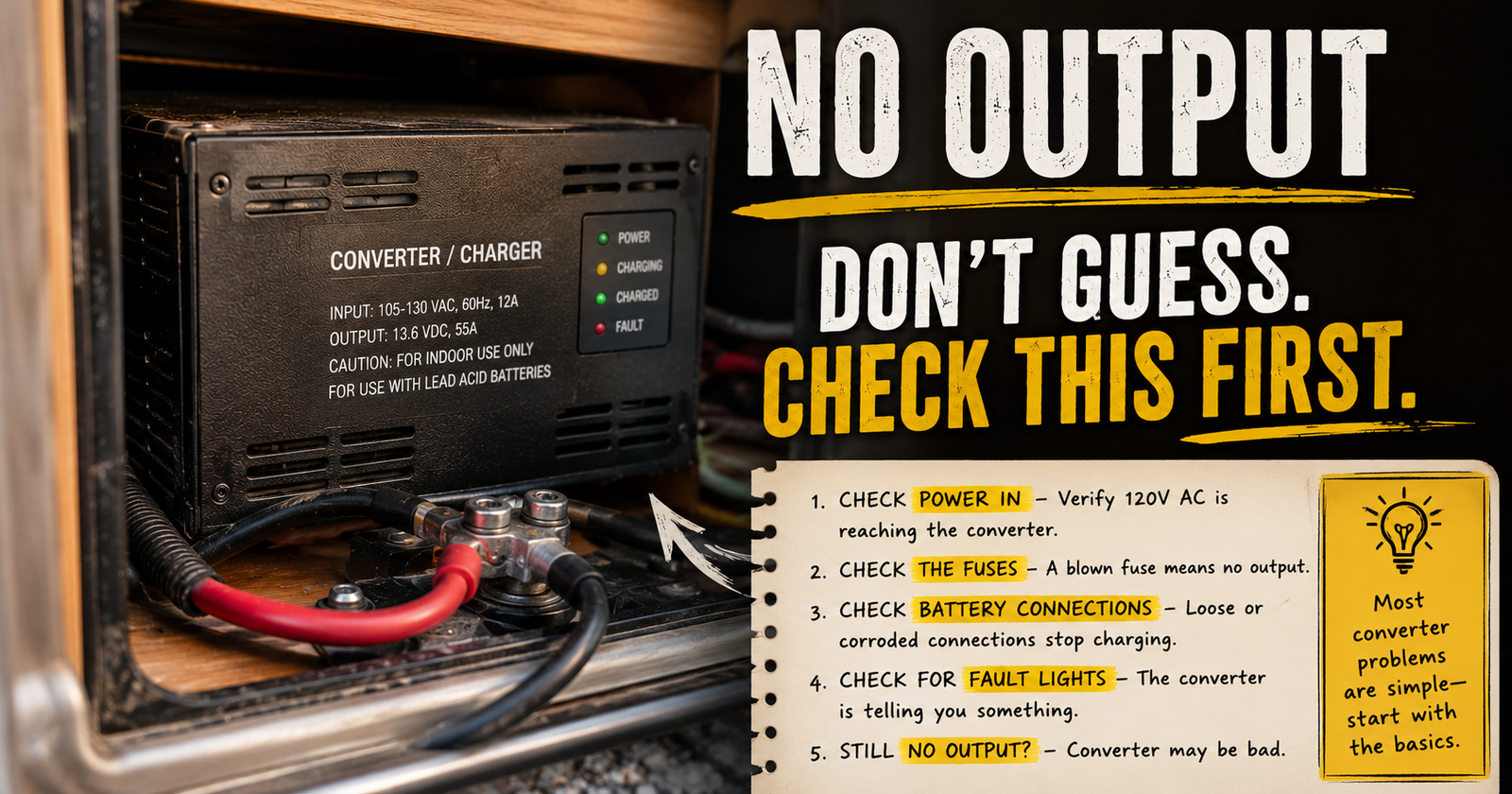
Seeing zero volts from an RV converter feels pretty conclusive. You put the meter on it, nothing useful comes out, and the natural reaction is, “Well, I guess the converter is dead.”
Maybe.
But zero output is actually where I wouldn’t rush to order a replacement.
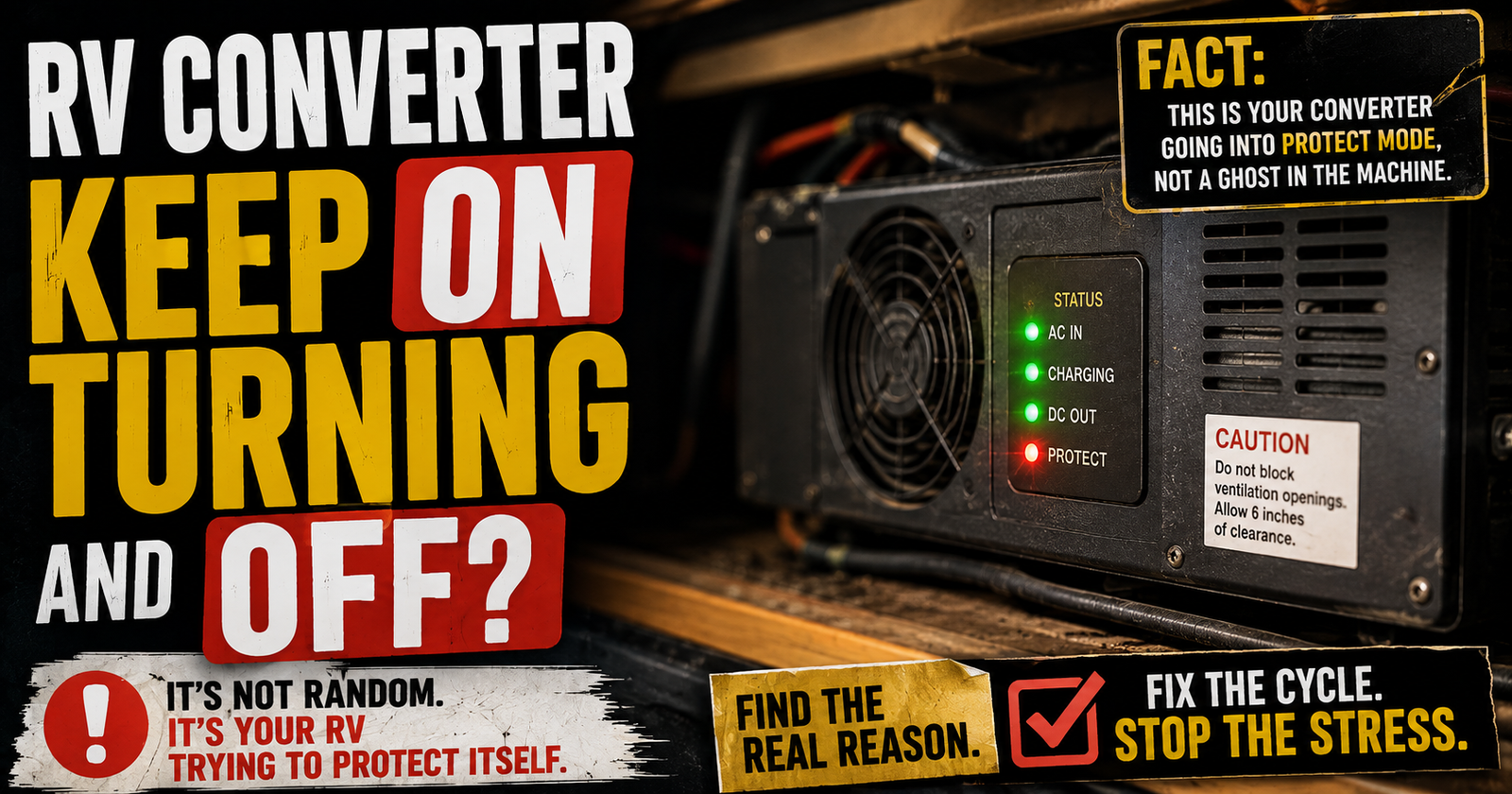
A converter can’t produce DC power if it isn’t getting AC power. A tripped breaker can stop it. Reverse-polarity protection fuses can open after a battery mistake. Some newer converters can shut themselves down because of overheating, an electrical short, overload, or unacceptable incoming AC voltage. Those protective shutdown causes are worth comparing with the symptoms described in converter protective shutdown causes.
So zero output gives us a great clue.
Now we just need to figure out why there’s zero output.
First Make Sure You’re Actually Testing the Converter
This sounds almost too basic, but RV electrical compartments can get confusing quickly.
You may have a converter.
An inverter.
An inverter/charger.
Solar equipment.
A transfer switch.
A DC fuse panel.
A separate power center.
And depending on the RV, some of that may be crammed into the same general area.
Before interpreting your voltage reading, identify the equipment by its manufacturer and model number.
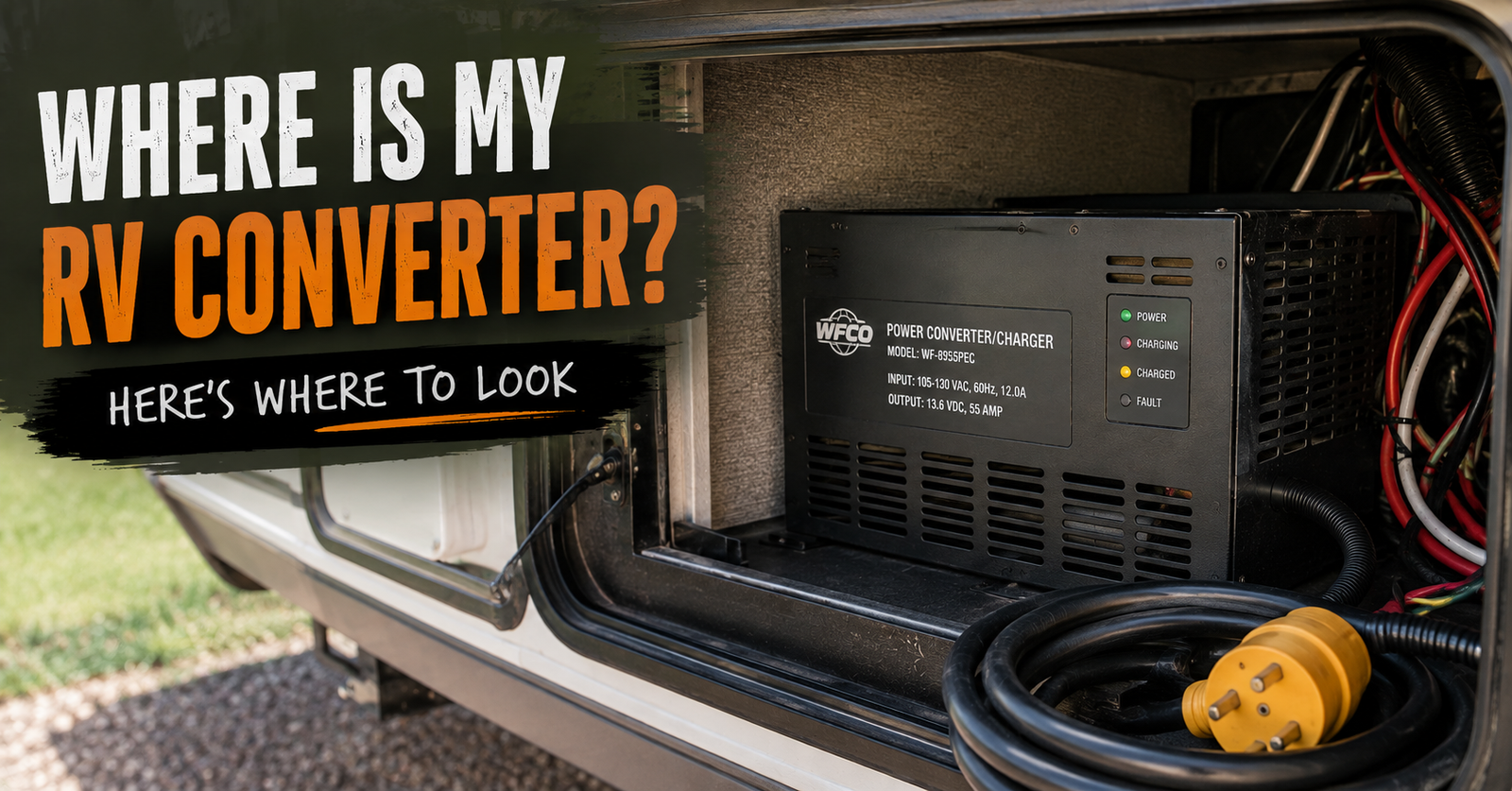
If you’re still hunting for the thing, our guide showing where RV converters are commonly located can help you narrow it down.
Once you’ve got the model number, find the manufacturer’s troubleshooting instructions for that exact unit.
That’s much better than treating every converter like it’s wired and tested identically.
What Does “No Output” Actually Mean?
For this article, I’m talking about a converter that isn’t producing the expected DC voltage at its output when it’s supposed to be operating.
Maybe your meter literally reads 0.0 volts.
Maybe it’s effectively dead.
That’s different from a converter producing DC voltage that’s simply lower than expected.
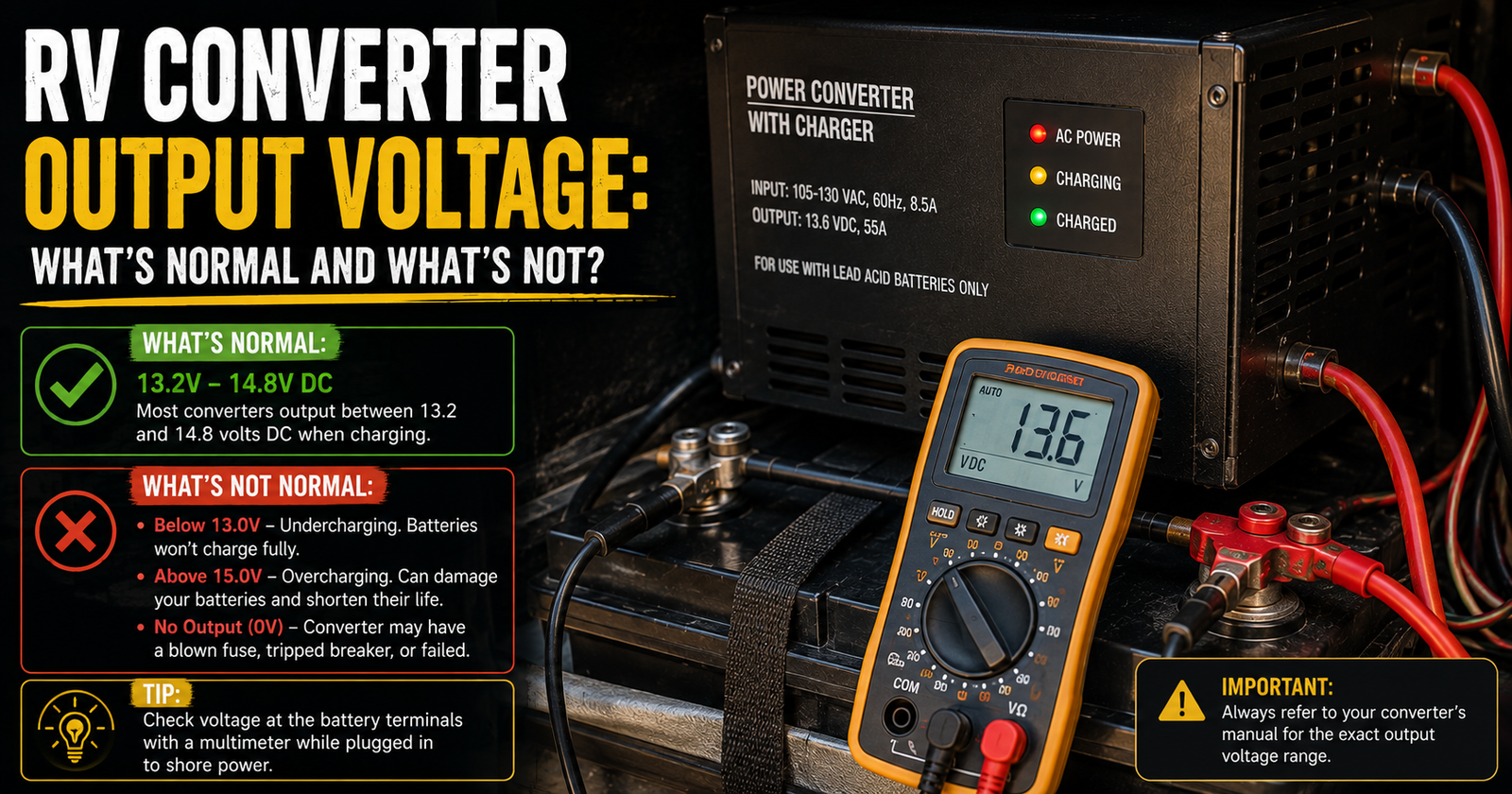
We just covered the normal ranges and why charging voltage changes in our RV converter output voltage guide.
If you’ve got output but don’t like the number, start there.
If you’ve got nothing, keep going.
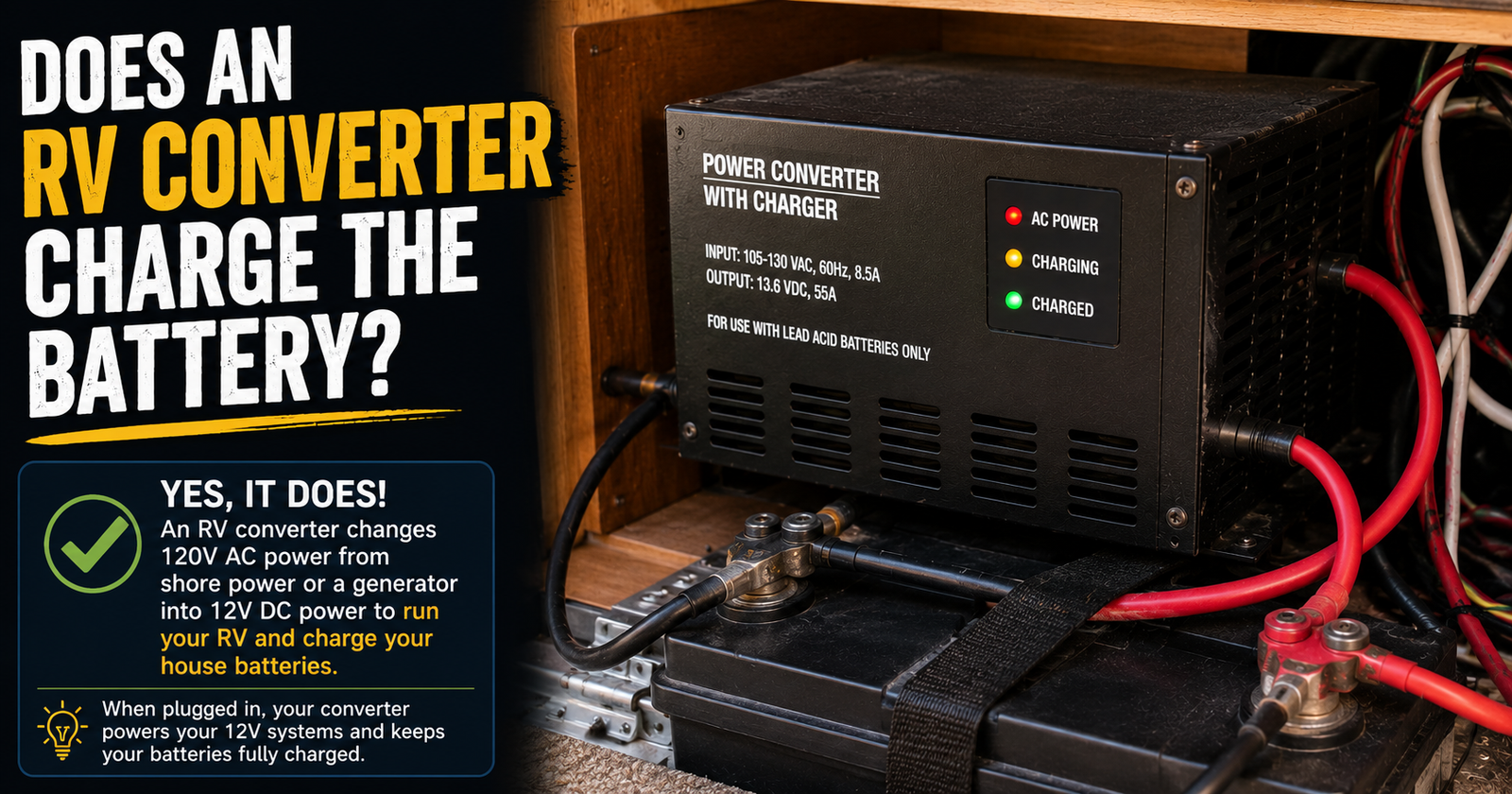
Start With Shore Power
Before crawling into the converter compartment, make sure the RV actually has a valid AC power source.
Is the shore-power cord connected?
Is the campground pedestal on?
Is an adapter involved?
Is there evidence of an upstream power problem?
Do other AC devices in the RV work?
That last question gives you information, but don’t let it fool you.
The microwave working does not prove the converter itself is receiving power.
It only proves that AC power is reaching at least part of the camper.
Check the Breaker Supplying the Converter
This is one of my first stops.
Converters need incoming AC electricity.
If the breaker supplying the converter is tripped, the converter isn’t going to produce its normal DC output.
Find the appropriate breaker in the RV’s AC distribution panel.
A tripped breaker may not always look dramatically different from one that’s on, so operate it according to the breaker manufacturer’s instructions. Typically, that means moving it fully to OFF before resetting it to ON.
Then pay attention.
If it stays on, continue testing.
If it trips again immediately, that’s important.


Don’t Keep Resetting a Breaker That Keeps Tripping
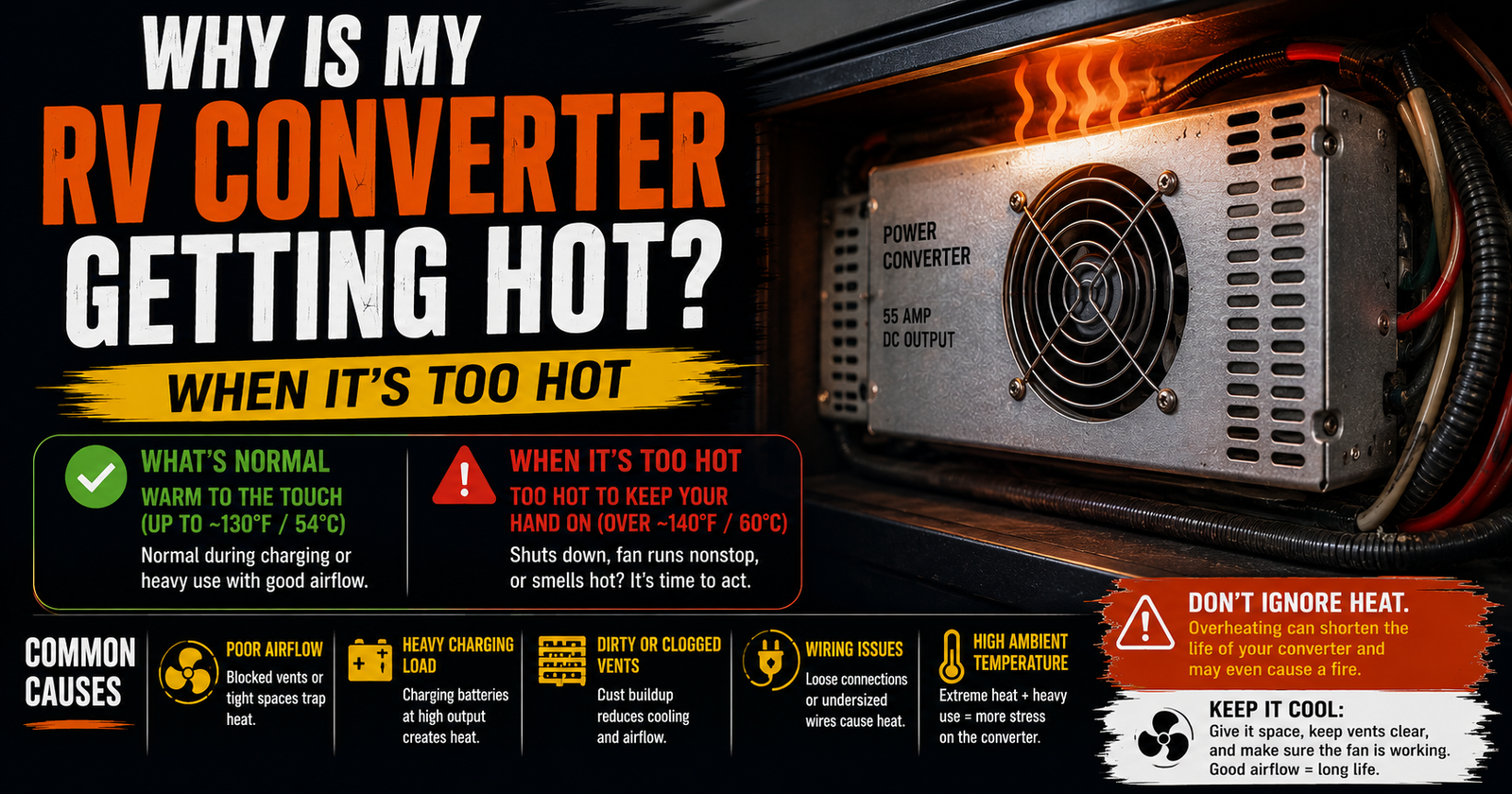
A breaker that repeatedly trips isn’t being annoying. A guide to a circuit breaker that keeps tripping explains what that pattern can indicate and what to check next.
It’s telling you there’s a problem.
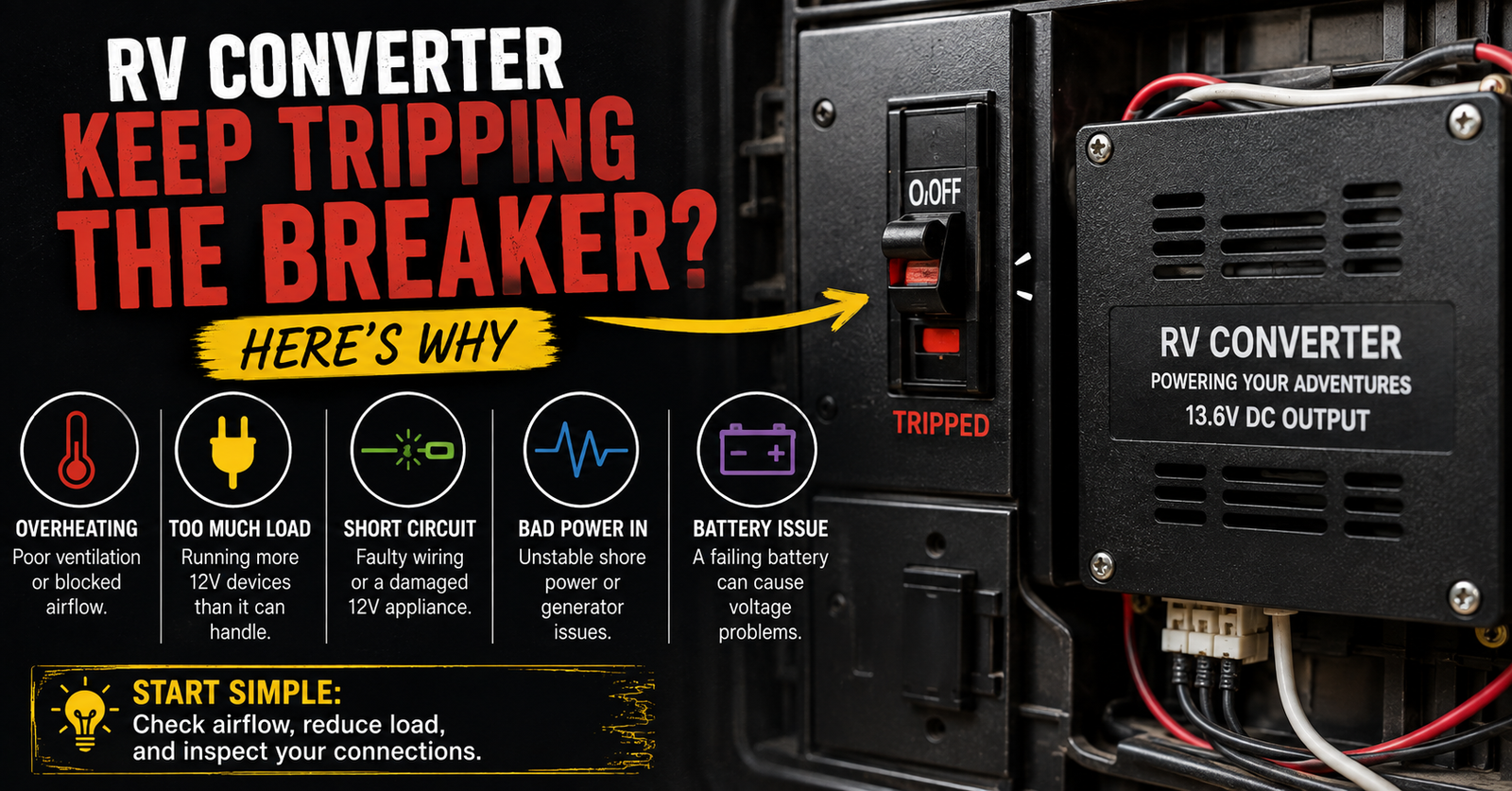
Progressive Dynamics’ troubleshooting instructions for its PD9100 and PD9200 converters say that if the converter’s supplying breaker trips immediately after being reset, the converter is bad and should be replaced.
That’s manufacturer-specific guidance, which is why I want you using the troubleshooting procedure for your converter.
Don’t keep forcing a breaker back on.
Find the cause.
Does the Converter Actually Have AC Power?
If the breaker isn’t tripped but converter output is still zero, the next logical question is whether AC electricity actually reaches the converter.
Some deck-mounted converters plug into a receptacle.
Progressive Dynamics specifically instructs owners troubleshooting certain PD9100/PD9200 units to verify that approximately 120V AC is available at the outlet supplying the converter. If AC power is present but converter output remains zero after the other specified checks, its guidance points toward converter failure.
But if there’s no AC at that outlet?
Now you’ve got an RV AC wiring or supply problem rather than proof of a failed converter.
That’s a huge distinction.
Be Careful With Live 120-Volt Testing
This is where I’m going to draw a clear line.
Measuring a 12-volt battery is one thing.
Working around exposed energized 120-volt AC components is another.
Progressive Dynamics explicitly warns in its power-center troubleshooting documentation that procedures involving exposure to live 120V AC should only be performed by a qualified technician.
If you aren’t qualified to work safely around energized AC circuits, don’t open things up just to prove you can.
An RV technician can verify the AC side.
You can still understand exactly what they’re checking and why.
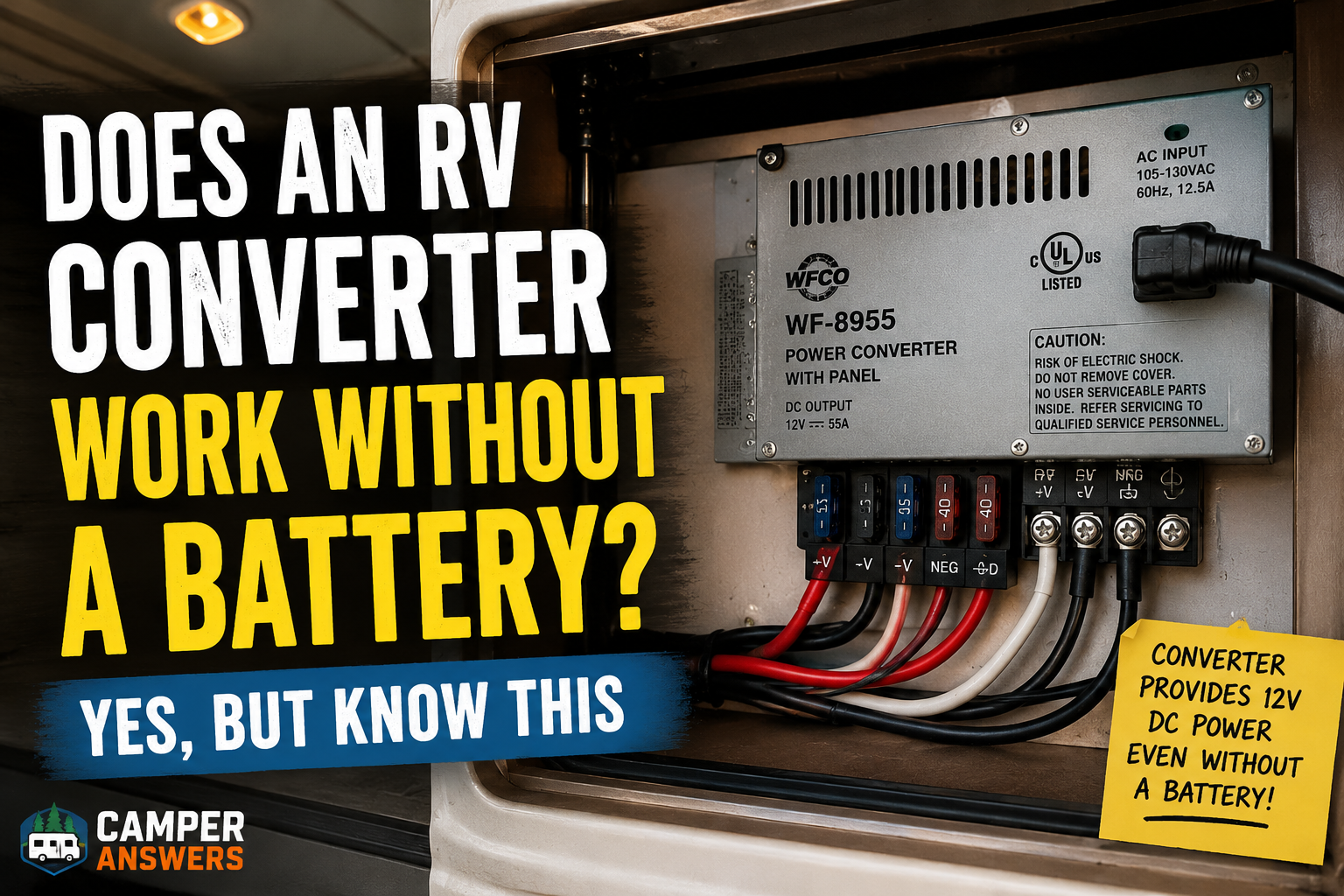
Check the Reverse-Polarity Protection Fuses
This is a big one.
Many RV converters have protection specifically intended to prevent damage if the battery is connected with reverse polarity.
Progressive Dynamics puts this check directly into its zero-output troubleshooting procedure.
If converter output reads zero, it instructs owners to check the reverse-battery protection fuses.
So before declaring the converter dead, find out whether your converter has these fuses and check them according to the manufacturer’s instructions.
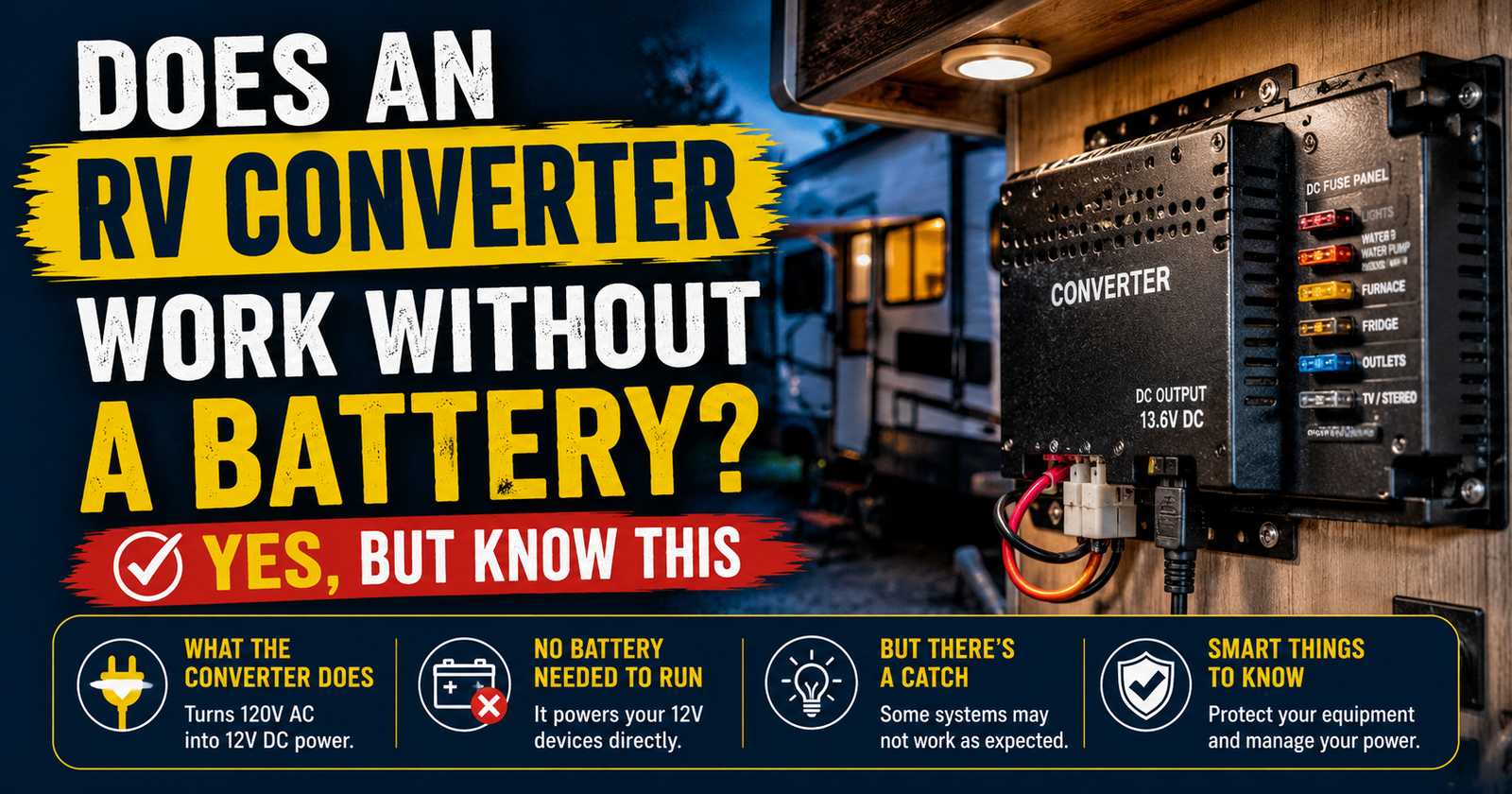

Did the Problem Start Right After Changing the Battery?
If so, my suspicion immediately increases.
Maybe somebody replaced the battery.
Maybe it was removed for winter.
Maybe the cables got moved around.
Maybe a second battery was added.
Everything seemed fine until that work happened.
Then suddenly:
No converter output.
That timeline matters.
Progressive Dynamics states that reversing the battery leads, even briefly, can blow the reverse-battery protection fuses on the converter models covered by its troubleshooting guide.
That’s exactly the kind of simple mistake that can make a perfectly serviceable converter look dead.
Don’t Just Throw New Fuses Into It
Before replacing a blown reverse-polarity fuse, verify the battery is now connected correctly.
Positive to positive.
Negative to negative.
Don’t assume cable color is infallible on an older or modified camper.
Previous owners change things.
Cables get replaced.
Electrical systems get modified.
Identify the actual connections.
Then use only the fuse type and rating specified for your equipment.
What If the New Fuse Blows Again?
Stop.
Don’t keep feeding the converter fuses.

If the battery polarity is correct and a protection fuse immediately opens again, something else needs diagnosis. The next step is to understand what a converter protection fuse keeps opening may be signaling before replacing it again.
A short.
Damaged wiring.
Internal converter trouble.
Another electrical fault.
Protection devices are there to interrupt abnormal current.
Repeatedly replacing them without correcting the fault doesn’t fix anything.
Check for Loose or Damaged Wiring
Now start looking at the physical condition of the installation.
Loose wire?
Burned connection?
Damaged insulation?
Evidence of overheating?
Connector pulled loose?
Previous-owner modifications?
Progressive Dynamics’ newer PD9300 troubleshooting documentation includes damaged or loose wiring that creates a short among the things to check when diagnosing a no-output condition.
Don’t touch or tighten energized connections.
De-energize the appropriate systems first and follow safe service procedures.
Don’t Forget the Converter’s Negative Connection
We tend to chase positive wires because that’s where fuses and breakers get our attention.
But DC electricity still requires a complete circuit.
An open or poor negative connection can prevent the system from behaving normally.
Inspect both sides.
Positive.
Negative.
Connections.
Terminals.
Grounding arrangement where applicable.
Don’t diagnose half a circuit.
Look for Signs of Overheating
A converter generates heat during normal operation.
That’s why many units use cooling fans and require ventilation.
But excessive heat can cause protective shutdowns on some modern equipment.
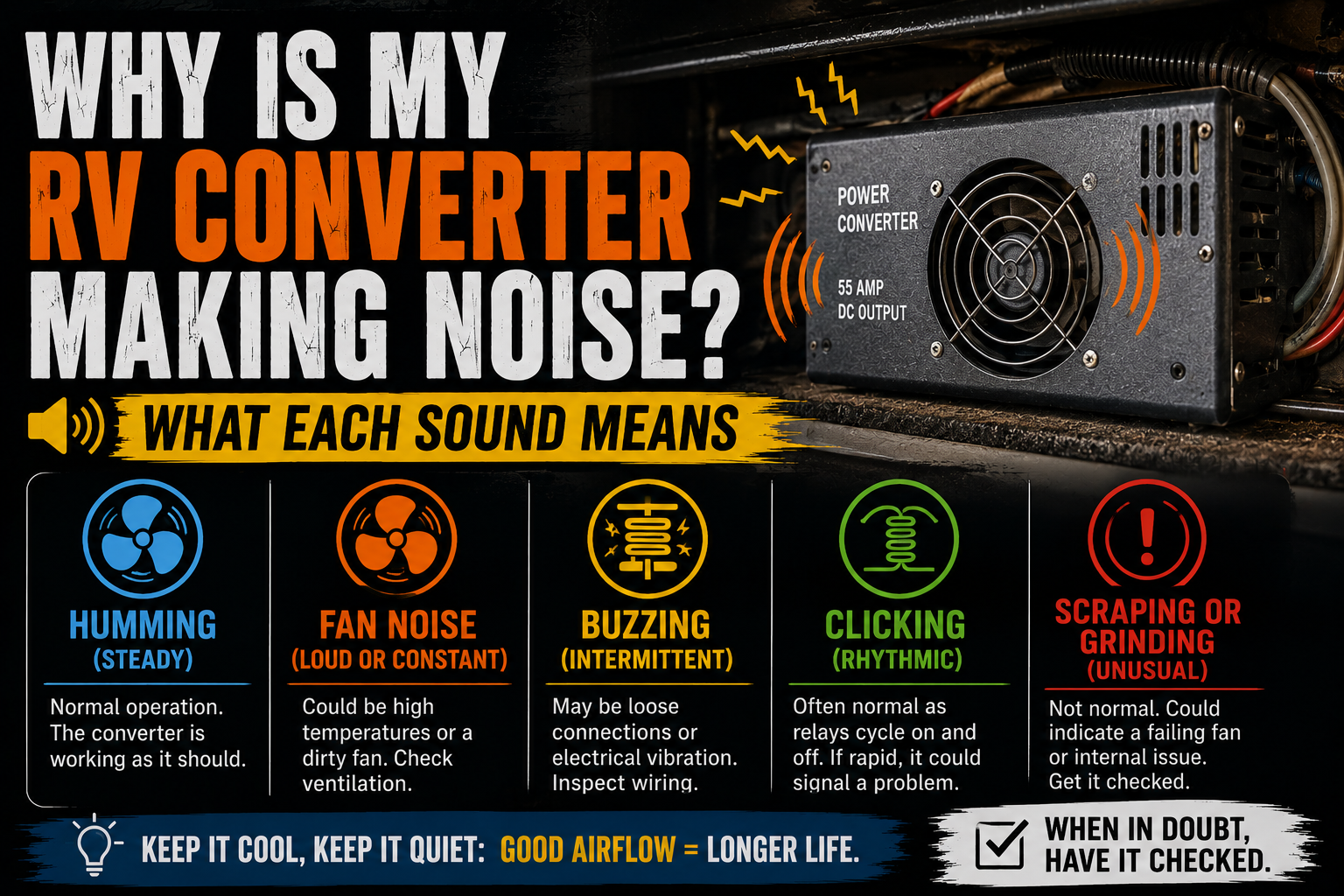
For example, the current PD9300 troubleshooting documentation tells owners with no output to make sure the converter isn’t overheating and that its fan and ventilation are functioning properly. When overheating or poor airflow is accompanied by an unfamiliar sound, fan and ventilation can help narrow down what you are hearing.
So if your converter has zero output and is extremely hot, that’s useful information.
Don’t ignore it.
Check Whether the Converter Is Buried in Camping Gear
This happens more easily than people think.
The converter lives in or near a storage area.
You load the camper.
Blankets get shoved against it.
A bag blocks the ventilation opening.
Someone piles towels around it.
Now airflow is restricted.
Electrical equipment that was designed to breathe suddenly can’t.
Converters need the installation clearances and airflow specified by their manufacturers.
Don’t turn the electrical compartment into a linen closet.
Let an Overheated Converter Cool Before Retesting
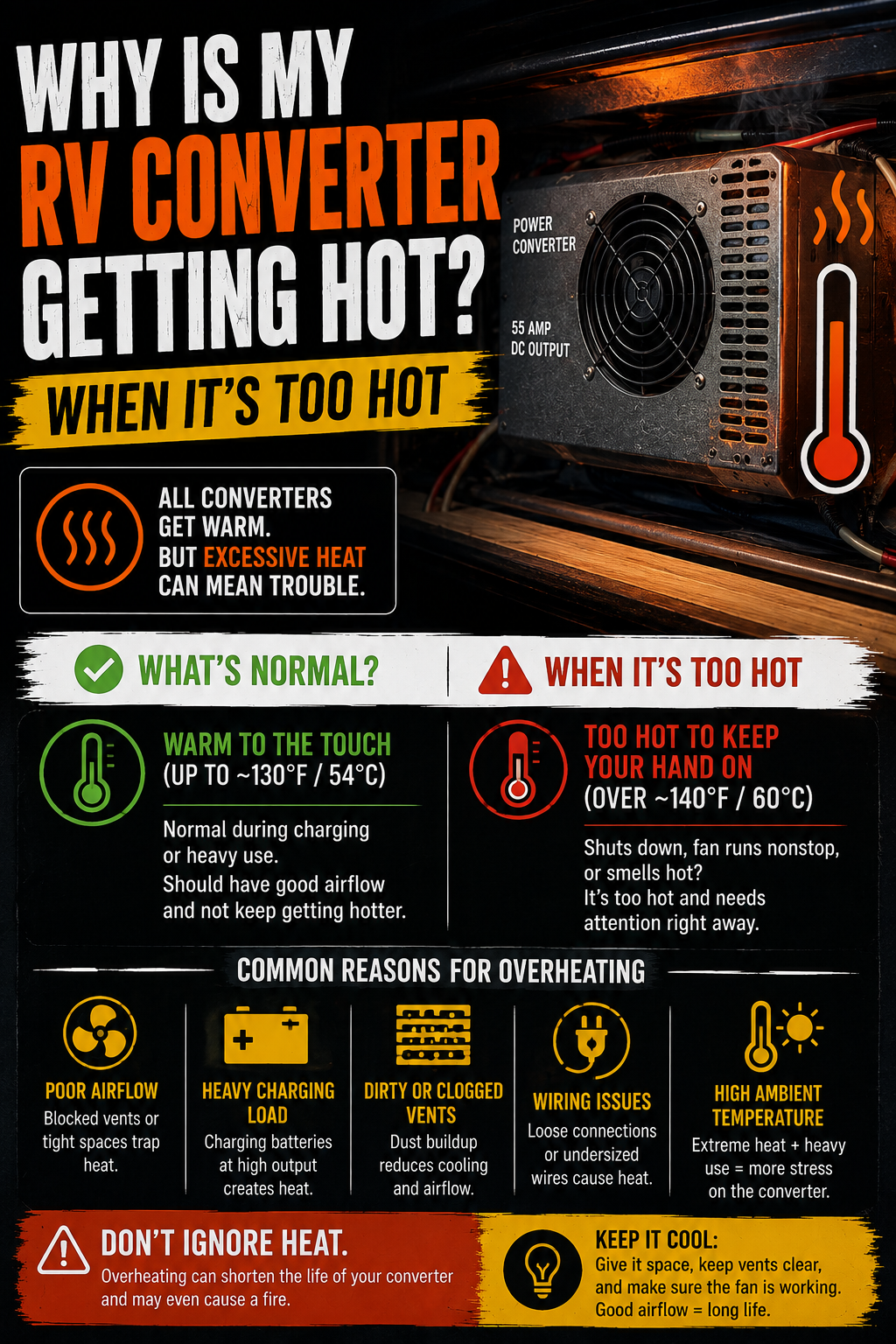
If the converter has thermal protection and appears to have shut itself down from excessive heat, correct the ventilation or overheating problem first. Before chasing an output fault, compare those symptoms with RV converter overheating symptoms to identify whether heat may be triggering the shutdown.
Then allow it to cool appropriately and retest according to its instructions.
If output returns after cooling, that’s a huge clue.
The question changes from:
“Why is my converter dead?”
to:
“Why is my converter overheating?”
That’s a different troubleshooting branch, and we’re going to give it its own article.
Incoming AC Voltage Can Matter Too
Here’s something that’s easy to overlook.
“Has AC power” and “has acceptable AC power” aren’t necessarily identical.
For example, Progressive Dynamics’ PD9300 manual specifies an input operating range of 105 to 130 volts AC and says the converter will shut down if the incoming AC voltage falls outside that range.
That’s especially interesting at campgrounds or when operating from generators.
Your converter might be protecting itself from bad incoming power.
Again, check the specifications for your model.
Low Campground Voltage Can Create Weird Symptoms
Campground electrical systems can experience voltage problems, particularly under heavy demand.
Imagine a packed campground on a hot afternoon.
Everybody’s air conditioner is running.
Incoming voltage falls.
Depending on the converter and its protection features, abnormal AC input could affect operation.
Don’t assume the converter failed internally until you’ve verified the power feeding it is within the range the manufacturer requires.
Generator Power Can Cause the Same Question
Maybe your converter works perfectly on shore power.
But when you start the generator, output becomes intermittent or disappears.
That pattern matters.
Progressive Dynamics specifically tells PD9300 owners experiencing intermittent or no converter output on generator power to check the AC voltage at the converter receptacle and verify that the generator is operating smoothly.
If the converter works on shore power but not on the generator, don’t immediately replace the converter.
Investigate the difference between those power sources.
Is the Converter Overloaded?
Another possibility is excessive DC demand.
Some converters include current-limiting and protective circuitry.
Progressive Dynamics says its PD9100 and PD9200 series incorporate current limiting that can shut the converter down rapidly during a short or overload and automatically reset once the condition is removed.
So if the converter output disappears only when a certain 12-volt load comes on, that’s worth paying attention to.
Maybe the converter isn’t the original problem.
Maybe it’s responding to one.
Try to Identify Whether a Particular Load Triggers the Problem
Does output disappear when:
The furnace starts?
A slide is operated?
A particular light circuit is switched on?
An aftermarket accessory is activated?
Something recently installed is powered up?
Patterns are incredibly valuable.
If the converter works normally until one specific DC circuit is energized, I’d investigate that circuit before ordering another converter.
A Short Circuit Can Make a Good Converter Look Dead
This is why protection circuitry exists.
If something on the DC system is shorted, a modern converter may limit or shut down its output rather than happily pumping current into the fault.
Remove the fault and the converter may recover.
So don’t assume:
No output = failed converter electronics.
Sometimes:
No output = converter protecting itself from another problem.
That’s a much cheaper diagnosis if you find it before buying parts.
What If the Converter Has AC Power and the Fuses Are Good?
Now we’re getting closer.
Let’s say you’ve established all of this according to the manufacturer’s procedure:
The converter has proper AC input.
The breaker is good.
Reverse-polarity fuses are good.
There isn’t an obvious wiring problem.
The converter isn’t simply in thermal shutdown.
There isn’t an external short or overload causing protective shutdown.
And the converter still produces zero DC output.
At this point, internal converter failure becomes a much stronger possibility.
This Is Where Manufacturer Testing Matters
I don’t like diagnosing expensive electrical components by intuition.
Use the exact output test for your converter.
Progressive Dynamics, for example, specifies approximately 13.6V DC, plus or minus 0.3V, for the output test on standard PD9100/PD9200 units and approximately 14.6V, plus or minus 0.3V, for the lithium versions.
Zero is obviously nowhere near either specification.
If the converter has proper AC input and passes all the prerequisite checks but still produces zero, now we’ve actually built a case for replacement.
Don’t Confuse No Battery Charging With No Converter Output
These are not the same problem.
This distinction is extremely important.
Your battery isn’t charging.
You assume:
“Converter has no output.”
Then you test the converter.
It has perfectly good output.
That’s not a no-output converter.
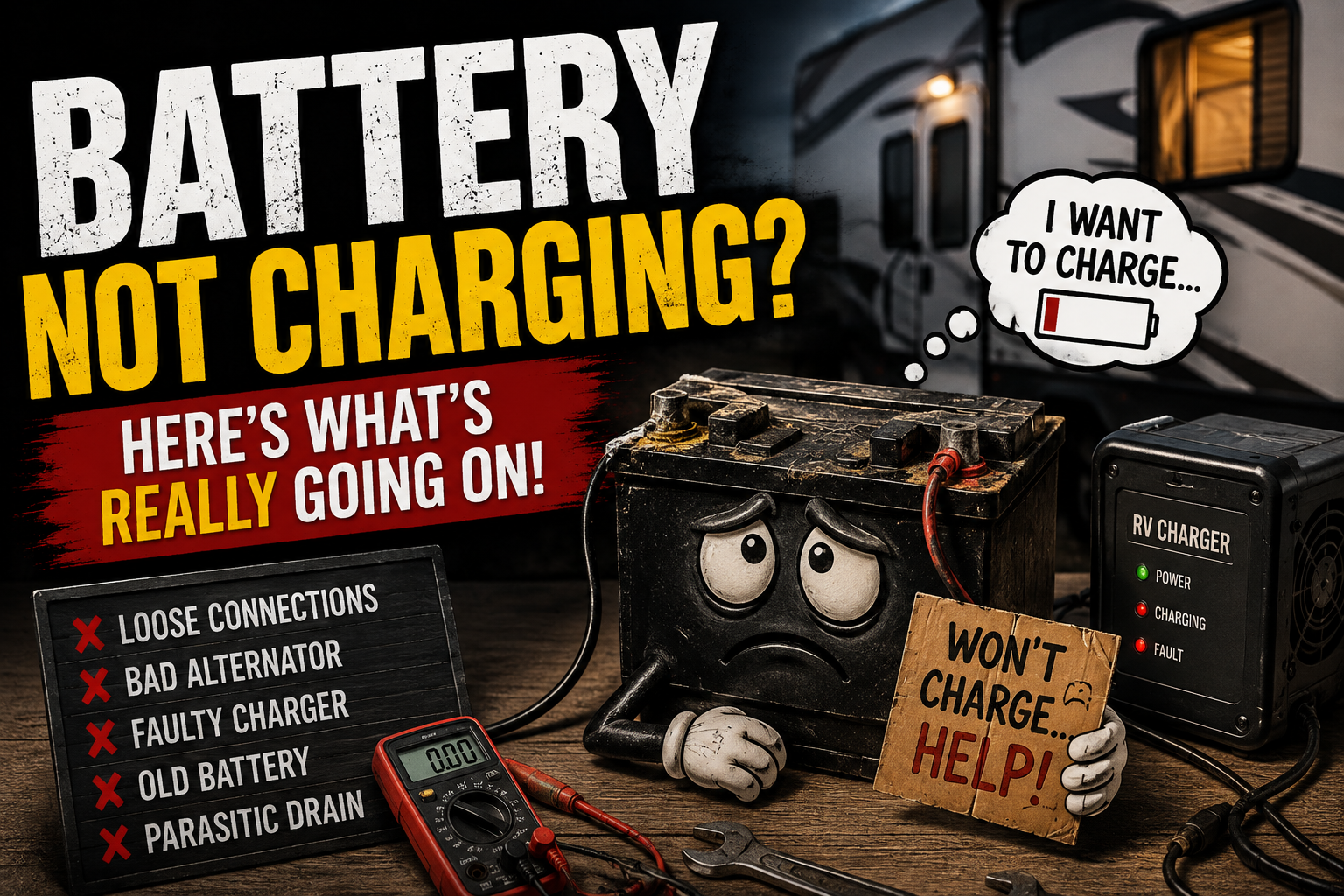
That’s a charging-path problem.
Something between the converter and battery may be interrupting the charge.
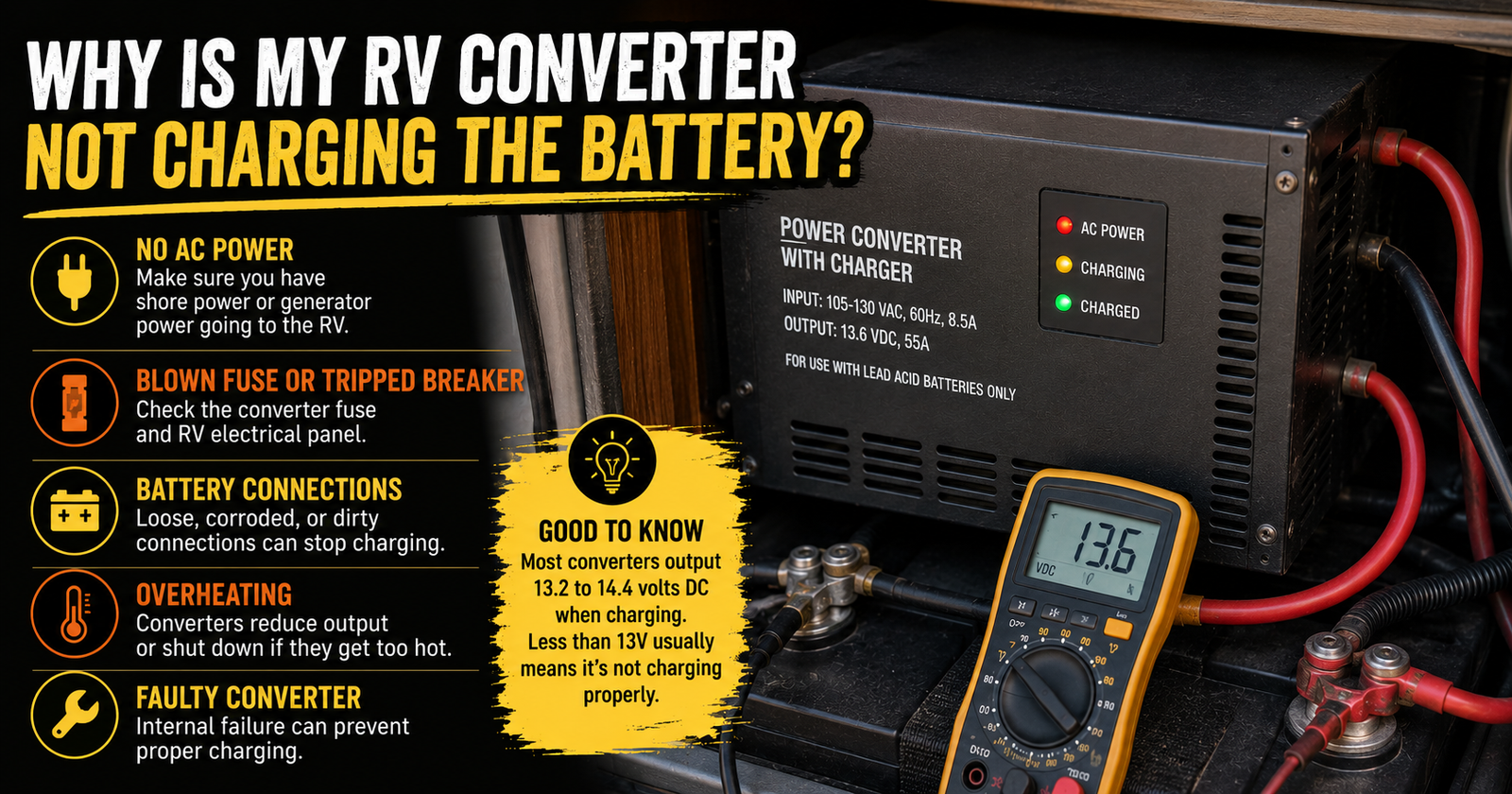
Our converter-not-charging troubleshooting guide is specifically built for that situation.
Good Converter Voltage but Nothing at the Battery?
Follow the circuit.
Battery fuse.
Circuit breaker.
Disconnect.
Positive cable.
Negative connection.
Corrosion.
Loose terminal.
Damaged wiring.
Don’t replace the source when the source is producing exactly what it’s supposed to produce.
The problem is farther downstream.
What If the Converter Is Inside the Power Center?
Then you may be dealing with a replaceable converter section rather than replacing the entire electrical distribution center.
Progressive Dynamics, for example, uses replaceable converter modules in several of its all-in-one power centers. Its PD4000 documentation shows the converter module as a serviceable section within the larger power center.
That’s another reason identifying your model matters before buying anything.
“Converter replacement” doesn’t always mean ripping the entire breaker and fuse panel out of the wall.
Don’t Order a Converter Based on Appearance
Find the model.
Find the amp rating.
Determine battery chemistry compatibility.
Determine whether you’re replacing a deck-mounted converter or converter section.
Check physical installation requirements.
Check wiring requirements.
Then identify the appropriate replacement.
Two silver boxes that look almost identical in an online photo may not be interchangeable.
What If I Recently Switched to Lithium?
Add battery compatibility to the diagnosis.
Some converters have lithium settings.
Some are lithium-specific.
Some older models were designed around lead-acid batteries.
That doesn’t necessarily explain literal zero output, but battery-system changes are relevant whenever a charging problem starts immediately after an upgrade.
Ask:
What changed right before the problem started?
That question solves an amazing number of electrical mysteries.
Can a Bad Battery Cause Zero Converter Output?
It depends on the equipment and type of battery failure.
A battery or battery circuit fault can create abnormal loading or short-circuit conditions that may cause some converters to enter protective current limiting or shutdown.
But I wouldn’t simply declare:
“Bad battery caused zero volts.”
Isolate and test according to the converter manufacturer’s procedure.
That’s how you separate the converter from whatever is happening elsewhere in the DC system.
Why I Like Testing the Converter Separately
It lets us answer one question at a time.
Can the converter itself produce the specified output under the manufacturer’s test conditions?
Yes?
Great.
Then stop blaming it and move outward.
No?
Now verify its AC input and protection devices.
Everything correct and still no output?
Now converter failure makes sense.
That’s clean troubleshooting.
Don’t Forget Multiple Power Sources
Before physically working on any of this equipment, remember how many ways an RV can remain energized.
Shore power.
Generator.
House battery.
Solar.
Inverter.
Depending on the system, unplugging the shore-power cord doesn’t necessarily mean every wire you’re looking at is dead.
Know your RV’s electrical sources and isolate them properly before servicing equipment.
When I’d Finally Call the Converter Bad
I’m comfortable strongly suspecting the converter itself when we’ve established:
It has the correct AC input.
The supplying breaker isn’t the problem.
Reverse-polarity and other applicable fuses are good.
Battery polarity is correct.
There’s no obvious wiring fault.
The converter isn’t simply overheated.
We’re not dealing with a short or overload that’s triggering protection.
And the converter still fails its manufacturer’s specified DC output test.
At that point, we’re not throwing parts at the camper anymore.
We’ve eliminated the things that allow a good converter to look dead.
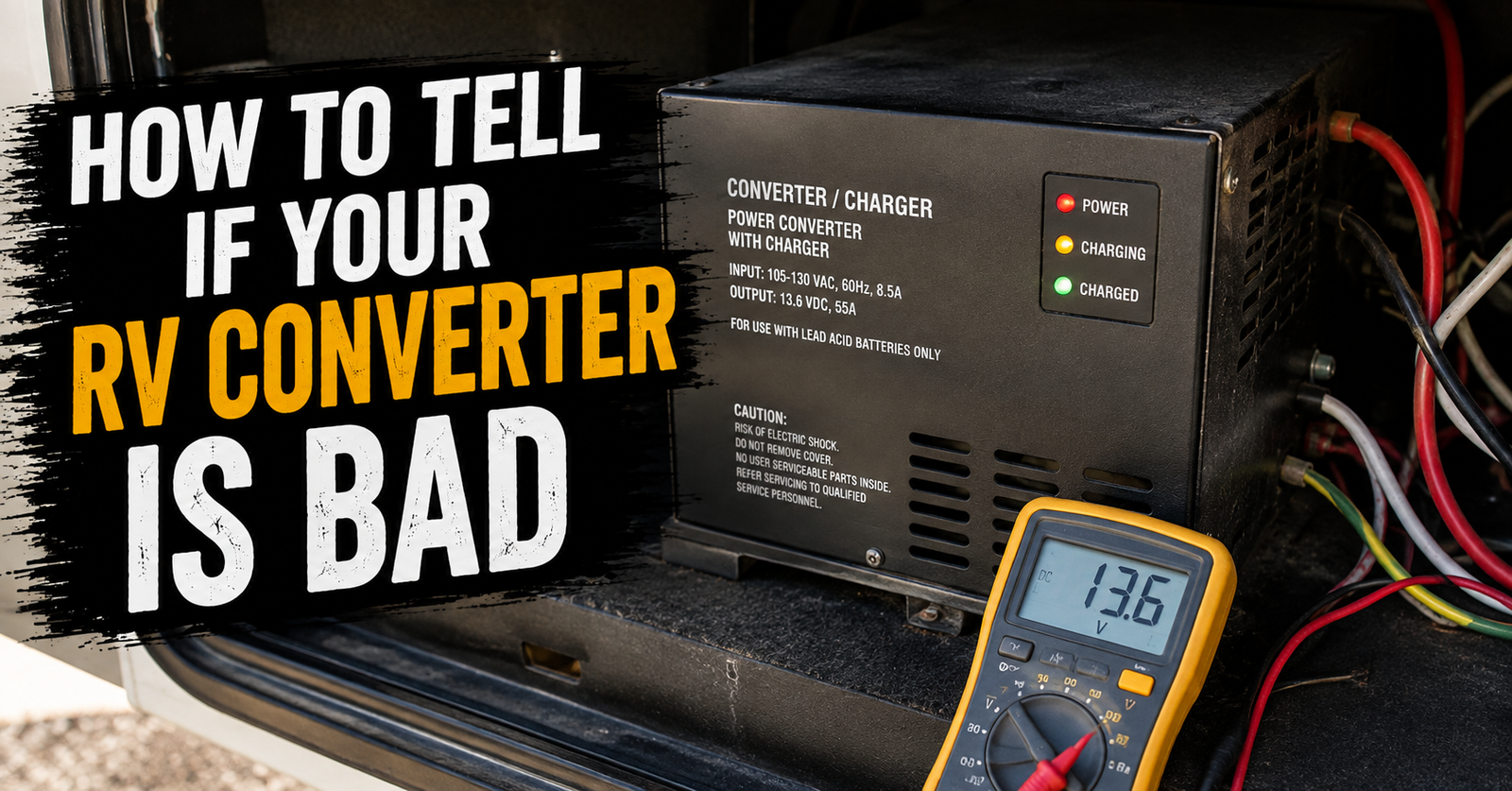
If you want the broader diagnostic picture before replacement, our guide on how to tell whether an RV converter is badwalks through the complete set of symptoms and tests.
Zero Volts Is a Clue, Not the Diagnosis
That’s the main thing I’d remember.
Seeing zero converter output narrows the problem considerably, but it doesn’t tell you the cause by itself.
Start upstream.
Does the converter have acceptable AC power?
Then check its protection.
Are the reverse-polarity fuses intact?
Look at operating conditions.
Is it overheated?
Is there a short or overload?
Look at wiring.
Anything loose, damaged, burned, or recently changed?
Then test the converter according to the manufacturer’s procedure.
If everything it needs is coming in and nothing useful is coming out, that’s when I start believing the converter itself has failed.
It’s a much better way to spend an afternoon than ordering a new converter first and discovering the old one was sitting there perfectly healthy with a blown fuse.
Written by Evan Mercer
Evan Mercer writes about RV electrical systems, converter failures, battery charging and practical camper troubleshooting for CamperAnswers.com. His work focuses on following electrical problems back to their actual source so RV owners can fix what’s broken instead of replacing whatever part gets blamed first.