
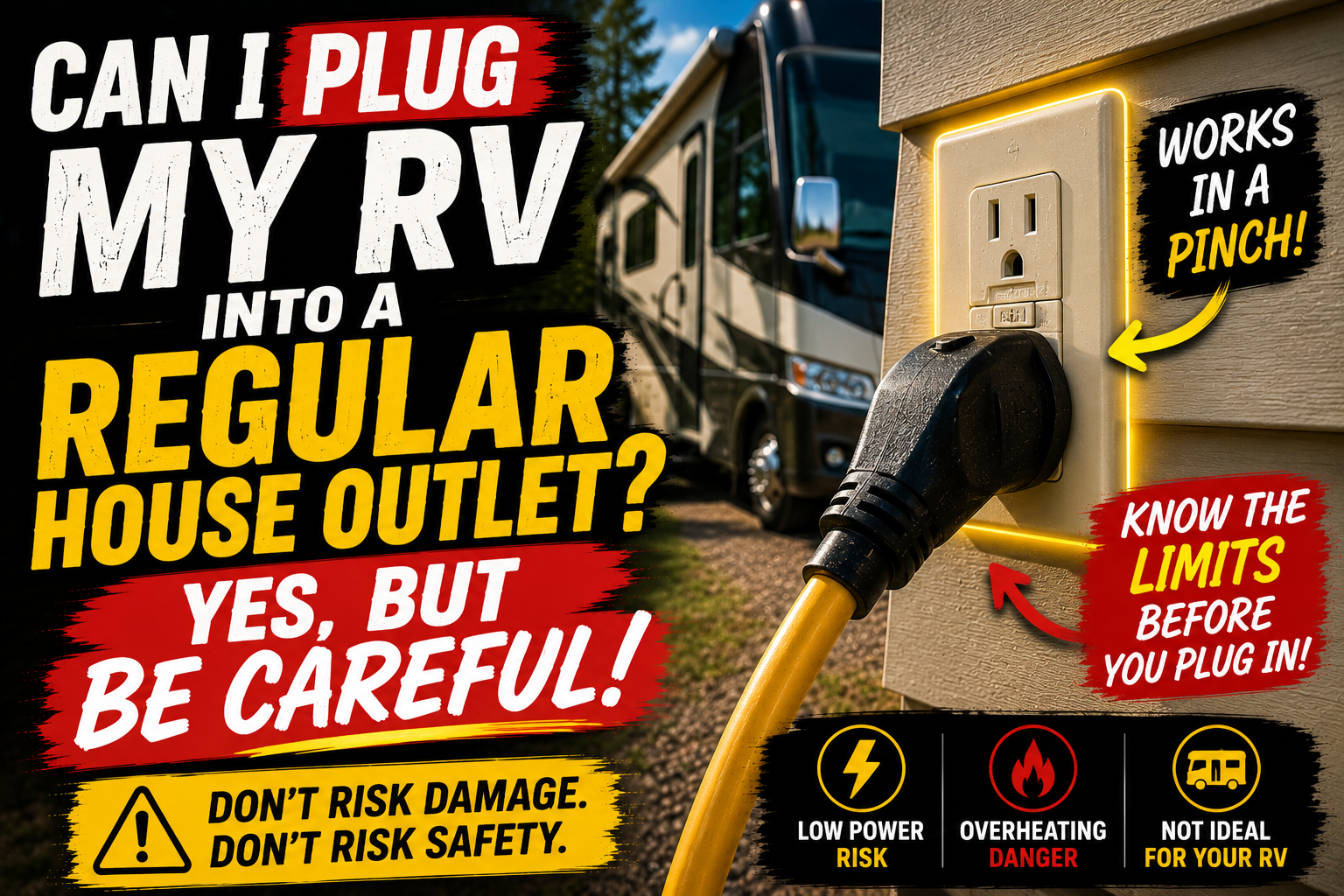
Yes, you can plug an RV into a regular household outlet, and I actually think it’s one of the handiest things to know as an RV owner.
Maybe the camper is sitting beside your house and you want to keep the battery charged. Maybe you’re loading the refrigerator the night before a trip. Maybe you want the lights and a few outlets available while you’re cleaning everything out.
You don’t necessarily need a dedicated 30 amp or 50 amp RV hookup for those things.
A 30 amp or 50 amp RV can be connected to a normal 120-volt household outlet with the proper RV adapter. The catch is that the house circuit may only provide 15 or 20 amps, so plugging the camper in does not give you the same amount of power you’d have at a campground. If that household connection trips its safety receptacle, see why an RV trips a household GFCI even when the camper is not drawing the full circuit rating.
That’s where people get into trouble.
The adapter makes the plugs compatible.
It does not turn your house outlet into an RV pedestal.
What Adapter Do I Need to Plug My RV Into the House?
That depends on whether your camper has 30 amp or 50 amp service.
For a 30 amp RV, you need an adapter that accepts your RV’s 30 amp plug and connects to the standard household receptacle.
For a 50 amp RV, you’ll need the corresponding adapter arrangement that allows your 50 amp RV cord to connect to household power.
These adapters are commonly sold specifically for connecting an RV to 15 amp household service.
I prefer a decent RV-rated dogbone-style adapter rather than the cheapest little adapter I can find, especially if I’m going to leave the camper connected for days at a time.
But regardless of which adapter you use, remember:
You’re still limited by the household circuit.
How Much Power Does a Regular House Outlet Give My RV?
This is the part I really want new RV owners to understand.
Your 30 amp RV normally has access to approximately:
120 volts × 30 amps = 3,600 watts
A 50 amp RV has two 120-volt, 50 amp legs and can have roughly:
12,000 watts total
Now connect either camper to an ordinary 15 amp household circuit.
Your theoretical maximum becomes approximately:
120 volts × 15 amps = 1,800 watts
And that’s before considering whether anything else in your house is sharing that circuit.
So yes, your camper is plugged in.
But no, you don’t suddenly have 30 or 50 amp RV service.
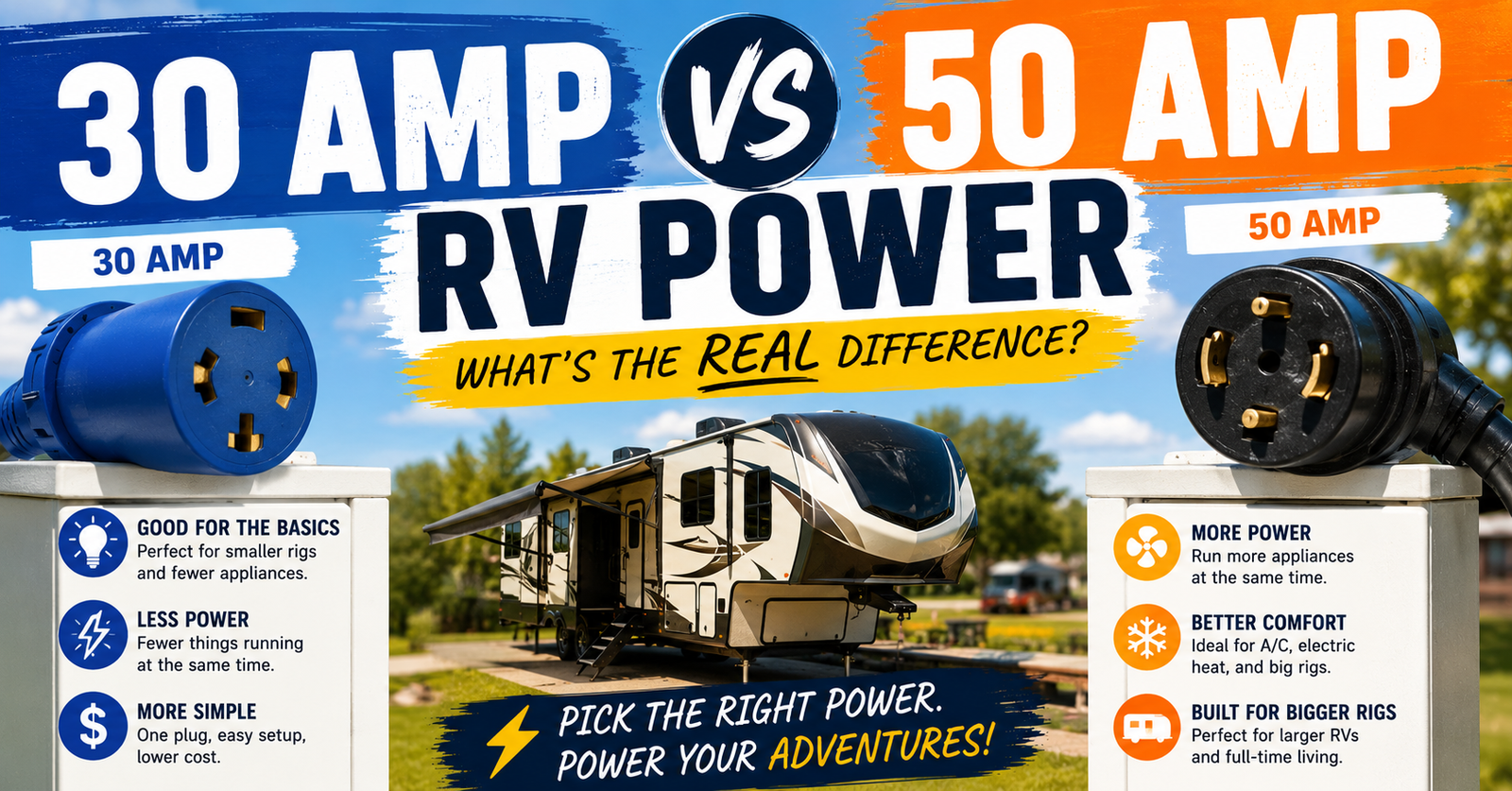
If the differences between those larger RV hookups are still confusing, our 30 amp vs 50 amp RV power guide explains exactly what those ratings mean.
What Can I Normally Run From a House Outlet?
This is where plugging the RV into the house can be extremely useful.
For light-duty use, you’ve got plenty of possibilities.
I might plug my camper in at home to:
Keep the house battery charged.
Run the refrigerator before leaving on a trip.
Use the RV’s lights.
Run small electronics.
Use certain outlets.
Operate modest electrical loads while cleaning or preparing the camper.
Etrailer specifically notes that a 15 or 20 amp household connection can be used to keep an RV battery charged, although it doesn’t provide the full appliance-running capability of normal campground shore power.
That’s exactly how I think about it.
Household power is great for keeping the camper alive and ready.
It isn’t automatically enough to pretend you’re at a full-hookup campsite.
Will My RV Battery Charge From a Regular Outlet?
Yes.
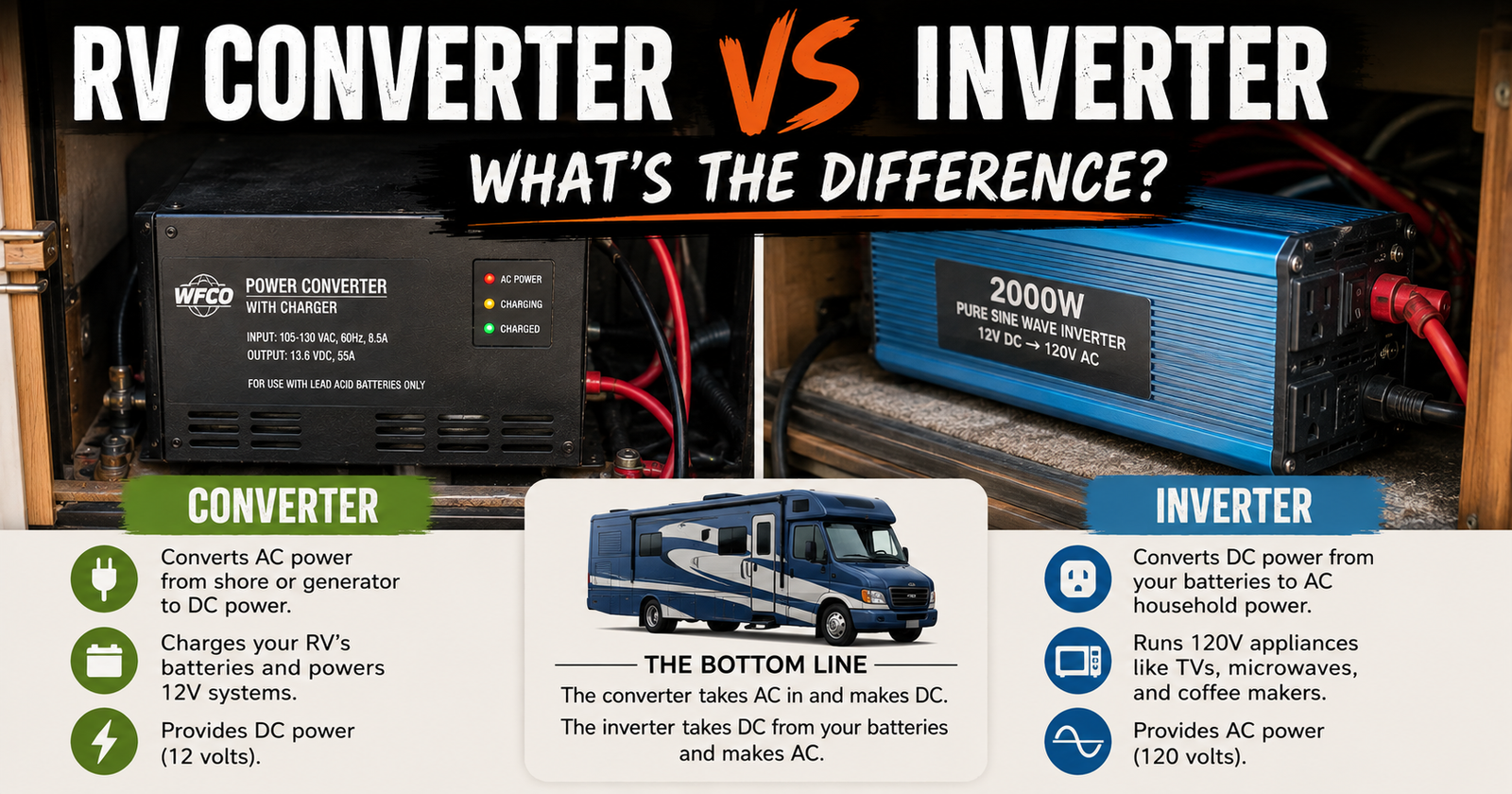
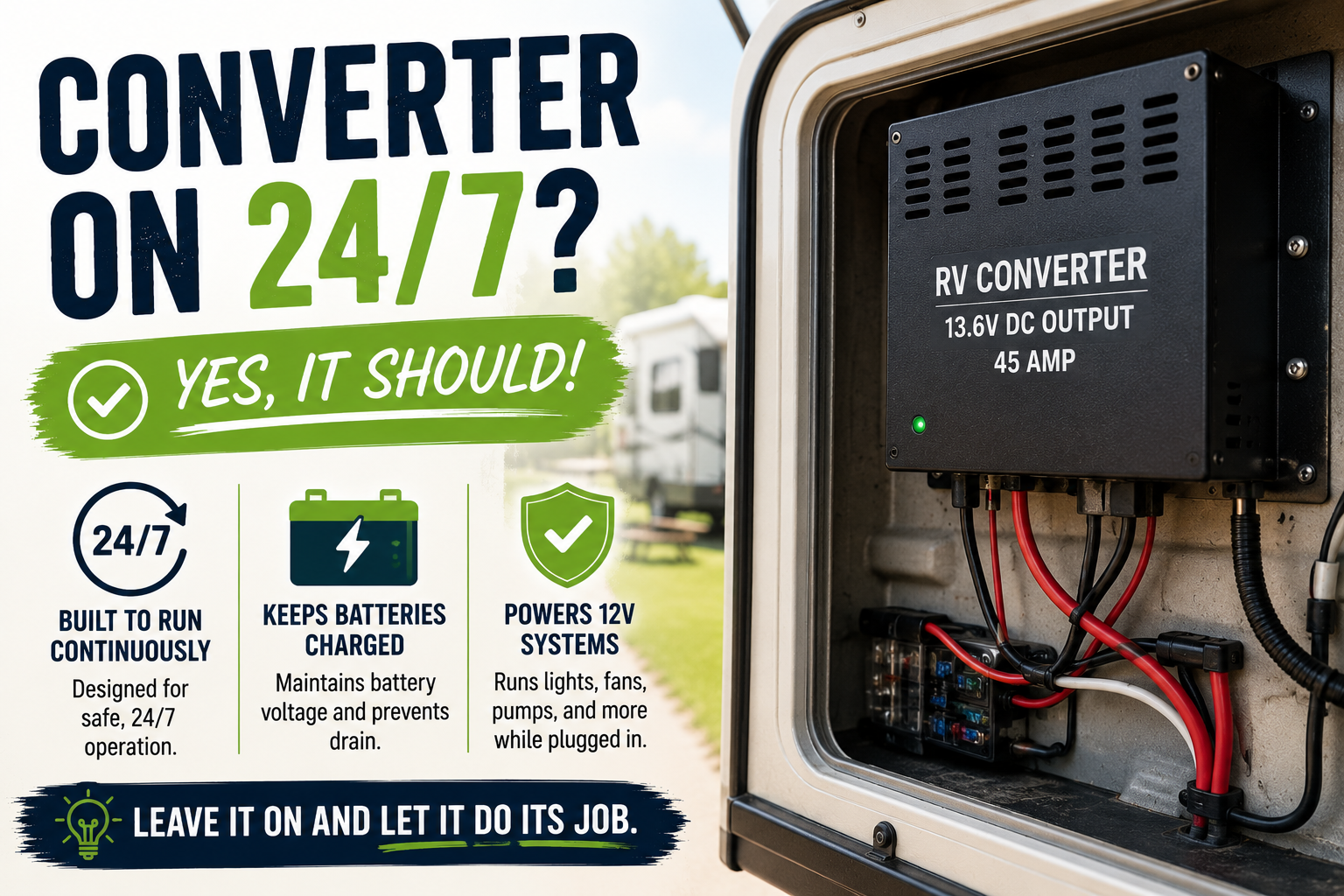
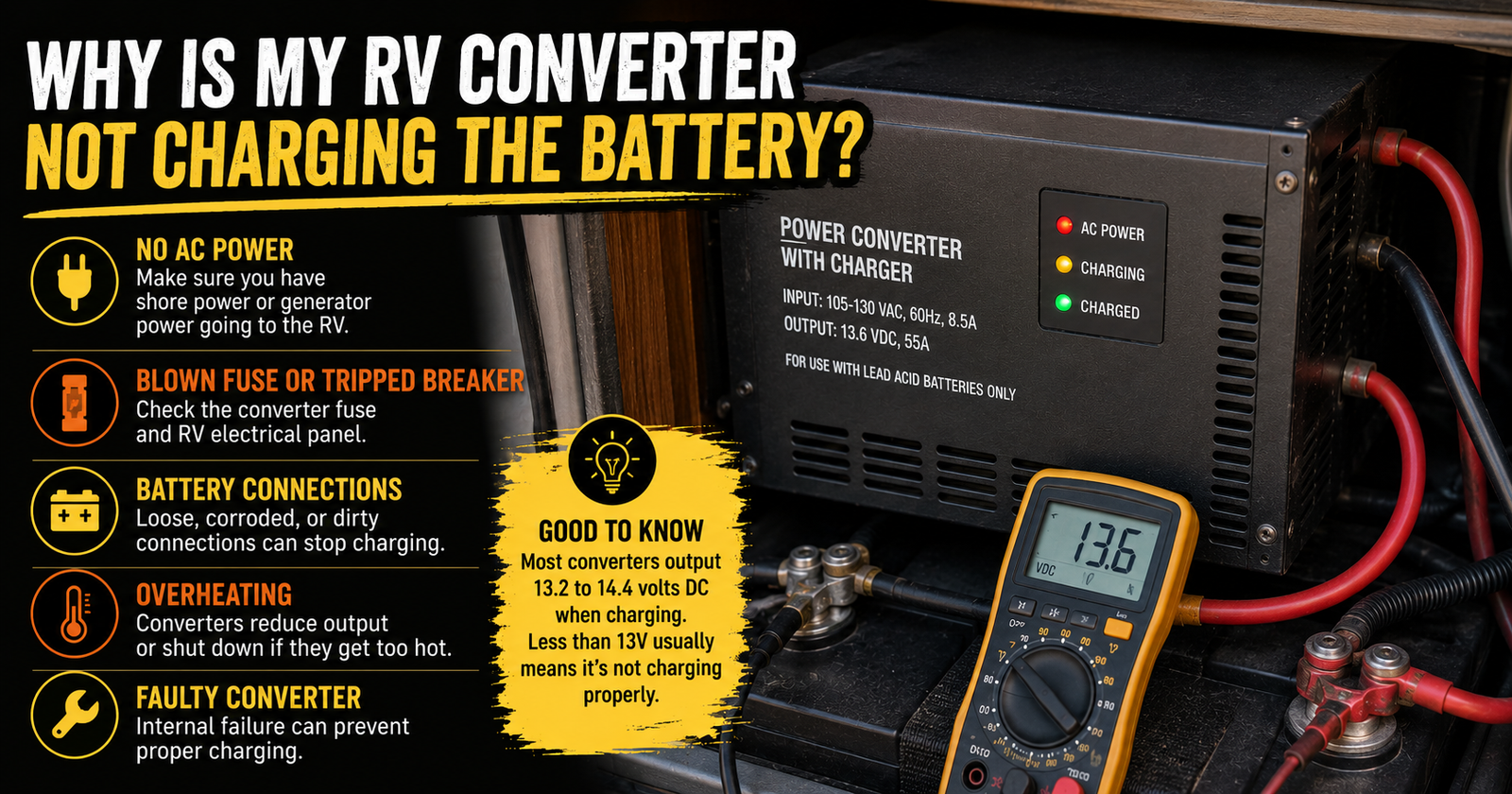
Assuming your RV’s converter/charger and electrical system are operating normally, plugging the camper into household AC power can allow the converter to charge the house battery. The converter’s role in this setup, and how it differs from an inverter, is covered in why an RV battery can die while plugged in.
That’s actually one of the best reasons to plug an RV in at home.
The converter doesn’t care that the camper normally has a 30 amp shore cord if you’re properly adapting it to a smaller AC supply. What matters is that the converter receives the AC power it needs.
Progressive Dynamics, for example, uses standard 15 amp AC plugs on many of its converter/chargers, while some higher-output models require a 20 amp circuit.
So for normal RV storage and battery maintenance, a household connection can be extremely useful.
Will the Battery Charge Just as Fast?
This depends on the converter, battery condition, charging system, and what else you’re asking the limited household circuit to power.
Don’t think of it as:
15 amp household connection = slow battery charging
and
30 amp campground connection = fast battery charging.
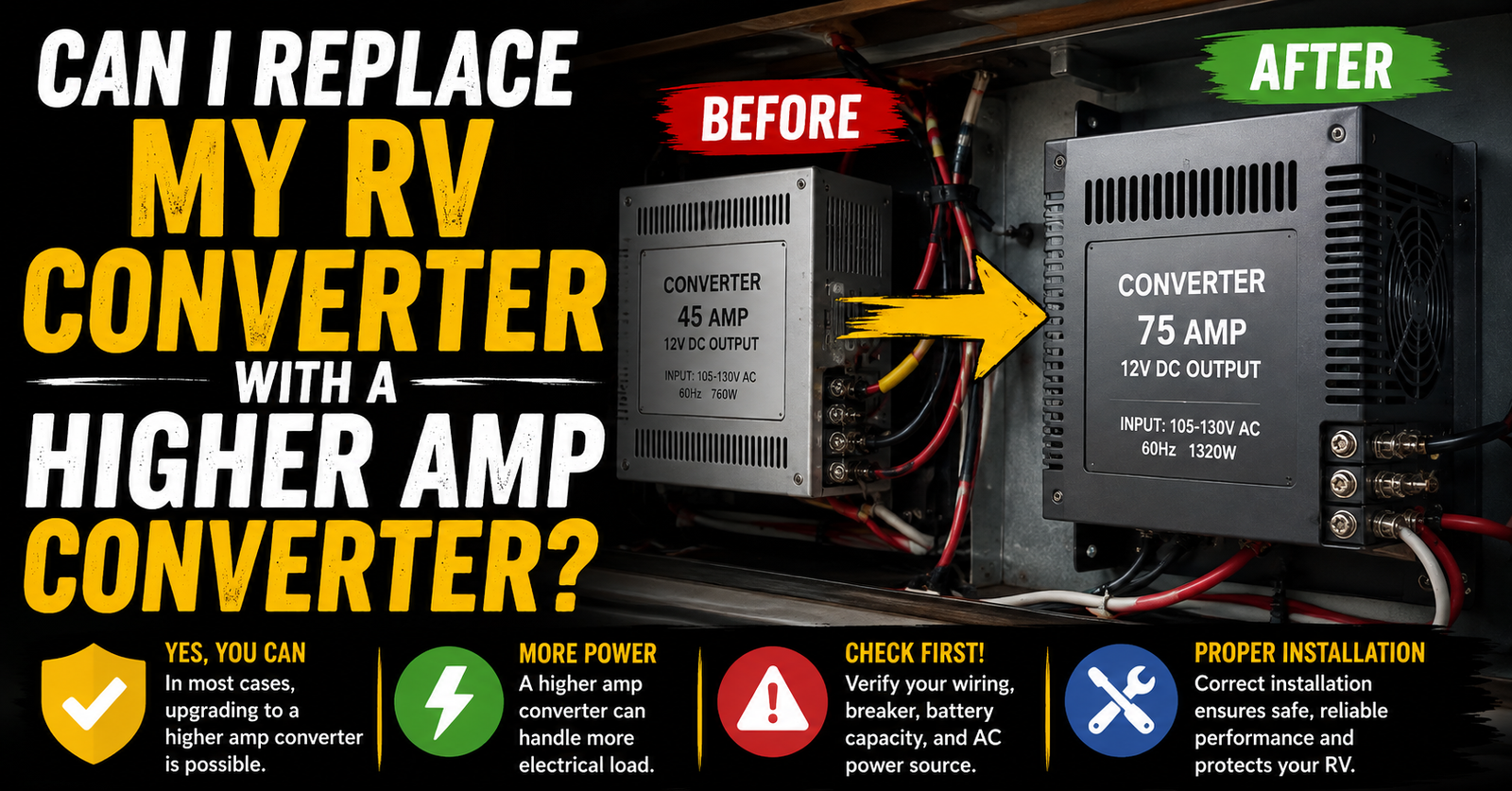
Those shore-power amp ratings aren’t your battery charging amperage. That distinction matters before choosing a higher-amp RV converter, since the converter’s DC output and the campground’s AC supply are different parts of the system.
The converter determines the DC charging output.
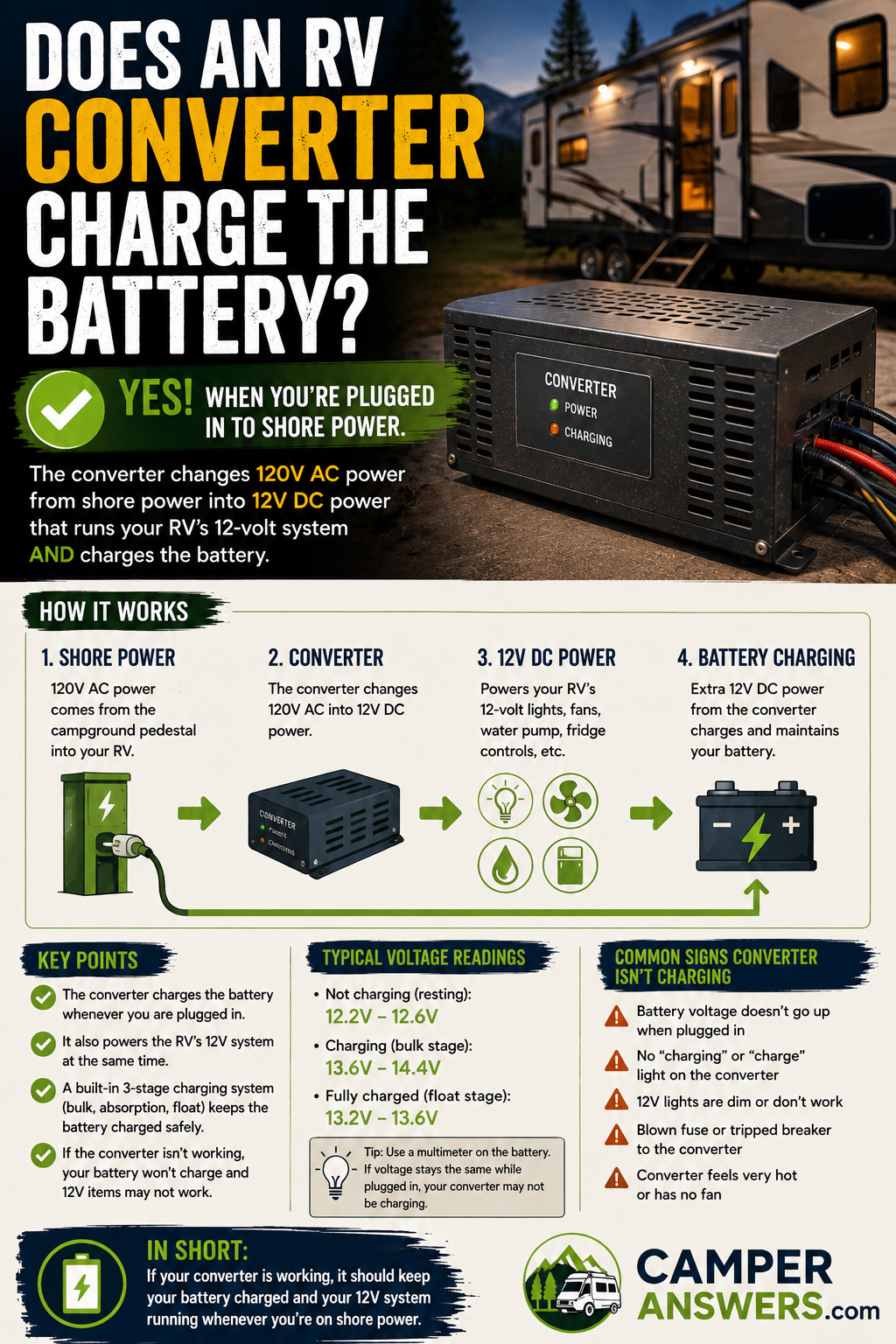
If you want to understand that relationship better, our guide to how an RV converter charges the battery explains what’s actually happening between the wall outlet and your 12-volt battery.
Can I Run My RV Refrigerator From a House Outlet?
In many cases, yes.
If your refrigerator operates on 120-volt AC power and the overall electrical load remains within the household circuit’s capacity, this can be a great way to cool the refrigerator before a trip.
That’s something I can actually see myself doing much more often than trying to run the entire camper from a garage outlet.
Plug the RV in.
Turn the refrigerator on.
Let it cool.
Load the food.
Keep the batteries topped up.
Then you’re ready to leave.
A household connection can be plenty useful without trying to run everything in the camper simultaneously. Etrailer likewise notes that light loads such as battery charging and refrigerator operation can be practical when a larger RV is adapted to household service.
Can I Run My RV Air Conditioner From a Regular Outlet?
Here’s where my answer becomes:
Maybe, but don’t assume you can.
An RV air conditioner can consume a large portion of what a 15 amp household circuit has available, especially during compressor startup.
Some smaller or properly equipped air-conditioning setups may operate successfully from a dedicated 15 or 20 amp circuit. Soft-start equipment can also reduce the compressor’s startup surge. For example, current guidance for a typical 13,500 BTU RV air conditioner puts running current around 10 to 13 amps in one soft-start application, but other RV loads, voltage drop, and the particular AC unit still matter.
So I would never tell somebody:
“Yep, plug your RV into any house outlet and fire up the AC.”
There’s more to it than that.
Why Does the Breaker Trip When I Turn the Air Conditioner On?
Because you may have reached the limit of the household circuit.
Let’s say the RV air conditioner is running.
The converter is charging a low battery.
Refrigerator is on electric.
Then somebody starts another appliance.
The house breaker doesn’t care that your camper normally has a 30 amp shore cord.
It sees the current being pulled through the 15 or 20 amp household circuit.
Once you exceed what that circuit is designed to handle, the breaker can trip.
An RV adapter does not increase the available power from the source.
That’s exactly the same lesson we’ve been seeing throughout this shore-power cluster.
A 30 Amp RV Is Still Limited to 15 Amps When Plugged Into 15 Amp Service
This is probably the easiest way to remember it.
Think of the available power as being determined by the smallest limiting connection upstream.
Your camper may be capable of using 30 amps.
But the house is offering 15.
You get 15.
Likewise, your 50 amp fifth wheel may normally have a huge amount of electrical capacity available.
Connect it to a 15 amp garage outlet and you’ve still only got that little household circuit feeding the entire thing.
The camper doesn’t get to demand 50 amps just because that’s what’s printed on its shore cord.
Can I Run the Microwave?
Possibly, but now we’re getting into load management.
A microwave can use a substantial amount of the available capacity on a 15 amp household circuit.
If the converter is charging, refrigerator is running, and something else is already drawing power, starting the microwave could push you over the circuit’s limit.
Personally, if I’m running my camper from a regular household outlet, I’m treating it as limited shore power.
I’m not trying to see how close I can get to the breaker rating all afternoon.
What About the Electric Water Heater?
That’s another load I’d normally avoid stacking onto a limited household connection.
An electric water-heater element can use a meaningful amount of power without making much noise or drawing your attention.
That’s part of why people sometimes say:
“I wasn’t even running anything and the breaker tripped.”
Meanwhile:
Converter is charging.
Refrigerator is on electric.
Water heater is on electric.
Then they start another large appliance.
It all counts.
If your water heater can operate on propane and you’re temporarily running the camper from limited household power, propane can help keep that large electrical load off the house circuit.
Electric Space Heaters Are Another Big One
I wouldn’t forget about portable electric heaters either.
A typical space heater on high can consume a large chunk of a 15 amp circuit by itself.
Run one inside the camper while the converter is charging and other equipment is operating, and you don’t have much electrical headroom left.
Run two and you’re practically begging the breaker to get involved.
A regular household outlet is perfectly useful for an RV.
You just have to respect what it is.
Is a 20 Amp House Outlet Better Than a 15 Amp Outlet?
Yes, if it’s truly a properly wired and protected 20 amp circuit.
At 120 volts, a 20 amp circuit theoretically provides:
120 × 20 = 2,400 watts
That’s 600 watts more theoretical capacity than a 15 amp circuit.
But don’t assume an outlet is on a 20 amp circuit just because it’s in your garage.
Check the circuit.
And don’t replace a 15 amp breaker with a 20 amp breaker because you want more RV power.
The breaker is selected to protect the wiring.
Progressive Dynamics’ wiring guidance, for example, pairs 15 amp protection with 14-gauge wiring and 20 amp protection with 12-gauge wiring.
Changing the breaker without making sure the entire circuit is designed for it can create a serious problem.
A Dedicated Circuit Is Much Better
If I have a choice, I’d rather plug my RV into a household circuit that isn’t also feeding half the garage.
Here’s why.
Maybe the circuit is rated for 15 amps.
The camper is drawing 10.
Sounds fine.
Then somebody inside the house turns on equipment connected to another receptacle on that same circuit.
Now the combined load increases.
Breaker trips.
You walk out to the camper wondering what happened even though you didn’t change anything.
The RV isn’t necessarily the only thing using that circuit.
That’s why a dedicated circuit is so useful.
Can I Use an Extension Cord?
Yes, but this is where I don’t grab the cheapest 100-foot household extension cord I can find.
Long, undersized extension cords can create voltage drop and heat.
Etrailer specifically warns that ordinary household extension cords may be undersized for RV loads and notes that longer extension runs create more voltage drop.
If I need an extension, I want:
A properly rated heavy-duty cord.
As short as reasonably possible.
Good plugs and receptacles.
No damaged insulation.
No burned or loose connections.
I’d much rather buy the right cord once than spend the afternoon wondering why the camper is seeing terrible voltage.
Why Extension Cord Gauge Matters
Wire has resistance.
As the distance gets longer and current increases, voltage drop becomes more important.
A tiny cord powering a phone charger is one thing.
That same cord feeding an RV with the converter working hard and other equipment operating is completely different.
If the extension cord itself is getting unusually hot, that’s a warning.
Don’t solve that by moving it into the shade and continuing to use it.
Reduce the load and make sure the cord is appropriate for what you’re asking it to carry.
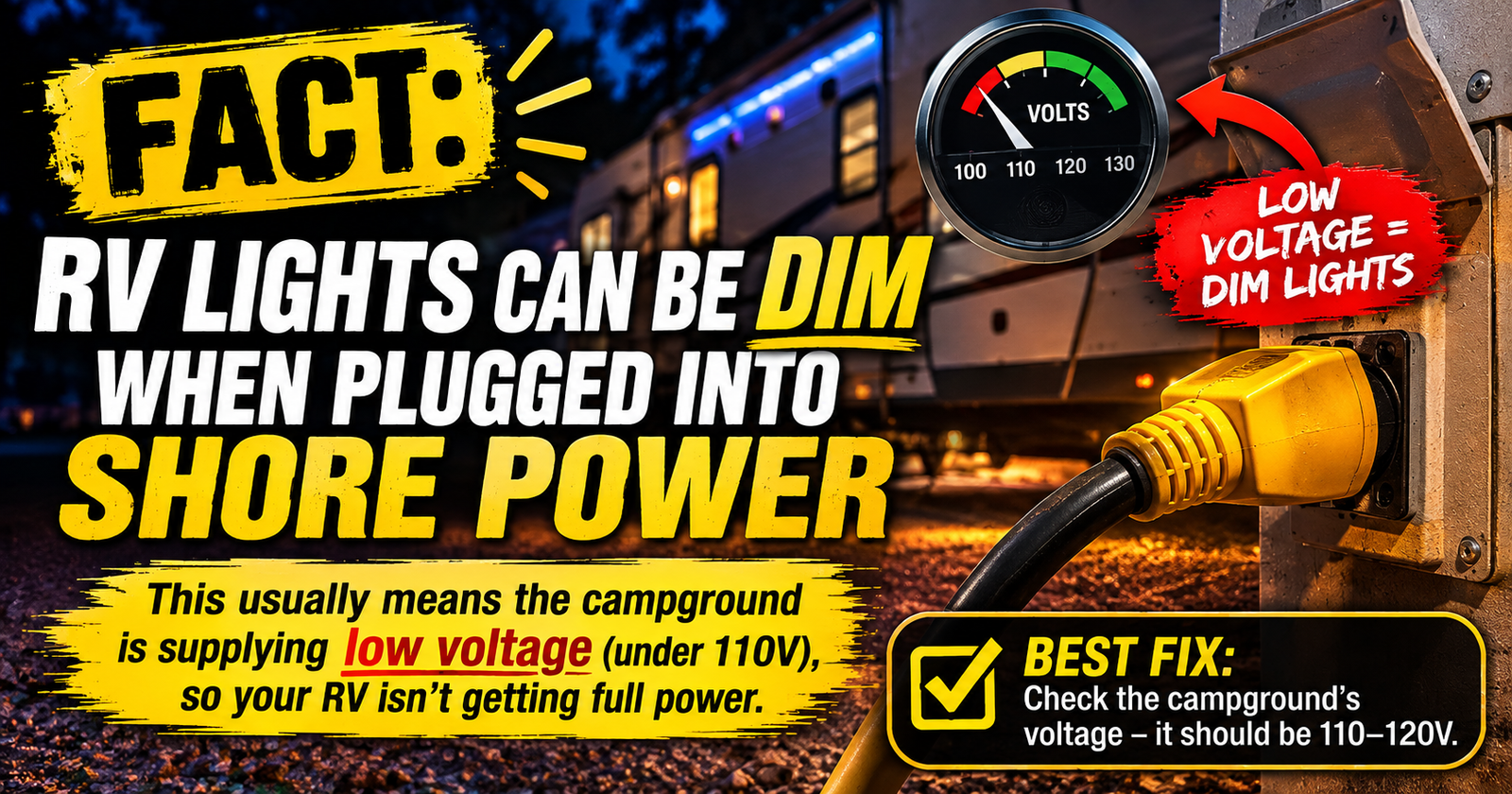
Check Your Voltage Inside the RV
This is another reason the voltage article we just wrote fits so nicely into this cluster.
You might have perfectly acceptable voltage at the house receptacle.
Then you’ve got:
House receptacle
↓
Extension cord
↓
RV adapter
↓
Shore cord
↓
Camper
Every bit of wiring and every connection adds something to the electrical path.
If voltage inside the camper drops badly once you turn on a significant load, start investigating.
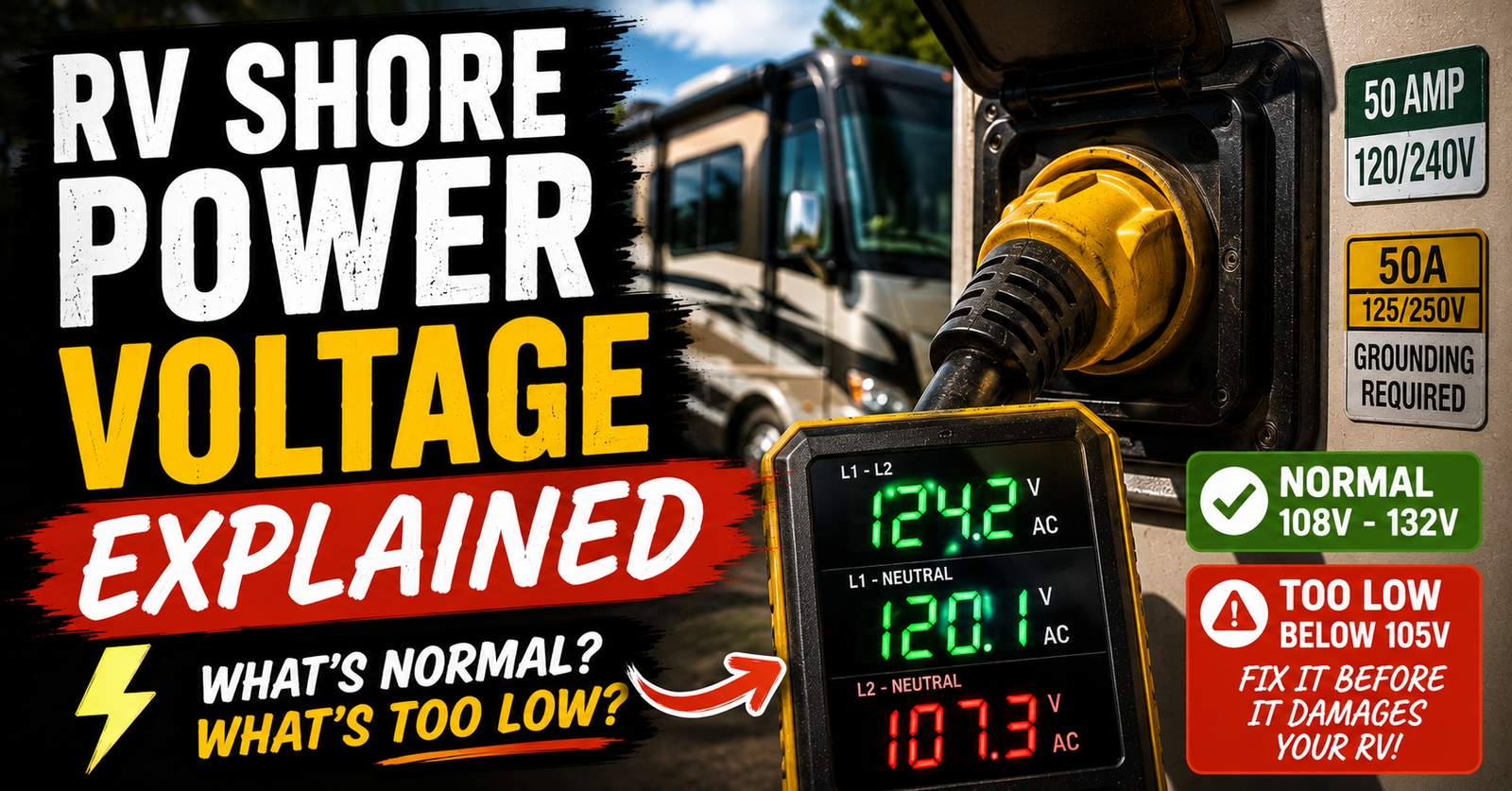
Our RV shore power voltage guide explains why I care much more about voltage under load than one pretty reading when practically nothing is running.
Watch for Hot Plugs and Adapters
This is especially important when adapting a large RV shore cord to a small household receptacle.
After you’ve been connected for a while under a meaningful load, carefully pay attention to the connections.
A little warmth and seriously hot aren’t the same thing.
If the adapter or plug is:
Extremely hot.
Melting.
Turning brown.
Smelling burned.
Loose in the receptacle.
I stop using it.
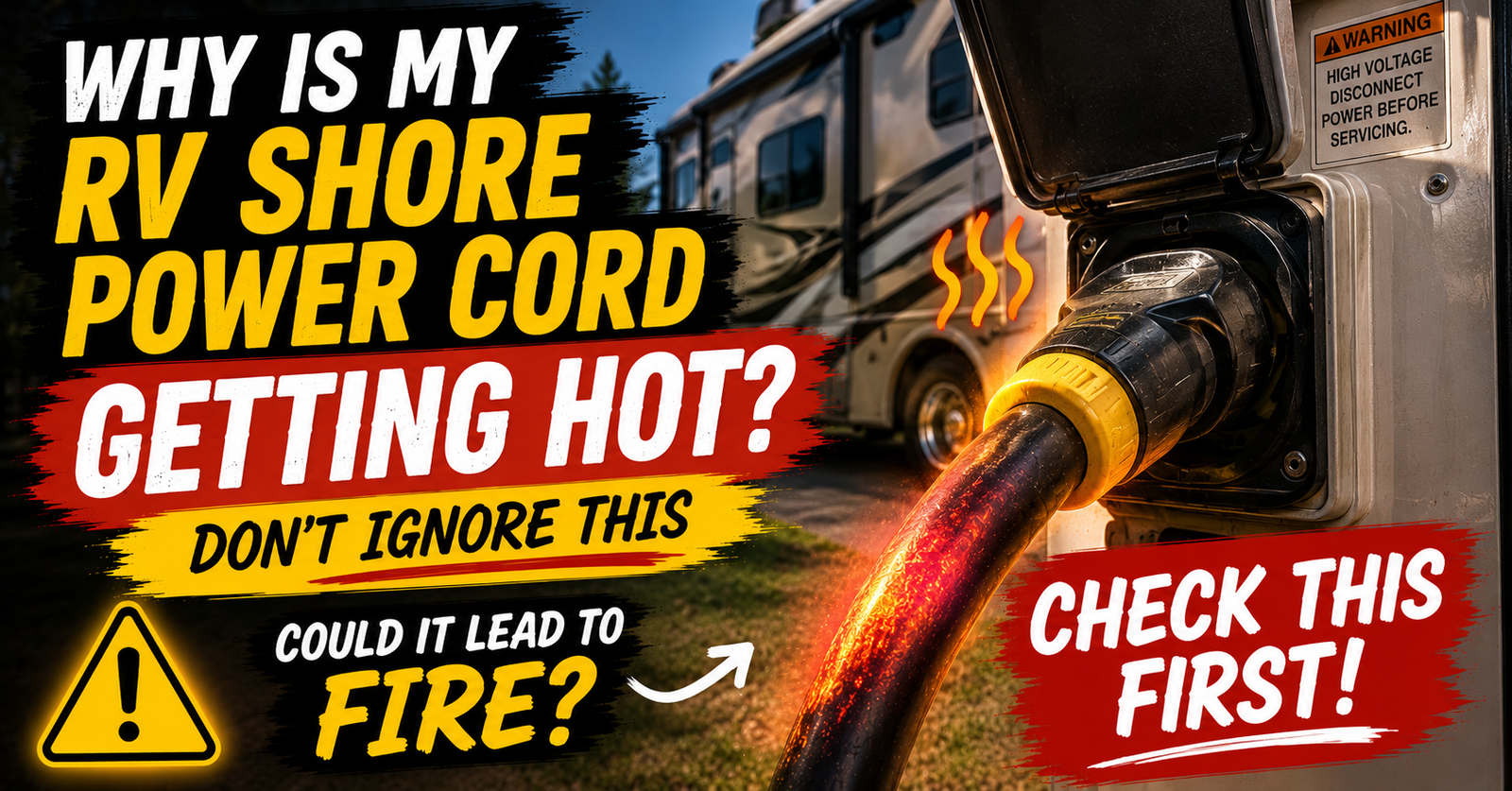
We’ve already covered why an RV shore power cord or plug gets hot in detail, and the same principle applies here.
A breaker doesn’t have to trip for a bad connection to overheat.
Can I Leave My RV Plugged Into the House All the Time?
Electrically, an RV can remain connected to an appropriate power source, but whether I’d leave a particular camper plugged in continuously depends heavily on its charging system and battery setup.
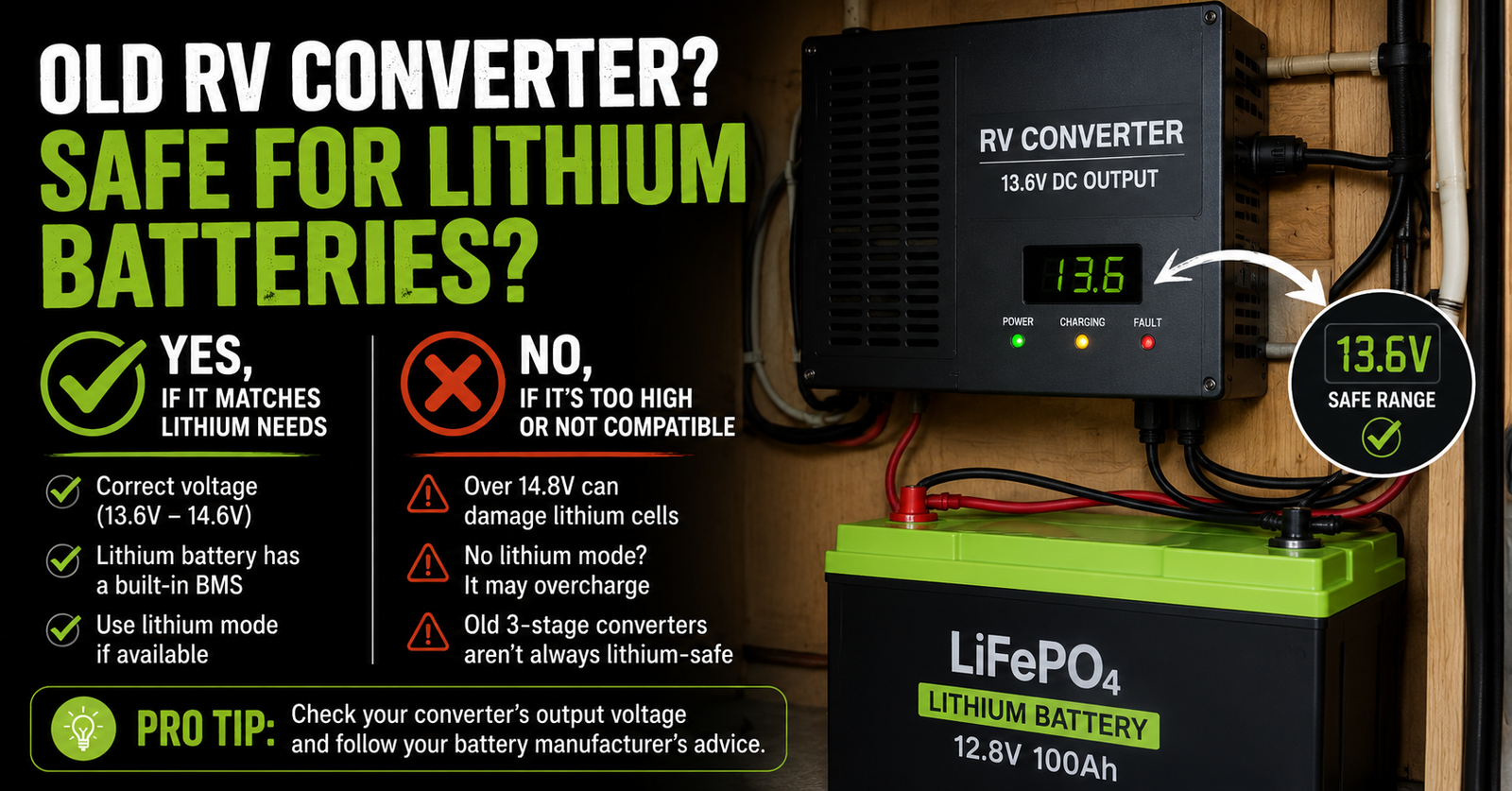
Modern multistage converter/chargers are designed much differently than older, less sophisticated charging equipment. That difference matters even more after a lithium upgrade, so review older converter charging behavior before leaving the camper connected.
I’d want to know:
What converter/charger is installed?
What battery chemistry do I have?
Is the charging system configured correctly?
Is the battery healthy?
Are all connections in good condition?
That’s really a battery-maintenance question rather than a household-outlet question.
And it’s a good future article because “Can I leave my RV plugged in all the time?” has its own clear search intent.
Will Plugging Into the House Keep My Battery From Dying?
It should help keep the battery charged if the converter/charger is operating properly and the connection provides the AC power it needs.
But if your battery keeps dying while the camper is plugged in, don’t assume the house outlet is automatically too small.
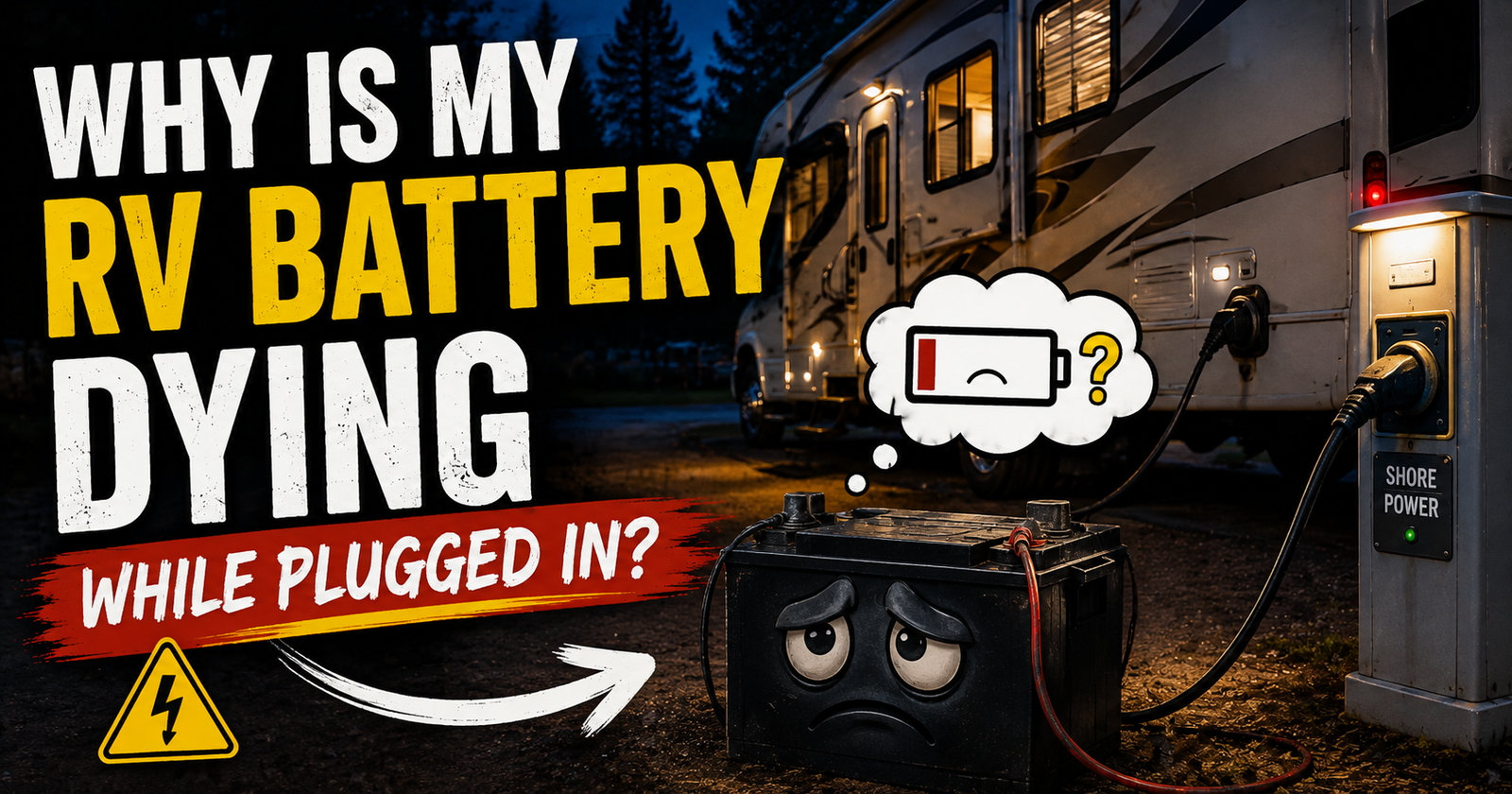
We’ve already covered why an RV battery can die even while plugged in.
You could have a charging problem.
Converter problem.
Battery problem.
Connection issue.
Excessive 12-volt load.
Something else entirely.
A 15 amp connection can be perfectly adequate for keeping a normal battery charging system operating.
What If My RV Trips the House GFCI?
Now we’re getting into one of the last articles we still need for this shore-power cluster.
A lot of modern garages, outdoor receptacles, and other household locations have GFCI protection.
You connect the camper.
Click.
House GFCI trips.
Reset it.
Click.
Trips again.
Don’t assume this is happening simply because your RV is “too big” for the outlet.
An overloaded circuit and a GFCI trip are two different things.
Our next dedicated article will cover why an RV keeps tripping the GFCI outlet at home, because that’s common enough and specific enough that I don’t want to cram the entire diagnosis into this article.
What If the House Breaker Trips Instead?
Now electrical load moves much higher on my list.
Turn off the major RV loads.
Reset the house breaker properly.
Reconnect with very little operating.
If it holds, gradually add the equipment you actually need.
If the breaker trips when you reach a particular combination of loads, you may simply be exceeding the circuit capacity.
If it trips immediately with practically everything off, that’s different.
I’d stop repeatedly resetting it and investigate for an actual electrical problem.
Don’t Plug Your RV Into a Dryer Outlet
This one deserves to be painfully clear.
A 30 amp RV receptacle and a 30 amp dryer receptacle are not the same thing.
Your common 30 amp RV TT-30 connection is a 120-volt RV connection.
A dryer receptacle can be a completely different electrical configuration.
Etrailer specifically warns that a 30 amp RV TT-30 plug and a NEMA 10-30 dryer receptacle are not interchangeable and that an incorrect connection can cause major RV electrical damage.
So please don’t look at a dryer outlet and think:
“Hey, that’s 30 amps. My camper is 30 amps. Perfect.”
No.
Be Very Specific If You’re Having an RV Outlet Installed at Home
If I hire an electrician to install a dedicated RV receptacle, I’m not simply saying:
“Put a 30 amp outlet beside my driveway.”
I’d specifically explain that it’s for a 120-volt, 30 amp RV TT-30 connection.
That removes ambiguity.
Likewise, if I want proper 50 amp RV service, I’m specifying exactly what the RV requires.
A dedicated RV hookup at home is fantastic if you use the camper frequently.
But it needs to be wired correctly.
Should I Install a Real 30 Amp RV Hookup at Home?
If you plug the camper in constantly, I think it’s worth considering.
Especially if you want to:
Run the air conditioner regularly.
Use the camper as extra living space.
Prepare it for trips.
Run multiple appliances.
Keep it connected for long periods.
A proper dedicated RV hookup gives you considerably more usable electrical capacity than adapting down to a household outlet.
For occasional battery charging and refrigerator cooling, however, a regular house connection may be all you need.
There’s no reason to install a campground pedestal in your driveway just to charge a battery twice a year.
What About a 50 Amp RV?
You can adapt a 50 amp RV to household service too.
But the power difference becomes enormous.
Remember that full 50 amp RV service can provide around 12,000 watts total.
A 15 amp household circuit gives you roughly 1,800 watts theoretically.
So when somebody plugs a huge fifth wheel into the garage and asks:
“Why can’t I run everything?”
That’s why.
You’ve connected an RV designed around a massive electrical supply to one ordinary household circuit.
The adapter allows the connection.
It doesn’t reproduce 50 amp service.
Can I Run One Air Conditioner on a 20 Amp Circuit?
Possibly, depending on the air conditioner, startup current, other electrical loads, voltage, circuit condition, and whether soft-start equipment is installed.
I don’t like giving a universal yes because RV air conditioners aren’t all identical.
If you’re going to try it, I’d want a dedicated properly wired circuit, minimal other RV loads, good voltage, a proper heavy-duty connection, and an air conditioner whose electrical requirements actually fit within what’s available.
Don’t use the house breaker as your experimental on/off switch.
Turn Off the Stuff You Don’t Need
This is my easiest trick when the RV is temporarily connected to household power.
If I’m only trying to cool the refrigerator and charge the battery, why would I also leave the electric water heater running?
I don’t need it.
Likewise, I don’t need an electric fireplace, space heater, or other large load operating while I’m preparing the camper.
Use the electricity for what you’re actually trying to accomplish.
A 15 or 20 amp household connection becomes surprisingly useful when you’re not wasting half of it on equipment you don’t need.
The Adapter Doesn’t Protect You From Bad Power
Another important distinction.
An RV-to-house adapter changes the physical electrical connection.
That’s basically its job.
It isn’t automatically an electrical management system.
It doesn’t necessarily protect against:
Low voltage.
High voltage.
Open ground.
Wiring faults.
Surges.
Other power-quality problems.
That’s why the next major piece of this cluster after our home-GFCI article is whether an RV really needs a surge protector or electrical management system.
We’ve mentioned those devices throughout this entire cluster, so they deserve their own explanation.
My Simple Rule for Plugging an RV Into the House
I think about what I’m actually trying to accomplish.
Charging batteries and preparing the camper
A household connection is often perfect.
Cooling the refrigerator before a trip
Usually very practical.
Running lights and a few small loads
No big deal when the circuit can handle them.
Running an air conditioner
Now I’m checking the circuit, AC requirements, voltage, other loads, and connections carefully.
Running the camper exactly like it’s on a full campground hookup
No.
That’s where people get frustrated.
A Regular House Outlet Can Be Extremely Handy
I don’t want this article to scare somebody into thinking they shouldn’t connect their RV at home.
I do it differently in my head.
A household outlet is limited shore power.
That’s it.
You’re still supplying 120-volt AC electricity to the camper.
The converter can operate.
The battery can charge.
The refrigerator may run.
You can use plenty of normal RV equipment.
But the circuit feeding everything may only be rated for 15 or 20 amps.
If you remember that one limitation, the rest starts making sense.
Use the correct RV adapter, keep your electrical load reasonable, use a properly sized extension cord if you genuinely need one, watch your voltage, and pay attention to connections that get unusually hot.
And whatever you do, don’t mistake a 30 amp dryer receptacle for a 30 amp RV hookup.
A little adapter can make your camper extremely useful sitting right beside the house.
It just can’t turn that ordinary garage outlet into a campground pedestal.
Written by Evan Mercer
Evan Mercer writes about RV shore power, campground hookups, batteries, converters, and practical camper electrical troubleshooting for CamperAnswers.com. He focuses on explaining RV electrical systems the way camper owners actually encounter them, without making a simple hookup sound like an electrical engineering class.