

I’ll make this one easy right from the beginning.
Yes, I would use electrical protection every time I plug an RV into campground shore power. But if I were buying protection today, I wouldn’t stop at the cheapest device labeled “RV surge protector.” I’d want an electrical management system, or EMS, that also monitors the incoming power and disconnects the camper when something is seriously wrong.
That’s because a giant electrical surge isn’t the only thing that can hurt an RV.
Campground power can have low voltage, high voltage, an open neutral, an open ground, reverse polarity, or another wiring problem. A full RV electrical management system can monitor for several of these conditions and refuse to send questionable power into the camper.
And after everything we’ve covered about shore power, you can probably see why that’s valuable.
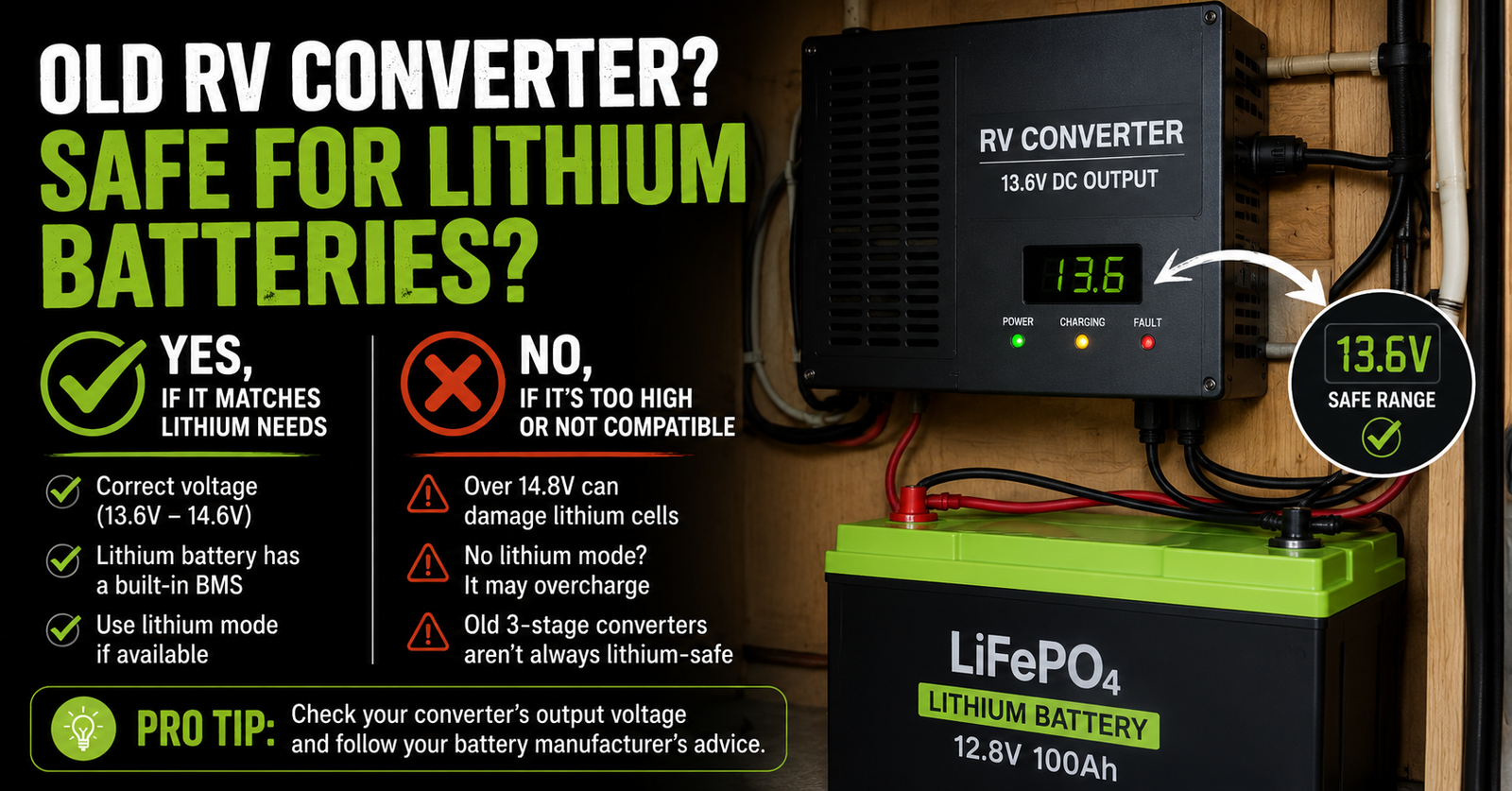
Your RV may contain air conditioners, a converter/charger, refrigerator electronics, TVs, microwave, control boards, an inverter, and plenty of other equipment I’d rather not sacrifice because one campground pedestal has a problem.
What Does an RV Surge Protector Actually Do?
Let’s start with the terminology because RV owners call several different devices a “surge protector.”
A basic RV surge protector is primarily there to protect against voltage spikes or surges.
That’s useful.
A large electrical transient can damage sensitive electronics inside an RV.
But there’s an important limitation.
A basic surge protector and a full electrical management system aren’t necessarily the same thing.
An EMS provides broader protection.
Depending on the model, an EMS can monitor for problems including:
Low voltage
High voltage
Open neutral
Open ground
Reverse polarity
Incorrectly wired campground power
Abnormal AC frequency
Surges
Southwire’s 50 amp Surge Guard, for example, continuously monitors incoming shore power and shuts it off when it detects several dangerous conditions, including low or excessive voltage, open ground, open neutral, reverse polarity, and miswired pedestal conditions.
That’s much more interesting to me than surge protection alone.
Surge Protector vs EMS Is the Important Decision
If you’re shopping for one of these devices, don’t get hung up entirely on what the manufacturer prints in giant letters on the front.
Look at what the device actually protects against.
A basic surge protector may handle electrical surges.
A proper EMS adds active monitoring and can disconnect your camper when incoming shore power falls outside acceptable conditions.
That’s why I’d personally choose the EMS.
Camping World makes the same distinction between basic RV surge protection and an EMS, noting that an EMS adds protection against problems such as high and low voltage, reverse polarity, open neutral, and open ground.
Think of the basic surge protector as one layer of protection.
The EMS is watching much more of what’s happening at the pedestal.


Why Would Campground Power Be Bad?
Because campground electrical systems live a hard life.
Think about a popular campground in July.
You’ve got dozens or hundreds of RVs.
Air conditioners running everywhere.
People plugging and unplugging constantly.
Old pedestal receptacles.
Weather exposure.
Long electrical runs.
Changing electrical loads throughout the day.
Maybe everything is perfectly maintained.
Maybe it isn’t.
And unlike plugging into the same receptacle at your house every day, RV owners constantly connect their campers to electrical systems they’ve never seen before.
You pull into a site.
Level the camper.
Connect the water.
Plug into a pedestal you’ve never used in your life.
Then trust it with thousands of dollars worth of RV equipment.
That’s exactly why electrical protection makes sense to me.
Low Voltage Is One of the Big Reasons I Want an EMS
This is probably the biggest distinction between a simple surge protector and a good EMS.
Campground voltage can fall when electrical demand gets heavy.
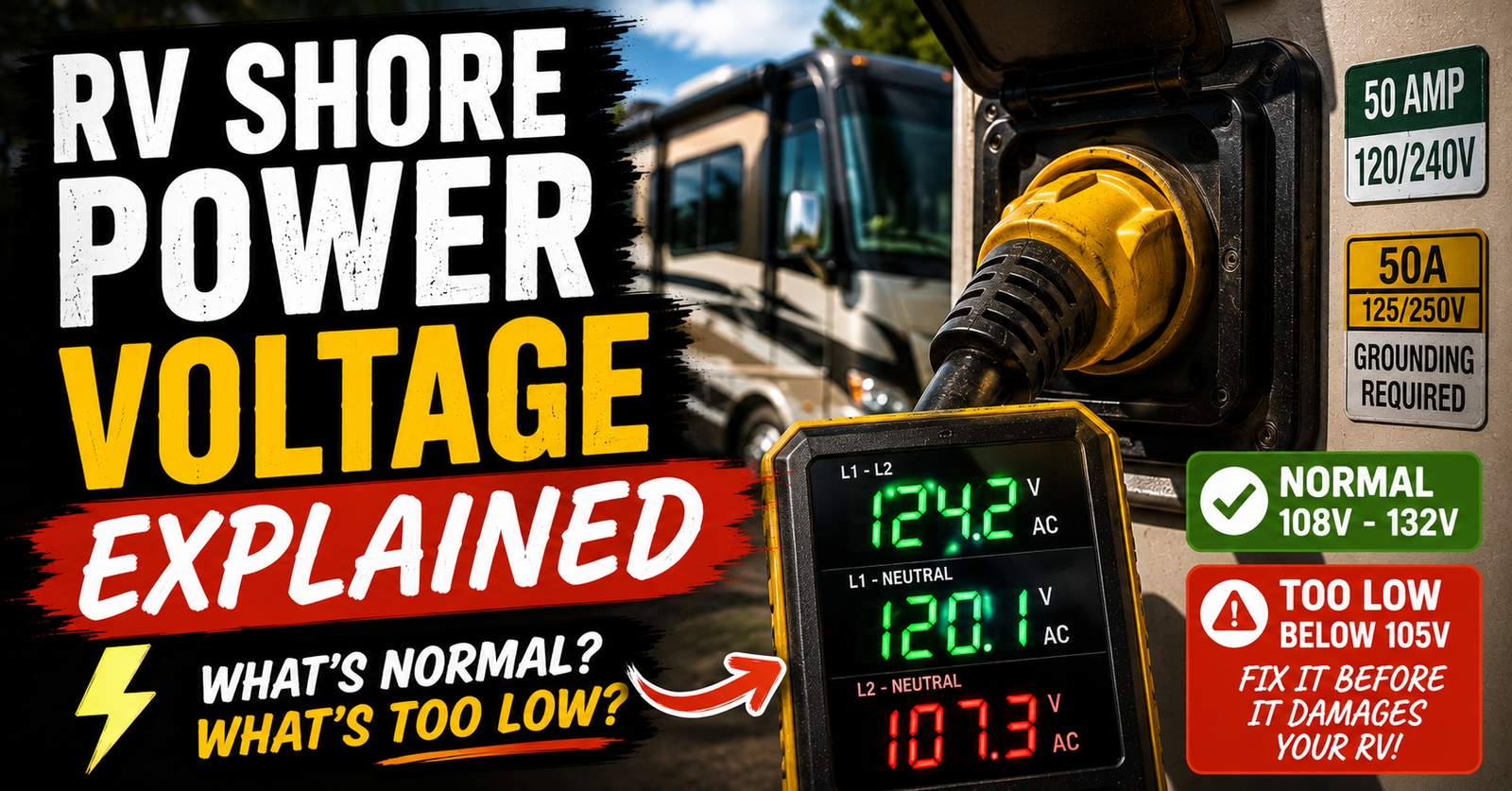
We just covered what normal RV shore power voltage should look like, including why I care about voltage under load.
Some EMS units automatically disconnect the camper when voltage becomes too low.
Progressive Industries equipment, for example, uses a low-voltage protection threshold below 104 volts and high-voltage protection above 132 volts on certain EMS models.
That means the device doesn’t just tell you:
“Hey, campground voltage looks terrible.”
It can actually prevent that power from continuing into the RV.


Why Does Low Voltage Matter?
Because electricity doesn’t have to disappear completely to become a problem.
Your pedestal can still have power.
The microwave display can still light up.
Your outlets can still work.
But the voltage may be far lower than what you want feeding certain equipment.
Air-conditioning equipment is one of my biggest concerns.
That’s why I’d rather have an EMS shut the camper down when incoming power becomes unacceptable than continue operating expensive equipment and hope everything survives.
This is also why a basic surge protector isn’t the whole story.
A surge and low voltage are different electrical conditions.
I want protection against both.
High Voltage Can Be a Problem Too
Low campground voltage gets more attention because RVers run into it frequently during hot weather.
But excessive voltage isn’t something I want entering the camper either.
A good EMS monitors both ends.
If incoming voltage gets too low, disconnect.
If it gets too high, disconnect.
That gives me a much more useful layer of protection than something designed only around sudden voltage spikes.
What Is an Open Neutral?
Here’s another condition most RV owners never think about until something goes wrong.
The neutral conductor is an important part of the shore-power circuit.
On 50 amp RV service especially, an open neutral can create serious voltage problems because the two 120-volt legs share that neutral.
A quality EMS can detect an open-neutral condition and prevent power from reaching the RV.
Progressive Industries documentation specifically lists open-neutral protection among its EMS functions and states that the system will not allow power into the RV when that condition exists.
That’s the kind of problem I want detected before I discover it by watching something expensive fail.
An Open Ground Matters Too
The equipment grounding conductor is another important safety component.
If the campground pedestal has an open ground, I want to know about it.
Again, a proper EMS can detect that condition and refuse to energize the camper.
Without monitoring equipment, you may plug into the pedestal and see everything inside the RV appear to work normally.
That’s what makes these problems tricky.
“The RV has power” doesn’t prove the pedestal is wired correctly.
What Does Reverse Polarity Mean?
Reverse polarity generally means the hot and neutral conductors have been reversed.
That’s another campground wiring condition a good EMS can detect.
Southwire includes reverse-polarity detection among the faults that cause its power-management equipment to shut off power to the coach.
Again, that’s why I like active monitoring.
I don’t want my first indication of a bad pedestal to be something inside the camper behaving strangely.
I’d rather the EMS say:
No power until this gets fixed.
An EMS Can Make It Look Like Your RV Has No Power
This is worth knowing before buying one.
You pull into a campground.
Plug in.
Nothing happens.
Your first thought might be:
“Great. My RV electrical system just broke.”
Not necessarily.
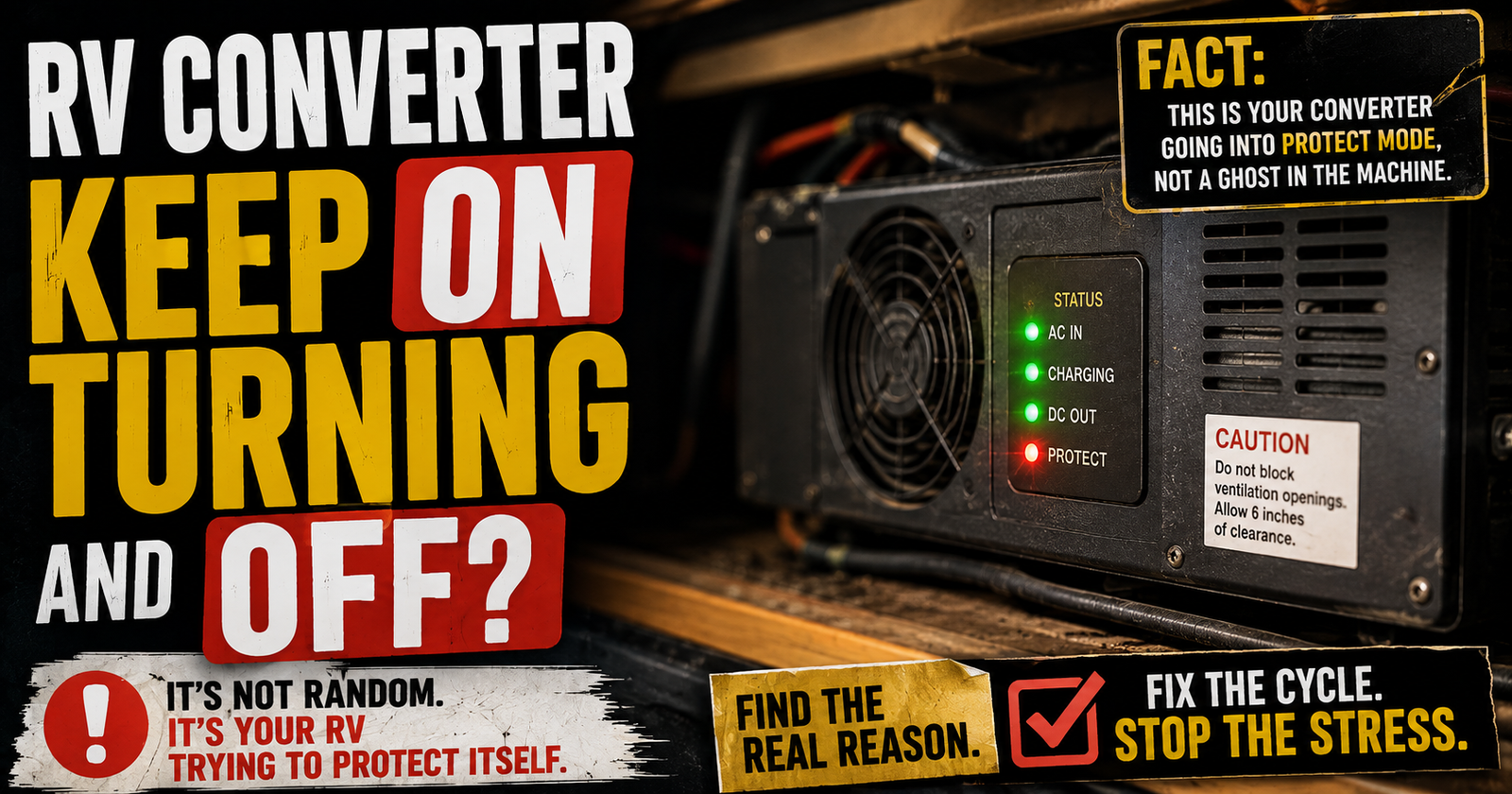
The EMS may have found something wrong with the pedestal and intentionally refused to connect the camper.
That’s exactly what it’s supposed to do.
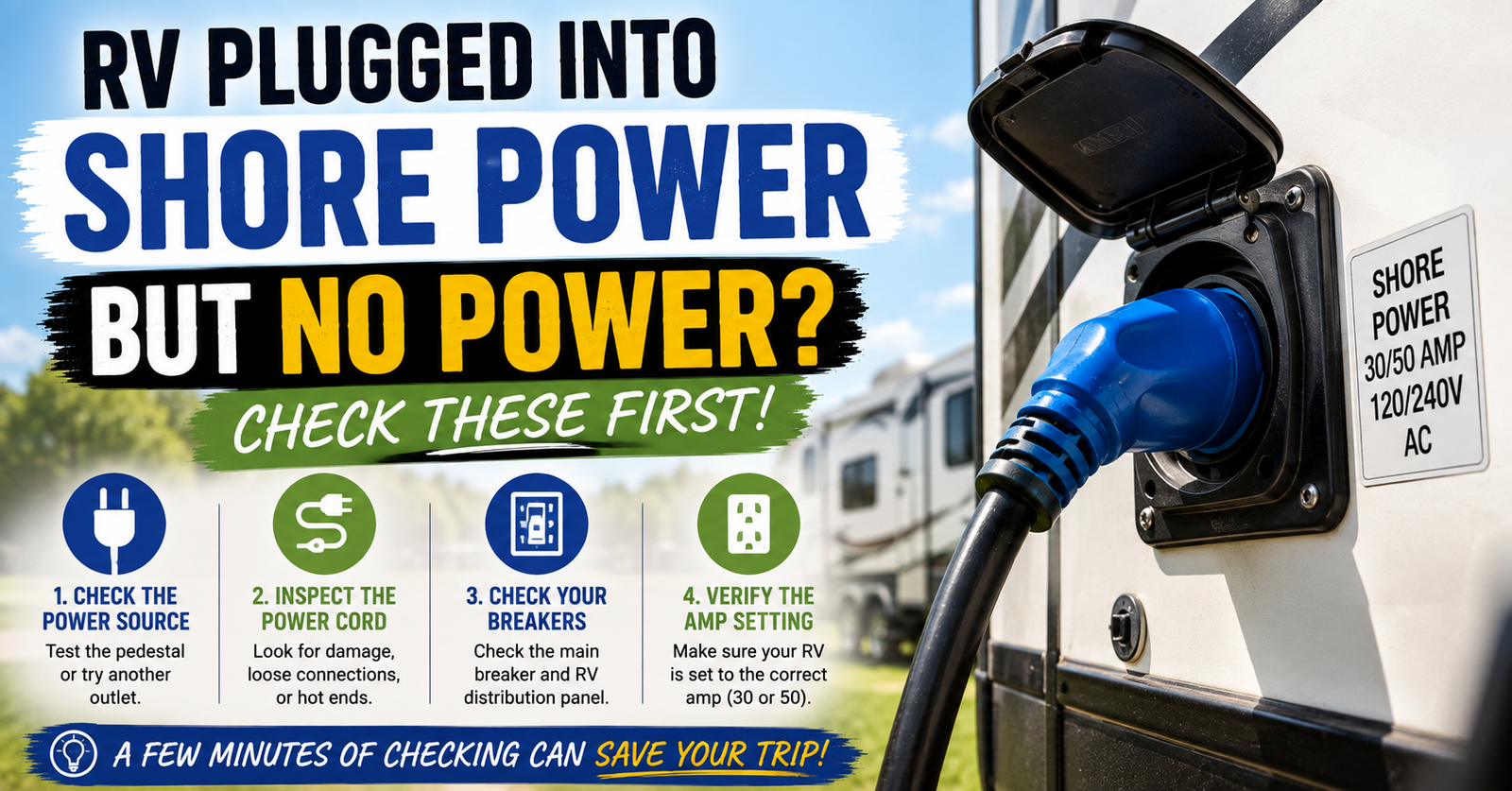
If you’ve ever dealt with an RV that’s plugged into shore power but has no power, the EMS display or error lights should be one of the first things you check when one is installed.
Don’t bypass the protection before finding out why it blocked the connection.
Why Does My EMS Wait Before Turning the RV On?
Another thing that confuses new owners is the delay.
You plug in.
Nothing.
Ten seconds.
Still nothing.
You start wondering what broke.
Some power-management systems intentionally delay connecting the RV after incoming power appears.
Southwire documentation for certain Surge Guard systems, for example, describes a startup delay while the device evaluates incoming shore power before energizing the coach.
So know how your particular unit works.
A short delay doesn’t automatically mean something is wrong.
Do I Need an RV Surge Protector at a New Campground?
I would still use one.
A beautiful new pedestal doesn’t prove every electrical connection behind it is perfect.
Likewise, an older campground doesn’t automatically have terrible electricity.
I don’t try to judge electrical quality by how nice the campground looks.
That’s one of the advantages of having monitoring equipment.
It measures what’s actually happening instead of relying on appearances.
Do I Need One at a Campground I’ve Used Before?
I’d still use it.
Maybe you’ve camped there 20 times.
That doesn’t mean nothing can change.
A receptacle can wear.
A connection can loosen.
Electrical demand can change.
Weather can affect equipment.
Repairs can be made.
Utility conditions can change.
If I’ve already bought the protection, I don’t see any reason to leave it in the storage compartment because:
“This campground is usually good.”
Do I Need a Surge Protector When Plugged Into 30 Amp Service?
Yes, I’d protect a 30 amp RV.
Remember, a 30 amp RV can draw up to about:
120 volts × 30 amps = 3,600 watts
That’s plenty of electricity feeding plenty of equipment.
The fact that it’s “only” 30 amp service doesn’t make bad campground power harmless.
You simply need protection designed and rated for the electrical service you’re using.
What About a 50 Amp RV?
I’d arguably want good protection even more.
A standard 50 amp RV service has two 120-volt hot legs, each capable of supplying up to 50 amps.
That’s around 12,000 watts of total available power.
If that sounds wildly larger than 30 amp service, it is.
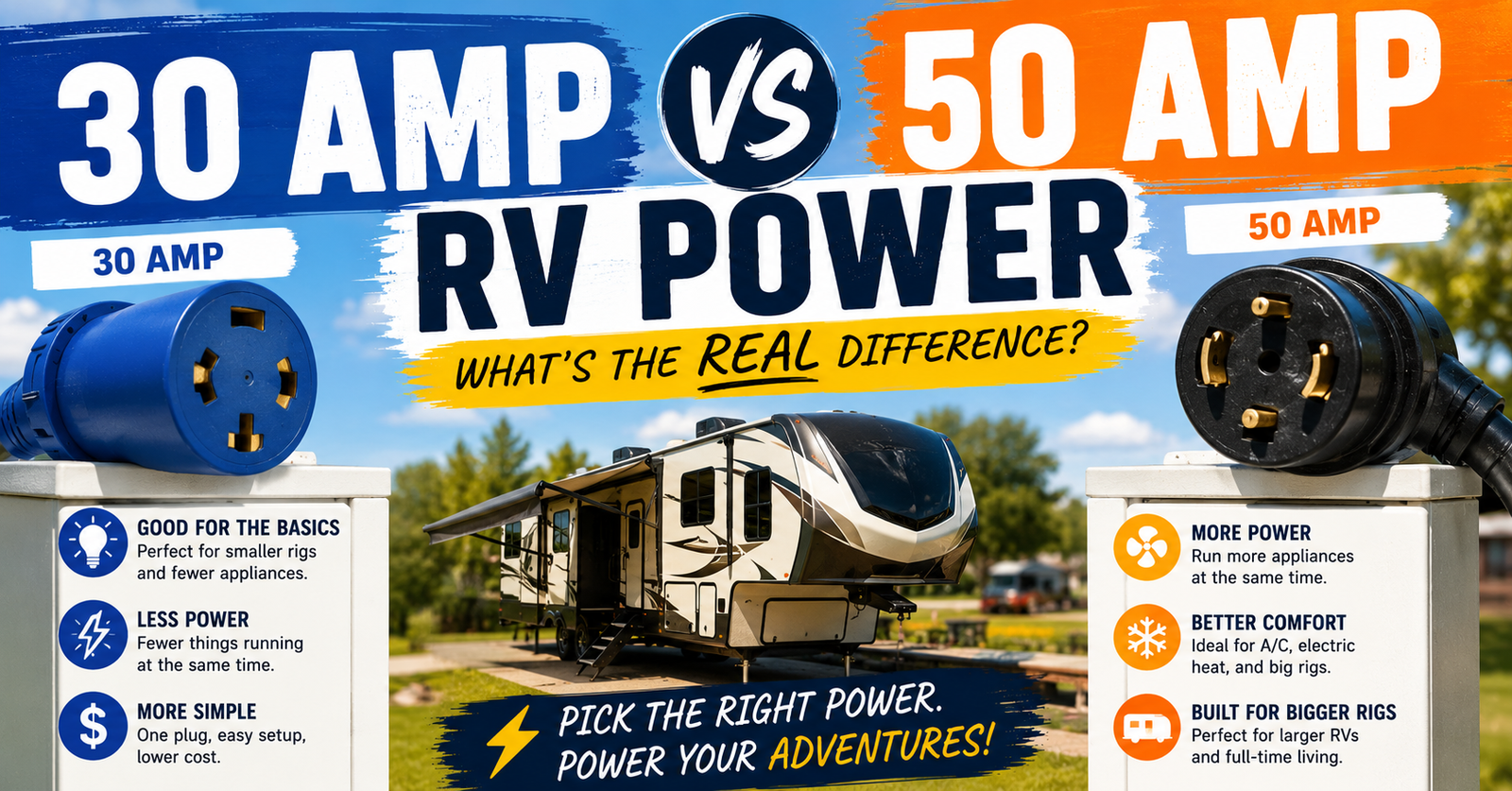
Our 30 amp vs 50 amp RV power guide explains why 50 amp RV service provides so much more usable power.
A 50 amp EMS can also monitor the conditions on both incoming legs.
That’s something I’d absolutely want on a large fifth wheel or motorhome packed with expensive electrical equipment.
Do I Need a 30 Amp or 50 Amp Surge Protector?
Match the protection equipment to your RV’s normal shore-power service.
If you own a 30 amp RV, I’d buy protection intended for 30 amp RV service.
If you own a 50 amp RV, I’d buy a 50 amp unit.
That keeps the equipment matched to the camper’s electrical system.
Don’t choose based solely on whatever pedestal happens to be available at one campground.
What If I Plug My 30 Amp RV Into a 50 Amp Outlet?
You can still use appropriate RV electrical protection.

We’ve already covered how a 30 amp RV can connect to a 50 amp campground outlet with the proper adapter.
The RV itself is still a 30 amp RV.
Using an adapter doesn’t suddenly convert the camper into 50 amp service.
I still want the RV properly protected.
What If I Plug My 50 Amp RV Into 30 Amp Service?
Same basic idea.
The camper is still a 50 amp RV, but you’re connecting it to a much smaller source through the proper adapter.
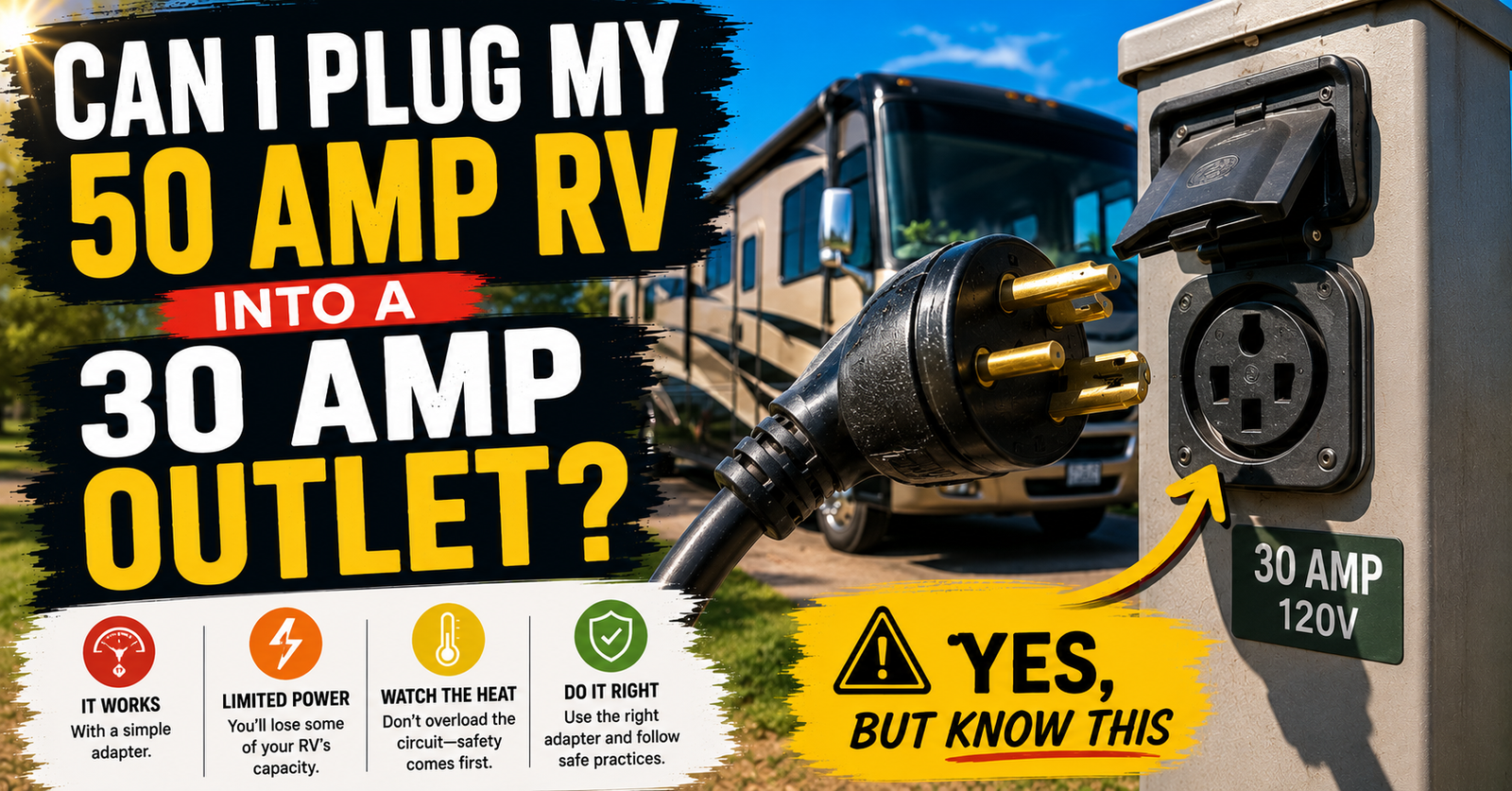
We’ve already explained what happens when a 50 amp RV uses a 30 amp hookup.
The big limitation is available power.
You need to manage electrical loads much more carefully.
Electrical protection doesn’t give you additional amperage.
A Surge Protector Doesn’t Give You More Power
This is worth stating clearly.
An EMS isn’t a power booster.
If the campground provides 30 amp service, your EMS doesn’t turn that into 50 amp service.
If the campground voltage is low enough to be unsafe, a typical EMS may disconnect the camper rather than increase the voltage.
That’s different from an RV voltage booster or autoformer.
So don’t buy an EMS expecting it to solve every campground electrical limitation.
Its job is protection.
What About an RV Autoformer?
An autoformer or voltage booster is another piece of equipment with a different purpose.
It’s designed to help increase low incoming voltage within its operating range.
An EMS primarily monitors incoming power and disconnects the RV when conditions become unacceptable.
Some RV owners use both types of equipment depending on their setup and camping habits.
But for someone asking me:
“What’s the first electrical-protection device I should buy?”
I’d start with a quality EMS.
Portable vs Hardwired RV Surge Protector
This is another decision you’ll run into.
Portable
A portable unit plugs directly into the campground pedestal.
Then your RV shore cord connects to it.
The advantage is simplicity.
No permanent installation.
You can move it from RV to RV.
You can also see and access it easily at the pedestal.
Hardwired
A hardwired EMS is permanently installed inside the RV’s shore-power system.
Southwire, for example, offers permanently installed power-management equipment designed to continuously monitor incoming shore power.
The advantage is that you don’t have to remember to plug it in every time.
It’s also much harder for someone to walk away with it.
Can Someone Steal a Portable RV Surge Protector?
Unfortunately, yes.
A portable EMS sitting at a campground pedestal isn’t exactly hidden.
Some RV owners use locking devices or cable locks to discourage theft.
A hardwired unit eliminates that particular concern because the equipment is installed inside the camper.
For me, this choice comes down mostly to:
Convenience.
Installation.
Price.
Whether I plan to keep the RV for a long time.
How worried I am about theft.
Both approaches can provide excellent protection if you’re comparing similarly capable units.
Should the Surge Protector Go Before or After My Adapter?
Follow the manufacturer’s instructions for your particular equipment and adapter arrangement.
I don’t like making a universal connection rule when different products can have different requirements.
What I care about is that the protection equipment is correctly rated, connected according to its instructions, and capable of monitoring the shore power feeding the RV.
Don’t improvise an electrical chain just because all the plugs happen to fit together.
Can a Surge Protector Keep My Shore Cord From Getting Hot?
Not necessarily.
This is another important limitation.
An EMS can detect certain voltage and wiring problems.
But it cannot magically repair a loose physical connection between your shore plug and a worn campground receptacle.
A poor connection can create resistance and heat.
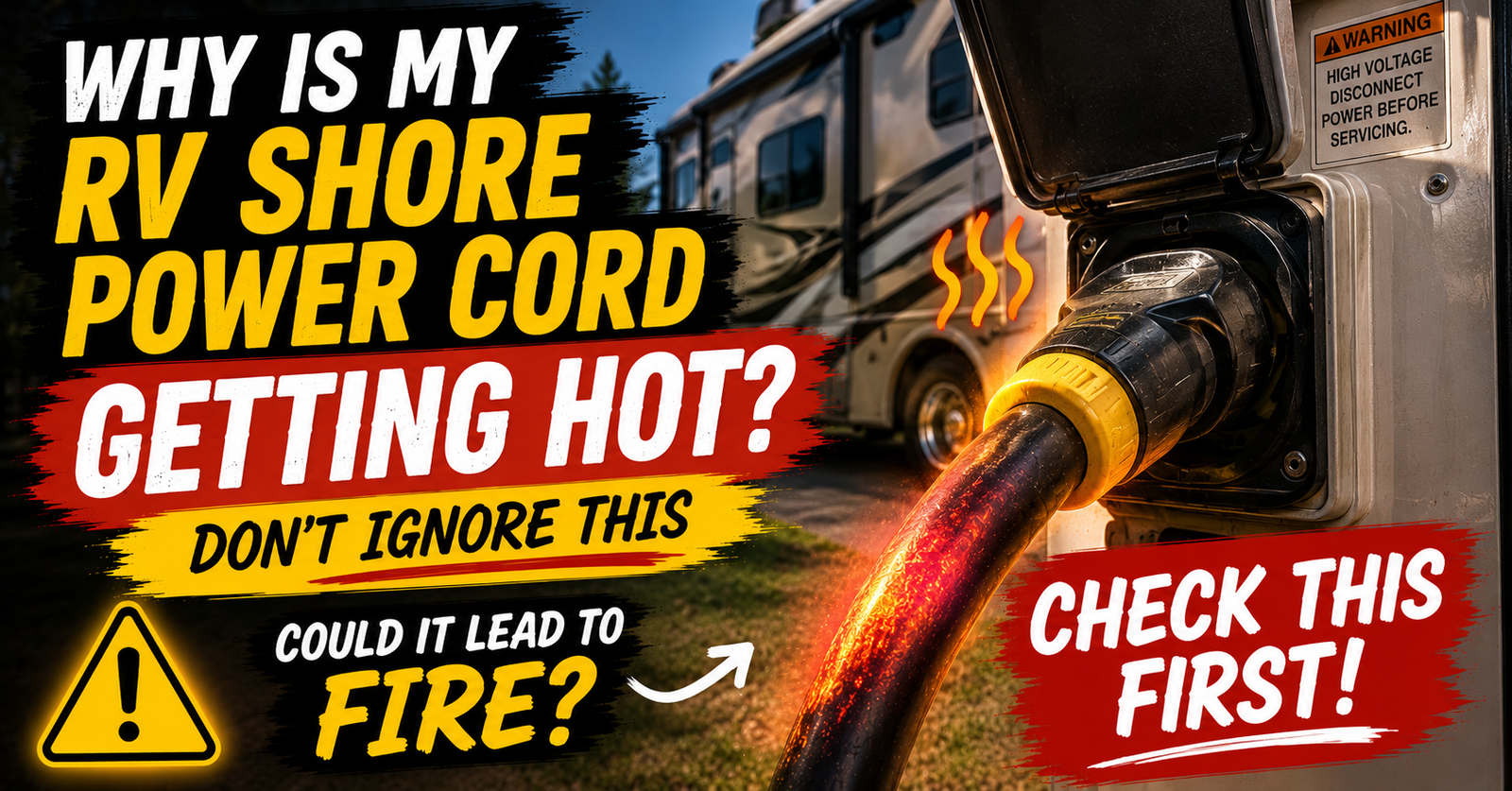
That’s why you still need to pay attention to an RV shore power cord or plug that’s getting unusually hot.
Electrical protection doesn’t eliminate the need to inspect your plugs and connections.
Can an EMS Stop My Breaker From Tripping?
Not if you’re simply using too much electricity.
Suppose you’re on 30 amp service.
Air conditioner running.
Water heater on electric.
Converter charging.
Microwave starts.
Coffee maker is going.
If your total load exceeds the circuit’s capacity, the breaker may trip.
An EMS doesn’t turn a 30 amp hookup into unlimited electricity.
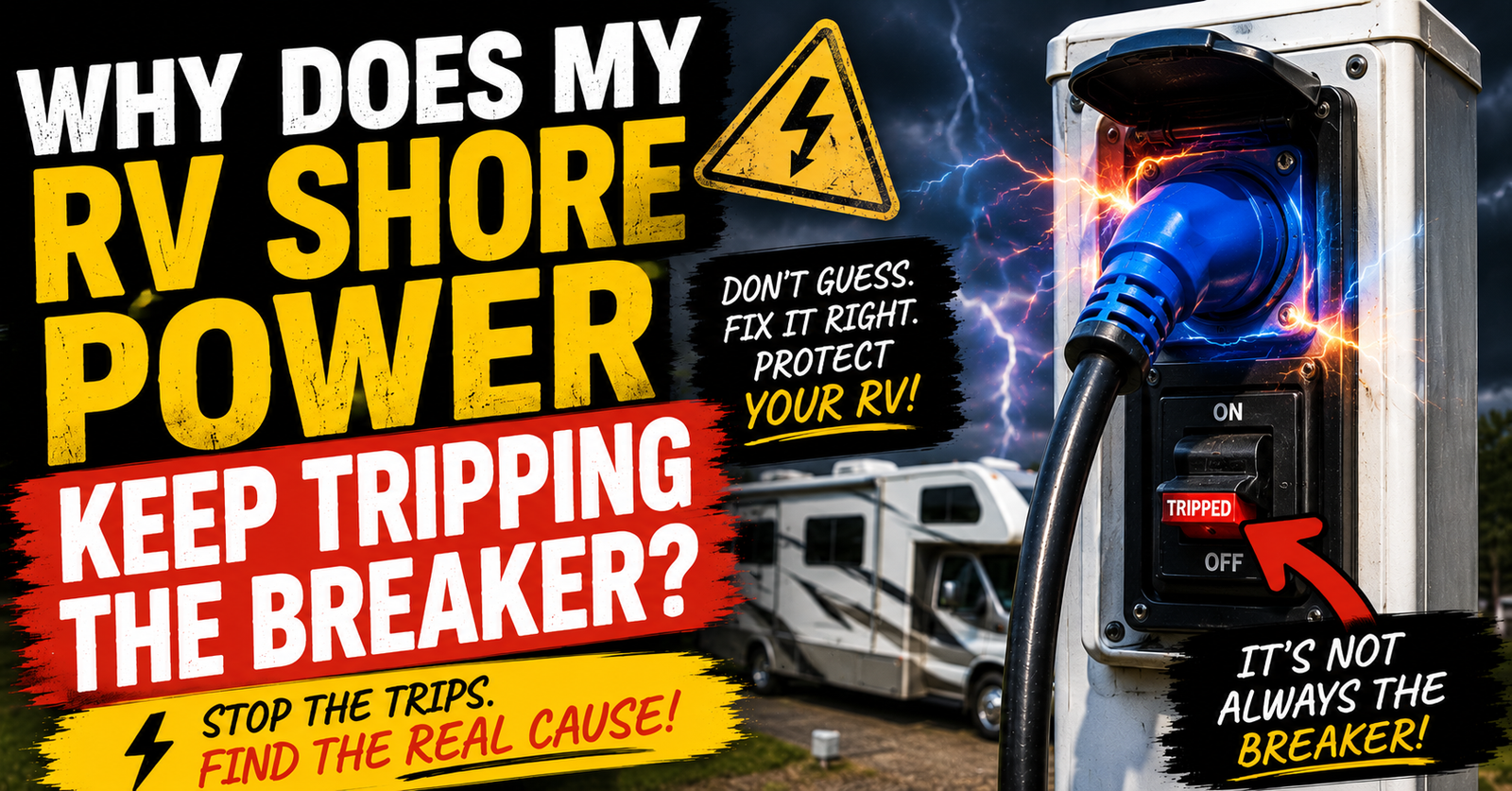
We’ve already covered why an RV shore-power breaker keeps tripping separately because that’s an electrical-load and fault troubleshooting problem.
Does an RV Surge Protector Protect Against Lightning?
Surge protection can help protect RV equipment against transient overvoltage events.
But I wouldn’t interpret that as a guarantee that any plug-in device makes an RV invincible against a direct lightning strike.
Lightning involves enormous energy.
I think of surge protection as reducing risk from electrical transients and abnormal power conditions, not creating an impenetrable electrical force field around the camper.
That’s another reason I care more about the whole protection package than a giant lightning-bolt graphic on the product box.
How Many Joules Should an RV Surge Protector Have?
You’ll see joule ratings advertised heavily.
Joules describe how much surge energy the protection circuitry is designed to absorb.
More capacity can be useful, but I wouldn’t choose an RV electrical-protection device based on joules alone.
For example, Southwire’s 50 amp hardwired Surge Guard combines surge protection with monitoring for multiple shore-power faults.
That’s what I want.
Not just:
Big joule number = best product.
I’d compare the complete protection features.
Surge Protection Can Wear Out
This is something people don’t always realize.
Surge-protection components don’t necessarily last forever.
They can sacrifice themselves while absorbing electrical events.
Some EMS equipment can actually indicate when its surge-protection module has been depleted and needs service or replacement. Progressive Industries documentation, for example, uses an error condition to indicate when its surge protection needs replacement.
So don’t buy one, toss it in the electrical bay for 12 years, and assume it must still provide exactly the same protection forever.
Check its status indicators.
Why Did My EMS Shut the RV Off in the Afternoon?
Now you understand one likely reason.
Low voltage.
Imagine the campground at 8:00 a.m.
You’re seeing:
120 volts.
Perfect.
Then it’s 97 degrees outside.
Every camper turns on its air conditioner.
By late afternoon the campground electrical system is under a much heavier load.
Voltage falls.
Your EMS sees the incoming voltage cross its protection threshold and disconnects the camper.
That doesn’t necessarily mean your EMS is defective.
It may have just protected your RV.
Don’t Automatically Bypass an EMS Error
This is one of my strongest recommendations.
The device says:
Open ground.
Open neutral.
Reverse polarity.
Dangerously low voltage.
And somebody says:
“There’s a bypass button. Just bypass it.”
I’d want to know why the error exists first.
Some manufacturer guidance specifically cautions against bypassing electrical protection unless you’re certain the power source is safe.
If the campground pedestal has a legitimate wiring fault, bypassing your EMS simply removes the thing standing between that fault and your camper.
Tell the Campground
If your EMS identifies a pedestal problem, involve campground management.
Don’t open their electrical pedestal and start repairing wiring.
Tell them what the EMS is reporting.
They may inspect the pedestal.
They may move you to another campsite.
If you move to another properly wired pedestal and the error disappears, that’s useful information.
If the same error follows your RV everywhere, then the camper or your equipment deserves investigation.
What If My EMS Says the Pedestal Is Good?
That’s reassuring, but it doesn’t prove every electrical component inside your RV is healthy.
The EMS primarily protects and monitors the incoming electrical supply.
You can still have an internal problem such as:
A bad outlet.
A tripping GFCI.
A failed appliance.
A branch-circuit problem.
A converter issue.
A loose connection.
A bad breaker.
That’s why this shore-power cluster has become so useful.
We’ve separated these symptoms instead of treating every electrical problem as:
“The shore power isn’t working.”
Is an RV Surge Protector Worth the Money?
For me, yes.
Look at what it’s protecting.
A rooftop air conditioner can be expensive.
So can an inverter/charger.
Refrigerator electronics aren’t free.
Neither are control boards, converters, televisions, microwaves, and everything else connected to the camper’s electrical system.
I’m already paying for the RV.
I’m already paying campground fees.
Buying one good electrical-protection device that I can use every time I connect to shore power makes sense to me.
And I would rather buy the more complete protection once than buy a basic surge-only device and later realize I really wanted low-voltage and pedestal-fault protection too.
What I Would Buy
I would look for a 30 amp or 50 amp EMS matched to my RV, not simply the cheapest product with “surge protector” in the name.
At minimum, I’d want to see protection or detection for:
Surges.
Low voltage.
High voltage.
Open neutral.
Open ground.
Reverse polarity.
I’d also want a clear display or error system that tells me why power was disconnected.
That’s incredibly useful when you’re standing beside a campground pedestal wondering why your camper won’t turn on.
This Is One RV Accessory I Wouldn’t Leave at Home
There are plenty of RV accessories you can live without.
You don’t need every gadget somebody on YouTube puts in an Amazon storefront.
But electrical protection is different for me.
Every time you plug into a campground, you’re trusting an electrical system you don’t own and usually know almost nothing about.
A good EMS sits between that unknown power source and your camper.
It watches what’s coming in.
And when something is seriously wrong, it can simply refuse to let that power through.
After seeing how many different shore-power problems can occur, that’s exactly where I’d want it.
Written by Evan Mercer
Evan Mercer writes about RV electrical systems, shore power, campground hookups, batteries, converters, and practical camper troubleshooting for CamperAnswers.com. He focuses on helping RV owners understand how their electrical systems work so they can recognize bad campground power before it becomes an expensive lesson.