
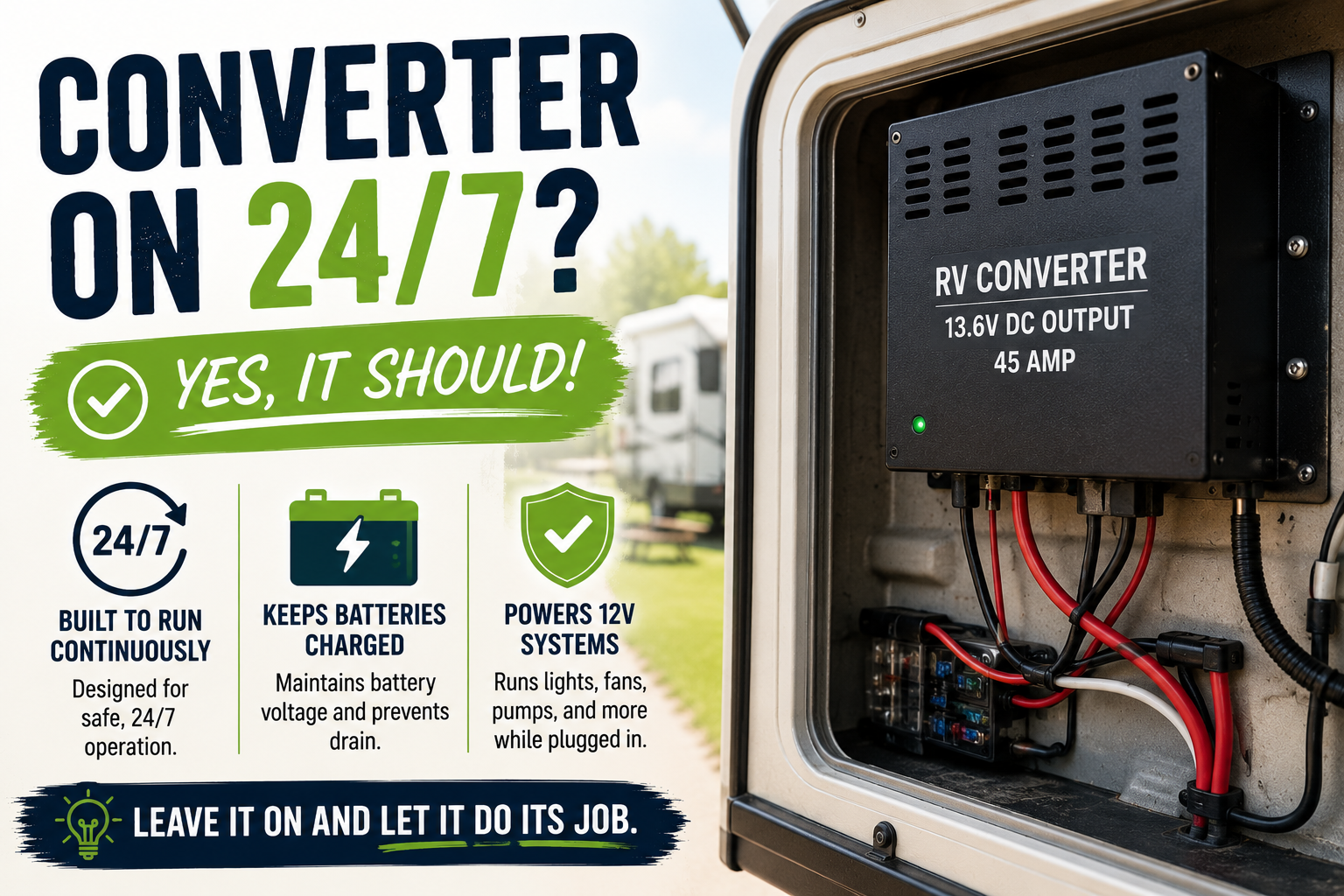
You plug your RV into shore power and start wondering about that converter tucked away behind the power center. Is that thing seriously supposed to stay on the entire time the camper is plugged in?
In most RVs, yes, the converter is designed to remain powered whenever the RV has shore power available. That doesn’t mean it should constantly charge the battery at maximum output, run its cooling fan nonstop, or make noise 24 hours a day. A modern converter/charger changes what it’s doing depending on the battery and the amount of 12-volt power your RV needs.
That’s the distinction that matters.
The converter being on all the time can be perfectly normal.
The converter acting like it’s working at full blast all the time deserves a closer look.
What Your Converter Is Doing While You’re Plugged In
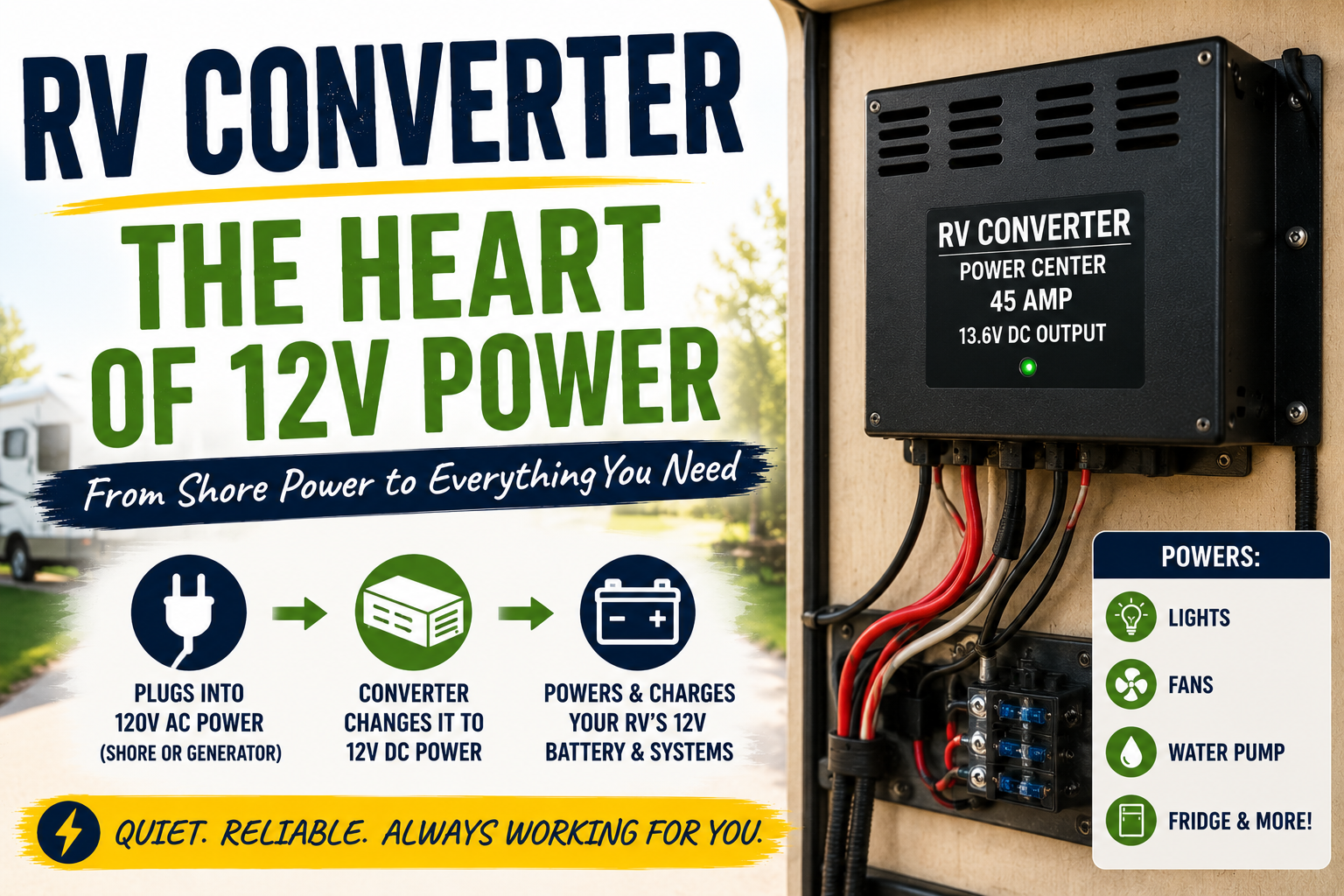
Your converter has two closely related jobs.
It supplies DC electricity to the RV’s 12-volt system, and it charges or maintains the house battery.
WFCO explains that its converters can provide nominal 12-volt power to an RV even without a battery connected. When a battery is present, converter capacity can also be used to recharge it.
So imagine you’re sitting at a campground with shore power connected.
Your ceiling lights are on.
The furnace blower kicks on.
You use the water pump.
A vent fan is running.
Various control boards and electronics are using 12-volt electricity.
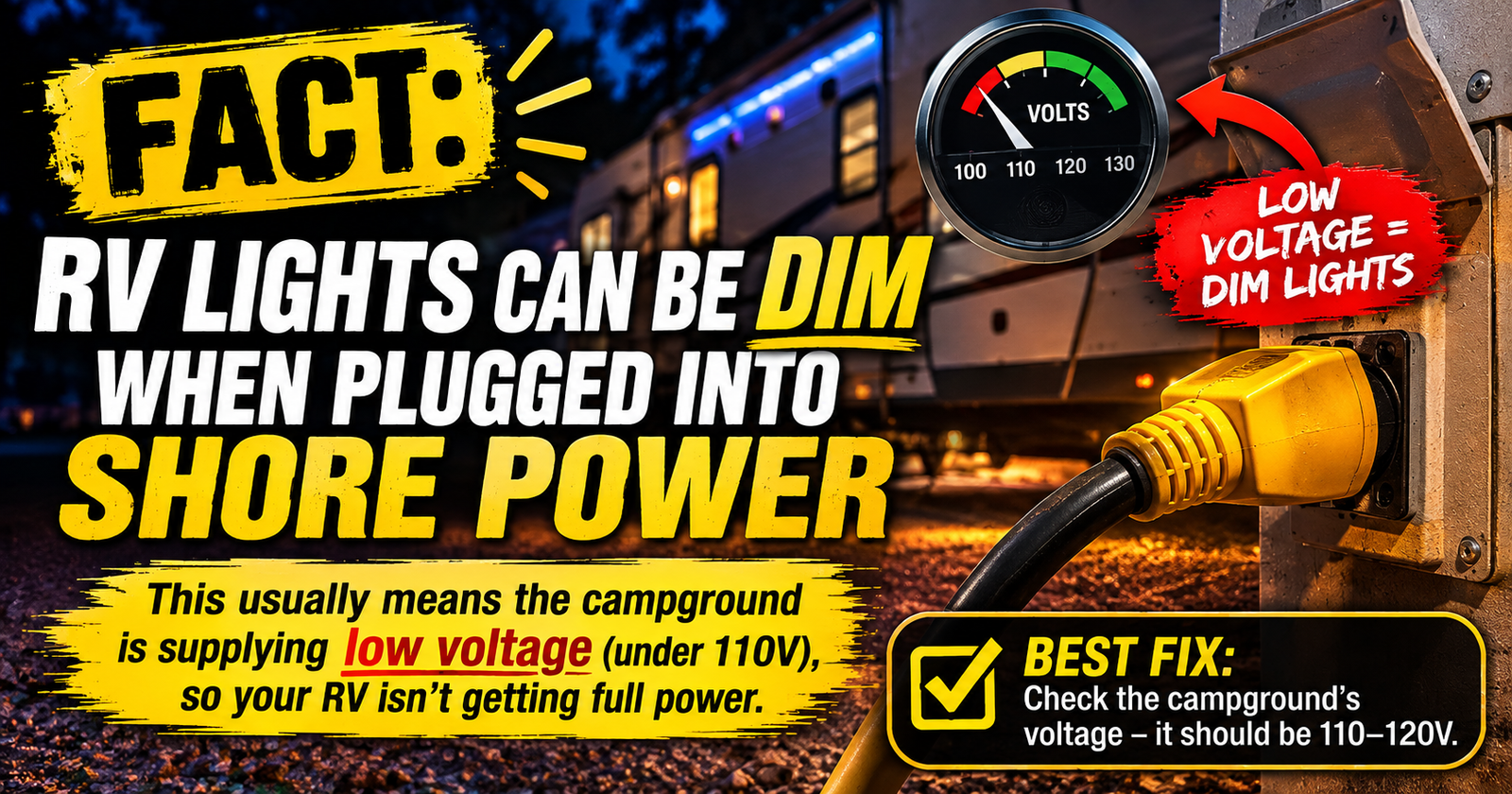
Your converter has work to do even if the battery is already charged.
That’s why I don’t think of the converter as something that should simply turn off the moment the battery reaches 100 percent.
The Converter Doesn’t Completely Shut Off When the Battery Is Full
This surprises a lot of RV owners.
A modern converter/charger doesn’t necessarily say:
Battery full. My work here is done.
Then shut itself completely off.
Progressive Dynamics says its applicable converter/chargers reduce battery charging current to a very low level after the battery reaches full charge. The converter can then replace the battery’s normal self-discharge losses to maintain it.
Meanwhile, the converter is still available to supply the RV’s 12-volt equipment.
That’s normal operation.
Staying On and Charging Hard Are Two Different Things
This is probably the most important thing to understand.
Your converter can remain powered while doing very little battery charging.
Let’s say you’re using a modern multi-stage converter with a healthy, fully charged lead-acid battery.
The converter doesn’t need to keep pounding that battery with maximum charging voltage.
It can transition into a lower charging or maintenance stage.
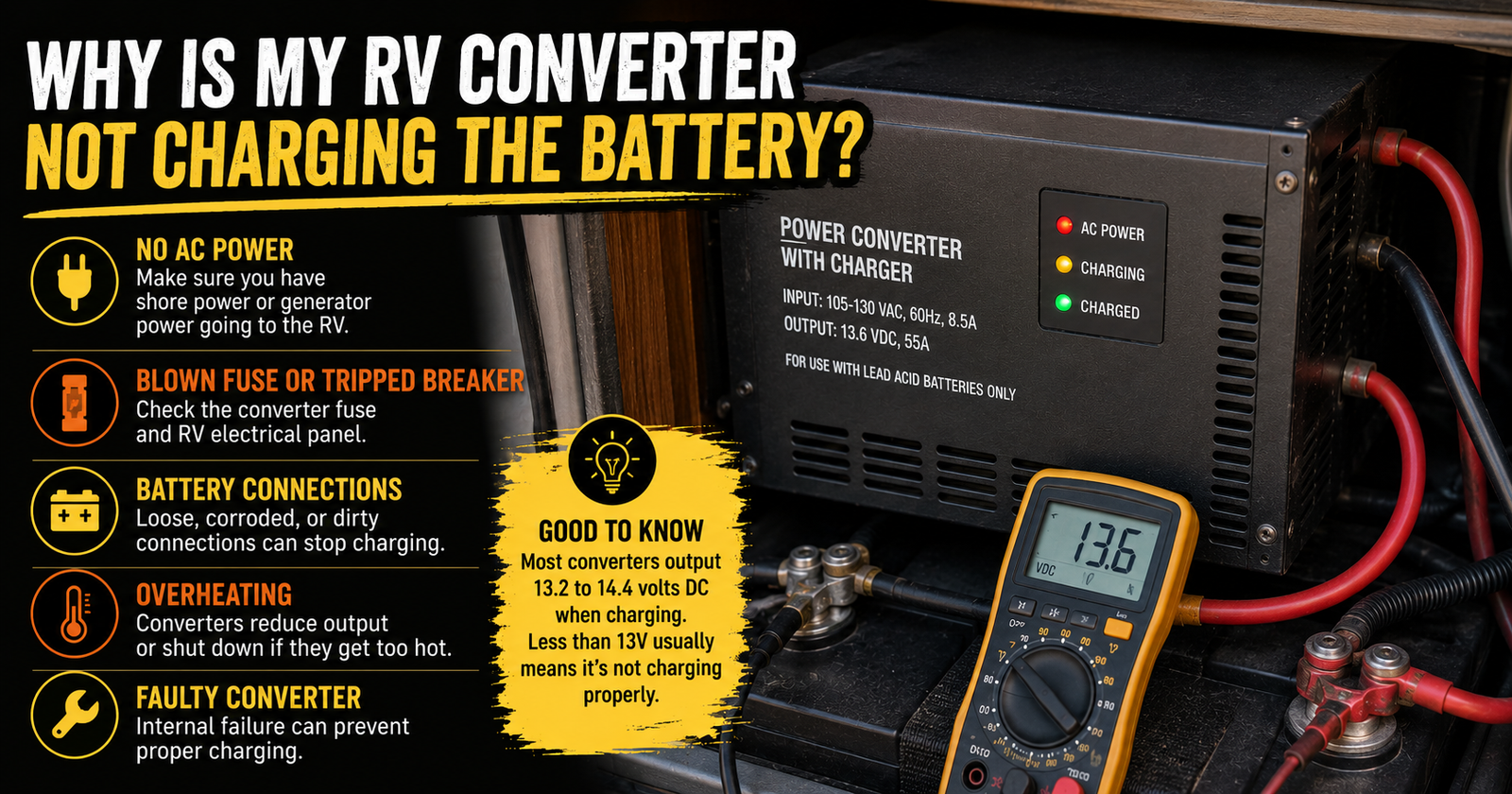
WFCO, for example, describes applicable three-stage converters that operate around 14.4 volts during bulk charging, approximately 13.6 volts during normal absorption operation, and approximately 13.2 volts in float mode.
Those numbers aren’t universal for every converter and every battery chemistry.
The point is that converter output changes.
It doesn’t have to shut completely off to stop aggressively charging the battery.
So Is It Okay to Leave My RV Converter On Overnight?
Under normal circumstances, yes.
That’s what it’s designed for.
If I’m camping with shore power connected, I’m certainly not getting out of bed at midnight to turn the converter off.
I want the converter supplying the RV’s 12-volt equipment and maintaining the battery.
The same applies when you’re connected for several days at a campground.
A properly functioning converter/charger that’s compatible with your battery should manage charging automatically.


Can I Leave the Converter On for Weeks?
This depends more on what equipment you have.
With a healthy battery and a properly functioning modern multi-stage converter that’s designed for that battery chemistry, extended shore-power connection is normal use.
WFCO’s float mode, for example, is specifically intended to maintain a charged battery while the RV isn’t being used, using a lower output voltage to help preserve battery life.
That’s much different from an old fixed-voltage charging system.
If I owned an older camper and didn’t know what converter was installed, I’d identify it before assuming it had modern battery-maintenance capabilities.
Older RV Converters Are Where I’d Pay More Attention
RV converter technology has improved tremendously.
Some older converters weren’t nearly as sophisticated about battery charging.
That’s why you’ll hear longtime RV owners say things like:
“Never leave your camper plugged in or it’ll boil the battery dry.”
There was some real-world experience behind that advice.
But you can’t automatically apply the behavior of a decades-old converter to every modern multi-stage converter/charger.
Find the model number.
That’s one of the most useful things you can do when learning your camper’s electrical system.
How Do I Know What Converter I Have?
Start around the RV’s electrical distribution panel.
Some campers have the converter integrated into the power center.
Others have a separate converter located nearby or somewhere else in the camper.
Look for a manufacturer and model number.
WFCO.
Progressive Dynamics.
Parallax.
IOTA.
PowerMax.
Or another manufacturer.
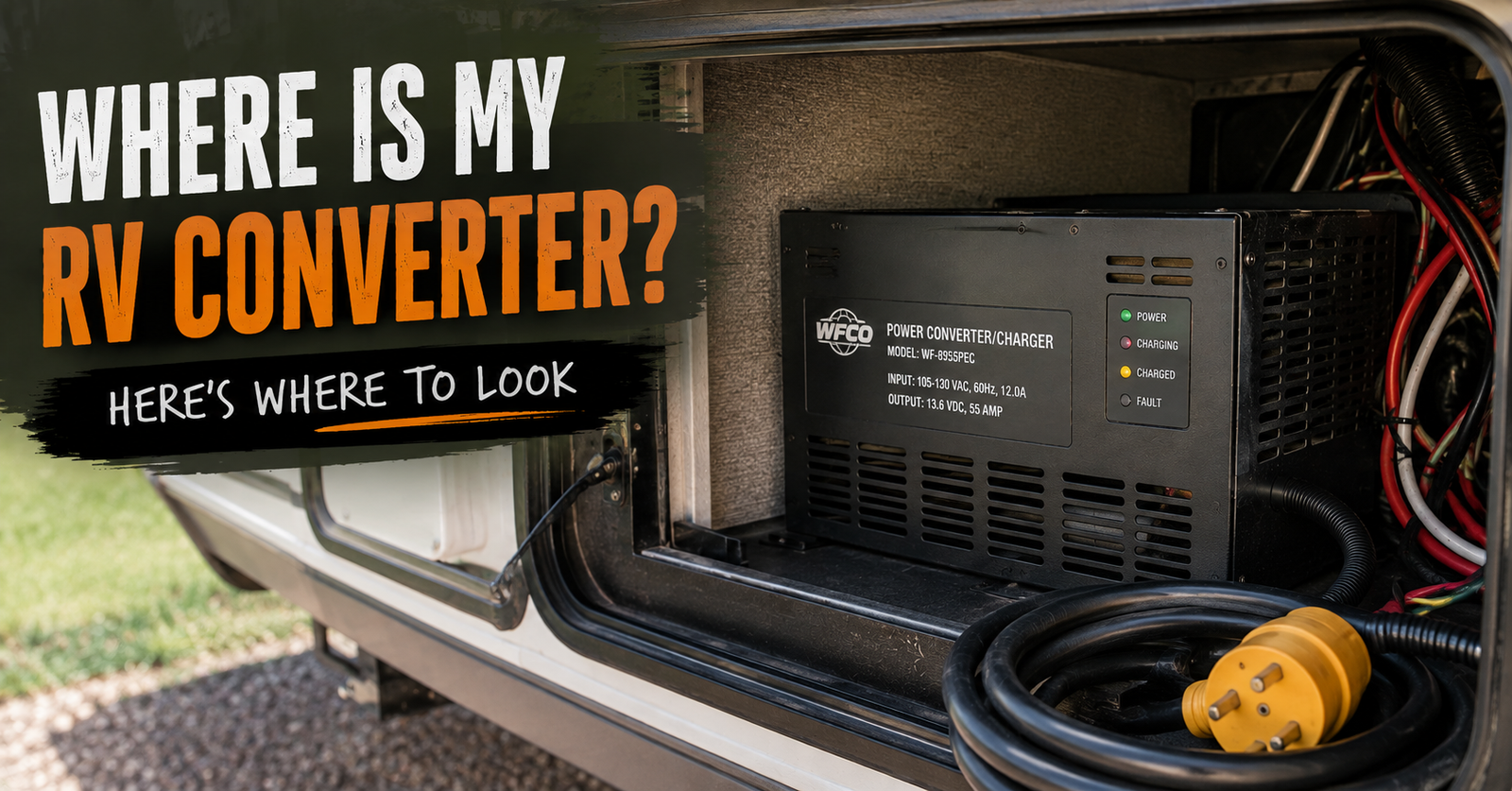
If you can’t find yours, our guide showing where RV converters are commonly located will give you the places I’d check first.
Once you have the model number, you can find out exactly how that converter is supposed to behave.
Should the Converter Fan Run All the Time?
Now we’ve got a different question.
No, the converter being powered all the time does not necessarily mean its fan should run all the time.
Many modern converters use load-controlled or temperature-controlled cooling fans.
WFCO says the fan on applicable converters responds to DC load, starting at lower speeds as demand increases and eventually shutting off when demand drops sufficiently.
Progressive Dynamics similarly says the intelligent fan on applicable 9100 and 9200 series converters uses temperature sensing and operates only as much as necessary.
So the converter can be powered while its fan sits completely still.
That’s normal.

Why Does My Converter Fan Run So Much?
Usually because the converter is working harder.
Maybe the battery is heavily discharged.
Maybe you’re using several 12-volt appliances.
Maybe both are happening at once.
WFCO points out that converter amperage supplies the RV’s DC loads first, with the remaining capacity available for battery charging.
A discharged battery can also pull substantial current from the converter.
More converter load means more heat.
More heat often means more fan operation.
That’s why a fan that runs frequently immediately after you plug in with a low battery doesn’t automatically concern me.
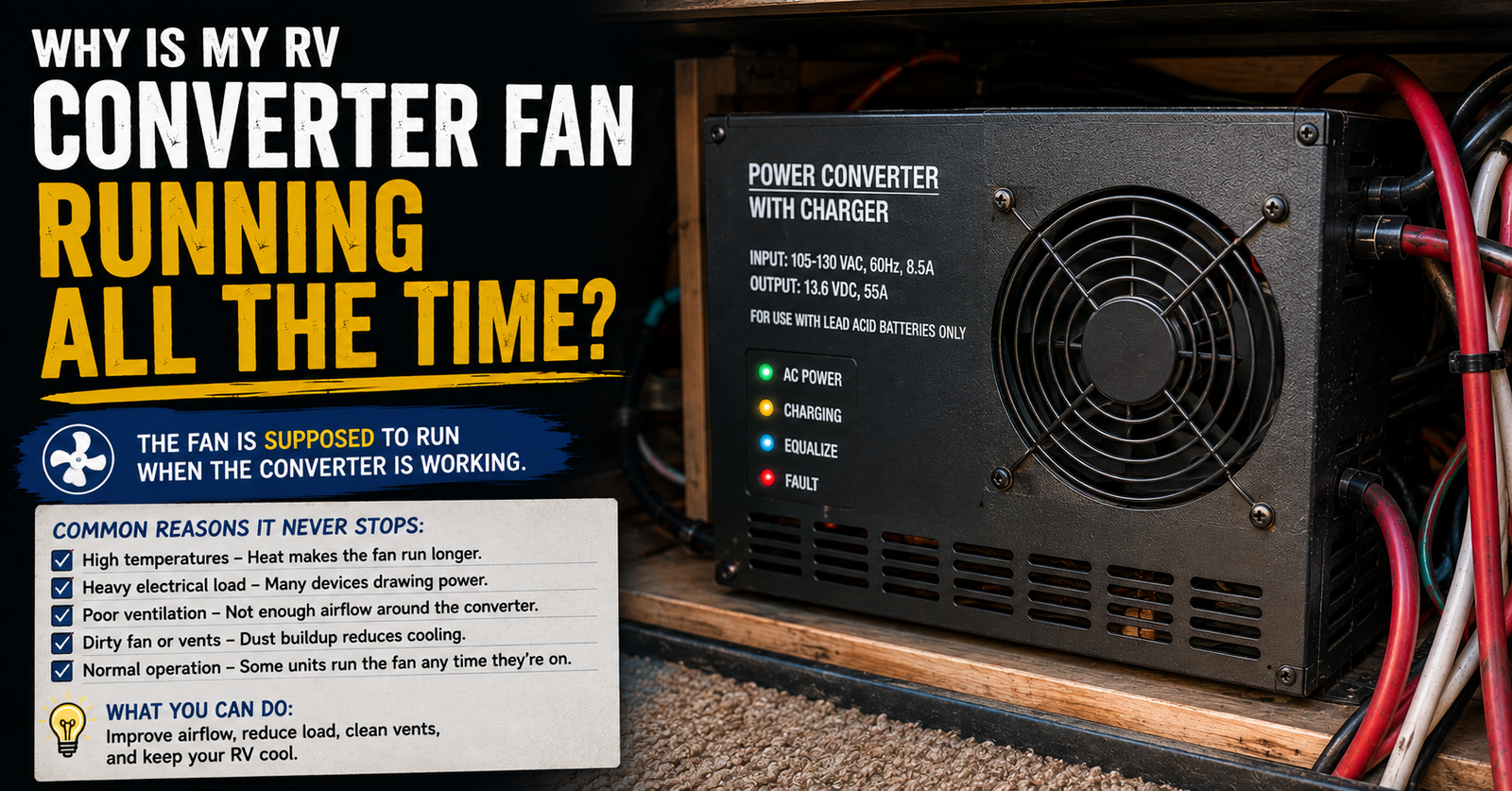
If it never seems to stop, that’s when I’d investigate further using our guide to why an RV converter fan runs all the time.
What If the Converter Fan Never Runs?
That isn’t automatically a problem either.
If the battery is charged and you’re barely using any 12-volt equipment, the converter may not need much cooling.
A quiet fan can be perfectly normal.
What concerns me is a converter that’s obviously hot and working hard but never runs its cooling fan when its design says the fan should operate.
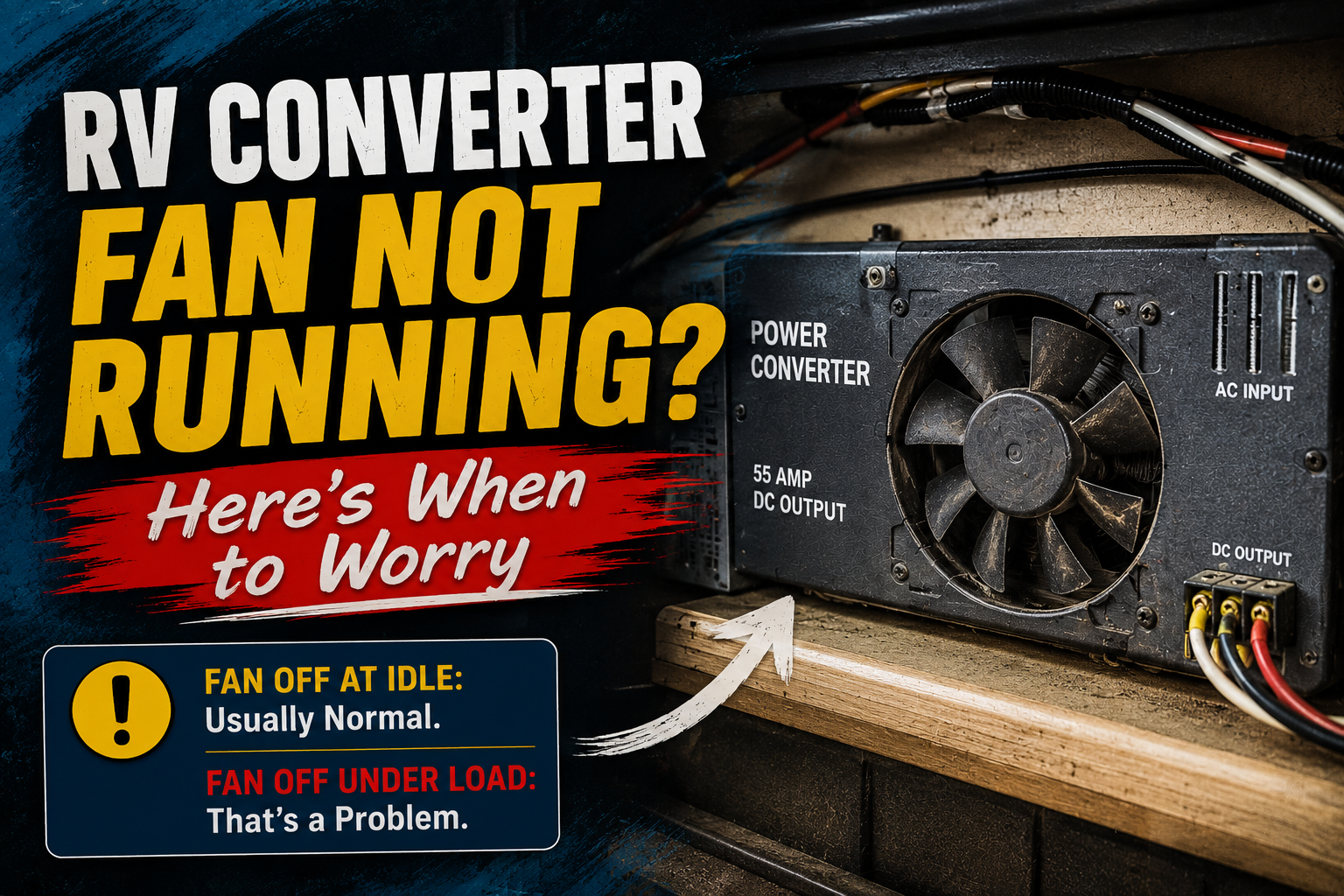
We’ve covered that situation separately in what to check when an RV converter fan isn’t running.
Again, context matters.
Should the Converter Make Noise All the Time?
Not necessarily.
You may occasionally hear the cooling fan.
Some converters produce a mild electrical hum.
But a converter shouldn’t suddenly become dramatically louder just because staying powered is normal.
Buzzing, clicking, whining, rattling, or other new sounds can point toward completely different issues.
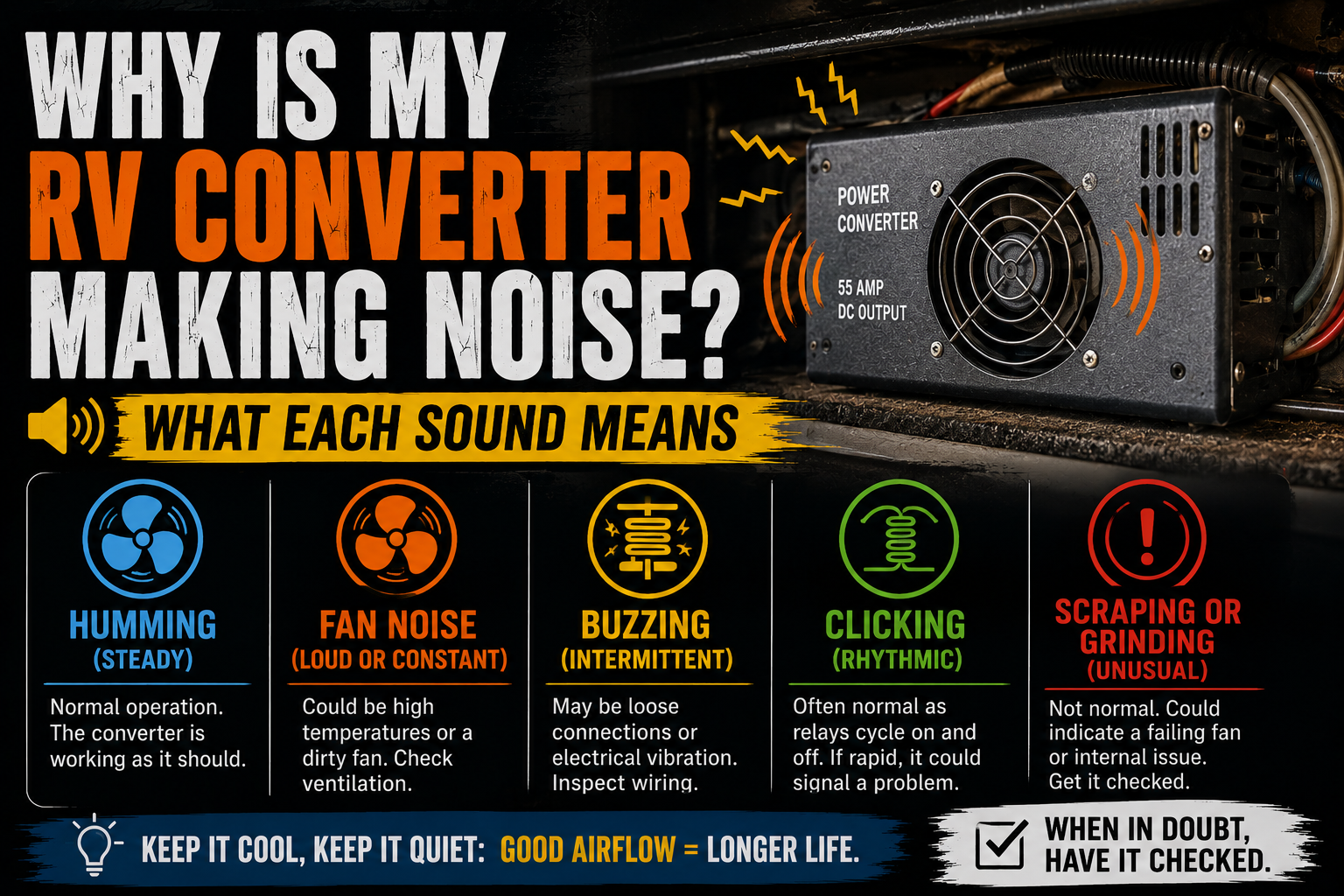
If yours suddenly sounds different than it used to, our guide explaining what different RV converter noises can mean will help narrow that down.
The key word there is change.
A converter you’ve heard quietly humming for years is different from one that suddenly starts loudly buzzing tonight.
Should My Converter Be Warm All the Time?
Some warmth is normal.
Converters aren’t 100 percent efficient.
They’re converting AC electricity into DC electricity while powering loads and potentially charging a battery.
That process produces heat.
What I don’t want is excessive heat.
If the converter becomes unusually hot, repeatedly shuts down, smells strange, or shows other signs of distress, don’t write that off as:
“Well, converters run hot.”
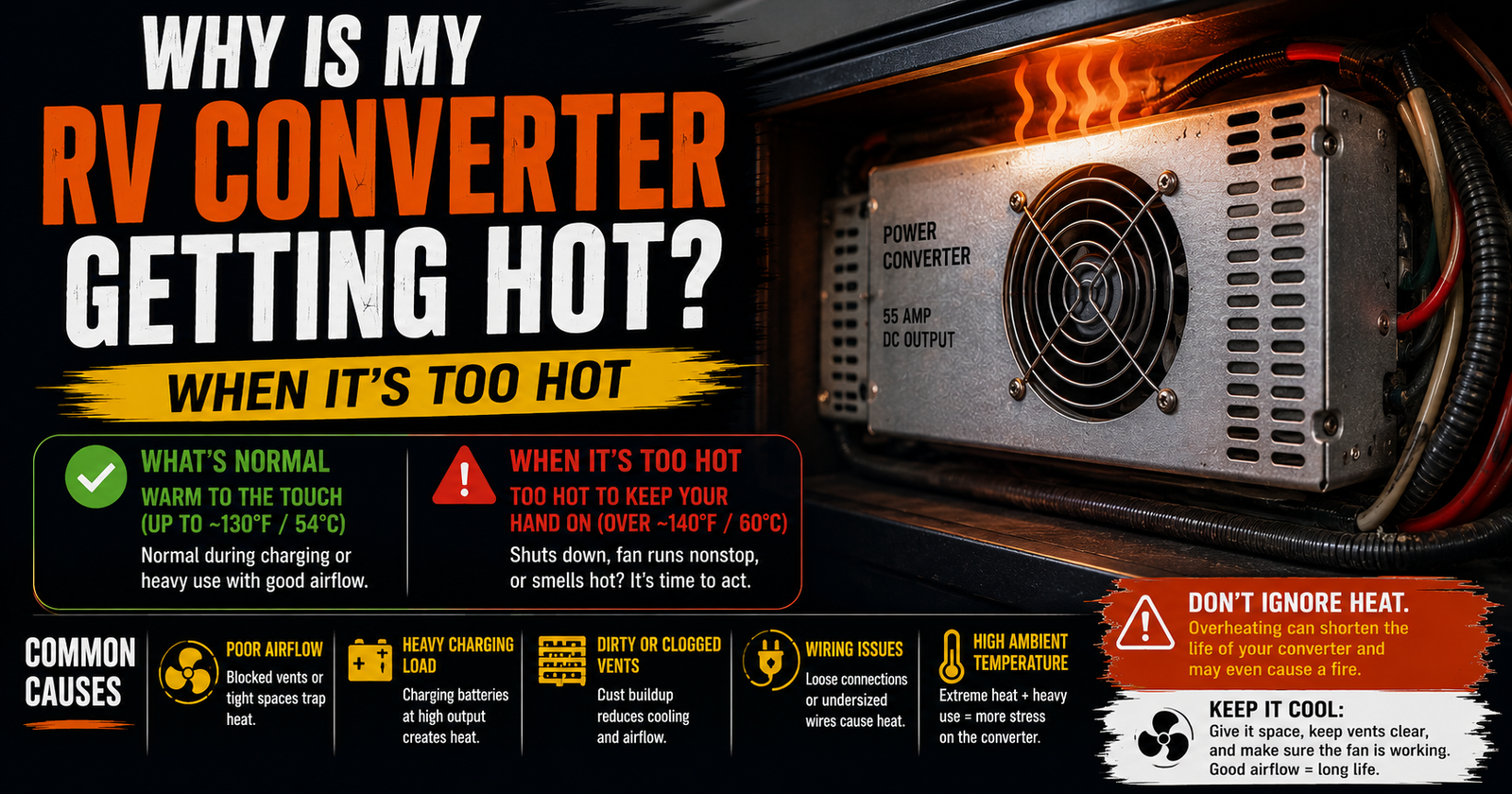
We’ve already dug into how hot an RV converter should get because temperature can provide a useful troubleshooting clue.
What If My Converter Smells Burnt?
That’s not normal “always-on” behavior.
A burning electrical smell gets my attention immediately.
If the converter smells burnt, you see smoke, or you find melted or discolored electrical components, safely remove the appropriate power source and investigate before continuing to use it.
Don’t convince yourself that the smell is normal because the converter has been running for several days.
It isn’t.
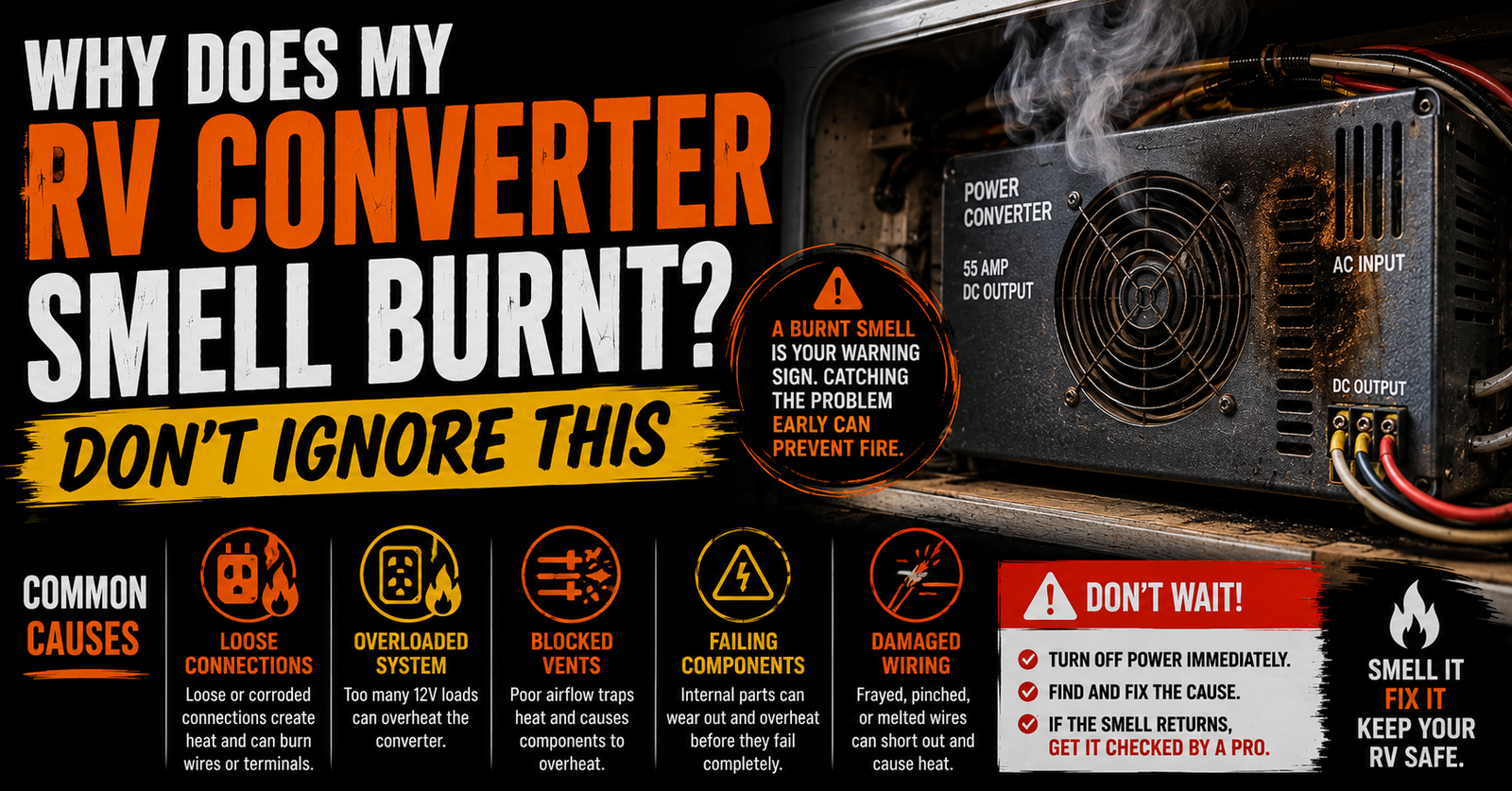
Our guide covering what to do when an RV converter smells burnt goes through that situation separately.
Should the Converter Stay On With the Battery Disconnect Off?
It certainly can.
The converter receives its power from the RV’s AC electrical system.
The battery disconnect deals with the battery side of the system.
WFCO specifically confirms that its converters can supply nominal 12-volt RV power without a battery connected.
So turning the battery disconnect off doesn’t necessarily shut down the converter.
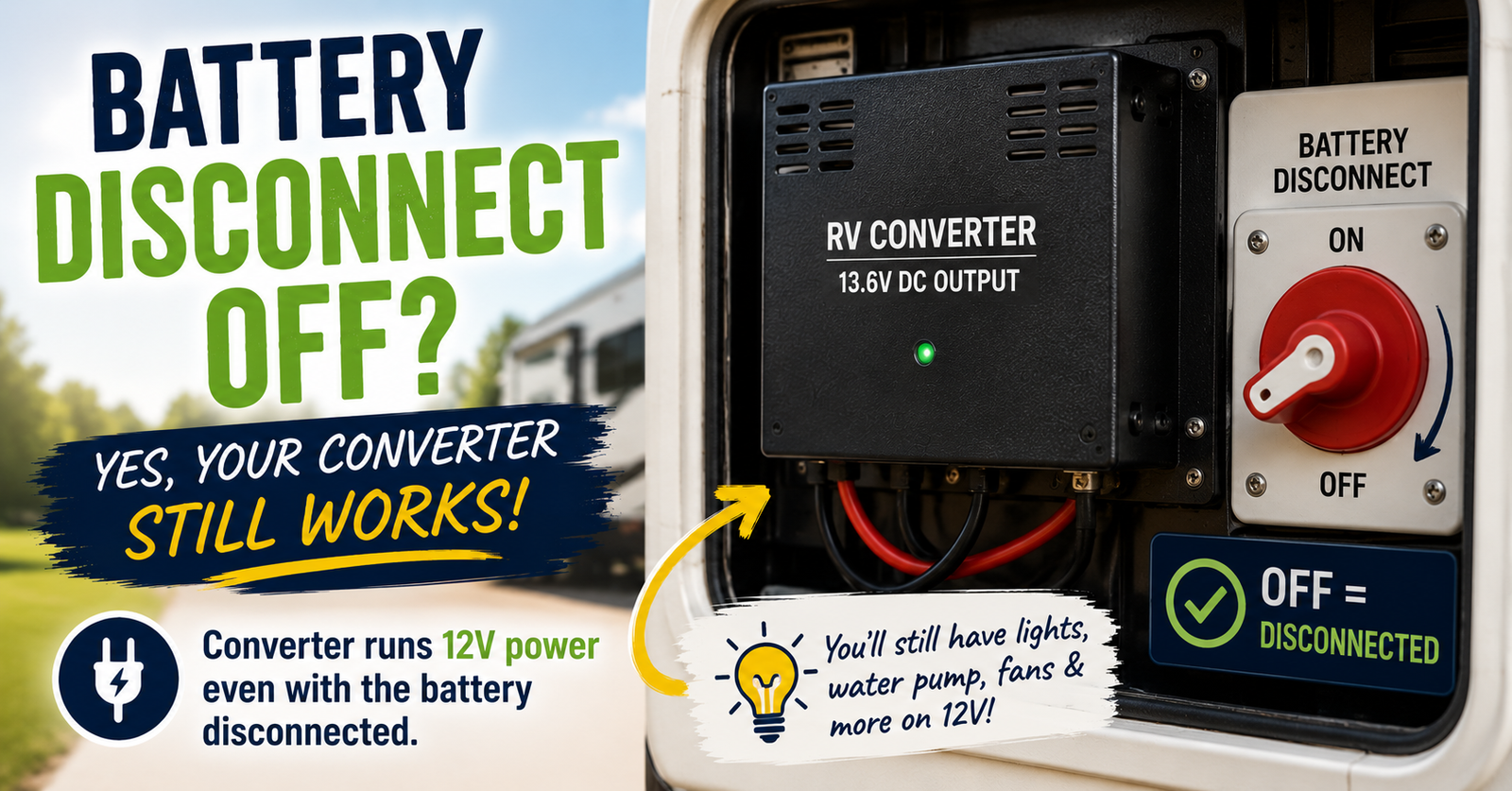
In fact, we just covered this exact situation in our guide explaining how the converter behaves with the battery disconnect off.
Whether the battery continues charging with the disconnect off depends on how the RV is wired.
But the converter itself can still be powered by shore power.
What Actually Turns the Converter Off?
Take away its AC input.
The converter needs AC electricity to produce DC output.
WFCO specifically states that the converter will not work without AC input.
That AC electricity may come from campground shore power, a properly connected home electrical source, or a generator supplying the RV.
If AC input disappears, converter output disappears.
Now the battery becomes responsible for supplying the RV’s 12-volt system, assuming it’s connected.
That’s the basic handoff.
What Happens When I Unplug From Shore Power?
The converter stops producing DC electricity.
The battery takes over the 12-volt loads.
That’s why your lights don’t normally go out every time you unplug the camper.
The power source changed.
The electrical equipment didn’t.
This is also why battery problems sometimes stay hidden until you disconnect shore power.
Everything looks fantastic while the converter is doing the work.
Then you unplug.
Thirty minutes later, the lights are dim and the battery is nearly dead.
Now we’ve learned something about the battery.
Does the Converter Run From the Battery?
No.
This is another misconception worth clearing up.
The converter isn’t normally taking 12-volt battery electricity and somehow using that to produce the same 12-volt power.
That’s not its job.
The converter takes AC input and converts it to DC output.
If you’re thinking of a device that takes battery DC power and creates household-style AC electricity, you’re thinking of an inverter.
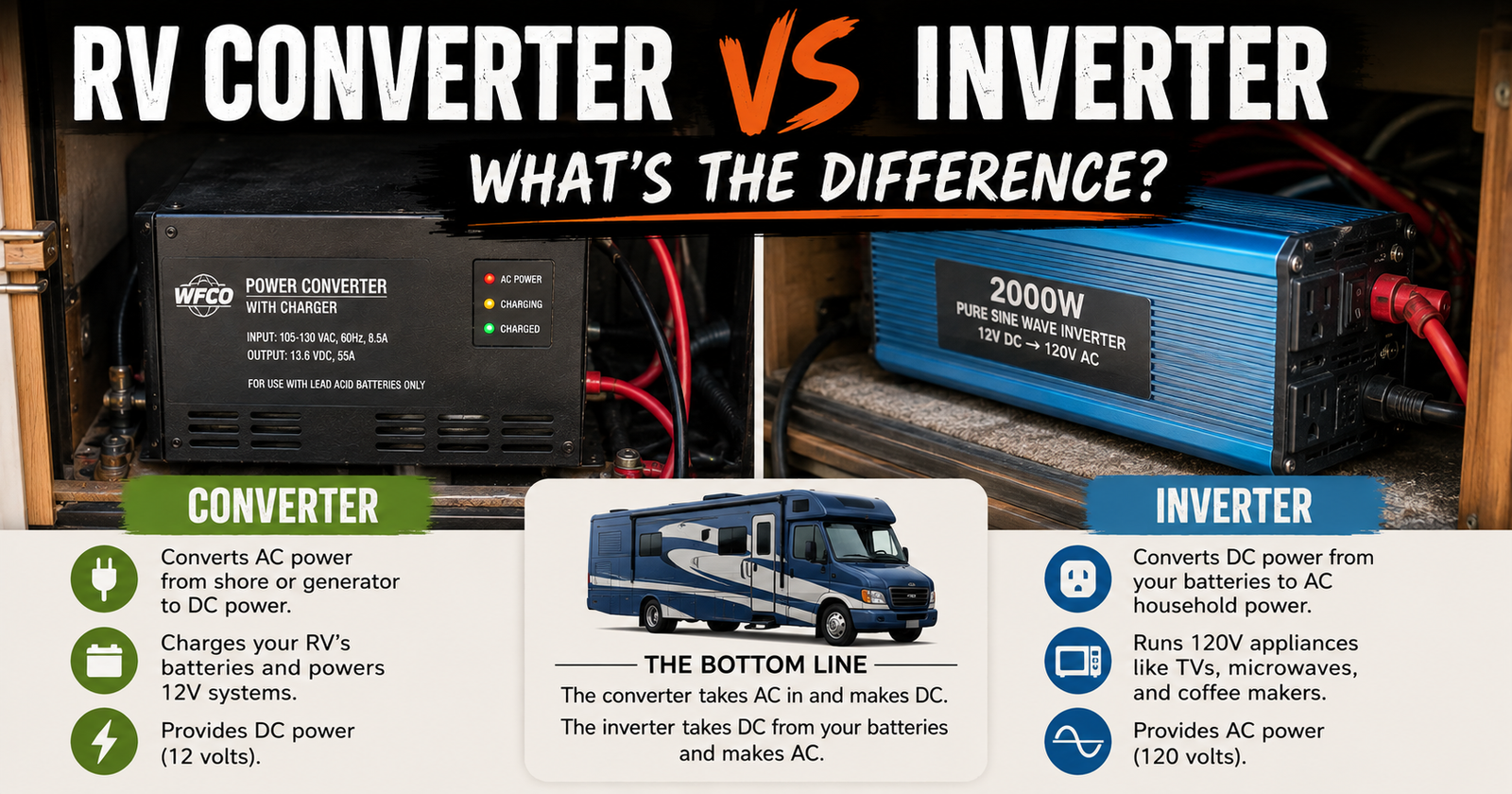
We’ve got a full explanation of the difference between an RV converter and inverter because the names are ridiculously easy to mix up when you’re new to RV electrical systems.
Converter: AC to DC.
Inverter: DC to AC.
Remember that and you’ve already won half the battle.
Does the Converter Run When I’m Using a Generator?
Yes, assuming the generator is properly supplying AC electricity to the RV.
From the converter’s perspective, it has the AC input it needs.
It can then supply DC loads and charge the battery just as it does when you’re connected to shore power.
That’s why running a generator can recharge the house battery through the converter.
The generator isn’t necessarily charging the battery directly.
It’s powering the equipment that does the charging.
Should I Turn the Converter Off When Using an Inverter?
Now we have an important exception.
If you’re using an inverter to power the RV’s AC system from the same battery bank, you generally don’t want the converter simultaneously trying to charge that battery bank from inverter-produced AC power.
Think about the loop you’d create.
Battery sends DC power to inverter.
Inverter converts DC to AC.
Converter takes that AC and converts it back to DC.
Converter tries to recharge the battery that is powering the inverter.
Every conversion loses energy.
You haven’t invented unlimited electricity.
You’ve invented a very inefficient way to drain a battery.
In systems where an inverter powers the RV’s AC distribution, converter operation needs to be accounted for in the system design.
This Is Different With an Inverter/Charger
Some larger RV electrical systems use a combined inverter/charger.
That’s different from having a standalone converter plus a standalone inverter.
The equipment is designed to manage charging and inversion as part of one integrated system.
That’s why knowing what equipment is actually installed matters so much.
Don’t apply converter advice blindly to a completely different inverter/charger setup.
Can I Turn the Converter Off Manually?
Usually, yes, depending on how the RV is wired.
Many converters are supplied through their own AC branch breaker in the power center.
Some standalone converters plug into an AC receptacle.
But I wouldn’t routinely shut the converter off without a reason.
If you’re connected to shore power and want the RV’s normal DC system and battery charging to function, the converter generally needs AC power.
Turning it off may leave the battery supplying the 12-volt loads instead.
Then you can end up slowly draining the battery while sitting at a campsite with perfectly good shore power available.
That’s not particularly useful.
Why Would I Ever Turn the Converter Off?
Troubleshooting is one reason.
Maybe you’re isolating an electrical problem.
Maybe the converter keeps tripping its breaker.
Maybe you’re testing whether a strange noise disappears when the converter is shut down.
Maybe you have an inverter installation that requires the converter to be disabled under certain operating conditions.
Maybe you’re working on the electrical system according to the manufacturer’s service procedures.
Those are legitimate reasons.
But “the converter has been on for six hours” isn’t by itself a reason I’d shut it down.
What If the Converter Keeps Tripping Its Breaker?
Then we’re way past normal continuous operation.
A converter that’s simply powered all the time shouldn’t repeatedly trip its AC breaker.
For applicable Progressive Dynamics PD9100 and PD9200 converters, the manufacturer’s troubleshooting procedure says that if the AC breaker supplying the converter immediately trips again after being reset, the converter is bad and needs replacement.
That’s one specific manufacturer’s procedure, so I wouldn’t automatically apply it to every converter ever made.
But repeated breaker trips definitely deserve investigation.
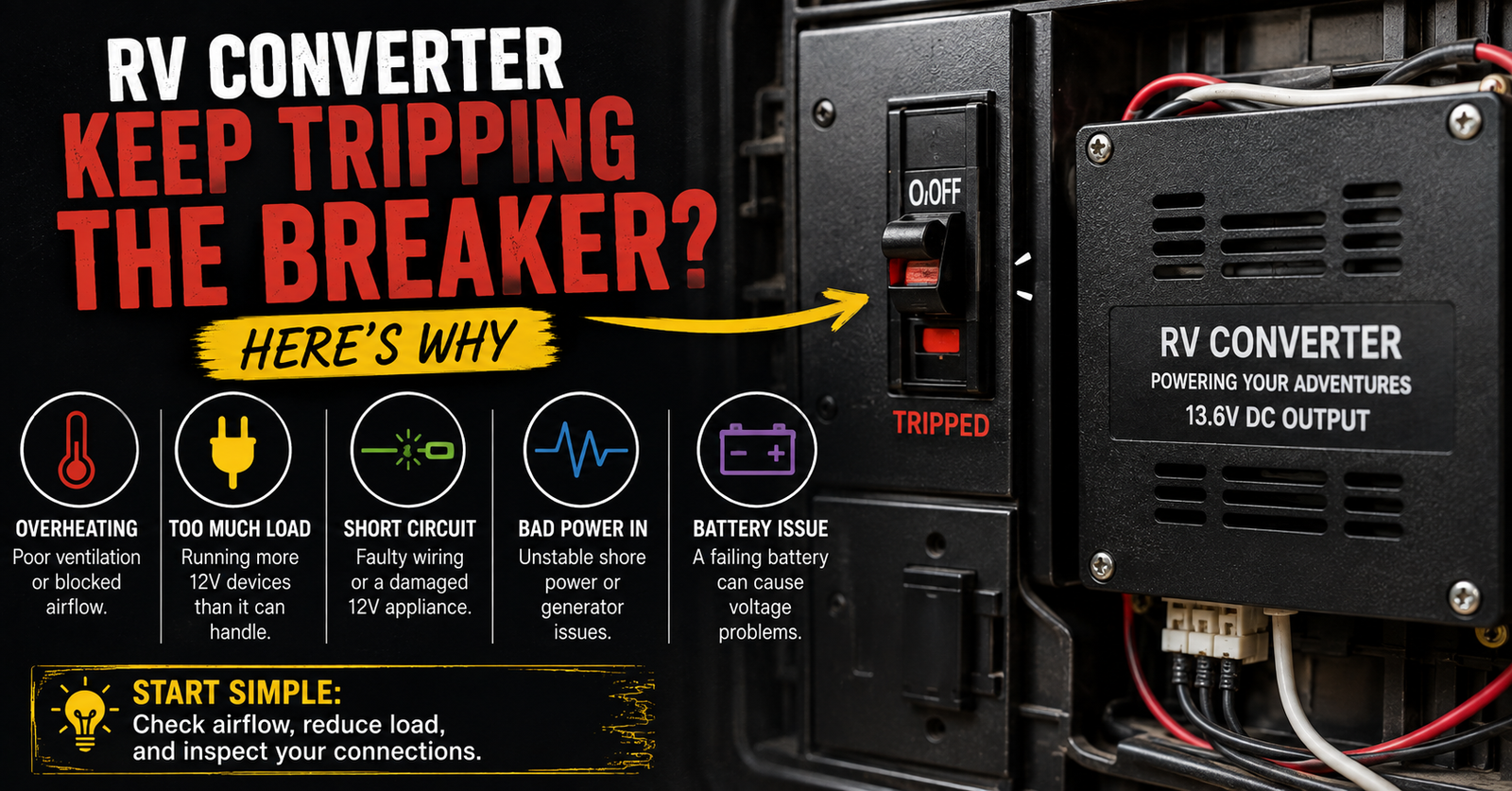
Our guide to an RV converter that keeps tripping the breaker covers that troubleshooting path.
What If My Converter Seems to Turn On and Off?
That can mean several different things.
Sometimes people hear the fan cycle and assume the entire converter is switching on and off.
It may not be.
The fan can cycle independently while the converter remains powered.
Actual converter output cycling is different.
Overheating, excessive load, poor connections, internal protection, or another electrical problem can cause abnormal behavior.
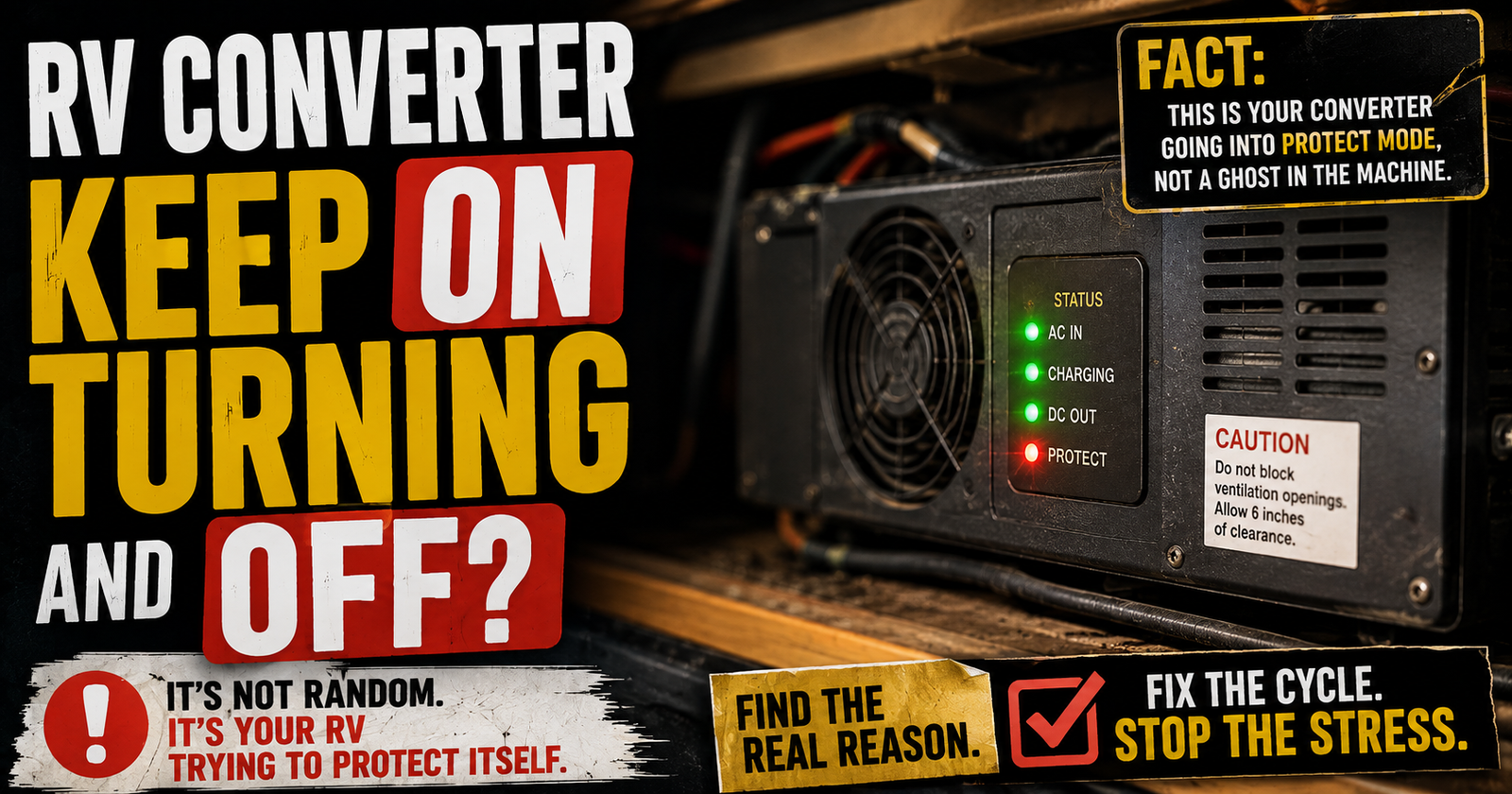
We’ve already covered why an RV converter can keep turning on and off because that’s not the same thing as normal charging-stage changes.
What If the Converter Is Constantly Charging My Battery?
First, determine whether it really is.
Don’t assume the converter is aggressively charging because your multimeter shows 13-something volts.
A converter can maintain a fully charged battery at relatively low current.
Progressive Dynamics says applicable converter/chargers reduce battery charging current to only about 20 to 25 milliamps after full charge, then replace normal self-discharge losses as necessary.
That’s maintenance.
Not the same thing as dumping maximum charging current into the battery around the clock.
How Can I Tell What the Converter Is Actually Doing?
A multimeter gets you surprisingly far.
Measure directly at the battery.
Measure converter output when appropriate.
Observe how the voltage changes after plugging into shore power.
Pay attention to battery condition.
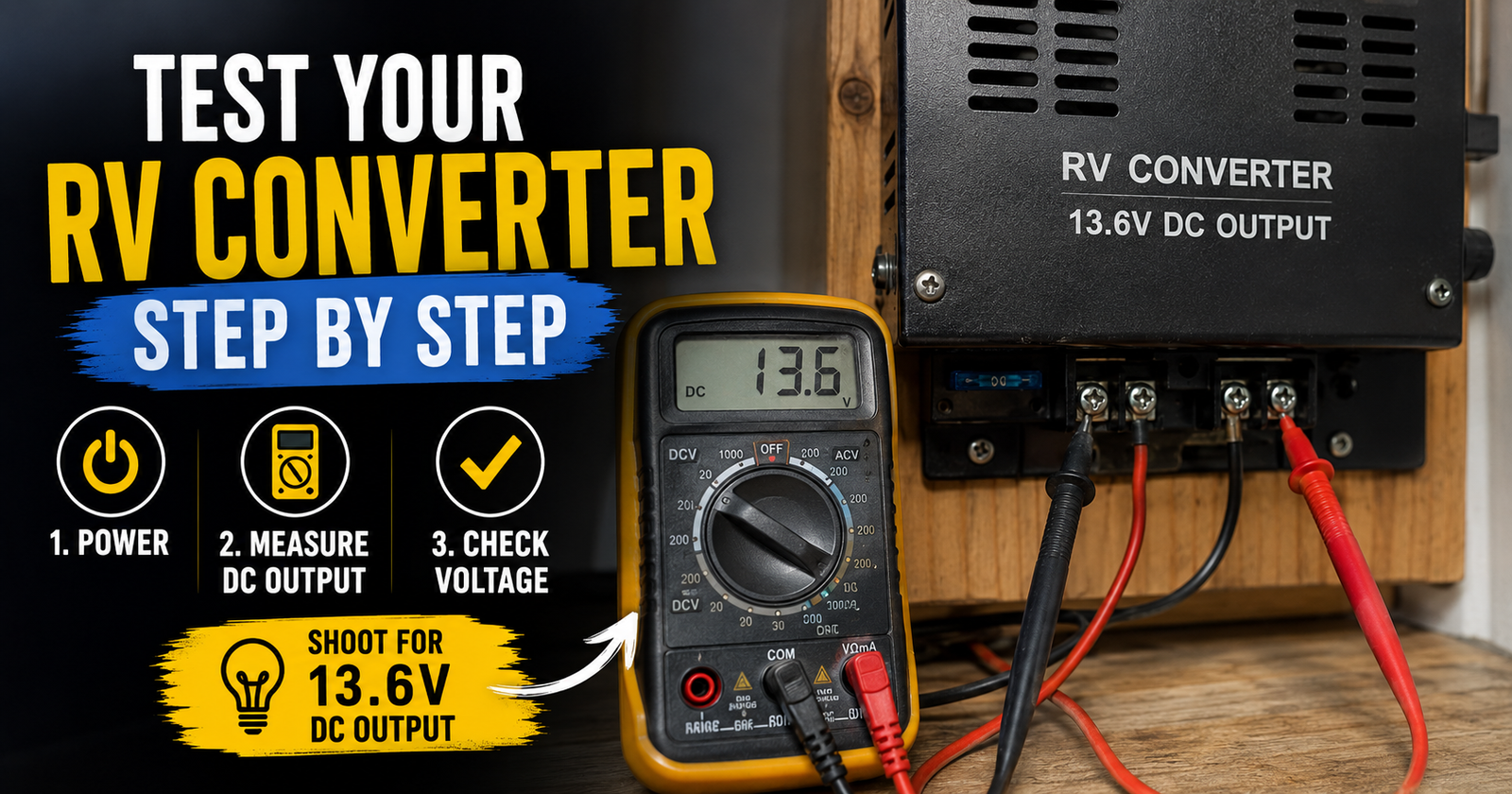
If you want to get much more specific, follow our step-by-step guide for testing an RV converter with a multimeter.
For applicable Progressive Dynamics standard PD9100 and PD9200 converters, the manufacturer’s isolated output test expects approximately 13.6 volts, plus or minus 0.3 volts. Lithium models use a different specified voltage.
Your exact converter may have different specifications, so always check its documentation.
Don’t Assume Higher Voltage Means the Converter Won’t Shut Off
Charging voltage is supposed to change.
WFCO’s applicable converters can increase output to approximately 14.4 volts during bulk charging of a significantly discharged battery. They later return to approximately 13.6 volts and can eventually reach approximately 13.2 volts during float operation.
So catching your converter at 14.4 volts doesn’t mean:
“This thing is stuck on.”
The battery may simply need charging.
What matters is whether the converter behaves appropriately as battery conditions change.
What If It Really Is Overcharging?
Then that’s a problem.
A battery that’s getting excessively hot, losing water rapidly, heavily gassing, or being subjected to an inappropriate charging voltage deserves investigation.
That’s different from a converter merely remaining powered.
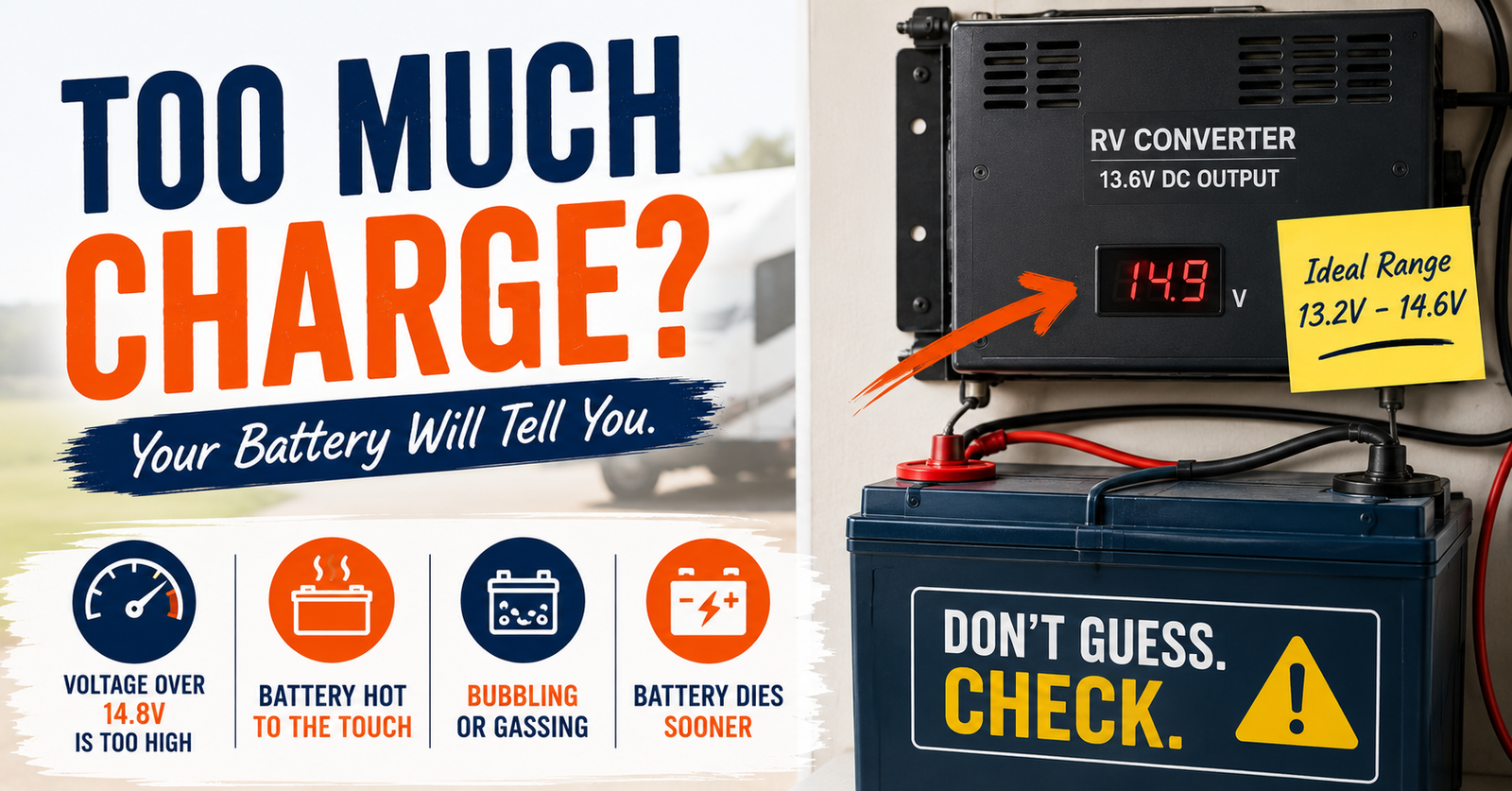
We’ve covered the warning signs in our guide to figuring out whether an RV converter is overcharging the battery.
Don’t turn a normal maintenance voltage into a problem that doesn’t exist.
But don’t ignore genuine battery distress either.
What If It Doesn’t Fully Charge the Battery?
That’s the opposite problem.
Converter is on.
Battery gains some charge.
But it never seems to finish.
That can happen because of converter capacity, DC loads, voltage drop, wiring problems, battery condition, charging profile, or an actual converter problem.
We just covered that in why an RV converter may not fully charge the battery.
This is why simply knowing that the converter is “on” isn’t enough to diagnose charging performance.
Should I Hear the Converter at Night?
Maybe a little.
Maybe nothing at all.
If the battery is charged and most 12-volt equipment is off, converter load may be tiny.
The cooling fan may stop.
The converter can remain powered and maintain the battery quietly.
Progressive Dynamics specifically notes that the intelligent fan on applicable converters often doesn’t need to run at night when most 12-volt lights and appliances are off.
So silence doesn’t mean your converter shut off.
Sometimes silence means everything is working exactly as it should.
Should I Turn My Converter Off During RV Storage?
Not automatically.
This depends on whether the RV remains connected to AC power, what battery chemistry you have, what converter is installed, and how the manufacturer recommends storing the system.
A compatible modern multi-stage converter may be specifically designed to maintain the battery during extended connection.
WFCO’s float mode is intended to maintain battery charge during periods of low activity while reducing voltage compared with normal absorption operation.
If you’re storing the RV completely disconnected from shore power, that’s a different situation because the converter won’t be operating anyway.
Then battery-disconnect strategy, parasitic loads, solar, and battery-storage recommendations become more important.
If Your Battery Keeps Dying in Storage, Don’t Blame an Off Converter
Remember, the converter needs AC input.
If the RV isn’t plugged in and no generator is running, the converter isn’t charging anything.
The battery is on its own.
That’s when tiny parasitic loads can slowly drain it.
If you’re dealing with that situation, our guide to finding parasitic battery drain in an RV is a much better place to troubleshoot.
That’s a battery-drain problem, not a converter-staying-on problem.
The Simple Rule I Use
When the RV has proper shore power available, I expect the converter to be powered.
What I don’t necessarily expect is:
Maximum charging voltage constantly.
Maximum charging current constantly.
Cooling fan constantly running.
Excessive heat.
Loud buzzing.
Burning smells.
Repeated shutdowns.
Breaker trips.
Battery boiling.
Those are different symptoms.
A converter sitting quietly in the background at a campground, supplying the RV’s 12-volt system and maintaining a charged battery, is doing exactly what I want it to do.
So if yours seems to stay on every minute you’re connected to shore power, don’t panic.
The better question isn’t whether the converter stays on. It’s whether it’s behaving normally while it’s on.
If the battery is healthy, charging voltage matches what your converter and battery require, the fan behaves normally, and nothing is overheating or tripping, I’d leave it alone and let it do its job.
Written by Evan Mercer
Evan Mercer writes about RV converters, batteries, shore power, 12-volt electrical systems, and practical camper troubleshooting for CamperAnswers.com. He focuses on helping RV owners understand how their camper actually works so normal electrical behavior doesn’t get mistaken for an expensive problem.