
You shut everything down for the night, go to bed with battery power, and wake up to an RV battery that’s nearly dead. It can feel like the battery somehow drained itself while you were sleeping, but electricity went somewhere. The trick is figuring out whether your camper is quietly using more power than you realize, the battery isn’t holding the charge it should, or it never started the night fully charged in the first place. These same clues can help explain an RV battery draining unexpectedly in other camping situations, not just overnight.
An RV battery dying overnight is usually a sign of excessive 12-volt power consumption, an unexpected parasitic draw, inadequate battery capacity, a weak battery, or a charging problem that left the battery less than fully charged before nighttime. In some cases, the RV is actually operating normally and the overnight loads are simply larger than the battery bank can support. For context on Camper Answers' troubleshooting approach, see how the site turns complicated RV symptoms into practical explanations.
Before buying another battery, I’d narrow down which of those situations you’re dealing with.
First Figure Out How Fast the Battery Is Actually Dying
“Dead overnight” can mean very different things.
One owner may have a fully charged battery at sunset that is severely discharged the following morning.
Another may notice the battery monitor drop substantially overnight and assume something is wrong.
Someone else may disconnect from shore power without realizing the battery wasn’t properly charged beforehand.
Those situations shouldn’t be diagnosed the same way.
Start with what you know about the battery before the overnight period.
Was it actually fully charged?
Had the RV been connected to shore power long enough for its charging system to replenish the battery?
Had you been camping without hookups for several days already?
Were you running the furnace?
Was an inverter left on?
Are you relying on one relatively small house battery or a much larger battery bank?
Battery capacity and electrical demand have to be considered together.
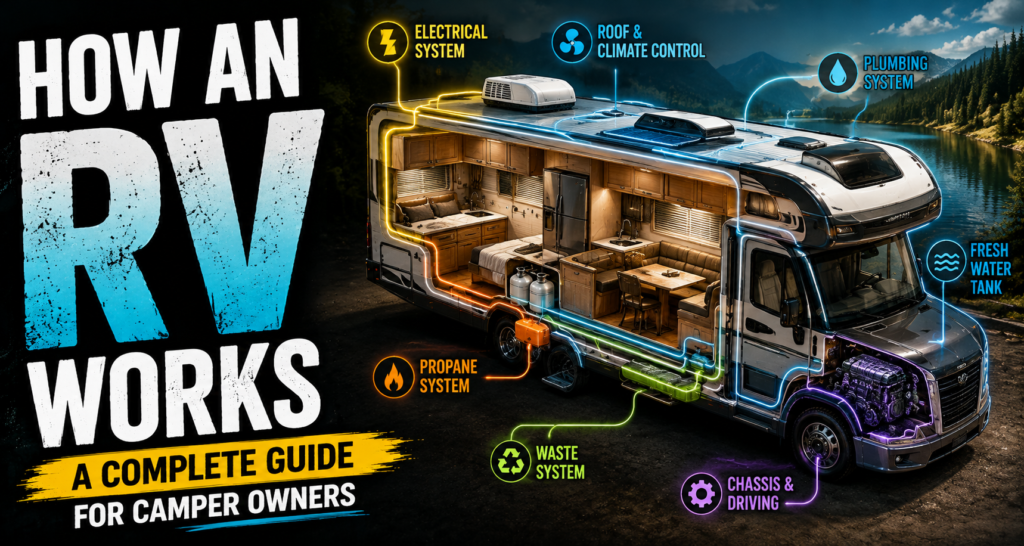
If you’re still getting familiar with the relationship between your batteries, converter, shore power and the rest of the camper, our guide to how the major systems in an RV work together gives you the bigger picture.
Your RV Probably Isn’t Completely “Off”
This catches a lot of owners.
You can turn off the lights, television, water pump and other obvious equipment and still have 12-volt loads drawing power. Because RV electrical systems vary and can be hazardous, review the site’s general information and safety limitations before testing or modifying equipment.
RVs often contain equipment that needs a small amount of electricity continuously or remains connected unless it is specifically disconnected.
Depending on your particular RV, possible loads can include detectors, control modules, radio memory, monitoring equipment, leveling controls and other electronics.
One tiny load isn’t necessarily enough to kill a healthy, adequately sized battery overnight.
Several loads combined with an already partially discharged or weak battery are another story.
That’s why the goal isn’t to panic when you discover that your camper uses some power while “off.” The goal is to determine whether the amount of power being consumed makes sense.

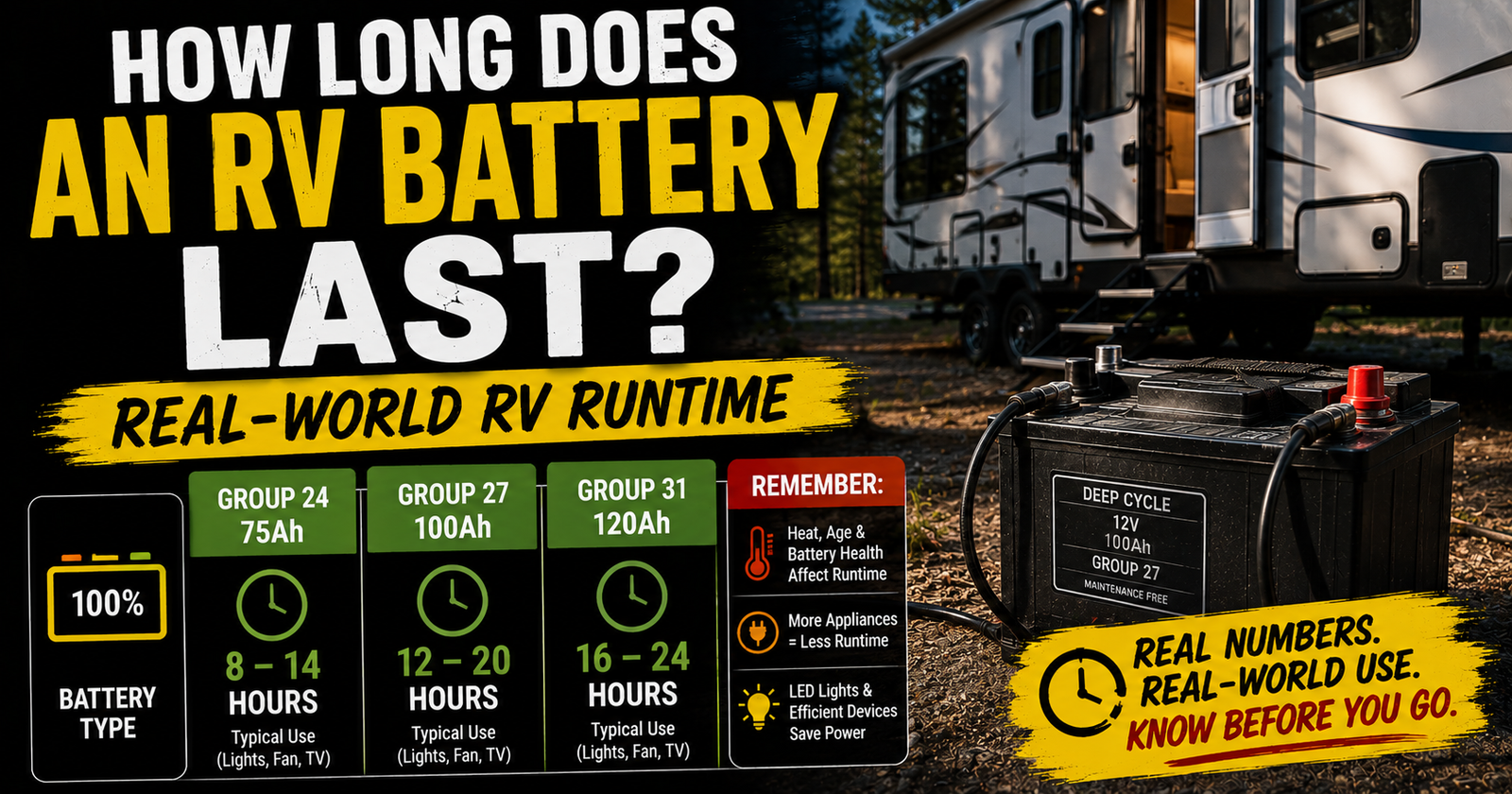
The Furnace Can Use More Battery Power Than You Expect
If this problem happens mainly on cold nights, your furnace jumps much higher on my list.
A propane RV furnace doesn’t operate on propane alone.
The propane creates heat, but the furnace blower and electrical controls need 12-volt power. If temperatures are low enough that the furnace cycles repeatedly throughout the night, that blower can put a meaningful load on the house battery.
This creates a situation that confuses people all the time.
You go to sleep thinking:
“My furnace is running on propane.”
Technically, yes, propane is providing the heat.
But your battery is helping make that heat possible.
The colder the night, the more frequently the furnace may operate. A small battery bank that seems adequate during warm-weather camping can suddenly struggle when the furnace starts running for hours every night.
If your battery problem appeared at roughly the same time you started using the furnace heavily, don’t ignore that connection.
An Inverter Can Quietly Add to the Drain
If your RV has an inverter, check whether it’s being left on.
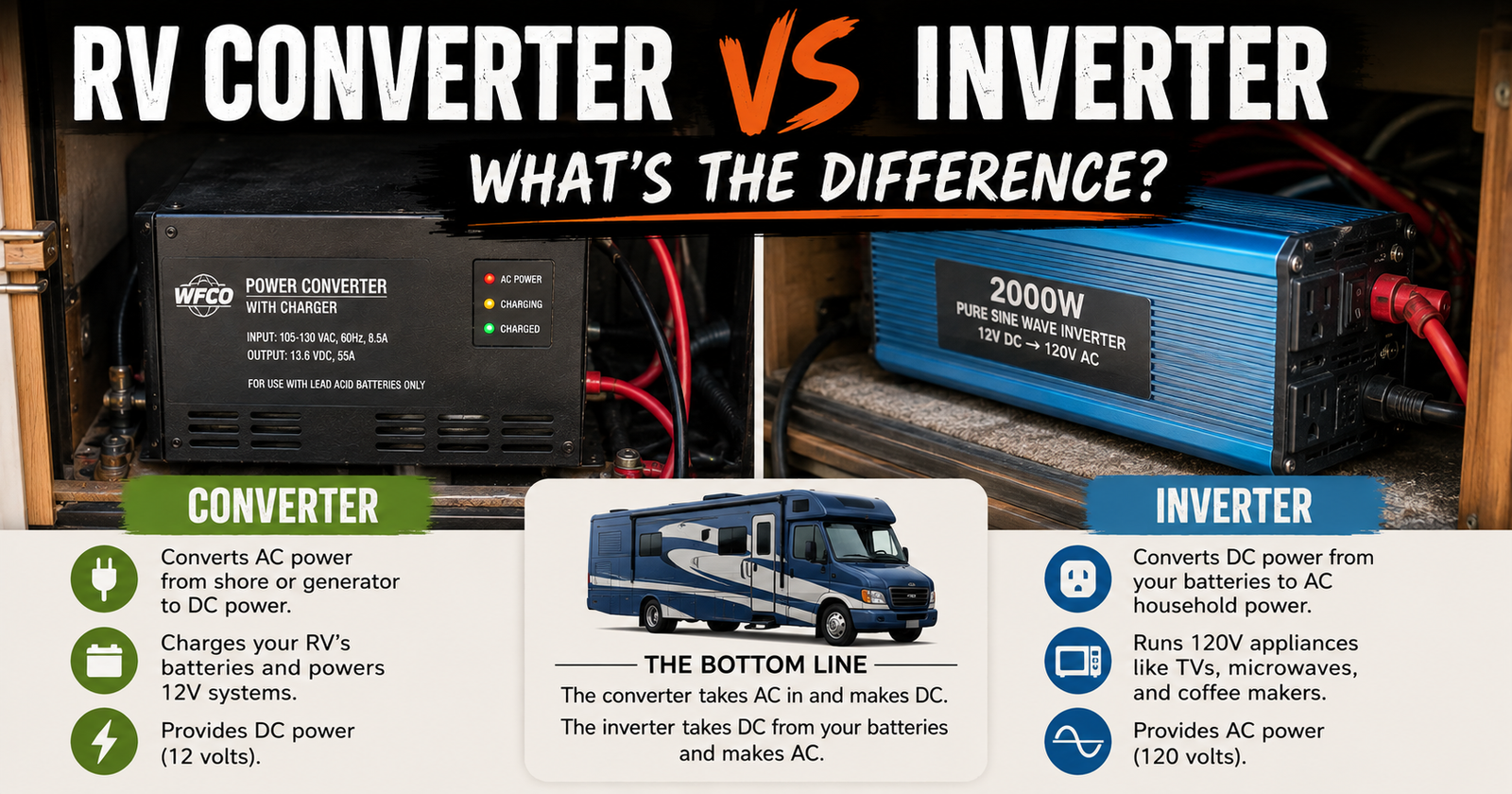
An inverter takes DC electricity from the battery bank and makes AC electricity available to whatever circuits or equipment the system is designed to supply.
The important part here is that an inverter itself can consume some power while operating, even before considering the AC equipment you’re asking it to run.
Then there are the loads on the other side of it.
Something plugged into an AC outlet may continue consuming electricity even when it doesn’t look particularly active.
Chargers, televisions, entertainment equipment and other electronics can all contribute.
If you’re trying to maximize battery life while dry camping, don’t assume “nothing important is running” means the inverter system isn’t using electricity.
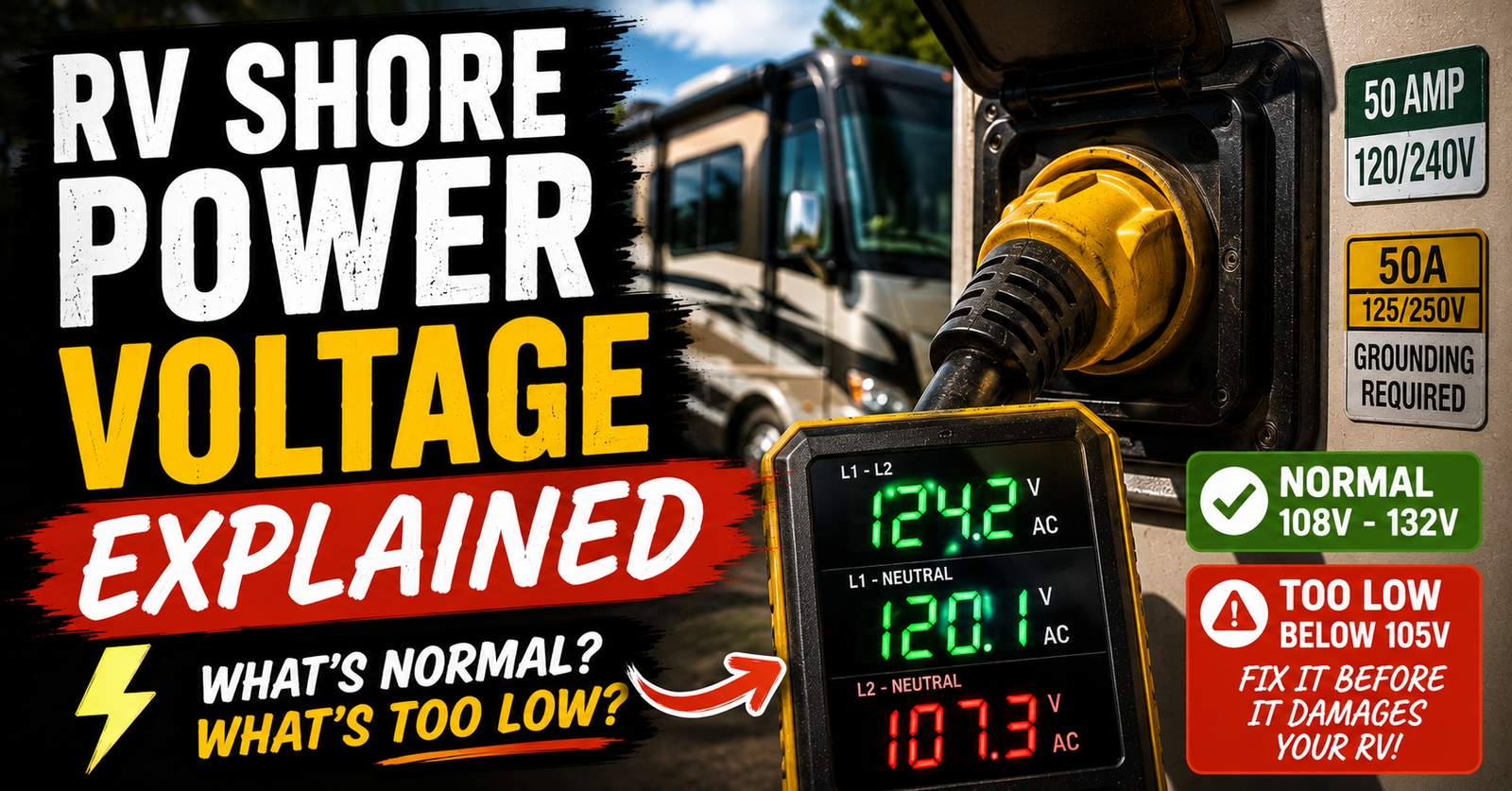
Your Refrigerator May Still Need 12-Volt Power
Another common misconception is that switching an RV refrigerator to propane completely removes it from the electrical system.
That isn’t necessarily true.
Many RV appliances that use propane still depend on 12-volt electricity for their controls.
The same general principle applies to some water heaters and other equipment.
These loads may not individually explain a dramatic overnight discharge, but they become part of the total energy budget.
That’s why looking for one mysterious device pulling every amp isn’t always the right approach.
Sometimes the answer is simply that six or seven legitimate loads are operating at the same time.
Don’t Forget Tank Heaters and Other Easy-to-Miss Equipment
Some RV equipment is especially easy to overlook because you don’t constantly interact with it.
Tank heaters are a good example.
Depending on your camper, you may also have antenna equipment, control panels, electronic modules or accessories that continue consuming 12-volt power.
After you’ve checked the obvious equipment, physically walk through the RV and look at every switch and control panel.
Don’t rely on memory.
It’s surprisingly easy to leave something operating because it doesn’t make noise or produce an obvious visual clue.
Your Battery Disconnect May Not Disconnect Everything
This one can be particularly frustrating.
You turn the battery disconnect to OFF and reasonably assume the battery is now electrically isolated from the camper.
That isn’t universally true.
Some RVs have equipment connected in ways that allow certain loads to remain powered even when the primary disconnect is off.
There can also be separate disconnects for equipment such as an inverter.
So if an RV battery dies during storage despite using the battery disconnect, don’t immediately conclude that the battery must be defective.
First determine what that disconnect actually isolates on your particular camper.
This is exactly where the RV’s documentation and electrical diagrams become much more valuable than generic advice.
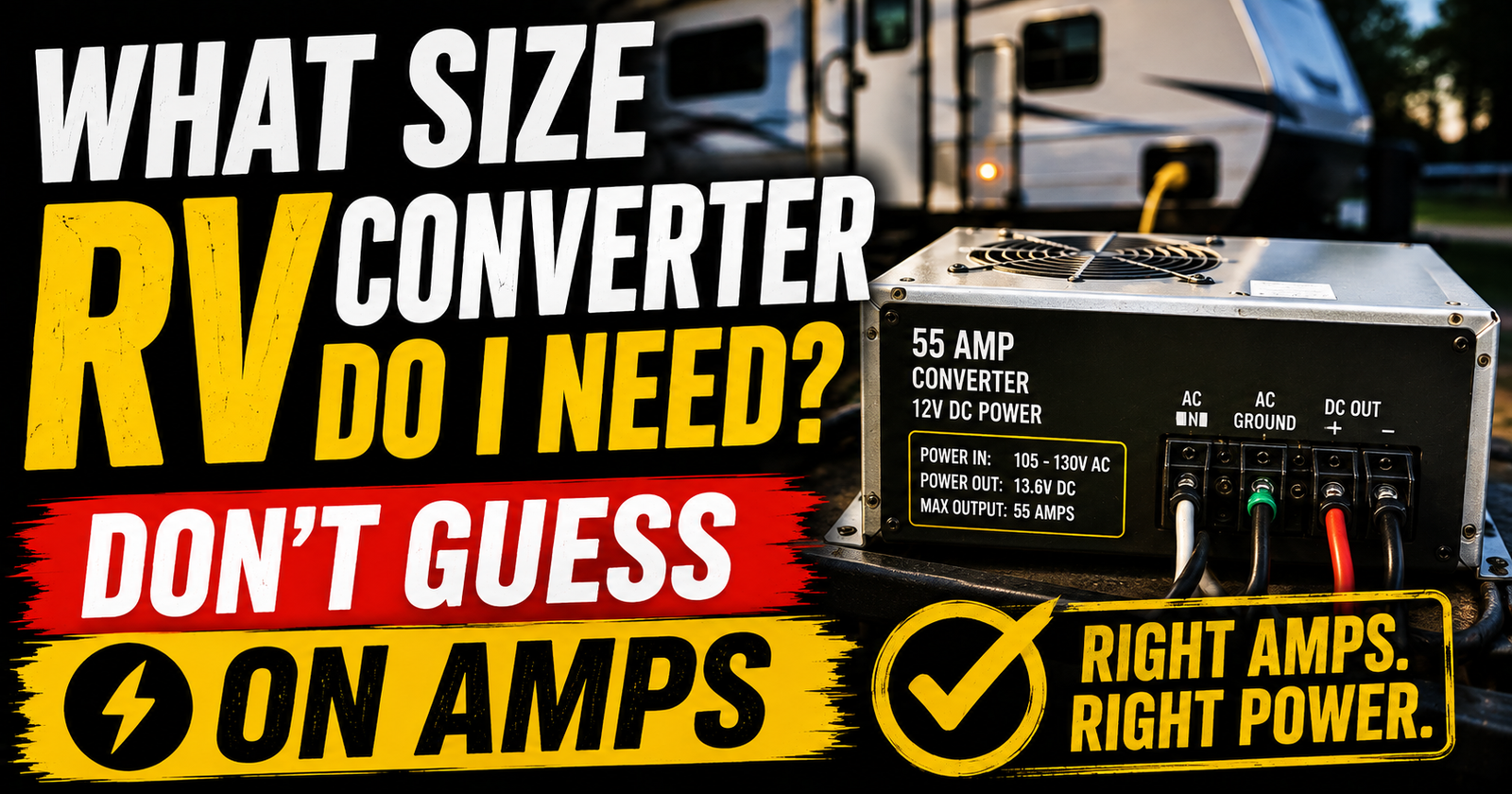
The Battery May Never Have Been Fully Charged
Before chasing hidden electrical loads, verify your starting point.
A battery can appear charged without actually containing the amount of usable energy you expect.
Maybe the RV was plugged in, but the charging system wasn’t operating correctly.
Maybe it wasn’t connected long enough.
Maybe the battery has lost capacity.
Maybe the displayed voltage was influenced by active charging and was mistaken for the battery’s resting condition.
If you start the night with a partially charged battery, normal overnight consumption can make the morning result look much worse than it really is.
This becomes especially suspicious if the battery repeatedly “dies overnight” even after the RV has supposedly spent plenty of time charging.
The overnight drain may only be exposing a charging problem that began hours or days earlier.
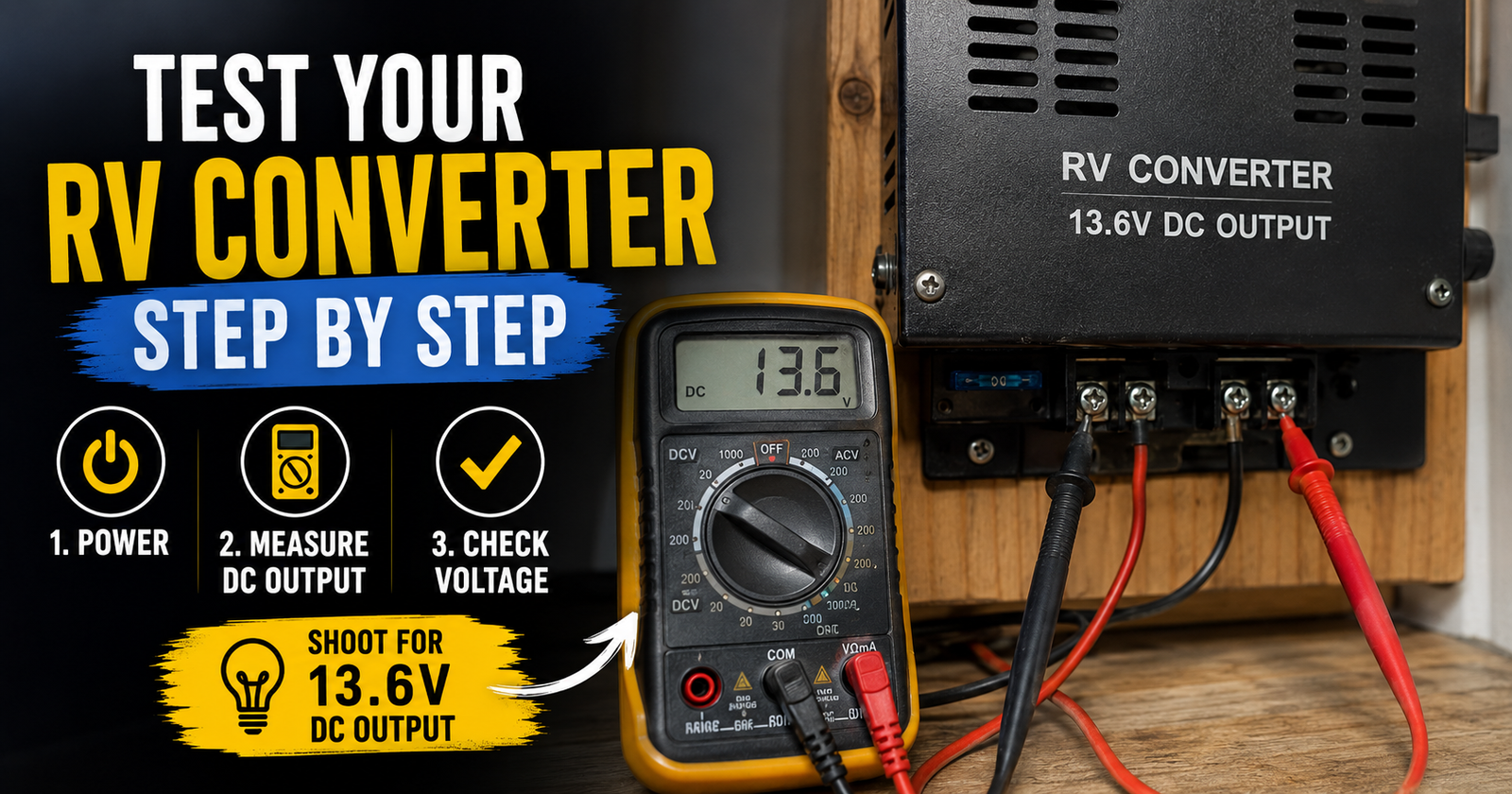
A Weak Battery Can Look Like a Massive Electrical Drain
Battery age and condition matter.
As batteries deteriorate, they can lose usable capacity.
Imagine having two containers that both appear full, except one has become much smaller internally.
You can fill both, but the smaller one runs out sooner.

A degraded battery can behave similarly from an owner’s perspective. It may reach a voltage that makes it appear charged and then drop much faster under load than a healthy battery of the same original capacity.
That’s why a battery that repeatedly goes dead shouldn’t automatically be blamed on the camper.
The battery itself belongs on the diagnostic list.
Battery Type Changes the Way You Should Evaluate It
Not every RV uses the same battery technology.
You may have flooded lead-acid batteries, AGM batteries, lithium batteries or another configuration.
Their charging requirements, discharge characteristics and useful voltage information aren’t identical.
This matters when somebody gives you a single voltage number online and says:
“If it reads this, your battery is bad.”
That’s often an oversimplification.

You need to know what type of battery you’re testing, whether it’s being charged or discharged at that moment, and what the battery manufacturer says about evaluating its state of charge and condition. The guide to interpreting RV battery voltage brings those testing conditions together before you draw conclusions from the number.
One Battery May Simply Be Too Small for the Way You’re Camping
Sometimes nothing is broken.
You may simply be asking more from the battery than it can provide overnight.
This is especially possible when dry camping.
Imagine running lights during the evening, the water pump periodically, refrigerator controls, detectors, device charging and a furnace that cycles throughout a cold night.
Every one of those loads takes energy from the same battery bank.
An RV that spends most of its life plugged into campground power can hide an undersized battery setup because shore power continually supports the electrical system and charging equipment.
Disconnect from shore power for a night and suddenly battery capacity matters a lot more.
Cold Weather Can Make the Problem More Noticeable
Cold weather and overnight battery trouble often arrive together for more than one reason.
The furnace may run much more frequently, increasing electrical consumption.
Battery performance and charging behavior can also be affected by temperature, with the exact effects depending heavily on battery chemistry.
Lithium batteries introduce their own cold-temperature considerations, particularly around charging.
Don’t apply lead-acid cold-weather advice blindly to a lithium system or vice versa.
Follow the specifications for the battery actually installed.
The Fastest Clue Is Often What Changed
If your RV battery used to last through the night and suddenly doesn’t, ask yourself what changed immediately before the problem appeared.
Did temperatures drop?
Did you start using the furnace?
Did you install an inverter?
Did you add a refrigerator or other appliance?
Did you replace the battery?
Did the RV recently come out of storage?
Did you disconnect from shore power for the first time in a while?
Did you add solar equipment?
Did you change a battery-disconnect setting?
Did somebody leave a tank heater or other switch on?
A sudden change in behavior deserves a search for a sudden change in conditions.
What I’d Check First When an RV Battery Dies Overnight
I wouldn’t begin by disconnecting random wires or buying electrical parts.
I’d start by establishing the basic facts.
Make Sure the Battery Starts Fully Charged
Verify that the battery is actually being charged according to the requirements for your battery and charging equipment.
If it isn’t reaching a proper charge, solve that problem first.
There’s little value in analyzing overnight consumption when the battery begins every night partially discharged.
Turn Off the Obvious Loads
Look for lighting, fans, water pumps when not needed, entertainment equipment, tank heaters, antenna boosters and other manually controlled equipment.
Check rather than assume.
Look Closely at Furnace Use
If it’s cold outside, note how frequently the furnace runs.
If the battery lasts normally during warm nights and struggles only when the furnace is heavily used, that’s valuable diagnostic information.
Check the Inverter
Determine whether your RV has one and whether it’s operating.
Then determine what AC equipment is being supplied by it.
Understand the Battery Disconnect
Find out what your particular disconnect actually shuts off.
Don’t assume every circuit passes through it.
Consider Battery Condition and Capacity
An older, damaged or undersized battery may simply not have enough usable capacity for the overnight load.
Compare Overnight Behavior
Once you know the battery starts properly charged, note its condition before bed and again in the morning.
Then repeat the test after deliberately reducing optional electrical loads.
If the result improves dramatically, you’ve learned something.
How Parasitic Draw Testing Helps Narrow the Problem
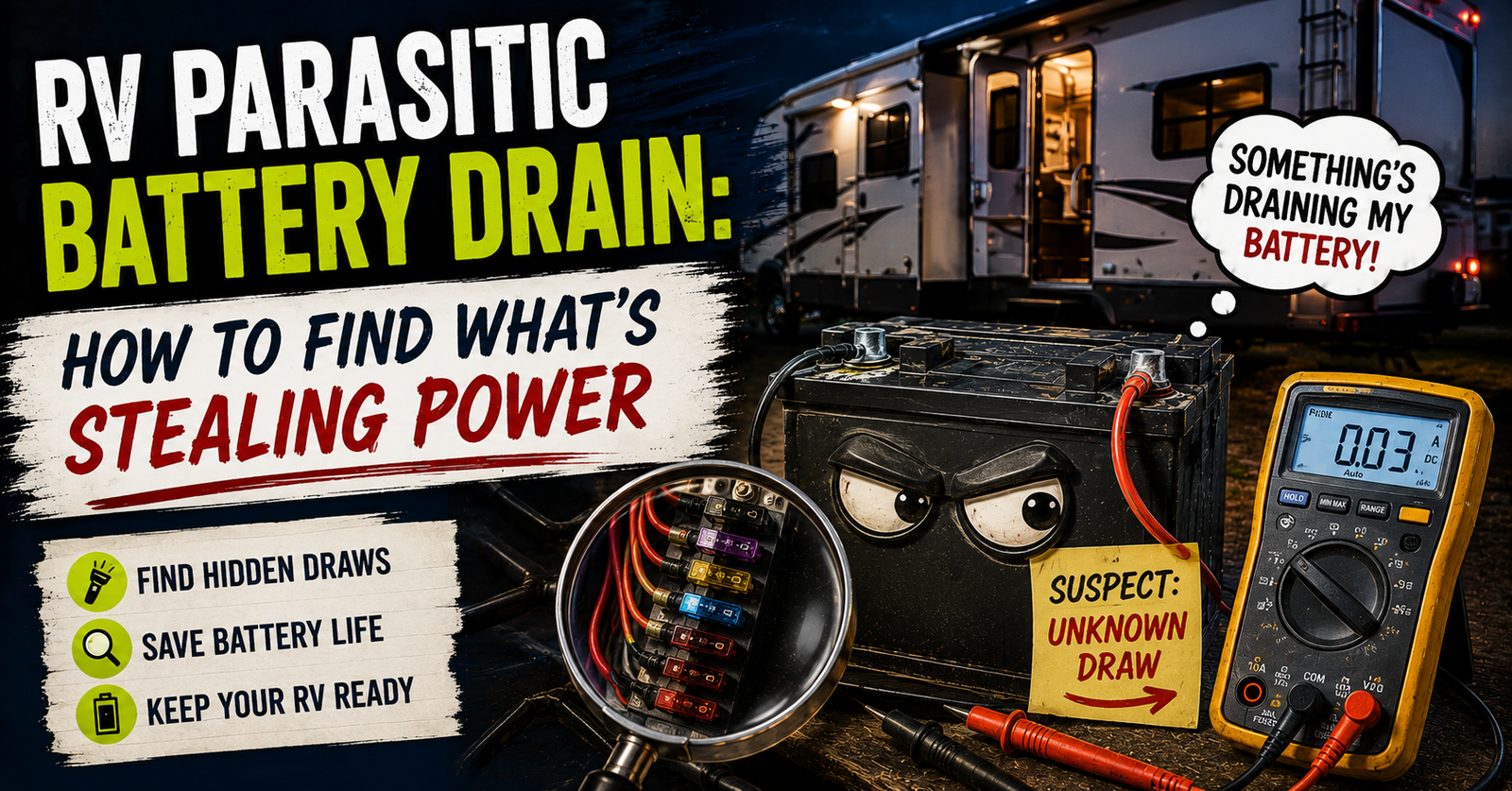
If the battery is healthy, starts properly charged and still loses an unreasonable amount of energy with everything you can identify turned off, parasitic-draw testing may be the next step.
The idea is to measure how much current continues flowing from the battery when the RV is supposed to be largely inactive.
Then circuits can be investigated methodically to determine where the current is going.
This is far more useful than randomly disconnecting components.
But there’s an important distinction between a parasitic draw and an abnormal parasitic draw.
Some electrical consumption while the RV is connected is expected on many campers.
You’re looking for consumption that doesn’t make sense for the equipment and operating condition.
Don’t Guess With High-Current Battery Wiring
RV battery systems can deliver a tremendous amount of current.
A 12-volt system may sound harmless compared with household voltage, but accidentally shorting a battery can create severe heat, sparks and fire risk.
If you’re not comfortable measuring current correctly or don’t know how your meter needs to be configured, don’t improvise.
A qualified RV technician or automotive electrical technician can perform a parasitic-draw test without turning troubleshooting into another problem.
What If the Battery Dies While the RV Is Plugged In?
That’s a different clue.
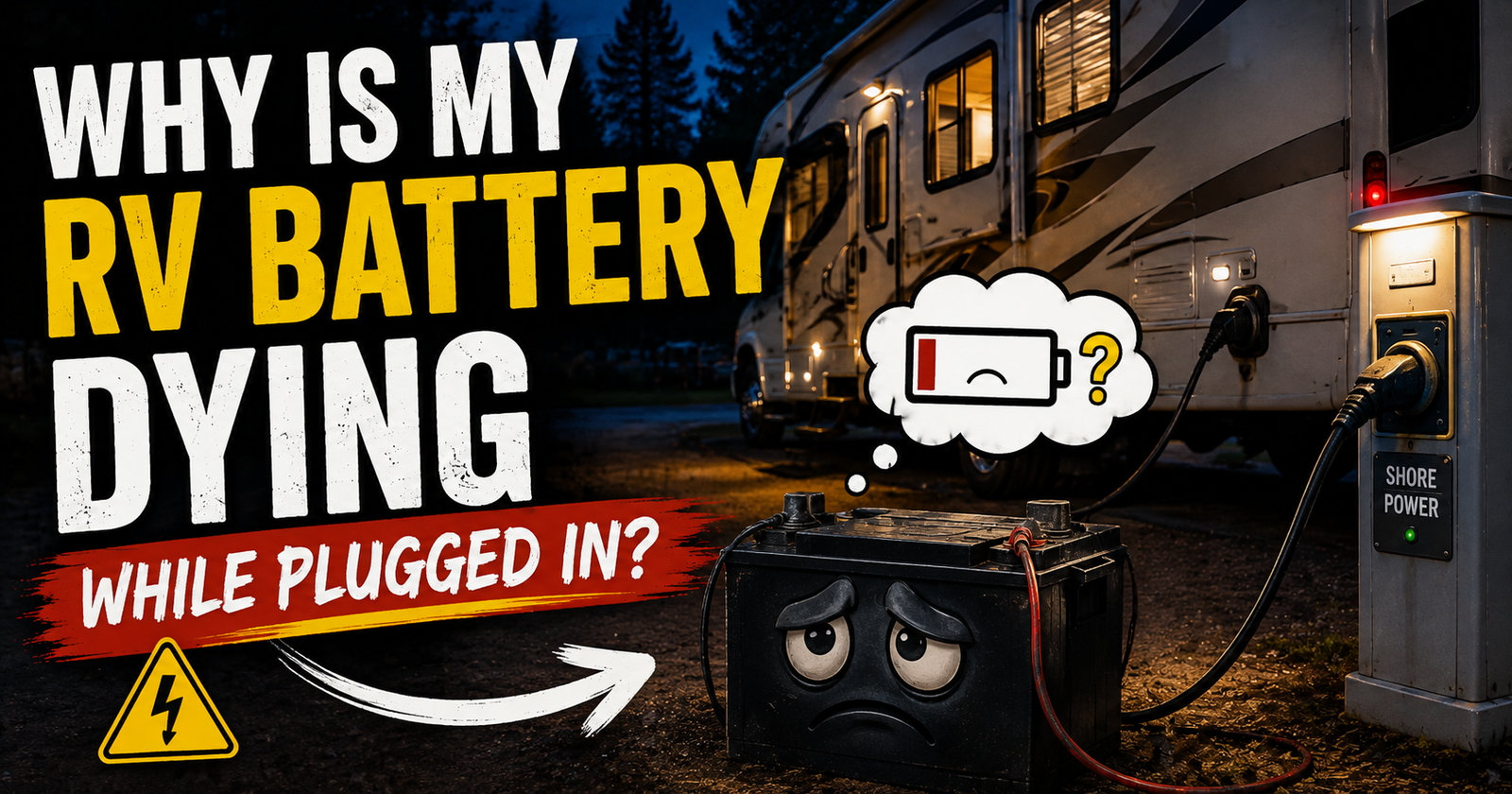
If you’re connected to functioning shore power and the battery continues losing charge, I’d start thinking much more seriously about the charging side of the electrical system.
The converter or inverter/charger, circuit protection, wiring, battery connections, configuration and battery itself can all become relevant depending on the RV.
A battery dying while boondocking and a battery dying despite being connected to shore power may produce the same dead-battery result, but the diagnostic paths are not the same. The broader different diagnostic paths category can help readers compare related battery and shore-power problems.
What If the Battery Dies During Storage?
Storage changes the situation again.
A camper can sit quietly while small electrical loads slowly discharge the battery.
The longer it sits, the more important those seemingly tiny loads become.
If your battery survives a normal camping night but dies after the RV sits unused for days or weeks, I’d investigate storage-related parasitic loads and the actual behavior of the battery disconnect before blaming ordinary overnight camping consumption.
Battery maintenance during storage also depends on battery chemistry and the RV’s charging arrangement.
What If a New RV Battery Still Dies Overnight?
A new battery doesn’t eliminate the rest of the electrical system.
If you replaced the old battery and the new one quickly develops the exact same symptom, stop treating battery replacement as the solution.
Verify charging.
Verify actual overnight loads.
Verify battery capacity.
Check the inverter and other equipment.
Investigate abnormal parasitic draw if appropriate.
Also confirm that the replacement battery is appropriate for the charging system and application.
A new component can still be installed into a system that contains the original problem.
What If the Battery Is Dead Every Morning but Fine During the Day?
Look carefully at what operates specifically at night.
The furnace is an obvious candidate during cold weather.
Lighting use increases after dark.
Entertainment equipment and device charging may increase in the evening.
Solar charging disappears overnight.
That last point matters.
During daylight, solar can mask some of your electrical consumption by continuously putting energy back into the battery bank.
Once the sun goes down, you’re living entirely on stored energy unless another charging source is operating.
A battery problem that seems to happen “only at night” can therefore be a simple imbalance between evening consumption and available battery capacity.
Solar Doesn’t Automatically Prevent a Dead Battery Overnight
Solar panels can’t replenish the battery when there’s no useful sunlight.
What matters is whether the solar system replaces enough energy during the day to make up for what you consumed overnight and throughout the rest of the day.
Cloud cover, shading, season, panel capacity, battery capacity and electrical usage all influence that balance.
A camper can have solar panels on the roof and still experience chronically undercharged batteries.
“Has solar” and “receives enough charging energy” aren’t the same statement.
When I’d Suspect the Battery Itself
I’d move battery condition higher on the list when the battery loses voltage unusually quickly under modest loads, won’t accept or retain an appropriate charge, has obvious physical problems, is known to be old or continues behaving badly after charging and load issues have been investigated.
Physical warning signs deserve particular attention.
A swollen battery, excessive heat, leaking battery or unusual odor isn’t something to casually keep using while you troubleshoot for another week.
Stop and follow the battery manufacturer’s safety guidance.
When I’d Suspect an RV Electrical Problem Instead
I’d look harder at the RV when a known-good battery repeatedly drains, the problem follows a particular circuit or piece of equipment, the discharge occurs even when expected loads are minimized, charging behavior is abnormal, or the problem began after electrical work or equipment installation.
At that point, the battery may simply be the victim.
Something else in the camper is consuming energy or preventing that energy from being replenished.
Don’t Ignore the Pattern
One dead battery can happen because somebody left something on.
A battery that dies every single night is a pattern.
And patterns are useful.
If it happens only in cold weather, investigate what cold weather changes.
If it happens only while dry camping, compare your actual consumption with your battery capacity.
If it happens during storage, investigate loads that remain connected.
If it happens while plugged in, investigate charging.
If it started after installing equipment, inspect that change.
If replacing the battery doesn’t fix it, stop replacing batteries.
You don’t need to guess your way through the entire RV electrical system. Narrow the problem according to when the battery dies and what the camper is doing at the time.
When It’s Time to Have the RV Tested
If you’ve confirmed the battery is appropriately charged, minimized known loads and still experience severe overnight discharge, measuring actual current draw can tell you far more than another round of guessing.
Likewise, a battery that repeatedly won’t charge properly deserves diagnosis of both the battery and charging system.
The important thing is not to treat “dead battery” as a diagnosis.
It’s a symptom.

Your job is to determine whether the energy was never put into the battery, was consumed normally, disappeared through an abnormal load, or can no longer be stored properly because the battery itself has deteriorated. That same troubleshooting framework applies when an battery keeps going dead repeatedly in other situations, too.
Once you know which of those is happening, the mystery of an RV battery dying overnight becomes a much smaller problem.
Written by Evan Mercer
Evan Mercer writes about RV systems, camper troubleshooting, maintenance and everyday ownership questions for CamperAnswers.com. His work focuses on turning technical information and manufacturer guidance into practical answers ordinary RV owners can actually use.