
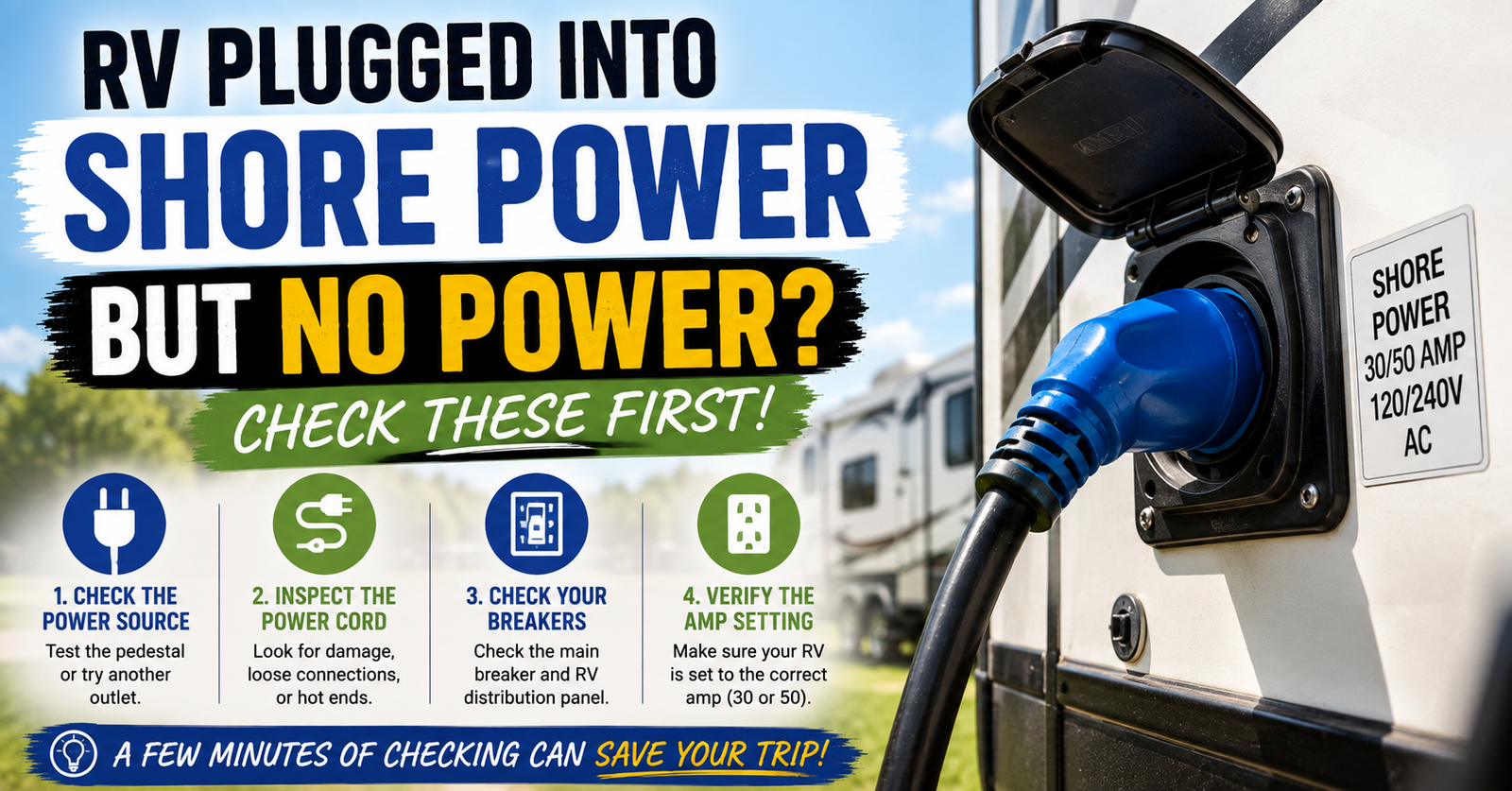
You pull into the campsite, level the camper, hook up the water, plug the shore power cord into the pedestal and expect everything inside to come alive.
Instead, nothing happens.
Before you start thinking you’ve got a fried converter, bad breaker panel, or some expensive electrical problem buried inside the RV, don’t overlook the simple stuff. An RV that’s plugged into shore power but has no power can be caused by the campground pedestal, a tripped breaker, a bad connection, the shore cord, a transfer switch, or a problem inside the RV.
The fastest way I’ve found to troubleshoot this is to start where the electricity comes from and follow it toward the camper.
Don’t start in the middle and guess.
First Figure Out What “No Power” Actually Means
This sounds obvious, but it matters a lot.
When someone tells me their RV has “no power,” my first question is what exactly stopped working?
Are the regular 120-volt wall outlets dead?
Does the microwave display stay dark?
Will the air conditioner turn on?
Are the 12-volt ceiling lights also dead?
Those symptoms don’t necessarily point toward the same problem.
If the microwave, air conditioner and regular outlets don’t work but the 12-volt lights still do, the battery may simply be keeping the DC side alive while the RV has lost shore power.
If absolutely everything is dead, including the 12-volt equipment, you may have a shore-power problem and a discharged or disconnected battery.
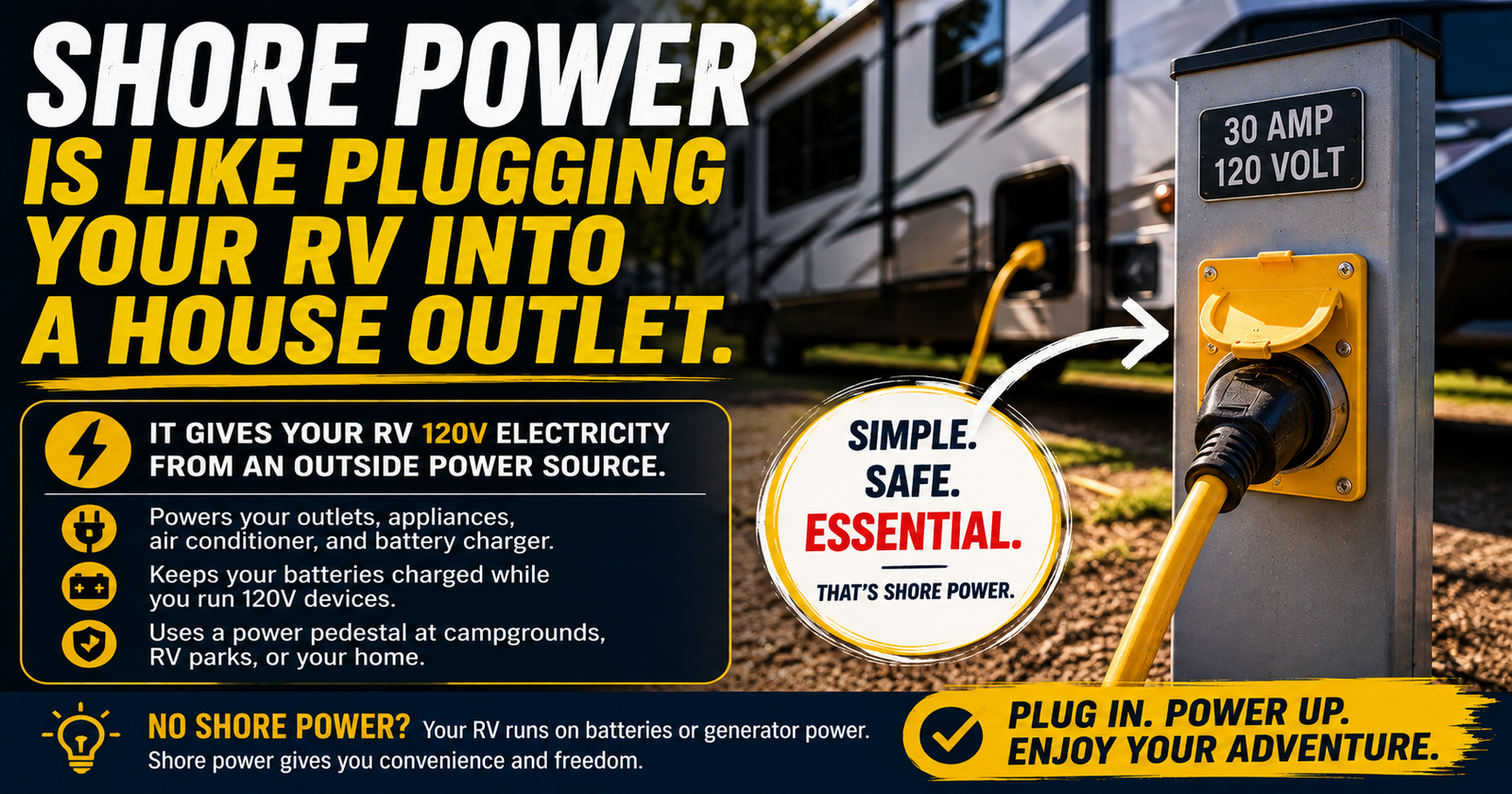
Understanding how shore power works inside an RV makes this distinction much easier.
Check the Campground Pedestal First
I wouldn’t touch anything inside the camper until I’ve made sure electricity is actually available outside.
That’s because plugging the cord into a receptacle doesn’t prove that receptacle has power.
Look at the campground pedestal breaker.
Depending on the pedestal, you might have breakers for:
50 amp
30 amp
20 amp
Make sure the breaker corresponding to the receptacle you’re using is actually on.
Some campground pedestals require you to turn the breaker OFF before connecting your cord and then switch it ON afterward.
If it’s tripped, reset it properly by moving it completely to OFF and then back to ON.
Don’t just push against a breaker that’s sitting somewhere in the middle.

The Pedestal Breaker Can Look On When It Isn’t
This catches people.
A breaker doesn’t always dramatically flip all the way over when it trips.
Sometimes the handle moves only slightly.
That’s why I don’t simply look at it and decide:
“Yep, that’s on.”
I’ll move it firmly to OFF and then reset it.
If it immediately trips again, however, I don’t keep resetting it over and over. A breaker that will not reset calls for a closer look at the circuit before you try resetting it again.
Now something needs to be investigated.
Test the Pedestal Before Blaming the Camper
If you’re comfortable using appropriate electrical testing equipment, verify that the pedestal is actually supplying the correct voltage.

This is also where an RV electrical management system can be extremely useful because better units can detect several pedestal and voltage problems before allowing questionable power into the camper. The broader role of an EMS is covered in this explanation of how an RV EMS protects shore power.
If you’re uncomfortable testing a live campground pedestal, don’t.
Campground electrical service isn’t where I’d recommend somebody learn how to use a multimeter for the first time.
Ask campground staff to check the pedestal or get somebody qualified to test it.


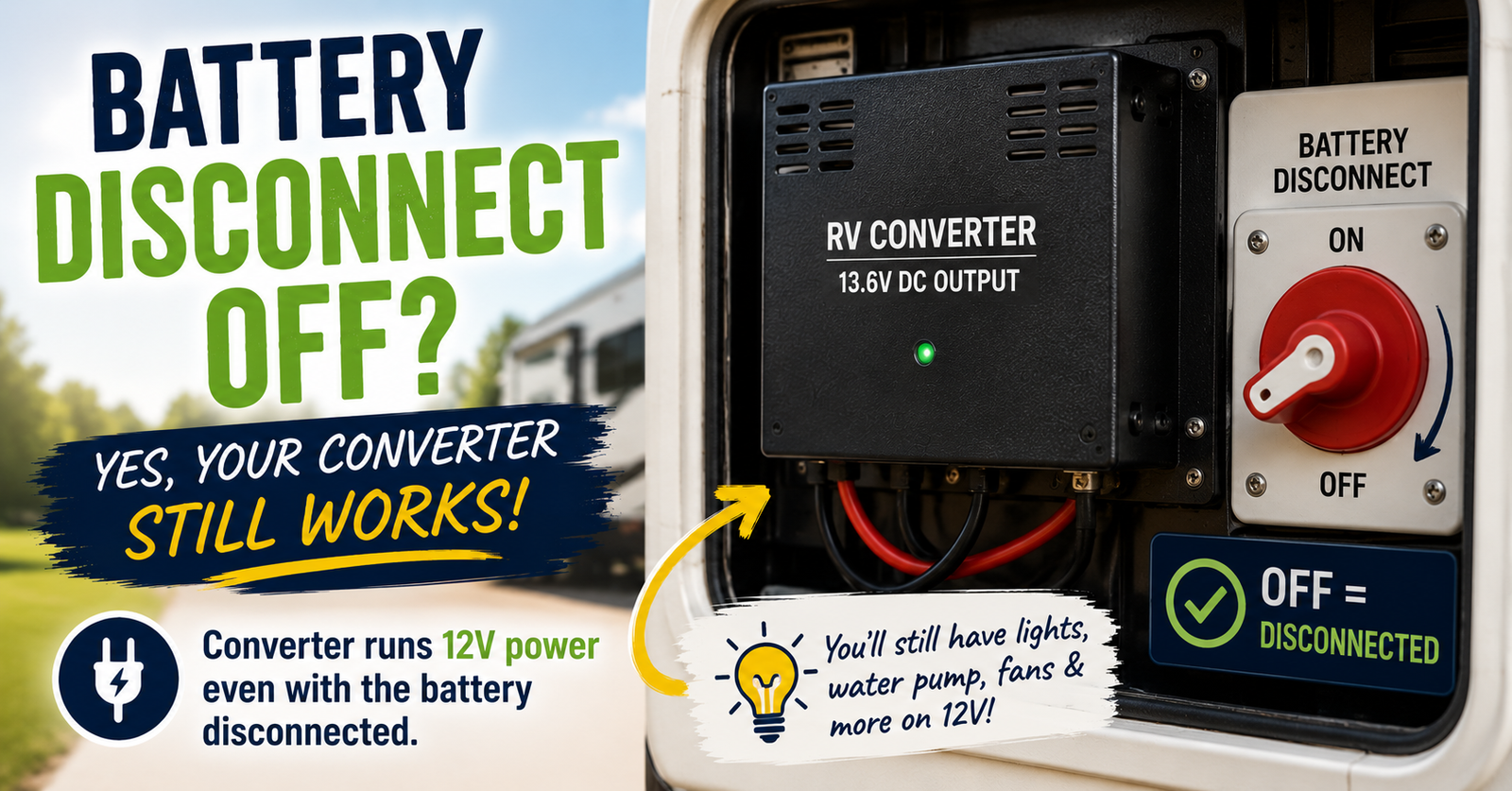
Try Another Pedestal If the Campground Allows It
This can be one of the easiest diagnostic tests available.
If campground staff confirms your pedestal has a problem, moving to another site or testing another known-good connection can quickly tell you whether the problem follows the RV.
If everything works normally on another pedestal, that tells you a lot.
The camper didn’t magically repair itself during the move.
You changed the power source.
Make Sure the Shore Cord Is Fully Connected
Next I inspect the shore-power cord.
This is especially important with detachable RV cords.
Check the connection at the pedestal.
Then check the connection at the RV.
A detachable cord can look connected without being completely seated and secured.
I’d also inspect for:
Burn marks
Melted plastic
Darkened terminals
Loose connections
Bent or damaged contacts
Corrosion
Heat damage
Any obvious physical damage
A shore-power connection carrying substantial current isn’t something I want making partial contact.
If the Plug or Cord Is Hot, Stop and Investigate
A little warmth and a connection that’s becoming hot aren’t the same thing.
Excessive heat can point toward resistance from a poor connection, worn receptacle, damaged plug, loose contact, excessive load, or another electrical problem.
Don’t keep using a visibly burned or melted shore connection because it “still works.”
That’s exactly the kind of clue I’d rather catch before the damage gets worse.
We’ll cover hot RV shore cords and plugs separately in this cluster because that problem deserves its own troubleshooting article.
Check Your Adapter Too
If you’re using a dogbone adapter, don’t forget that it’s now another connection in the electrical path.
For example:
Pedestal → adapter → shore cord → RV.
A problem at the adapter can prevent power from getting where it needs to go.
Make sure you’re using the proper RV adapter for the connection.
And remember that an adapter doesn’t increase the electrical capacity available from the pedestal.
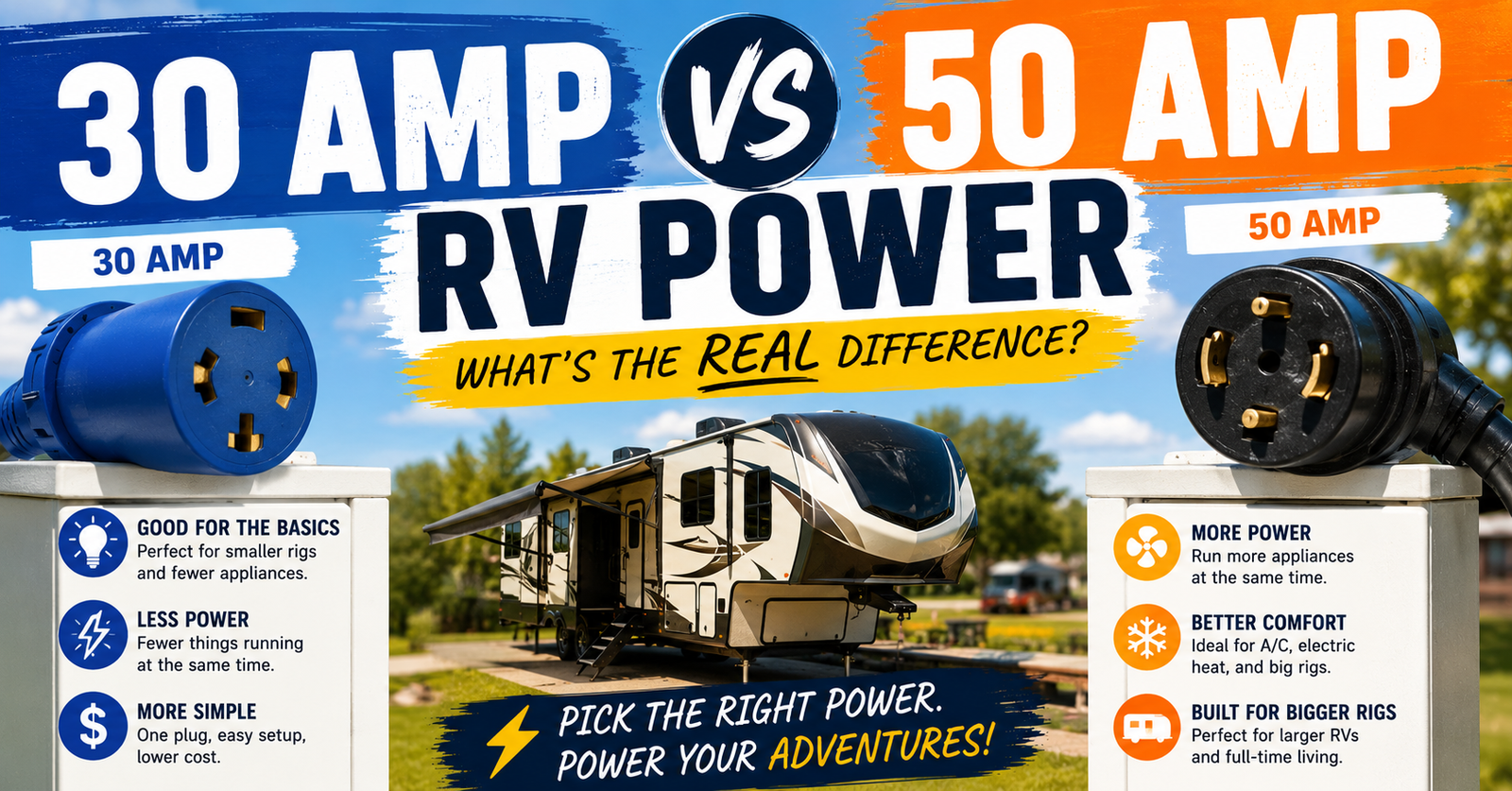
Our 30 amp vs 50 amp RV power guide explains why a 50 amp RV connected to 30 amp service is still limited by the smaller electrical supply.
Now Check the Main RV Breaker
If the pedestal has power and the cord looks good, move inside.
Find the RV’s electrical distribution panel.
Your main AC breaker is one of the first things I’d check.
Again, reset it properly rather than relying entirely on how the handle looks.
Switch it completely OFF.
Then back ON.
WFCO’s troubleshooting information specifically tells owners with no AC power to verify the pedestal connection, check the main breaker, and then investigate RV wiring if those checks don’t restore power.
If the main breaker immediately trips again, don’t keep forcing it back on.
Something is causing it to trip.
Check the Individual AC Breakers
While you’re at the panel, inspect the other breakers.
You may have individual breakers for equipment such as:
Air conditioner
Microwave
Water heater
Converter
General receptacle circuits
Other major AC loads
If the entire camper appears dead, the main breaker is more interesting than one branch breaker.
But if only certain equipment doesn’t work, an individual breaker becomes much more likely.
This distinction will become important later in the shore-power cluster when we cover why an RV has power to some things but not others.
A Tripped GFCI Can Make Several Outlets Look Dead
Here’s another one that causes unnecessary panic.
One GFCI receptacle can protect additional outlets downstream.
That means the outlet you’re staring at may not have a RESET button because the GFCI controlling it is somewhere else.
Check places such as:
Bathroom
Kitchen
Exterior outlet
Storage compartment
Other wet-location receptacles
Press RESET on the applicable GFCI.
If it immediately trips again, don’t keep resetting it indefinitely. There’s a reason it’s opening.
But a GFCI Usually Doesn’t Explain a Completely Dead RV
This is an important distinction.
If every AC circuit in the camper is dead, I’m looking farther upstream.
Pedestal.
Shore cord.
Adapter.
Main breaker.
Transfer equipment.
Main wiring.
A single branch GFCI generally isn’t going to explain why the entire AC distribution system has disappeared.
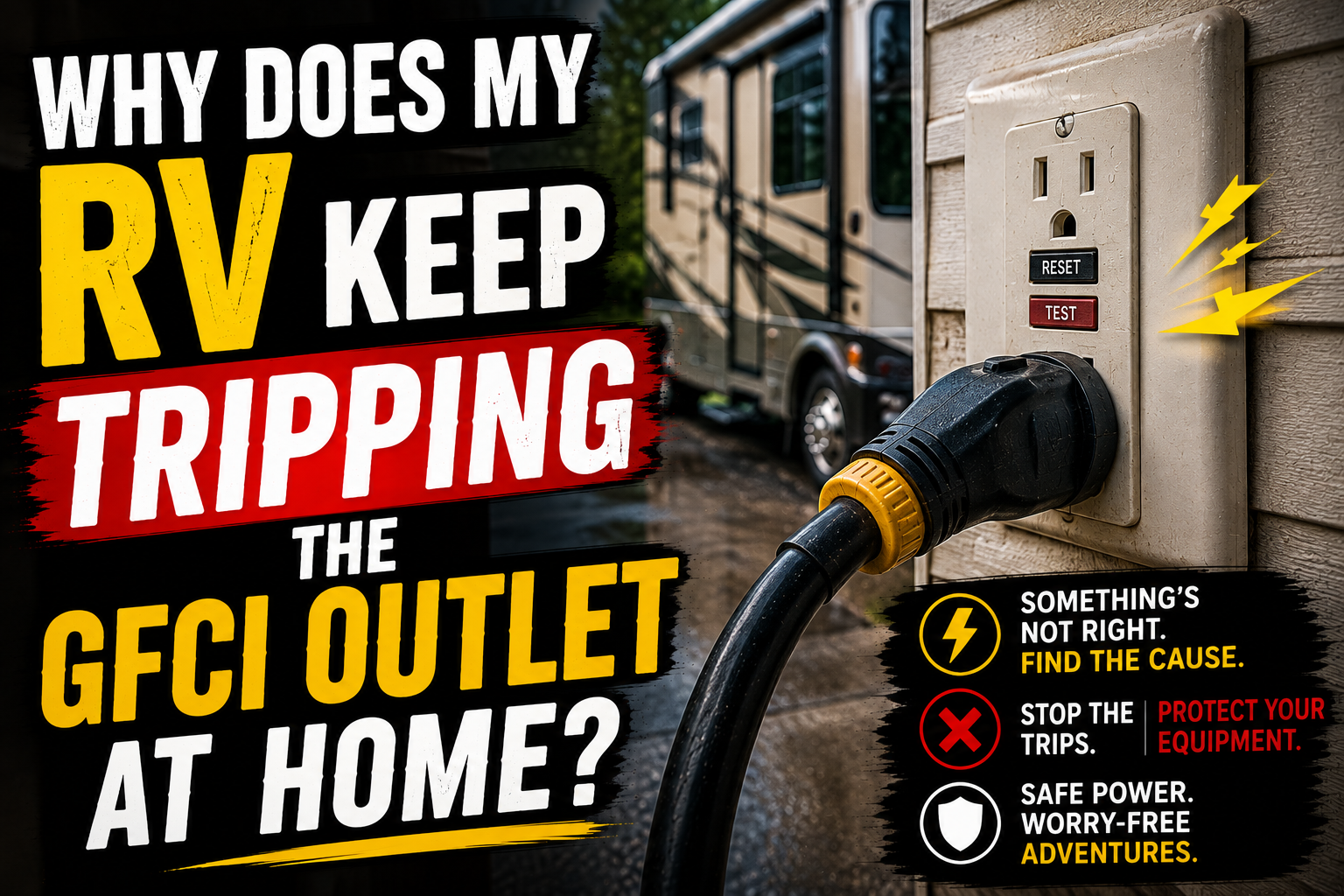
But if the microwave and air conditioner work while several outlets don’t, now GFCI protection becomes much more interesting. For a related situation outside the campground, see how household GFCI protection can trip when an RV is connected at home.
Does Your RV Have an Automatic Transfer Switch?
Motorhomes and RVs equipped with generators often use an automatic transfer switch, or ATS.
Its job is to determine which AC source supplies the RV.
Shore power may come in one side.
Generator power comes in another.
The transfer switch sends the appropriate source toward the RV’s electrical panel.
That creates another possible failure point.
Progressive Dynamics’ transfer-switch troubleshooting procedure specifically checks for voltage arriving from the shore cord and then checks whether that power appears at the panel output terminals. If shore power reaches the switch but doesn’t make it through, the transfer switch becomes the problem area.
A Transfer Switch Problem Can Create a Strange Clue
Suppose this happens:
Plug into shore power.
Nothing.
Start the generator.
The RV suddenly has normal AC power.
That doesn’t prove the transfer switch is bad, but it’s an extremely useful clue.
We now know the RV’s downstream AC system can receive power from somewhere.
The failure appears related to the shore-power path.
That’s much more useful than saying:
“My camper electricity is broken.”
Good troubleshooting is about narrowing the problem down.
Don’t Blame the Converter for Losing All Your AC Power
This is one of the biggest mistakes I want CamperAnswers readers to avoid.
We’ve written a ton about converters, so it’s worth being crystal clear here:
The converter does not normally supply the RV’s 120-volt AC outlets.
The converter takes AC electricity and turns it into DC electricity for the 12-volt side and battery charging.
So if your microwave, air conditioner and household-style outlets are all dead, replacing the converter isn’t the first thing I’d do.
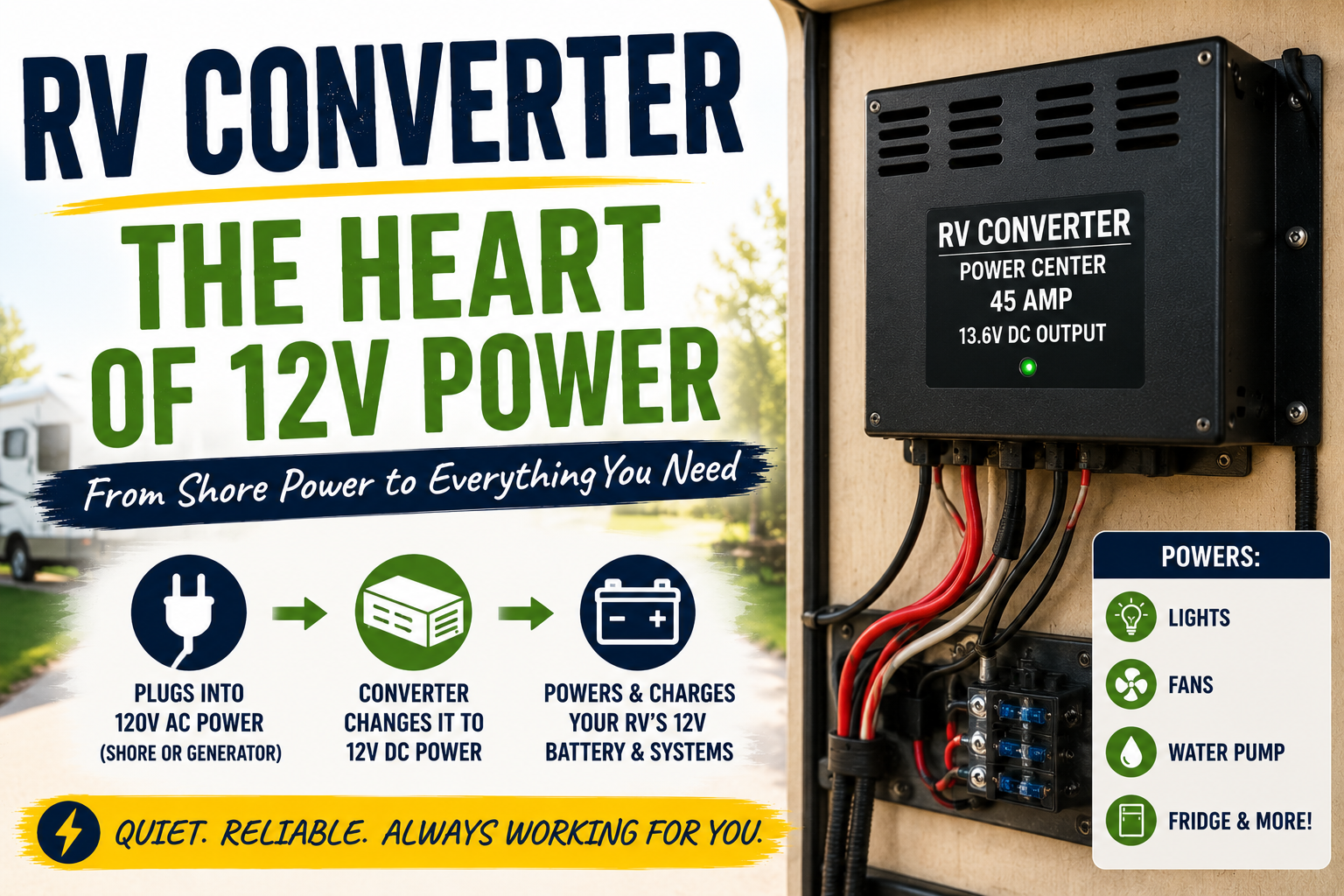
If you’re still fuzzy on that distinction, our plain-English explanation of what an RV converter actually does clears it up.
The converter can be a victim of lost shore power, not necessarily the cause of it.
Here’s Why the Battery Can Fool You
Let’s say the shore-power connection fails.
Your converter loses AC input.
But your house battery is healthy and charged.
Your ceiling lights still work.
Water pump works.
Maybe the furnace still operates.
You walk around thinking:
“Well, the RV has electricity.”
It has 12-volt DC electricity from the battery.
That doesn’t mean shore power is reaching the camper.
WFCO notes that its converter requires AC input to operate. Without that input, it isn’t doing the charging work you expect from shore power.
Watch the Battery If You Think Shore Power Failed
This gives us another clue.
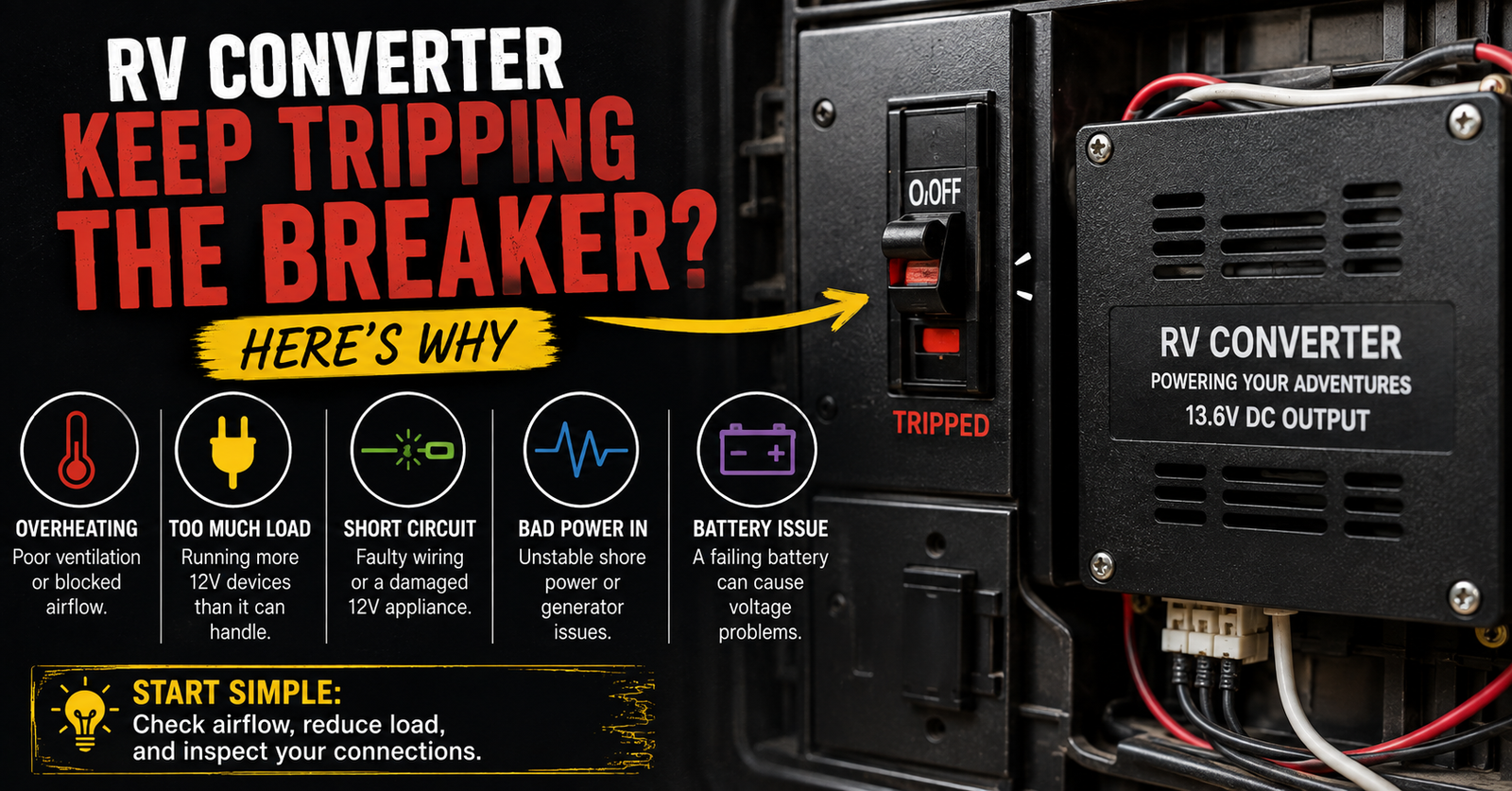
If you’re supposedly plugged in but the battery voltage keeps dropping as you use 12-volt equipment, I start questioning whether the converter is actually receiving AC electricity. When the converter’s AC supply is interrupted by a repeatedly opening breaker, converter AC power problem can help narrow down the cause.
Eventually you may notice:
Lights getting dimmer
Water pump sounding weaker
Battery monitor dropping
Furnace struggling
Other 12-volt equipment acting strange
Now the battery is essentially carrying the camper until it runs down.
That’s why a shore-power failure can eventually look like an entire RV power failure.
Check Whether the Converter Has AC Power
Once you’ve established that the AC system itself is working but battery charging or 12-volt operation isn’t, now the converter becomes relevant.
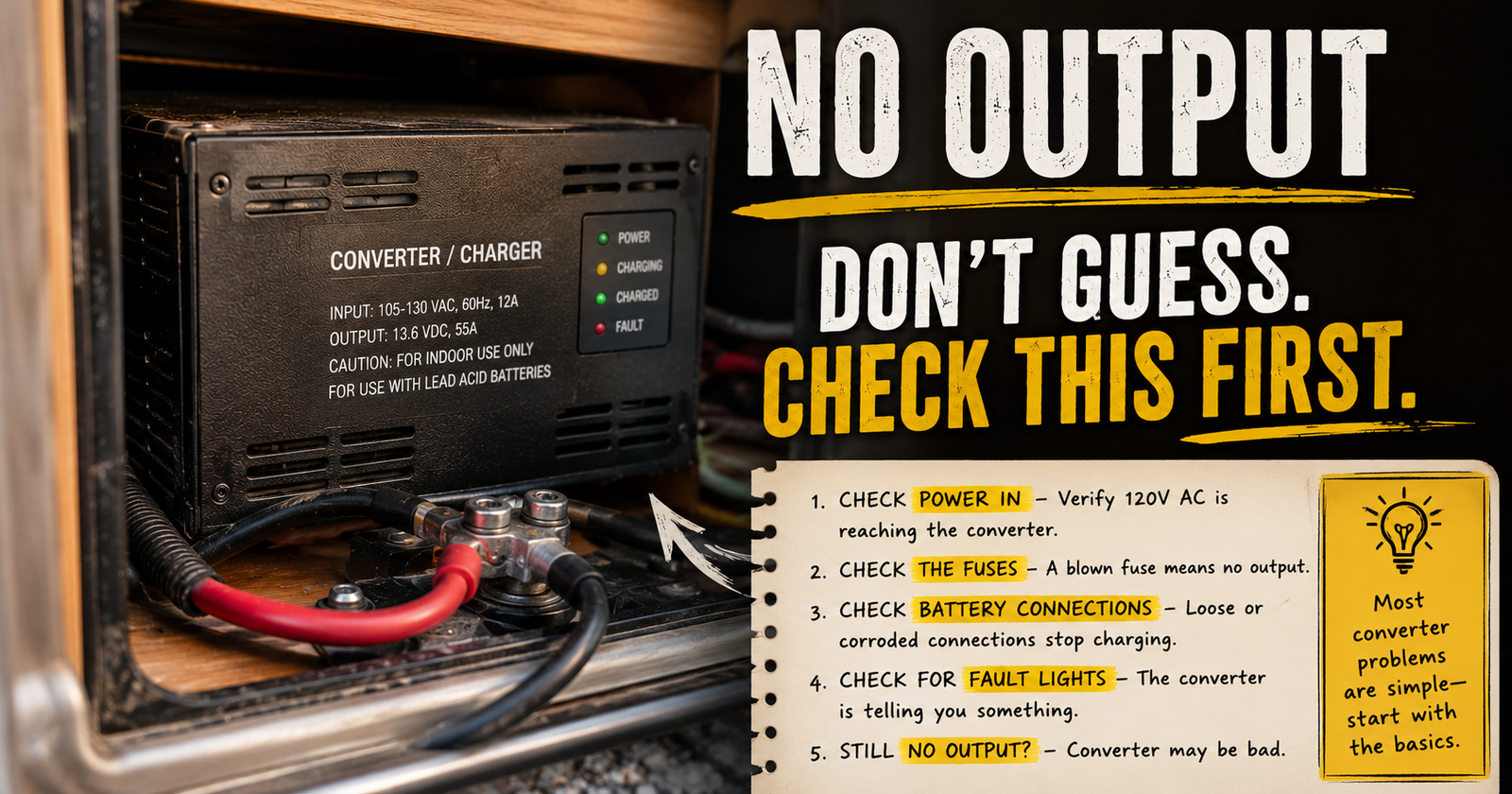
Progressive Dynamics’ converter troubleshooting procedure specifically says to check the 120-volt AC breaker supplying the converter and verify that 120 VAC is actually available at the converter’s AC outlet or input. Those checks are also the starting point for RV converter troubleshooting steps when the converter appears to have no output.
That’s a much more logical troubleshooting order.
Don’t start by replacing the converter.
First ask:
Is electricity even reaching it?
What If the Outlets Work but My 12-Volt Lights Don’t?
That’s a completely different situation.
If your 120-volt AC equipment works normally, then shore power is clearly getting into the RV.
Now I’d investigate the DC side.
Possible areas include:
Converter operation
Battery disconnect
Battery condition
DC fuses
Reverse-polarity protection
Main DC protection
DC wiring
WFCO’s no-DC-power troubleshooting similarly starts by checking whether AC power is entering the RV, whether the converter breaker is on, whether reverse-polarity fuses are good, and whether wiring is intact.
That’s no longer primarily a shore-power failure.
What If Everything Works Except the Battery Won’t Charge?
Again, narrow the problem.
If:
Air conditioner works.
Microwave works.
Outlets work.
Other AC equipment works.
Then you obviously have shore power.
Now we’re looking at the charging system.
Progressive Dynamics says that if converter output tests properly but the battery still isn’t charging, the fuse or breaker in the battery’s positive lead should be checked.
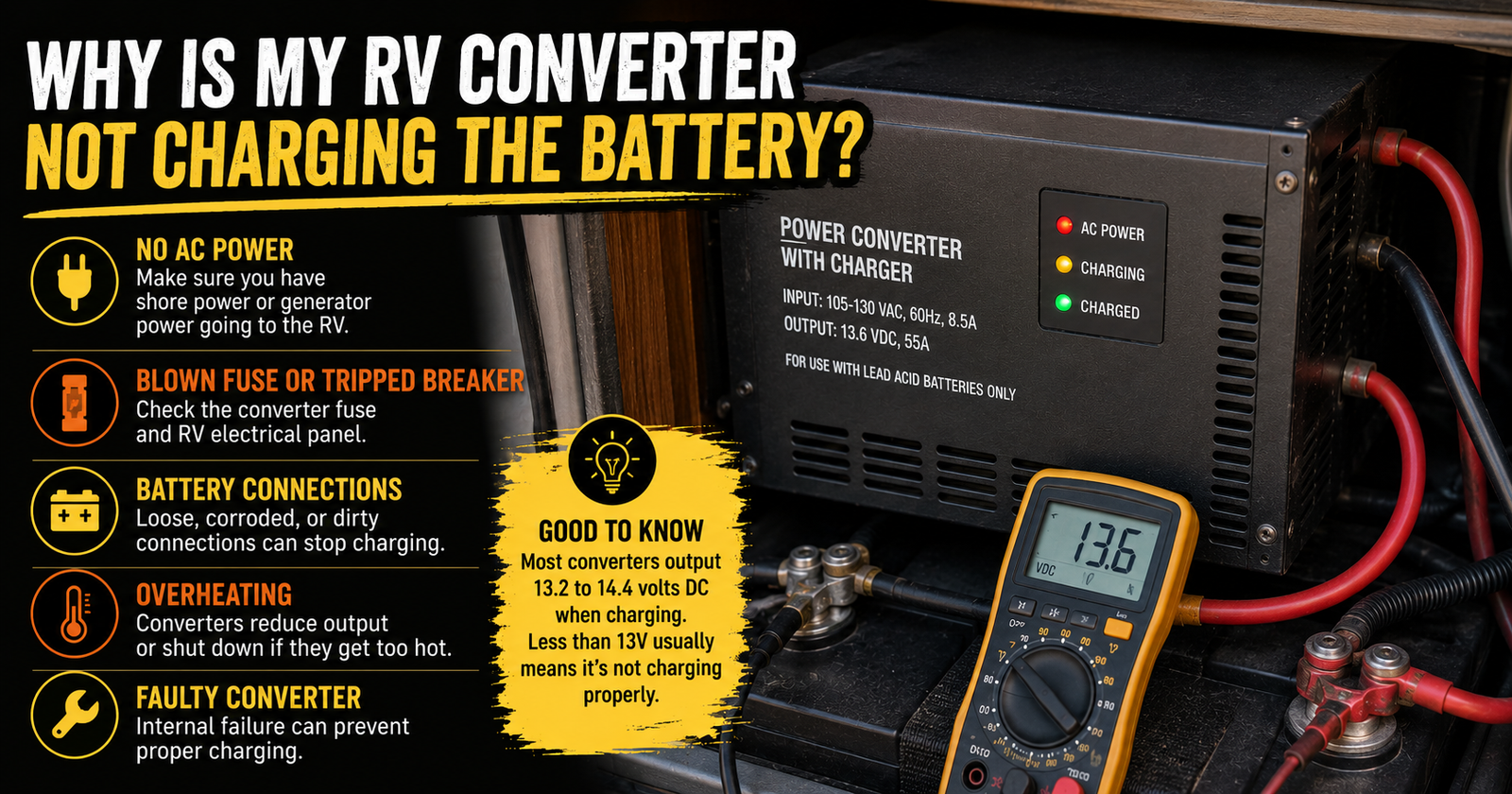
We’ve already built a detailed guide for an RV converter that isn’t charging the battery, so I wouldn’t repeat all of that troubleshooting here.
This article owns the no shore power problem.
That article owns the no battery charging problem.
What If My Surge Protector Won’t Let Power Through?
If you’re using an electrical management system or advanced RV surge protector, don’t immediately assume it’s broken because it refuses to energize the RV.
It may be doing exactly what you bought it to do.
Depending on the equipment, it may prevent power from reaching the RV when it detects unacceptable voltage, wiring problems, an open neutral, incorrect polarity, or another unsafe electrical condition.
Look at the display or error code.
That information can save a lot of guessing.
If it reports a pedestal fault, I’d rather investigate the pedestal than bypass protection just to make the air conditioner turn on.
What If I Have Power at Home but Not at the Campground?
That’s useful information.
If the camper operates normally from a known-good RV connection at home but refuses to work at the campground, the campground electrical source moves much higher on my suspect list.
Pedestal breaker.
Receptacle.
Voltage.
Connection.
Electrical-management-system rejection.
But don’t automatically assume the campground is wrong either.
Changing locations can also mean changing adapters, cord position, or connections.
Follow the electrical path rather than guessing based on location.
What If It Works at the Campground but Not at Home?
Now I’d inspect the home connection.
A regular household receptacle is not equivalent to a full 30 amp or 50 amp RV hookup.
You may also be dealing with a GFCI-protected household circuit.
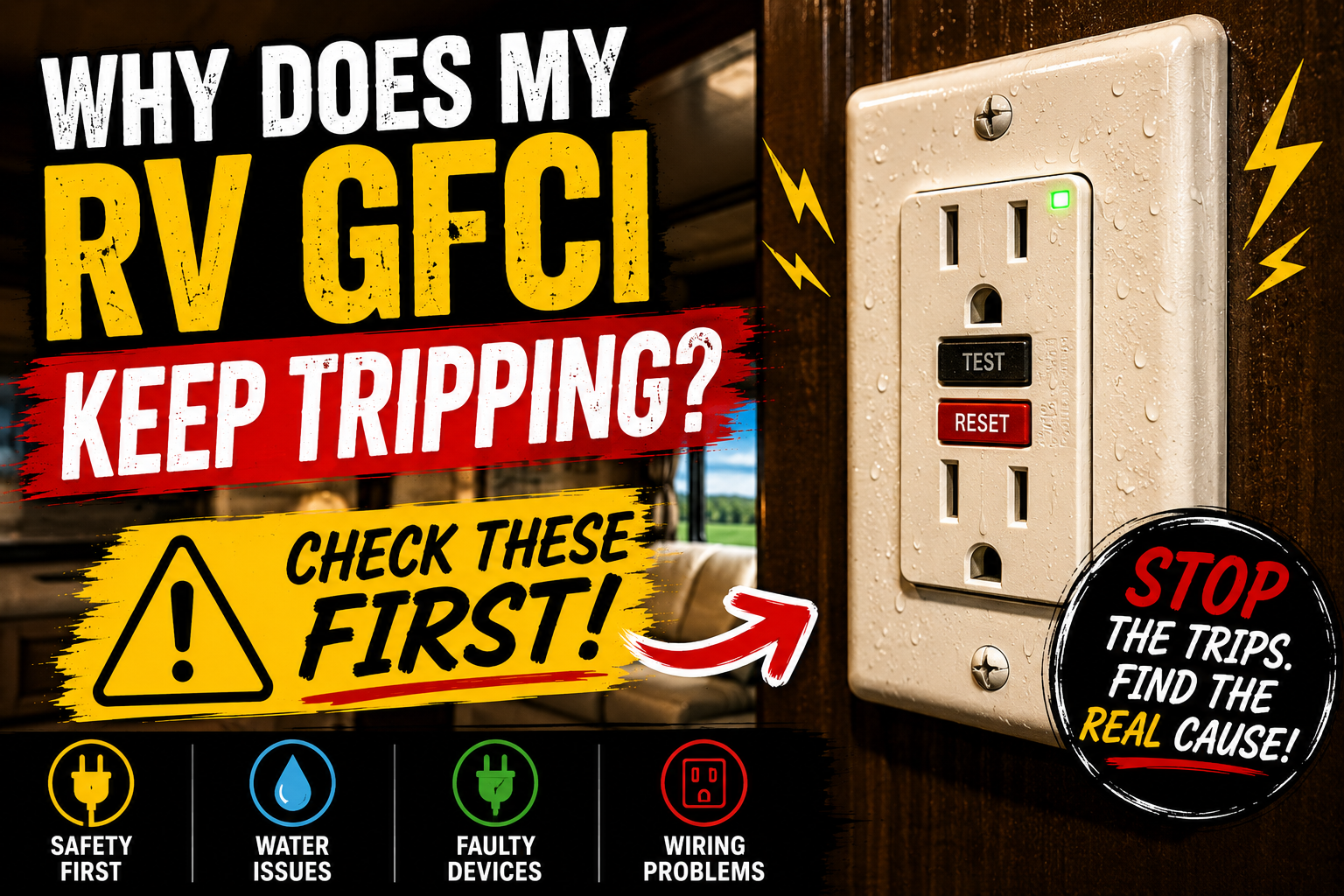
GFCI protection trips when it detects an imbalance between outgoing and returning current, and an RV that immediately trips a household GFCI deserves troubleshooting rather than repeatedly resetting the receptacle. For a step-by-step way to isolate that fault, see an RV that immediately trips a household GFCI.
Also make absolutely sure any dedicated RV receptacle installed at home is wired for the correct RV service.
Don’t assume every similarly shaped outlet is electrically compatible.
Don’t Confuse “No Power” With “Not Enough Power”
These are different problems too.
Maybe the RV works perfectly until you turn on:
Air conditioner
Microwave
Electric water heater
Hair dryer
Coffee maker
Then the breaker trips.
You don’t have a mysterious total shore-power failure.
You may simply be exceeding the available electrical capacity.
This is especially easy to do on a 30 amp RV because the entire camper has about 3,600 watts available from proper 120-volt, 30-amp service.
That’s exactly why we started this cluster with our 30 amp versus 50 amp RV power comparison.
What If the Breaker Keeps Tripping With Almost Nothing Running?
Now I’d pay attention.
Turn major loads off.
Reset the appropriate breaker.
See what happens.
If it immediately trips with essentially no normal load, I wouldn’t keep hammering the breaker back on.
A breaker is a safety device.
Repeated tripping can indicate a fault that needs diagnosis.
We’ll cover RV shore power repeatedly tripping the breaker as its own article because overloads, appliance faults, wiring problems, converter problems and campground-side issues can all enter that discussion.
What If I Smell Burning?
Stop treating it as a normal troubleshooting exercise.
If you smell burning electrical insulation, see smoke, find melted connections, or discover badly discolored shore-power components, disconnect power safely and investigate before continuing to use the system.
A loose high-current connection can generate substantial heat.
Don’t keep using a damaged pedestal connection or shore plug because electricity still manages to get through it.
“No power” is inconvenient.
An overheated electrical connection is something I take much more seriously.
The Shore Power Inlet Can Fail Too
Don’t forget about the connection mounted on the camper itself.
On RVs with detachable cords, the inlet is another set of electrical contacts.
Connections can loosen.
Terminals can corrode.
Heat damage can occur.
Physical damage can happen.
If the pedestal tests correctly and the cord tests correctly but electricity isn’t reaching the RV’s electrical system, the inlet and wiring immediately behind it become part of the path I’d investigate.
Again:
Follow the electricity.
A Bad Shore Cord Isn’t Always Obvious
A cord can look perfectly acceptable on the outside while having a problem at a plug, connector, or internal conductor.
That’s why visual inspection is only one part of troubleshooting.
If you’re qualified to perform electrical testing, continuity and voltage testing can help isolate the cord.
If not, have it checked.
I wouldn’t start cutting open an RV shore cord just because the camper went dark once.
The Main Electrical Panel Is a Major Checkpoint
Think of the troubleshooting process as checkpoints.
Do we have proper power at the pedestal?
Yes.
Does it make it through the shore cord?
Yes.
Does it make it through the inlet?
Yes.
Does it make it through the transfer equipment, if equipped?
Yes.
Does it reach the main electrical panel?
Once you know exactly where the voltage disappears, the problem becomes dramatically smaller.
That’s much better than randomly replacing electrical components.
Don’t Open Live Electrical Equipment Unless You Know What You’re Doing
Some of the advanced checks in this troubleshooting path involve live 120-volt AC electricity.
That’s not the same thing as checking a 12-volt battery with a meter.
Progressive Dynamics specifically warns that troubleshooting its equipment can involve exposure to live 120 VAC and says electrical diagnosis should be performed by someone who understands the risks.
There’s nothing wrong with stopping at:
“I’ve confirmed the pedestal and cord are good, but power isn’t reaching the panel.”
That’s already valuable information to hand an RV technician.
My Quick Troubleshooting Order
If my own camper were plugged in and suddenly had no shore power, this is the order I’d mentally follow:
Pedestal → pedestal breaker → surge protector/EMS → adapter → shore cord → RV inlet → transfer switch if equipped → main breaker → branch breakers/GFCI → individual equipment.
That’s the AC side.
If the AC side works but the 12-volt side doesn’t, I branch off toward:
Converter → DC protection → battery disconnect → battery → DC distribution.
Keeping those two systems mentally separated saves an enormous amount of confusion.
Don’t Start Buying Parts Until You Know Where Power Stops
This is really the lesson I want somebody to take from this article.
If your RV is plugged into shore power but nothing works, don’t immediately order:
A converter.
A transfer switch.
A new breaker panel.
A battery.
A shore cord.
Start at the source.
Check the campground pedestal.
Check the breaker.
Inspect every connection you’re using.
Determine whether the problem affects the AC side, DC side, or both.
Then work inward.
Sometimes the entire crisis ends with flipping a pedestal breaker properly back on.
Sometimes you find a loose shore cord.
Sometimes an electrical management system is correctly refusing bad campground power.
And yes, sometimes you eventually trace the failure to a transfer switch, wiring problem, or another component that needs repair.
But by following the electricity from the pedestal toward the RV, you’re diagnosing instead of guessing.
That’s almost always cheaper than replacing parts until the lights finally come back on.
Written by Evan Mercer
Evan Mercer writes about RV shore power, electrical systems, batteries, converters, and practical camper troubleshooting for CamperAnswers.com. He focuses on helping RV owners follow problems logically so they can understand where the electricity stopped before assuming an expensive component failed.