
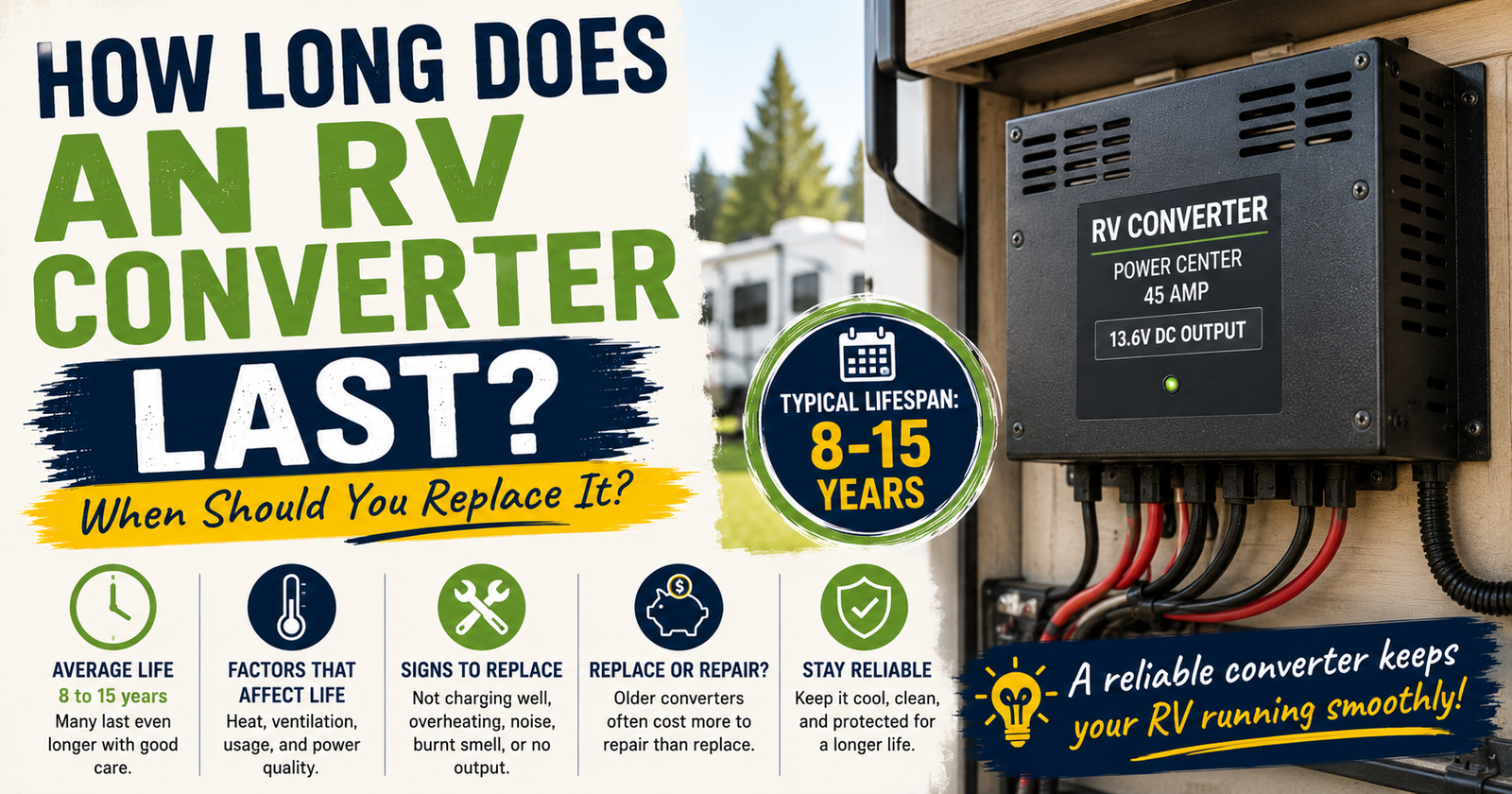
Most RV owners don’t replace a converter because it hit some magic birthday. They replace it because one day the battery stops charging, the lights start acting strange, the fan sounds terrible, or that little box they’ve barely thought about for years suddenly becomes the prime suspect.
So how long should an RV converter actually last?
A good RV converter can commonly last 10 years or longer, and plenty survive well beyond that. But there isn’t a reliable expiration date. Heat, ventilation, electrical conditions, moisture, component quality, and how hard the converter works can matter more than its age alone.
I’ve seen enough electrical equipment to know that replacing a perfectly working part just because it’s old doesn’t make much sense. At the same time, a 15-year-old converter can deserve a closer look even if it hasn’t completely died yet, especially if you’re upgrading batteries or starting to notice charging problems.
Here’s how I’d decide whether an RV converter is simply getting older or genuinely reaching the end of its useful life.
RV Converters Don’t Have a Set Expiration Date
This is the first thing I’d get out of the way.
You probably won’t find a sticker on your converter that says:
Replace after 10 years.
That’s because converter life depends heavily on operating conditions.
One converter might spend most of its life in a camper that gets used six weekends a year.
Another might live in a full-time RV, stay connected to shore power constantly, regularly recharge a large battery bank, and spend summers operating in brutal heat.
Those are very different lives.
So when somebody asks me whether an 8-year-old converter needs replacement, age alone isn’t enough information.
I’d rather know:
Does it produce the correct voltage?
Does it reliably charge the battery?
Does it stay reasonably cool?
Does its fan operate correctly?
Does it make unusual noises?
Does it repeatedly blow fuses or trip breakers?
Does it support the battery chemistry currently installed?
Those answers tell me far more than the manufacturing date.
What Actually Wears Out Inside an RV Converter?
An RV converter is electronic equipment, and electronic components don’t last forever.
Converters can contain capacitors, diodes, transformers or switching components depending on design, circuit boards, cooling equipment, and other components that spend years dealing with electrical load and heat.
Heat is especially important.
Every time your converter takes 120-volt AC electricity and turns it into the DC electricity your camper needs, some energy is lost as heat.
That’s one reason converters have ventilation openings and why many have cooling fans.
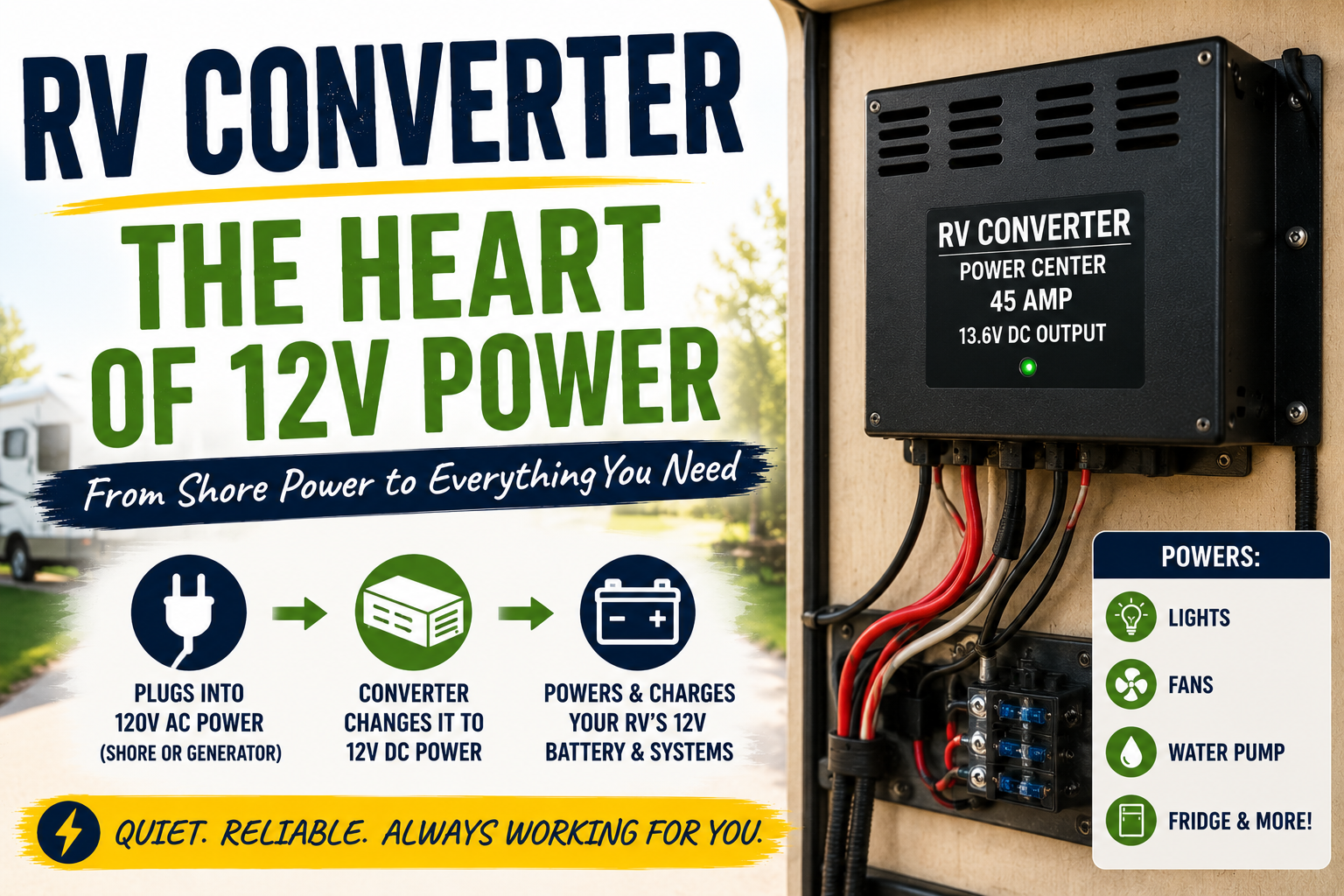
If you’re still getting familiar with this part of your camper, our guide explaining what an RV converter is and what it actually does is a good starting point before getting into failure symptoms.

Heat Is One of the Biggest Enemies
If I wanted an RV converter to live a long life, one of the first things I’d give it is room to breathe.
Converters generate heat naturally.
The cooling system is designed to get rid of it.
Problems start when airflow gets restricted.
Maybe somebody packs blankets around the converter.
Maybe storage gets piled against its ventilation openings.
Maybe dust and debris accumulate.
Maybe the cooling fan gets weak.
Maybe the converter was installed in an area that already gets extremely hot.
Now normal operating heat has nowhere to go.
Repeated excessive heat can shorten the life of electronic components.
That’s why I take a converter that’s suddenly running much hotter than normal seriously.
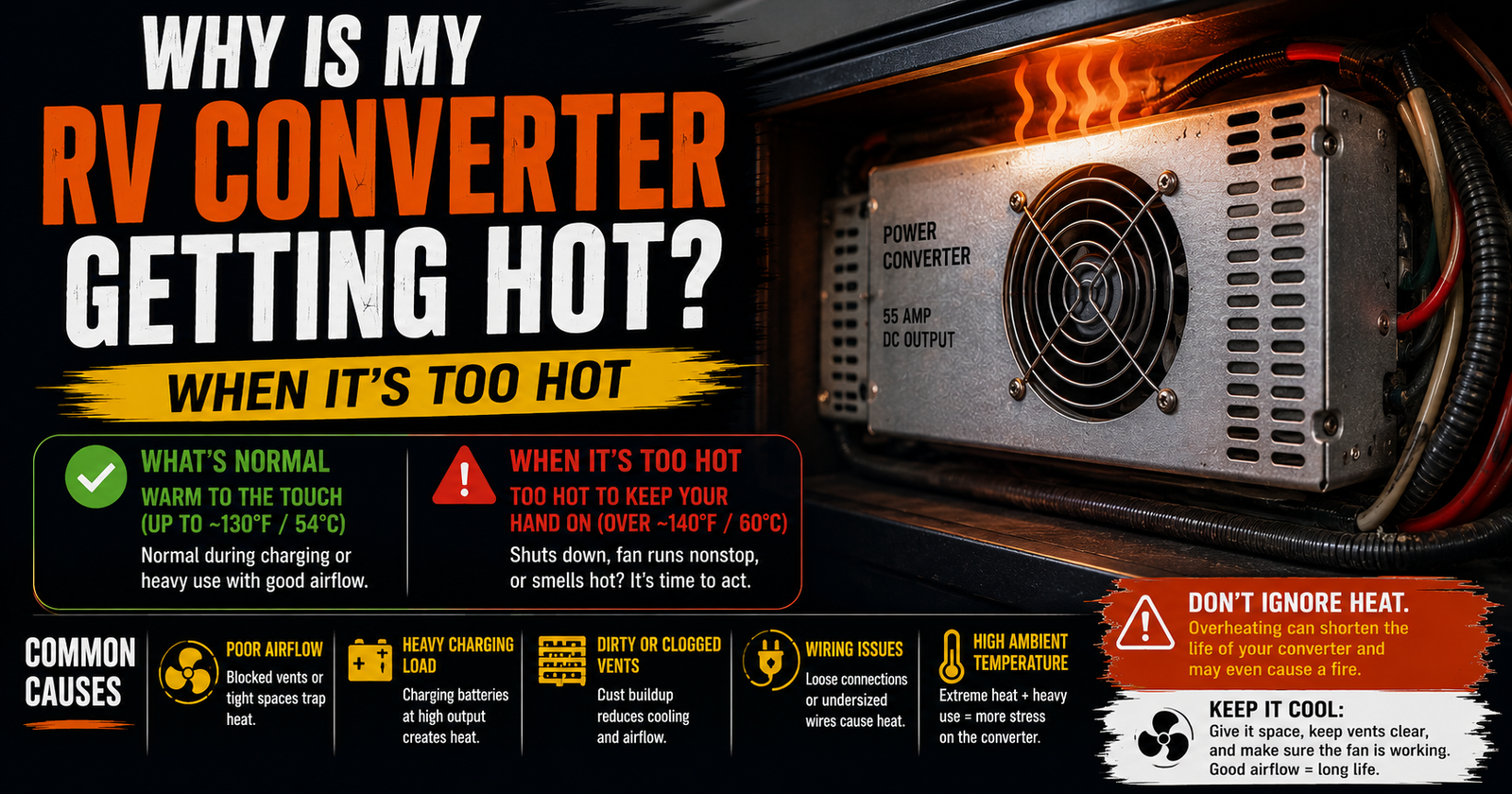
We’ve covered when an RV converter is getting too hot separately because warm and dangerously hot aren’t the same thing.
A Cooling Fan Can Age Before the Converter Does
Sometimes the electronics aren’t the first thing to cause trouble.
The fan is a moving mechanical component.
Bearings wear.
Dust builds up.
Fan blades get dirty.
Motors can weaken.
A fan that used to spin quietly may eventually start rattling, squealing, grinding, or refusing to run.
That doesn’t necessarily mean every part of the converter is dead.
But it does mean you need to pay attention because the fan is there for a reason.
If the converter needs cooling and isn’t getting it, the resulting heat can create a much bigger problem.
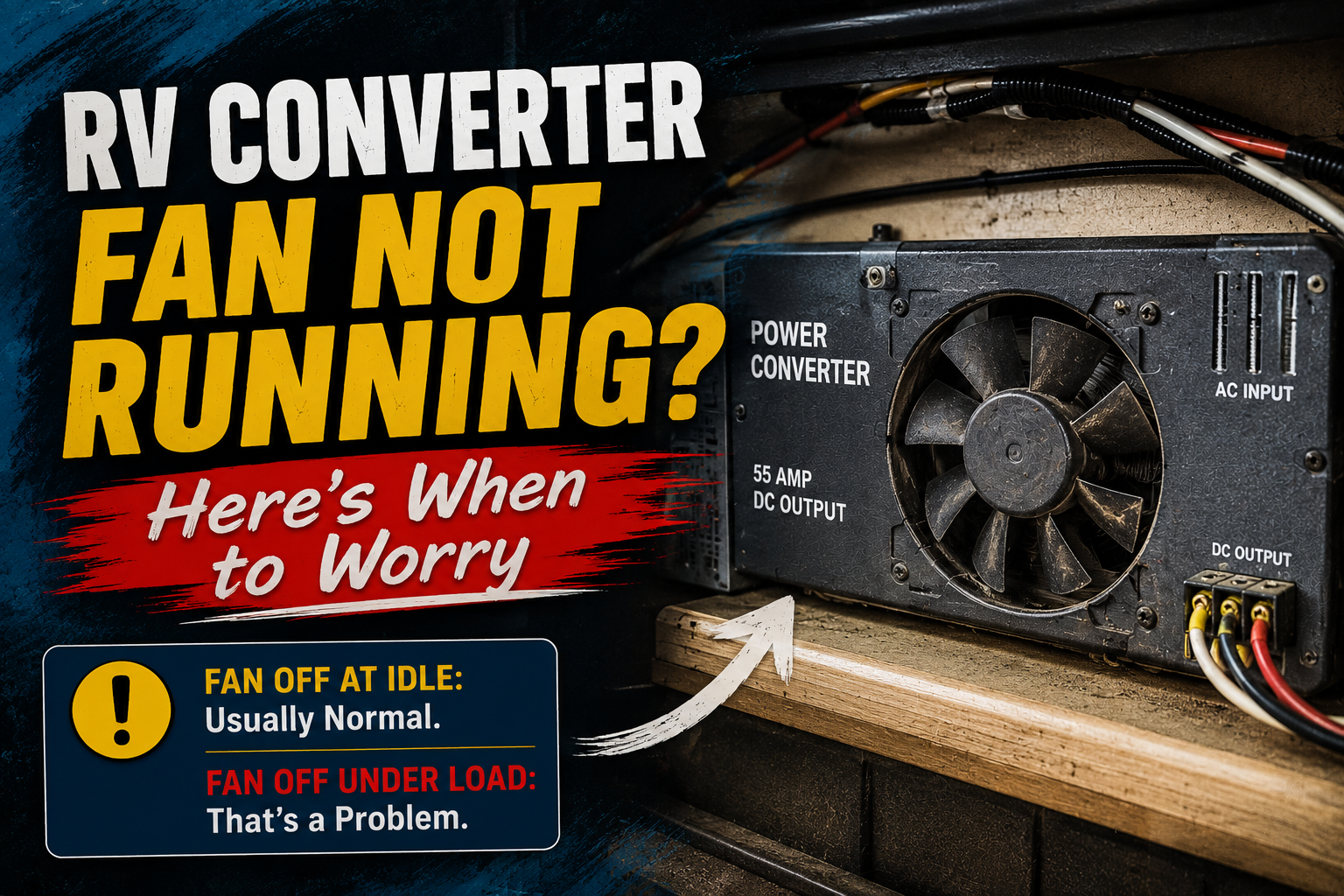
Our guide to an RV converter fan that isn’t running explains when a stationary fan is perfectly normal and when it deserves attention.
Constant Fan Operation Can Tell You Something Too
The opposite situation is worth watching.
If the fan suddenly seems to run constantly, I’d ask why the converter is working so hard.
A deeply discharged battery can cause heavier converter operation.
Heavy 12-volt loads can do the same.
Hot ambient temperatures can increase cooling needs.
But if nothing about your RV usage has changed and the converter suddenly seems to be working much harder than it used to, I’d investigate.
That doesn’t prove the converter is worn out.
It’s a clue.
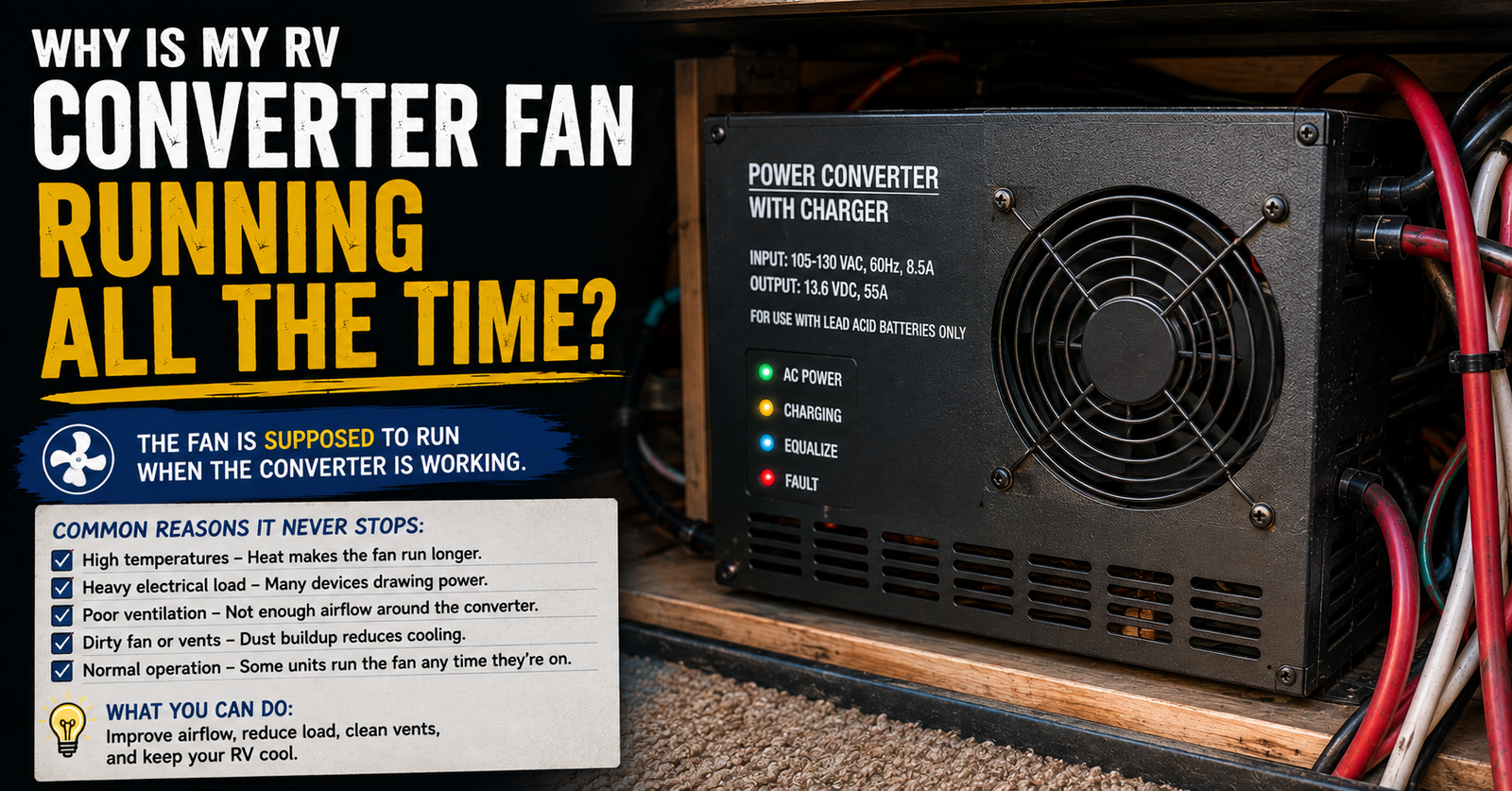
We’ve got a separate troubleshooting guide for an RV converter fan that runs all the time because there are several causes besides converter age.
Heavy Battery Charging Can Work a Converter Hard
Imagine two identical converters.
The first spends most of its life maintaining a healthy, nearly full battery.
The second repeatedly gets connected to a deeply discharged battery bank and has to supply substantial charging current.
The second converter has a harder job.
That’s not to say converters can’t handle charging. That’s exactly what converter/chargers are designed to do.
But operating conditions matter when we’re talking about lifespan.
The same is true if you have large ongoing 12-volt loads while the converter is simultaneously trying to recharge the battery.
The converter has finite output capacity.
The more of that capacity you’re regularly using, the more heat it may have to manage.
A Bad Battery Can Make the Converter Look Old
This is something I’d check before blaming a converter.
Suppose your battery has deteriorated internally.
Now it doesn’t hold charge well.
The converter keeps trying to maintain it.
You notice strange charging behavior and assume:
“My converter is 10 years old. It must finally be dying.”
Maybe.
But maybe the battery is the problem.
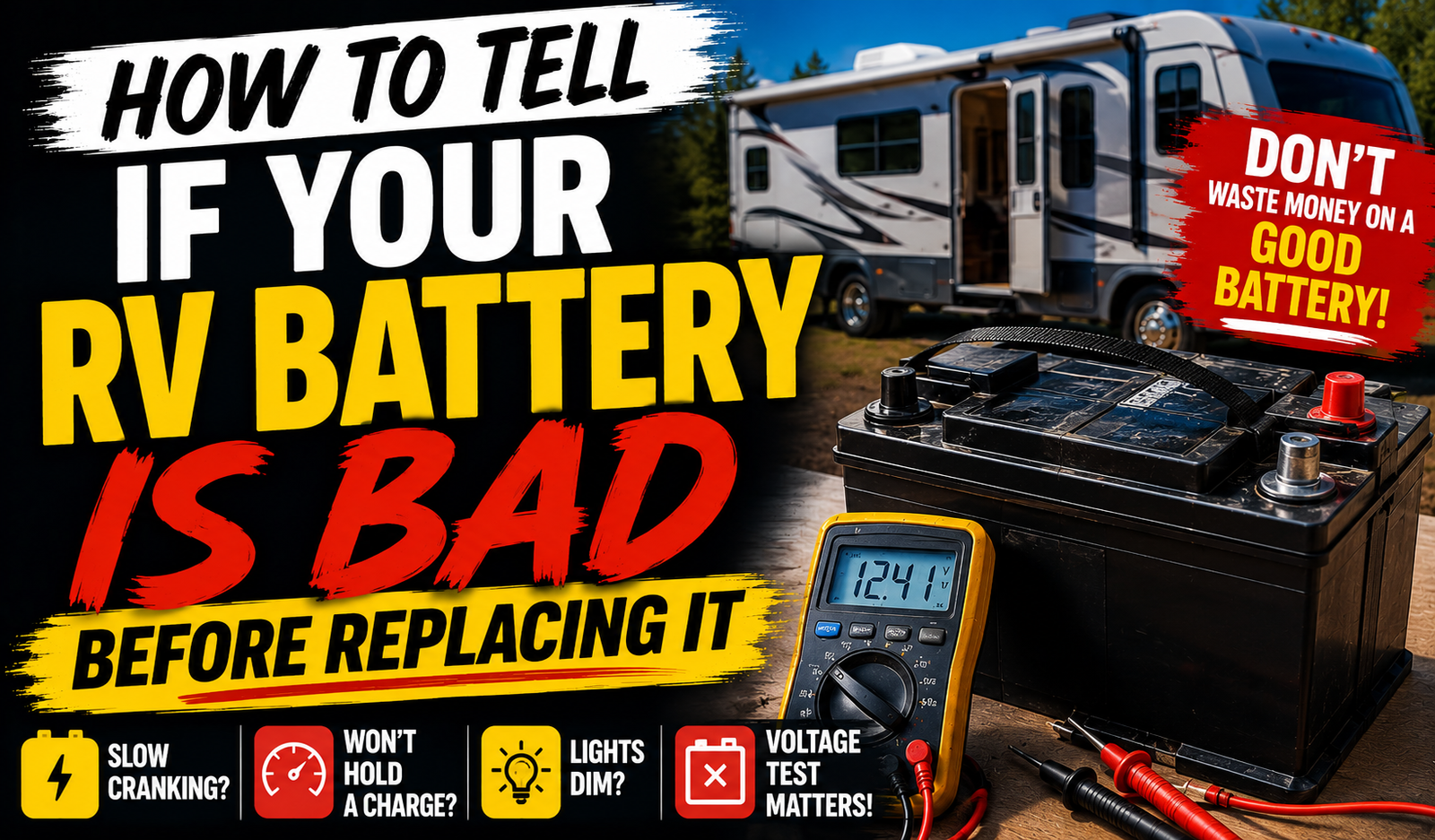
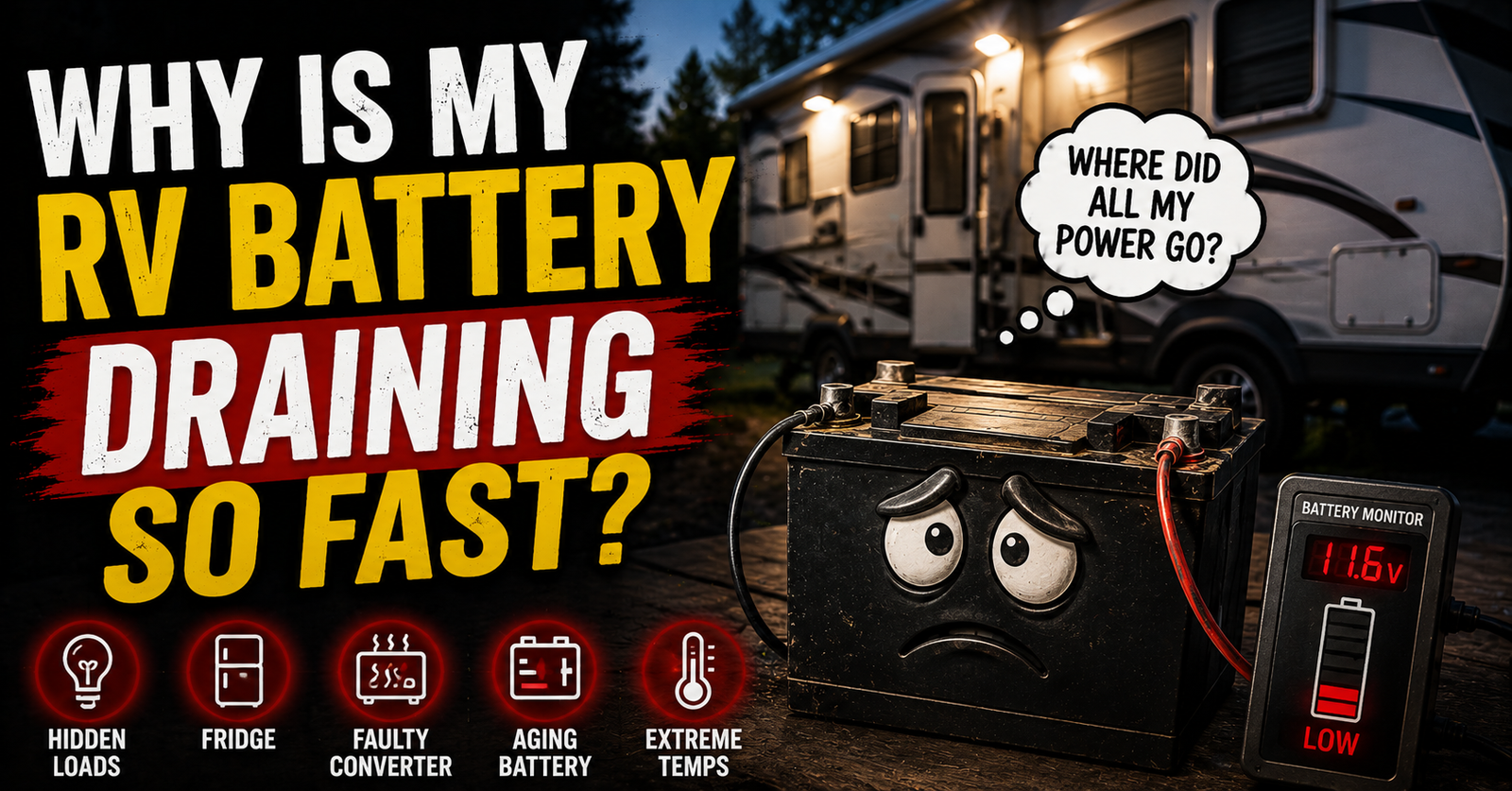
We’ve already covered how to tell if an RV battery is bad before replacing it because battery and converter problems can imitate each other surprisingly well.
Don’t condemn the converter until you’ve figured out which side of the charging system is actually failing.
What Are the First Signs an RV Converter Is Going Bad?
There isn’t one universal symptom.
That’s what makes converter diagnosis frustrating.
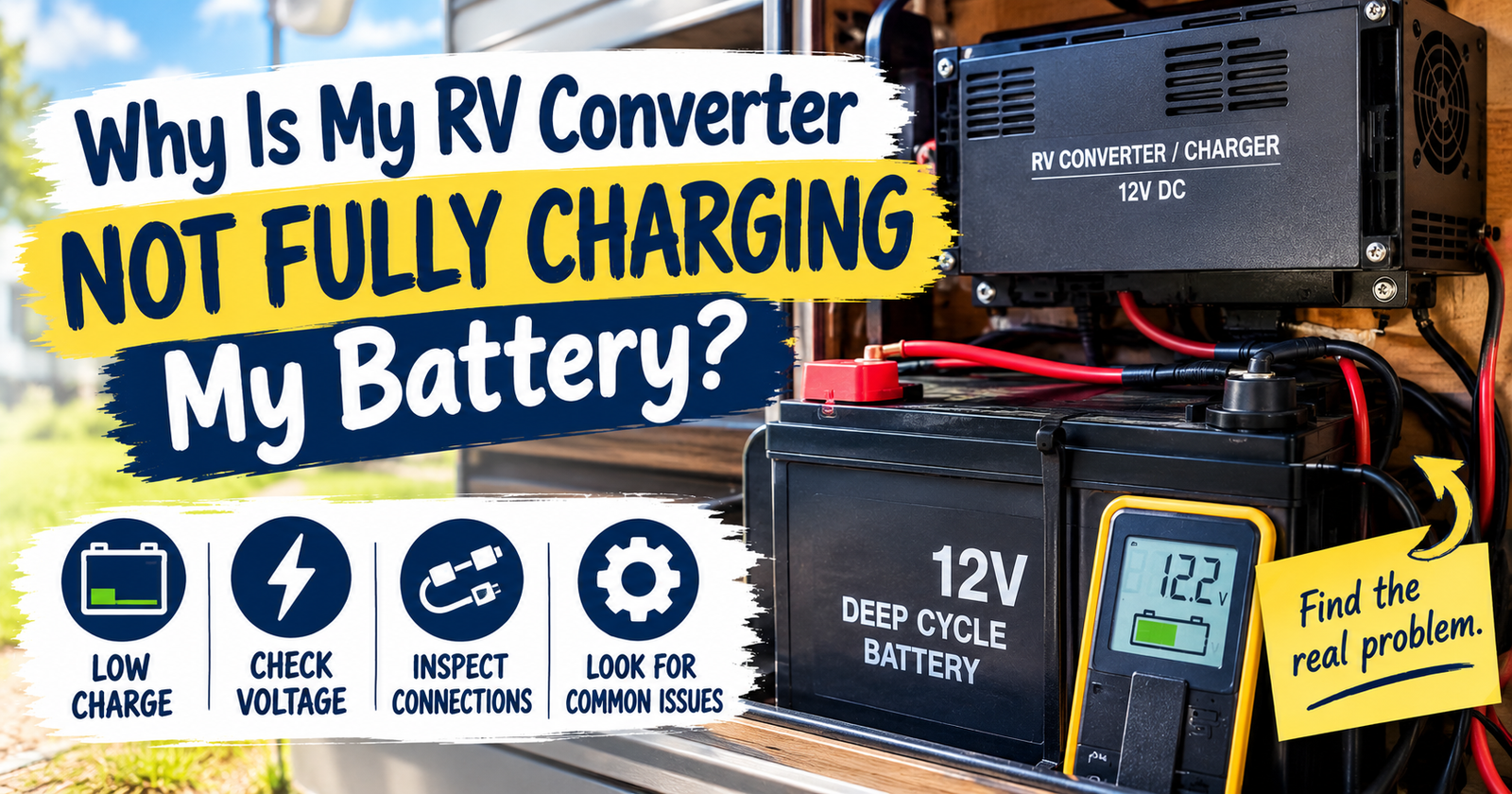
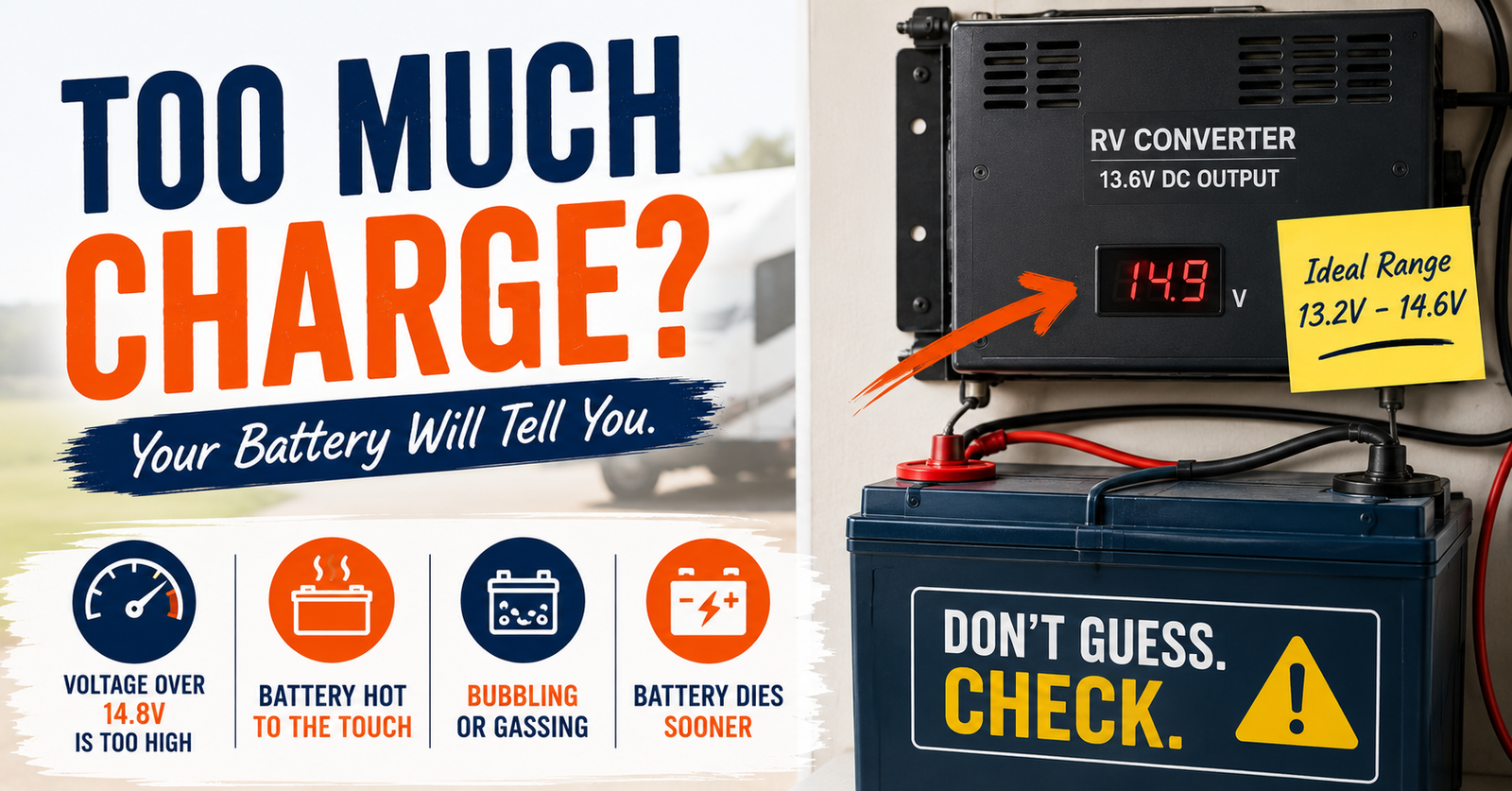
Some common warning signs include inconsistent battery charging, abnormal output voltage, no DC output, repeated fuse problems, breaker trips, unusual noises, excessive heat, burning smells, or strange behavior from the RV’s 12-volt equipment.
But here’s the important part:
None of those symptoms automatically proves the converter is bad.
A loose connection can cause voltage problems.
A bad battery can cause charging problems.
Reverse polarity can blow protection fuses.
An AC supply problem can leave the converter with no input.
That’s why I prefer testing over guessing.

Your Lights Can Give You an Early Clue
Interior lighting is one of the easiest places to notice changing 12-volt behavior.
Maybe the lights used to stay bright on shore power but now seem dim.
Maybe they brighten and dim.
Maybe they flicker when another DC load turns on.
That tells me something isn’t behaving normally on the DC side.
It doesn’t immediately tell me what is wrong.
Battery voltage, converter output, wiring connections, and charging performance are the next things I’d investigate.
Battery Charging Problems Are Another Big Warning Sign
If the converter has successfully charged the battery for years and suddenly stops, that’s obviously worth investigating.
But don’t skip the basics.
Make sure the converter actually has AC input.
Check the appropriate breaker.
Check applicable fuses.
Inspect battery connections.
Verify the disconnect position.
Measure voltage.
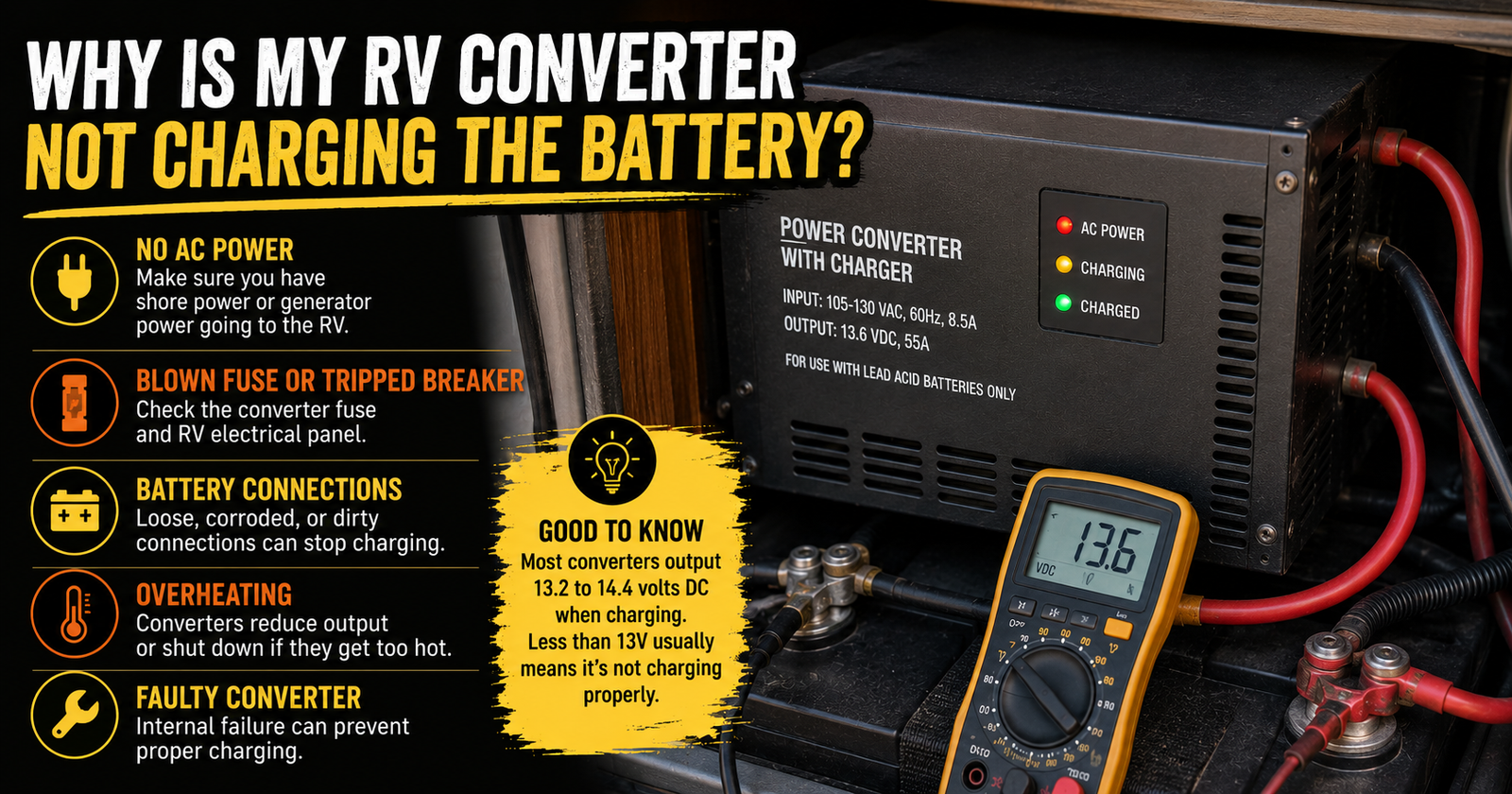
Our RV converter not charging the battery troubleshooting guide walks through those possibilities before assuming the converter needs replacement.
That’s particularly important with an older converter because its age can bias you.
You see a 12-year-old converter and immediately think:
There’s the problem.
Sometimes the actual problem is a $5 fuse.
No Output Is Much More Suspicious
Now we’re getting closer to something I’d take seriously.
If you’ve confirmed that the converter has the correct AC input, checked the applicable protection, isolated the system according to the manufacturer’s troubleshooting procedure, and the converter produces no DC output, then the converter itself becomes a much stronger suspect.
That’s different from saying:
“My battery is dead, therefore my converter is dead.”
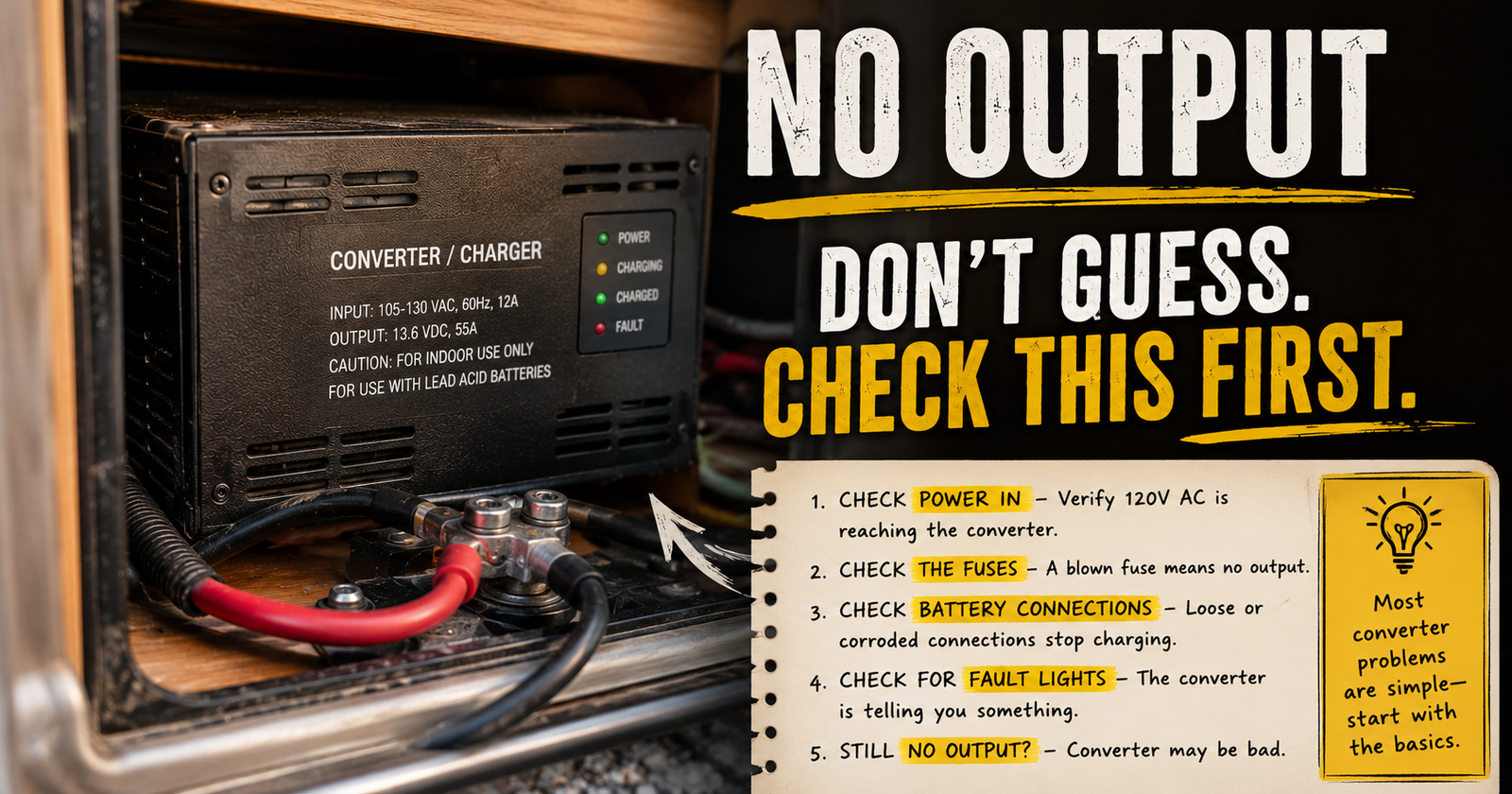
We have a dedicated guide for an RV converter with no output because confirming the input and output sides is one of the cleanest ways to narrow down the problem.
Strange New Noises Matter More Than Old Familiar Ones
Converters aren’t necessarily silent.
You may hear a cooling fan.
Some equipment can produce a mild hum.
What gets my attention is when the sound changes.
A converter that quietly hummed for eight years and suddenly develops a loud buzz is telling you something changed.
A fan that suddenly rattles is telling you something changed.
Repeated clicking or cycling deserves investigation too.
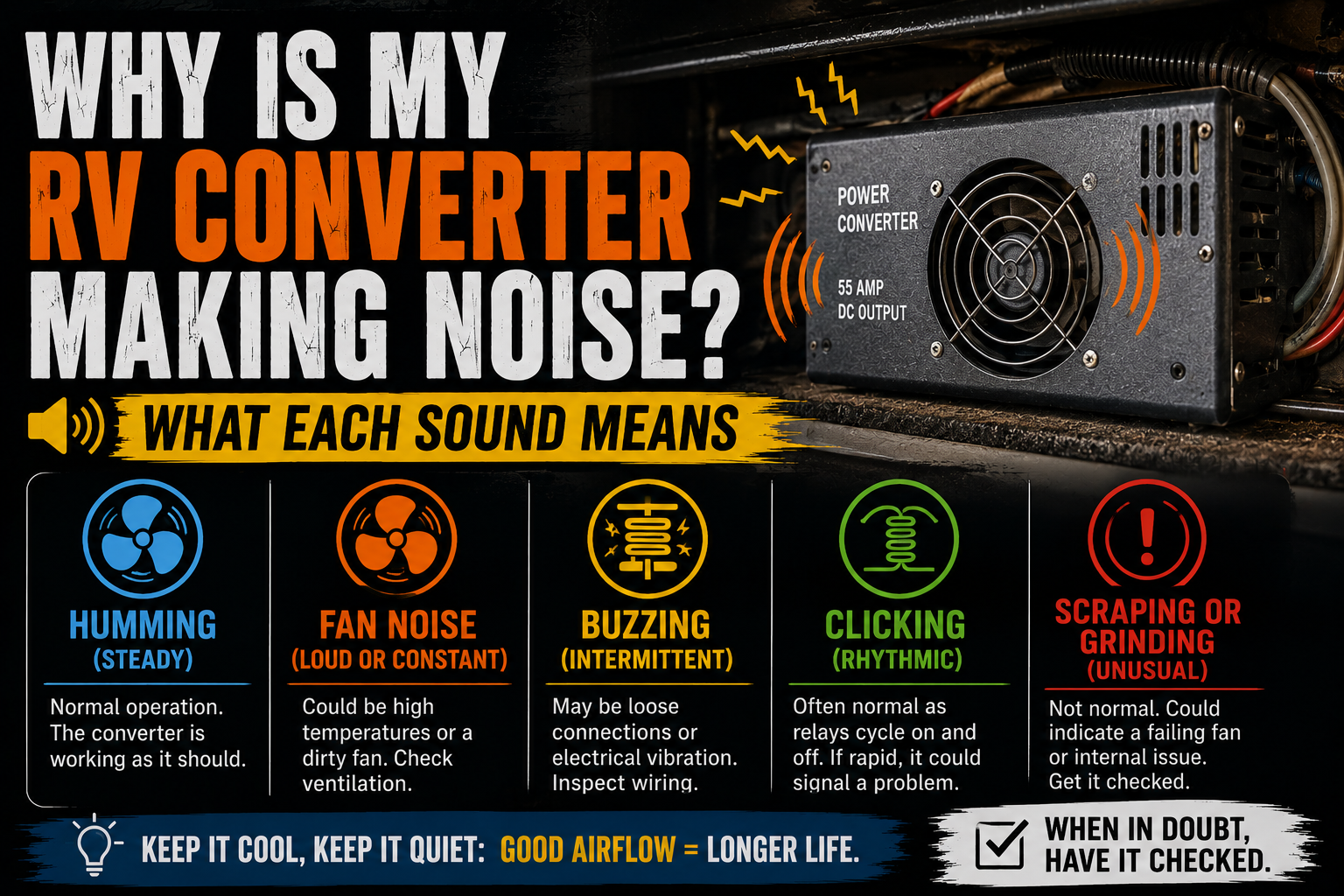
If you’re hearing something unfamiliar, our guide explaining different RV converter noises can help separate normal operating sounds from ones I’d investigate.
A Burning Smell Changes Everything
Age becomes almost irrelevant if I smell something burning.
Electrical burning odors, visible melting, smoke, severe discoloration, or obviously damaged components aren’t symptoms I’d continue monitoring for another month.
I’d safely disconnect the appropriate power source and investigate.
A converter can be 2 years old or 20 years old.
A burning electrical component is still a problem.
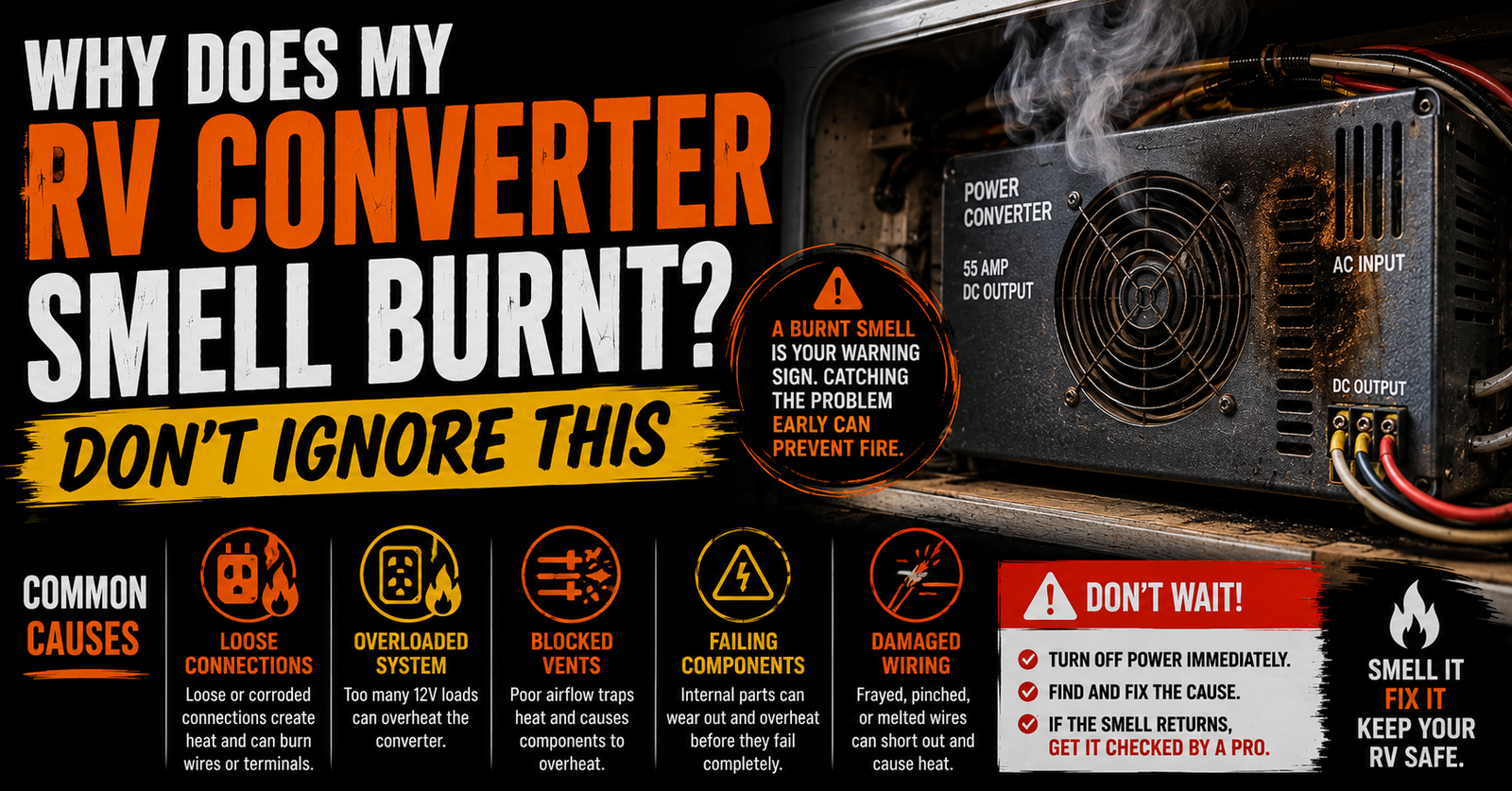
We’ve covered what to do when an RV converter smells burnt separately because that’s one situation where continuing to run the equipment just to “see what happens” isn’t worth it.
Should I Replace a 10-Year-Old RV Converter?
Not simply because it’s 10 years old.
If it:
Produces appropriate output
Charges the battery correctly
Doesn’t overheat
Doesn’t make abnormal noises
Doesn’t repeatedly blow fuses
Doesn’t trip its breaker
Is compatible with your battery
And otherwise operates normally
I wouldn’t automatically throw it away.
Age should make you more aware of the equipment, not automatically afraid of it.
What About a 15 or 20-Year-Old Converter?
Now I’d be more interested in exactly what is installed.
Not necessarily because it’s about to fail tomorrow.
Technology may be part of the decision.
Older RV charging systems may not provide the same charging capabilities as modern multi-stage converter/chargers.
So even if an older converter still technically works, an upgrade may offer advantages depending on your batteries and how you use the camper.
That’s particularly relevant when you’re making other electrical upgrades anyway.
Lithium Batteries Can Be a Good Reason to Reevaluate an Old Converter
This is one of the biggest reasons I’d look at converter compatibility even when the old converter hasn’t failed.
Maybe you’re replacing old lead-acid batteries with LiFePO4 batteries.
Now the question isn’t just:
“Does my converter still work?”
It’s:
“Is my converter appropriate for the batteries I’m installing?”
Those aren’t the same question.
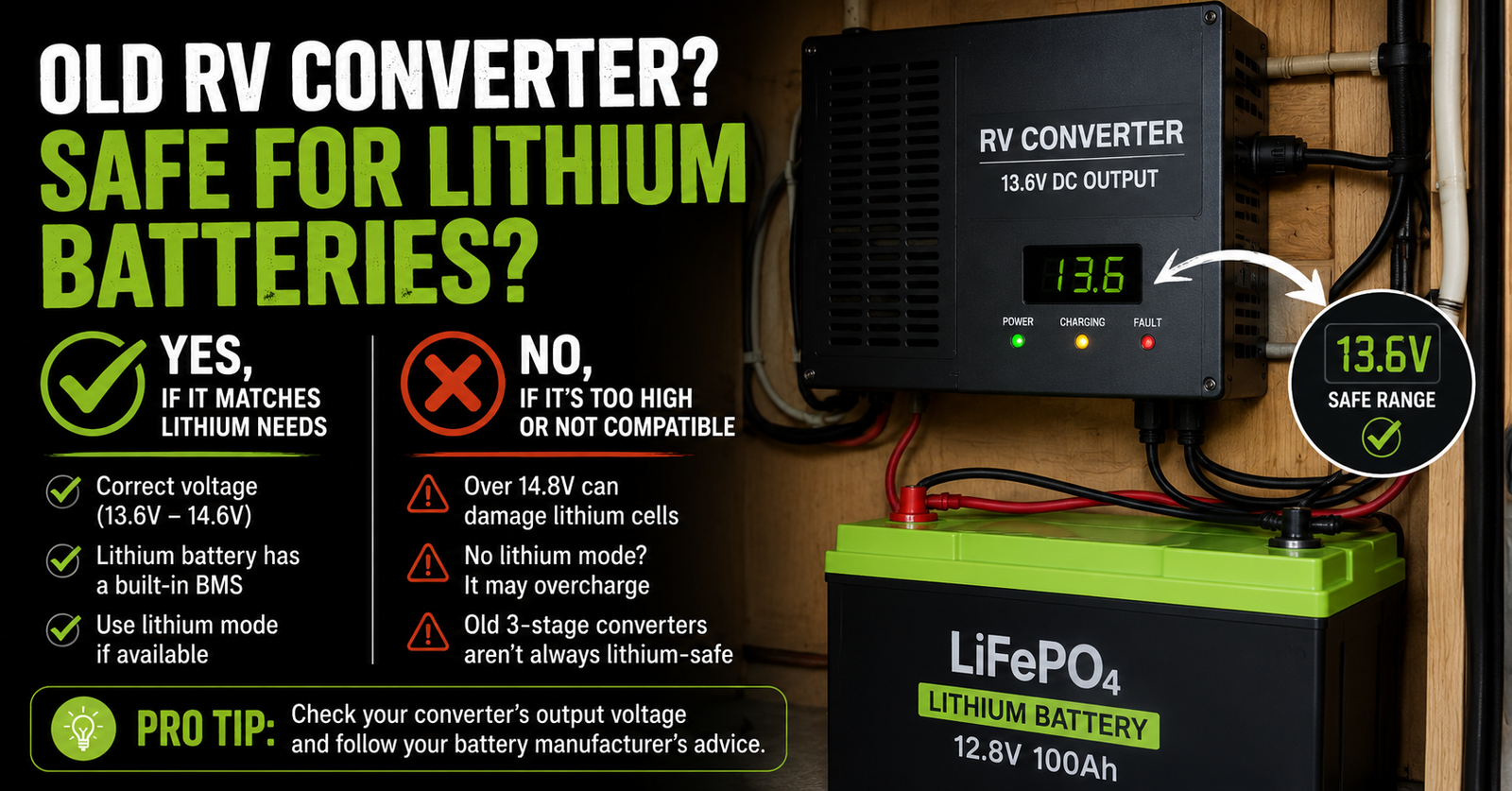
We’ve gone through this in our guide to using an old RV converter with a lithium battery.
A converter can be electrically functional and still not be the charging solution you’d choose for a new battery setup.
Don’t Upgrade Just Because a New Converter Has More Amps
This is another trap.
You’re replacing an old converter and see:
Old converter: 45 amps.
New converter: 75 amps.
Seventy-five must be better, right?
Not necessarily.
Converter capacity has to make sense for the RV’s wiring, batteries, charging needs, and electrical system.
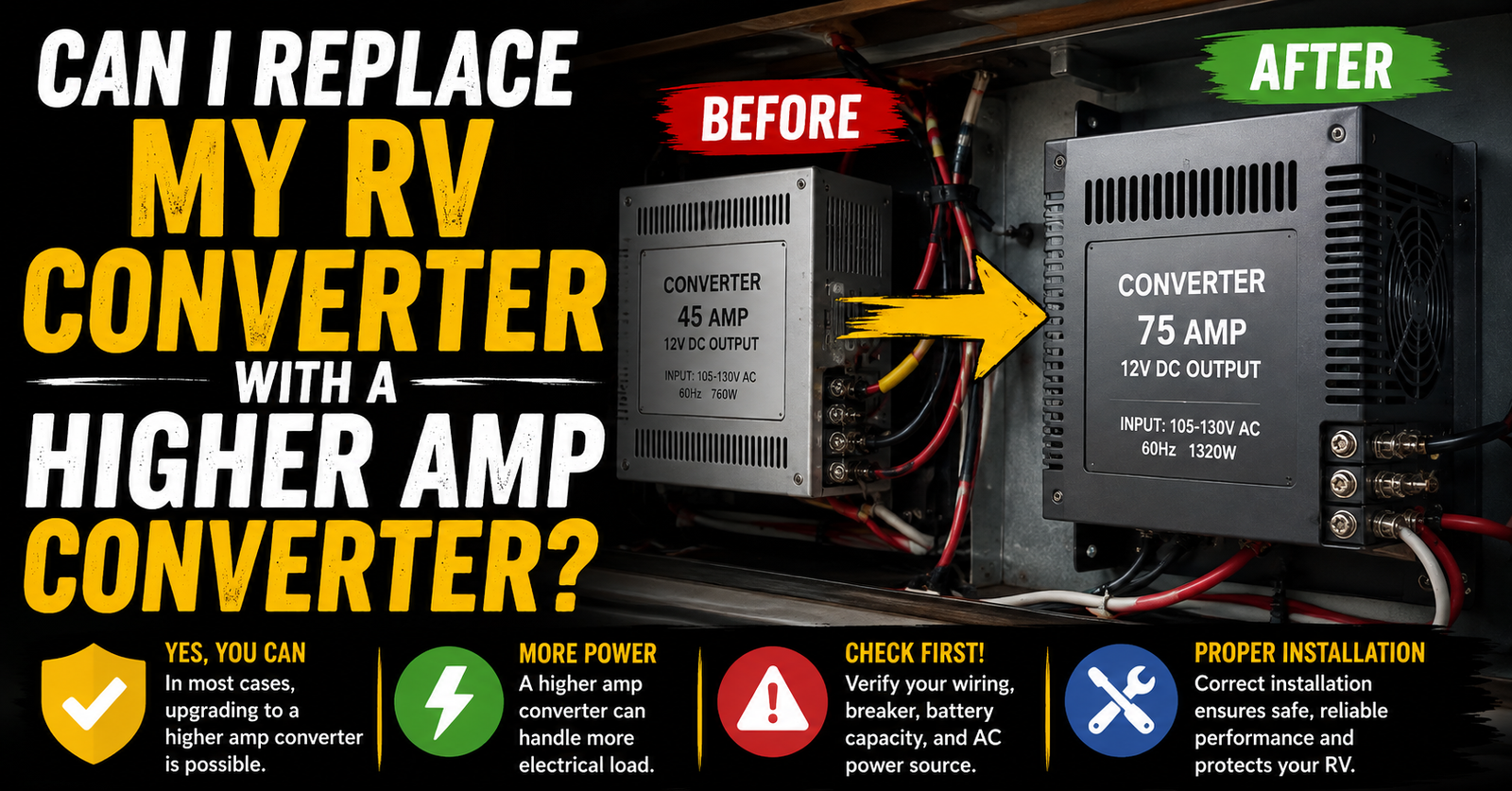
We’ve covered whether you can replace an RV converter with a higher-amp model because blindly installing the largest converter available isn’t a good sizing strategy.
If your old converter finally dies, replacement is an opportunity to choose the right converter, not simply the biggest one.
How Can I Test an Aging Converter?
This is where a multimeter becomes incredibly useful.
Instead of deciding:
“My converter is old, so I’m replacing it.”
You can actually see what it’s doing.
Check battery voltage.
Check converter output.
Compare behavior with shore power connected and disconnected.
Follow the manufacturer’s specified testing procedure for your particular converter.
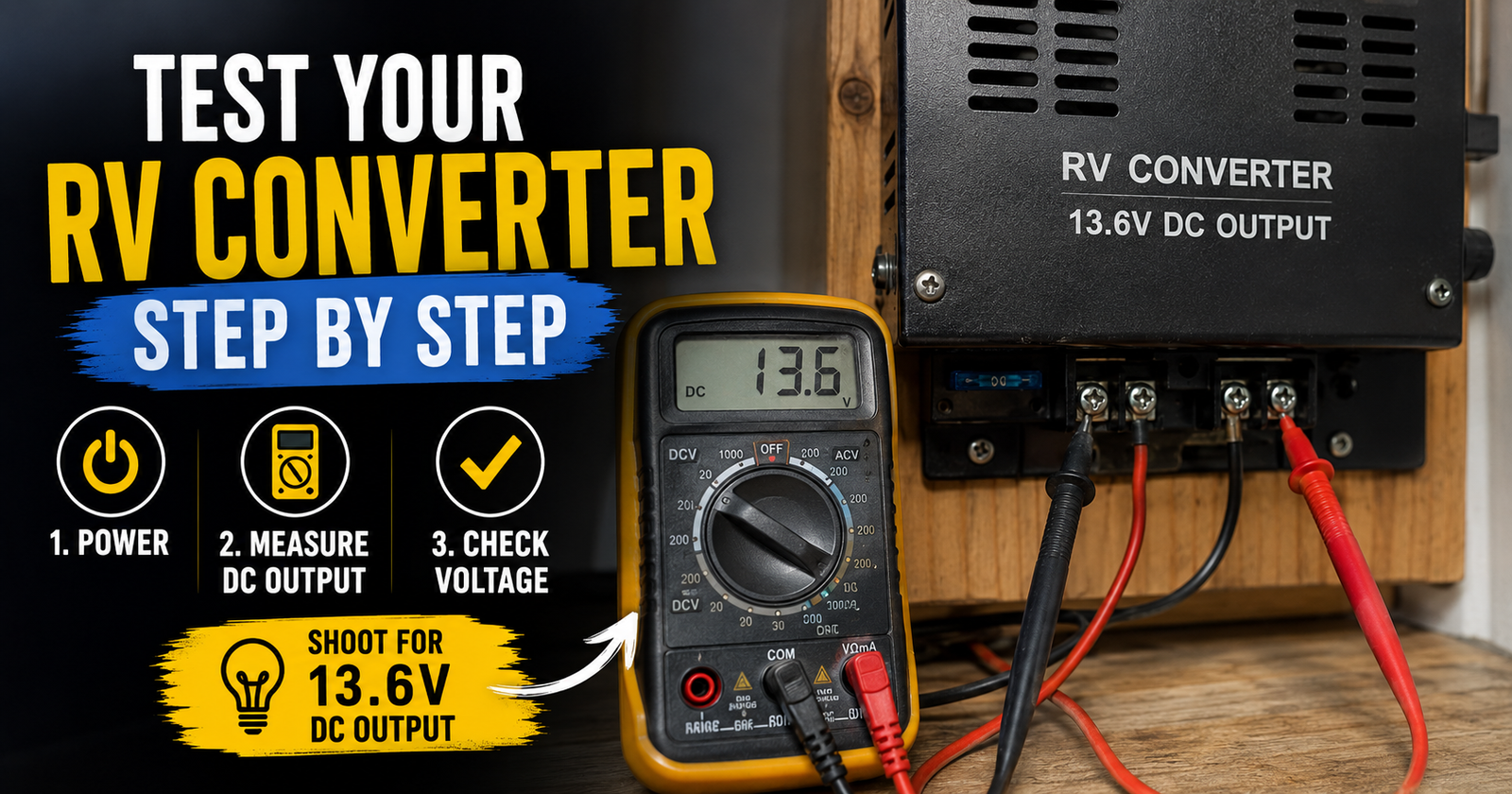
If you’re comfortable doing basic electrical testing, our step-by-step RV converter multimeter guide gives you the process.
If you’re not comfortable working around electrical equipment, there’s nothing wrong with having an RV technician test it.
Should I Carry a Spare RV Converter?
For most casual RV owners, probably not.
A converter isn’t something I’d automatically carry around like spare fuses.
But circumstances matter.
If you’re a full-time RVer traveling far from service options, your tolerance for being stranded with a charging-system failure may be very different.
I’d much rather carry basic electrical testing equipment and know the converter model installed in my RV.
Having the model number makes finding a replacement dramatically easier if you ever need one.
Can a Converter Last the Life of the RV?
Sure.
Especially if the RV itself doesn’t see decades of heavy use.
There’s no rule saying the converter must fail.
Some RVs are sold, traded, or retired while their original converter is still operating.
Others need converter replacement relatively early.
That’s why I’d avoid promises like:
“RV converters last exactly 10 years.”
Electrical equipment doesn’t work that way.
Is Preventive Converter Replacement Worth It?
Usually, I wouldn’t replace a modern, compatible, properly functioning converter purely as preventive maintenance.
I’d inspect it.
I’d keep its ventilation clear.
I’d pay attention to changes.
I’d test it when symptoms appear.
And I’d know what model I have.
There are exceptions.
Maybe you’re preparing an older RV for extensive travel and don’t trust an obsolete converter.
Maybe you’re upgrading the entire battery system.
Maybe replacement parts for the existing unit are difficult to obtain.
Maybe its charging capabilities no longer fit how you use the camper.
Those are better reasons than simply seeing an old date on the label.
What Can I Do to Help My RV Converter Last Longer?
Give it ventilation.
That’s the big one.
Don’t pack storage tightly against cooling openings.
Keep excessive dust and debris away from it.
Don’t ignore a failing cooling fan.
Keep battery terminals and electrical connections in good condition.
Use a battery system the converter is designed to charge.
Investigate abnormal heat instead of repeatedly letting the converter cook itself.
And don’t ignore electrical problems elsewhere in the RV that force the converter to work under abnormal conditions.
You don’t need to baby the converter.
You just need to let it operate the way it was designed to operate.
When I Would Replace an RV Converter
I wouldn’t use age as my only reason.
I’d replace it when proper testing confirms failure, when there’s significant physical or electrical damage that makes replacement appropriate, or when the existing converter no longer fits the battery system I’m building.
That’s also why I like testing first.
We’ve got a full guide explaining how to tell if an RV converter is bad before replacing it.
If testing confirms the converter really is finished, then our RV converter replacement guide can help make sure the new one actually matches the camper.
So How Many Years Should I Expect?
If you’re looking for a number, 10 years or more is a reasonable ballpark expectation for a quality converter that operates under decent conditions, but it isn’t a guaranteed service interval.
I wouldn’t be shocked by a converter lasting considerably longer.
I also wouldn’t assume something must be wrong just because yours is 12 or 15 years old.
Look at performance.
An old converter producing appropriate voltage, charging correctly, staying reasonably cool, and operating reliably has given me very little reason to replace it simply because the calendar says it’s old.
On the other hand, a relatively new converter that’s overheating, producing incorrect output, repeatedly shutting down, or failing electrical tests deserves attention regardless of its age.
The converter’s behavior tells you more than its birthday ever will.
Written by Evan Mercer
Evan Mercer writes about RV electrical systems, batteries, converters, shore power, and practical camper troubleshooting for CamperAnswers.com. He focuses on helping RV owners understand what their equipment is actually doing so they can test problems before spending money replacing parts.