
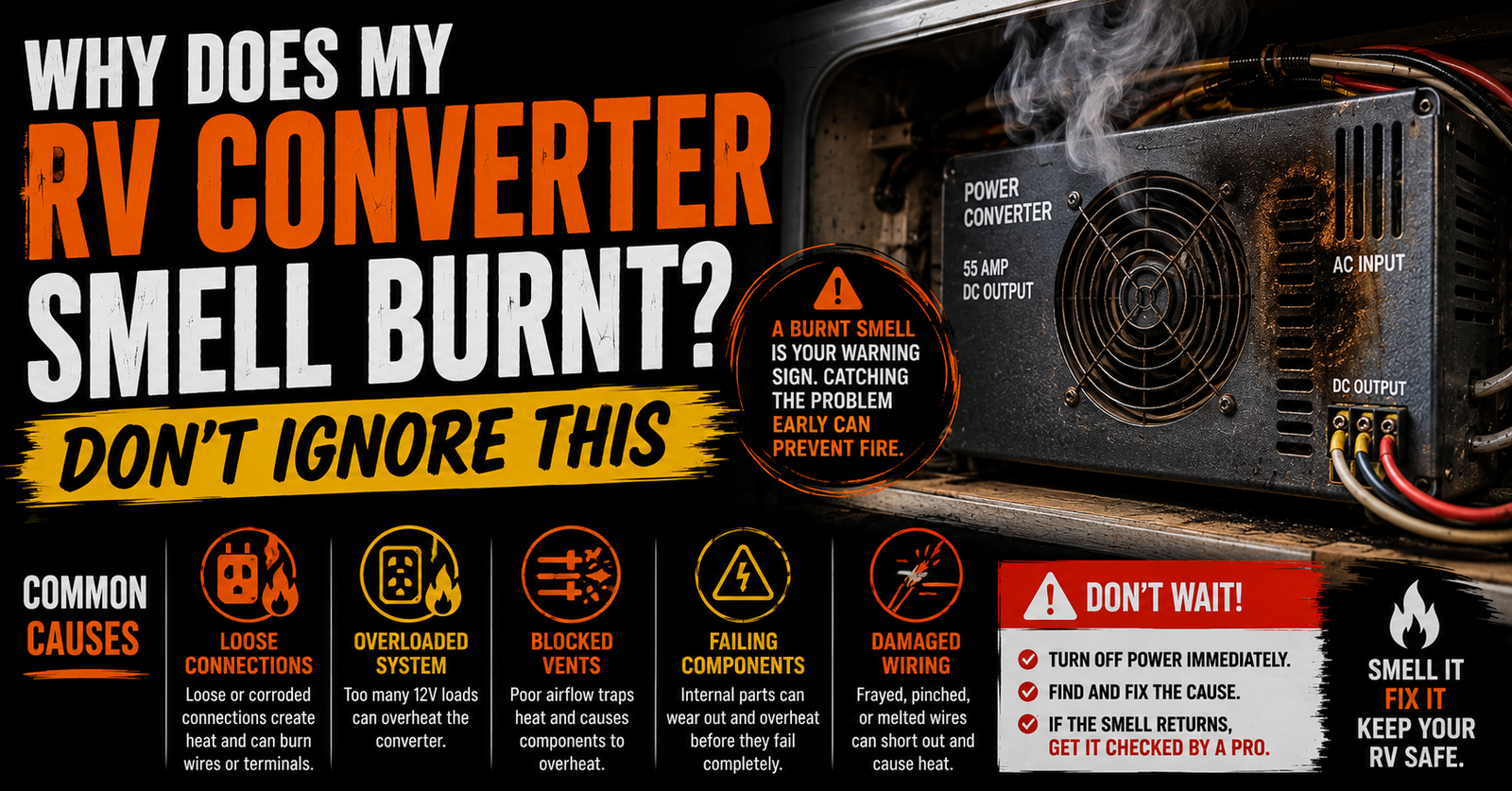
If I smell something burning around an RV converter, I’m not going to sit there and wait to see whether smoke eventually shows up.
I’d safely disconnect the appropriate power sources and figure out what’s getting hot.
That’s the big difference between this problem and a converter that simply feels warm. Converters naturally produce some heat while they’re operating. A distinct smell like burning plastic, overheated wiring, melting insulation, or cooked electronics is not something I’d write off as normal converter operation.
And don’t automatically assume the converter itself is burning up.
The smell could be coming from the converter.
It could also be a loose electrical connection, overheated terminal, damaged wire, cooling-fan problem, overloaded circuit, or another component mounted inside the same power center.
Your nose has given you a warning.
Now we need to find where it’s coming from.
Should I Unplug My RV If the Converter Smells Burnt?
If there’s a genuine burning or overheated-electrical smell coming from the converter or power-center area, I would stop normal operation until I knew what caused it.
Safely disconnect shore power.
Don’t run the generator as an alternate AC source.
And remember that disconnecting shore power doesn’t necessarily make the entire RV electrically dead.
You may still have power from the house battery, solar system, inverter, or other equipment.
That’s especially important before opening anything.
Progressive Dynamics warns that troubleshooting its power centers can expose a person to live 120-volt AC and says those procedures should be performed by a qualified technician.
If you’re not comfortable identifying and isolating every source of power, this is a good place to stop and get an RV technician involved.
Is a Hot Smell From an RV Converter Ever Normal?
I wouldn’t consider a recognizable burning-electrical smell normal.
That’s different from saying a converter can’t have a slight “new electronics” smell when it’s brand new, because manufacturing materials can sometimes have an odor initially.
But we’re talking about a camper that’s been operating normally and suddenly smells like:
Hot plastic.
Burning wire insulation.
Overheated electronics.
Something melting.
That deserves investigation.
Especially if the smell gets stronger while you’re plugged into shore power.
First Make Sure the Smell Is Actually Coming From the Converter
This sounds obvious until you’ve tried locating an electrical smell inside a camper.
Heat rises.
Air moves.
Compartments connect.
Several electrical components may be located inches apart.
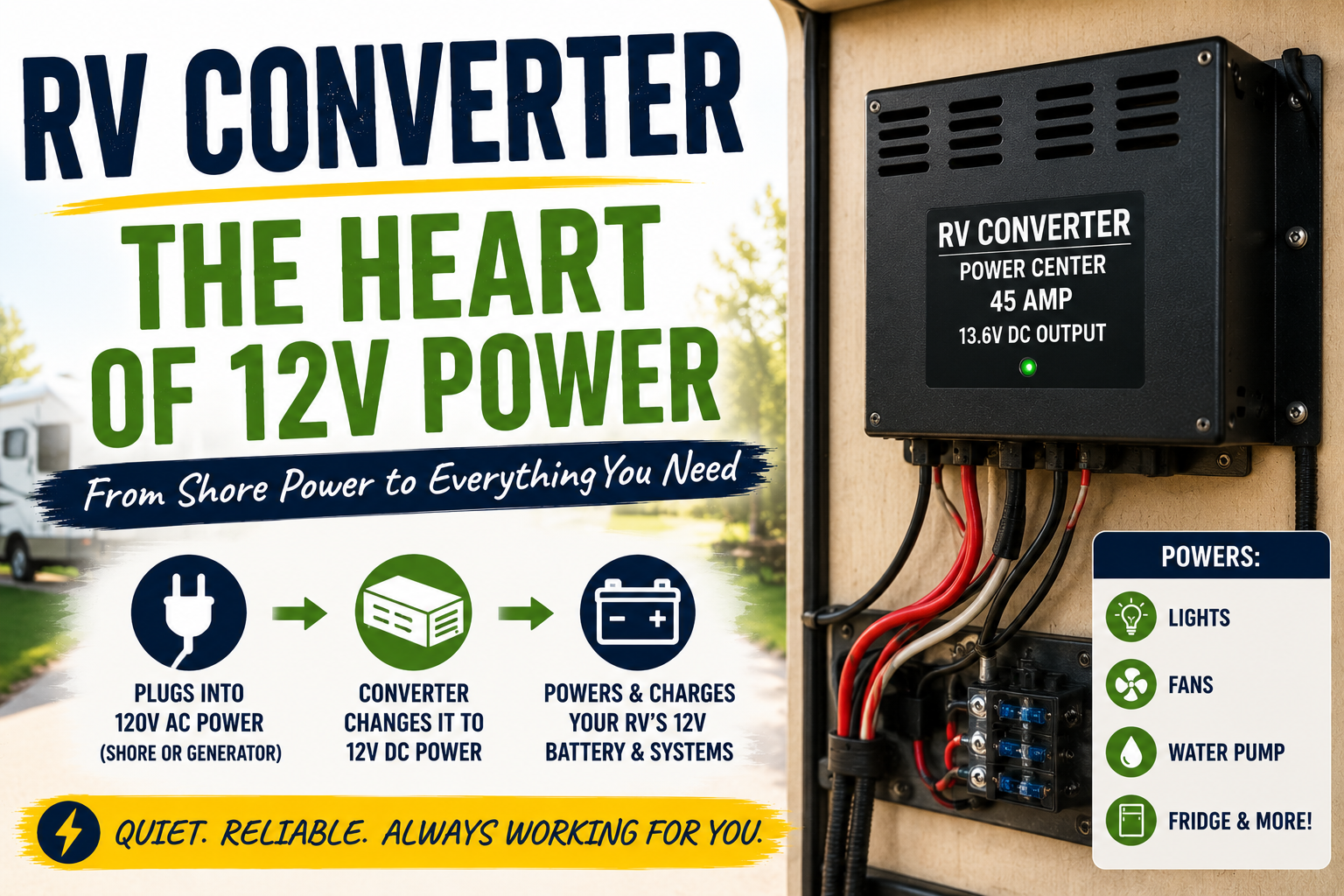
The converter might be near:
The AC breaker panel.
DC fuse panel.
Transfer switch.
Inverter equipment.
Wiring connections.
A receptacle.
Other electrical controls.
Don’t condemn the converter just because the smell seems strongest near the power center.
Find the actual source before replacing anything.
Look for Visible Signs of Overheating
With the system properly de-energized, I’d start with a careful visual inspection of anything safely accessible.
I’m looking for discoloration.
Melted plastic.
Darkened insulation.
Brown spots.
Warped connectors.
Burned terminals.
Heat-damaged fuse holders.
Loose components.
Anything that looks different from the surrounding electrical equipment deserves attention.
Sometimes the smell appears before the damage is dramatic.
Other times, you’ll open the compartment and immediately see where the heat came from.
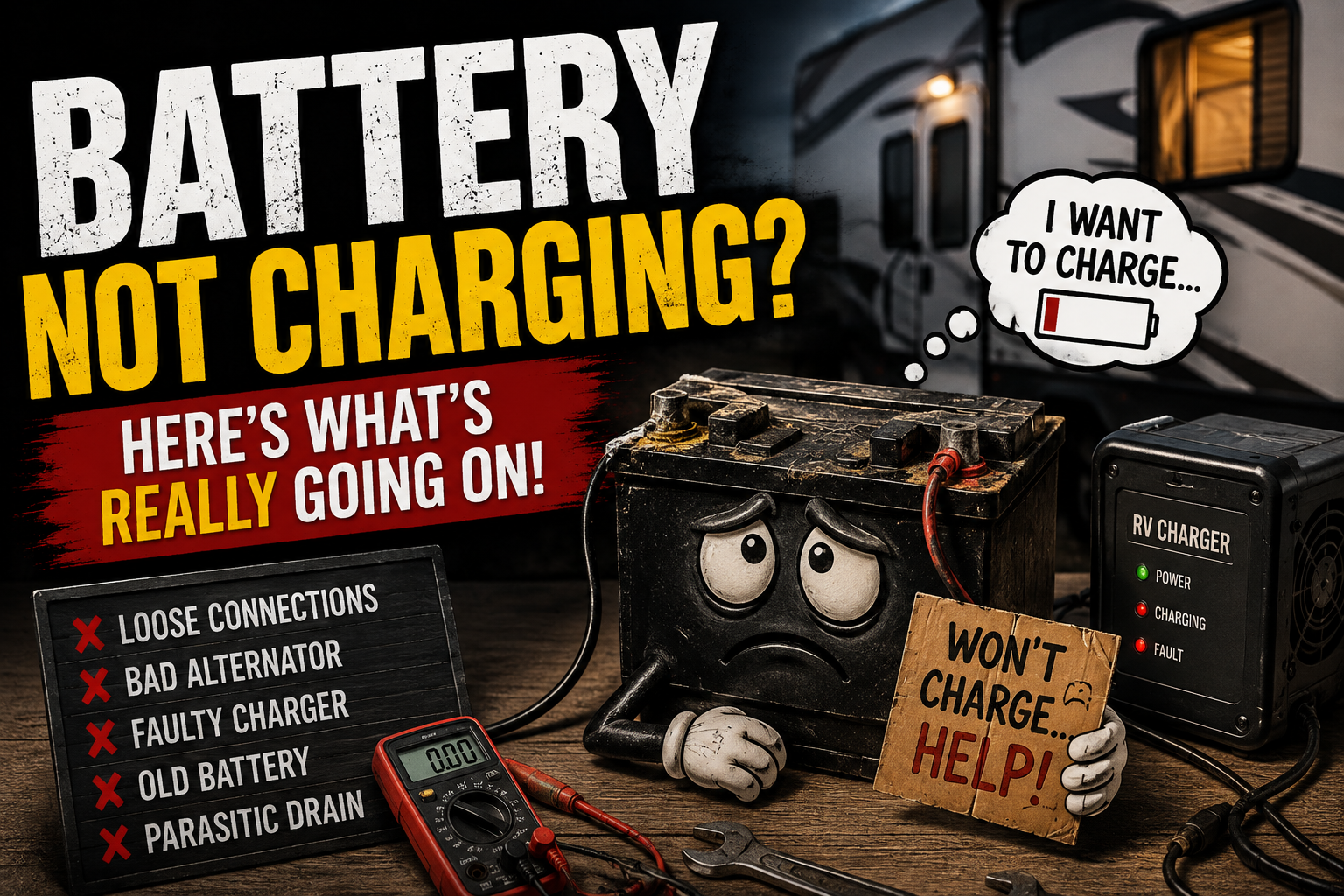

A Loose Electrical Connection Can Generate Serious Heat
This is one reason I don’t want people immediately ordering a new converter.
The converter itself might be perfectly capable of producing the correct voltage while a connection somewhere else is overheating.
A poor electrical connection can introduce resistance.
Current flowing through resistance generates heat.
Enough heat can damage terminals, connectors, insulation, or surrounding plastic.
So if you see one connection that’s darkened or melted while everything around it looks normal, don’t ignore it.
The location of the heat damage is a major clue.
Don’t Just Tighten Something While It’s Energized
Seeing a loose connection doesn’t mean you should immediately stick a screwdriver into a live power center.
That’s especially important because RV power centers can contain both low-voltage DC and 120-volt AC circuits.
If troubleshooting requires exposing energized AC components, that’s technician territory for anyone who isn’t properly qualified.
Progressive Dynamics makes the same warning in its power-center troubleshooting documentation.
Knowing what probably went wrong is still useful even if you’re not the person who ultimately repairs it.
Check Whether the Converter Has Been Getting Extremely Hot
Think back to what happened before you noticed the smell.
Was the converter unusually hot?
Was its cooling fan running constantly?
Did the fan stop working?
Did the converter start shutting down?
Did the smell appear after several hours of heavy battery charging?
Those details matter.
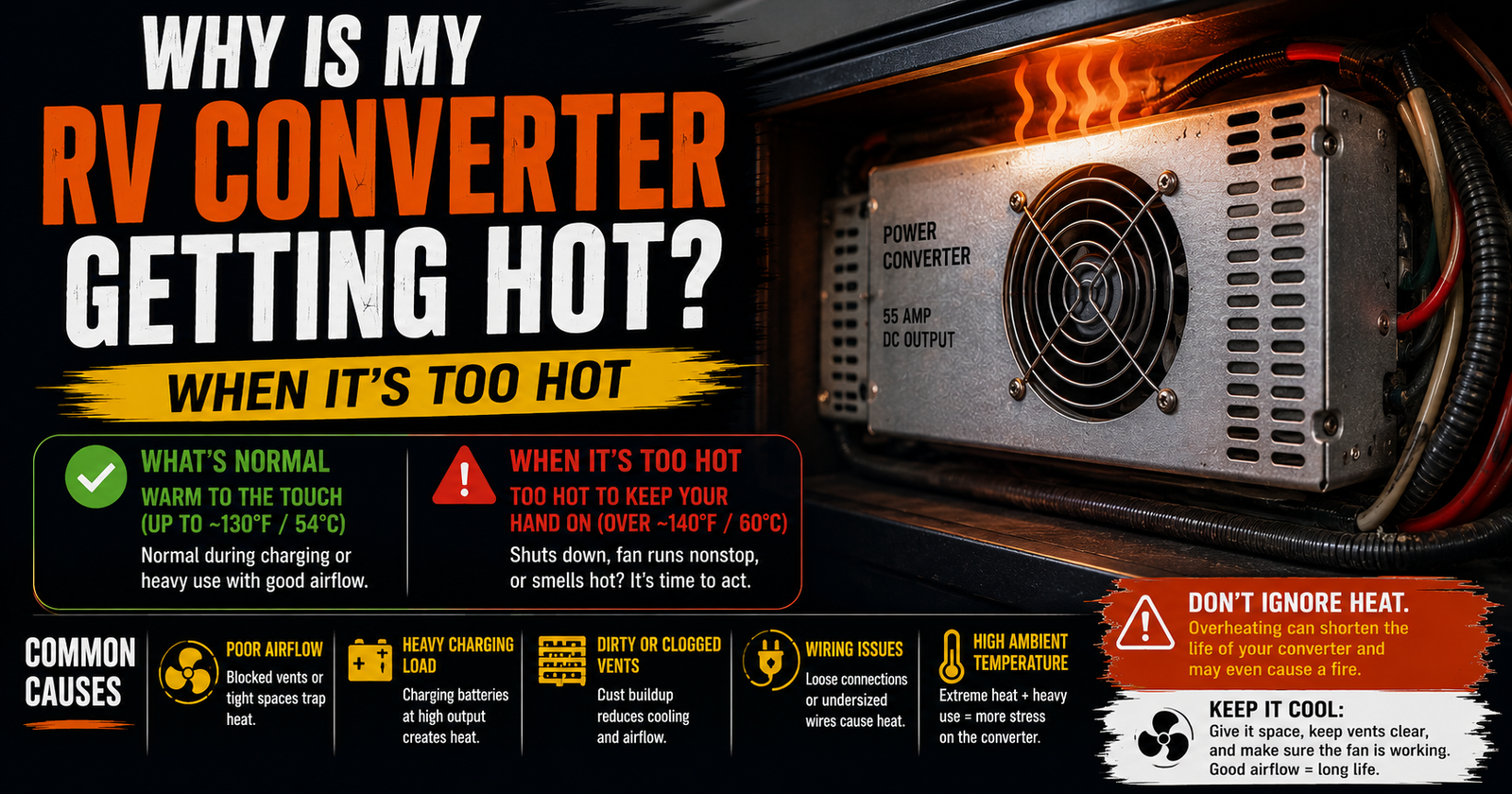
We just covered the temperature side of this problem in our guide to why an RV converter gets hot.
If excessive heat showed up first and the burnt smell came later, I’d take that progression seriously.
Poor Ventilation Can Make Converter Heat Worse
Converters need airflow.
Progressive Dynamics specifies adequate ventilation for its converters and, for its PD9100 and PD9200 installations, calls for at least five inches of clearance or otherwise sufficient ventilation around the converter compartment.
Your particular converter may have different requirements.
Check its manual.
But if you’ve packed towels, blankets, camping chairs, paper goods, tools, or other gear against the converter’s ventilation openings, that’s an obvious problem to correct.
Don’t make electrical equipment fight for air.
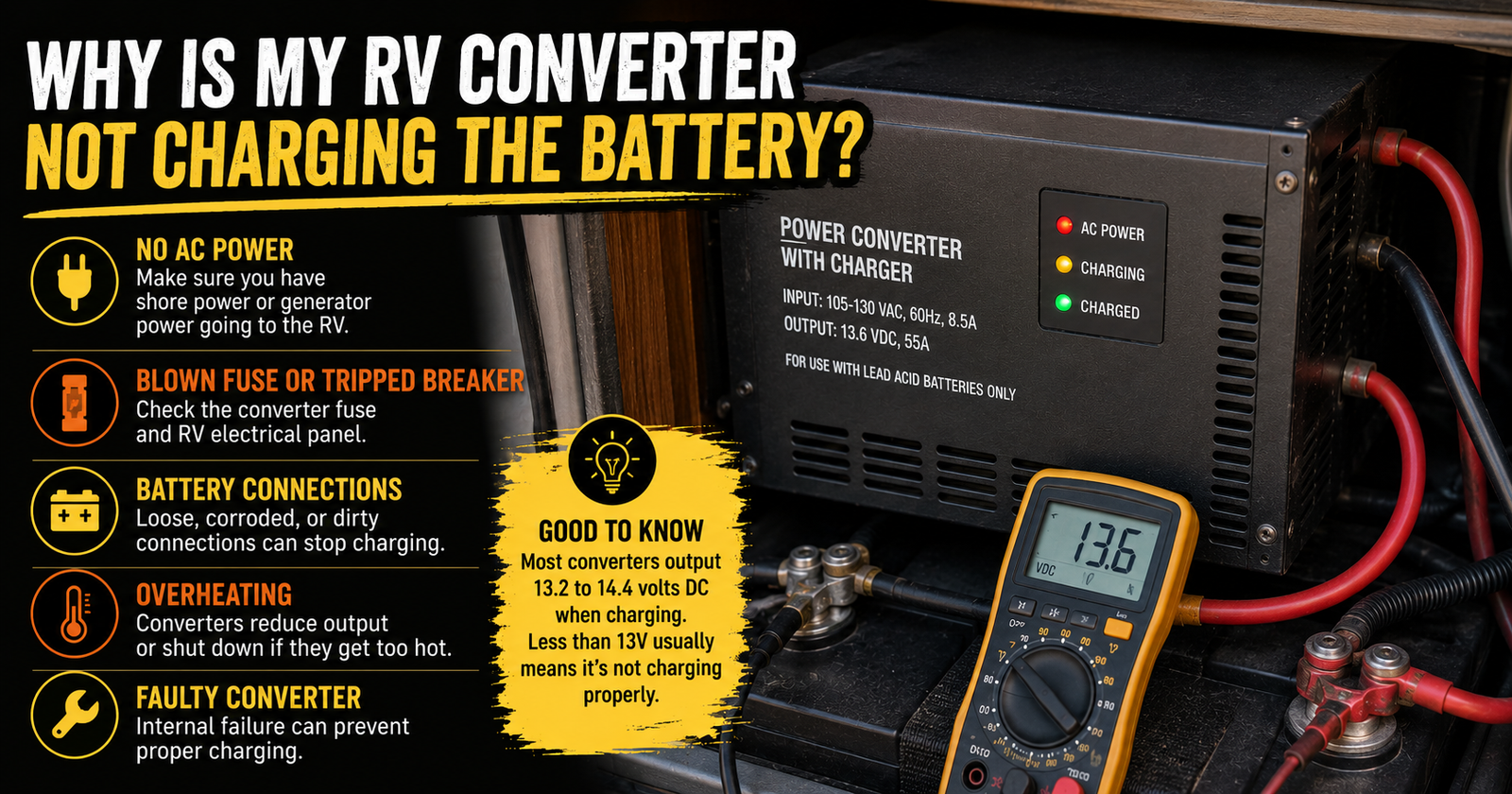

Look for Blocked Cooling Openings
Sometimes nothing was intentionally stored against the converter.
It just got dirty.
Dust.
Pet hair.
Lint.
Debris.
All of that can accumulate around cooling openings and fans.
Restricted airflow can make it harder for the converter to get rid of the heat it naturally produces.
If you discover a converter that’s filthy, extremely hot, and giving off an overheated smell, cooling becomes one of the first things I’d investigate.
Clean it only according to the manufacturer’s recommendations and with the appropriate power sources disconnected.
Check the Cooling Fan
A failed cooling fan can make a bad situation much worse.
The converter may still operate.
It may still charge the battery.
But now it can’t move air the way it was designed to.
Temperature climbs.
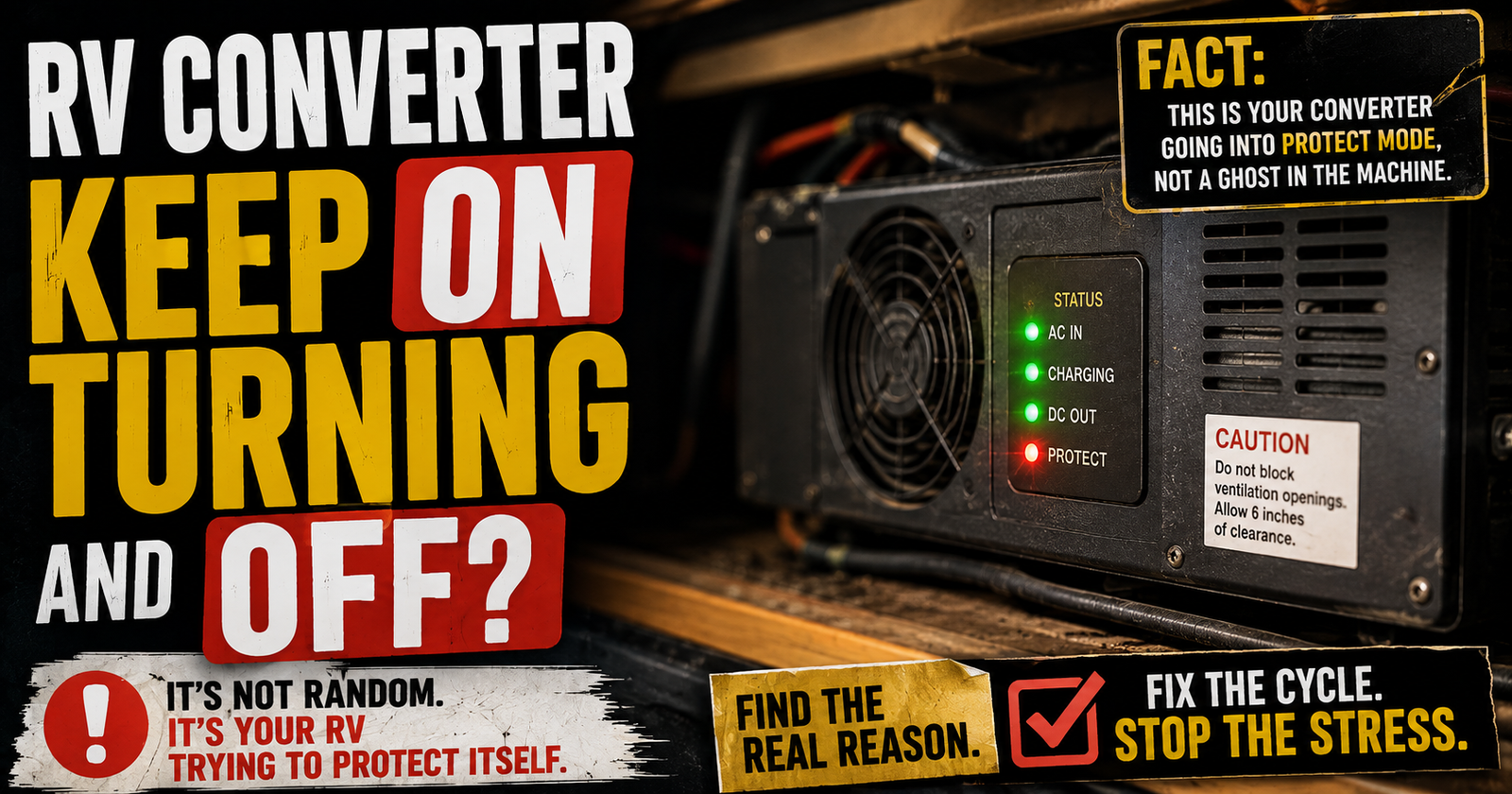
Some converters have thermal protection and may reduce output or shut down when temperatures become excessive. Progressive Dynamics’ current PD9300 troubleshooting documentation specifically tells owners to verify that the converter isn’t overheating and that the fan is running with proper ventilation. When overheating causes the unit to stop temporarily, this guide to converter thermal shutdown can help you interpret the cooling-related pattern.
If yours gets extremely hot while the fan remains completely still, that’s important.
Don’t Assume a Quiet Fan Is Automatically Broken
This distinction matters too.
Many converter fans don’t run continuously.
A fan sitting still while the converter is cool and lightly loaded can be completely normal.
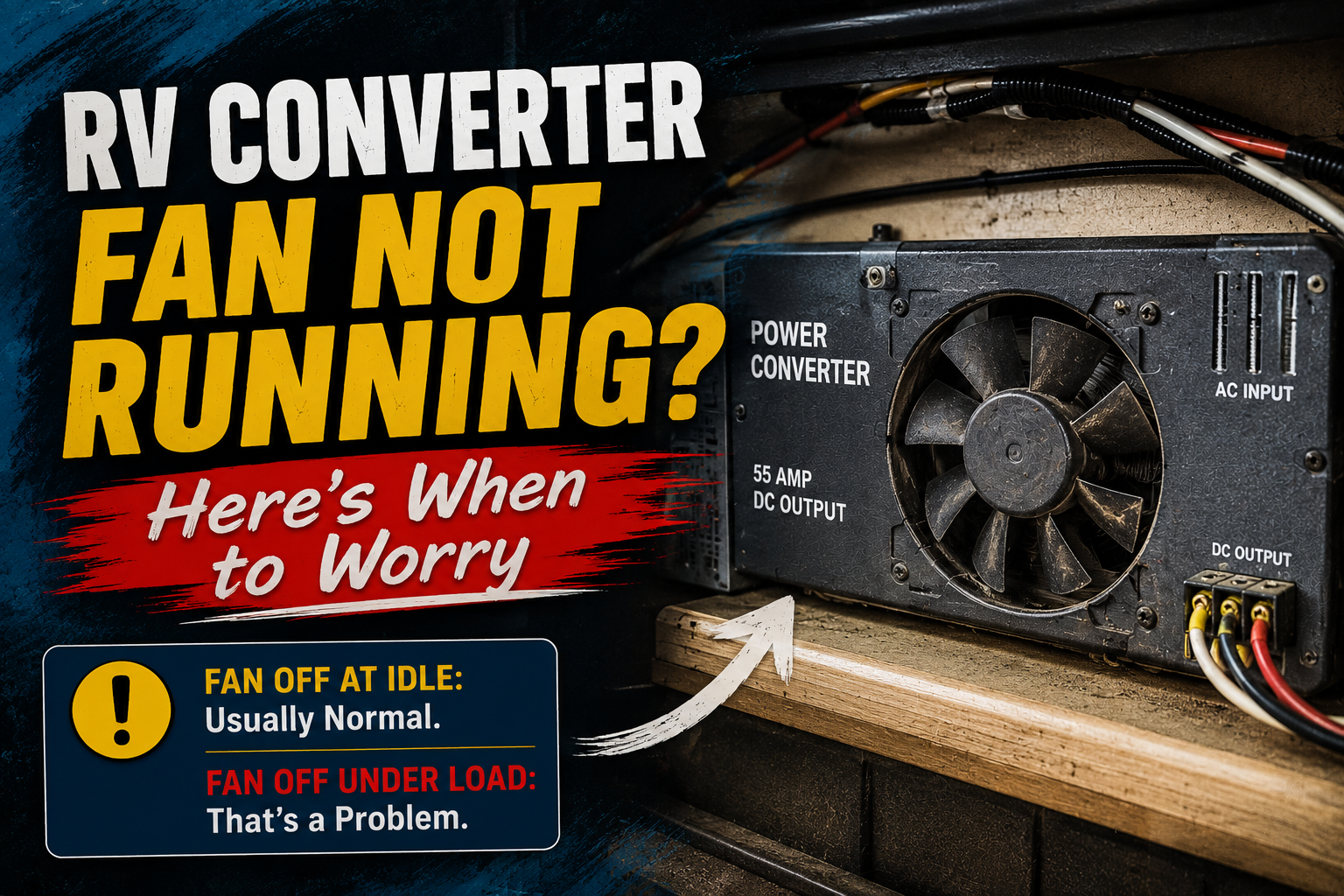
That’s why we built a separate guide explaining when an RV converter fan not running is actually a problem.
What concerns me here is the combination:
Converter extremely hot
Burning smell
Fan never operating
Now the symptoms are stacking up.
What If the Converter Fan Is Running Like Crazy?
That gives us another clue.
The converter may be working very hard or dealing with excessive temperature.
Maybe you’re charging a deeply discharged battery.
Maybe there are large 12-volt loads.
Maybe the compartment is hot.
Maybe ventilation is restricted.
Maybe the battery itself isn’t behaving normally.
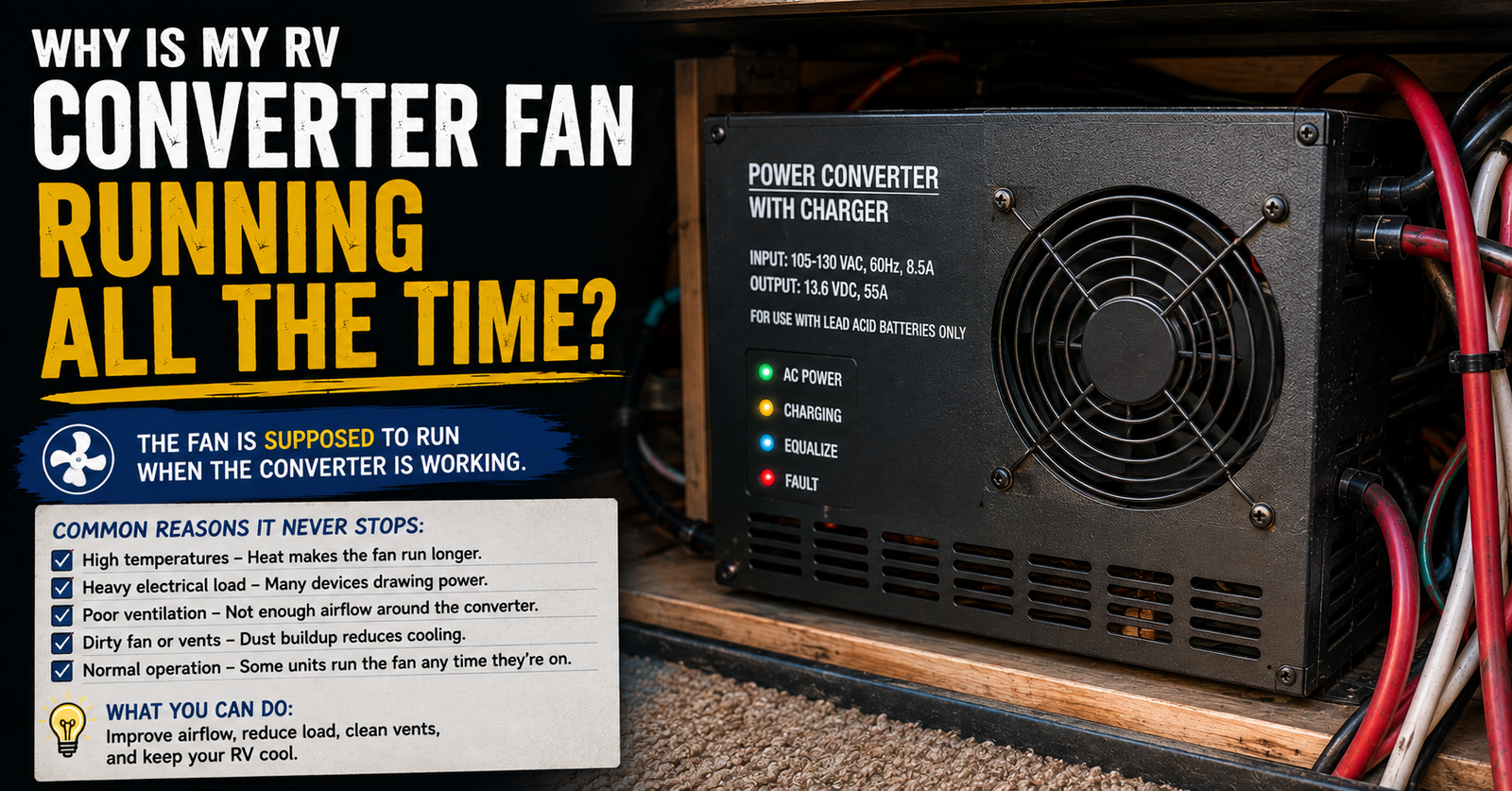
We’ve already covered why an RV converter fan may run constantly.
A fan working overtime and a burnt smell together deserve more attention than fan noise by itself.
A Deeply Discharged Battery Can Make the Converter Work Hard
Picture what happens after a couple days of camping without hookups.
The battery bank is low.
You finally plug into shore power.
The converter starts supplying the camper’s DC loads while also recharging the batteries.
That’s real work.
The converter may generate considerably more heat than it does while maintaining an already charged battery.
That doesn’t make a burning smell normal.
But it can explain why an existing cooling or connection problem suddenly becomes obvious during heavy charging.
A Bad Battery Can Create Charging Problems Too
Don’t forget the other half of the charging system.
Progressive Dynamics includes a bad battery connection or bad battery cell among the things to investigate when converter output is low on its PD9300 series.
A battery that isn’t behaving normally can affect what the converter is being asked to do.
Check the battery for obvious trouble too.
Unusual heat.
Swelling.
Leaks.
Damaged terminals.
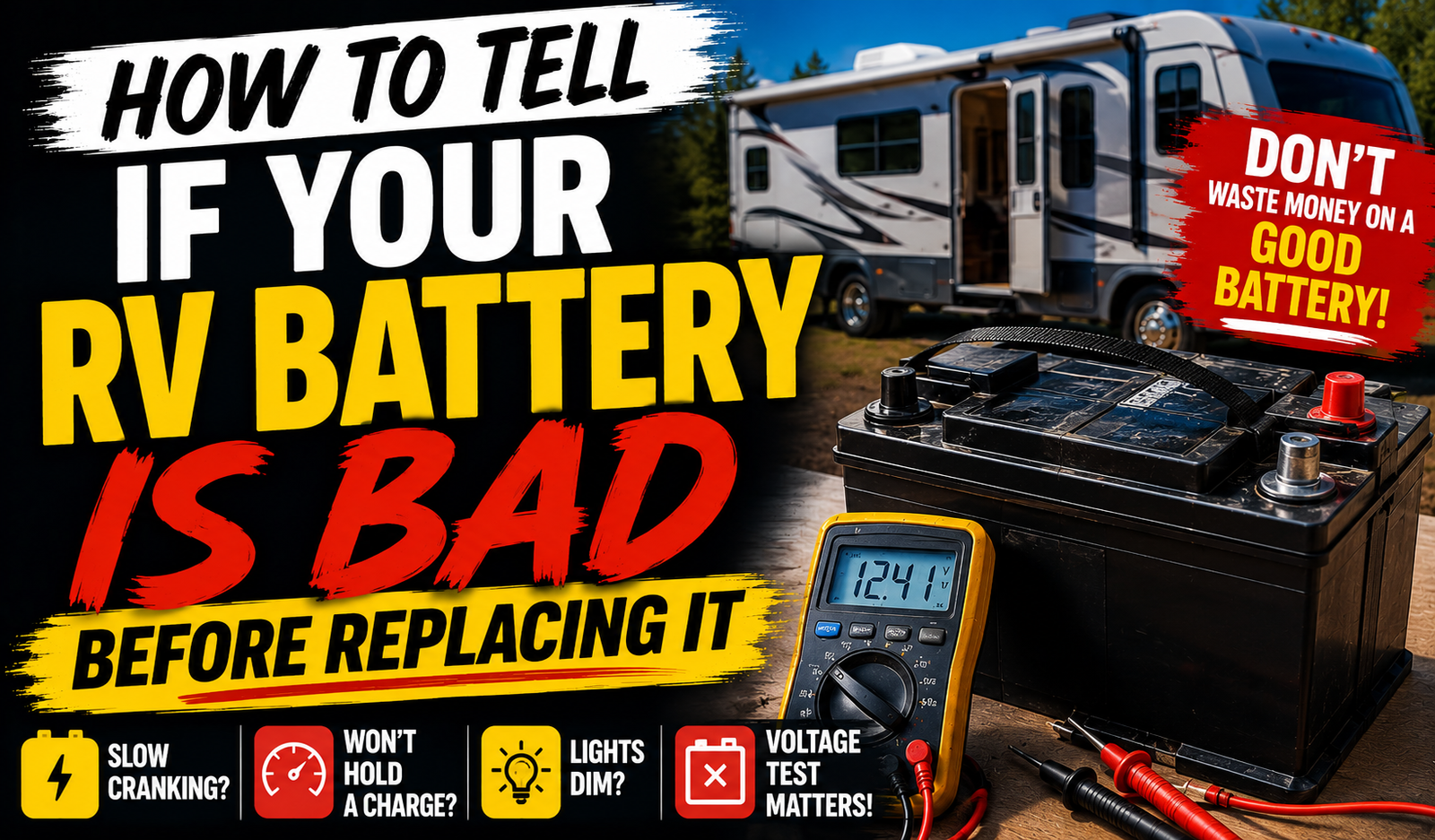
And if you’re not sure whether the battery itself is healthy, our guide showing how to tell if an RV battery is bad is the better place to diagnose that side of the system.
A Hot Battery Is Its Own Warning
Don’t become so focused on the converter that you overlook the battery.
If a battery is becoming unusually hot while charging, stop and investigate.
With flooded lead-acid batteries, a strong sulfur or rotten-egg smell is also different from the hot-plastic or burnt-electronics smell we’re discussing here.
That distinction can help you identify where the odor originates.
Either way, unusual battery heat or odor isn’t something I’d ignore.
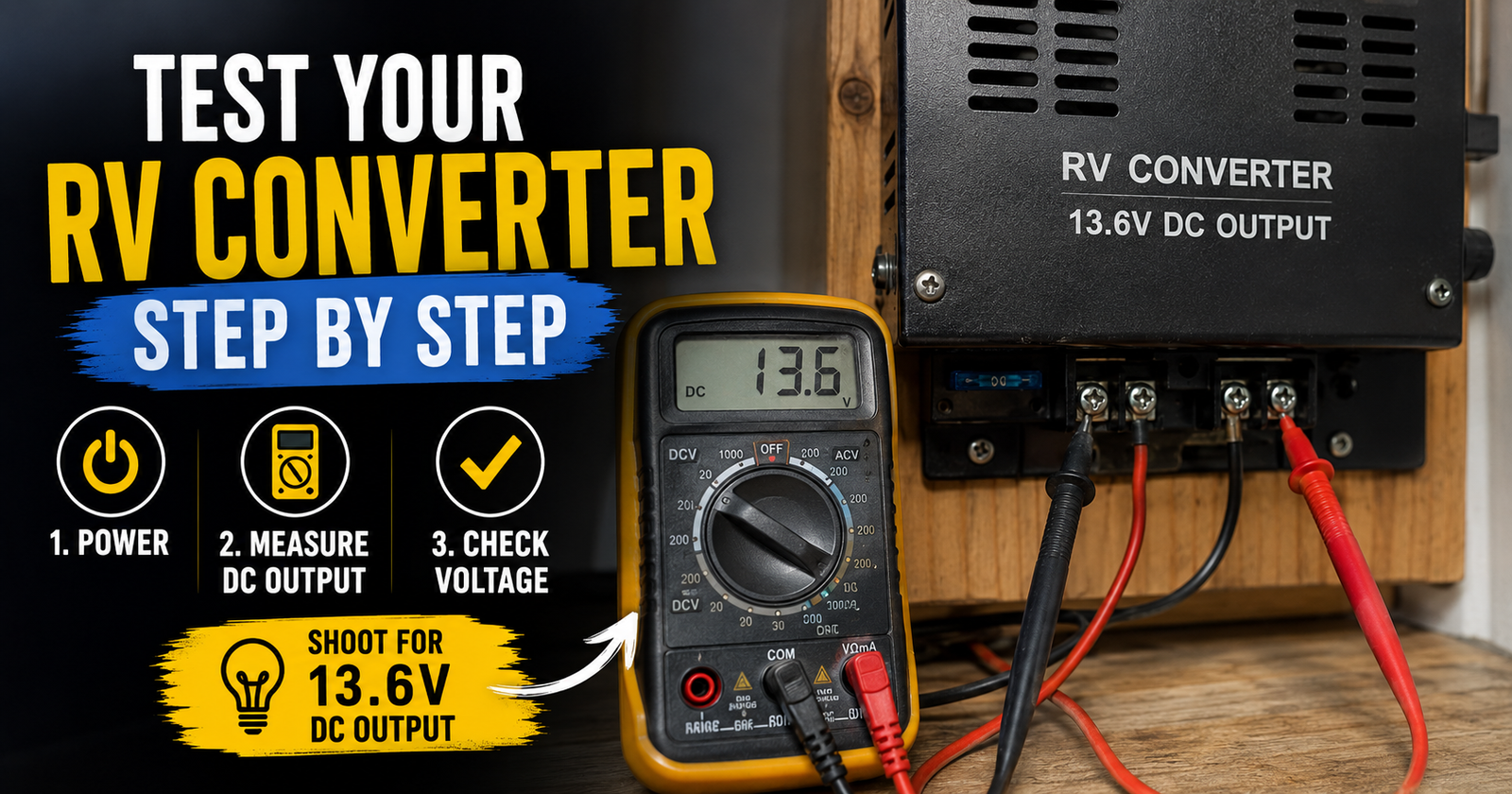
Check Converter Output Voltage
Once the system is safe to test according to the manufacturer’s procedure, voltage gives us valuable information.
Is the converter producing normal DC output?
Is voltage abnormally high?
Too low?
Zero?
Different converter models and charging stages have different expected readings, so compare yours with the correct specifications.
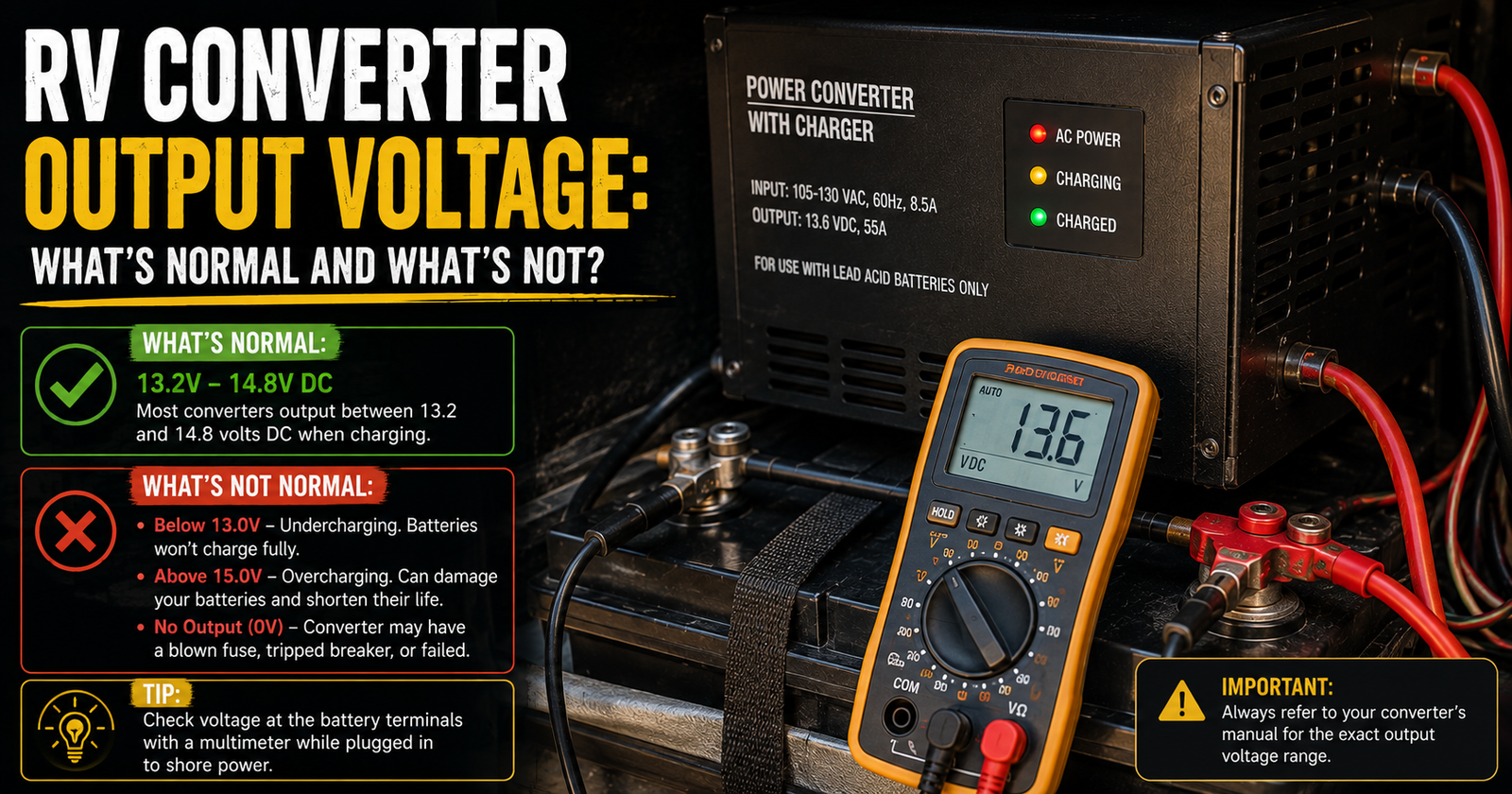
Our RV converter voltage guide goes through those readings in detail.
A burnt smell plus abnormal voltage makes me considerably more suspicious of an actual converter failure.
What If the Converter Smells Burnt but Still Works?
Don’t let that fool you.
Electrical equipment doesn’t need to completely fail before something can be wrong.
Maybe a connection is overheating but hasn’t opened yet.
Maybe a cooling fan is failing.
Maybe a component has been damaged but the converter still produces output.
Maybe plastic around a terminal is beginning to melt.
“Still works” isn’t the same thing as “safe to keep using.”
Find the source of the smell.
What If the Converter Has No Output Too?
Now we’ve got another strong symptom.
Burnt smell.
No DC output.
That certainly increases my suspicion of converter or wiring damage, but I’d still troubleshoot methodically.
Progressive Dynamics tells owners diagnosing zero output on its PD9100 and PD9200 converters to check reverse-polarity fuses, verify 120-volt AC input, and measure converter output before determining the converter itself has failed.
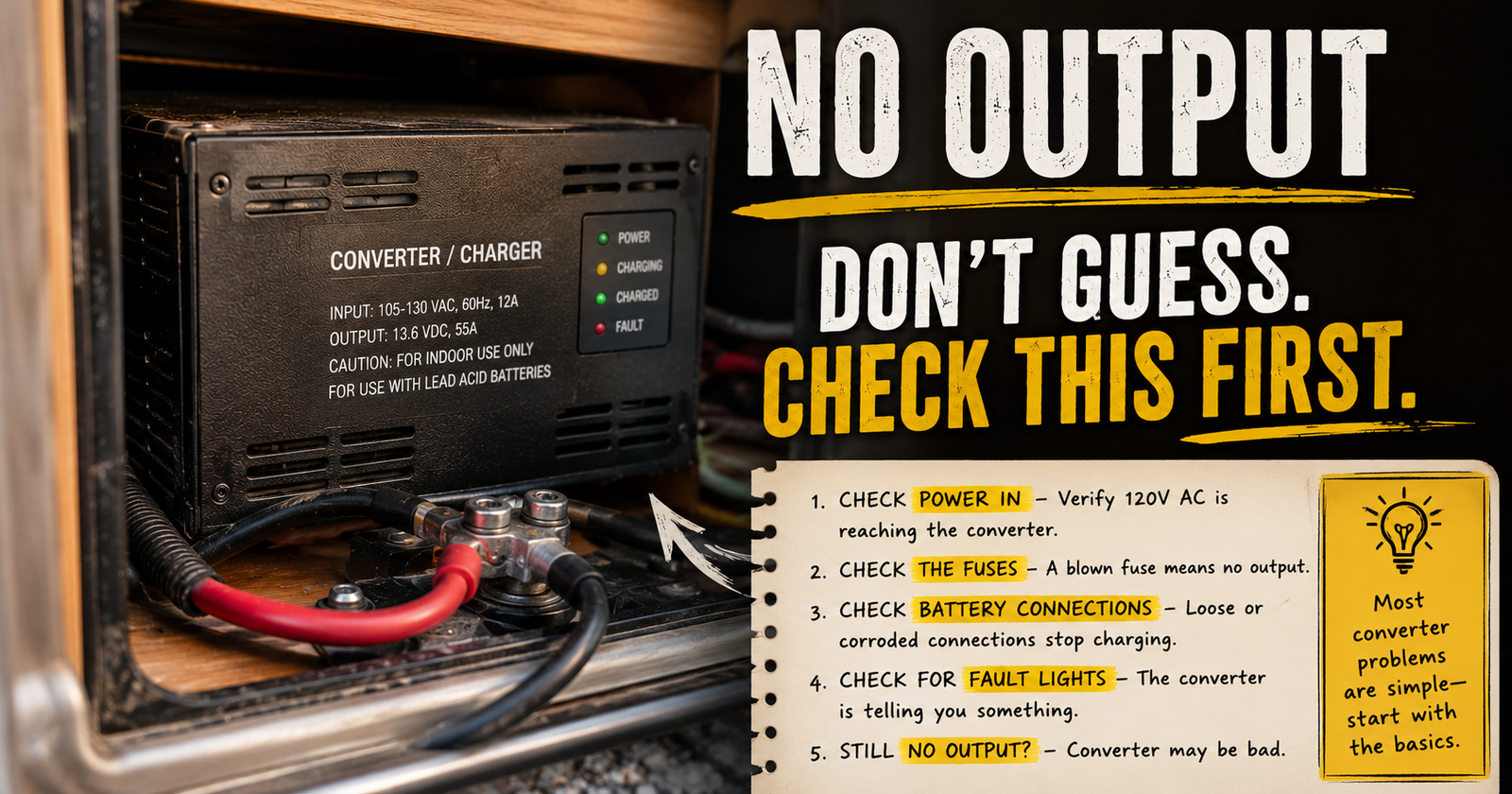
We’ve already built the complete process in our RV converter no-output troubleshooting guide.
Use the smell as another clue, not as your only test.
What If a Breaker Keeps Tripping?
Don’t keep resetting it.
If the converter’s supplying AC breaker immediately trips again after being reset, Progressive Dynamics’ troubleshooting procedure for its PD9100 and PD9200 converters says the converter is bad and should be replaced.
That’s model-specific manufacturer guidance, but it shows why repeated breaker trips matter.
A breaker opening repeatedly is telling you there’s a fault.
Don’t force the circuit to stay energized just to see what burns next.
What If Converter Fuses Keep Blowing?
Same idea.
A fuse opens for a reason.
Identify the fuse and determine what it protects.
For Progressive Dynamics PD9100 and PD9200 converters, the large reverse-battery protection fuses are specifically intended to protect against reversed battery polarity. The manufacturer says even a momentary reversed battery connection can blow them.

If you’ve got that problem, our guide explaining why an RV converter keeps blowing fuses walks through that troubleshooting branch.
Don’t install a larger fuse to make the problem disappear.
Never Replace a Blown Fuse With a Bigger One
A larger fuse isn’t a repair.
If the manufacturer specifies a certain fuse type and rating, use that fuse.
Installing oversized protection can allow wiring or equipment to carry more current than intended.
If the correct replacement immediately blows again, stop.
Something is still wrong.
Find it.
Look for Melted Fuse Holders
Here’s another problem that can produce that hot-plastic smell.
Maybe the fuse itself isn’t blown.
But the holder around it is browned or melted.
That can point toward excessive heat at the connection.
Look carefully at the condition of the fuse holder, terminals, and surrounding plastic rather than simply checking whether the little metal element inside the fuse is intact.
Heat damage is evidence.
Use it.
Could a Short Circuit Cause the Smell?
A wiring fault or short can certainly create serious electrical problems.
Modern converters may include short-circuit and current-limiting protection.
Progressive Dynamics specifically tells owners diagnosing PD9300 converter problems to check for damaged or loose wiring that may cause a short and converter shutdown.
So inspect accessible wiring with power properly disconnected.
Damaged insulation.
Pinched wires.
Burned conductors.
Loose connections.
Anything that has rubbed against sharp metal.
Previous-owner electrical work.
Those are all worth investigating.
Pay Special Attention to Recent Modifications
This is one of my favorite questions with any RV electrical problem:
What changed?
New battery?
Lithium conversion?
New inverter?
Solar added?
Battery monitor installed?
New converter?
Extra 12-volt appliance?
Electrical repair?
Then the smell started?
Go back to the work that was recently performed.
That doesn’t prove the new equipment is bad.
A connection could simply be loose, reversed, undersized, damaged, or installed incorrectly.
Lithium Upgrades Deserve a Second Look
A lithium conversion can involve much more than swapping batteries.
Depending on the RV, owners may change the converter, wiring, battery monitor, bus bars, inverter, solar equipment, disconnects, or other charging components.
If the burning smell started right after that work, I’d stop and verify the installation.
Converter compatibility matters.
So does wiring capacity.
So does proper circuit protection.
Don’t keep operating a newly modified system that’s telling you something is overheating.
Could the Converter Be Overloaded?
Potentially.
A converter has a rated output.
Progressive Dynamics’ installation information notes that its PD9100 and PD9200 converters use current limiting to protect themselves if DC demand exceeds what the converter was designed to supply.
Other converter designs may behave differently.
If the burnt smell appears only when you’re running a lot of 12-volt equipment, electrical load becomes very interesting.
But don’t assume overload is the cause until you identify what actually got hot.
Don’t Upgrade to a Bigger Converter Without Checking the Wiring
This is important.
If you eventually determine that your converter is undersized or needs replacement, don’t automatically buy the largest unit that physically fits.
The RV’s DC wiring must safely handle the converter’s maximum output.
Converter size, wire gauge, circuit protection, battery bank, and charging requirements all have to make sense together.
We’re going to tackle RV converter sizing later in this cluster because it deserves its own article.
What If the Burning Smell Only Happens on Generator Power?
That’s an excellent clue.
If everything works normally on shore power but converter problems appear when the generator is running, don’t automatically blame the converter.
Progressive Dynamics’ PD9300 troubleshooting documentation specifically tells owners with intermittent or missing converter output on generator power to verify AC voltage and confirm the generator is running smoothly. The unit is designed to shut down if AC input falls outside its specified 105 to 130-volt range.
Your converter may have different limits.
Check its specifications.
And a genuine burning smell still means I would stop operation until the source is identified.
What If I Hear Buzzing Too?
Now we’re stacking symptoms again.
Burnt smell.
Buzzing.
Maybe excessive heat.
Maybe abnormal voltage.
That’s considerably more interesting than an old converter that’s always had a faint hum.
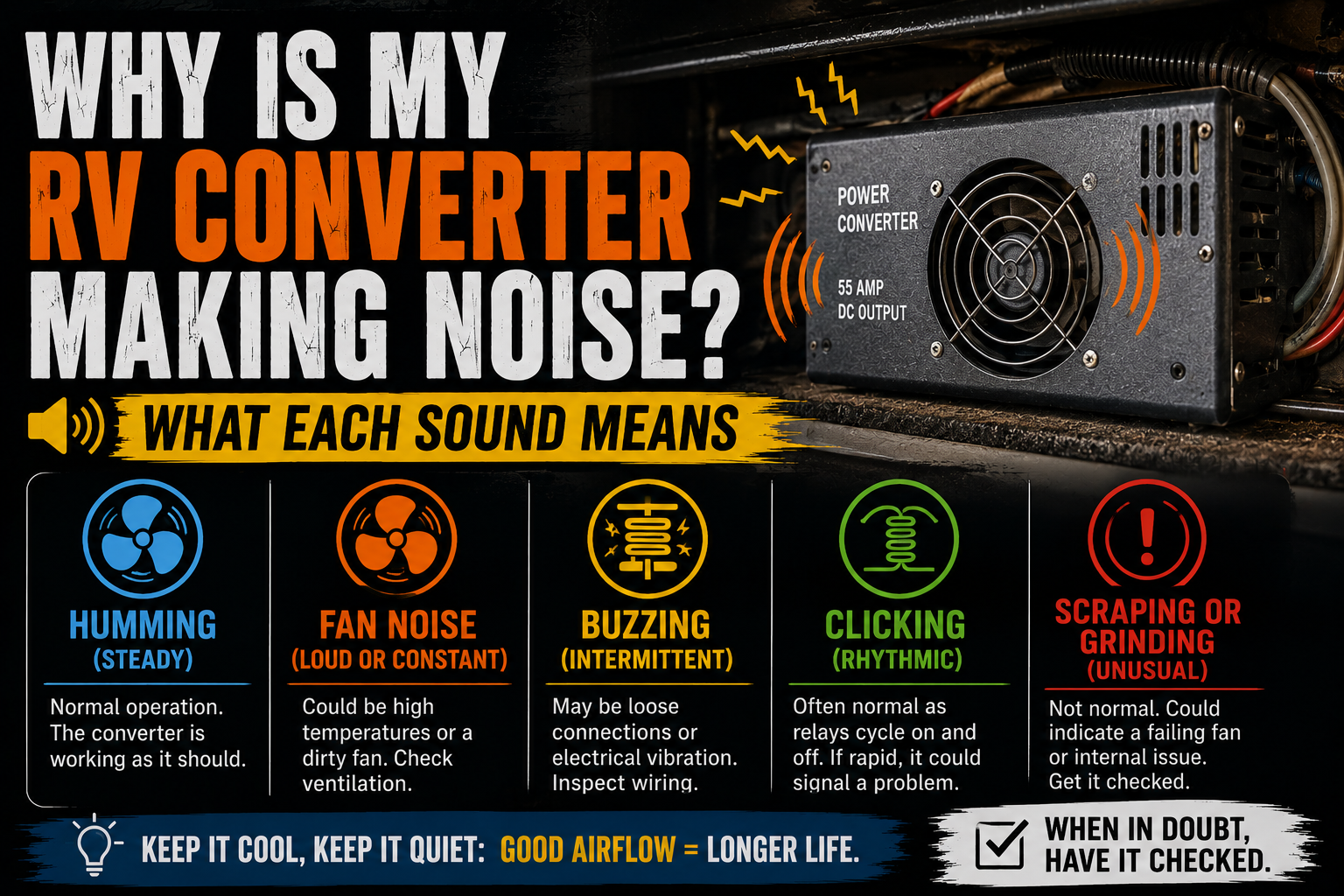
We’ve got a separate guide explaining what different RV converter noises can mean.
Use the sound, smell, temperature, and electrical readings together.
One clue is useful.
Four clues telling the same story are much better.
Can I Keep Camping With a Burnt-Smelling Converter?
I wouldn’t keep using the converter normally until I knew what was overheating.
Maybe the eventual repair is minor.
Maybe it’s a loose connection.
Maybe a cooling issue.
Maybe a damaged fan.
Maybe the converter itself needs replacement.
But continuing to energize electrical equipment that’s producing an unexplained burning smell isn’t how I’d find out.
I’d rather lose an evening of shore-power convenience than turn a repairable electrical problem into melted wiring or something worse.
Can I Just Turn the Converter Breaker Off?
Depending on how your particular RV is wired, turning off the converter’s AC breaker may stop the converter while leaving other shore-powered AC circuits available.
But don’t assume every RV is wired identically.
You also need to understand that without the converter operating, the house battery may be supplying your 12-volt loads and will eventually discharge.
If there’s heat damage or an unidentified electrical fault in the power center itself, I wouldn’t use breaker isolation as an excuse to ignore it.
Identify the problem.
When Would I Replace the Converter?
Not because it smells funny once.
I’d want to establish that the converter itself is actually damaged.
Proper AC input.
Correct wiring.
Good protection devices.
Adequate ventilation.
Working cooling system.
Battery and DC system checked.
Then test converter output according to the manufacturer.
If those checks point toward an internal converter failure, replacement makes sense.
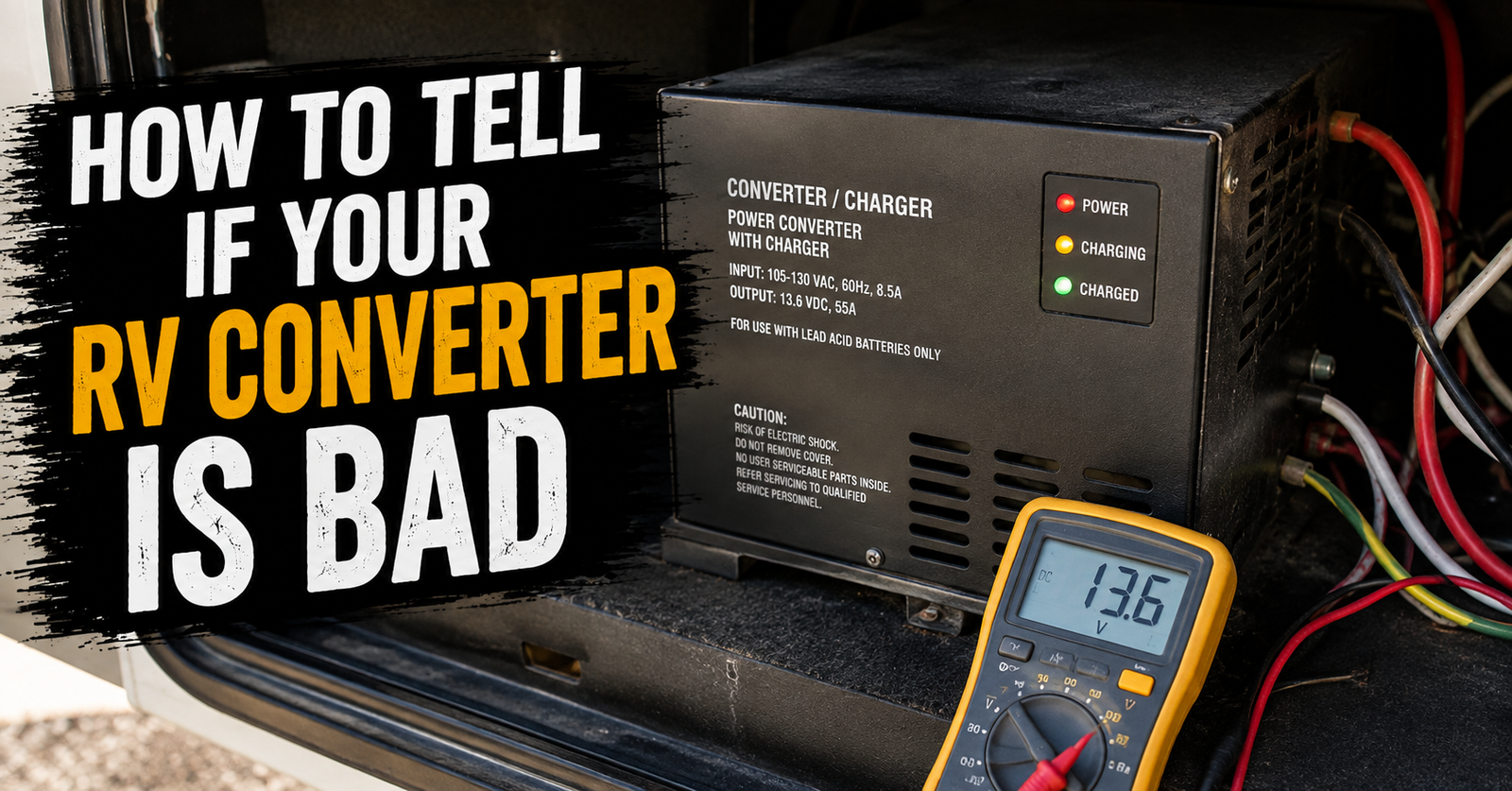
Our complete guide on how to tell if an RV converter is bad is designed for that decision.
Don’t Power It Back Up Just to See If the Smell Comes Back
This is probably the biggest mistake I’d avoid.
You smelled something burning.
You unplugged the camper.
Twenty minutes later everything cooled down and the smell disappeared.
So you plug it back in to “see what happens.”
Maybe nothing happens immediately.
That doesn’t mean the problem fixed itself.
Heat-related electrical problems can disappear temporarily when the system cools.
Loose connections can behave intermittently.
Thermal protection can reset.
A converter that shut itself down may start working again after cooling.
None of those possibilities prove the system is healthy.
The Burnt Smell Is Your Warning
I like troubleshooting campers without replacing parts unnecessarily.
But this is one symptom where I wouldn’t keep experimenting indefinitely.
A converter that’s warm can be normal.
A cooling fan running can be normal.
A little hum can be normal.
A converter working hard while charging a depleted battery can be completely normal.
An unexplained burning-electrical smell is different.
Safely remove power.
Find the source.
Look for heat damage.
Check ventilation and cooling.
Inspect the battery and accessible wiring.
Verify converter operation according to the manufacturer’s procedure.
And if the investigation requires opening energized 120-volt equipment, bring in somebody qualified to do it.
The best outcome here isn’t proving that the converter is bad.
It’s finding the overheated component before it gets the chance to become a much bigger problem.
Written by Evan Mercer
Evan Mercer writes about RV electrical systems, converter troubleshooting, batteries and practical camper repairs for CamperAnswers.com. His work focuses on helping RV owners recognize warning signs early, track electrical problems to their actual source, and avoid replacing expensive parts without testing them first.