
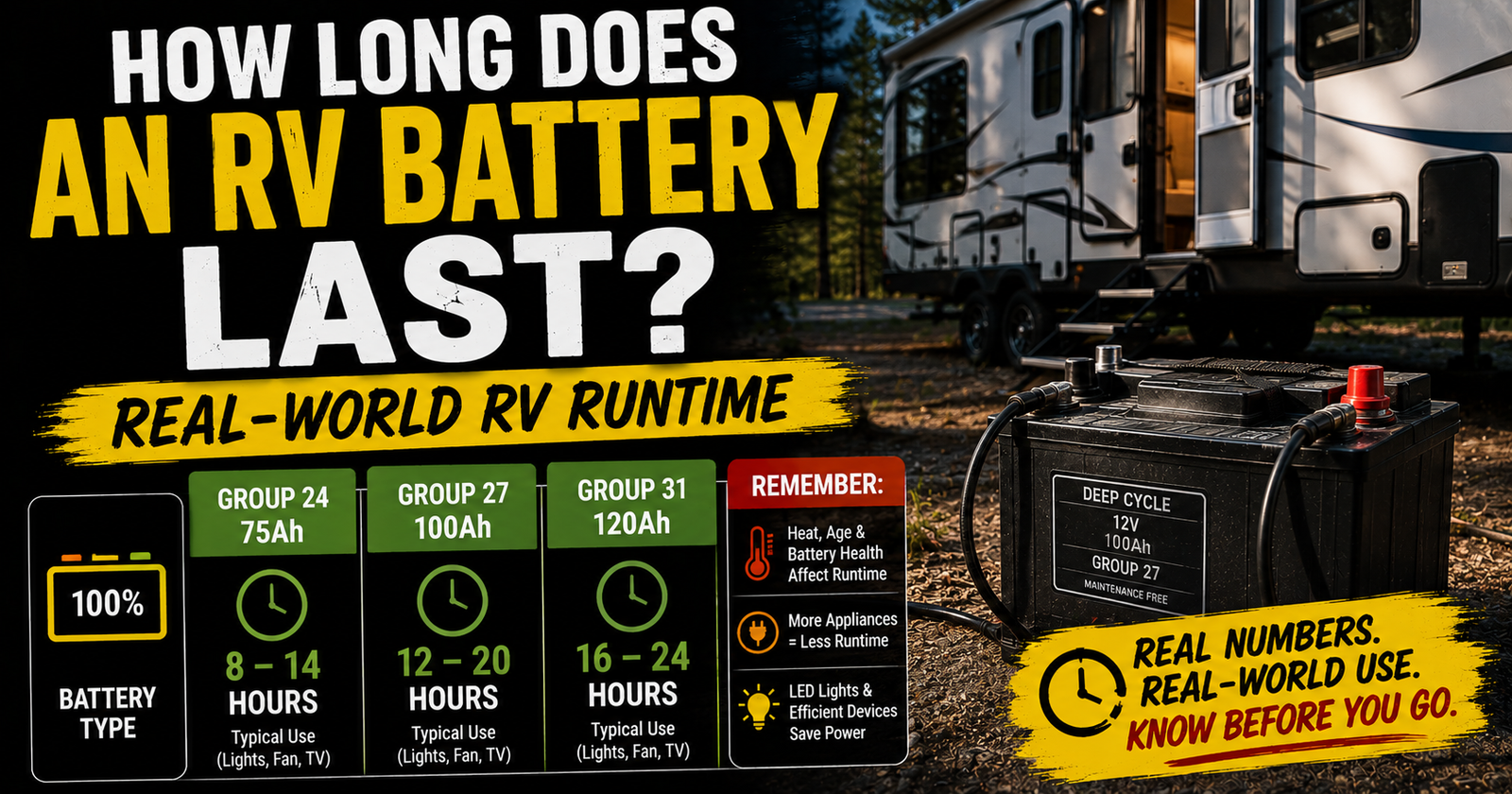
Ask ten camper owners how long an RV battery should last and you’ll probably get ten answers. One person will swear a single battery gets them through an entire weekend. Somebody else can’t make it through one cold night. Another has lithium batteries and solar and barely thinks about battery life at all.
The frustrating part is that all three of them could be telling the truth.
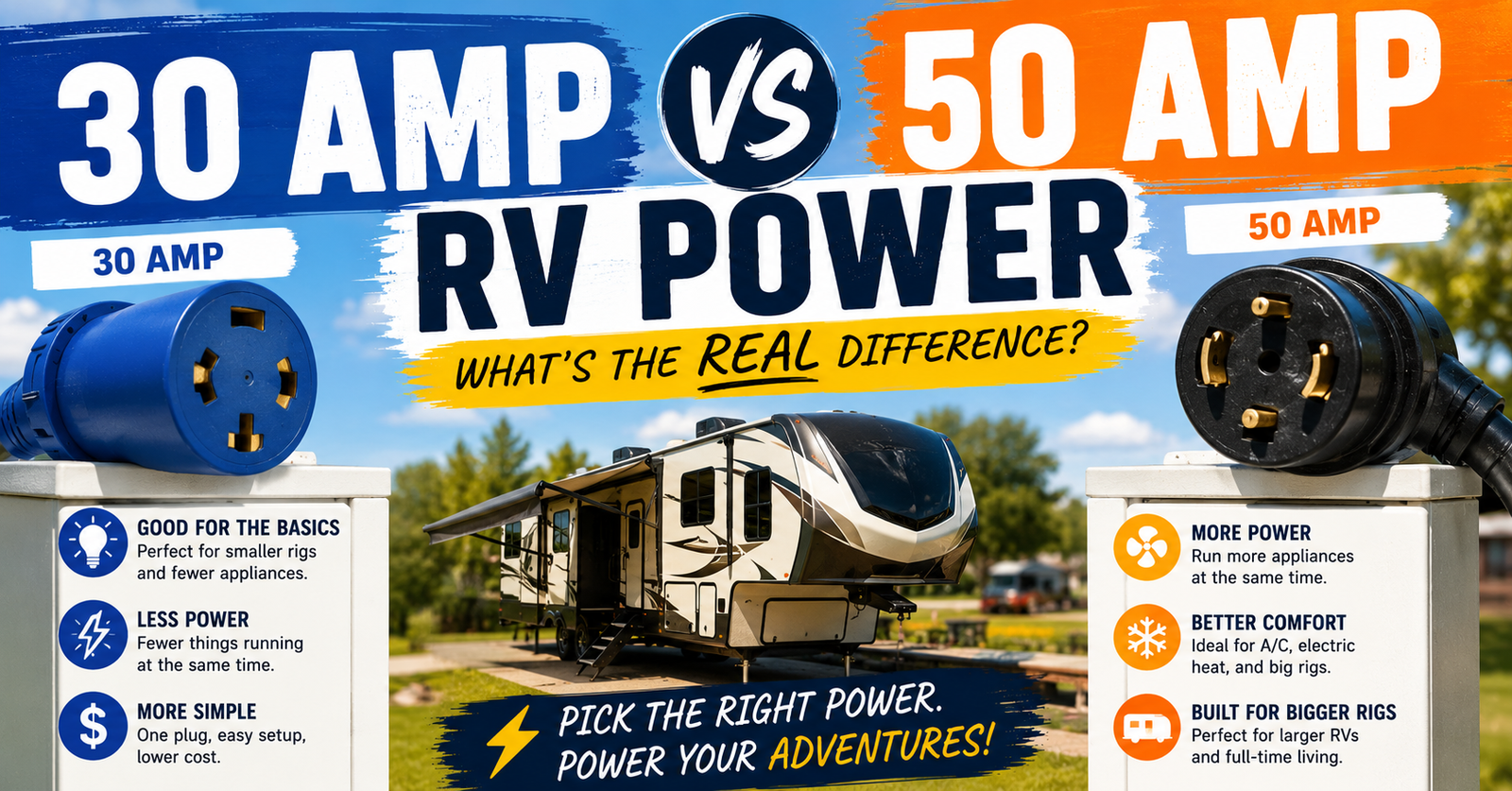
An RV battery doesn’t come with a useful answer like “lasts 37 hours.” It stores a certain amount of energy, and your camper removes that energy at a rate determined by what you’re running. Charging from solar, a generator, shore power, or the vehicle can put some of that energy back. Understanding RV power sources and energy use makes it easier to see why charging sources and daily loads affect runtime so much.
So when somebody asks me how long an RV battery lasts, my first question isn’t how old the camper is.
It’s this:
How much usable battery capacity do you have, and what are you trying to run with it?
Once we know those two things, battery runtime stops being a guessing game.
How Long Does an RV Battery Last While Camping?
A single RV battery might last less than one night under heavy use or several days under very light use.
That’s a huge range, but that’s also reality.
If you’re running a propane refrigerator’s controls, a few LED lights and an occasional water pump in mild weather, battery consumption can be fairly modest.
Now take that same battery and camp in freezing weather with the furnace cycling all night.
Completely different story.
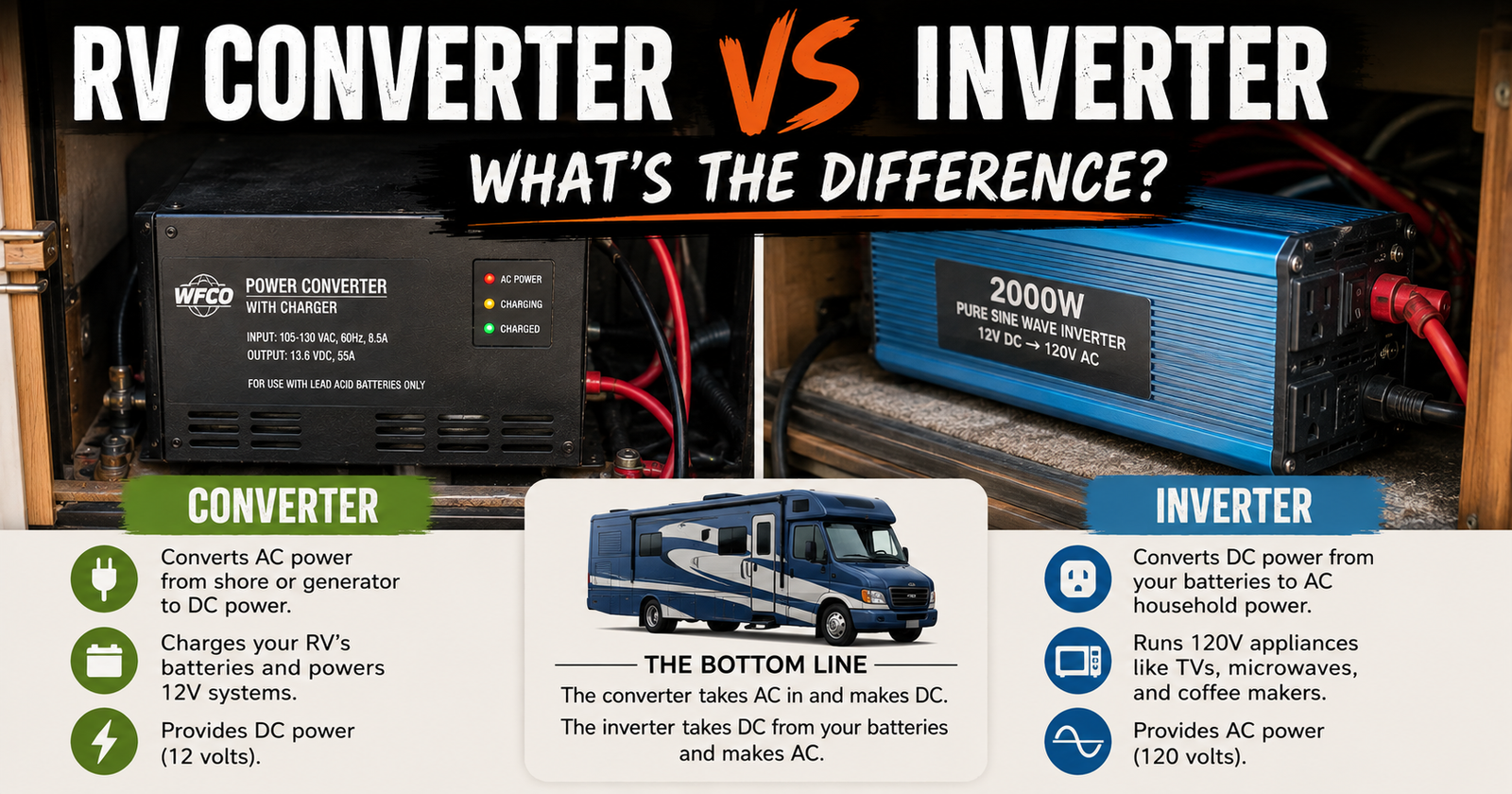
Add an inverter and start powering AC equipment from the battery and the difference becomes even larger. The electrical difference between an inverter and a converter is explained in powering AC equipment.
That’s why I don’t like telling someone, “Your RV battery should last two days.”
Two days doing what?
Battery Capacity Is Your Starting Point
RV battery capacity is commonly expressed in amp-hours, abbreviated Ah.
A 100Ah battery is rated for a certain amount of electrical capacity under specified conditions.
That gives us somewhere to start.
If you have two appropriately connected 100Ah 12-volt batteries in parallel, you may have roughly 200Ah of rated capacity at 12 volts.
But rated capacity and the amount you actually plan to use aren’t necessarily identical.
Battery chemistry matters.
Battery age matters.
Temperature matters.
Discharge rate matters.
And manufacturer recommendations matter.
So don’t stop at the number printed on the label.
A 100Ah Battery Doesn’t Automatically Give You 100Ah to Use
This is especially important with traditional lead-acid batteries.
Flooded lead-acid and AGM batteries have historically been operated more conservatively than lithium batteries when owners are trying to preserve battery life.
Repeatedly taking a lead-acid battery extremely deep into discharge can shorten its service life.
That’s why you’ll often see RVers use roughly half of a lead-acid battery’s rated capacity as a conservative planning figure.
So a 100Ah lead-acid battery may be treated more like roughly 50Ah of routinely usable energy for planning purposes.
That’s not a magical cliff where the battery instantly dies at 50 percent.
It’s a battery-life strategy.
Lithium Changes the Runtime Equation
Lithium iron phosphate batteries are one reason modern boondocking setups can behave so differently from older RV battery systems.
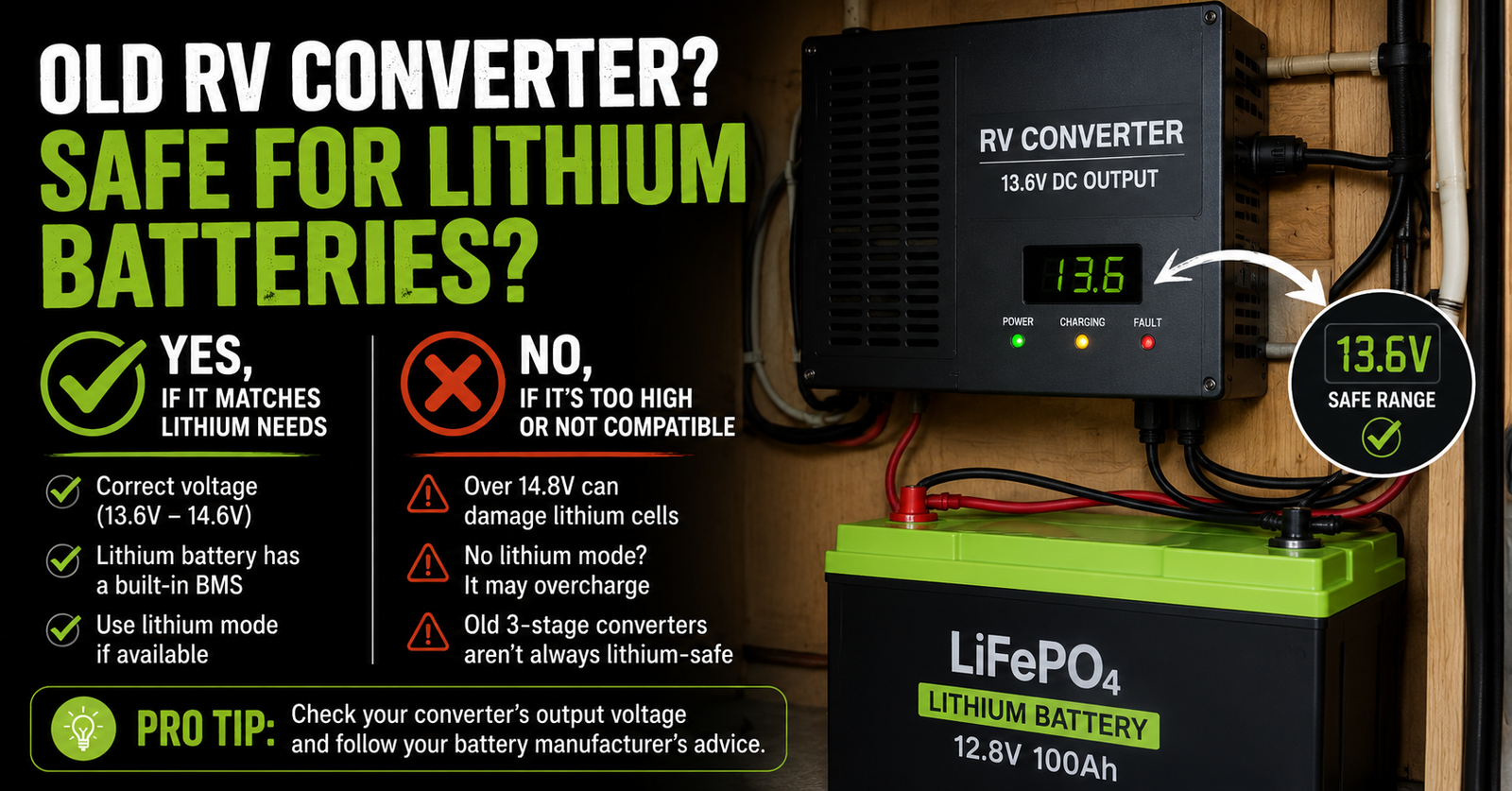
Depending on the particular battery and manufacturer specifications, lithium batteries can generally provide a larger percentage of their rated capacity for normal use than traditional lead-acid batteries. Those manufacturer specifications also determine whether lithium battery charging requirements is suitable for the battery bank.
That means a 100Ah lithium battery and a 100Ah lead-acid battery shouldn’t automatically be treated as though they provide identical usable energy.
The number on the label may be the same.
Your practical usable capacity can be very different.
That’s one reason lithium upgrades can feel so dramatic even when the advertised amp-hour number doesn’t look enormous.
Battery Runtime Is Really an Energy Budget
This is how I like to explain it.
Your battery is your checking account.
Every electrical load makes a withdrawal.
The furnace blower withdraws some.
Lights withdraw some.
The water pump takes a little when it runs.
USB chargers take some.
The refrigerator controls may need some.
The inverter takes some.
Anything powered through the inverter takes even more.
Solar makes deposits.
The converter makes deposits when you’re connected to shore power.
A generator can allow your charger to make deposits.
Vehicle charging may contribute depending on your setup.
Your battery lasts until withdrawals use the available balance faster than you’re replacing it.
That’s really the whole game.
The Basic RV Battery Runtime Formula
For a simple 12-volt DC load, a rough estimate can be made like this:
Usable battery amp-hours ÷ average amperage draw = approximate hours of runtime
Let’s say you have 80 usable amp-hours available.
Your camper averages a 4-amp draw.
80 ÷ 4 = 20 hours.
Simple enough.
But real campers don’t usually draw exactly 4 amps every second for 20 hours.
The furnace cycles.
The pump turns on for a minute.
Lights go off.
Somebody charges a phone.
Solar starts producing in the morning.
That’s why the calculation is an estimate rather than a countdown clock.
Average Consumption Matters More Than One Big Number
Suppose your furnace draws a noticeable amount of current while running.
That doesn’t necessarily mean it runs continuously.
Maybe it operates 15 minutes out of every hour.
Maybe it runs 45 minutes out of every hour because it’s bitterly cold.
Those two nights can produce completely different battery consumption even though the exact same furnace is installed.
That’s why average energy use over time is so useful.
I’m less interested in the maximum draw of every appliance than I am in how much energy the camper actually consumes over an entire day.
How Long Will a 100Ah RV Battery Last?
Let’s use some easy examples.
If you genuinely have 80 usable amp-hours available and average a 2-amp load:
80 ÷ 2 = about 40 hours.
Average 4 amps:
80 ÷ 4 = about 20 hours.
Average 8 amps:
80 ÷ 8 = about 10 hours.
Now imagine you’re conservatively planning around only 50 usable amp-hours from a lead-acid setup.
At an average 2-amp load:
50 ÷ 2 = about 25 hours.
At 5 amps:
50 ÷ 5 = about 10 hours.
That’s why asking how long a “100Ah battery” lasts without discussing battery type and electrical use doesn’t tell us enough. For more context on that approach, see how Camper Answers explains RV systems.

Real RV Loads Don’t Stay Constant
This is where campground math meets reality.
The water pump might pull several amps, but it only runs when somebody uses water.
LED lights can remain on for hours but may consume relatively little compared with larger loads.
The furnace blower can become a major overnight consumer because it cycles repeatedly.
The refrigerator may require 12-volt controls even when propane provides the cooling heat source.
An inverter may have standby consumption before you’ve even powered an AC appliance.
All of those loads overlap.
That’s why measuring your camper’s actual daily consumption beats copying somebody else’s numbers.
The Furnace Can Completely Change Battery Runtime
Cold-weather camping is where a lot of people discover their battery bank isn’t nearly as large as they thought.
An RV propane furnace doesn’t get its heat from the battery.
Propane provides the fuel.
But the furnace still needs 12-volt electricity for the blower and controls.
The blower is the big one.
A furnace pulling around 7 or 8 amps while running can consume a meaningful chunk of battery capacity over a cold night, especially if it’s cycling frequently.
Real-world RV battery calculations commonly put furnace blower consumption around this range, although the actual draw varies by furnace.
The Furnace Doesn’t Have to Run Continuously to Use a Lot of Power
This catches people.
Let’s say the blower draws 8 amps.
If it ran continuously for one hour, that would consume roughly 8Ah.
But maybe it only runs for 30 minutes during that hour.
Now you’ve used roughly 4Ah for the furnace during that hour.
Over an eight-hour night, if that average continues, you’re around 32Ah just for the furnace.
And that’s before the refrigerator controls, detectors, lights, water pump, phone charging and everything else.
Suddenly a single modest lead-acid battery doesn’t look very large.
Outside Temperature Changes Everything
A 45-degree night and a 15-degree night aren’t remotely the same battery test.
When it’s mild, the furnace may cycle occasionally.
When it’s bitterly cold, it may run much more frequently.
Cold conditions can also affect battery performance, with the exact effect depending on battery chemistry and temperature.
So when somebody tells me:
“My battery lasted two nights last month and couldn’t survive last night.”
I want to know what the weather did before I assume something broke.
This Is Why RV Batteries Often Die Overnight
Night combines several bad things for battery life.
Solar production disappears.
Temperatures often fall.
The furnace may start cycling more frequently.
Lights are used.
Televisions and electronics may be used before bed.
Phone charging happens.
And then several small standby loads continue for hours while everybody sleeps.
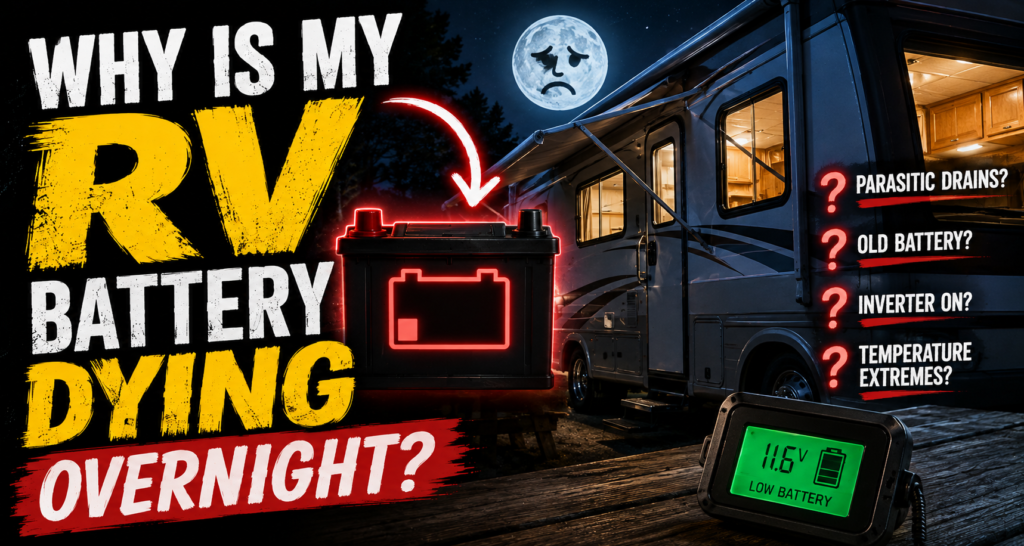
We’ve already gone much deeper into why an RV battery can die overnight, because that specific pattern has enough causes to deserve its own troubleshooting process.
If daytime battery life seems fine but nighttime destroys you, follow that clue.
How Long Will an RV Battery Last With the Furnace Running?
There is no one furnace-runtime number I’d trust without knowing the battery bank and furnace draw.
But we can estimate it.
Suppose you have 50Ah of battery capacity you’re willing to use.
Your furnace blower draws 8 amps while actually running.
If it somehow ran continuously:
50 ÷ 8 = about 6.25 hours.
But furnaces normally cycle.
If it runs half the time, the average furnace consumption is closer to 4Ah per hour.
Ignoring every other RV load for a moment:
50 ÷ 4 = about 12.5 hours.
That’s why furnace duty cycle matters so much.
Real-world runtime calculations use this same relationship between usable battery capacity, furnace draw, and how frequently the furnace operates.
Don’t Forget Everything Else Running Overnight
The furnace isn’t alone.
Your refrigerator controls may still need 12-volt power.
Safety equipment may remain powered.
USB devices may be charging.
An inverter may be on.
Other electronics may remain in standby.
Maybe somebody uses the bathroom and runs the water pump.
Each load takes its share.
This is why calculating furnace runtime as though the furnace owns the entire battery can give you an overly optimistic number.
The whole camper shares the same energy supply.
How Long Will an RV Battery Last Without Shore Power?
Now we’re really talking about dry camping or boondocking.
Without shore power, your runtime depends on how much other charging you have available.
No solar?
No generator?
No meaningful vehicle charging?
Then the battery bank is basically a finite tank.
Once you’ve consumed the usable energy, you’re done until you recharge.
With solar, the calculation becomes more interesting because energy can be replenished during the day.
A good solar day may replace everything you used.
A bad one may replace only part of it.
Solar Doesn’t Make Battery Capacity Unlimited
I love solar, but this misconception gets people in trouble.
Solar panels don’t make your battery infinite.
They produce energy when conditions allow.
Your camper consumes energy whenever equipment is running.
If you use 70Ah during a 24-hour period and solar replaces 70Ah, you’re roughly keeping up.
If solar replaces only 40Ah, you’re still down roughly 30Ah.
Do that again tomorrow and you’re down another 30.
Eventually the battery reaches its lower limit even though the solar controller showed charging every day.
The important number is your daily energy balance.
Cloudy Weather Can Turn a Great Setup Into a Short-Lived One
This is why I never plan an off-grid trip assuming every day will provide perfect solar production.
Cloud cover matters.
Shade matters.
Season matters.
Panel orientation matters.
Day length matters.
Dirt and snow matter.
Your charging equipment matters.
If your battery bank can barely survive one night without the next day’s solar, you don’t have much cushion when the weather stops cooperating.
Capacity gives you breathing room.
How Long Will an RV Battery Last With Only Lights?
Usually much longer than it will with the furnace or substantial inverter loads, especially if the RV uses efficient LED lighting.
But even here I wouldn’t promise a specific number.
How many lights?
What fixtures?
How long are they on?
What else remains connected?
If you’re truly trying to maximize runtime, lighting is often not the first place I’d obsess over unless you have older high-consumption fixtures.
Look at the big loads first.
The Water Pump Usually Isn’t Running Long Enough to Be the Biggest Problem
Your RV water pump can draw a noticeable amount of current while operating.
But it normally operates intermittently.
Wash your hands.
Pump runs.
Flush the toilet.
Pump runs briefly.
Take a shower.
Now it runs more.
The important thing is runtime.
A device drawing 7 amps for five minutes can use less daily energy than a tiny 0.5-amp load that runs all day.
That’s why amp-hours matter more than simply ranking appliances by amperage.
Tiny Loads Add Up Over 24 Hours
Let’s use that 0.5-amp example.
Half an amp doesn’t sound scary.
Leave it running for 24 hours:
0.5 × 24 = 12Ah.
Now leave it for four days:
48Ah.
That’s a substantial amount of energy from a modest battery bank.
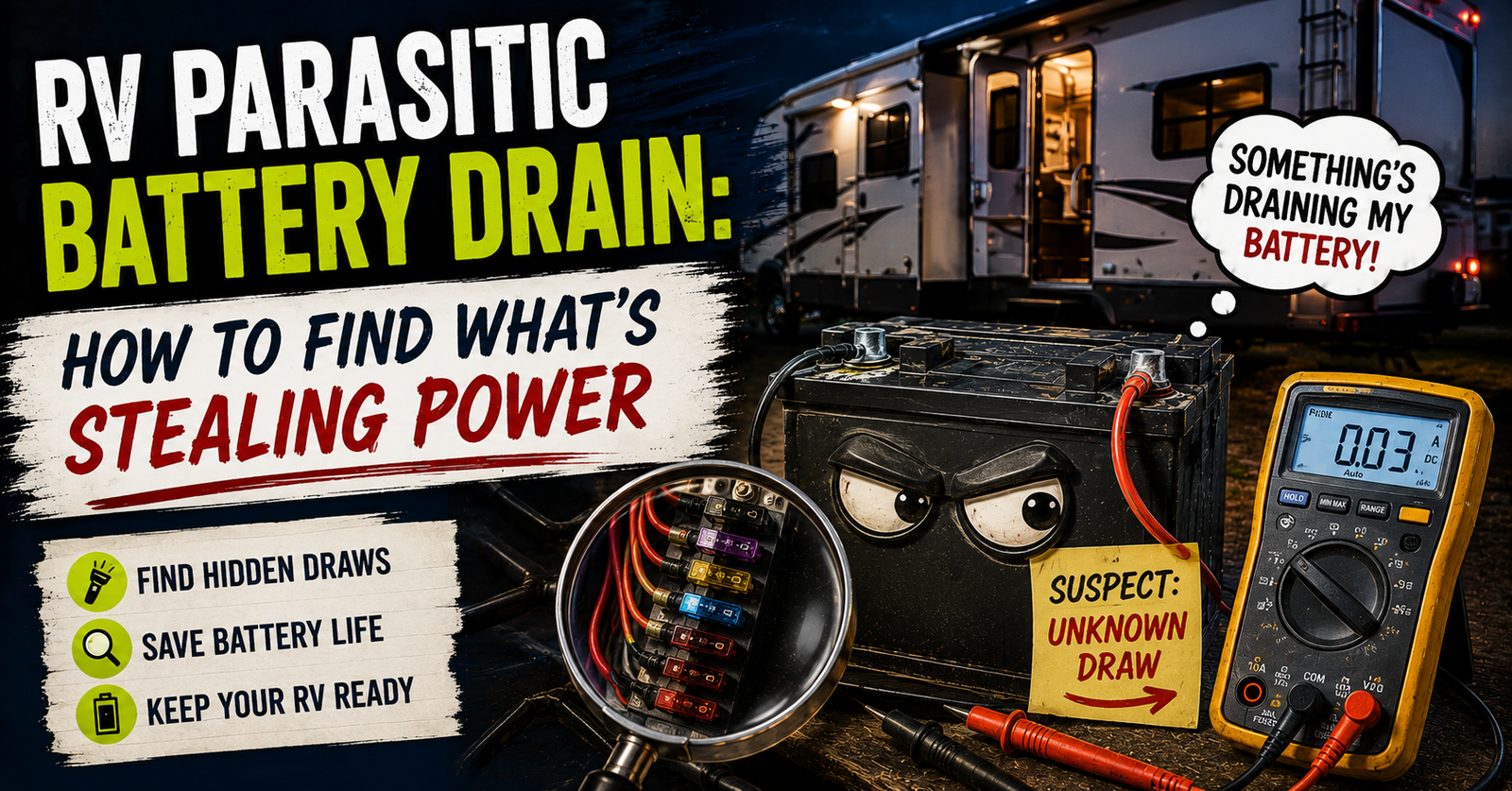
This is exactly why hidden parasitic battery draws matter so much during storage.
Time turns tiny loads into meaningful consumption.
How Long Will an RV Battery Last in Storage?
Potentially weeks or months, but only if the storage setup is appropriate.
This is different from camping runtime.
While camping, you’re intentionally using electricity.
During storage, you usually want battery consumption minimized and the battery maintained according to its manufacturer’s recommendations.
The problem is that an RV that looks “off” may still have connected electrical loads.
Detectors.
Control modules.
Stereo memory.
Aftermarket accessories.
Inverters.
Other equipment depending on the camper.
So a battery can be slowly discharged even though nobody has entered the RV for weeks.
The Battery Disconnect Can Help, but Know What It Actually Does
Turning the battery disconnect off can remove many RV loads.
That can dramatically extend storage time.
But don’t automatically assume it isolates every single connection.
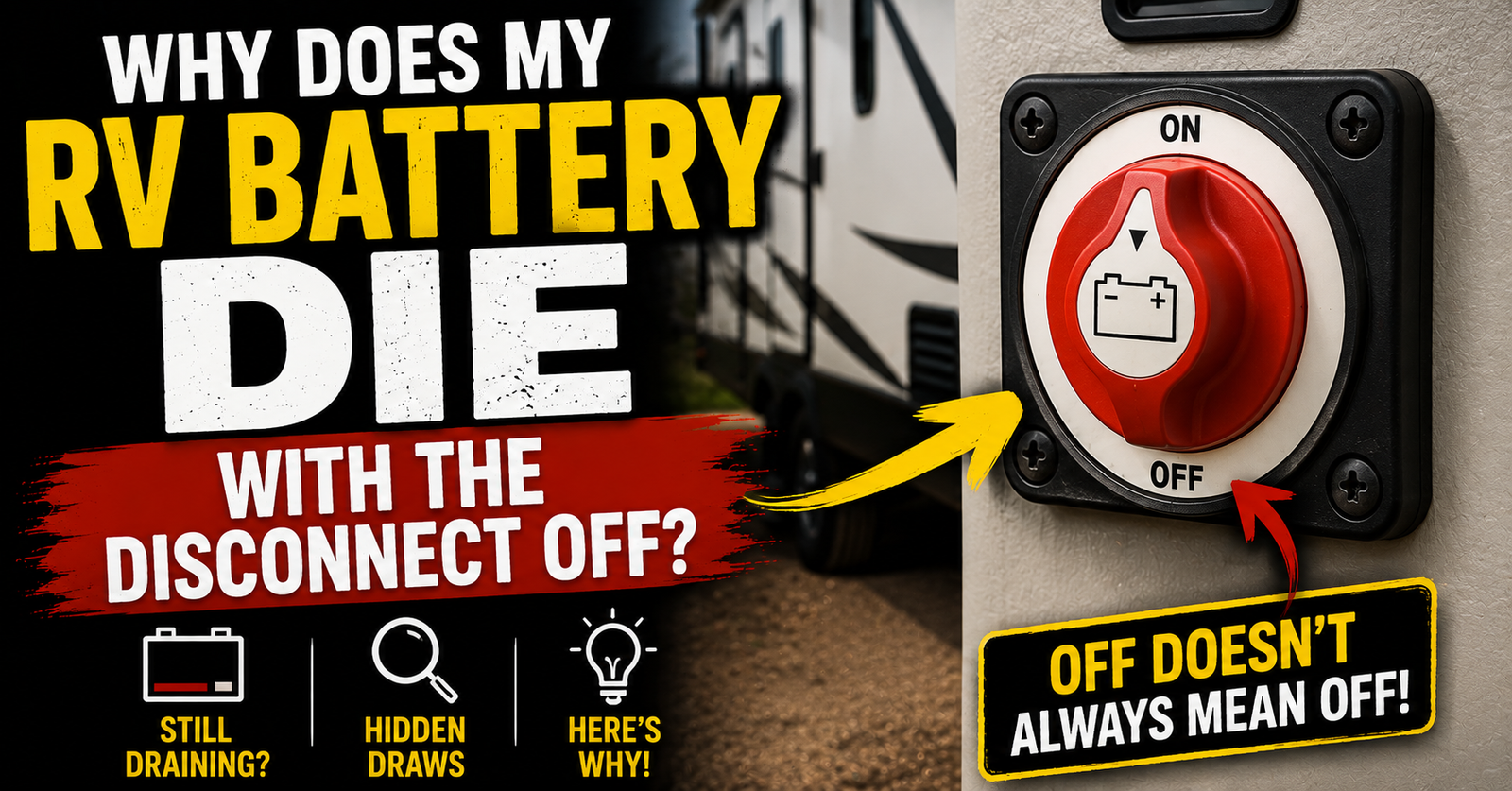
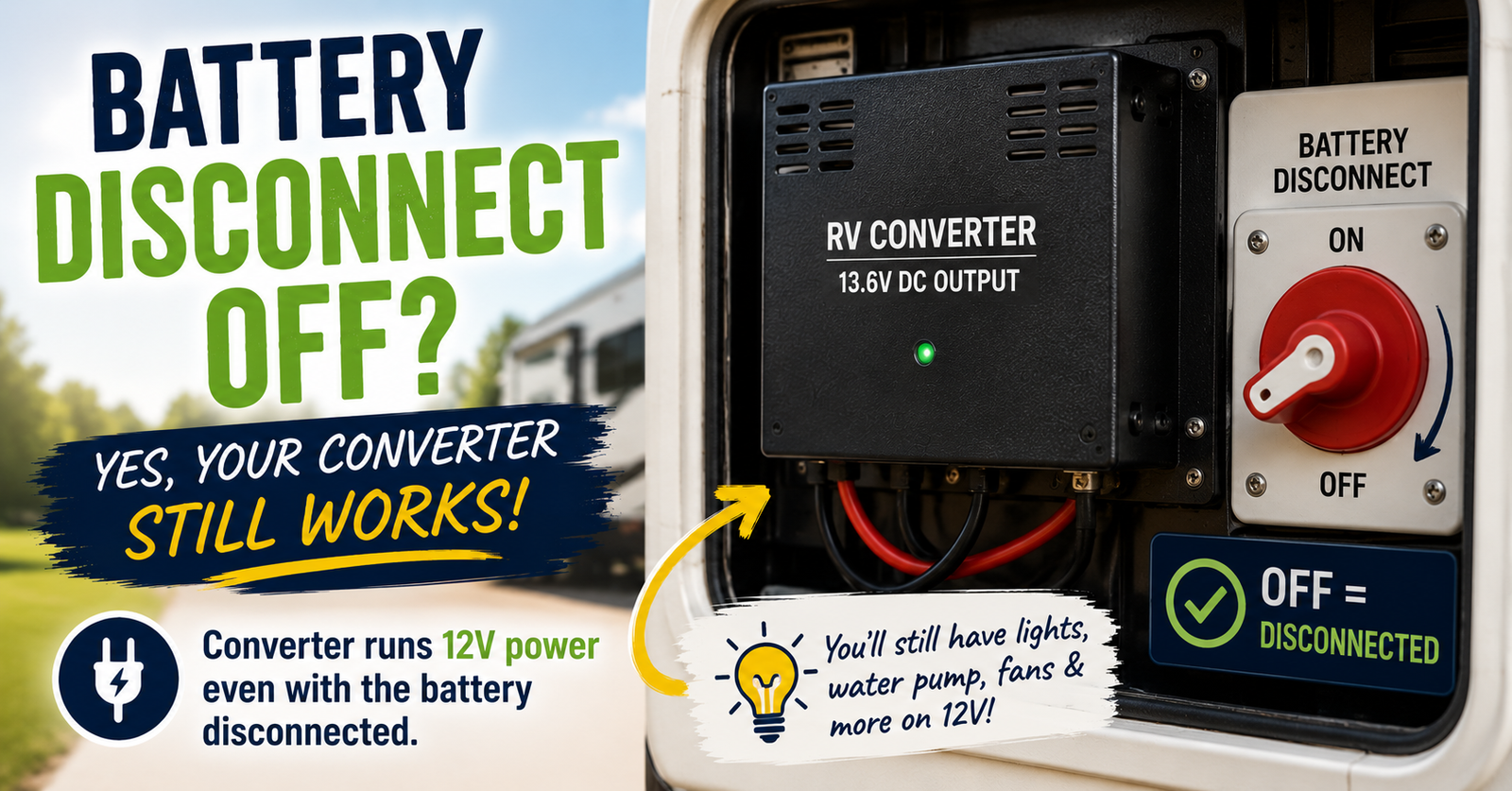
We’ve already covered why an RV battery can still die with the disconnect off, and this is exactly why that problem surprises so many owners.
Some equipment can be wired outside the main disconnect.
An inverter may have a separate connection.
Aftermarket equipment may connect directly to the battery.
If you’re storing the RV for an extended period, understand the actual electrical layout instead of relying solely on the switch label.
Battery Self-Discharge Exists Too
Even a battery genuinely isolated from every camper load doesn’t necessarily retain exactly the same state of charge forever.
Batteries can self-discharge over time.
How quickly depends on chemistry, condition, temperature and other factors.
That means storage battery care isn’t simply:
“Disconnect it and forget about it until spring.”
Follow the storage recommendations for the actual battery you own.
Lithium and lead-acid batteries shouldn’t automatically be treated the same way.
How Long Should an RV Battery Last Before It Needs Replacement?
Now we’re talking about service life, which is completely different from how many hours it lasts between charges.
This distinction is important.
When someone asks, “How long should my RV battery last?” they might mean:
How many hours can I camp?
How many days can it sit?
Or how many years before I need a new battery?
Those are three different questions.
Battery service life depends heavily on chemistry, quality, charging, depth of discharge, temperature, maintenance and how the RV is stored.
I’d be very skeptical of anyone promising every RV battery will last an exact number of years.
Abuse Can Shorten Battery Life Dramatically
Lead-acid batteries especially don’t appreciate being repeatedly left discharged.
If a battery gets run down, sits that way for weeks, gets partially charged, gets drained again and repeats that cycle, don’t expect the same service life you’d get from a properly maintained battery.
That’s one reason I take recurring battery problems seriously.

An RV battery that keeps going dead isn’t only inconvenient.
Depending on the battery chemistry and how deeply it is repeatedly discharged, you may also be shortening its useful life while you ignore the original problem.
A Battery Can Still Work but Have Terrible Capacity
Battery failure isn’t always dramatic.
Sometimes the battery doesn’t completely quit.
It just gets smaller in practical terms.
Maybe it used to get you through the night easily.
Now it barely makes it until midnight.
It charges.
Voltage looks decent.
Lights turn on.
But runtime is terrible.
That’s when I start thinking about lost usable capacity.
The battery is technically working.
It’s just not storing nearly as much useful energy anymore.
This Is Where Voltage Alone Can Mislead You

We’ve already built a full guide to understanding RV battery voltage readings because voltage is useful but easy to misinterpret.
A battery can show an encouraging voltage without proving that it has good usable capacity.
That’s why runtime matters.
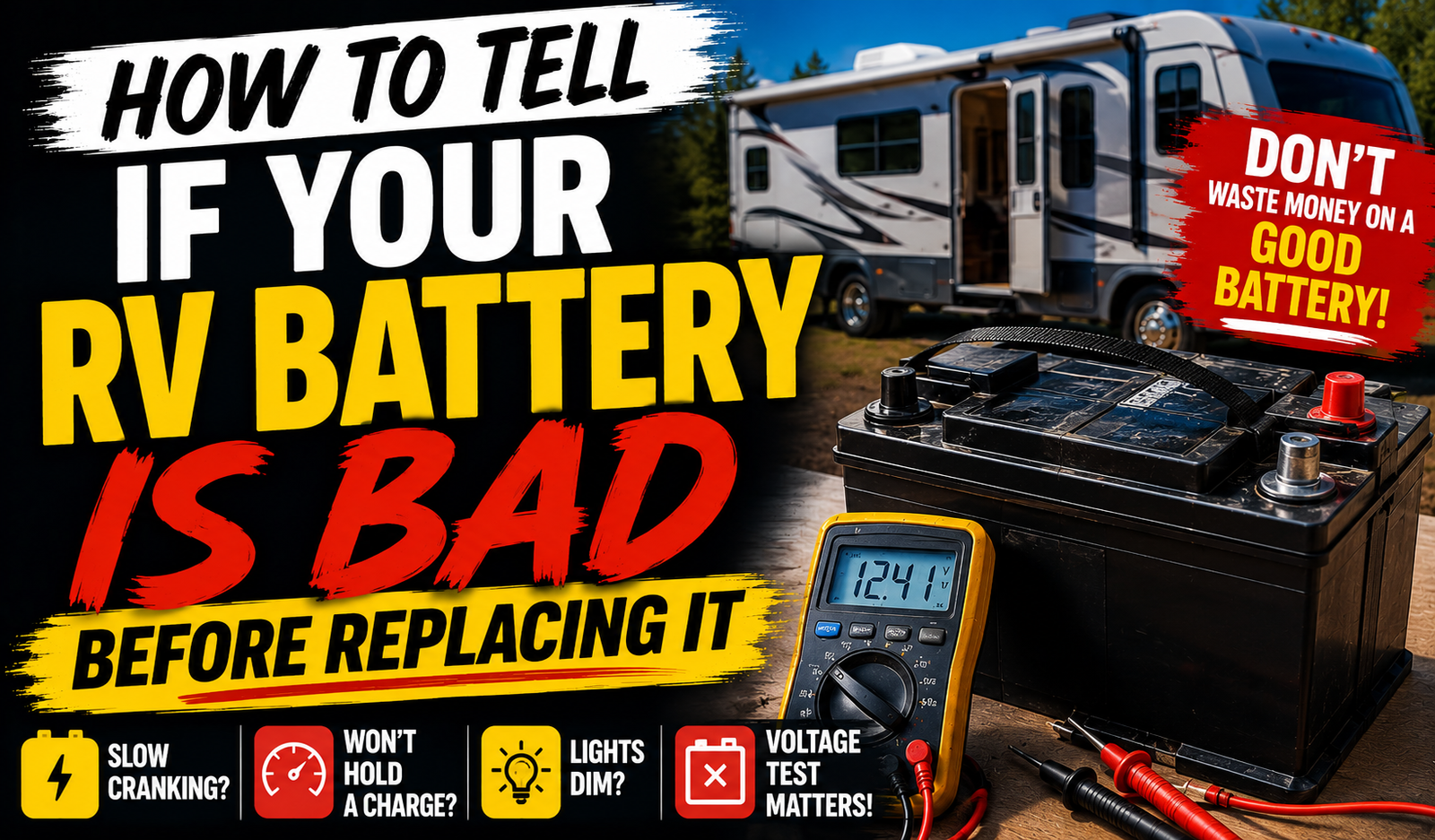
If your battery repeatedly reaches what appears to be a healthy state of charge but provides terrible runtime under normal loads, I want to know more about its actual capacity and condition. A short runtime can have several causes, so check the battery's actual condition before assuming the battery needs to be replaced.
One number on a multimeter doesn’t tell the whole story.
A Battery That Says Full Can Still Have Very Little Runtime
This is one of the weirdest battery symptoms until you understand capacity loss.
You charge it.
Gauge says full.
Unplug.
Use a few things.
Battery falls rapidly.

That’s exactly why we wrote a separate guide for an RV battery that says full but dies fast.
The short version is that a full-looking voltage reading doesn’t guarantee the battery still stores the amount of energy you expect.
If runtime has suddenly become terrible, don’t just assume your camper developed a massive electrical load.
Test the battery too.
Inverters Can Cut RV Battery Runtime Shockingly Fast
This is where the 12-volt side of RV life starts powering 120-volt conveniences.
An inverter converts battery DC power into AC power.
That’s incredibly useful.
It’s also capable of moving a lot of energy out of a battery bank very quickly.
A coffee maker.
Microwave.
Hair dryer.
Residential refrigerator.
Television.
CPAP.
Laptop chargers.
The actual effect depends on wattage and runtime, but large AC loads can make a single battery look tiny.
A 1,000-Watt Load Is Huge Compared With an LED Light
Here’s some rough math.
Ignoring conversion losses for a moment, 1,000 watts at 12 volts represents more than 80 amps.
In the real world, the battery-side current can be higher because an inverter isn’t 100 percent efficient and battery voltage isn’t fixed at exactly 12.0 volts.
Compare that with a small 12-volt light.
They’re not even playing the same game.
This is why an RV owner can say:
“My battery lasts forever when we camp normally but dies ridiculously fast when I use the inverter.”
That may be exactly what the math predicts.
The Microwave Is a Short but Heavy Hit
A microwave doesn’t normally run for hours.
But while it’s operating through an inverter, it can represent a substantial load.
That’s okay if the battery bank, inverter and wiring are designed for it.
The mistake is assuming a battery that can run 12-volt lights for days should therefore run a microwave for days too.
Power level matters.
Runtime matters.
Energy is energy.
The battery doesn’t care whether you’re using it slowly or quickly.
Residential Refrigerators Change the Equation
Some modern RVs use residential-style refrigerators powered from 120-volt AC.
When you’re off-grid, an inverter may supply that AC power from the battery bank.
Now the refrigerator becomes part of your battery-energy budget in a much bigger way than a traditional absorption refrigerator running primarily on propane.
That doesn’t make residential refrigerators bad.
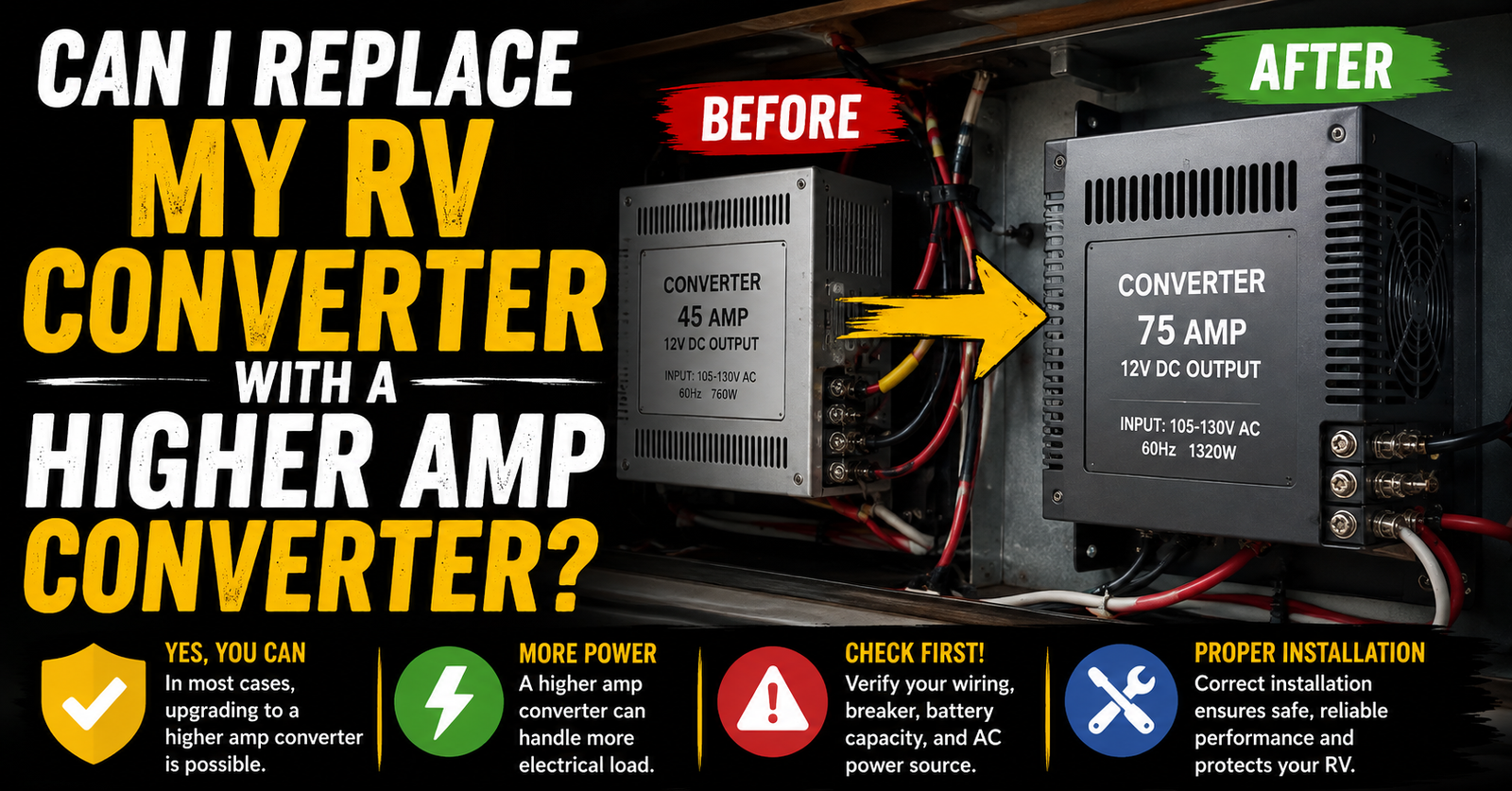
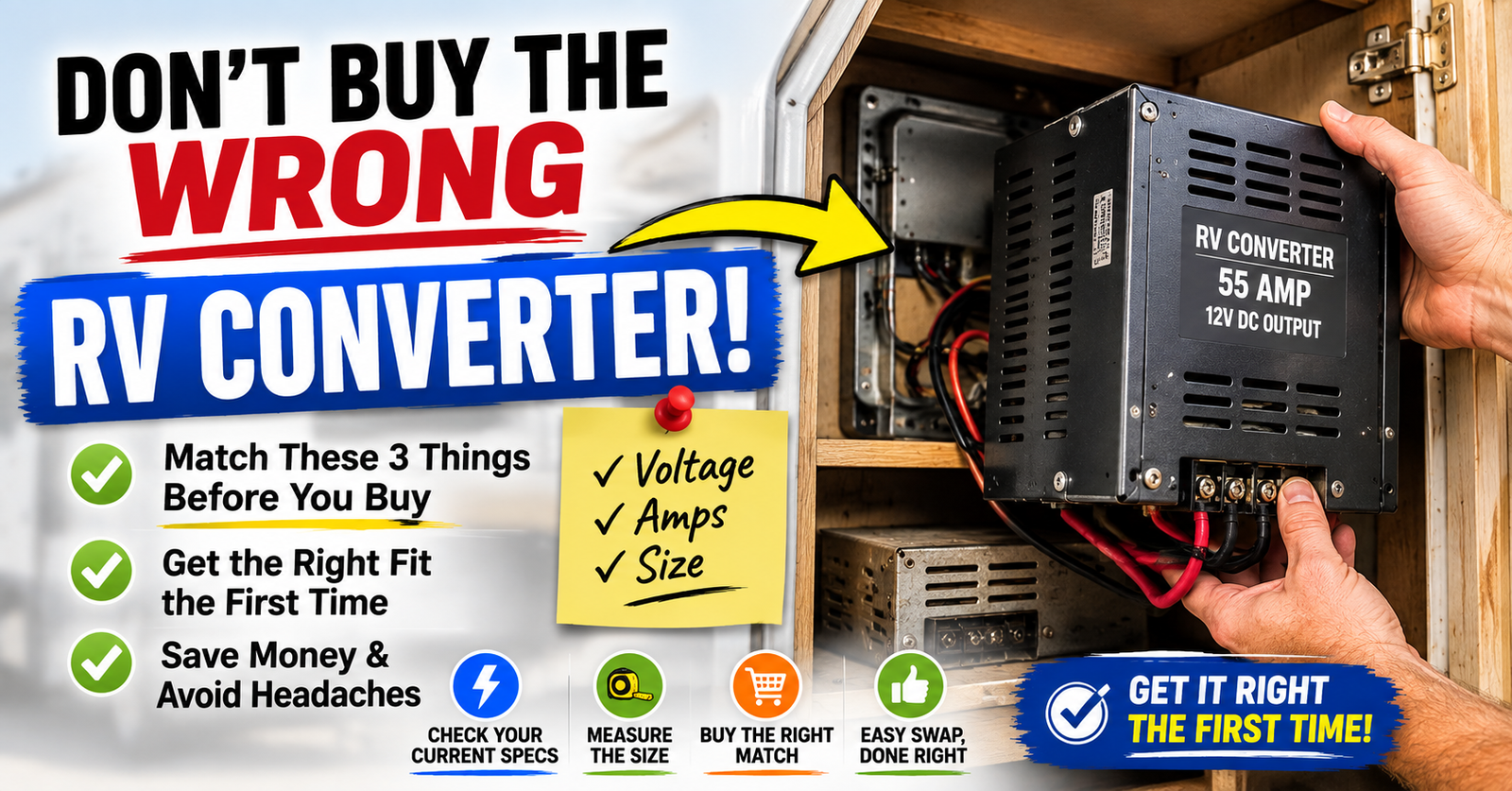
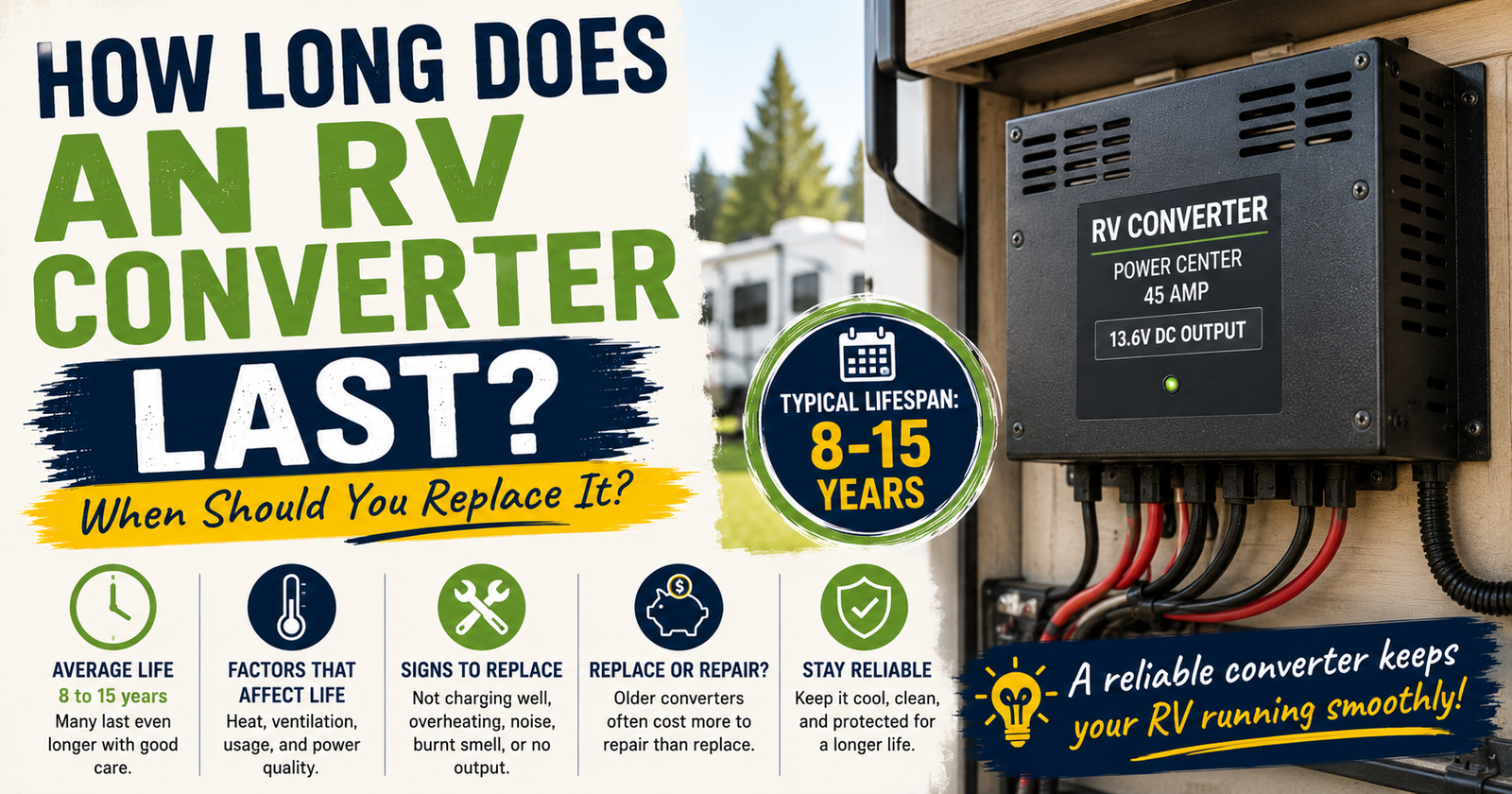
It means the electrical system needs to be designed around the equipment installed. The same principle applies when installing a higher-amp RV converter: the battery bank, wiring, protection, and converter all need to work together.
This is why comparing battery runtime between two RVs without comparing appliances is almost meaningless.
CPAP Machines Deserve Planning Too
A CPAP can be an important overnight load for campers who need one.
Power consumption varies by machine and setup, and heated humidification can change consumption substantially.
If you depend on medical equipment overnight, don’t guess at battery runtime based on somebody else’s camper.
Determine the actual power requirements of your equipment, account for conversion losses if you’re using an inverter, and leave yourself a healthy reserve.
That’s one place where I want a real energy plan, not campground math.
Two Batteries Don’t Always Mean Twice the Runtime
If you’re adding batteries appropriately in parallel to increase a 12-volt bank, you can increase total amp-hour capacity.
But the batteries need to be compatible with the system and connected properly.
Simply seeing two battery boxes doesn’t tell me their chemistry, capacity, condition or wiring configuration.
Two worn-out batteries can still perform terribly.
Two mismatched batteries can create their own issues.
And two batteries won’t help much if your charging system never properly replenishes them. A battery that is not being replenished may also be battery discharged by a failed charging source.
Capacity is only one part of the system.
More Battery Capacity Also Means More Energy to Recharge
This gets overlooked after upgrades.
You double your battery capacity.
Fantastic.
Now you can camp longer.
But after using all that extra energy, you also have more energy to put back.
If the charger stays the same size, recharge time can increase.
That’s not necessarily a problem.
It’s just math.
A larger fuel tank takes longer to fill from the same pump.
Battery banks aren’t much different.
Your Charger Determines How Quickly You Can Recover
This is why battery runtime and charging time belong in the same conversation.
Suppose your battery bank can comfortably last three days.
Great.
But if your charging setup needs an impractically long time to replace those three days of consumption, you still have an off-grid problem.
Boondocking systems work best when battery capacity and charging capability are designed together.
Battery bank.
Solar.
Converter or inverter/charger.
Generator.
Vehicle charging.
Loads.
They all affect the same energy budget.
A Battery That Won’t Fully Charge Will Never Give You Full Runtime
This sounds obvious, but it causes a lot of confusion.
You own a 100Ah battery.
But maybe it only starts the trip partially charged.
You don’t have the runtime of a fully charged 100Ah battery.
You’ve already lost part of your energy budget before leaving home.
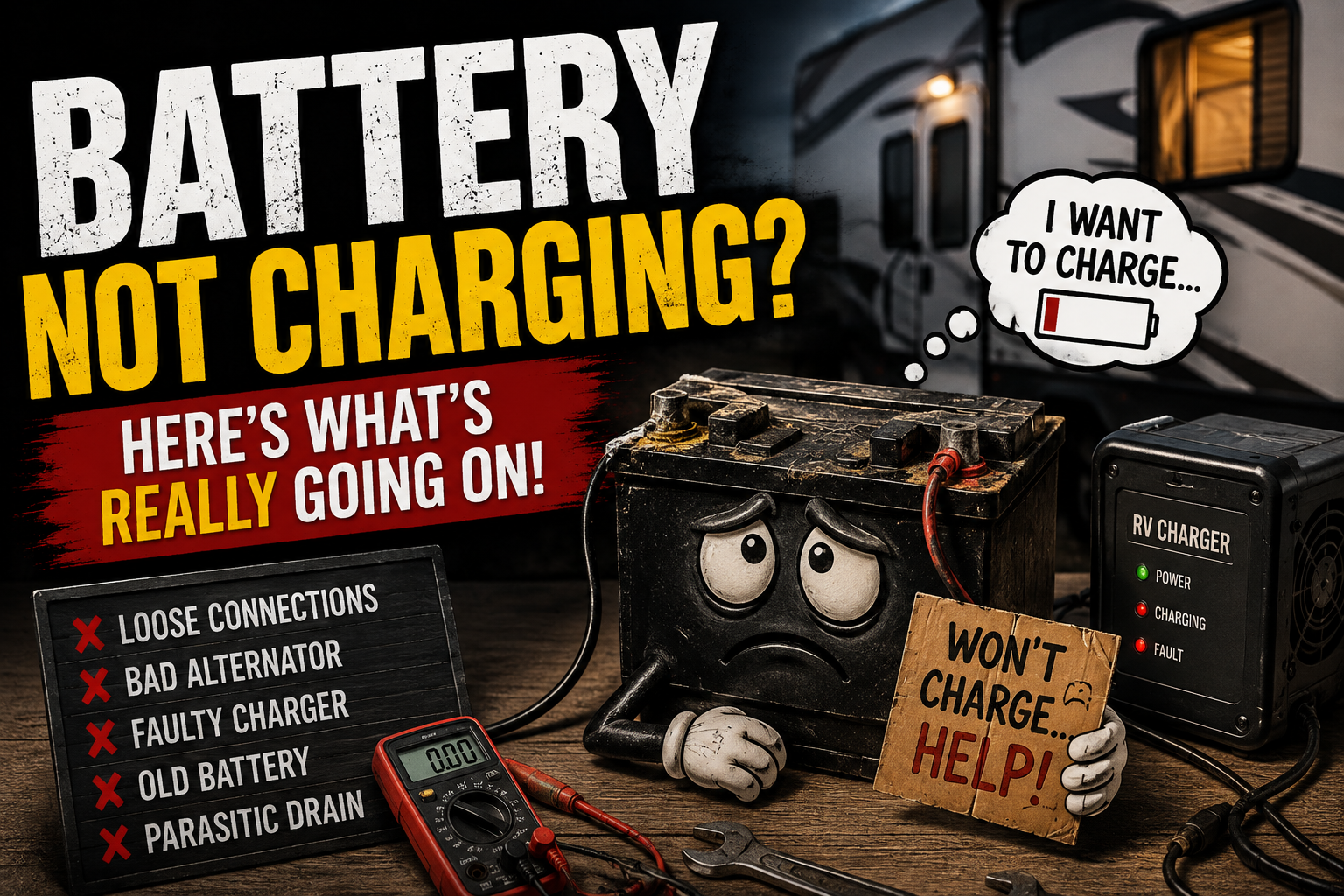
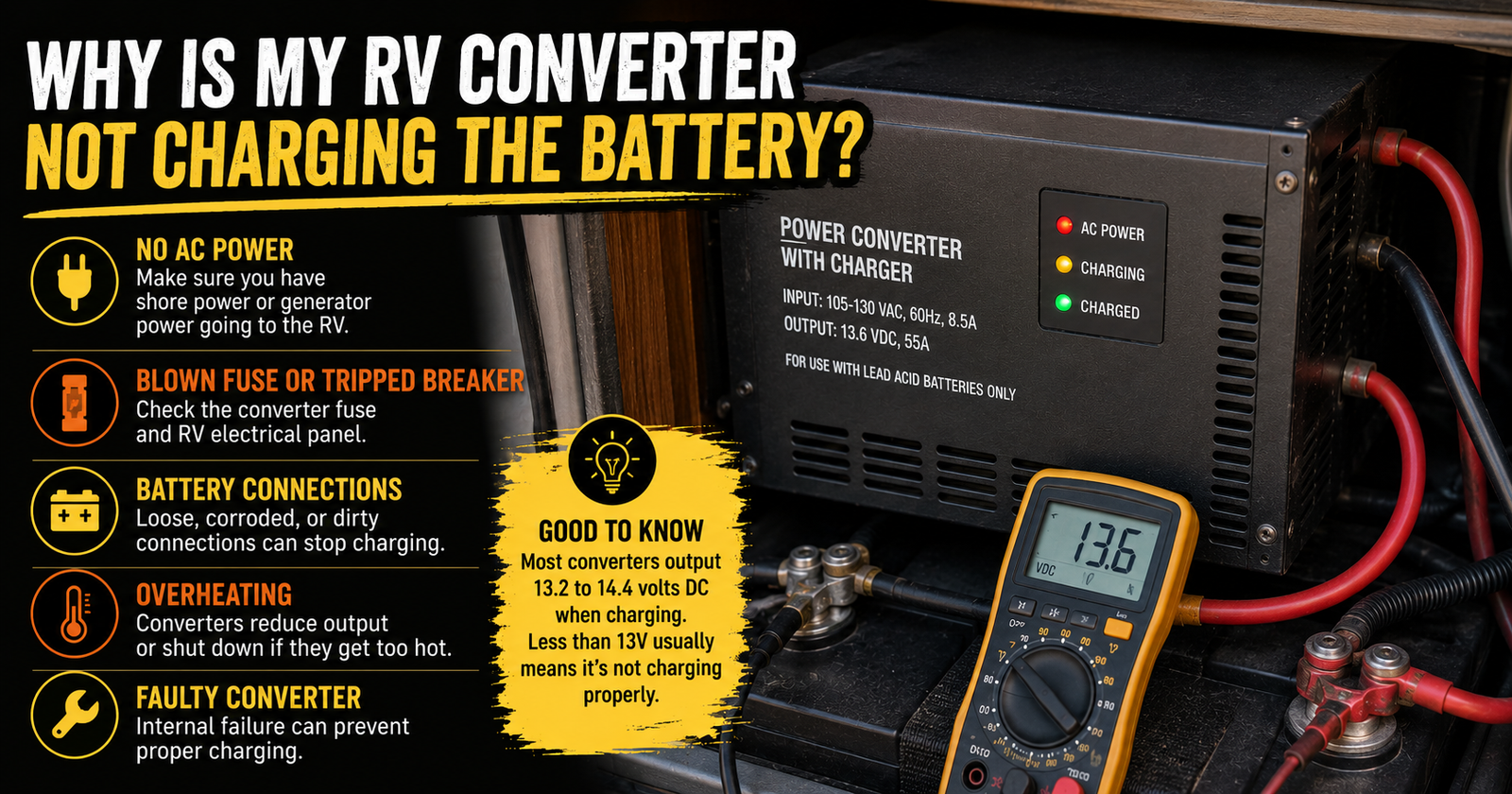
If your battery runtime consistently seems much shorter than the math suggests, make sure the RV battery is actually charging properly before buying more capacity.
You can’t judge battery endurance fairly if it never starts full.
Shore Power Can Hide a Weak Battery for Months
This is why some owners don’t discover battery trouble until their first dry-camping trip.
At home, plugged in.
At the campground, plugged in.
Everything works.
Converter carries the 12-volt loads and keeps the electrical system happy.
Then you spend one night without hookups.
Suddenly the battery is terrible.
It may not have become terrible that night.
Shore power may have been hiding the problem.
Off-grid camping finally forced the battery to prove what it could do.
How Long Should an RV Battery Last Boondocking?
For me, the better question is:
How many amp-hours do you use per day?
Suppose your usable battery capacity is 200Ah.
You consume 50Ah per day.
With no charging at all, that’s roughly four days on paper.
Use 100Ah per day and it’s roughly two.
Now add solar that replaces 60Ah each day while you consume 50Ah.
Under favorable conditions, you may be energy-positive.
But if bad weather cuts solar production to 15Ah, your battery bank starts losing ground.
This is why boondocking battery runtime can range from hours to effectively indefinite periods when daily charging consistently replaces daily consumption.
Measure One Real Camping Day
If you want to know how long your battery lasts, this is one of the best things you can do.
Install or use a properly configured shunt-based battery monitor.
Start with a properly charged battery bank.
Camp normally for 24 hours.
Don’t artificially conserve electricity just because you’re watching it.
Use the camper the way you actually use it.
Then look at how much energy you consumed.
That number is worth far more than somebody else’s estimate on the internet.
Now you can size battery capacity around your real life.
Do the Same Test on a Cold Night
If you camp in cold weather, repeat the experiment when the furnace is actually needed.
Your summer consumption may be dramatically lower than winter consumption.
That’s why I’d never size a boondocking battery bank around one beautiful 70-degree weekend if I know I’ll also be camping when it’s 25 degrees outside.
Design for the difficult trip.
The easy trips will take care of themselves.
What If My Battery Lasts Only a Few Hours?
Don’t immediately assume it’s bad.
Ask what you’re powering.
Large inverter loads?
Furnace running constantly?
Tank heaters?
Residential refrigerator?
Other heavy equipment?
If consumption doesn’t explain the short runtime, then look at battery state of charge and condition.
If the battery appears to be losing energy much faster than your measured loads explain, our guide to why an RV battery drains so fast is the troubleshooting path I’d follow.
A few hours can be completely abnormal or completely predictable depending on what you’re running.
What If My Battery Lasts for Weeks?
If the camper is in storage with nearly all loads properly isolated, that’s a different situation from camping.
Weeks of storage life doesn’t mean that same battery will power a furnace for weeks.
Storage consumption can be tiny.
Camping consumption isn’t.
Always compare similar operating conditions.
That’s why “my battery lasts three weeks” isn’t useful until I know whether you mean three weeks parked behind the barn or three weeks living in the camper.
Don’t Judge Battery Life by Calendar Time Alone
This is the point I want to drive home.
Hours and days are outcomes.
Energy use is the cause.
One person can use 20Ah in a day.
Another can use 150Ah.
Give them identical batteries and they’ll report completely different battery life.
Neither battery is necessarily better or worse.
The campers are simply using electricity differently.
When I Think the Battery Is Too Small
If the battery is healthy, fully charged, and performing according to its rated capacity but you repeatedly run out of usable energy during normal camping, the battery bank may simply be undersized for your needs. After determining that the battery bank needs more capacity, matching converter size to your battery bank is the next electrical-system check: matching converter size to your battery bank.
That’s not a failure.
It means your electrical lifestyle requires more storage.
At that point I start looking at battery capacity, charging capability and opportunities to reduce consumption.
Buying another battery makes sense when you’ve proven you need more capacity.
It doesn’t make sense as a blind repair for an unexplained drain.
When I Think the Battery Is Worn Out
I become suspicious of the battery when runtime has dropped substantially even though your camping habits haven’t changed, the battery has a history of deep discharge or poor maintenance, voltage falls excessively under reasonable loads, or proper testing shows significantly reduced capacity.
That’s evidence of a battery problem.
“Didn’t last as long as my neighbor’s battery” isn’t.
Compare the battery with its own specifications and your actual electrical use.
When I Think the Camper Is the Problem
If your battery tests well and your normal energy consumption doesn’t explain the short runtime, I start looking for unexpected loads.
Something may be staying on.
An inverter may be consuming power.
An accessory may have been wired directly to the battery.
A component may not be shutting down properly.
That’s when parasitic-draw testing becomes useful.
Don’t increase the size of the bucket until you’ve checked whether there’s a hole in it.
When I Think the Charging System Is the Problem
If your battery bank has enough capacity for your needs but never seems to begin a trip fully charged, investigate charging.
Maybe shore power isn’t actually replenishing it.
Maybe the converter isn’t working correctly.
Maybe a fuse or breaker has interrupted the charging path.
Maybe solar production isn’t what you expected.
Maybe vehicle charging is inadequate.
Battery runtime starts with the amount of energy actually stored.
Rated capacity doesn’t help if you never fill it.
The Best Battery Setup Is the One That Matches How You Camp
I don’t think every RV needs a giant lithium bank.
I also don’t think everybody should survive on one bargain deep-cycle battery.
A camper that spends almost every night connected to shore power has very different needs from a fifth wheel that spends two weeks in the desert.
Cold-weather campers have different needs from summer campers.
A family running electronics has different needs from someone who basically uses lights and the water pump.
Your battery system should match your camper, your loads and your camping style.
That’s what matters.
Figure Out Your Daily Number and Everything Gets Easier
If there’s one thing I’d do before spending serious money on RV batteries, it’s figure out roughly how much energy the camper actually uses in 24 hours.
Once you know that, the rest starts falling into place.
How much battery capacity do I need?
How long can I boondock?
Will one lithium battery be enough?
Do I need two?
How much solar makes sense?
How long will I need to run a generator?
Can my furnace make it through a freezing night?
Suddenly those questions have numbers behind them.
And that’s the real answer to how long an RV battery lasts.
It lasts as long as the usable energy stored in it can support the electricity you’re taking out of it, minus whatever your charging sources are putting back.
Once you understand that, you stop counting battery life in vague “days” and start understanding exactly what your camper needs to stay powered.
Written by Evan Mercer
Evan Mercer writes about RV electrical systems, battery troubleshooting, maintenance and everyday camper ownership for CamperAnswers.com. His work focuses on making the technical side of RV ownership understandable enough that camper owners can figure out what their systems actually need before spending money replacing parts.