
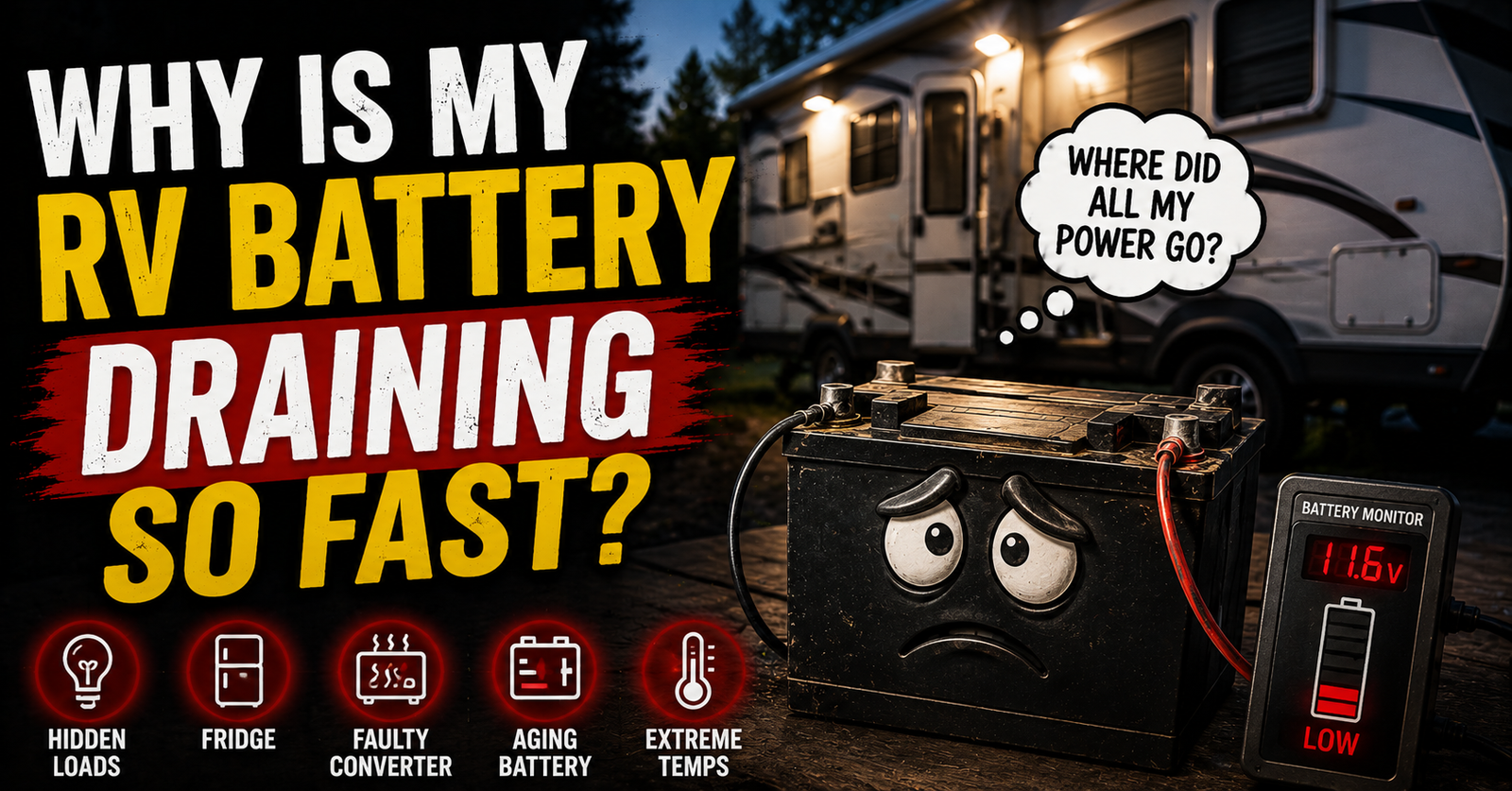
I’ve had enough experience around campers to know that a battery gauge dropping faster than expected will make you start switching things off in a hurry. The frustrating part is that the biggest drain isn’t always something obvious like a bunch of lights. Sometimes it’s a furnace blower cycling in the background, an inverter you forgot was on, a battery that doesn’t have nearly the capacity it used to, or a charging problem that started long before you noticed the battery getting low. If the problem keeps returning, RV battery keeps going dead may help you separate normal power use from charging or battery faults.
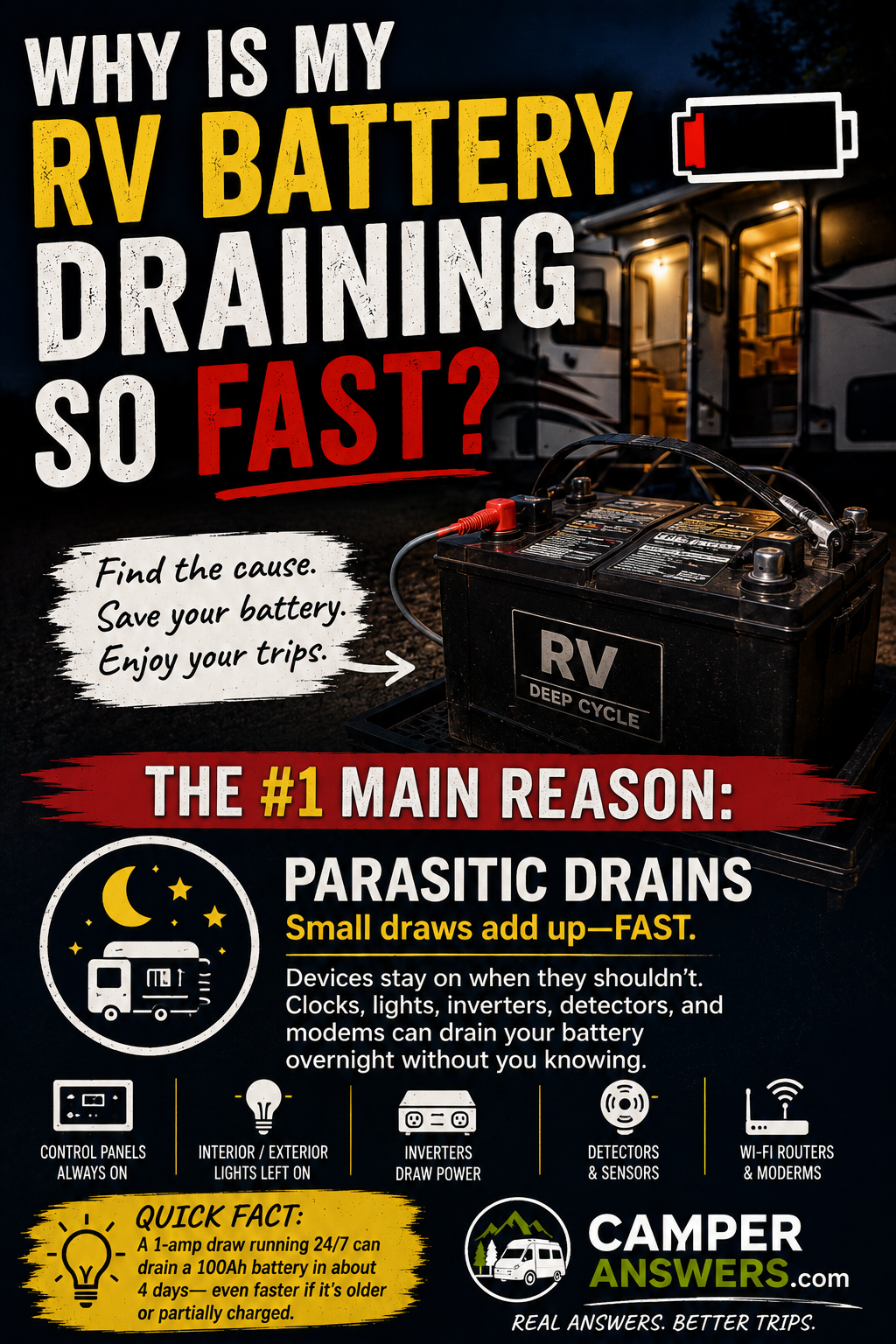
If your RV battery is draining fast, I wouldn’t buy another battery until I know where the power is going. A healthy battery can still drain quickly if you’re asking too much from it, and a weak battery can make perfectly normal RV power use look excessive.
There’s also a third possibility I see people overlook all the time: the battery wasn’t as fully charged as they thought it was to begin with.
Those three possibilities give us a much better place to start.
First, How Fast Is “Too Fast”?
Before hunting for a mysterious electrical problem, I like to get specific about what the battery is actually doing.
Did it go from fully charged to nearly dead in two hours?
Does it last through the afternoon but struggle overnight?
Does it drain only when you’re camping without hookups?
Does it lose power while the RV is sitting unused?
Does it seem fine until the furnace starts running?
Does it drain even while you’re connected to shore power?
Those aren’t small details. They’re completely different clues.
A battery that struggles only during cold nights makes me think about different things than one that dies in storage.
A battery that drains while plugged into campground electricity gives us an entirely different path to follow.
Before touching a wire, figure out when the fast drain happens.
Your RV Uses 12-Volt Power in More Places Than You Might Think
One of the biggest adjustments when you start learning RV electrical systems is realizing that “everything is off” rarely means absolutely everything is disconnected from the battery.
There are obvious 12-volt loads.
Lights are easy to understand.
The water pump is obvious because you can hear it.
Vent fans are easy to notice.
Then there are all the less obvious things scattered throughout the camper.
Depending on your RV and equipment, detectors, appliance control boards, monitoring equipment, entertainment systems, relays and other electronics may use DC power.
Some use very little.
But little loads add up, especially when they run all day and all night.
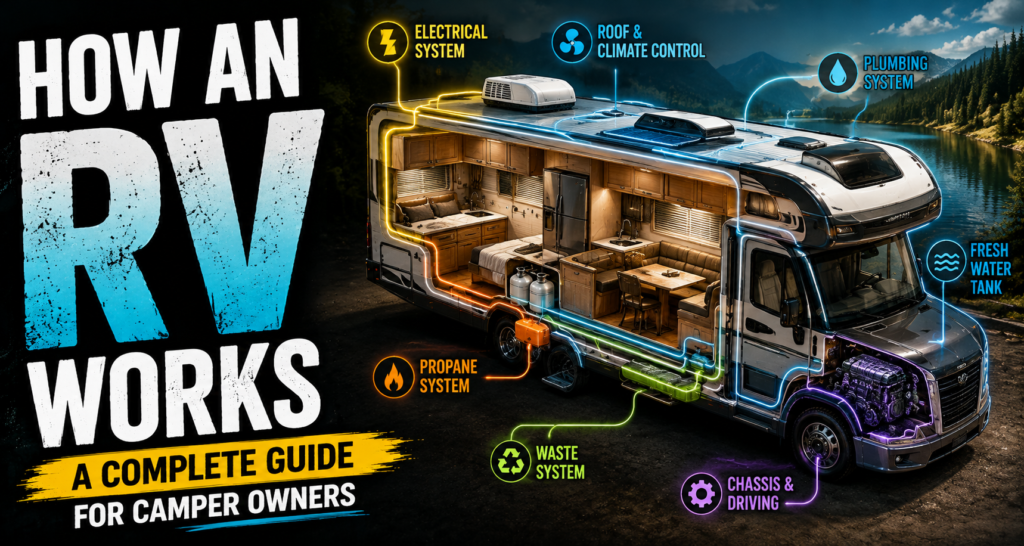
If you’re new to the electrical side of campers, it helps to understand how the different RV power systems work togetherbefore trying to diagnose everything as one electrical system.
Your battery isn’t necessarily powering the whole camper directly, but it’s involved with more equipment than many new owners realize.
The Furnace Is One of My First Suspects in Cold Weather
If someone tells me, “My battery was doing fine until it got cold outside,” I’m asking about the furnace pretty quickly.
RV furnaces commonly burn propane to make heat, but that doesn’t mean they’re free from an electrical standpoint.
The blower needs 12-volt power.
So do the controls.
Every time the furnace cycles, you’re pulling energy from the house battery if another source isn’t supplying the 12-volt system.
Now picture a cold night.
The furnace starts.
It runs.
It shuts down.
The camper cools.
It starts again.
Repeat that for eight hours.
Suddenly a battery that lasted a long time during a mild fall weekend seems terrible in January.
Nothing necessarily failed. Your power consumption changed.
An Inverter Can Be a Sneaky Battery Hog
This is another place I’d look early, especially in a camper with a larger electrical system.
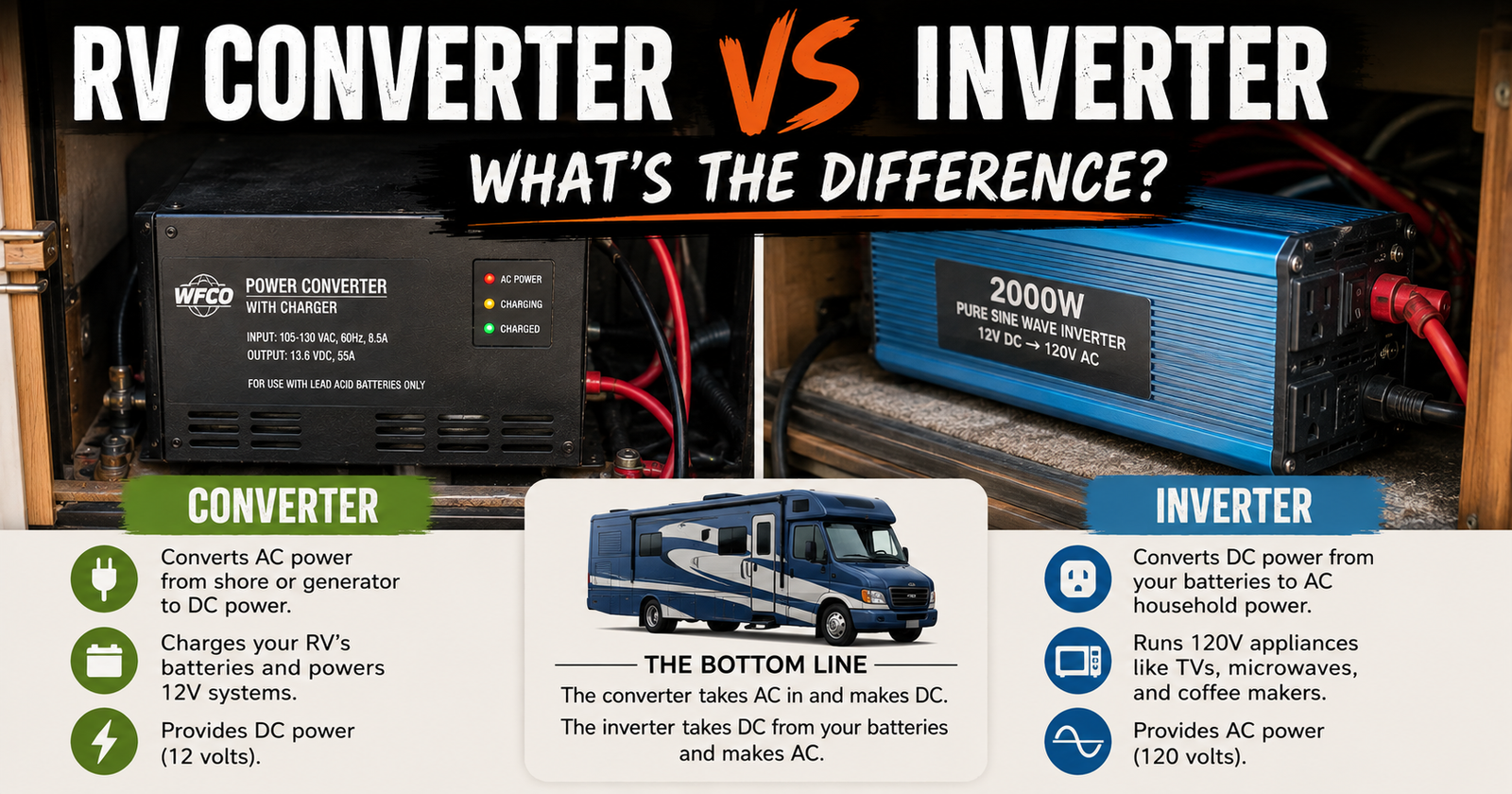
An inverter lets you use battery energy to supply certain 120-volt AC loads. That distinction between battery-to-AC and shore-power-to-DC conversion is explained in battery energy.
That’s incredibly convenient.
It’s also easy to forget where that electricity is coming from.
When you’re plugged into shore power, turning on a television or plugging something into an outlet doesn’t make you think much about battery capacity.
When an inverter is supplying that power, every watt ultimately has to come from the battery bank.
And the inverter itself isn’t perfectly efficient.
Even with very little plugged into it, an inverter may consume some power simply by being on, depending on the model and operating mode.
That’s why I don’t leave an inverter running unnecessarily when I’m trying to stretch battery life.
The Device Plugged Into the Inverter Might Be the Real Problem
Sometimes owners blame the inverter when the inverter is simply doing what it was asked to do.
Look at what’s connected to it.
A television?
Coffee maker?
Residential refrigerator?
Laptop chargers?
Entertainment equipment?
Microwave?
CPAP machine?
Something else?
AC appliances can consume dramatically different amounts of energy.
A large battery bank with a substantial inverter can make an RV feel almost like it’s connected to shore power, but the energy still isn’t unlimited.
High-wattage loads can chew through stored battery energy much faster than people expect.
A Residential Refrigerator Changes the Battery Equation
This deserves special attention because more RVs now have residential-style compressor refrigerators.
An absorption refrigerator and a residential refrigerator don’t necessarily place the same demands on an off-grid electrical system.
A residential refrigerator needs electricity to operate.
If you’re away from shore power and an inverter is supplying that refrigerator, the battery bank is supporting that load throughout the day and night.
That doesn’t mean residential refrigerators are bad.
It means the RV needs an electrical system designed around the way the refrigerator is being used.
If your battery drain suddenly seems excessive after changing refrigerators or changing how you camp, don’t overlook one of the largest appliances in the coach.
Even a Propane Refrigerator Can Still Use Electricity
Here’s the opposite misconception.
Someone switches an absorption refrigerator to propane and assumes the refrigerator is now completely disconnected from the battery.
Not necessarily.
Many RV appliances still need 12-volt electricity for controls even when propane supplies the heat.
The same general idea applies to other propane appliances.
This usually isn’t the kind of enormous load that single-handedly kills a large healthy battery bank in an hour, but it contributes to the total.
When you’re trying to understand battery life, every continuous load belongs in the calculation.
Your Water Pump Isn’t Usually Running Constantly, but It Still Counts
The water pump is an intermittent load.
It runs when the fresh-water plumbing needs pressure and stops once the system reaches the appropriate pressure.
Under normal use, that means the pump runs when you’re washing dishes, showering, flushing the toilet or otherwise using water from the onboard tank.
If your pump starts running when nobody is using water, though, that’s worth investigating for plumbing reasons as well as electrical ones.
A pump that cycles unnecessarily is consuming battery energy every time it runs.
One short cycle isn’t going to destroy your battery life, but repeated cycling is another load that shouldn’t be there.
Tank Heaters Can Use a Surprising Amount of Energy
Cold-weather campers should pay particular attention to tank heaters and other heating equipment.
Unlike a tiny detector or control board, an electric heating element can represent a meaningful load.
If your RV has tank-heater switches, check them.
Don’t assume someone else turned them off.
This is one of those things that’s easy to overlook because you can’t necessarily hear it operating from across the camper.
If the battery suddenly started draining faster after preparing the RV for freezing weather, I’d walk through every cold-weather feature you’ve turned on.
Lights Aren’t Always the Main Culprit Anymore
Older incandescent RV lighting could represent a noticeable electrical load.
Modern LED lighting is generally much easier on the battery.
That’s good, but it can also send owners looking in the wrong direction.
Turning off two LED ceiling lights while leaving a substantial inverter load running isn’t going to transform your battery life.
Don’t focus exclusively on what you can see.
The quiet equipment can be using far more energy.
USB Chargers and Electronics Still Count
A phone charger by itself probably isn’t the reason a healthy, appropriately sized RV battery dies absurdly fast.
But RVs accumulate electronics.
Phones.
Tablets.
Cameras.
Portable speakers.
Laptops.
Wi-Fi equipment.
Cellular equipment.
Televisions.
Streaming devices.
Security cameras.
All those conveniences have to get their electricity somewhere.
For occasional campground campers, it may not matter much.
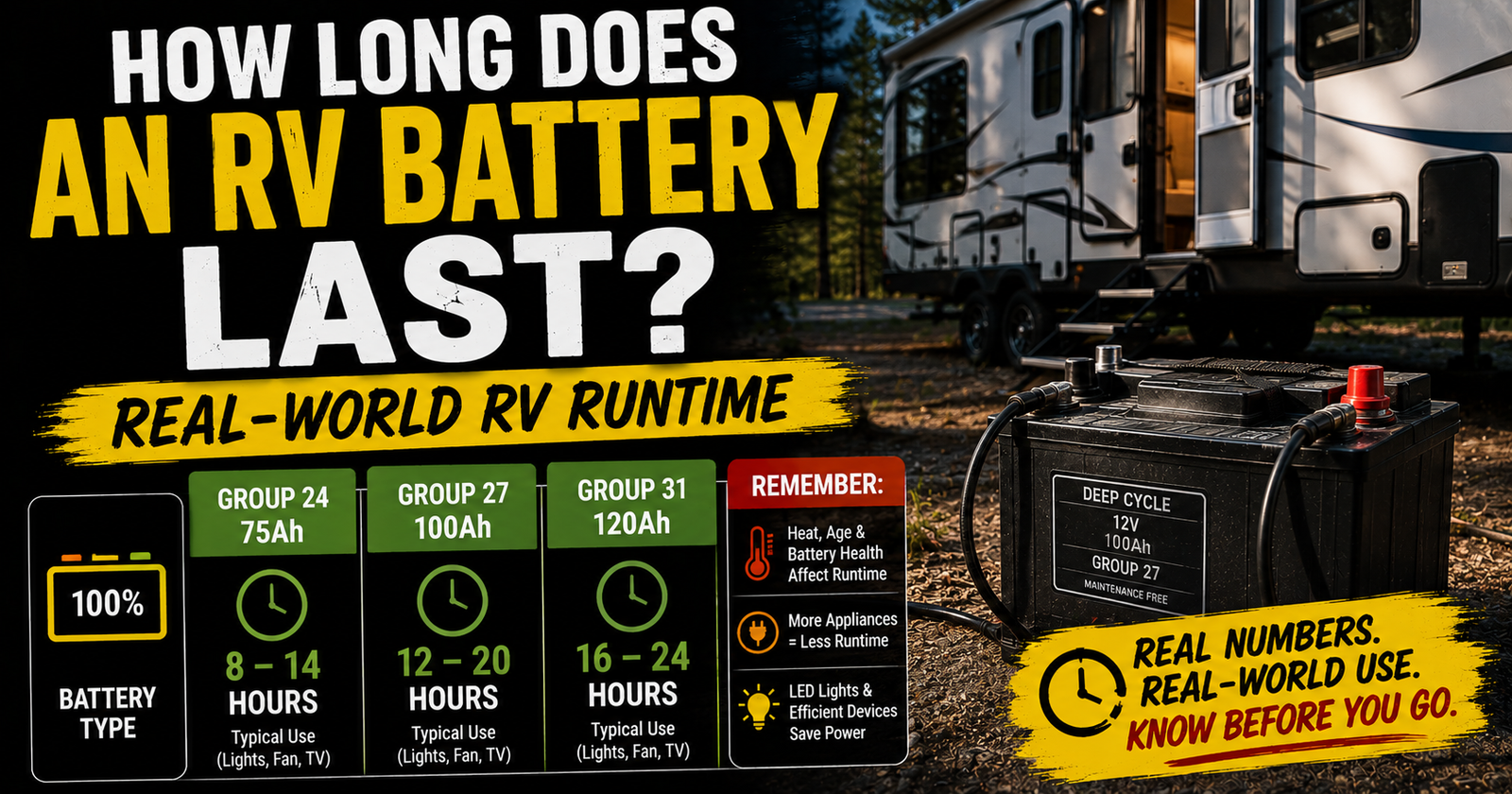
For someone trying to spend several days off-grid, understanding the combined daily consumption becomes much more important. Estimating combined daily consumption helps show how long the available battery capacity may actually last.
Your Battery May Be Smaller Than Your Camping Style Requires
This is where the problem sometimes isn’t really a problem at all.
The battery system may be functioning correctly.
It just isn’t large enough for what you’re asking it to do.
A single modest house battery might work fine for someone who drives to a full-hookup campground, plugs in immediately and stays connected until departure.
Take that same setup boondocking and suddenly every amp-hour matters.
Add furnace use, fans, water pumping, appliance controls, electronics and inverter loads, and the available capacity can disappear much sooner than expected.
That’s not necessarily parasitic drain.
That’s consumption.
There’s a big difference.
Amp-Hours Make Battery Capacity Easier to Understand
RV battery capacity is commonly discussed in amp-hours, although watt-hours can be especially useful when comparing energy consumption across different voltages and inverter loads.
You don’t need to become an electrical engineer to understand the basic idea.
Your battery bank contains a finite amount of usable energy.
Your RV consumes energy over time.
If you consume more than you replace, the battery state of charge goes down.
If you repeatedly use substantially more overnight than your solar system replaces the next day, you’ll eventually run out regardless of how expensive the batteries are.
That’s why understanding consumption is so much more useful than staring at a battery icon.
Battery Chemistry Changes How Much Capacity You Can Actually Use
A 100Ah battery label doesn’t tell the entire story by itself.
Battery chemistry matters.
Flooded lead-acid, AGM and lithium batteries have different operating characteristics, charging requirements and recommended discharge behavior.
You shouldn’t assume that two batteries with the same advertised amp-hour capacity will be used or managed identically.
This is particularly important when comparing an older lead-acid setup with a newer lithium installation.
Follow the battery manufacturer’s specifications for usable capacity, charging and operating limits.
An Old Battery Can Fool You
This is one of the reasons I don’t like diagnosing battery problems from voltage alone.
An aging battery may still charge to a voltage that looks encouraging.
Then you start using it and the voltage falls much faster than expected.
The problem isn’t necessarily that the camper suddenly developed a huge electrical load.
The battery may simply have much less usable capacity than it had when it was new.
Think of it like a fuel tank that somehow shrank over the years.
The gauge can say full, but there’s less fuel available than you remember.
Repeated Deep Discharge Can Hurt Some Batteries
How a battery has been treated matters.
For example, lead-acid batteries can lose capacity when they’re repeatedly left discharged or inadequately recharged.
Progressive Dynamics specifically notes that discharged lead-acid batteries should be recharged promptly because sulfation can eventually reduce battery capacity.
So if the battery has spent months repeatedly going dead and sitting that way, today’s poor runtime may be the result of yesterday’s treatment.
Replacing the battery can restore capacity, but only if you also fix whatever caused the repeated discharge.
Your Battery Might Not Be Fully Charging Between Uses
This is a huge one.
A battery that starts at 60 percent and drops to 20 percent looks like it lost 80 percent of its charge if you assumed it started full.
It didn’t.
It lost 40 percentage points.
Your starting assumption was wrong.
That’s why fast battery drain and charging problems are closely connected.
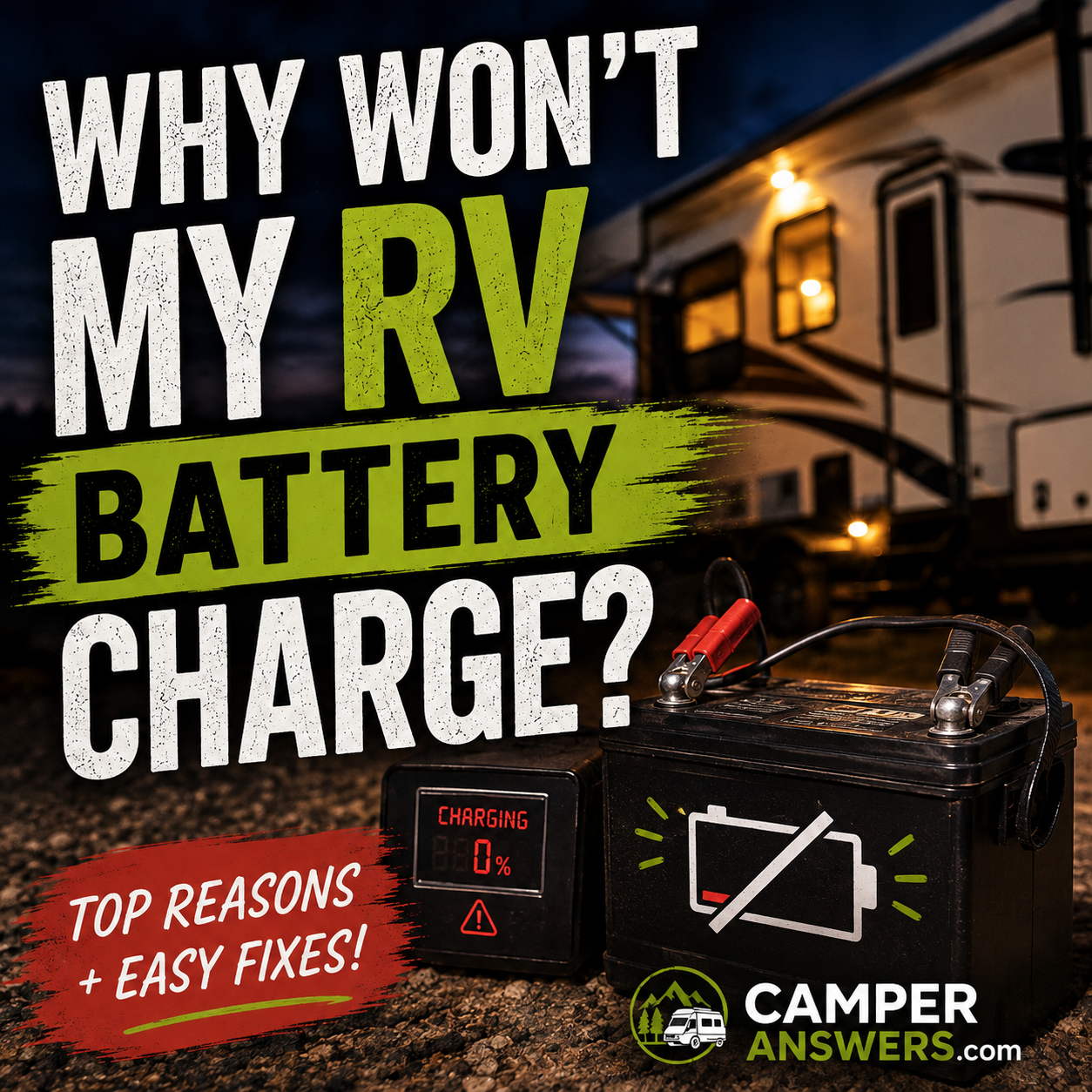
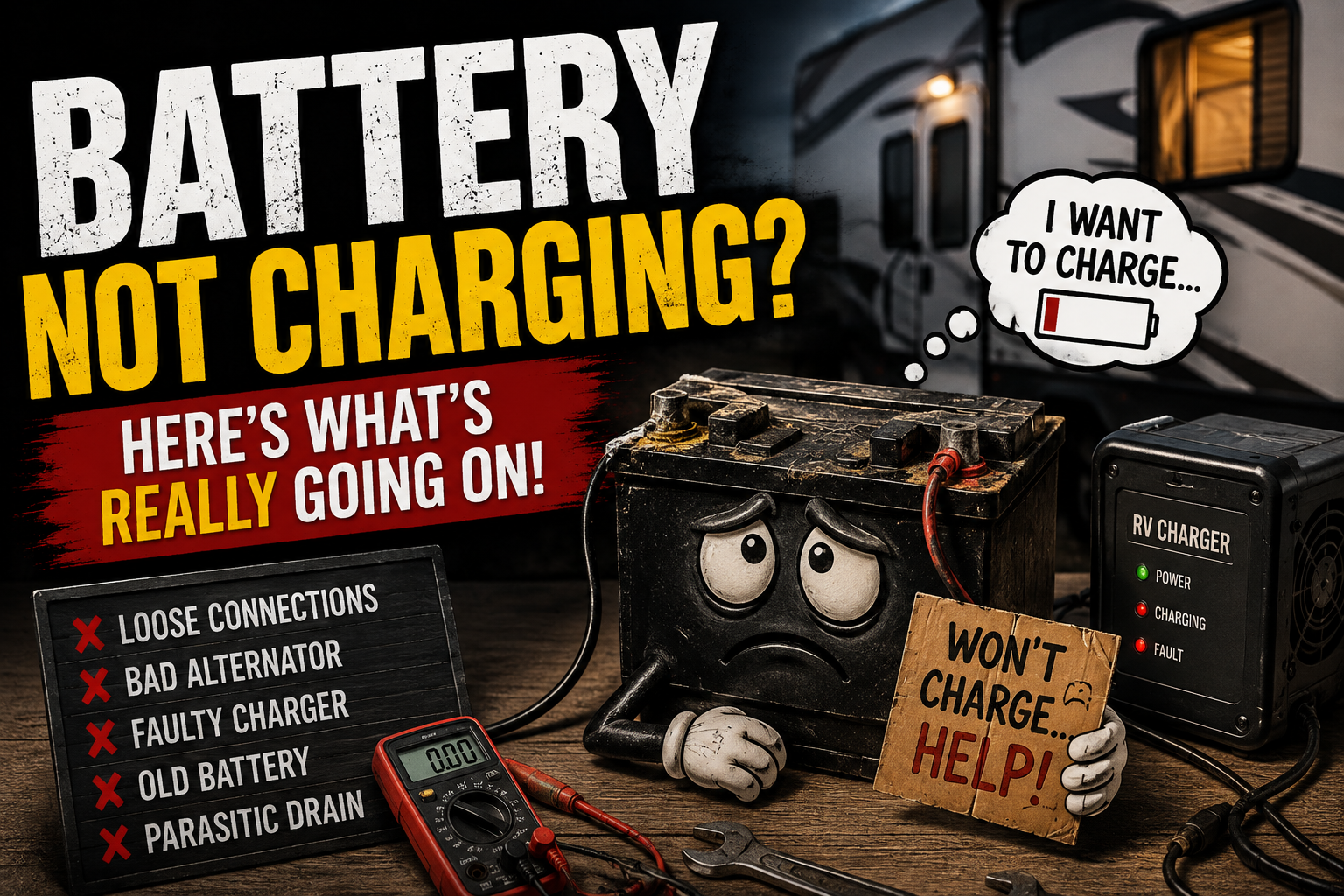
If you have any doubt that the battery is actually reaching a proper charge, I’d work through why the RV battery isn’t charging normally before spending too much time searching for phantom loads.
You can’t accurately judge runtime if you don’t know the battery’s starting condition.
Being Plugged In Doesn’t Guarantee the Battery Is Charging
This surprises a lot of RV owners.
You can have the shore-power cord plugged into the pedestal while the battery continues losing energy.
A breaker can be tripped.
The converter can lose AC input.
A fuse or breaker in the charging circuit can open.
The battery disconnect can be involved.
A connection can be bad.
The converter or inverter/charger can fail.
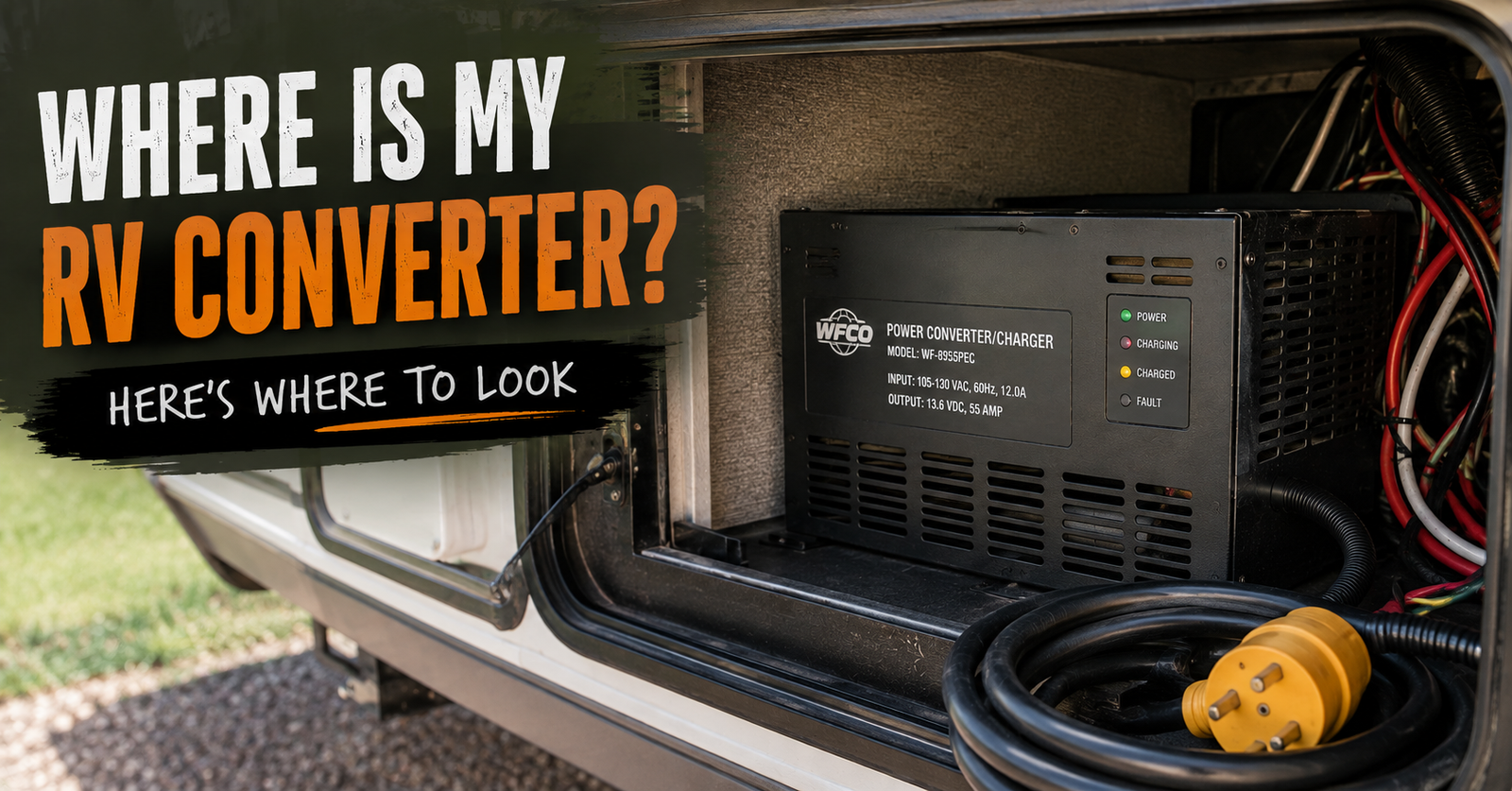
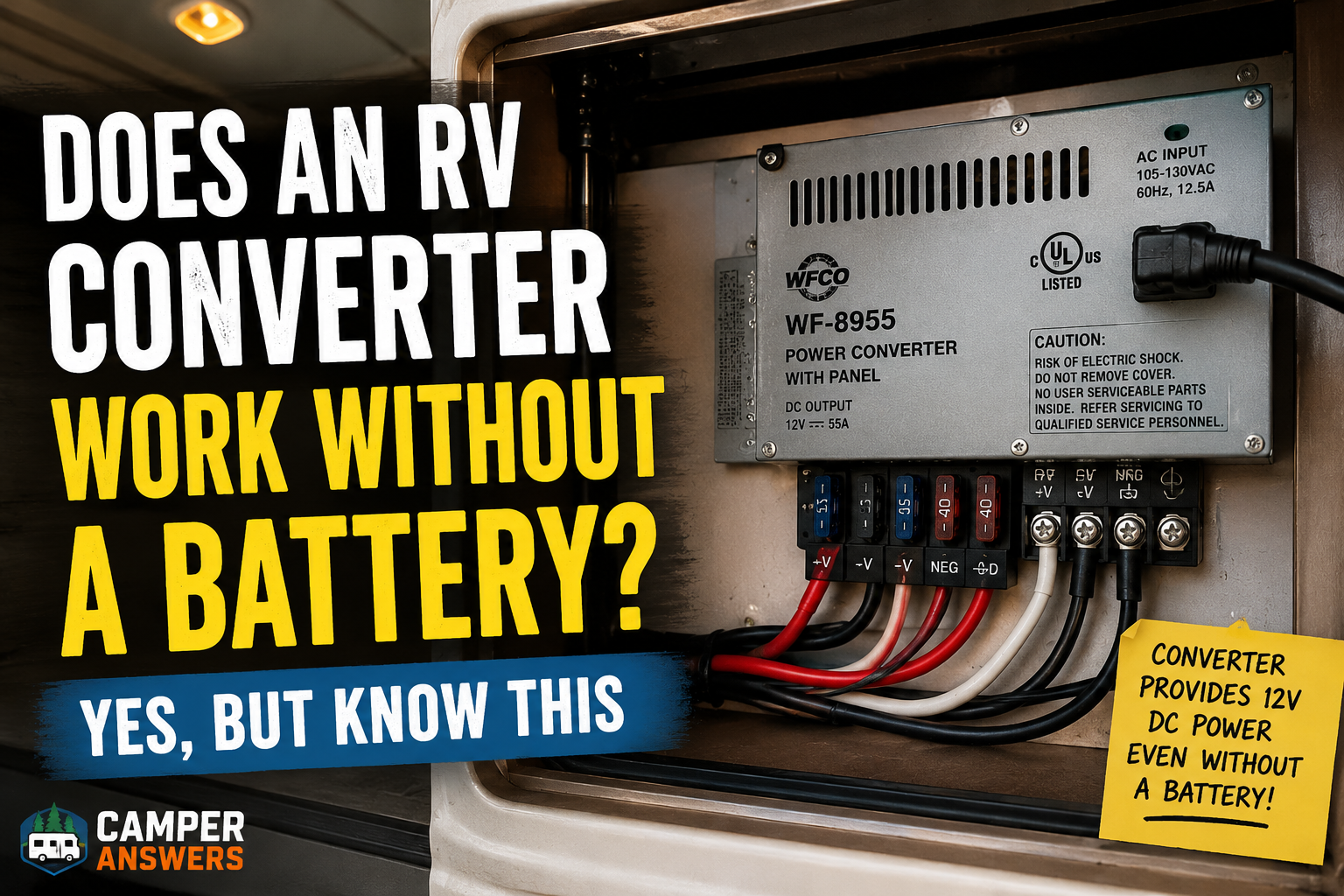
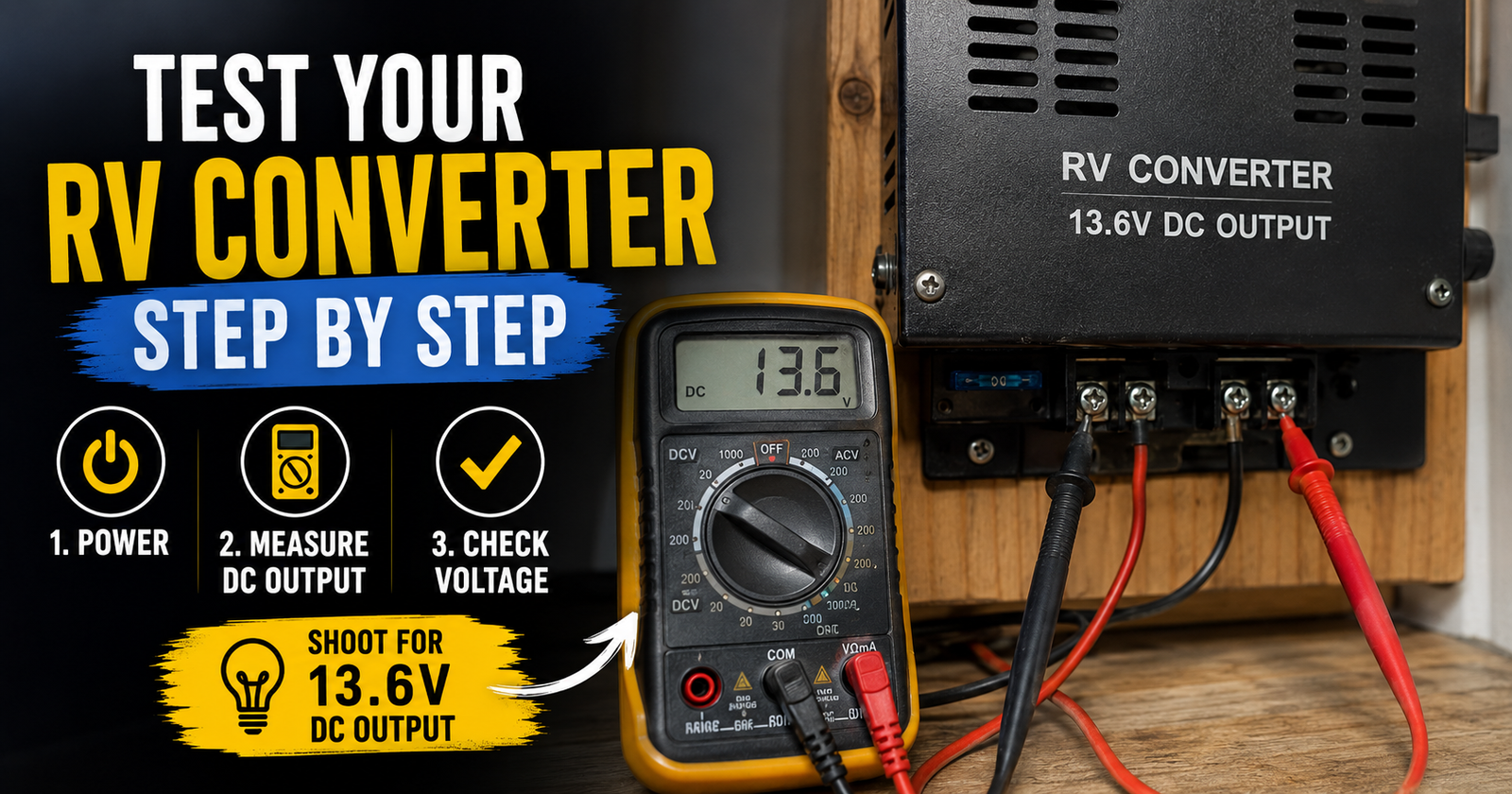
Progressive Dynamics’ own converter troubleshooting guidance specifically directs owners to verify converter output and check the fuse or breaker in the battery positive lead when the converter tests properly but the battery isn’t charging. If you need to inspect that equipment first, the most common places RV manufacturers hide the converter can narrow the search.
So don’t let the cord hanging from the side of the camper convince you charging is happening.
If the Battery Drains While Plugged In, Treat That as a Different Clue
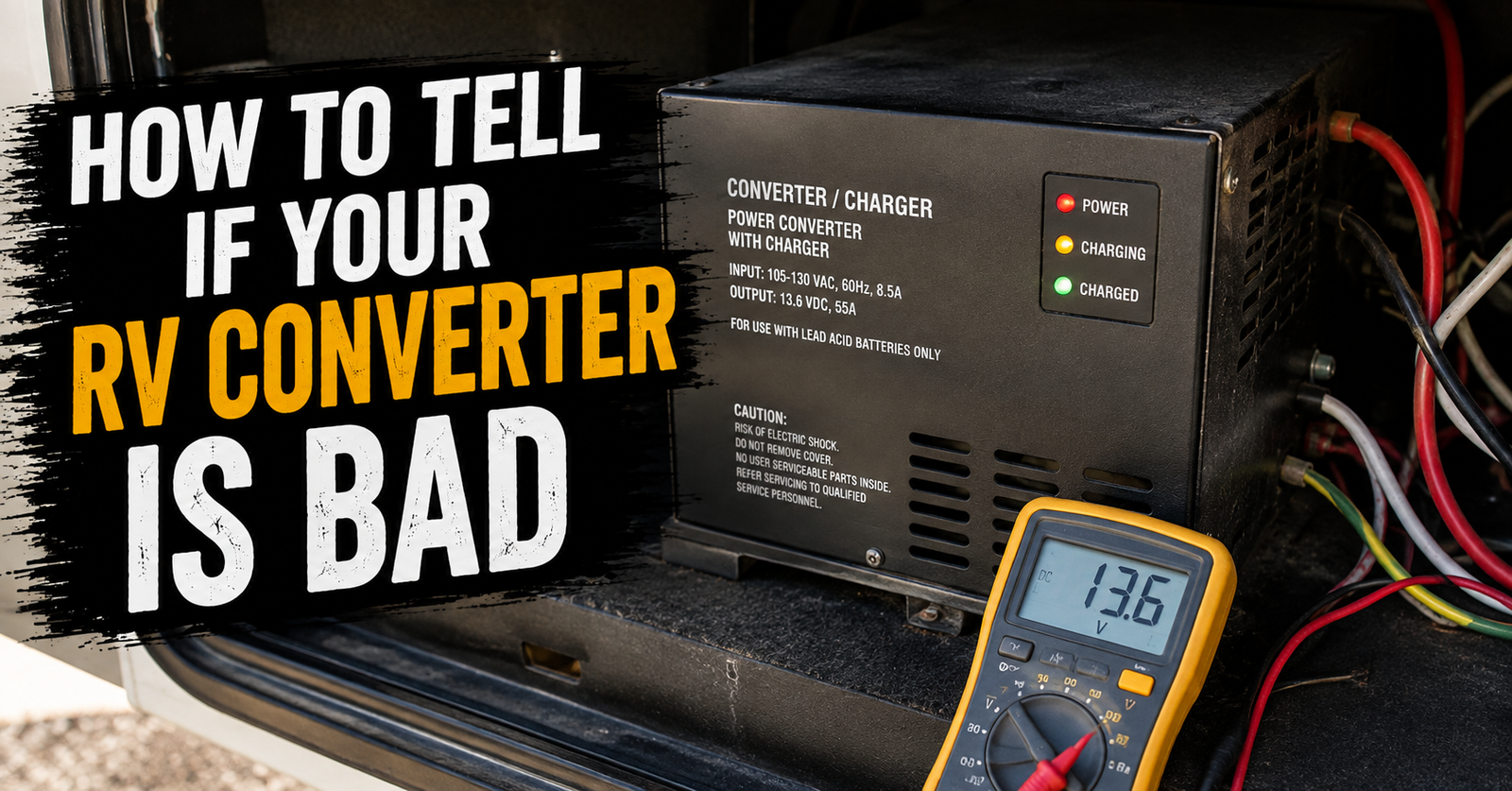
When a battery loses power while the RV is connected to shore power, I stop thinking only about battery capacity and start looking much harder at the charging system. A useful next step is to diagnose a bad RV converter before deciding that the battery itself is the problem.
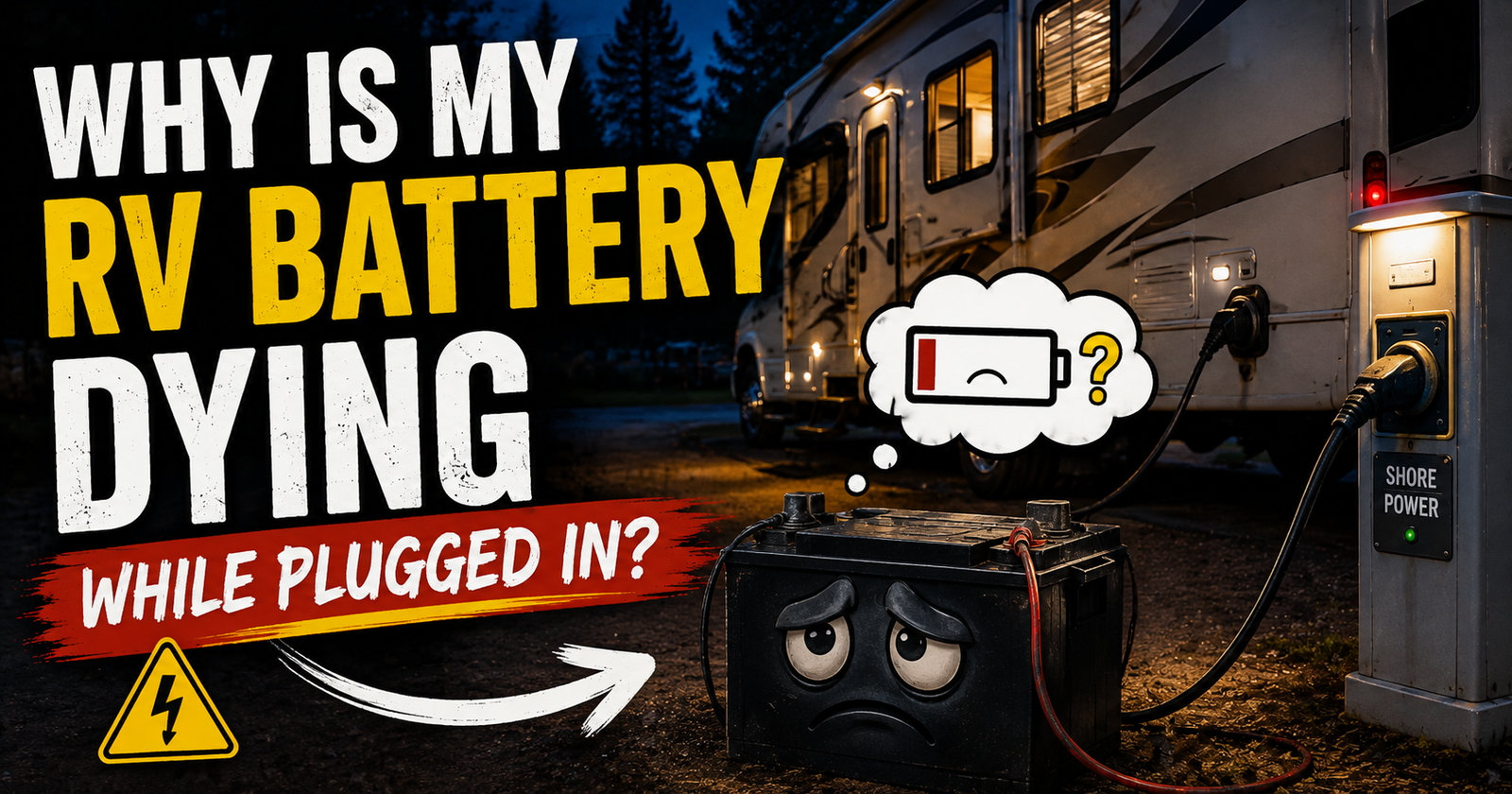
We’ve put together a separate walkthrough for an RV battery that keeps dying even while the camper is plugged inbecause that symptom deserves its own diagnostic path.
A battery draining during two days of boondocking and a battery draining at a full-hookup campsite might end with the same dead battery.
They don’t necessarily begin with the same problem.
Solar Can Hide Your True Power Consumption
Solar makes battery troubleshooting more interesting because the battery can be charging and discharging throughout the same day.
Imagine your RV is consuming four units of energy while the solar system is replacing three.
The battery is still losing energy, just more slowly.
You might look at the solar controller, see charging current and think everything is keeping up.
It isn’t.
Once the sun gets low, solar production drops and your true overnight consumption becomes much more obvious.
This is why I like looking at energy use over an entire day rather than judging a solar system from a sunny five-minute snapshot.
Shade Can Change Solar Production Fast
A beautiful solar array doesn’t help much if the panels aren’t receiving enough useful sunlight.
Trees, neighboring RVs, roof equipment, clouds and the sun’s angle can all influence production.
The exact effect depends on the solar setup.
If your battery performs wonderfully in one campsite and struggles in another despite similar electrical use, look up.
Your campsite may be part of the difference.
Short Winter Days Can Change the Math
Winter can hit an off-grid battery system from both directions.
You may consume more electricity because the furnace runs more.
At the same time, there can be fewer useful solar-production hours.
Now the battery is being asked to do more while potentially receiving less replacement energy.
That’s why a setup that feels almost unlimited during a sunny summer trip can seem completely different during cold-weather camping.
A Parasitic Draw Is Different From Normal Consumption
People use “parasitic draw” to describe almost any battery drain they don’t understand.
I like to be more precise.
Your RV is expected to consume some electricity when certain equipment remains connected.
That’s normal consumption.
An abnormal draw is something using power when it shouldn’t or consuming considerably more than expected.
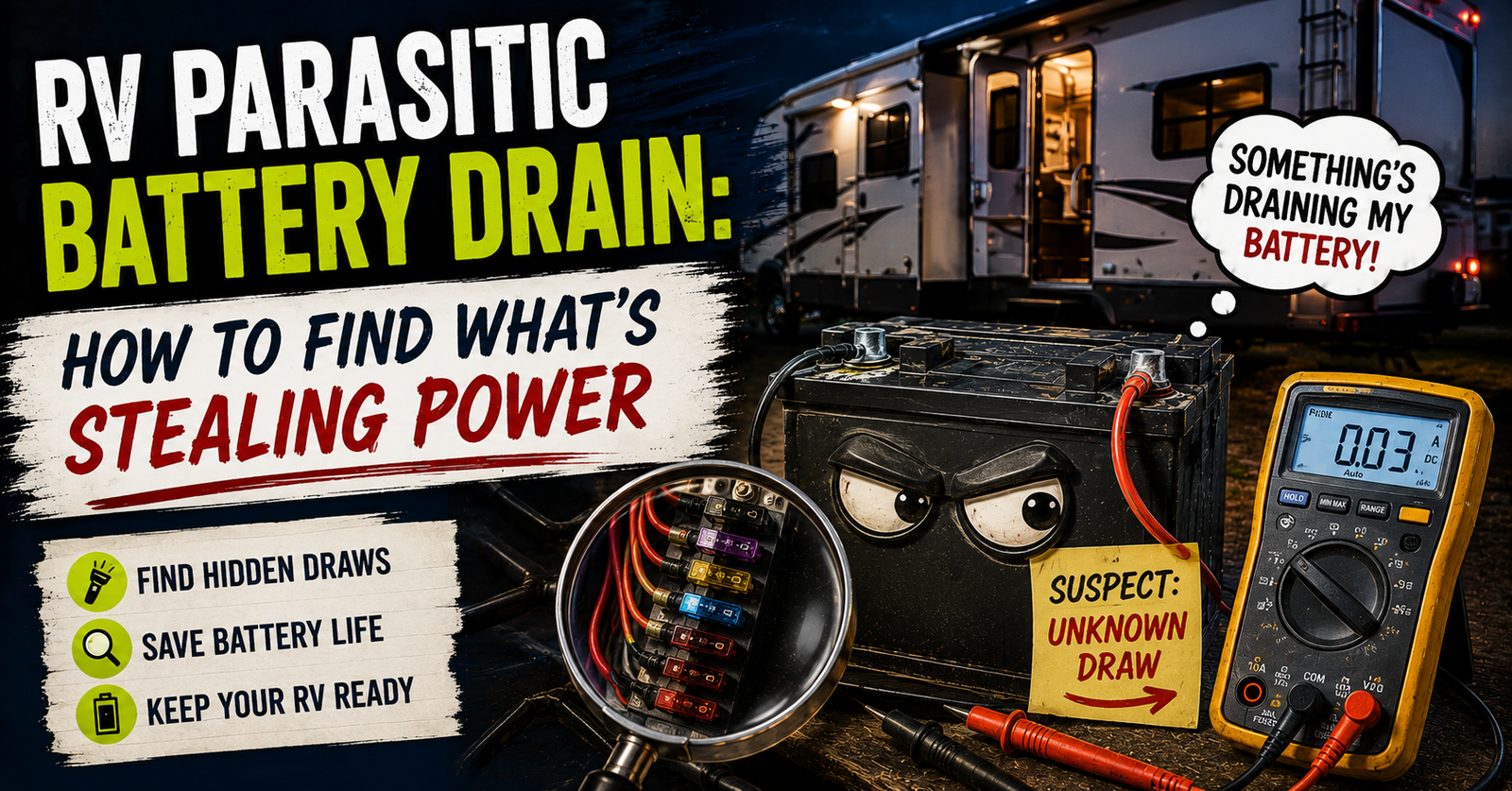
The distinction matters because you don’t want to spend three days hunting for a “short” only to discover that every milliamp you’re measuring belongs to equipment designed to remain powered. When the draw may be normal standby consumption rather than a short, equipment designed to remain powered explains how to separate expected loads from an actual problem.
Why RV Batteries Drain During Storage
Storage is where tiny loads become important.
A load that’s almost irrelevant over one night can matter after several weeks.
Detectors, electronic controls and other connected equipment can gradually discharge a battery if the RV isn’t receiving charging support.
Battery self-discharge can also matter, with behavior varying by battery type and conditions.
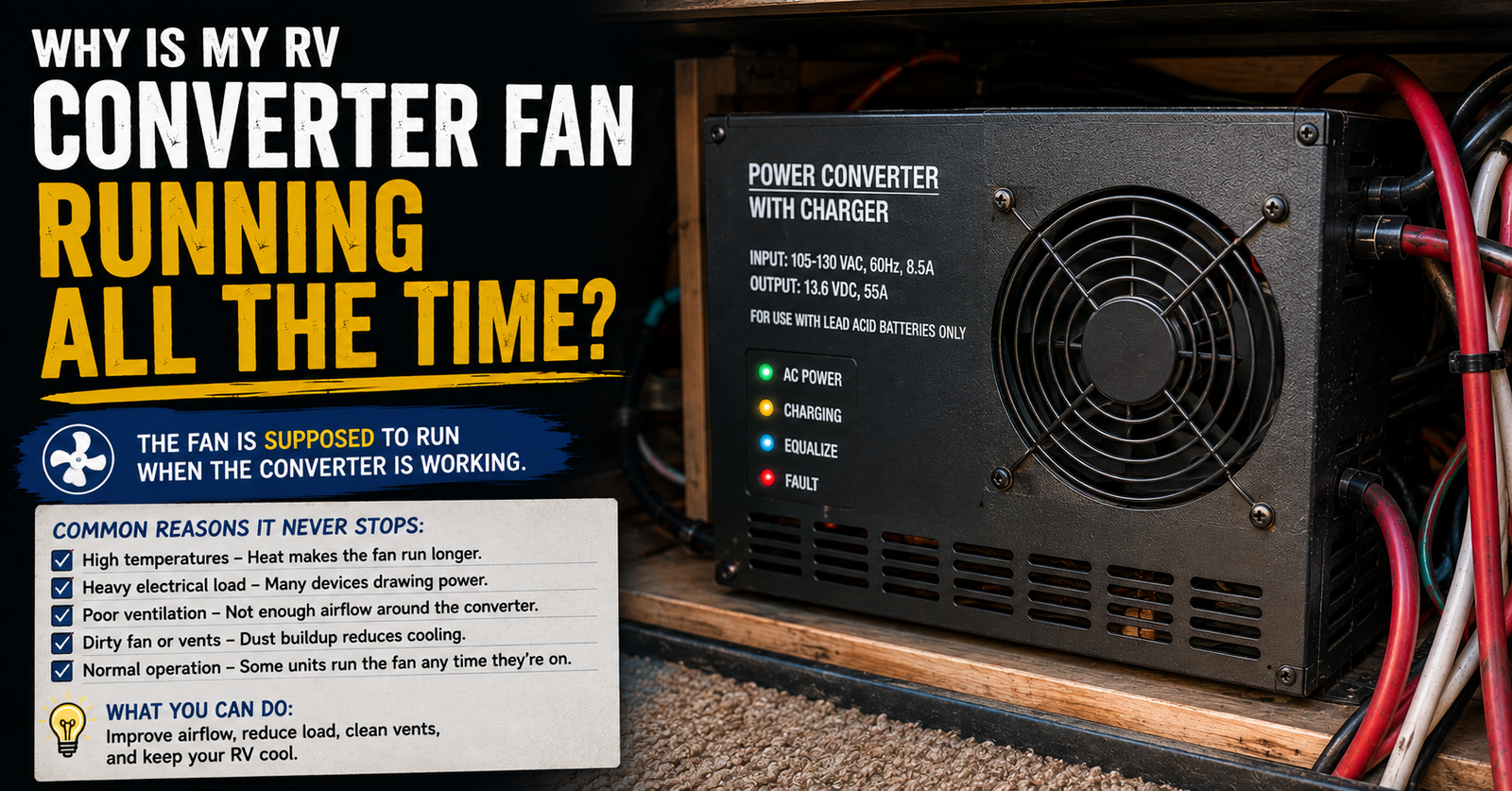
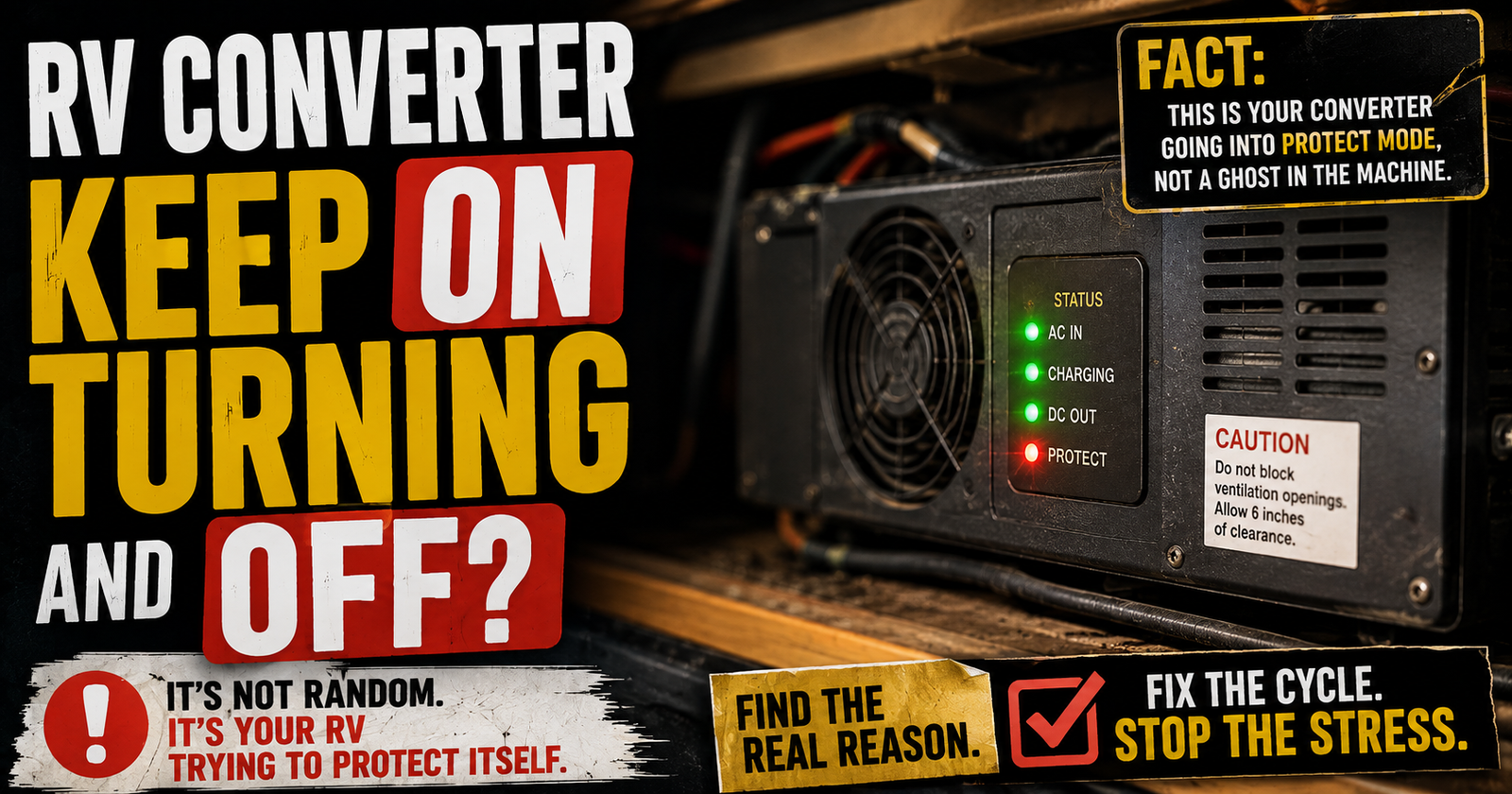
If the battery is fine during camping but repeatedly dead after sitting, that’s a completely different pattern from a battery that can’t survive six hours of normal use. When charging behavior seems tied to the battery problem, the converter fan can offer an additional diagnostic clue in converter fan and battery discharge clues.
Your Battery Disconnect Might Not Shut Off Everything
I wish the words “battery disconnect” always meant “absolutely nothing remains connected.”
RV electrical systems aren’t always that simple.
Depending on the camper and installation, some equipment can remain connected outside the primary disconnect arrangement.
Progressive Dynamics’ explanation of certain older converter systems even shows isolated circuits that remain directly tied to the battery side of the system, which is a good reminder that RV wiring arrangements vary.
The only way to know what your disconnect actually isolates is to understand your specific RV.
Aftermarket Accessories Are Worth Investigating
If battery life changed after adding something, I start there.
A new inverter.
Stereo.
Backup camera.
Cellular booster.
Solar controller.
Battery monitor.
Security system.
USB outlets.
Lighting.
Heated equipment.
Anything added to the 12-volt system can change consumption or introduce a wiring problem.
I’m especially suspicious when the timeline is obvious.
Battery worked fine.
Accessory installed.
Battery starts draining.
That doesn’t prove the accessory is responsible, but I’d investigate it before tearing apart equipment that’s worked correctly for years.
Look for Something That’s Warm When It Shouldn’t Be
Unexpected heat can sometimes be a clue that electrical energy is being consumed or that a poor connection is creating resistance.
But use common sense here.
Don’t start touching exposed electrical terminals looking for something hot.
Don’t open energized equipment you aren’t qualified to work on.
I’m talking about noticing abnormal heat around accessible equipment, wiring or connections that should not normally be hot.
A hot battery cable connection, melting connector or burning smell is a reason to stop using the system and investigate safely, not an invitation to keep camping until something fails completely.
Loose Connections Can Create Strange Battery Symptoms
Not every battery problem is caused by excessive consumption.
Loose or corroded connections can interfere with charging and power delivery.
You can end up thinking the battery drains too fast when the bigger problem is that it never receives a proper recharge.
Inspect accessible battery terminals and connections for obvious looseness, corrosion or damage.
Remember that the negative side matters too.
A circuit needs a complete path.
Check What the Battery Does With the RV Disconnected
When performed safely and appropriately for your battery and RV, isolating the battery from RV loads can help separate a battery problem from an RV-load problem.
If a properly charged battery loses energy unusually quickly even when genuinely isolated from the camper, the battery itself becomes more suspicious.
If it holds its charge while isolated but drains rapidly every time it’s connected to the RV, now the camper’s loads deserve more attention.
The challenge is making sure “disconnected” really means disconnected in your specific setup.
A Battery Monitor Makes This Much Easier
A good battery monitor can take a lot of guessing out of off-grid camping.

Simple voltage displays are useful, but a properly installed shunt-based monitor can show current moving into or out of the battery and track energy use much more meaningfully.
That’s valuable when you’re trying to find a drain.
Turn something on.
Watch what changes.
Turn it off.
Watch again.
You begin learning what your RV actually consumes instead of relying on assumptions.
You Can Learn a Lot by Turning Loads Off One at a Time
If you’re comfortable with basic RV electrical operation, a methodical approach beats randomly unplugging things.
Start with a known battery condition.
Observe the current draw with the equipment normally configured.
Turn off optional loads one at a time.
Watch for meaningful changes.
An inverter that changes consumption substantially when switched off tells you something.
So does a furnace cycle.
So does a tank heater.
You’re building a picture of where your energy goes.
That’s far more useful than declaring that the camper “just eats batteries.”
Circuit-by-Circuit Testing Can Find an Abnormal Draw
When an unexplained drain remains after the obvious loads are eliminated, electrical testing can narrow it further.
A technician can measure current leaving the battery and isolate circuits to determine which branch contains the unexpected load.
This is the proper way to chase a true parasitic draw.
Not pulling random wires.
Not replacing the converter because someone online guessed converter.
Not installing a bigger battery and hoping the problem disappears.
Measure first.
Then narrow it down.
Be Careful Measuring Battery Current
This is one place where a multimeter can get people into trouble.
Current measurement isn’t performed the same way as simply touching meter probes across a battery to read voltage.
Incorrect meter configuration can create a short circuit, blow the meter’s internal fuse or create a dangerous situation.
RV batteries are low voltage, but they can deliver extremely high current.
Progressive Dynamics warns that converter troubleshooting involves dangerous electricity and recommends qualified RV technicians or electricians when the person performing the work doesn’t understand the risks.
If you’re not confident about measuring current, this is a perfectly reasonable job to hand to someone who is.
Check the Battery’s Physical Condition
While you’re investigating the electrical system, actually look at the battery.
A battery that’s swollen, leaking, unusually hot or giving off a concerning odor deserves immediate attention.
With serviceable flooded lead-acid batteries, maintenance requirements can include electrolyte inspection according to the battery manufacturer’s directions.
Different battery types have different maintenance requirements.
Never open or service a sealed battery simply because you saw instructions written for a different type.
If the Battery Drains Fast Only Overnight
That’s a pattern worth using.
Think about what changes after dark.
Solar production disappears.
Lights stay on longer.
The furnace may cycle more.
Televisions and electronics may be used during the evening.
People charge devices.
Outdoor temperatures fall.
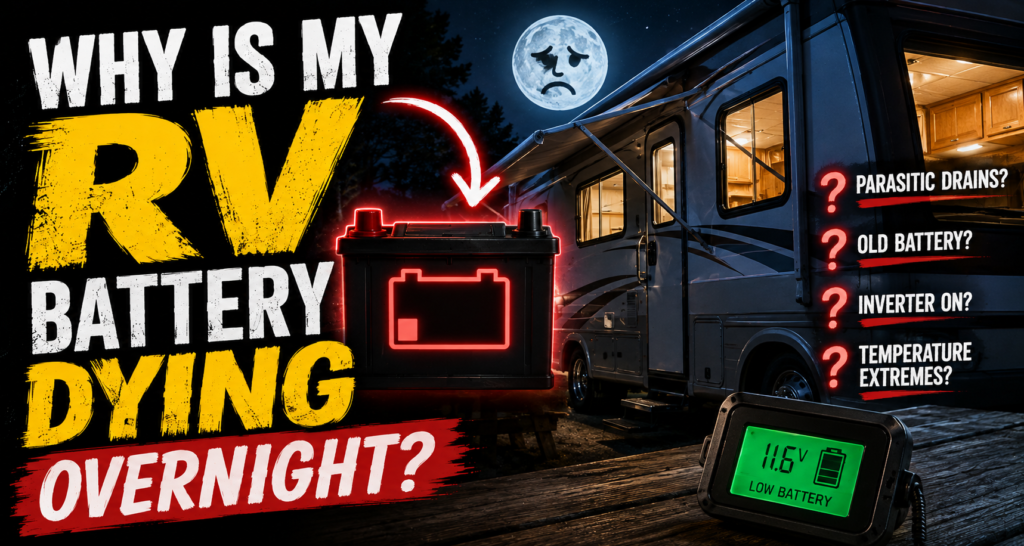
If nighttime is consistently when your problem happens, our deeper guide to why an RV battery dies overnight focuses specifically on that situation.
The timing itself can point you toward the answer.
If It Drains Fast Only When Boondocking
This often points toward capacity and energy use rather than a mysterious failure.
At a campground with shore power, the converter or inverter/charger can continually support the 12-volt system and replenish the battery.
Unplug and that safety net disappears.
Now you discover what your camper really consumes.
If the battery lasts about as long as its capacity and your measured loads suggest it should, you may not have a fault at all.
You may need to reduce consumption, increase usable battery capacity, improve charging capability or some combination of those.
If It Drains Fast Even on Shore Power
Now I’m much less interested in whether you left an LED light on.
The charging system should normally be helping support the DC system while appropriate shore power is available.
Verify that shore power is actually present.
Verify the charger receives AC power.
Check the appropriate breakers and protection devices.
Confirm the converter or inverter/charger is operating.
Determine whether charging voltage reaches the battery.
This is a charging-system problem until testing tells us otherwise.
If It Drains Fast After You Installed Lithium Batteries
Don’t immediately blame lithium.
Start by checking the conversion.
Is the charging equipment compatible?
Are the settings correct?
Is the battery management system behaving normally?
Were wiring changes made?
Was an inverter added at the same time?
Did your camping habits change because you suddenly had more usable battery capacity?
Sometimes the battery upgrade gets blamed for a problem introduced elsewhere during the project.
If a Brand-New Battery Drains Fast
A new battery doesn’t get a free pass, but I’d be careful about condemning it immediately.
Ask whether the old battery had the same problem.
If yes, that’s a huge clue.
Two batteries showing the same symptom often makes me look harder at the RV.
Check charging.
Check loads.
Check wiring.
Check connections.
Confirm the replacement battery is appropriate for the system.
Replacing battery number two without answering those questions isn’t troubleshooting.
If Two Batteries Drain Fast
More batteries give you more capacity, but they don’t fix an abnormal load.
If something is drawing power continuously, adding another battery may simply make it take longer before everything goes dead.
That’s useful if the system was merely undersized.
It’s not a repair if something is wrong.
I want to know whether the batteries are being consumed at a reasonable rate before deciding the answer is more capacity.
Don’t Trust the Little Battery Icon Too Much
Many factory RV battery indicators are better at giving you a rough idea than telling you exactly how much usable energy remains.
Voltage also changes with charging and load conditions.

A monitor can show “full” while charging voltage is present and then fall once the charger is removed. That change makes charging voltage and resting voltage useful before deciding whether the battery is actually failing.
That’s one reason people swear their battery went from full to low incredibly fast.
It may never have been as full as the display made it appear.
Here’s How I’d Approach a Fast-Draining RV Battery
I start with the pattern.
When does it drain?
Then I establish whether the battery is actually starting from a proper charge.
Next I look at the big loads.
Furnace.
Inverter.
Residential refrigerator.
Tank heaters.
Fans.
Added electronics.
Then I look at battery capacity and condition.
After that, I verify charging performance.
If the numbers still don’t make sense, that’s when an actual current-draw test becomes valuable.
This order keeps me from spending hours chasing tiny standby loads while a 1,500-watt appliance is running through the inverter.
When I Start Suspecting the Battery
The battery itself moves higher on my list when it won’t hold charge while properly isolated, loses voltage unusually quickly under a reasonable load, has substantially reduced tested capacity, has a history of deep discharge or shows physical signs of deterioration. Those signs make it worth taking the next step to test whether the battery is actually bad.
Age matters, but performance matters more.
I’ve seen old batteries that still did their job and newer batteries that had problems.
Test what you actually have.
When I Start Suspecting the Camper
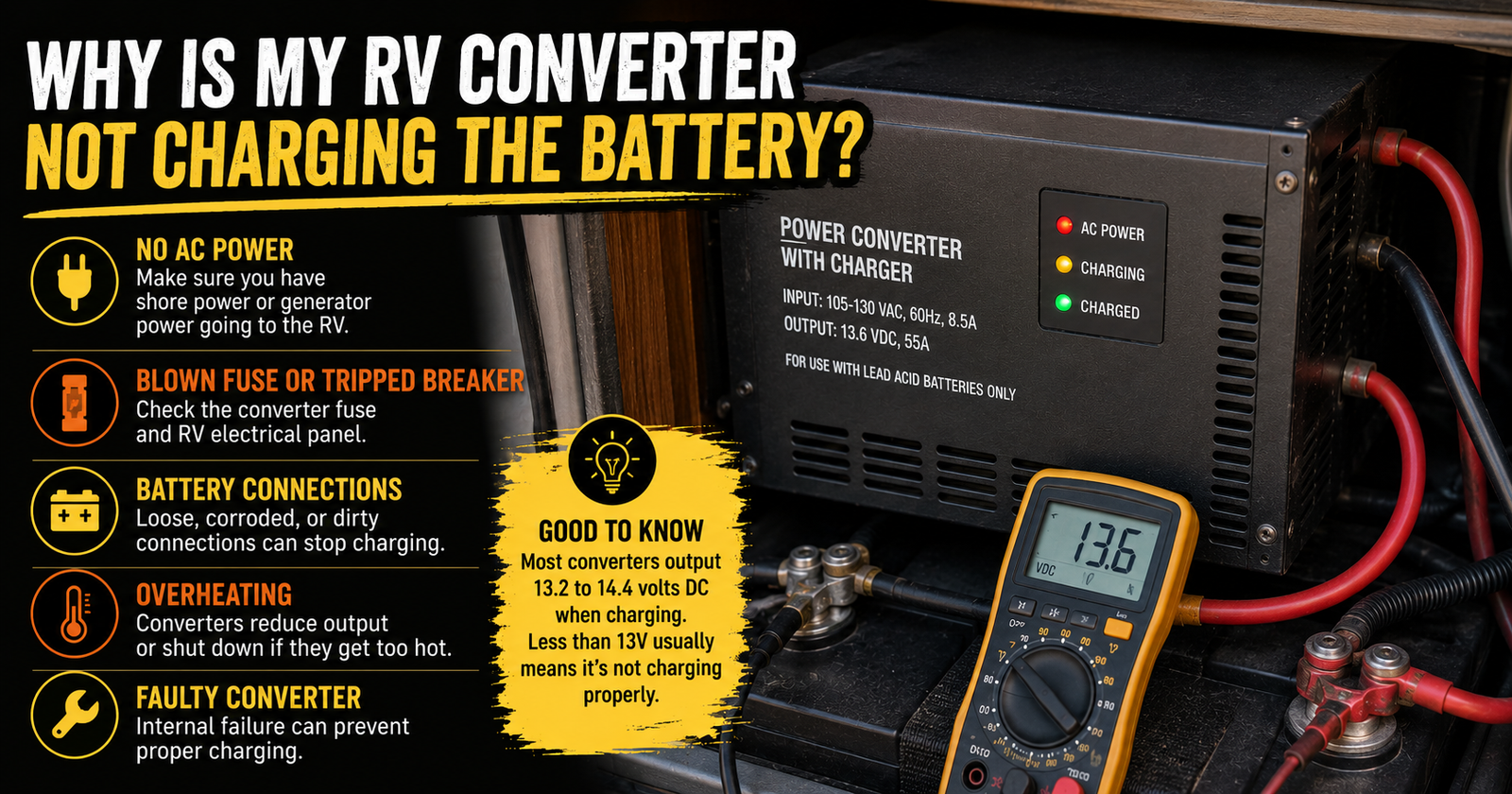
The RV moves higher on my list when a known-good battery drains quickly only while connected to the camper, measured current draw is much higher than expected, a particular circuit dramatically changes consumption, the problem started after an electrical modification or the charging system isn’t replenishing the energy being used. When the charging system isn't replenishing the energy being used, check this guide to an RV converter that isn't charging the battery before adding more battery capacity.
That’s when the battery may be doing exactly what batteries do.
It’s supplying electricity to whatever is asking for it.
The real question becomes why the camper is asking for so much.
Don’t Fix Fast Battery Drain With a Bigger Battery Until You Know Why
I love a good battery upgrade as much as the next camper owner. More usable capacity can completely change what you’re able to do away from hookups.
But capacity should solve a capacity problem.
If you have an abnormal electrical draw, failed charging circuit or bad connection, throwing more battery at it can hide the symptom without fixing the cause.
Find out where the energy is going first.
Then, if your RV is operating normally and your camping style simply demands more power, upgrading the battery bank actually makes sense.
That’s a much better outcome than buying batteries until one finally seems big enough to outrun a problem you never diagnosed.
Written by Evan Mercer
Evan Mercer writes about RV systems, camper troubleshooting, maintenance and everyday ownership questions for CamperAnswers.com. His work focuses on turning technical information and manufacturer guidance into practical answers ordinary RV owners can actually use.