
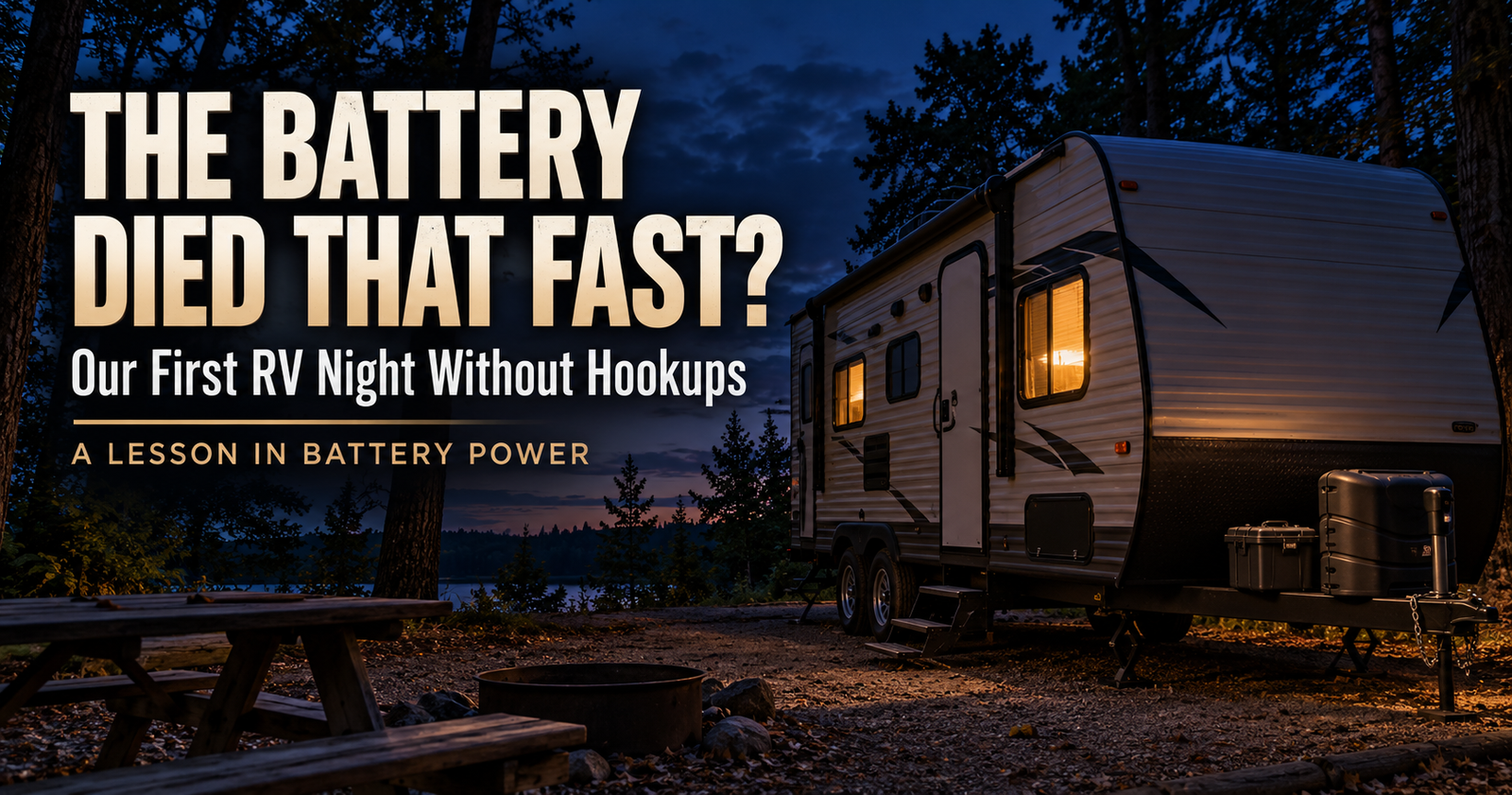
don’t think you really understand how much stuff in a camper quietly depends on the battery until you’re sitting somewhere without an electrical cord plugged into the side of it.
That’s the part that caught me off guard.
You look around the camper and think you’re barely using electricity. A couple lights are on. Maybe somebody runs the water pump for 20 seconds. Phones are charging. The refrigerator is doing its thing. If it’s cold outside, the furnace comes on every once in a while.
Nothing about that feels like heavy electrical use.
So starting the evening with a charged RV battery feels like plenty.
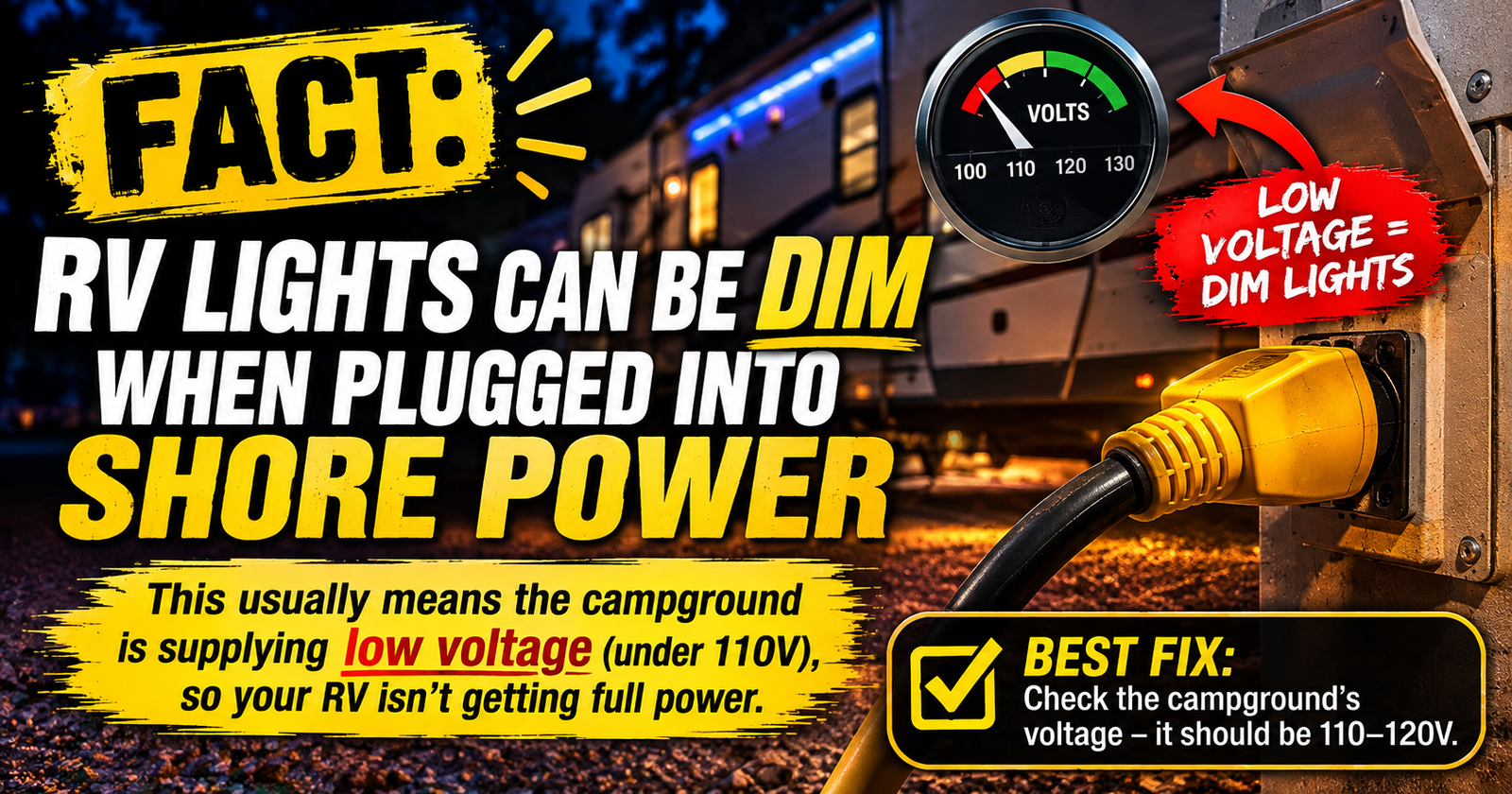
Then you wake up in the middle of the night, turn on a light, and immediately notice something isn’t quite right.
The light comes on.
It’s just…not as bright.
Then somebody uses the bathroom and the water pump sounds different too.
That’s when I learned that “the battery isn’t dead yet” and “we have plenty of battery left” are two very different things.
I Thought Not Having Hookups Just Meant We Couldn’t Use the Outlets
That was probably my biggest misunderstanding about camping without shore power.
I understood that we couldn’t simply use the camper like it was plugged into a campground pedestal.
No microwave.
No normal air conditioner.
No casually plugging household appliances into the regular outlets unless we had an inverter setup capable of powering them.
Fair enough.
What I hadn’t really thought through was how much of the camper still depends on 12-volt battery power.
The lights were obvious.
The water pump was obvious once I thought about it.
But then there are control boards, detectors, the furnace blower, refrigerator electronics on many RVs, and other little loads quietly sitting there in the background.
None of them seem particularly dramatic individually.
Put them together for an entire evening and suddenly the battery has a real job.
The Furnace Was the Part I Underestimated Most
If I were doing that night over again, this is the thing I’d watch.
A propane RV furnace sounds like something that should mostly use propane.
And it does burn propane to make the heat.
But propane doesn’t push warm air through the camper.
The furnace blower needs electricity.
So every time the thermostat calls for heat, that 12-volt blower comes on and stays on while the furnace runs.
On a chilly night, it can cycle again.
And again.
And again.
Meanwhile I’m sleeping.
That’s completely different from the water pump running for 15 seconds while somebody washes their hands.
The furnace can quietly become one of the biggest overnight battery loads in the camper.
The Battery Looked Fine When We Went to Bed
This is what would have fooled me.
Nothing dramatic happened.
There wasn’t some moment when the camper went:
WARNING: YOU HAVE USED 63% OF YOUR BATTERY.
Everything just worked.
Lights came on.
Water pump ran.
Furnace heated the camper.
So there wasn’t much reason to think about it.

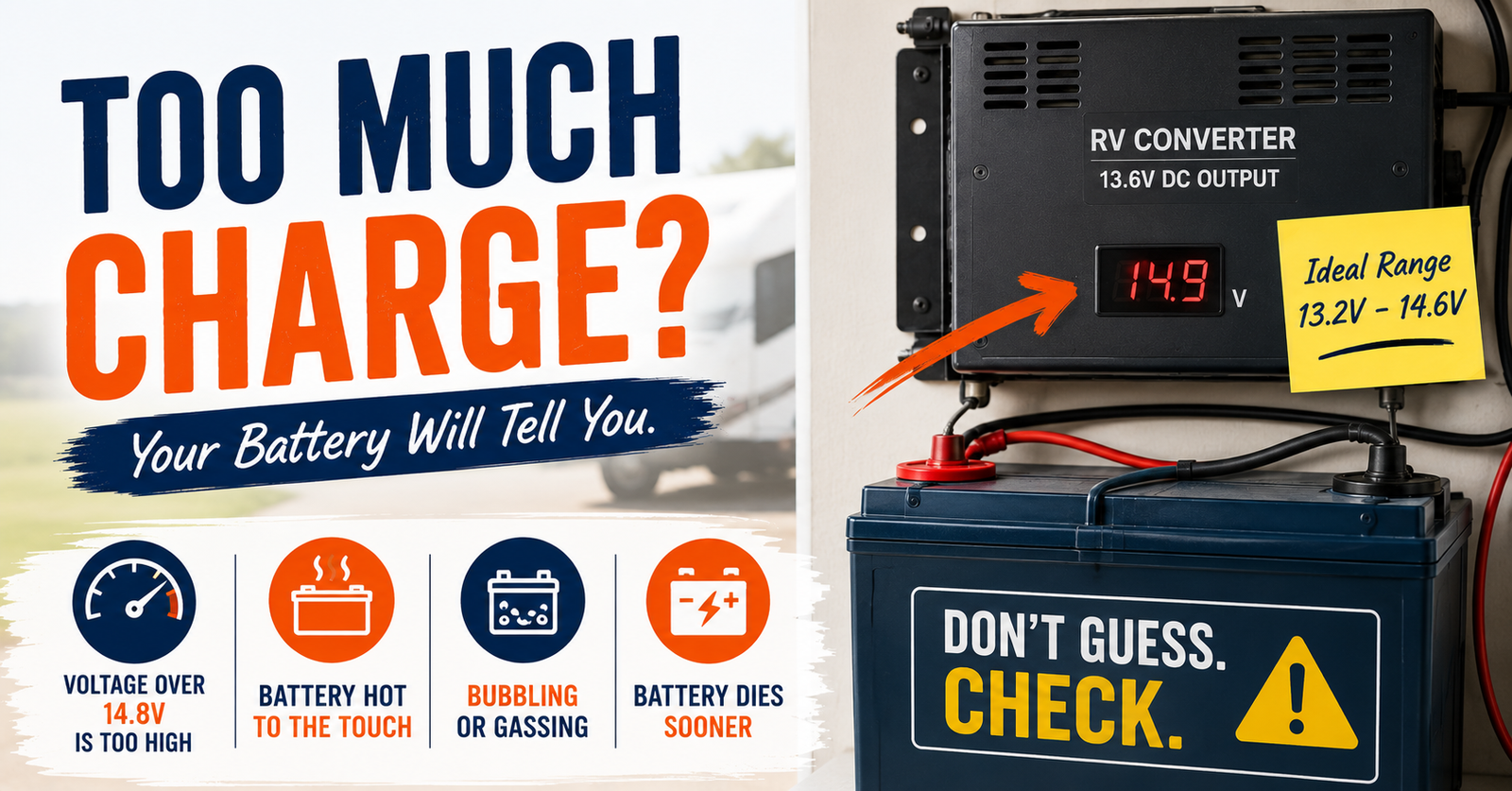
That’s one reason I eventually started paying much more attention to actual RV battery voltage and what the reading really means instead of treating “everything still works” as a battery monitor.
A battery can continue powering things while getting lower and lower.
Eventually the camper starts giving you clues.
The Lights Were the First Clue I Noticed
It wasn’t like flipping a switch and getting nothing.
That actually would have been easier to understand.
The lights just looked weaker.
Not enough that I’d necessarily notice while sitting underneath them all evening.
But after waking up and turning one on, I could tell something had changed.
That’s what made me start paying attention.
Then the water pump ran.
It still pumped water.
But it didn’t sound as strong either.
That’s when the little things started adding up.
The camper hadn’t suddenly developed three unrelated problems in the middle of the night.
The common denominator was the 12-volt system.
And the battery supplying it was getting low.
A Battery Doesn’t Have to Be Completely Dead to Start Acting Dead
That’s another thing I think new camper owners learn the hard way.
“Dead battery” makes you picture a battery at absolute zero where nothing works.
Real life is messier.
Voltage falls.
Equipment starts behaving differently.
Lights may dim.
Motors can sound slower.
Some electronics eventually reach a voltage where they stop operating correctly.
You can still have some power and have a battery that’s effectively too discharged to keep doing what you need it to do.
That’s why I don’t wait for every light in the camper to go black before deciding battery condition matters.
And a Battery That Says Full Can Still Fool You
This is where things get even more frustrating.
Maybe you checked before leaving.
Battery showed full.
Great.
Then it seems to disappear ridiculously fast.
That doesn’t automatically mean camping without hookups uses some unbelievable amount of electricity.
Sometimes the battery itself isn’t providing the capacity you think it is.
A weak or aging battery can reach charging voltage and appear healthy without actually storing much usable energy.

We’ve got a separate guide explaining why an RV battery can say full and then die surprisingly fast, because that’s a completely different problem from simply using a healthy battery heavily overnight.
The important lesson for me is that “charged” doesn’t tell me how much usable capacity the battery actually has.
I Started Mentally Adding Up Everything We’d Used
This is where the evening suddenly looked different.
Lights had been on for hours.
The water pump had run every time somebody used water.
Phones had been charging.
The furnace had cycled repeatedly.
The refrigerator and various electronics had their own 12-volt requirements.
Detectors and other small background loads never asked permission before using electricity.
And we’d started with one finite bucket of stored energy.
Nothing was replenishing it.
That’s really what camping without hookups comes down to.
You have a battery bank with a certain amount of usable energy, and every 12-volt load takes a little bit out of it.
Shore Power Had Hidden All of This From Me
When you’re plugged into a normal campground hookup, it’s easy to never think about any of this.
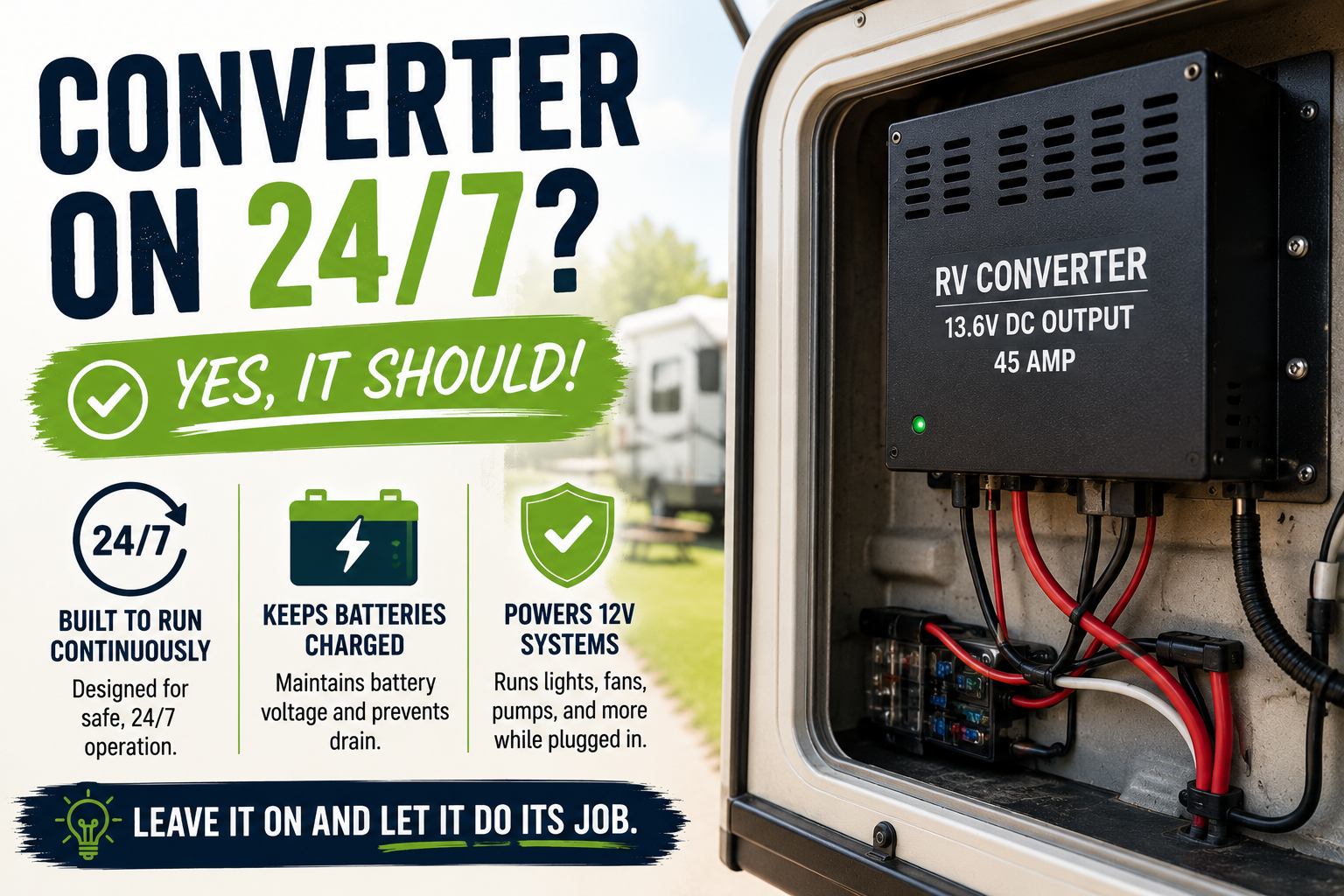
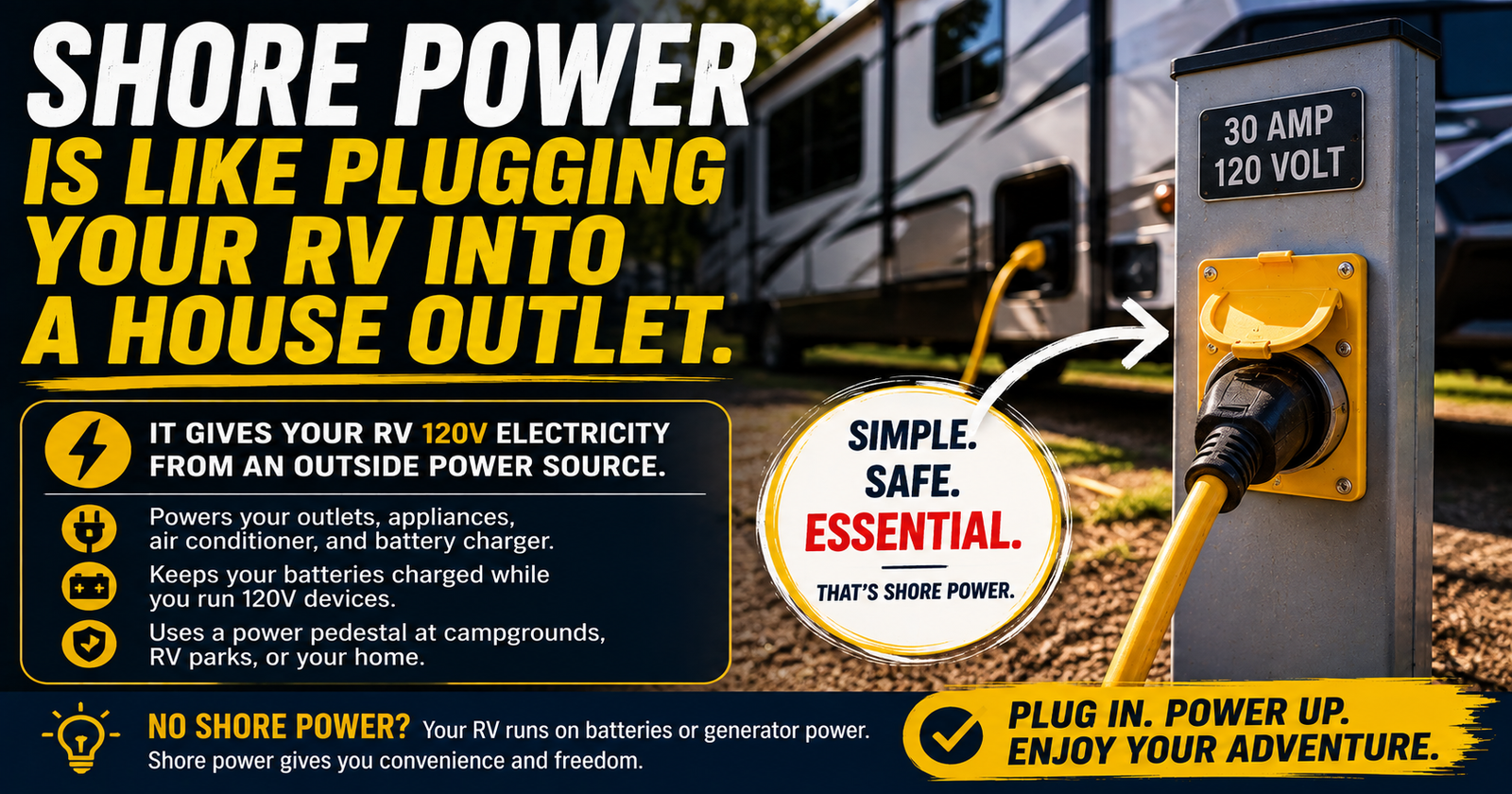
The converter is supplying the RV’s 12-volt system and charging the battery.
Use the lights.
Run the water pump.
Let the furnace cycle.
You aren’t watching the battery slowly give up stored energy because the charging system is there in the background.

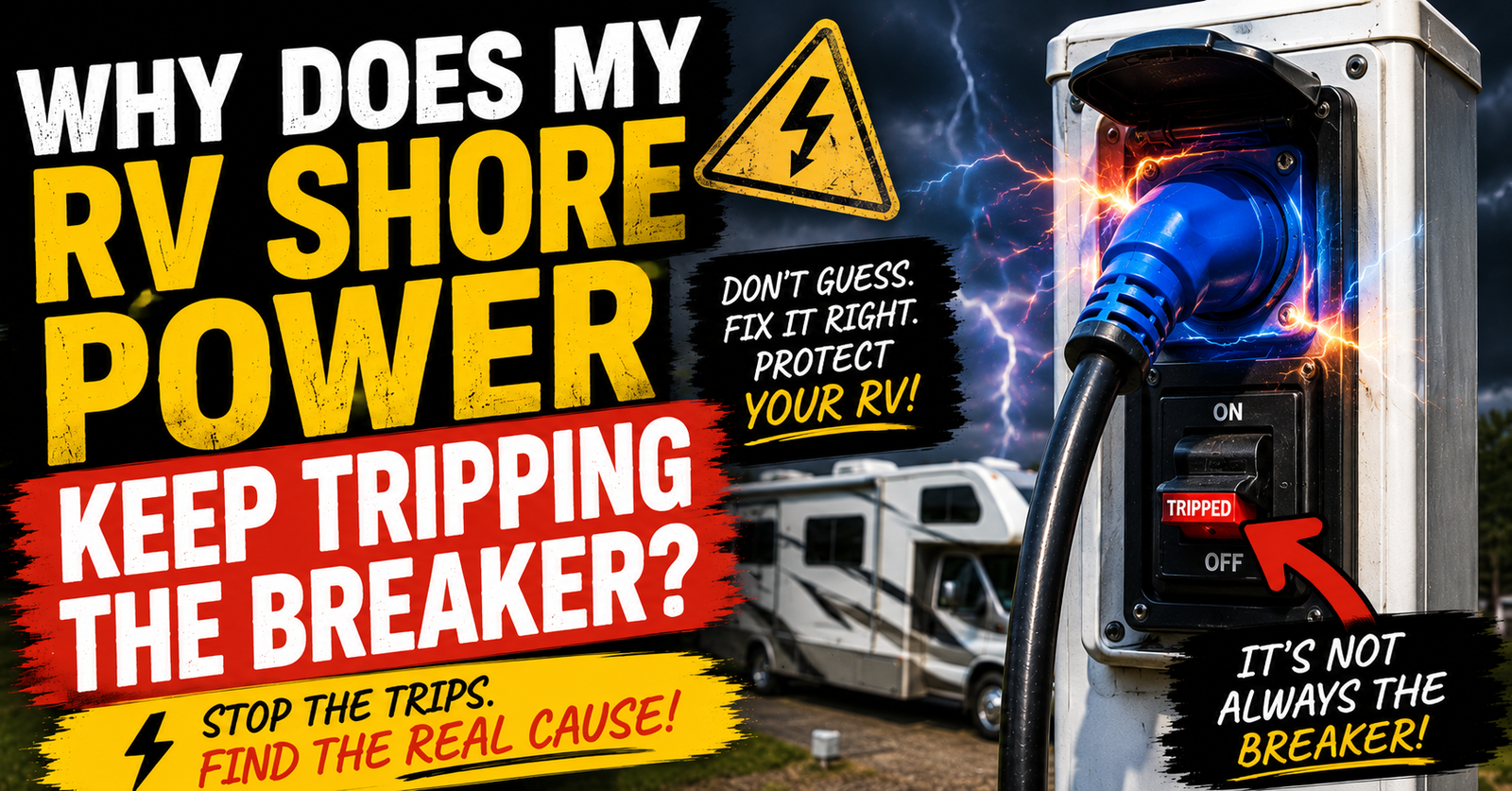
If you’ve never really understood what happens when the shore cord gets plugged in, our simple guide to RV shore powerexplains that side of the camper.
But once shore power disappears, the battery becomes much more interesting.
There’s no campground pedestal quietly replacing what you’re using.
I Finally Understood Why Battery Capacity Matters More Than the Word “Battery”
This sounds obvious now.
But saying:
“My camper has a battery.”
doesn’t tell you much.
What battery?
What chemistry?
What capacity?
How old is it?
What’s its condition?
How much of its rated capacity is realistically usable?
How many batteries are in the bank?
How much electricity are you actually using?
Two campers can both have “a battery” and have completely different experiences overnight.
That’s why there isn’t one honest answer to how long an RV battery lasts.
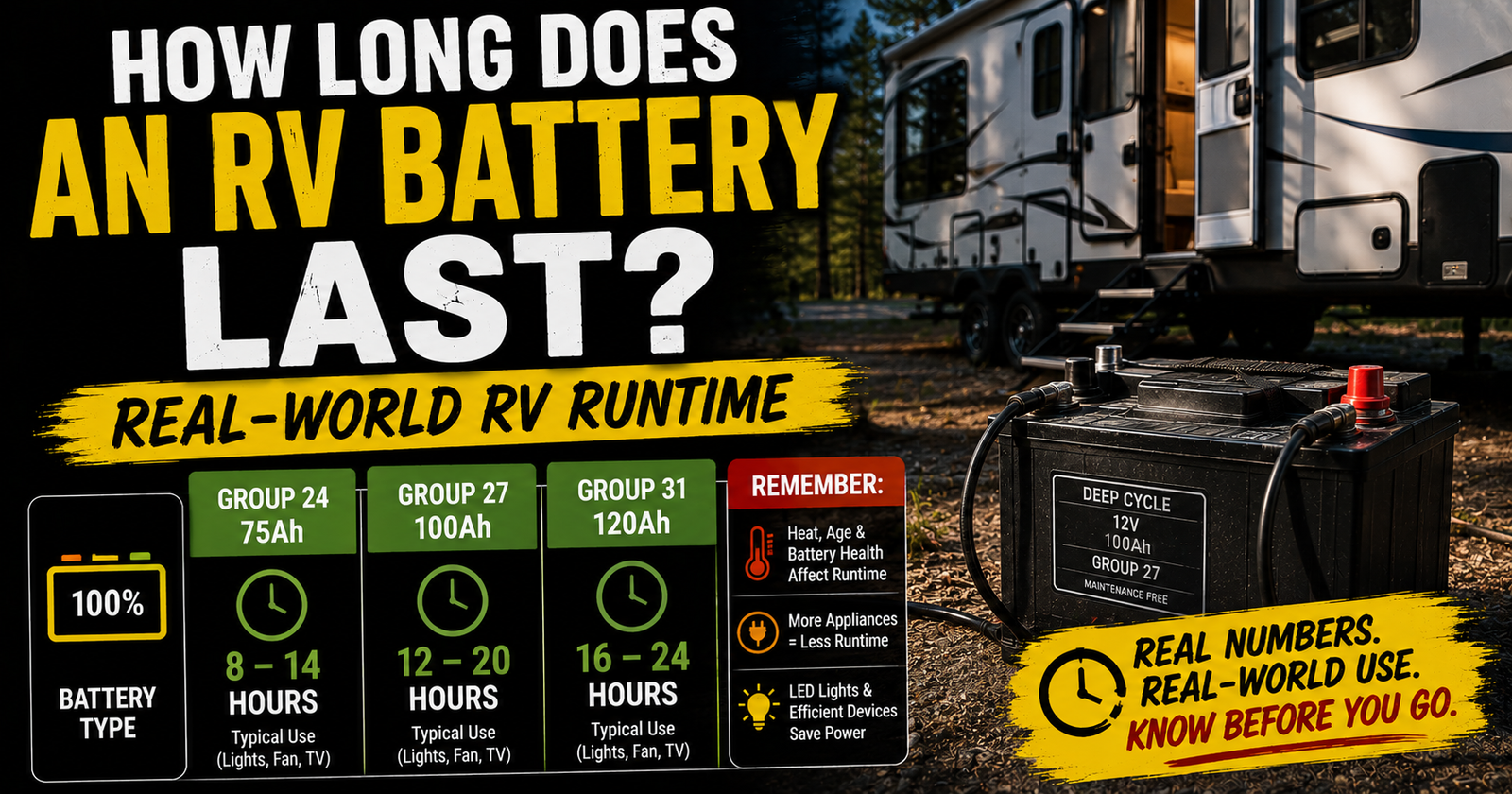
Our guide to real-world RV battery runtime goes into the numbers much deeper.
But that night taught me the simpler lesson first.
The battery doesn’t know I’m trying to make it until morning.
It only knows the loads connected to it.
Turning Lights Off Helped, but That Wasn’t the Whole Problem
The obvious reaction is to start shutting everything off.
And sure, unnecessary lights don’t need to stay on.
But with modern LED lighting, I wouldn’t obsess over sitting in darkness while ignoring the furnace blower cycling all night.
That’s the kind of mistake I could easily see myself making.
Turn off one tiny LED.
Feel responsible.
Then let a much larger 12-volt load run for hours.
The better approach is understanding where the meaningful loads actually are.
I Would Watch the Furnace Much More Closely on a Cold Night
If I’m trying to stretch battery power overnight, temperature becomes part of my electrical plan.
That’s weird until you’ve lived it.
Cold outside means the furnace runs more.
More furnace runtime means more blower runtime.
More blower runtime means more battery use.
So weather can change how long the same battery lasts.
A battery setup that easily survives a mild fall evening may struggle through a freezing night with the furnace cycling constantly.
That’s why I don’t like statements such as:
“One RV battery will last two days.”
Two days doing what?
In what weather?
With what equipment?
The Water Pump Wasn’t Running Constantly, but Every Little Use Counted
The water pump is another load that’s easy to forget.
Brush your teeth.
Pump runs.
Flush.
Pump runs.
Wash your hands.
Pump runs.
Someone gets a drink.
Pump runs.
Take a quick shower and now it’s running considerably longer.
None of that means you shouldn’t use water.
It’s a camper. Use it.
But when you’re away from hookups, all those normal activities come out of the same stored energy supply.
That’s the mental shift I was missing.
Phones Were Easy to Blame Because I Could See Them Charging
This is kind of funny.
You see two phones plugged in and think:
There goes our battery.
Meanwhile the furnace is cycling in the background.
That’s why guessing based on what looks electrical isn’t particularly useful.
I’d much rather know what the actual loads are and how long they operate.
A phone charging for a while may matter.
But it isn’t automatically the reason your RV battery disappeared overnight.
Then There Are the Loads You Never Turned On
This is the sneaky part.
Some equipment can draw power simply because it’s connected.
Detectors.
Control boards.
Stereo memory.
Monitoring equipment.
Other electronics.
Maybe you’ve got additional aftermarket equipment.
One tiny load doesn’t sound important.
But tiny loads operate all night.
And some continue operating for days while the camper is sitting unused.
That’s how you end up with a completely different question:
“Why does my RV battery keep going dead when we’re not even using the camper?”
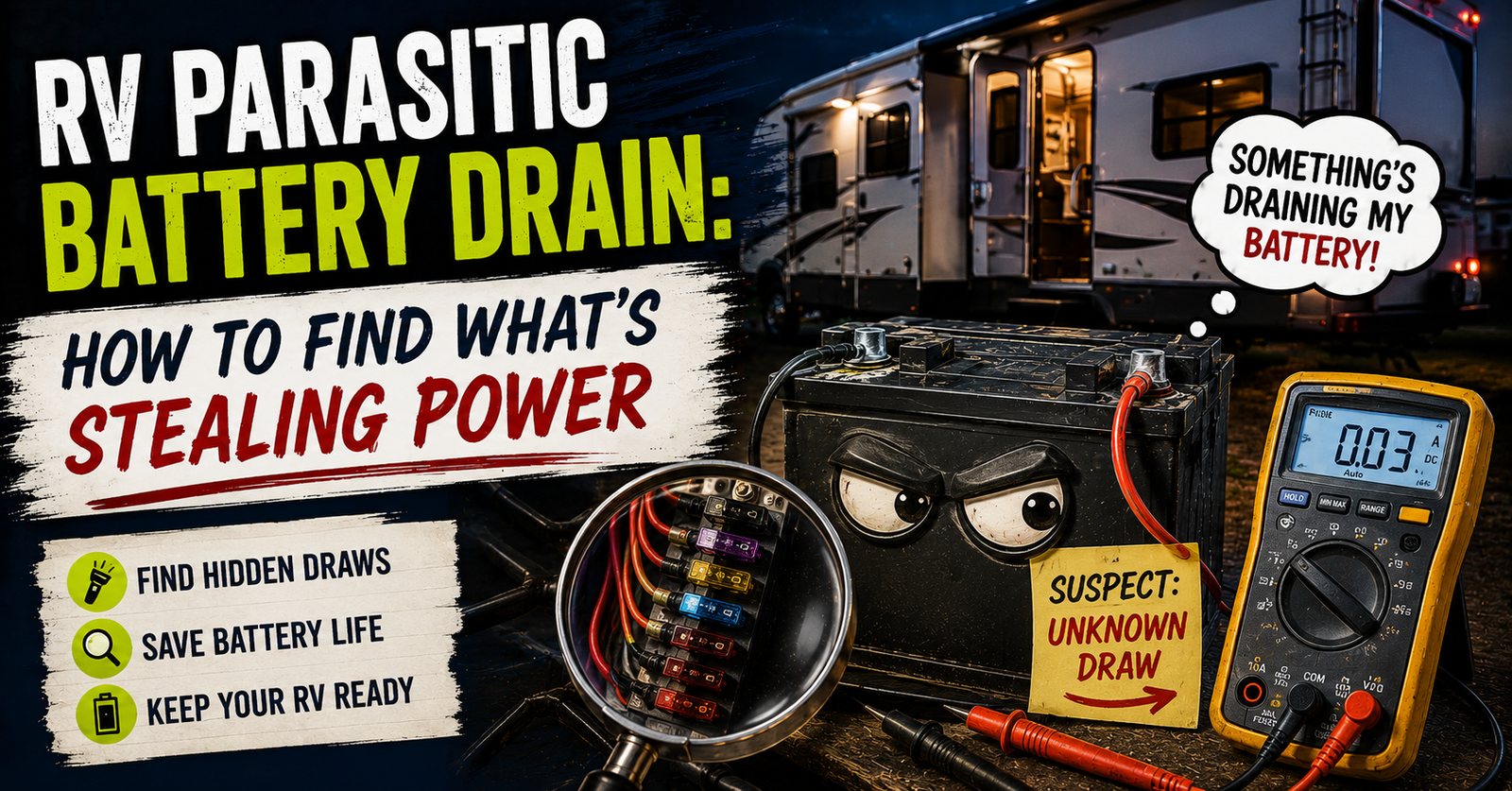
That’s where I’d stop thinking about one night of camping and start looking for parasitic RV battery drain.
This Night Was Different Because We Were Actually Using the Camper
That’s an important distinction.
A battery dying overnight while four people are actively camping in cold weather isn’t automatically evidence of a mysterious parasitic drain.
A battery dying while the RV has been sitting unused in the driveway is much more suspicious.
Context matters.
That’s something I’ve learned to ask about nearly every camper problem.
What was the RV doing when the problem happened?
The symptom by itself rarely tells the whole story.
The Battery Disconnect Isn’t a Magic “Everything Off” Switch Either
This is another lesson that fits into the bigger battery picture.
It’s tempting to think turning the battery disconnect off completely isolates the battery from every possible load.
That isn’t true on every RV.
Certain equipment may remain connected depending on how the camper is wired.
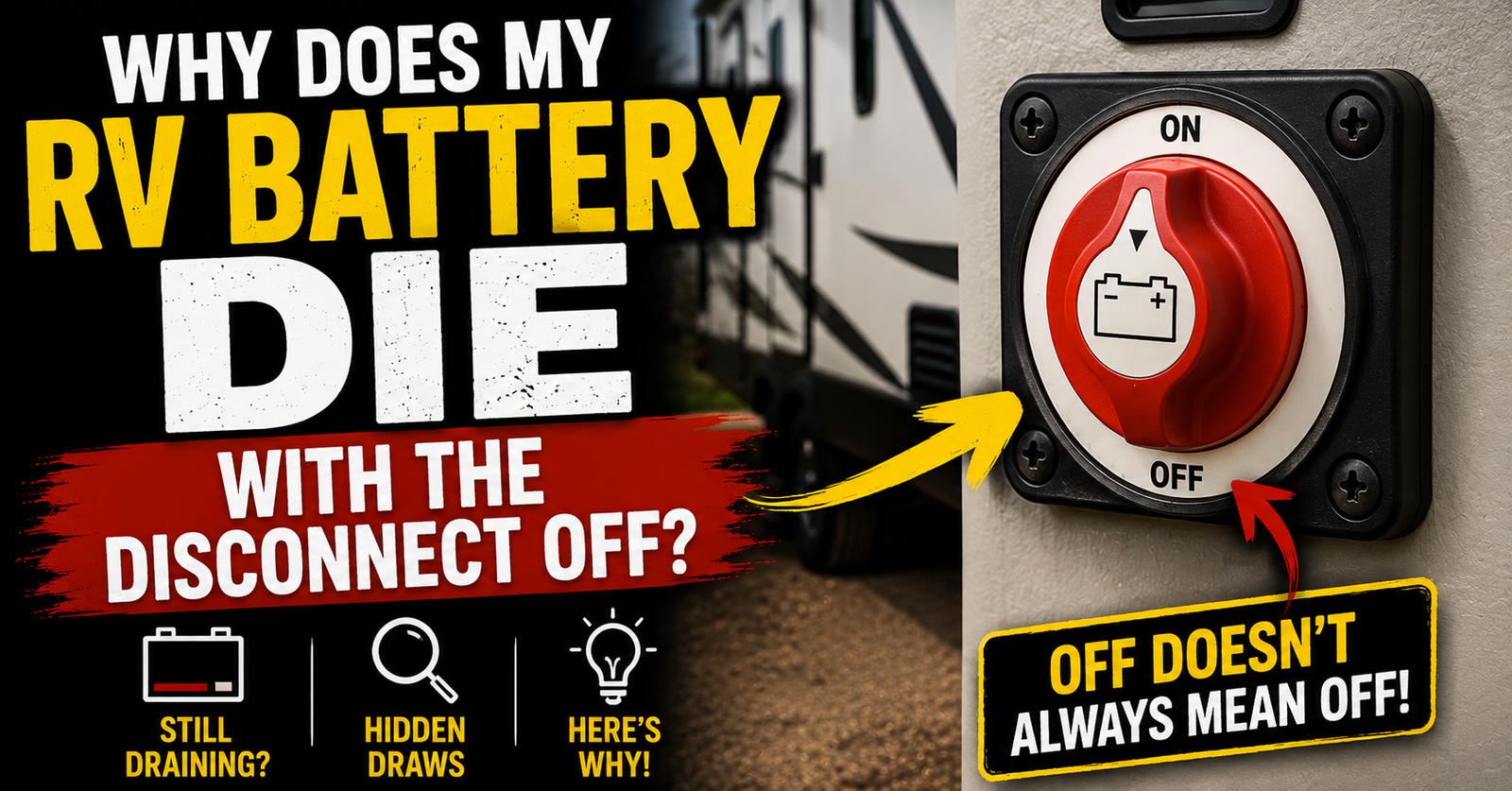
We’ve already covered why an RV battery can still die with the disconnect off because it’s one of those things that makes no sense until you understand that the disconnect doesn’t necessarily disconnect absolutely everything.
That matters more during storage than during one night of active camping, but it’s part of learning what your battery is really powering.
By Morning, I Wouldn’t Just Blame the Battery
This is another place I think people waste money.
Battery went low overnight.
Therefore:
Buy new battery.
Maybe.
But before replacing anything, I’d want to know whether the battery behaved reasonably for its size, condition, and the amount of power we used.
If it should have had plenty of capacity and still collapsed ridiculously quickly, then I’d test it.
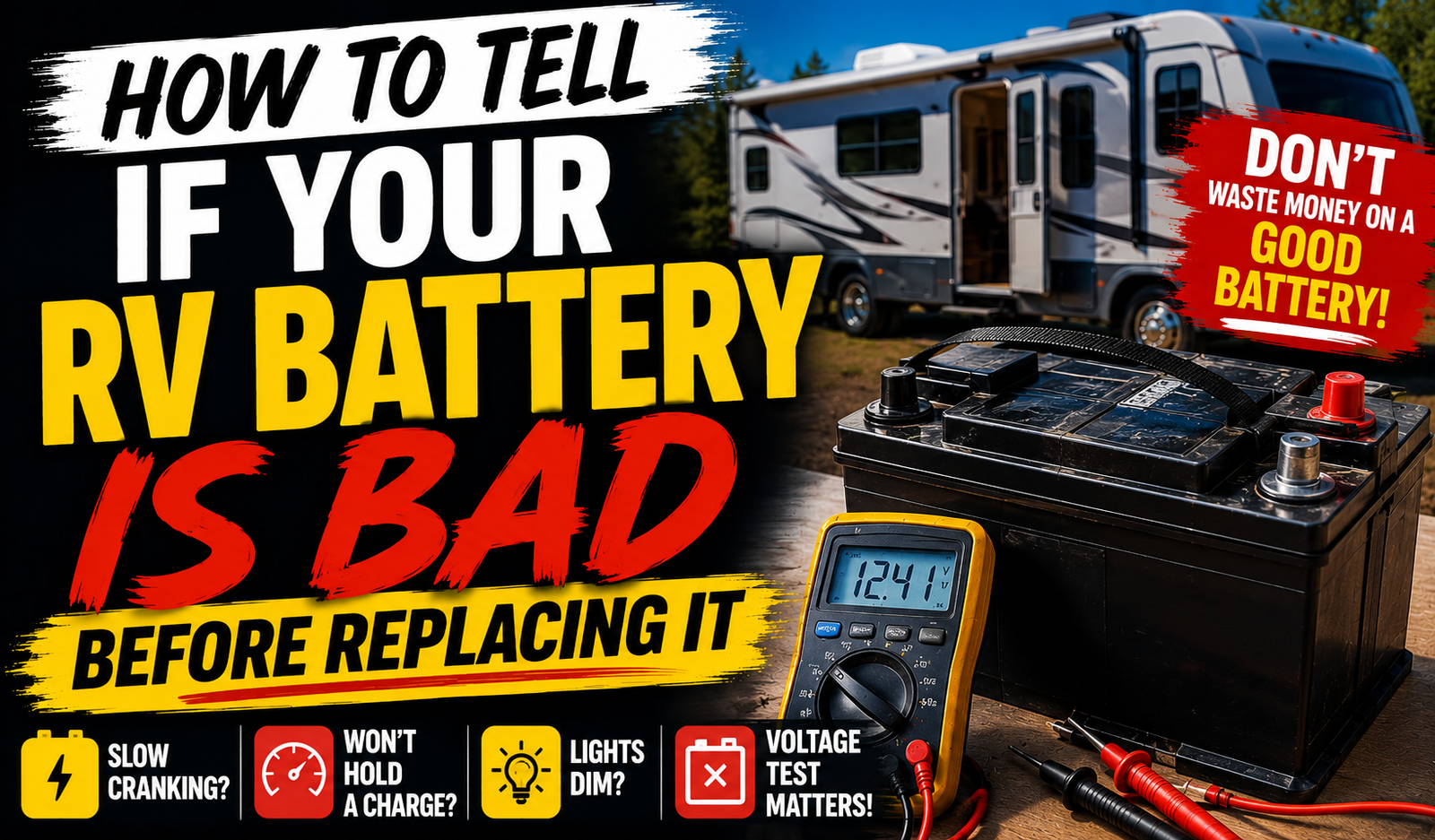
Our guide to telling if an RV battery is actually bad before replacing it exists for exactly that reason.
I don’t want to buy a battery because the furnace used the old one exactly as expected.
And I don’t want to spend the next five camping trips blaming our electricity use when the battery really is worn out.
The Next Morning Is When Charging Becomes the Problem
Surviving the night is only half the story.
Now you’ve got a depleted battery.
How are you putting that energy back?
If you’re moving to a campsite with shore power, that’s easy.
Plug in and let the charging system do its job.
If you’re staying off-grid, now you’re thinking about solar, generator charging, tow-vehicle charging depending on the setup, or whatever charging equipment your RV actually has.
That’s the part of camping without hookups that I think beginners sometimes overlook.
You don’t just need enough battery to make it through the night.
You need a plan for tomorrow.
A Bigger Battery Isn’t the Only Answer
It certainly can help.
More usable battery capacity gives you more stored energy.
But I wouldn’t automatically throw battery capacity at every problem.
If the existing battery is unhealthy, fix that.
If there’s a major parasitic load, find it.
If your charging system isn’t restoring the battery properly, fix the charging problem.
If you’re simply using more electricity than the battery bank was designed to support, then yes, additional capacity may make sense.
That’s much different from blindly buying the biggest battery you can fit.
Solar Makes More Sense to Me After a Night Like This
Solar is easy to think of as some fancy off-grid upgrade until you actually watch your battery percentage drop overnight.
Then the idea becomes pretty simple.
The battery stores energy.
Nighttime loads consume it.
Morning arrives.
Sun comes up.
Solar can start putting some of that energy back.
It doesn’t make the battery infinite.
Clouds happen.
Shade happens.
Solar-panel output varies.
Your electrical usage still matters.
But now you have a way to replenish energy without plugging into a pedestal or running a generator.
That’s when off-grid electrical systems start making sense as a complete system instead of a collection of gadgets.
I Wouldn’t Trust the Battery Monitor Blindly Either
Another thing I’ve learned is that a display saying:
100%
is only useful if the system producing that number actually knows what’s happening.
Some simple monitors are largely interpreting voltage.
More sophisticated battery monitors can track current going into and out of the battery bank.
Lithium batteries add another layer because their voltage behavior is different from traditional lead-acid batteries.
So I like numbers.
But I also want to understand what those numbers mean.
A fancy screen doesn’t automatically make bad information accurate.
What I Would Do Differently Before Another Night Without Hookups
I wouldn’t dramatically change how we camp.
I’m not interested in sitting silently in a dark camper afraid to use the water pump.
I’d just go into the night knowing what I actually have.
I’d know the battery capacity.
I’d know the battery is healthy.
I’d start genuinely charged.
I’d understand the major 12-volt loads.
I’d watch furnace use if it’s cold.
I’d have a realistic idea of how much energy we’re consuming.
And I’d know how we’re recharging the next day.
That’s a completely different situation from:
“The battery says full. I’m sure it’ll be fine.”
This Is Why I’d Test the Camper Before a Real Off-Grid Trip
Honestly, one of the smartest things you could do is test this at home.
Don’t make a remote campsite the first place you discover how long your battery setup lasts.
Charge the battery.
Disconnect shore power.
Use the camper somewhat like you would while camping.
Run the normal lights.
Use the water pump.
Let the furnace operate if conditions allow.
Monitor battery voltage or state of charge.
See what happens.
You’re learning the camper without the pressure of being miles from a power source.
If things go badly, the extension cord is sitting 30 feet away.
You’ll Learn More From One Night Than From the Battery Label
The battery label gives you specifications.
The camper gives you reality.
Your particular family uses electricity differently from somebody else.
Maybe your furnace barely runs.
Maybe yours runs constantly.
Maybe you’ve got one battery.
Maybe four.
Maybe everything is LED.
Maybe you’ve got a pile of aftermarket electronics quietly drawing power.
Maybe you camp in summer.
Maybe you camp when it’s 25 degrees outside.
That’s why real-world runtime is so variable.
The Biggest Thing I Learned Was to Stop Thinking in Terms of “Having Power”
This is probably the part that stuck with me most.
At home, electricity feels binary.
Power is on.
Or power is off.
A camper battery isn’t like that.
You have stored energy.
You’re continuously taking some away.
You may also be putting some back.
The lights working right now doesn’t tell you whether you have enough energy for the next 10 hours.
That’s why the first weak light in the middle of the night suddenly makes the whole system click in your head.
The battery wasn’t fine five minutes ago and magically dead now.
We’d been spending it all evening.
We just hadn’t been paying attention to the balance.
I Still Love Camping Without Hookups
If anything, understanding the electrical side makes it better.
You’re not wondering whether the camper is randomly going to die overnight.
You know what you’re working with.
You know what uses power.
You know roughly how long your battery bank can support you.
You know when to conserve.
You know how you’re charging again tomorrow.
And if something behaves completely differently from what you expect, you’ve got enough understanding to realize there’s probably a problem worth investigating.
That’s a lot more relaxing than staring at a dim ceiling light at 2:00 in the morning thinking:
“Well…I guess this is how we learn.”
Written by Caleb Warren
Caleb Warren writes about real-world RV ownership, off-grid camping, water systems, batteries, and the little camper problems that usually teach you the most for CamperAnswers.com. He focuses on what RV systems actually feel like to use away from home, then breaks down the practical lessons that make the next camping trip a whole lot easier.