
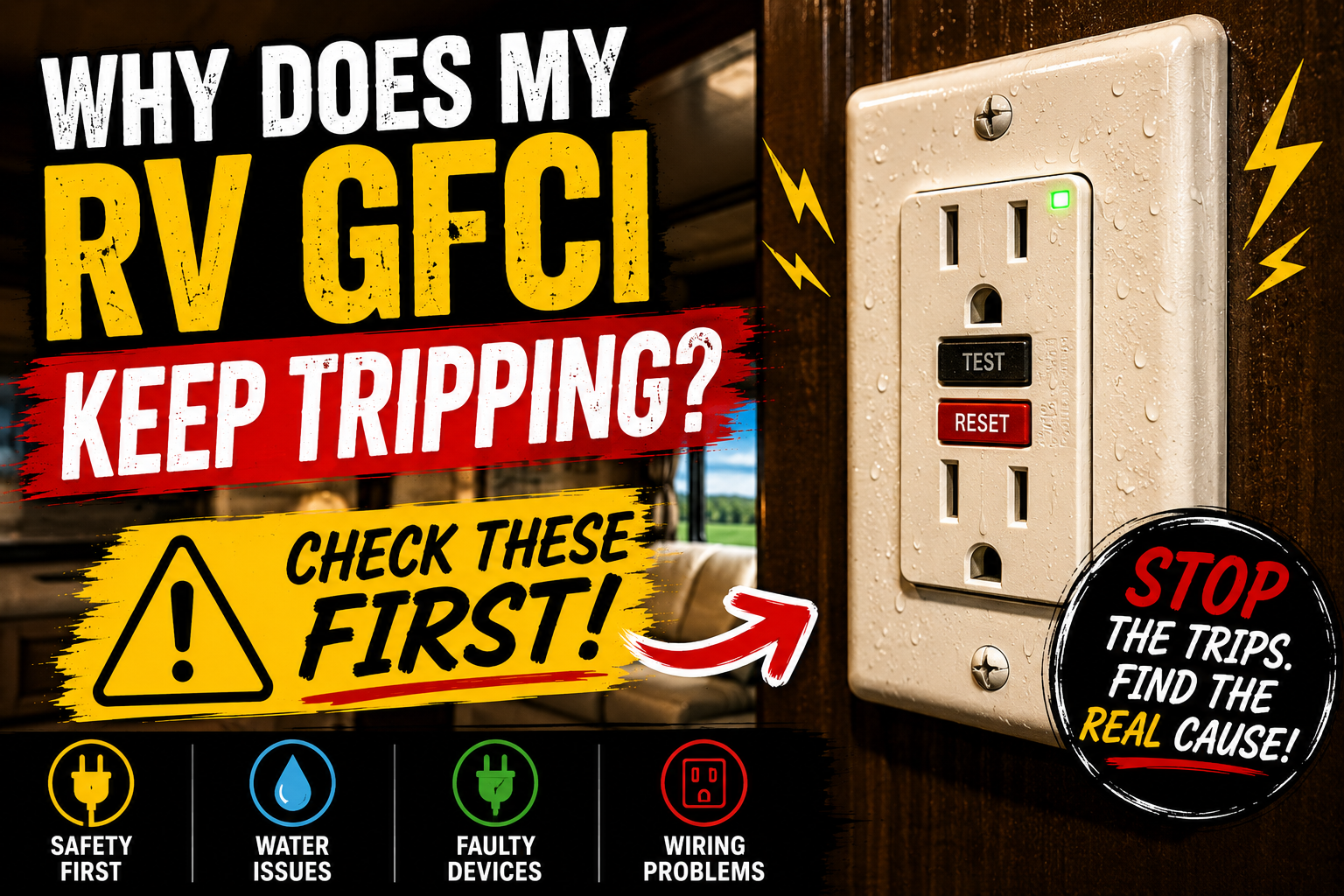
An RV GFCI that trips once doesn’t immediately make me think something serious is wrong. Maybe moisture got somewhere it shouldn’t, or an appliance caused a temporary problem.
But when I press RESET and hear that little click again five seconds later, I stop treating it like a nuisance.
If your RV GFCI keeps tripping, unplug everything from the affected outlets first. If the GFCI stays reset, plug things back in one at a time until you find the problem. If it still trips with everything unplugged, start looking for moisture, a downstream outlet problem, damaged wiring, or a failing GFCI itself. For the separate case of an RV GFCI trips at home, the household GFCI itself provides an important clue about the RV's 120-volt system.
There’s another important thing to understand before we start troubleshooting.
The outlet that’s dead may not be the outlet causing the problem.
One GFCI can protect several receptacles scattered around the camper, and that’s why these problems can get confusing fast.
What Does an RV GFCI Actually Do?
GFCI stands for ground-fault circuit interrupter.
Its job is different from the regular circuit breaker in your RV’s electrical panel.
A normal breaker primarily protects a circuit from excessive current.
A GFCI watches for an imbalance between the current leaving on the hot conductor and the current returning on the neutral.
If some of that electricity appears to be taking another path, the GFCI can disconnect the circuit very quickly.
That’s especially important around places where people, electricity, and water might meet.
That’s why you’ll commonly find GFCI protection around kitchens, bathrooms, exterior receptacles, and other potentially damp locations.
A GFCI Is Not the Same as Your RV Breaker
This distinction saves a lot of confusion.
If your 30 amp campground pedestal breaker keeps tripping when you run the air conditioner, microwave, water heater, and coffee maker together, you may simply be overloading your available shore power. A separate guide explains how to diagnose a repeatedly tripping circuit breaker.
That’s a breaker problem.
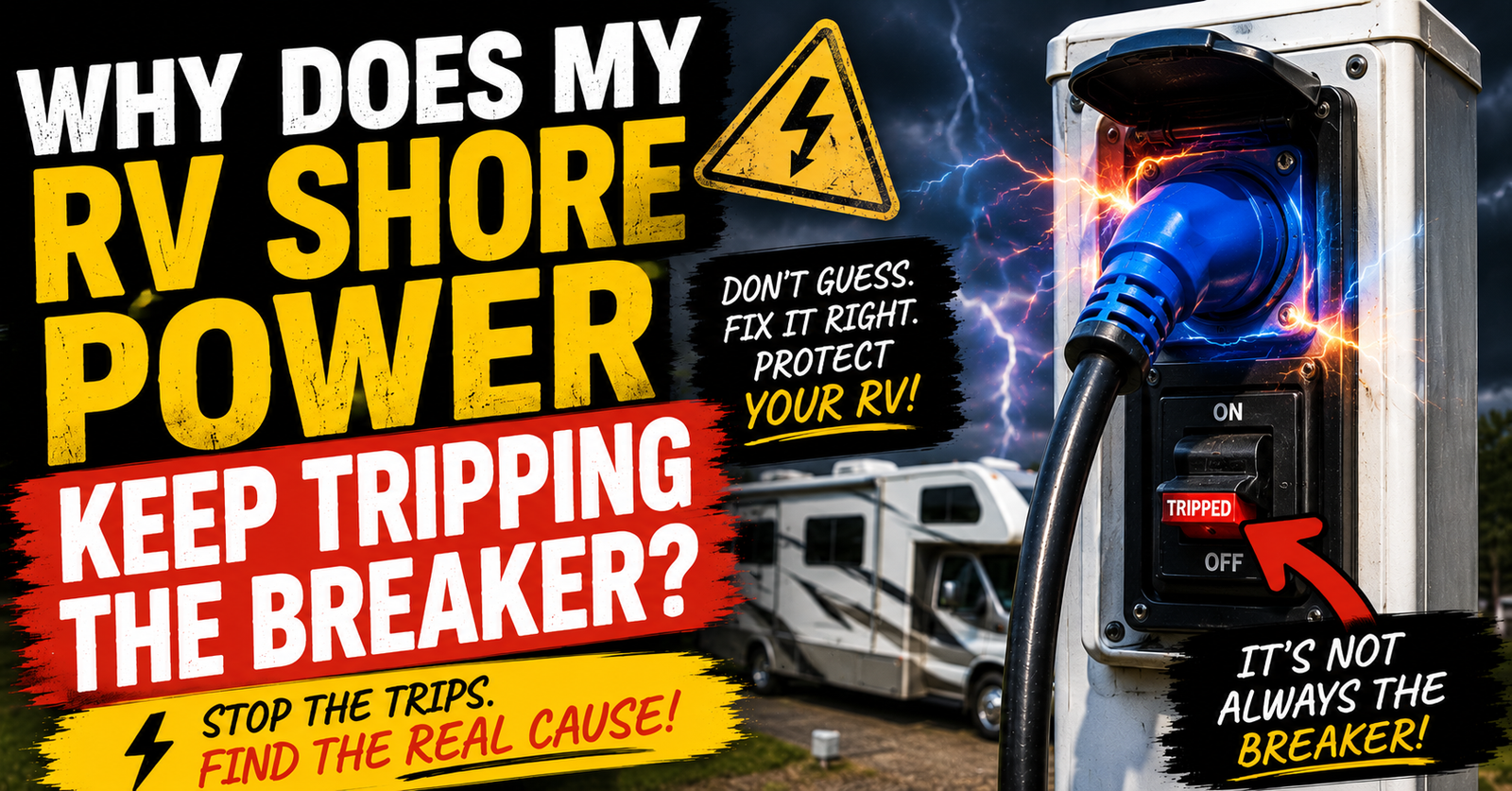
We’ve already covered why RV shore power keeps tripping the breaker separately.
A GFCI can trip even when you’re nowhere near the maximum amperage available to the RV.
It isn’t simply asking:
“Are you using too much electricity?”
It’s looking for current going somewhere it shouldn’t.
Find Every GFCI in Your Camper First
Before doing anything complicated, I’d figure out what GFCI receptacles the RV actually has.
Look around the:
Bathroom
Kitchen
Exterior
Wet bay
Basement or storage compartments
Other areas near plumbing or moisture
Depending on your camper, one GFCI may protect several ordinary-looking receptacles downstream.
That means an outside outlet can go dead because the bathroom GFCI tripped.
The dead exterior outlet doesn’t necessarily have its own RESET button.
That’s one of the biggest reasons people think they’ve got several failed outlets at once.
One GFCI Can Shut Off Several RV Outlets
Imagine the circuit like this:
Breaker → GFCI → Outlet → Outlet → Outlet
The GFCI is upstream.
If it trips, everything downstream can lose power.
That’s why you might suddenly discover:
Bathroom outlet dead.
Outside outlet dead.
Kitchen outlet dead.
Storage-compartment outlet dead.
Meanwhile, the bedroom outlet still works perfectly.
There’s nothing mysterious happening.
Those receptacles may simply be on different circuits or different sides of the GFCI protection.

If you’re dealing with that broader symptom, our guide to why some RV outlets work while others don’t will help you map out the circuit.
Start by Unplugging Everything
This is my favorite first test because it’s easy and tells us a lot.
Unplug everything from the affected GFCI-protected outlets.
Don’t just unplug whatever was closest to the GFCI.
Remember that other outlets farther downstream may be protected by it too.
Look for things such as:
Coffee makers
Toasters
Hair dryers
Space heaters
Phone chargers
Outdoor extension cords
Televisions
Small appliances
Anything else connected to the affected receptacles
Then press RESET.
Does the GFCI Stay Reset Now?
If yes, that’s good information.
There’s a decent chance something you unplugged contributed to the trip.
Now reconnect things one at a time.
Don’t plug all six things back in simultaneously.
Plug one device in.
Give it a moment.
Still good?
Move to the next.
If the GFCI trips immediately when one particular device is connected or operated, you’ve found a very strong clue.
An Appliance Can Trip the GFCI Without Tripping a Breaker
This makes sense once you understand what each protection device is watching for.
An appliance doesn’t necessarily have to draw huge current to create a ground-fault condition.
So you might have:
Pedestal breaker still on.
RV main breaker still on.
Branch breaker still on.
GFCI tripped.
That isn’t contradictory.
The GFCI detected something the normal breaker wasn’t designed to detect in the same way.
Don’t replace the campground breaker because your bathroom GFCI keeps popping.
They’re doing different jobs.
Pay Attention to What Was Running When It Tripped
This is one of the easiest troubleshooting tricks with almost any RV electrical problem.
Ask yourself:
What changed immediately before the power disappeared?
Did somebody plug in a hair dryer?
Did it start raining?
Did you connect an outdoor extension cord?
Did an appliance start?
Did you turn on an electric heating element?
Did you wash the camper?
Did the problem begin immediately after plugging into shore power?
The timing can tell you far more than staring at the GFCI outlet.
Moisture Is High on My List
If an RV GFCI starts tripping after heavy rain, washing the camper, or water getting near an exterior receptacle, I pay attention.
Exterior RV outlets live a pretty rough life.
They’re exposed to humidity, temperature changes, rain, washing, condensation, and whatever else camping throws at them.
Check the weather cover.
Check the receptacle.
Look for obvious moisture.
If water has gotten inside, don’t bypass the GFCI just because you want that outlet working.
The GFCI may be warning you about exactly the condition it was installed to protect against.
Check Your Exterior Outlets Even If You Aren’t Using Them
This catches people.
They’ll say:
“Nothing is plugged into my outside outlet, so it can’t be the problem.”
But an empty receptacle can still be part of the protected circuit.
If moisture or damage creates an electrical fault there, the upstream GFCI can still trip.
So when I’m tracing a stubborn GFCI problem, I don’t only inspect outlets with appliances plugged into them.
I look at the entire protected circuit.
Check the Bathroom and Kitchen for Water Too
Exterior outlets aren’t the only places moisture shows up.
Maybe water splashed around the bathroom sink.
Maybe something leaked beneath the kitchen counter.
Maybe condensation or a plumbing leak reached wiring somewhere it shouldn’t.
RVs pack electrical wiring and plumbing into relatively small spaces.
That doesn’t mean every GFCI trip is caused by water, but moisture is certainly one of the clues I’d investigate when the timing makes sense.
What If the GFCI Trips Only When the Refrigerator Is Running?
Now you’ve narrowed the problem considerably.
Depending on how your particular RV is wired, appliances such as the refrigerator may be associated with a GFCI-protected circuit.
If the GFCI repeatedly trips only when one particular appliance is connected or operating, I stop blaming the GFCI automatically.
The appliance, its wiring, or the circuit supplying it deserves investigation.
The same thinking applies to any specific appliance.
If everything behaves normally until one piece of equipment starts, that’s useful evidence.
What If It Trips When I Plug in a Space Heater?
Unplug the heater and test again.
A space heater is a substantial electrical load, but remember that GFCI tripping and breaker overloading aren’t the same thing.
If you’re simply exceeding the circuit’s current rating, I’d expect the appropriate breaker to become part of the discussion.
If the GFCI itself repeatedly trips only with that heater, I’d stop using the heater until I know why.
Don’t automatically assume:
“Space heaters use a lot of electricity, so GFCIs just don’t like them.”
That’s not a good explanation for repeated ground-fault trips.
What If It Trips With Nothing Plugged In?
Now things get more interesting.
You’ve unplugged everything you can identify from the protected receptacles.
Press RESET.
Click.
Trips again.
At that point, I’d consider possibilities such as:
Moisture in a receptacle or electrical box
A damaged downstream receptacle
Damaged wiring
A wiring connection problem
An actual ground fault somewhere on the circuit
A problem with hardwired equipment sharing the circuit
A failing GFCI receptacle
Now we’re moving beyond the easy “bad coffee maker” explanation.
Check the Branch Breaker
If the GFCI won’t reset at all, make sure the circuit is actually receiving power.
Find the RV’s AC electrical distribution panel.
Identify the applicable breaker.
Reset it properly by moving it completely to OFF and then back to ON.
A breaker can sometimes trip without the handle moving dramatically enough that you immediately notice.
If the branch breaker won’t stay reset either, stop treating this purely as a GFCI problem.
You may have a circuit fault that needs further diagnosis.
A GFCI May Not Reset Without Incoming Power
This is important because people sometimes replace a perfectly good GFCI when the real problem is upstream.
Depending on the device, a GFCI may refuse to reset if it isn’t receiving proper incoming power.
So if you push RESET and absolutely nothing happens, verify that the circuit supplying it is energized before declaring the receptacle dead.
If other AC equipment throughout the RV is also dead, you may have a broader shore-power problem.
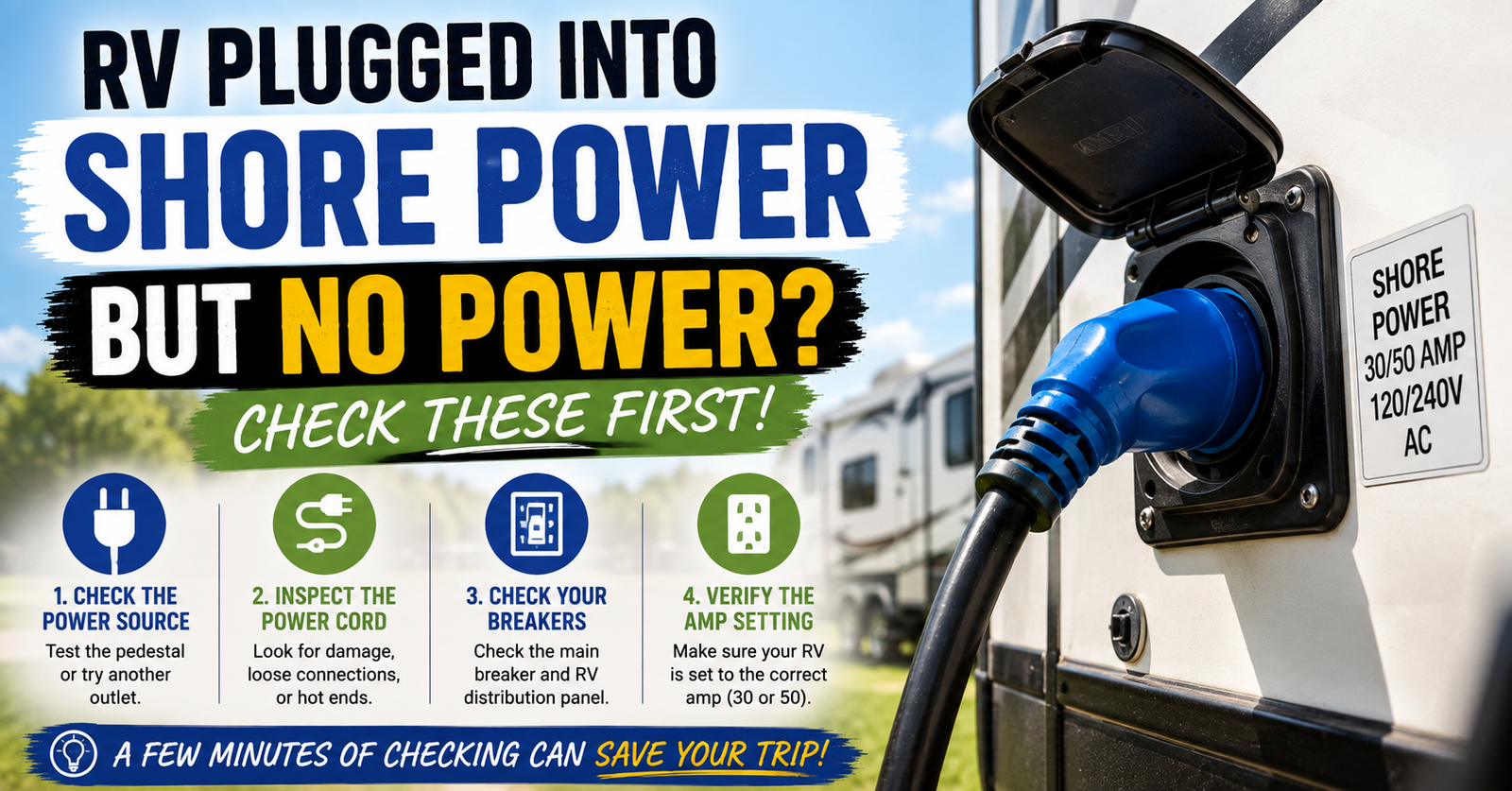
Our RV plugged into shore power but no power troubleshooting guide is the better place to start in that situation.
The GFCI Itself Can Eventually Fail
GFCIs aren’t immortal.
They’re electrical devices, and they can fail.
If you’ve eliminated downstream loads, checked for moisture and obvious circuit problems, confirmed proper incoming power, and the device still behaves incorrectly, the GFCI itself becomes more suspicious.
But I don’t like using:
“It’s probably a bad GFCI.”
as the first diagnosis.
Replacing the receptacle without finding an actual downstream fault can simply give you a brand-new GFCI that trips exactly like the old one.
Use the TEST Button
The TEST button is there for a reason.
With the circuit energized and the device operating normally, pressing TEST should cause the GFCI to trip.
Then RESET restores it.
If the device doesn’t behave as designed, it may need attention.
Follow the testing instructions for the particular GFCI installed in your RV.
And if the receptacle shows signs of physical damage, burning, or overheating, I’d replace or repair the damaged equipment rather than continuing to trust it.
A Burned Outlet Is a Different Warning
If you remove a plug and see:
Brown plastic
Melting
Black marks
Damaged contacts
or smell burned electrical material,
that’s more than a nuisance trip.
Something has overheated.
A loose connection can create resistance and heat without necessarily causing the exact overcurrent condition you’d expect to trip a normal breaker immediately.
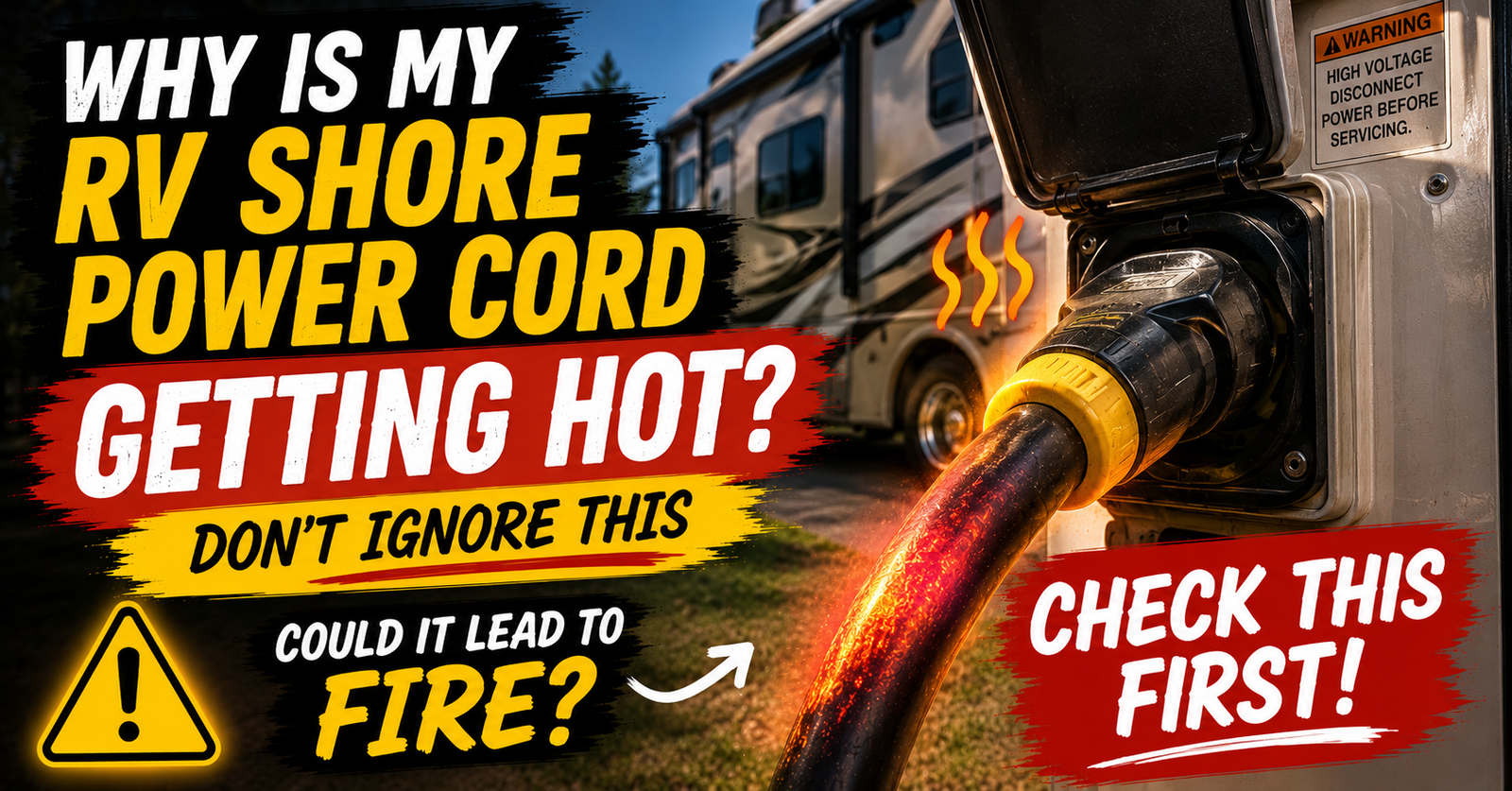
We just covered this same principle in our guide to an RV shore power cord getting hot.
Electrical heat deserves attention wherever you find it.
Don’t Replace a GFCI With a Regular Outlet
I wouldn’t “solve” repeated trips by removing the protection.
If the RV manufacturer installed GFCI protection on that circuit, putting an ordinary receptacle in its place just because it stops the annoying trips doesn’t correct the fault.
You’ve removed the thing warning you about it.
That’s not troubleshooting.
That’s hiding the symptom.
Don’t Keep Pressing RESET Either
One accidental trip?
Reset it and see what happens.
A trip associated with one appliance?
Unplug the appliance and investigate.
But if the GFCI immediately trips every single time you reset it, I don’t see any value in doing this:
RESET.
Click.
RESET.
Click.
RESET.
Click.
The result isn’t changing.
Something is causing the device to open.
Start isolating the circuit.
Can Low Campground Voltage Trip My GFCI?
Low shore voltage and GFCI trips are different electrical problems.
A GFCI is looking for a current imbalance, not simply checking whether the campground is providing exactly 120 volts.
If your campground voltage is poor, that deserves attention, but I wouldn’t automatically blame low voltage every time a GFCI opens.
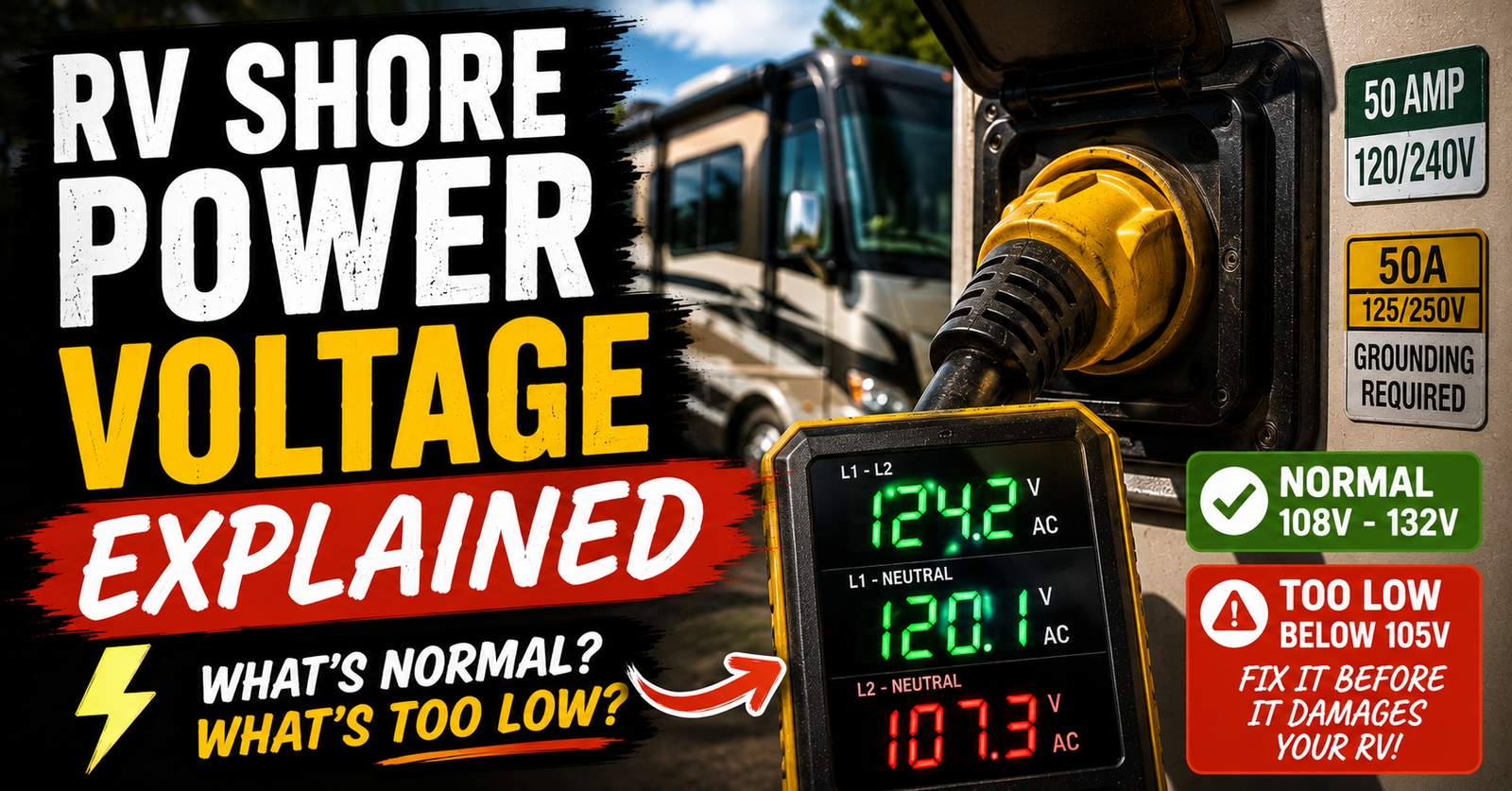
We’ve already built an entire guide to normal RV shore power voltage and what’s too low because power quality deserves its own troubleshooting path.
Keep the symptoms separated until you have evidence connecting them.
What If My GFCI Trips Only at One Campground?
That’s interesting.
Ask what changed.
Different pedestal?
Different adapter?
Different electrical protection equipment?
Different weather?
Different appliances running?
Different electrical service?
Don’t automatically assume the campground is causing a GFCI fault inside the RV, but don’t ignore the pattern either.
If the camper works everywhere except one site, that information matters.
I’d also pay attention to any error information from your electrical management system.
What If the RV Trips the Campground’s GFCI?
That’s a slightly different problem from an individual GFCI outlet inside the camper tripping.
You see this frequently when somebody brings the RV home and connects it to a garage or outdoor household receptacle that’s GFCI protected.
The camper may immediately trip the house GFCI.
That’s important enough that we’re giving RV trips GFCI outlet at home its own article next rather than burying that search intent inside this one.
The diagnostic approach can involve the RV as a whole rather than one small receptacle circuit.
What If It Started After I Plugged My RV Into a Regular House Outlet?
Again, distinguish between what’s actually tripping.
Is the house GFCI receptacle tripping?
Is the house circuit breaker tripping?
Is an RV GFCI tripping?
Those symptoms aren’t interchangeable.
And plugging an RV into a household receptacle brings another limitation into the picture: available amperage.
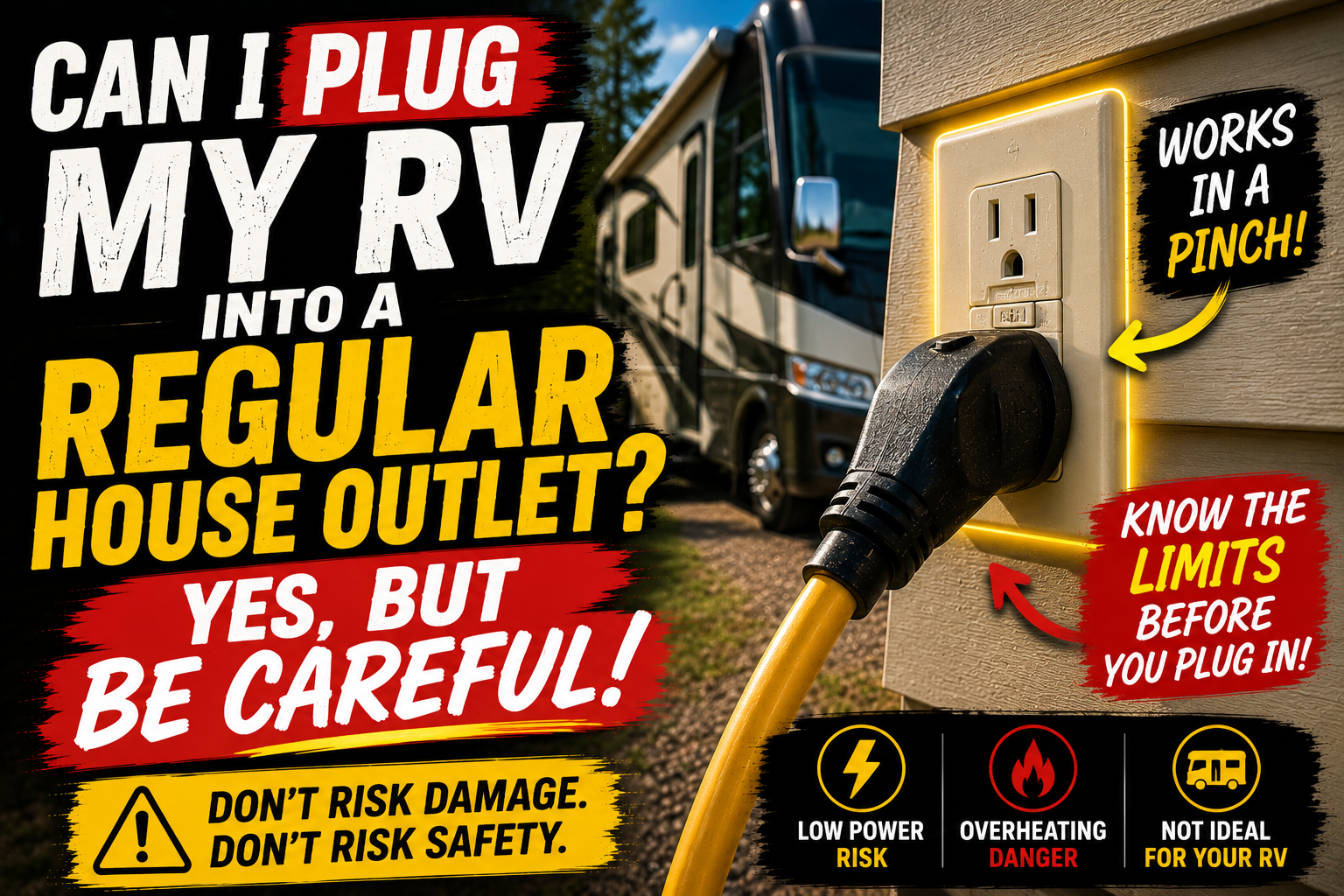
A normal 15 or 20 amp household circuit cannot supply the same electrical capacity as proper 30 or 50 amp RV service. That difference matters when 15 or 20 amp household circuit is used to power an RV.
We’re covering that separately because yes, you can plug many RVs into a regular household outlet with the proper setup, but you need to understand what you can actually run.
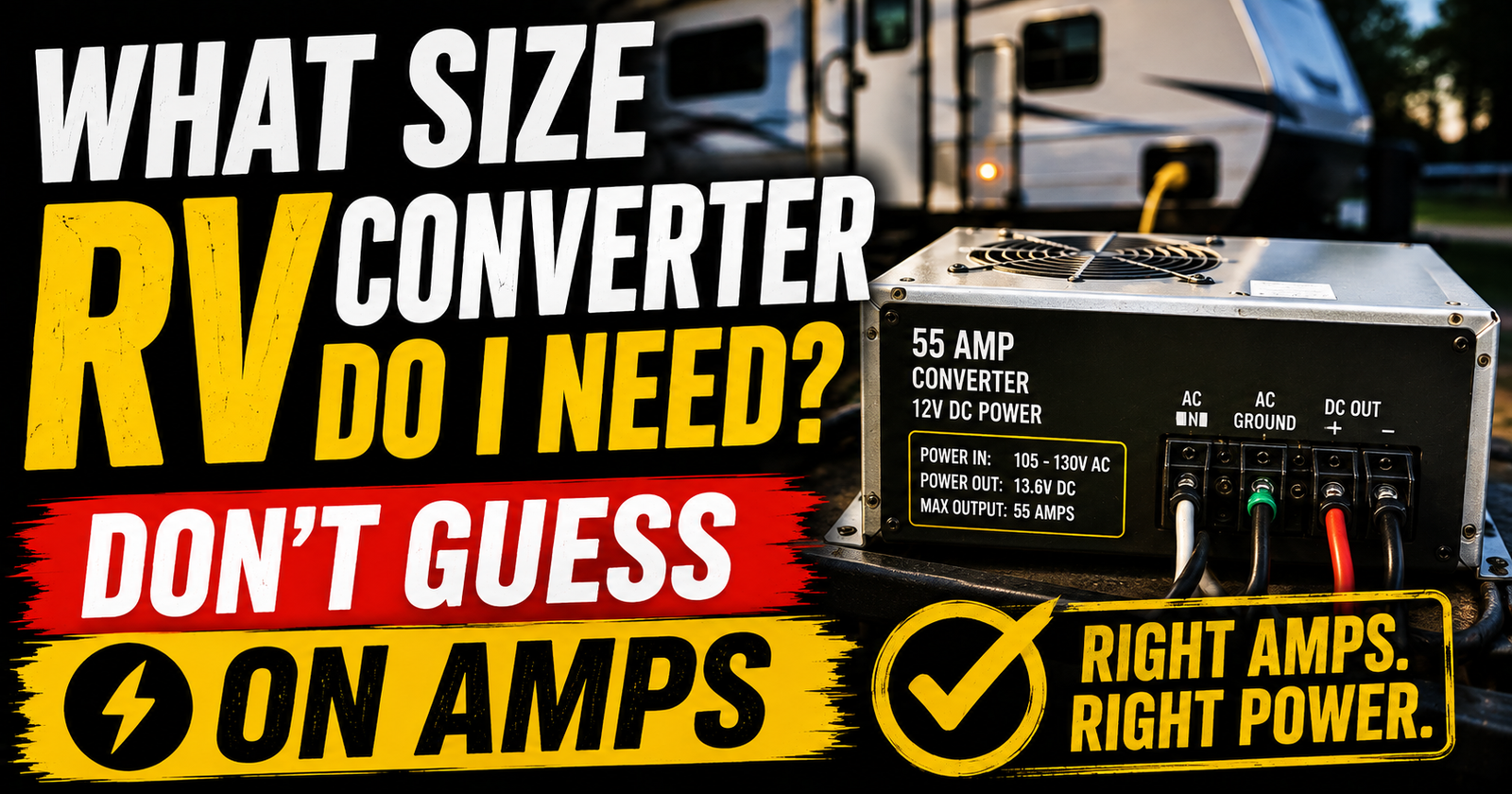
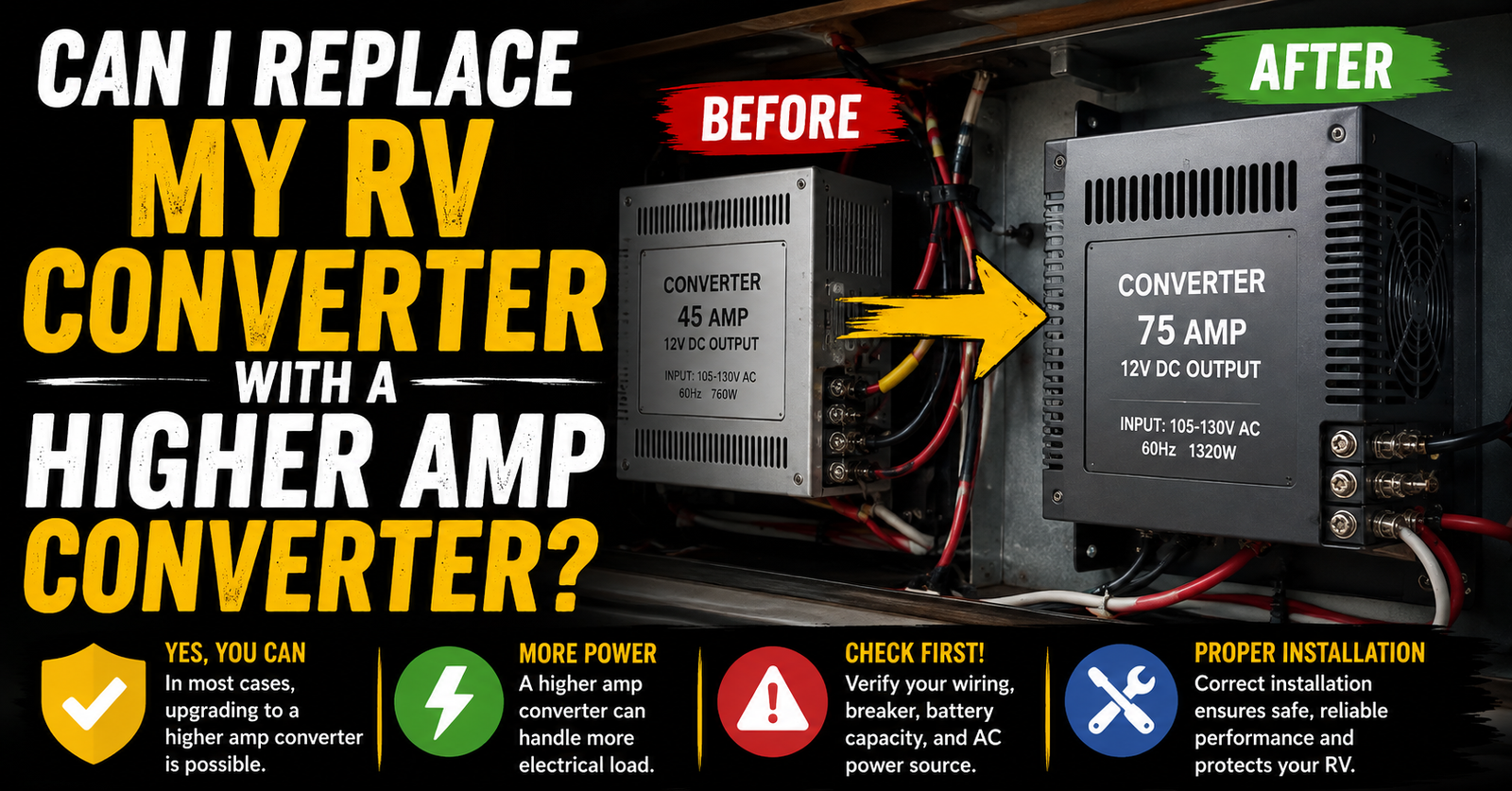
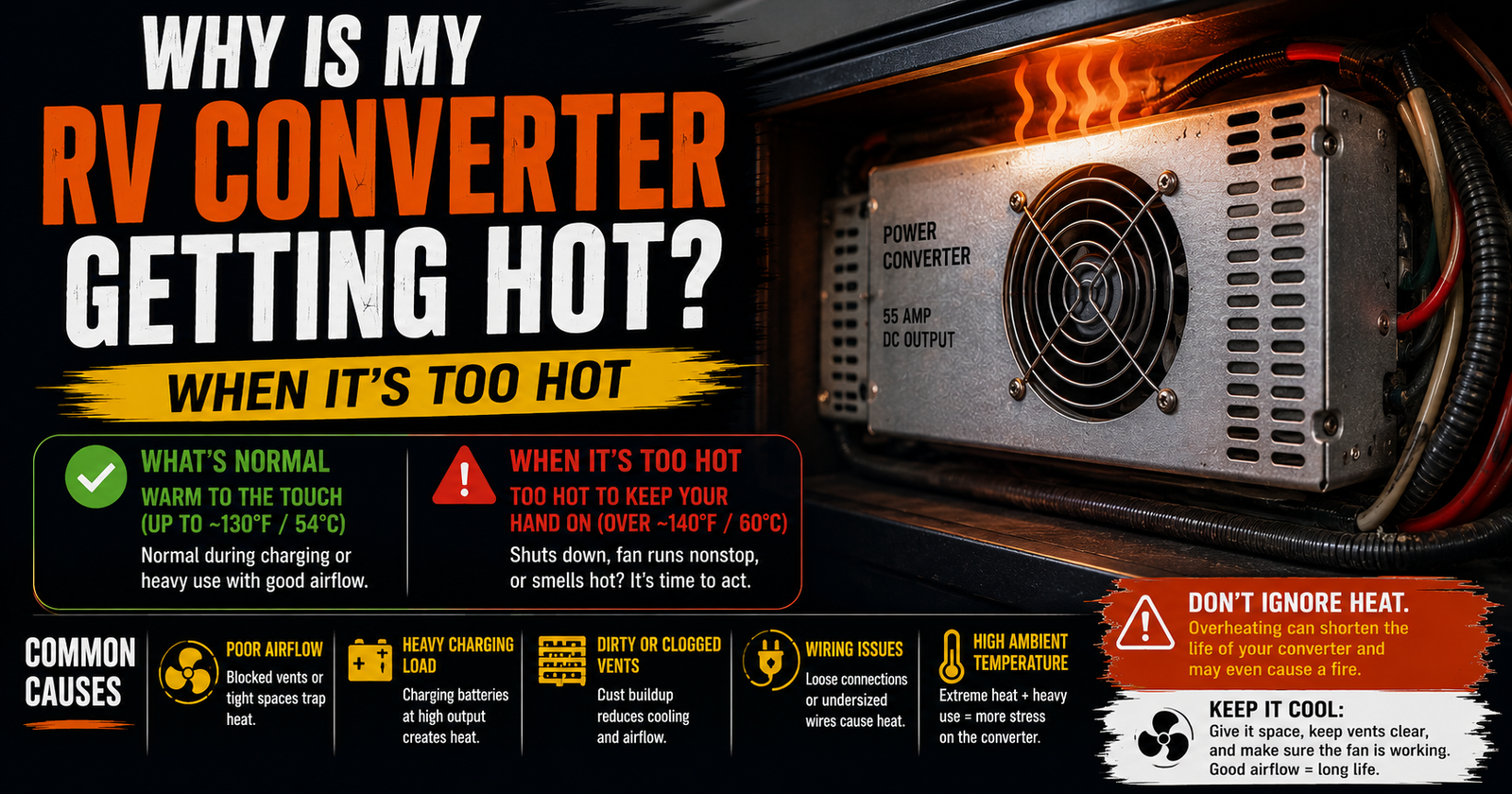
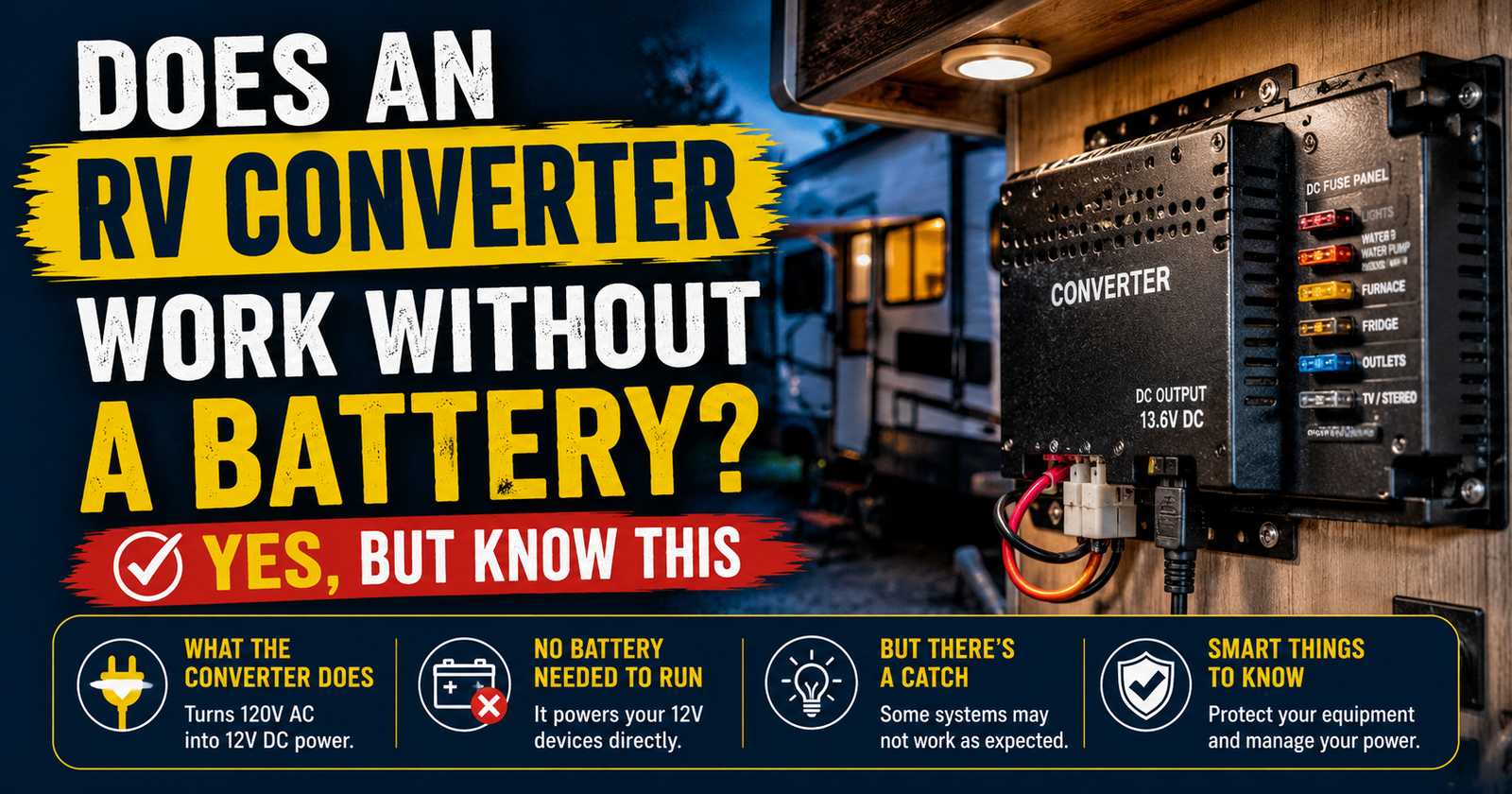
Does My Converter Have Anything to Do With the GFCI?
Possibly, depending on how the RV is wired and what exactly is tripping, but I wouldn’t start by blaming it.
Your converter uses incoming AC power to produce DC power for the RV’s 12-volt system and battery charging.
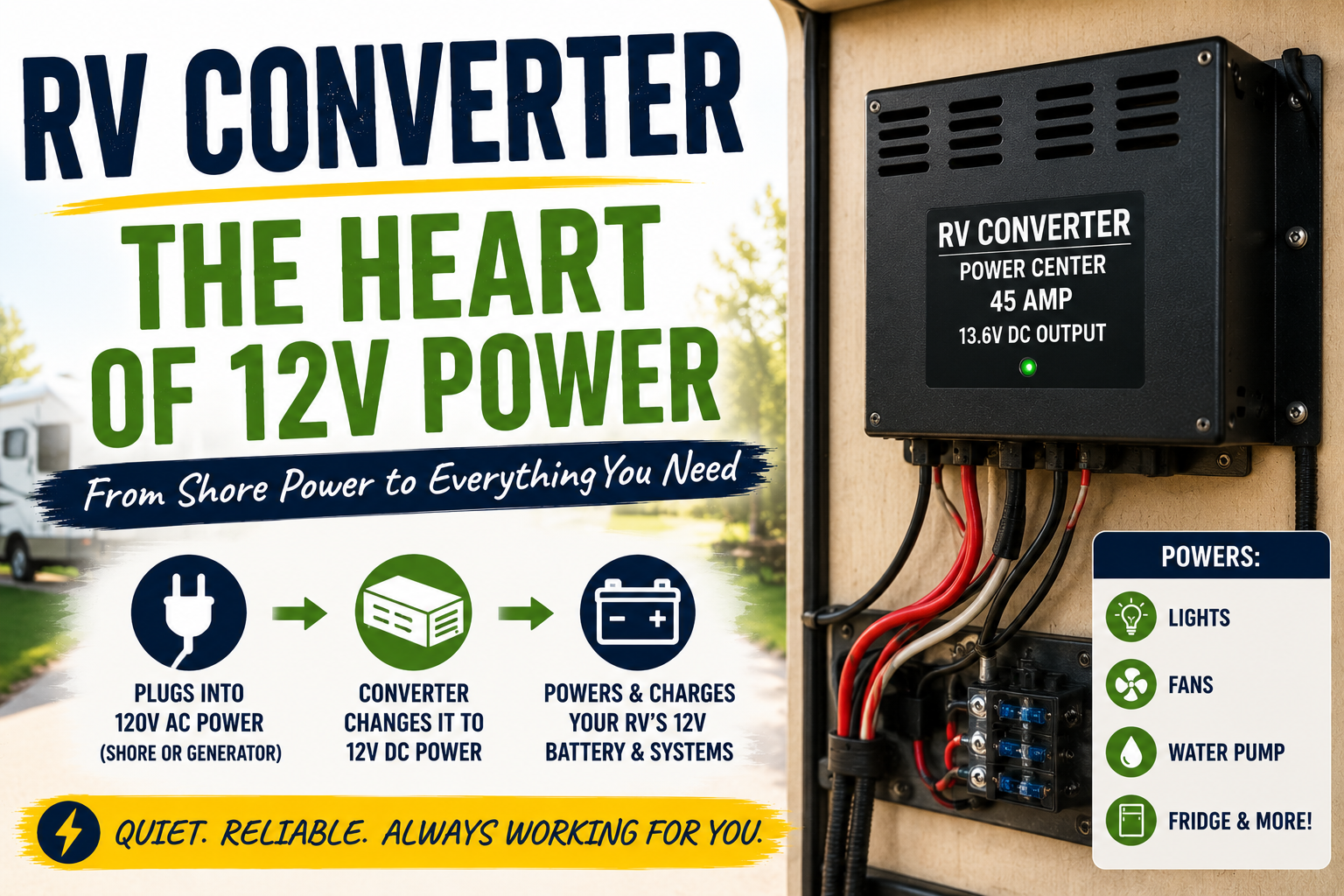
If you’re new to this entire electrical setup, our guide to what an RV converter actually does explains that relationship.
A converter or another component with an electrical fault can potentially contribute to GFCI problems in some configurations.
But “GFCI keeps tripping” isn’t enough evidence by itself to order a new converter.
Isolate the problem first.
What If the GFCI Trips When the Water Heater Is On?
That’s another excellent clue.
If the circuit behaves normally until a particular appliance operates, stop and investigate that appliance and its circuit.
Electric water-heating elements can develop electrical faults.
Again, don’t assume the GFCI is overly sensitive because it happens to trip whenever the same equipment turns on.
Consistency is useful evidence.
If turning one appliance off makes the problem disappear every time, you’ve dramatically narrowed your search.
The Same Goes for an Outdoor Extension Cord
Outdoor extension cords are easy to forget about.
Maybe you’ve got one running from the RV to:
Lights
A fan
Cooking equipment
A television
Decorations
Something underneath the awning
Then rain comes through.
The GFCI trips.
Start disconnecting those outside loads.
Inspect the cord and connections.
Don’t keep resetting the GFCI while wet equipment remains connected.
An Outlet Tester Can Help, but It Doesn’t Diagnose Everything
A basic plug-in receptacle tester can be handy for identifying some common wiring conditions at standard outlets.
But don’t let a cheap tester give you false confidence that you’ve diagnosed the entire RV electrical system.
A persistent ground fault may require actual electrical testing.
And once we’re opening electrical boxes or working around energized 120-volt wiring, the risk changes significantly.
That’s where I’d rather see somebody qualified perform the diagnosis than have a beginner poking around because they watched three videos.
RVs Have More Than One Possible Power Source
This is something I want you thinking about before opening any electrical equipment.
Your RV may have:
Shore power
Generator power
An inverter
Battery power
Solar charging
Different equipment can energize different portions of the electrical system.
Disconnecting the campground cord does not automatically mean every wire in every RV is safe to touch.
Understand your particular electrical system before opening things.
If you don’t, stop at the basic troubleshooting checks.
How I’d Narrow Down a GFCI That Won’t Stop Tripping
My process is pretty straightforward.
First I identify exactly which GFCI is tripping and which outlets lose power with it.
Then I unplug everything from those affected outlets.
Reset the GFCI.
If it holds, I reconnect equipment one piece at a time.
If it still trips with everything unplugged, I inspect for moisture and obvious receptacle damage.
Then I verify the branch breaker is operating normally and that the GFCI has incoming power.
If all the easy checks look good but the GFCI still trips, I’m looking at the protected circuit, hardwired loads, wiring, connections, and the GFCI itself.
That’s much more useful than replacing parts randomly.
When I Would Call an RV Technician or Electrician
I’d stop the DIY troubleshooting when you’ve reached the point where diagnosis requires opening energized AC equipment and you aren’t experienced with it.
Especially if you’re seeing:
Repeated immediate trips with all loads removed
Burned wiring
Melted receptacles
Electrical smells
Evidence of arcing
Breaker trips along with GFCI trips
An unexplained fault that follows the RV everywhere
You can still give the technician useful information.
Tell them which GFCI trips.
Tell them which outlets it affects.
Tell them what you’ve unplugged.
Tell them whether rain or moisture was involved.
Tell them whether one appliance consistently causes the problem.
That’s far better than saying:
“Something electrical is wrong.”
Most GFCI Problems Get Easier Once You Stop Resetting and Start Isolating
That’s really the trick.
Don’t treat the RESET button like the repair.
Treat the trip as information.
If the GFCI holds with everything unplugged, start adding loads back until you find the offender.
If it trips with everything unplugged, start looking at the circuit itself.
If it started after rain, investigate moisture.
If one appliance causes it every time, investigate that appliance.
If the GFCI doesn’t have incoming power, move upstream.

Once you understand how shore power enters and feeds an RV, this becomes much easier to picture.
And most importantly, don’t defeat the GFCI because it keeps annoying you.
I’d much rather spend some time figuring out why a safety device keeps opening than remove the protection and discover later that it was trying to tell me something important.
Written by Evan Mercer
Evan Mercer writes about RV shore power, campground hookups, electrical systems, batteries, converters, and practical camper troubleshooting for CamperAnswers.com. He focuses on helping RV owners understand what an electrical symptom is actually telling them so they can isolate the problem instead of replacing parts until something finally works.