
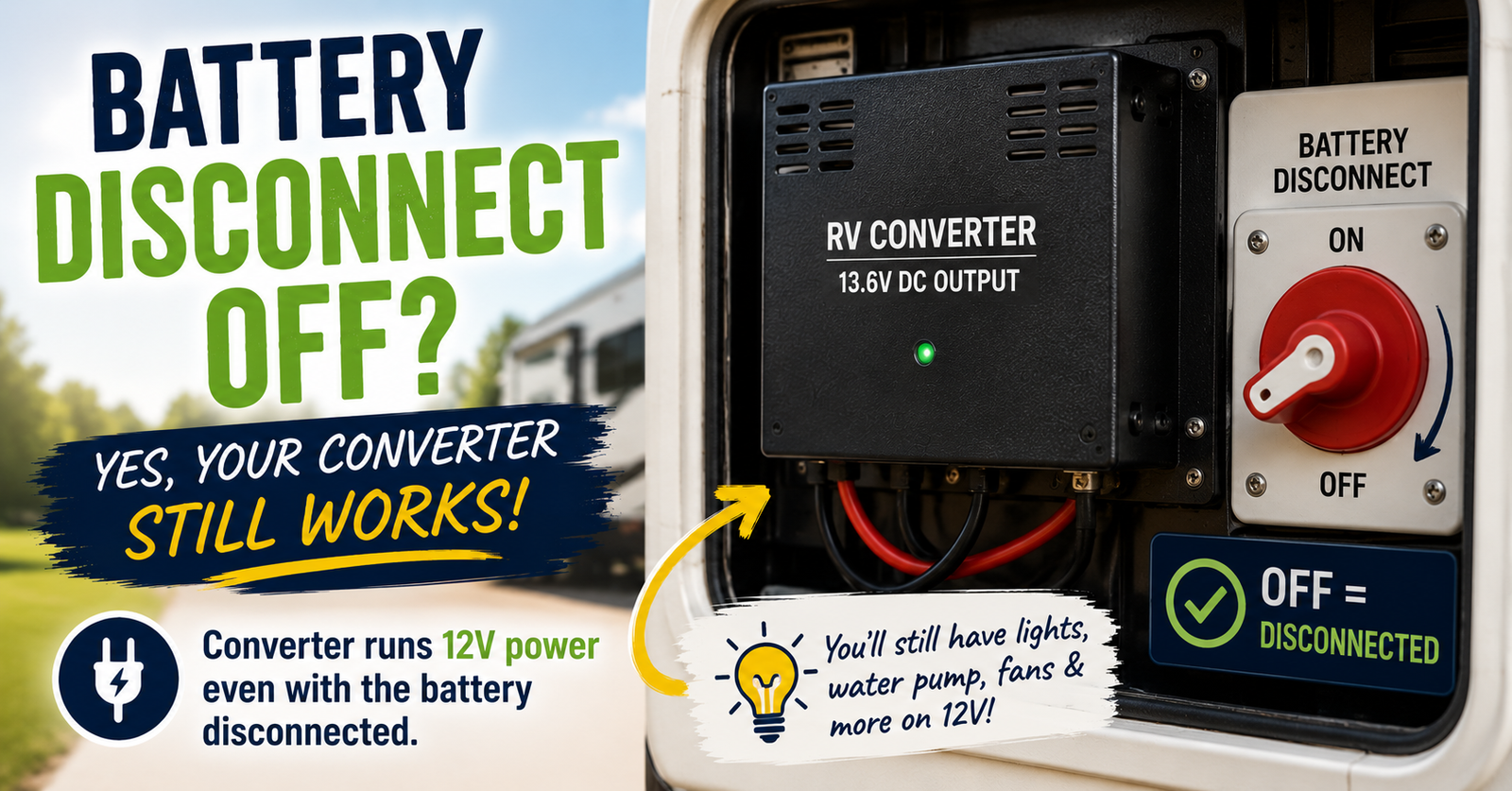
You flip your RV battery disconnect to OFF, plug the camper into shore power, and somehow the lights still work.
That can feel completely backward the first time you see it.
If the battery is disconnected, where is the 12-volt power coming from?
In many RVs, the converter can still power the camper’s 12-volt equipment while the battery disconnect is off because the converter is supplying DC power directly from shore power. However, whether the battery itself continues charging depends on where the disconnect switch is installed in the charging circuit.
That’s the part that makes this question confusing.
Two campers can have battery disconnect switches labeled almost exactly the same way and behave differently.
Your Converter Doesn’t Need the Battery to Make 12-Volt Power
This is the easiest part to understand.
Your converter takes 120-volt AC electricity from shore power and converts it into roughly 12-volt DC electricity for the camper.
Progressive Dynamics describes a converter/charger as supplying 12-volt power for RV lights and appliances while AC power is available, in addition to recharging the battery.
So when you’re plugged into shore power, your battery isn’t necessarily what’s running the lights.
The converter may be doing it.
That’s why you can turn the battery disconnect off and still walk inside to find perfectly bright lights.
The Battery Disconnect and Converter Aren’t the Same Thing
I think this is where the name battery disconnect causes trouble.
It sounds like you’re shutting down the entire 12-volt system.
Usually, you’re not.
You’re disconnecting the battery from some portion of the RV’s DC electrical system.
Meanwhile, the converter is a separate source of DC power whenever it has AC input.
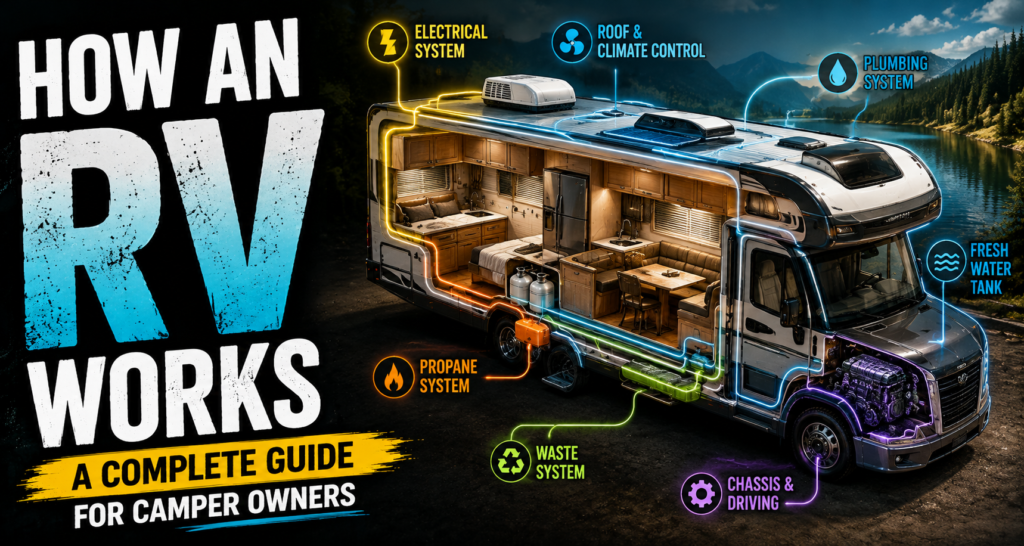
If you’re still getting comfortable with how all these pieces fit together, our complete guide to how an RV works gives you the bigger picture.
For this question, just remember:
Battery = stored DC power.
Converter = creates DC power when AC power is available.
That simple distinction explains a lot.

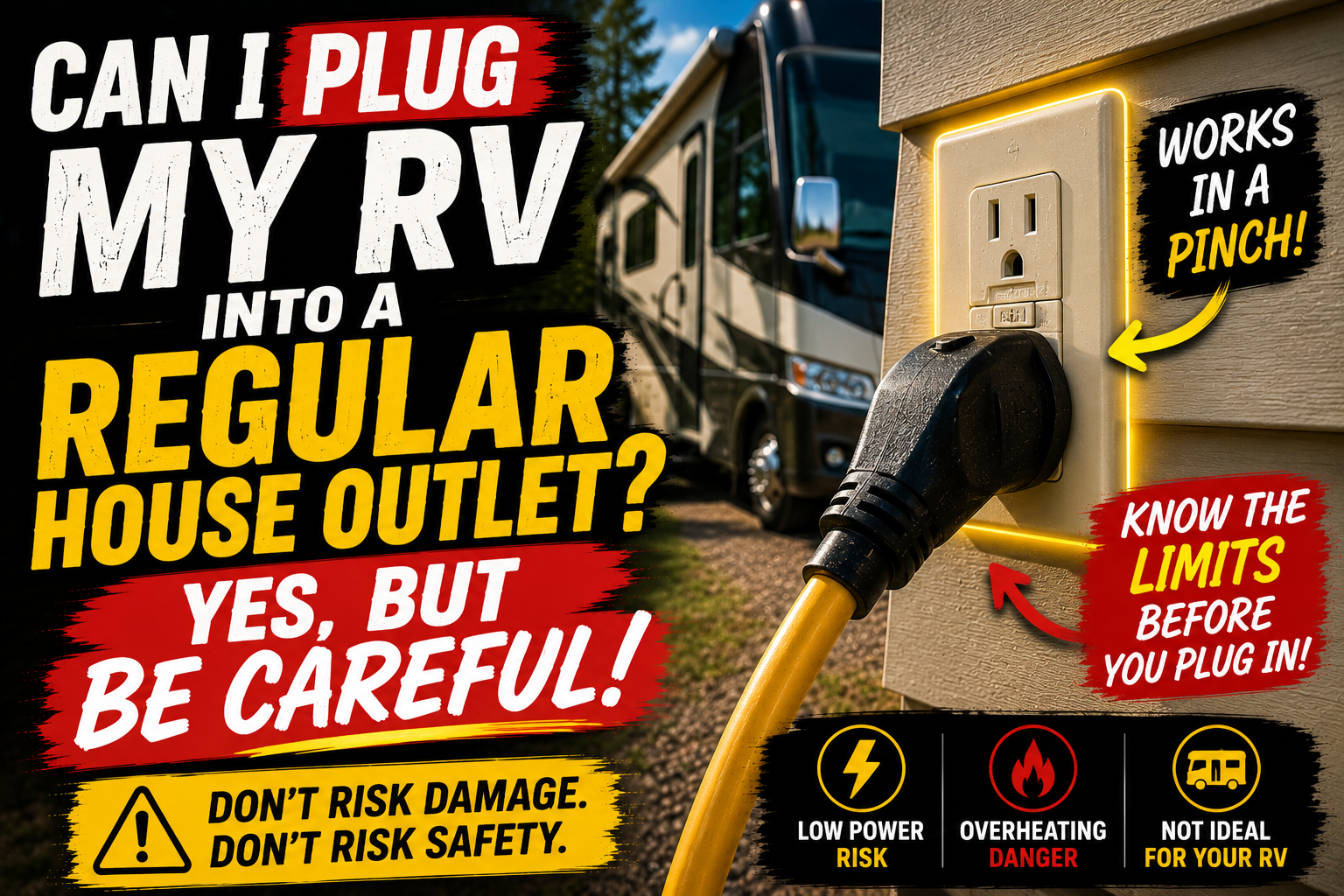
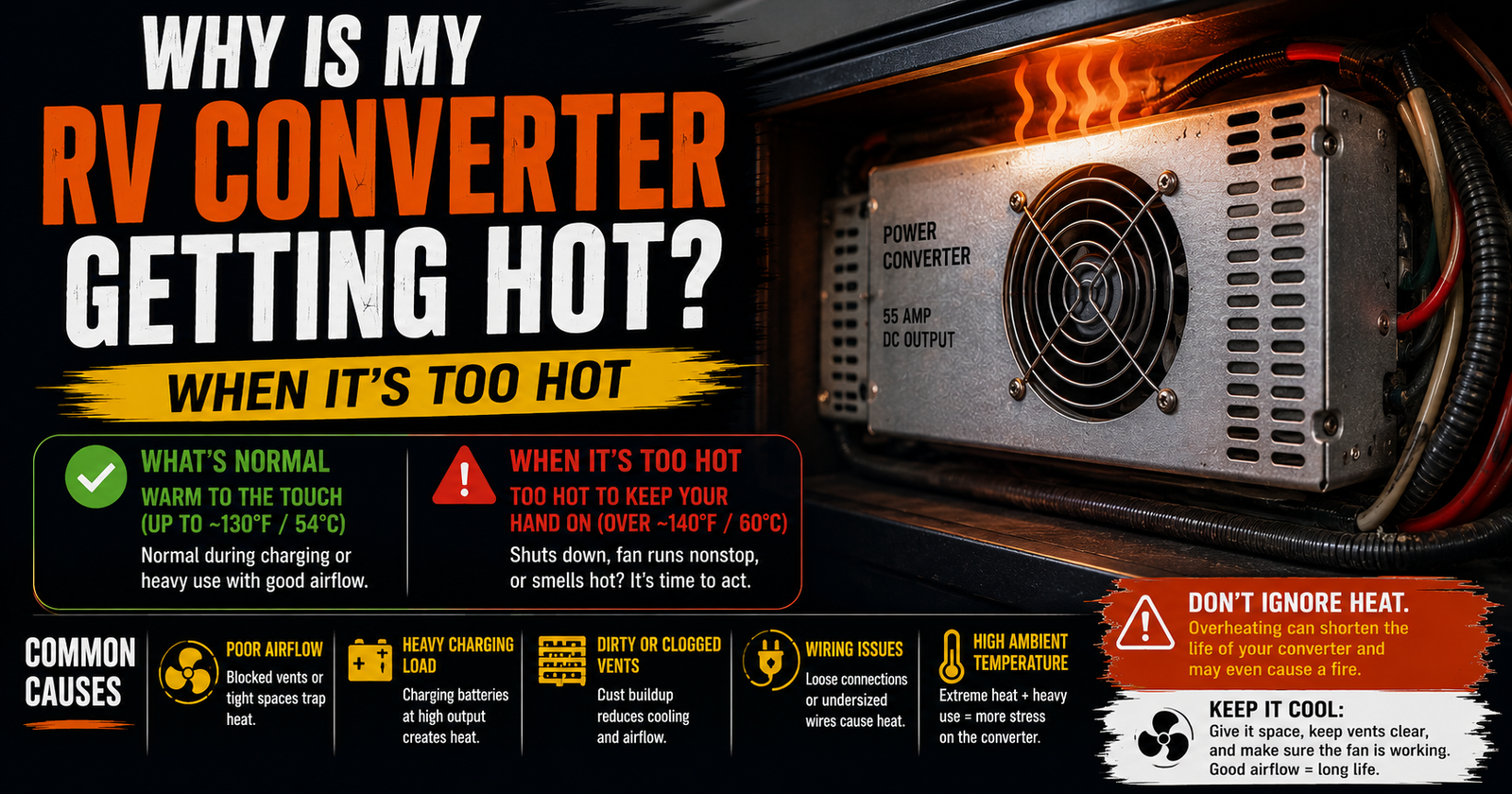
Will My 12-Volt Lights Work With the Battery Disconnect Off?
Quite possibly, yes.
If the converter is connected to the RV’s DC distribution system and you’re plugged into shore power, it can supply the 12-volt circuits even though the battery has been disconnected.
Depending on your camper, that can include things like interior lights, vent fans, control boards, and other 12-volt equipment.
This is also why seeing the lights come on doesn’t prove the battery is connected.
It only proves the 12-volt system is receiving power from somewhere.
Does the Converter Still Charge the Battery With the Disconnect Off?
This is where the answer becomes RV-specific.
If your battery disconnect opens the charging path between the converter and battery, the battery won’t charge with the disconnect off.
WFCO specifically lists an open battery disconnect switch in the positive battery lead as one possible reason converter voltage doesn’t reach the battery.
But not every RV is wired exactly the same way.
Some disconnect arrangements may leave certain circuits connected, and aftermarket battery switches can be installed in different locations.
So I wouldn’t tell every RV owner:
“Battery disconnect OFF always means no charging.”
I’d test it.

There’s a Really Easy Way to Find Out
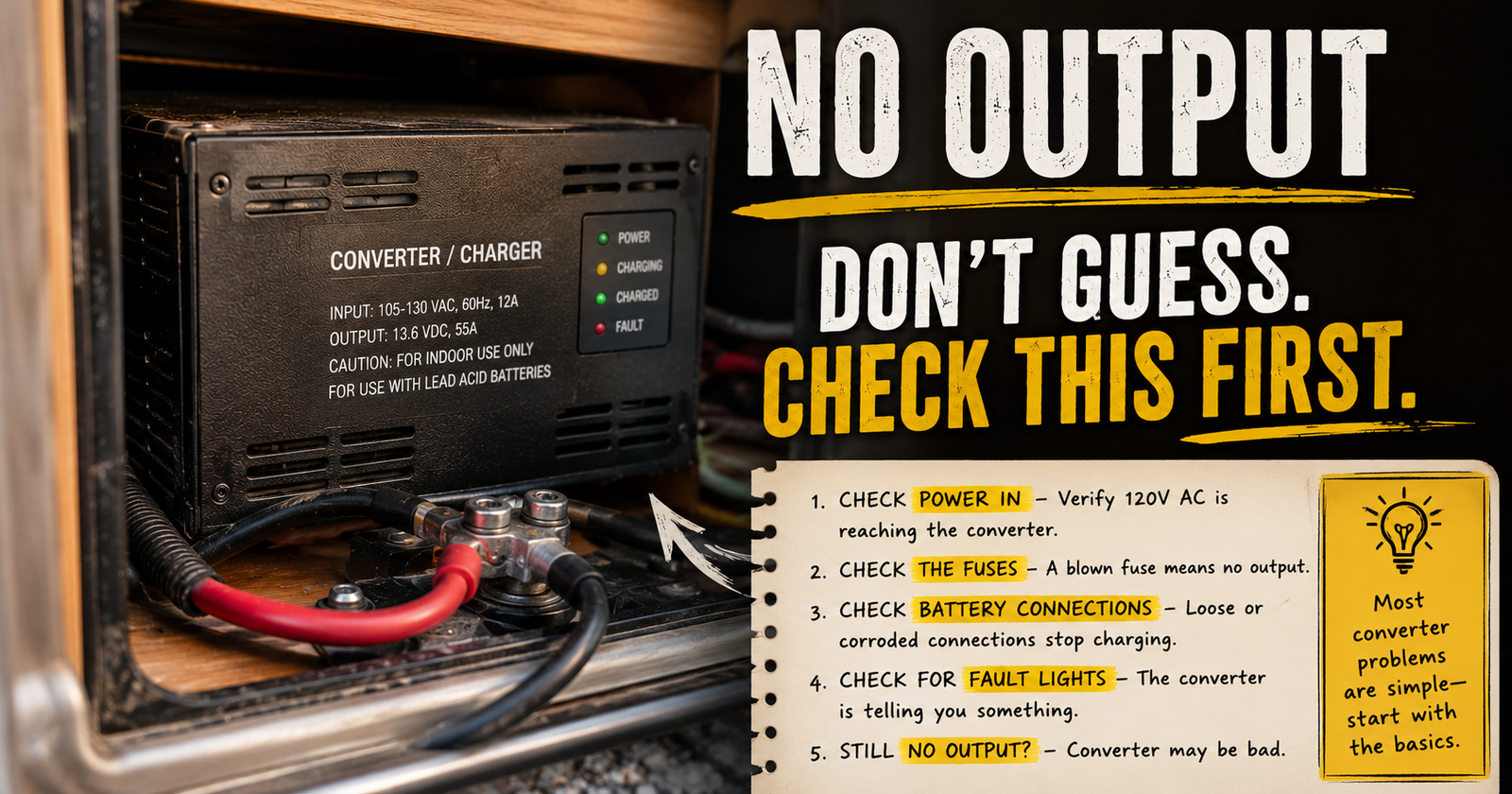
Get your multimeter.
With the RV disconnected from shore power, measure directly across the battery terminals.
Let’s say you see:
12.4 volts
Now turn the battery disconnect off.
Connect the RV to shore power.
Wait a little bit and measure directly across the battery terminals again.
If you now see a charging voltage such as 13-something volts or another value appropriate for your converter and battery, charging voltage is still reaching the battery.
If the battery stays around its original resting voltage while the converter is operating, the disconnect may be interrupting its charging path.
Don’t worry about chasing one exact voltage number for this simple test. You’re looking for a clear change that shows whether converter charging voltage is reaching the battery.
Don’t Use the RV Battery Gauge for This Test
I’d use a multimeter directly on the battery.
The little factory battery monitor inside many campers isn’t something I’d trust for diagnosing the exact behavior of a disconnect switch.
When shore power is connected, that display may be seeing converter voltage rather than giving you a useful picture of the battery itself.
Go straight to the battery posts.
Then you know what the battery is actually seeing.
Why Does My Battery Disconnect Say OFF but Everything Still Works?
Because you’re plugged in.
This is probably the most common version of the question.
Owner turns disconnect off.
Owner flips a light switch.
Light comes on.
Owner thinks:
“Well, this switch doesn’t work.”
Not so fast.
Unplug shore power and try the same test.
If the 12-volt equipment shuts down once shore power is removed, the disconnect may be working perfectly. The converter was simply supplying the DC power while you were plugged in.
That’s normal behavior for many RV electrical systems.
This Is Actually a Handy Converter Test
The behavior can tell you something about the converter too.
Suppose your battery is properly isolated from the RV according to your particular system.
You’re connected to shore power.
The interior 12-volt lights still work normally.
That strongly suggests the converter is supplying DC power.
It doesn’t prove every converter function is perfect, especially battery charging, but it tells you the converter isn’t completely dead.
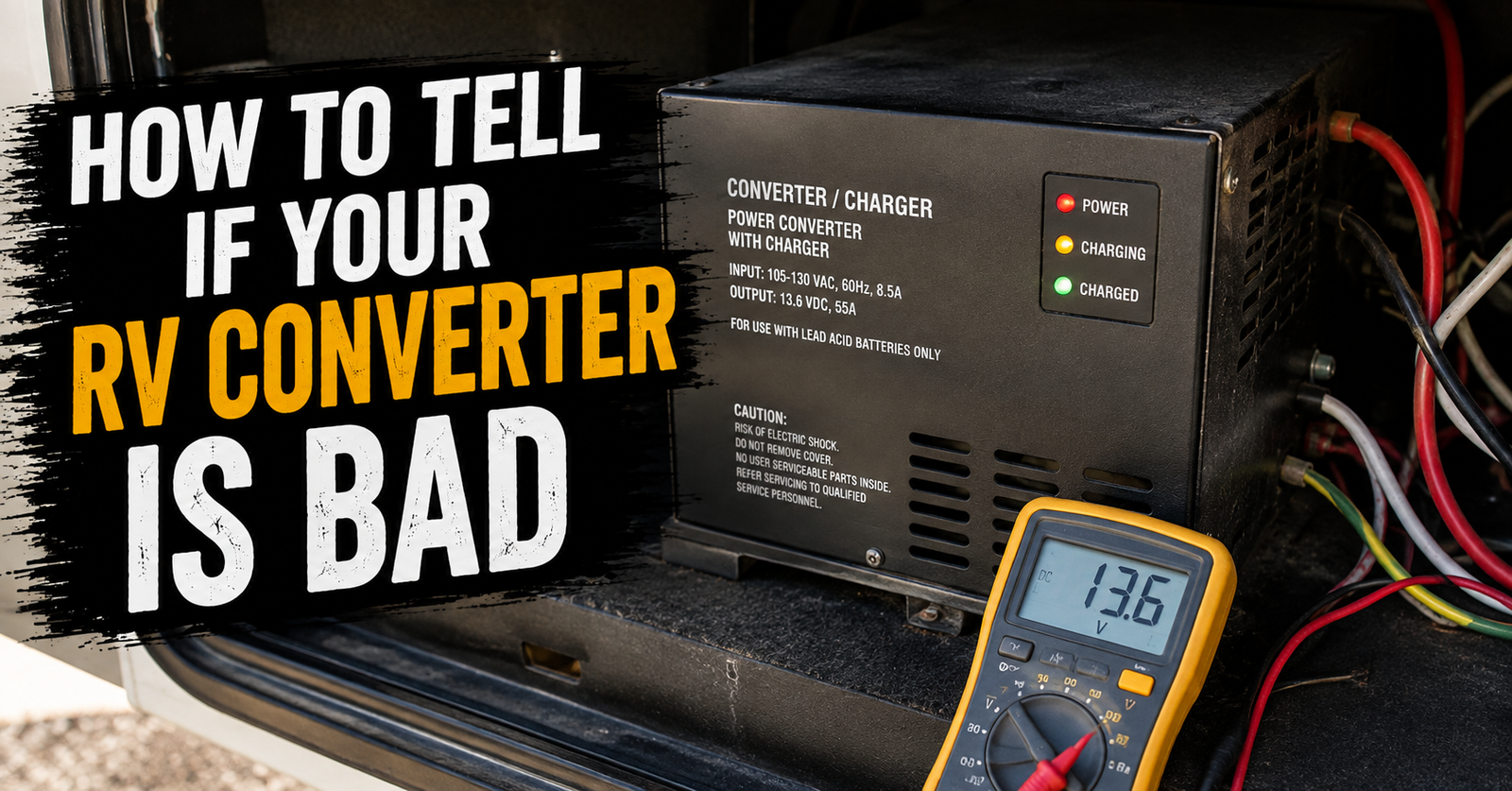
If you’re dealing with a suspected converter failure, our guide to telling whether your RV converter is bad goes much farther than this quick test.
But Some RV Equipment May Still Need the Battery
Here’s where I don’t like making blanket statements.
Just because the converter can operate without a battery doesn’t mean every RV is designed to be used indefinitely that way.
The battery can serve other purposes in the electrical system, and RV wiring varies considerably.
Older converter designs can be especially different from the modern electronic converter/chargers most people are familiar with.
Progressive Dynamics documentation for some older converter designs shows systems where relays actually changed the relationship between the battery and 12-volt branch circuits when AC power was connected.
That’s why the owner’s manual for your particular converter and RV matters.
What Happens If I Unplug Shore Power With the Disconnect Off?
Now the converter loses its AC source.
WFCO states plainly that the converter will not work without AC input.
If the battery is also disconnected from the coach’s 12-volt circuits, you’ve removed both common sources of DC power.
The lights go out.
Fans stop.
Other 12-volt equipment loses power.
That’s exactly what I’d expect in a typical setup.
Turn the battery disconnect back on and the battery can once again supply those circuits.
This Explains Why the Converter Seems to “Take Over”
That’s basically what is happening.
Plug into shore power and the converter becomes an active DC power source.
Unplug from shore power and the converter stops producing DC electricity.
Now the battery has to carry the load.
This relationship is one of the most important things to understand about camper electrical systems.
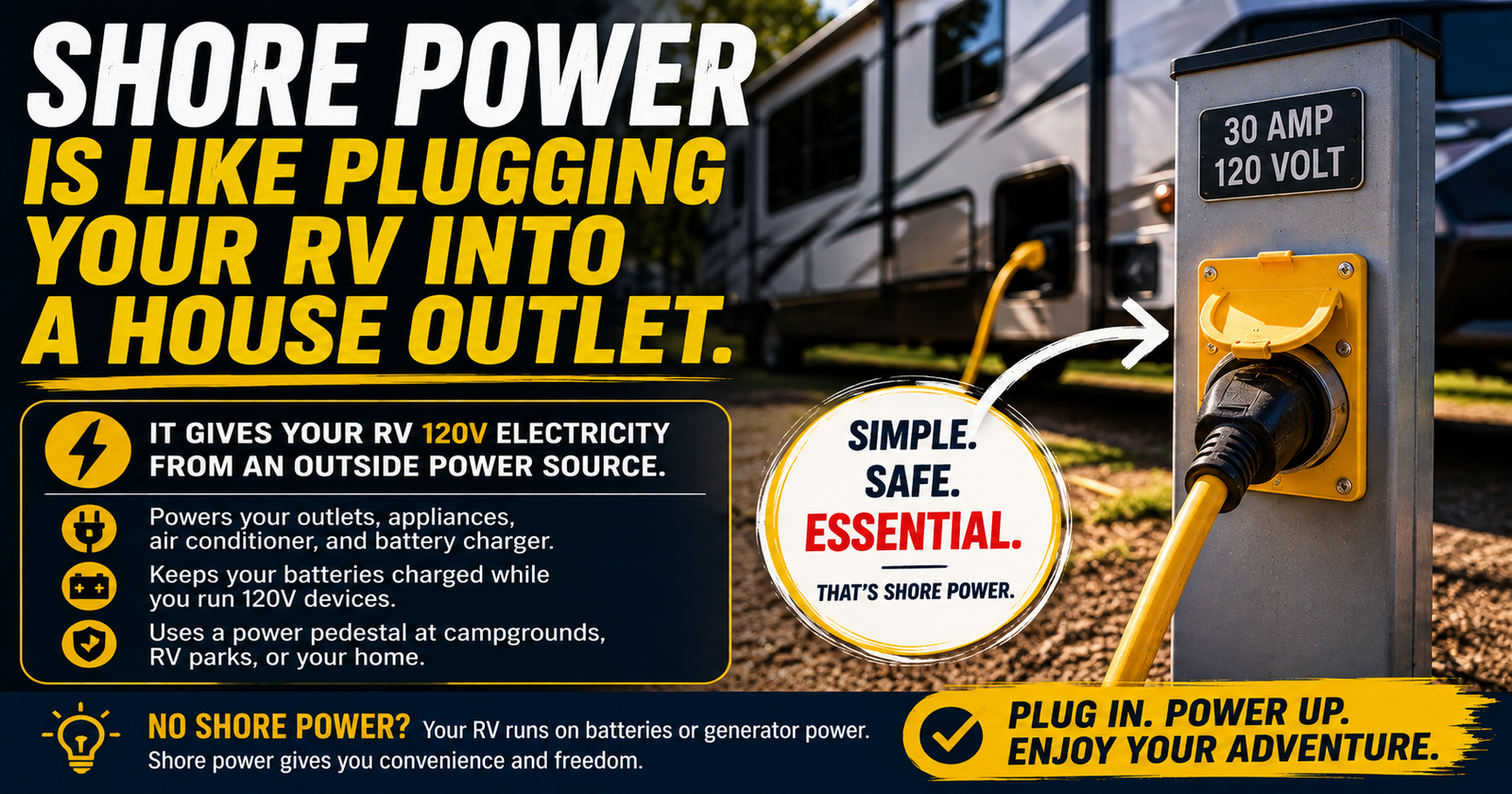
Our guide explaining what shore power means in an RV is worth reading if the whole AC-versus-DC thing still feels confusing.
Once that clicks, converter problems become much easier to diagnose.
Should I Leave the Battery Disconnect On While Plugged Into Shore Power?
In a normal RV with a healthy battery and a properly functioning, compatible converter/charger, I generally want the system configured the way the RV and converter manufacturers intended so the converter can maintain the battery.
Modern converter/chargers are designed to charge and maintain batteries rather than simply hammering them with maximum charging voltage forever.
For example, WFCO describes multiple charging stages that change converter output as battery and system conditions change.
Progressive Dynamics likewise uses automatic charging systems that monitor battery conditions and adjust charging voltage.
So I wouldn’t routinely shut the battery off while plugged in because I’m afraid any shore-power connection will automatically overcharge it.
If you’re actually seeing excessive charging voltage, heat, water loss, or other problems, that’s something to diagnose.
What If I Want to Store the RV Plugged In?
This is where I’d look at the specific battery and converter rather than following a generic internet rule.
If you have a modern multi-stage converter that’s compatible with the battery, it’s designed to maintain battery charge while AC power is available.
Progressive Dynamics says its applicable converter/chargers reduce charging current substantially once the battery reaches full charge and then replace the battery’s small self-discharge losses as needed.
But if you have an older converter, unknown equipment, or an old flooded battery that constantly loses water, I’d investigate exactly what you’ve got before leaving it plugged in for months.
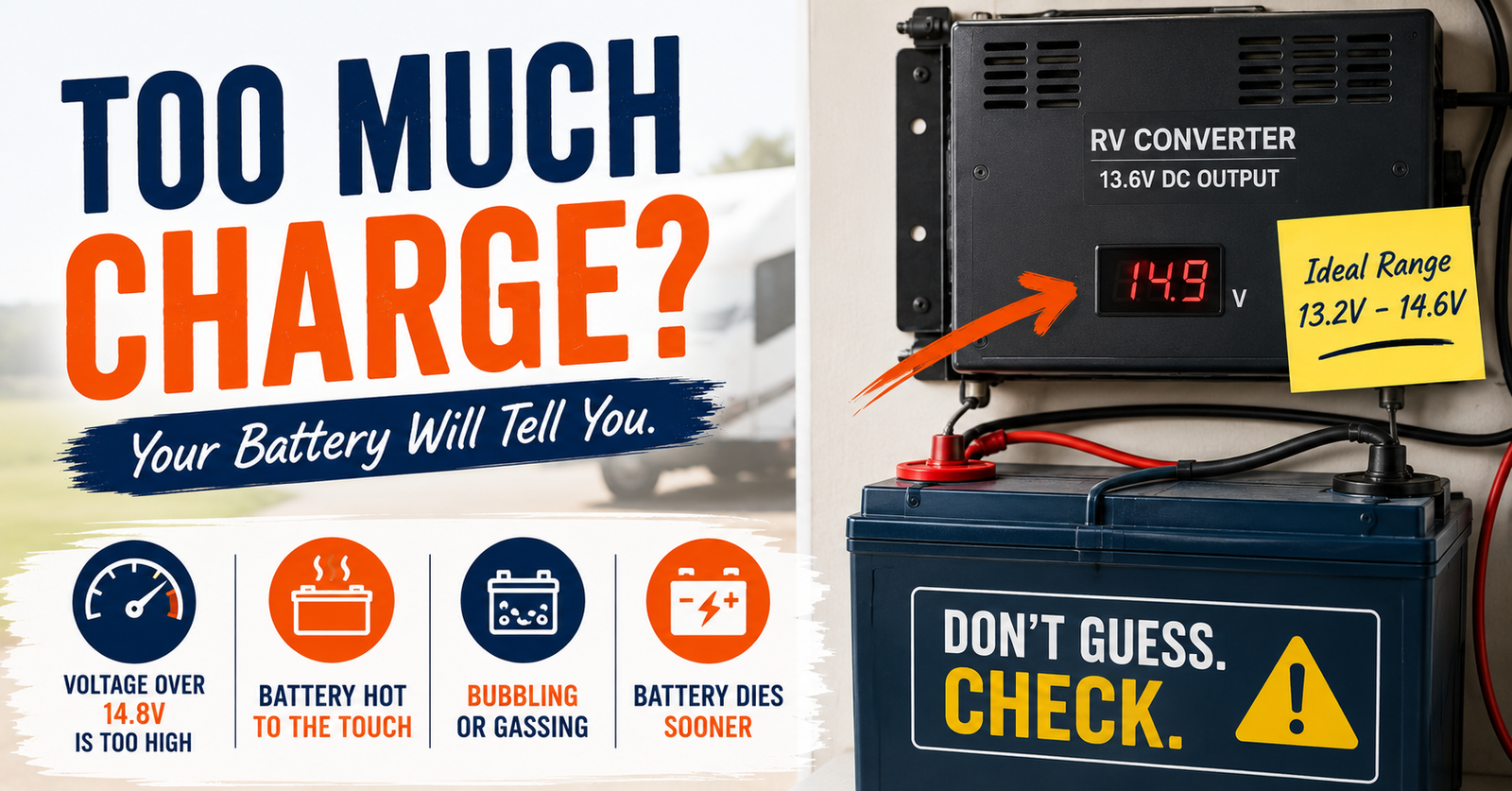
We’ve already covered signs that an RV converter may be overcharging the battery if that’s your concern.
Why Isn’t My Battery Charging With the Disconnect On?
Now we’ve got a different problem.
If you’ve confirmed the disconnect is in the proper position for charging but battery voltage doesn’t rise on shore power, don’t assume the switch is the only possibility.

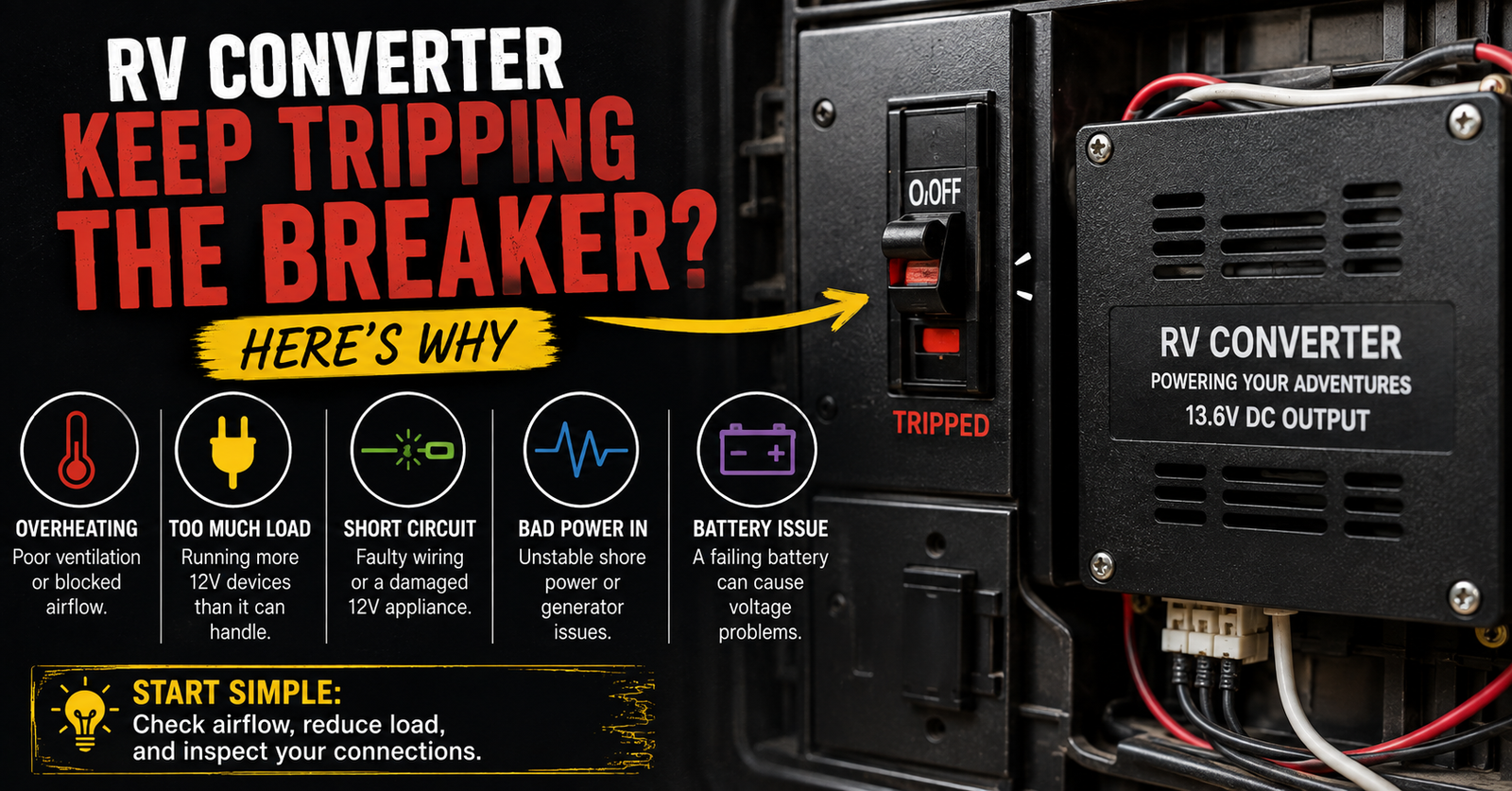
WFCO’s troubleshooting information points to several things worth checking, including reverse-polarity fuses, inline protection, battery condition, loose wiring, and the battery disconnect itself. When reverse-polarity protection is on that list, converter protection fuse keeps opening can help identify what happened before you replace the fuse.
Progressive Dynamics similarly recommends checking the fuse or breaker in the positive battery lead when converter output is correct but the battery isn’t charging.
That’s when I’d stop focusing on the disconnect switch and start tracing the charging circuit.
The Disconnect Switch Itself Can Fail
A battery disconnect is an electrical component.
Components can fail.
Connections can loosen.
Terminals can corrode.
Switch contacts can deteriorate.
And previous owners can modify things in ways that make absolutely no sense to the next person who owns the camper.
If the switch position doesn’t seem to correspond with what your meter says is happening, inspect the actual wiring rather than trusting the label.
I’ve seen enough RV electrical modifications to know that “OFF” printed on a switch doesn’t tell me exactly what somebody wired behind it.
You May Also Have More Than One Battery Isolation Device
Some campers have a factory disconnect switch plus additional battery protection or switching equipment.
A previous owner may also have added a manual battery switch directly near the battery.
Solar complicates things further because the solar charging system may be connected differently from the converter.
So you could theoretically disconnect the battery from one portion of the RV while another charging source remains connected.
That’s why measuring directly at the battery is so useful.
You don’t have to guess what the switches are doing.
The meter tells you.
Solar Can Make This Test Confusing
Here’s an easy trap.
You’re trying to determine whether the converter charges with the battery disconnect off.
The camper is sitting outside in bright sunlight.
You measure the battery and see charging voltage.
Aha! The converter is still charging it.
Maybe.
Or the solar controller is.
If you have solar, you need to account for it when performing the test.
Otherwise you’re trying to diagnose one charging source while another charging source is quietly working in the background.
The Same Thing Applies to Your Tow Vehicle
If you’re connected to a tow vehicle and the trailer charging circuit is active, you’ve introduced another possible source of battery charging.
Again, isolate variables.
When I’m trying to determine exactly what the converter is doing, I don’t want solar, the tow vehicle, and the converter all feeding the system at the same time.
One charging source at a time makes troubleshooting much easier.
Can I Run My RV With the Battery Disconnect Off?
While connected to shore power, many of the RV’s 12-volt systems may continue operating from converter power.
But I wouldn’t make “battery permanently disconnected” the normal operating configuration unless the RV and converter manufacturers say that’s acceptable for your setup.
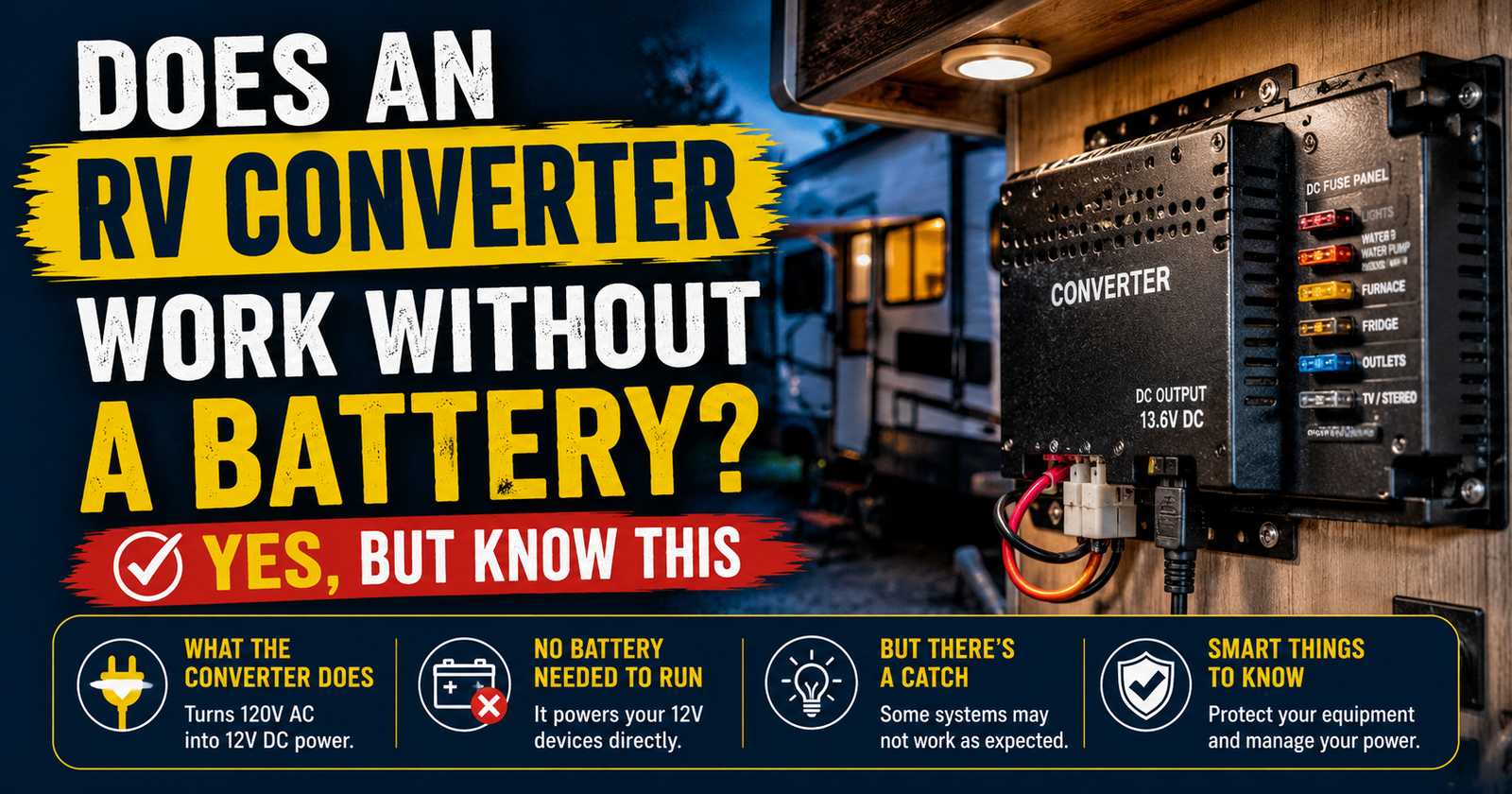
We’ve covered the bigger question separately in our guide to whether an RV converter can work without a battery.
The short version is that many modern converters can produce DC power without a battery connected.
That doesn’t mean every camper and every piece of equipment should be treated identically.
Why Does My Battery Still Go Dead With the Disconnect Off?
This is the opposite side of the problem.
You turn the battery disconnect off expecting the battery to be completely isolated.
A week or two later, the battery is dead anyway.
That can happen because some RV circuits may bypass the disconnect switch entirely.
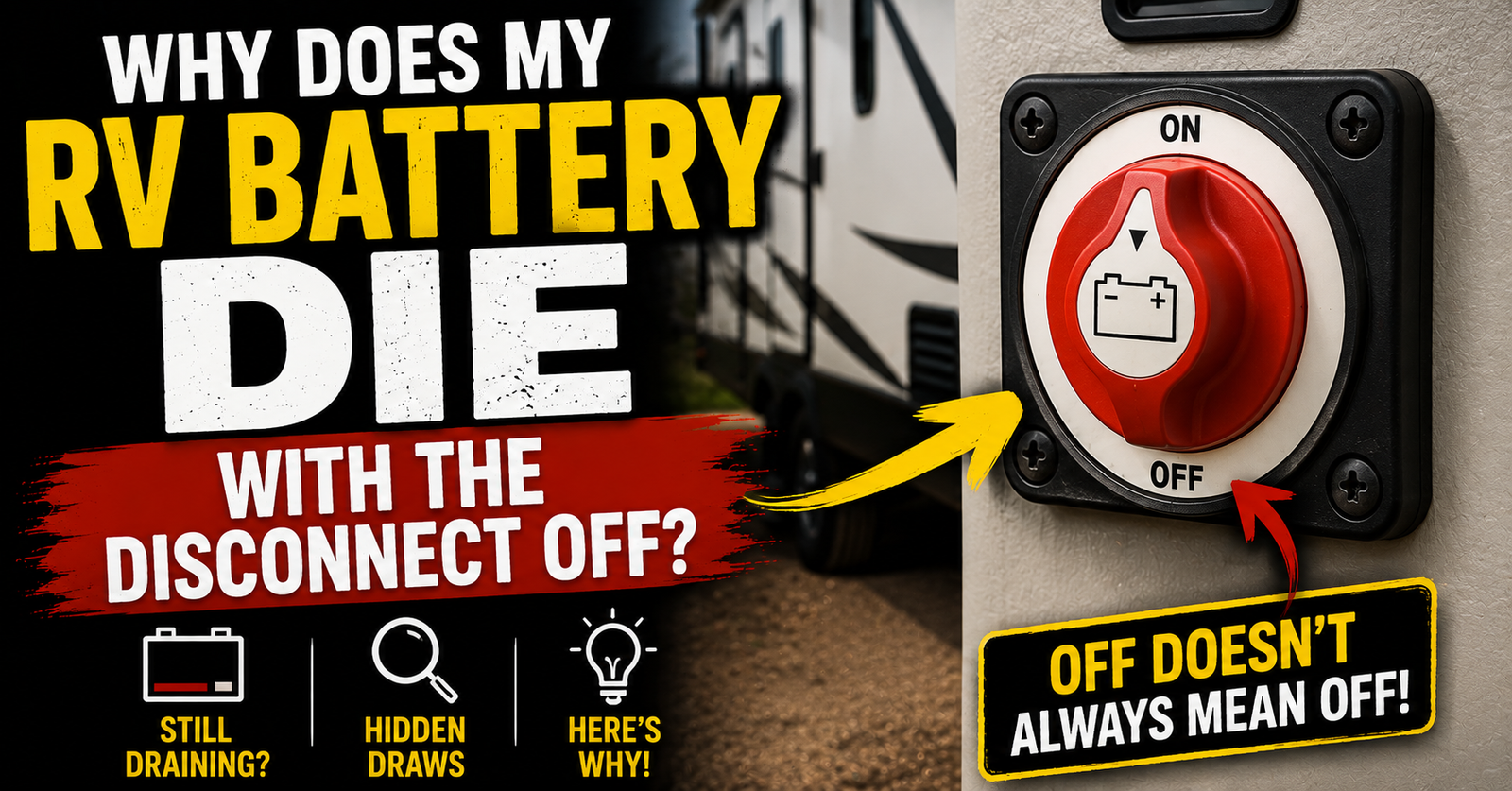
We’ve already dug into this problem in our guide explaining why an RV battery can die with the disconnect off.
The switch may disconnect most loads without disconnecting every possible load.
Again, wiring varies by RV.
The Best Way to Learn What Your Disconnect Actually Does
Don’t guess from the switch label.
Test it.
Start with shore power disconnected.
Measure battery voltage.
Turn the disconnect OFF.
Check which 12-volt equipment still operates.
Then connect shore power and see what changes.
Measure directly at the battery to determine whether charging voltage reaches it.
If you have solar or another charging source, account for that during testing.
Those few checks tell you much more about your particular RV than somebody online saying:
“Mine works this way.”
Your camper may not be wired like theirs.
Don’t Start Moving Wires Just to Make Yours Behave Differently
If you discover your battery doesn’t charge with the disconnect off, don’t immediately decide the switch was wired wrong.
That may be exactly how the manufacturer intended it to operate.
Likewise, if your battery continues receiving charge with the disconnect off, don’t automatically assume something has been bypassed incorrectly.
First understand the design.
Then decide whether there’s actually a problem.
When I’d Start Looking for a Wiring Problem
I’d investigate farther if the behavior suddenly changed.
Maybe the battery used to charge on shore power and now doesn’t.
Maybe the disconnect used to shut the battery off and now seems to do nothing.
Maybe battery voltage appears on circuits regardless of switch position.
Maybe the switch gets hot.
Maybe you see melted terminals or damaged wiring.
Maybe somebody recently replaced the converter or batteries.
That’s different from discovering that your RV has behaved this way since you bought it.
Changes are clues.
If Your Converter Works but the Battery Doesn’t Charge, Follow the Power
This is one of my favorite ways to think about RV electrical troubleshooting.
Don’t ask:
“Which expensive part should I replace?”
Ask:
“Where does the power stop?”
If the converter is producing proper DC voltage, follow that voltage toward the battery.
Converter output.
Distribution system.
Fuse or breaker.
Battery disconnect.
Charging cable.
Battery terminal.
Progressive Dynamics specifically says that when converter output tests good but the battery isn’t charging, the fuse or breaker in the battery’s positive lead should be checked.
Find where the voltage disappears and you’ve usually found the neighborhood where the problem lives.
The Simple Answer
If you came here because you turned your RV battery disconnect off and the lights still work while plugged into shore power, that does not automatically mean anything is wrong.
The converter can supply 12-volt DC power whenever it has the proper AC input.
The battery is a separate source of DC power.
What the disconnect switch does to battery charging depends on how your RV is wired.
That’s the part I’d actually test.
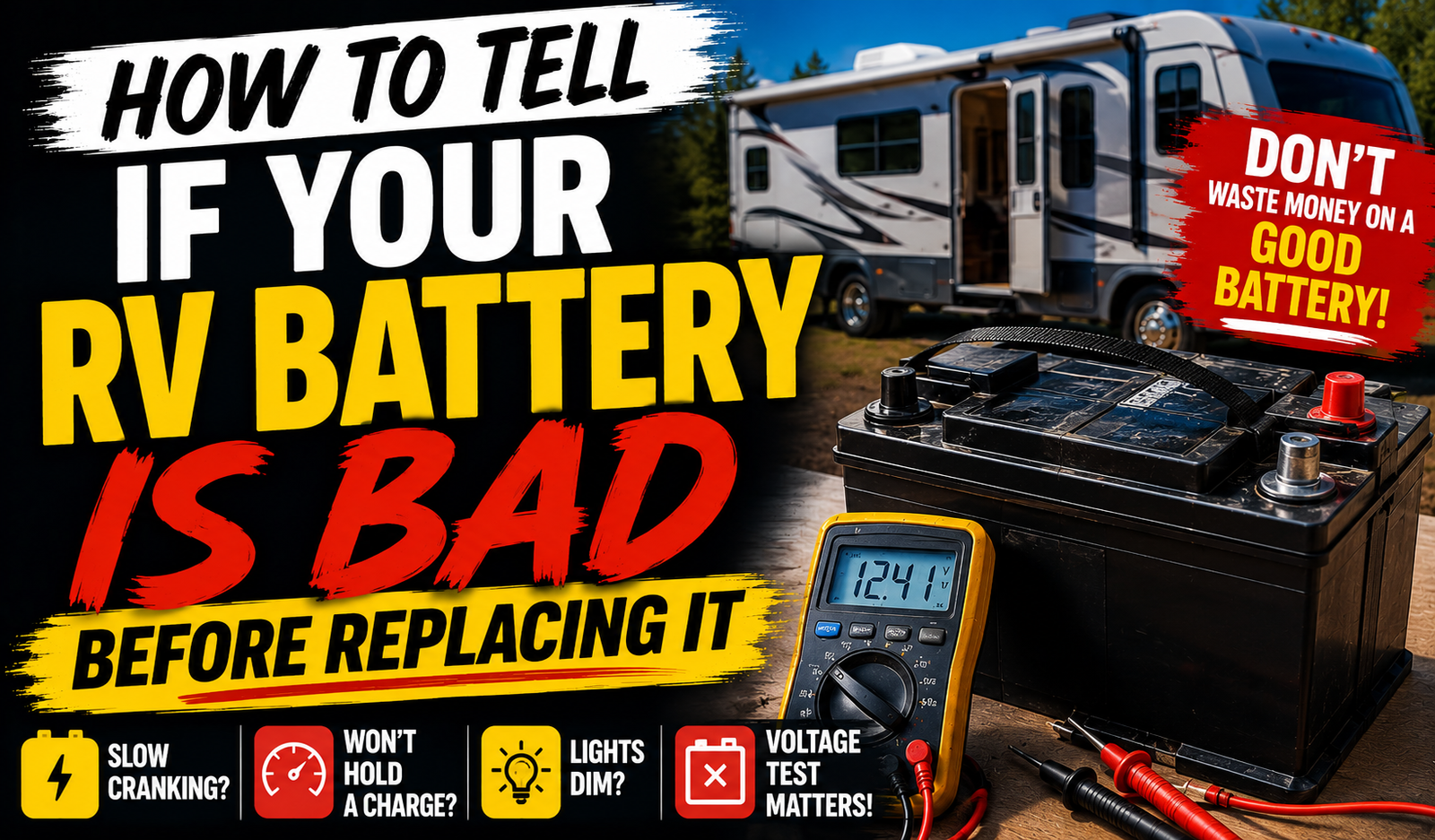
Put a multimeter directly on the battery, eliminate other charging sources such as solar when appropriate, and compare what happens with the disconnect ON and OFF while the converter is powered. If the readings still look questionable, test whether the battery is actually bad under controlled conditions.
Within a few minutes, you’ll know far more about your own camper than the label on that little disconnect switch could ever tell you.
Written by Evan Mercer
Evan Mercer writes about RV converters, batteries, shore power, charging systems, and practical electrical troubleshooting for CamperAnswers.com. He focuses on making camper electrical systems understandable enough that owners can figure out what their RV is actually doing before they start replacing parts.