
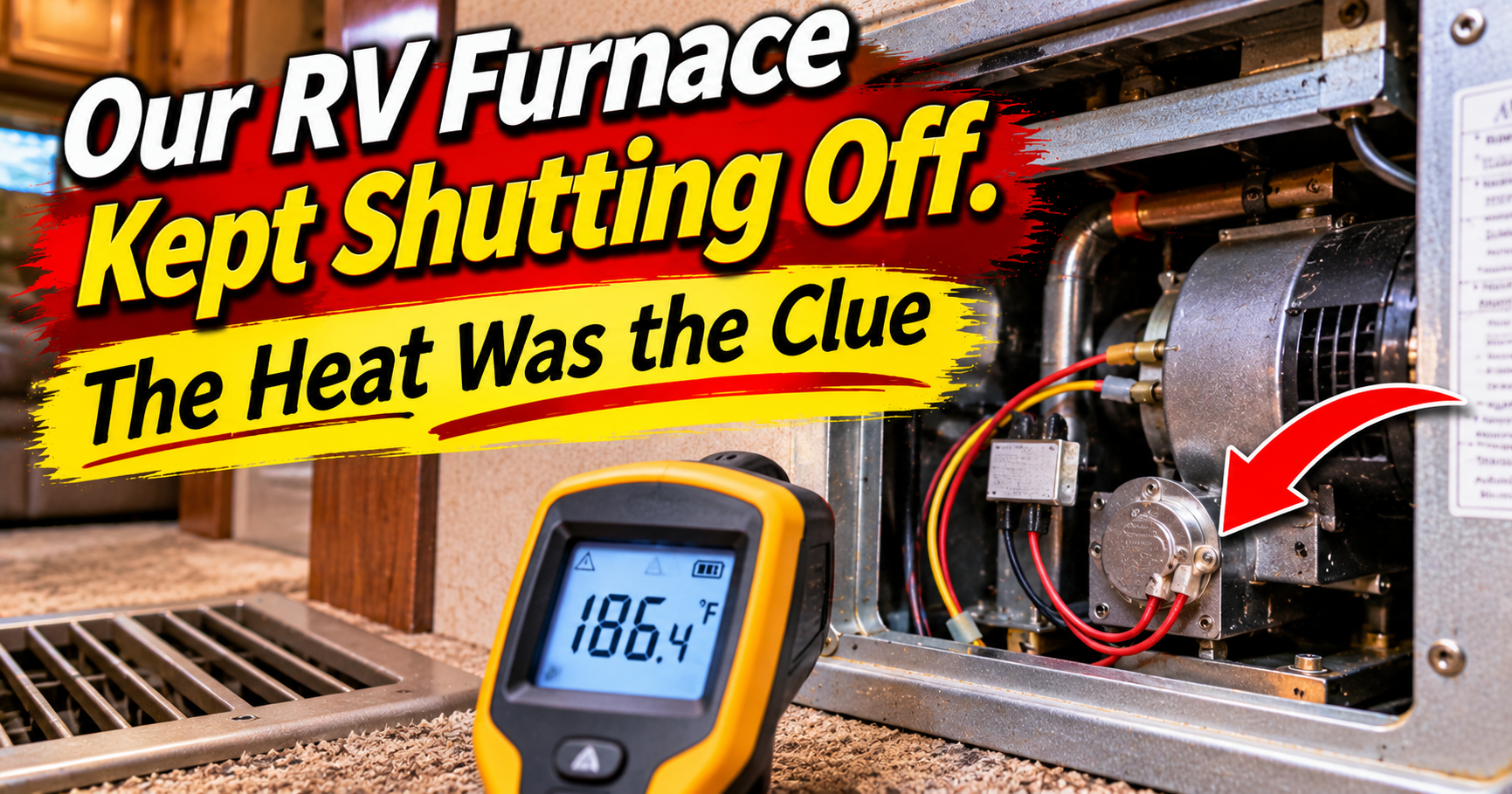
This furnace problem confused me more than one that simply wouldn’t start.
The furnace came on.
Blower ran.
We actually got heat.
Then it shut off way sooner than I expected.
A little later it would try again.
At first, that made me think the thermostat was acting weird. But the fact that the furnace actually produced heat before shutting down turned out to be the useful clue.
If an RV furnace successfully lights and produces warm air before shutting off too soon, I wouldn’t start with the same things I’d check on a furnace that never ignites. The burner already proved it can light. I’d pay close attention to how long it runs, whether airflow from the vents feels strong, whether any vents are closed or blocked, and whether it shuts down within seconds or after several minutes. If the furnace never gets past ignition or starts blowing cold air, RV furnace ignition troubleshooting can help separate startup symptoms before replacing parts.
Those two shutdown patterns can mean very different things.
First I Wanted to Know How Long It Actually Stayed Lit
“Furnace keeps shutting off” isn’t specific enough.
I started paying attention to the timing.
Does it light and die almost immediately?
Or does it actually heat the camper for several minutes before shutting down?
That distinction matters.
If the burner lights and then dies within only a few seconds, flame sensing moves much higher on my list.
If it runs long enough to produce real heat and then repeatedly shuts down, I’m much more interested in airflow and overheating.
Current furnace troubleshooting guidance makes the same distinction. A furnace that lights and immediately drops the flame points toward flame confirmation, while one that runs and then repeatedly cycles off can be opening its high-temperature limit because heat isn’t moving away from the furnace properly.
I Checked the Vents Before Touching the Furnace
This is the kind of simple thing I’ve learned not to skip with campers.
Are all the heat registers open?
Is something sitting over one?
Did a bag get pushed against a return-air opening?
Did somebody close vents because one part of the camper was getting too warm?
The furnace has to move the heat it creates.
If airflow is restricted enough, temperatures inside the furnace can climb until the high-limit safety switch shuts the burner down.
Then things cool.
The furnace tries again.
And you’ve got a camper that seems to heat in short bursts without ever behaving normally.
The Return Air Is Easy to Forget
Everybody notices the warm-air vents because that’s where the heat comes out.
The return side isn’t nearly as interesting.
Until it’s blocked.
The furnace needs air coming into the system too.
So I’d look around the return-air opening and make sure camping gear, bedding, clothes, storage bins, or anything else hasn’t been shoved against it.
That’s especially easy to do in a camper because we’re constantly trying to use every square inch of space.
A duffel bag in the wrong place can suddenly become part of the heating system.
I Put My Hand Over the Vents
Nothing scientific.
I just wanted to know:
Does the airflow feel normal?
If one register barely moves air while another is blowing hard, I’d start wondering about that duct.
If airflow everywhere feels unusually weak, that tells me something else.
RV ductwork isn’t living an easy life.
It can be crushed, kinked, disconnected, or restricted in places you can’t immediately see.
And poor airflow can make a perfectly capable furnace shut itself down to keep from overheating.
This Was Different From Our Furnace That Wouldn’t Ignite
That’s why I’m glad we’re separating these furnace problems.
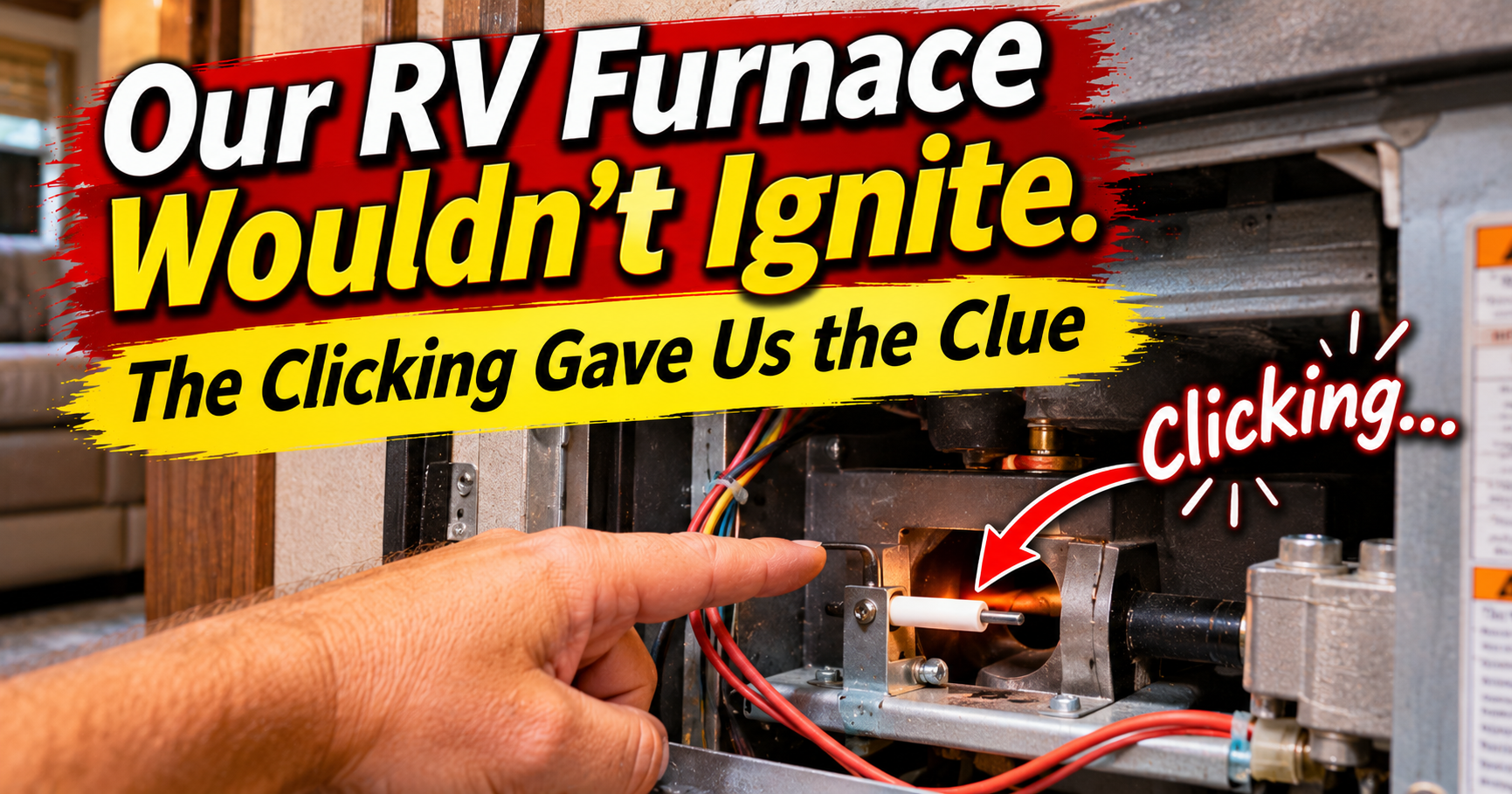
When the RV furnace wouldn’t ignite and we could hear the clicking, the useful clue was that the furnace was trying to establish flame but wasn’t succeeding.
Here, it did establish flame.
We had heat.
That means I don’t want to repeat the entire no-ignition checklist and pretend it’s the same search intent.
The furnace got farther through its operating sequence.
I want to know why it stopped afterward.
If It Dies Within Seconds, I’d Think Differently
Now suppose the furnace lights.
You hear the burner.
Maybe you feel the beginning of warmth.
Then almost immediately the flame disappears.
That’s not the same pattern as overheating after several minutes.
The control board needs to confirm that the burner flame actually exists.
If it doesn’t receive the proper flame-sense signal, it shuts the propane valve as a safety measure.
A dirty or incorrectly positioned electrode/flame sensor or a poor electrical ground can contribute to that kind of quick shutdown.
So timing matters.
Seconds: I’m thinking flame sensing.
Several minutes of real heating: I’m thinking much harder about airflow and the high-limit side.
I Wouldn’t Blame the Thermostat First
It’s easy to blame the thermostat because that’s the thing telling the furnace when to run.
And sometimes thermostat location or operation can absolutely create short cycling.
But I’d first make sure the furnace isn’t shutting itself down because it’s getting too hot.
There’s a big difference between:
The thermostat says the camper is warm enough.
and:
The furnace safety system says the furnace itself is too hot.
One is normal.
One needs investigation.
Make Sure the Camper Isn’t Already Warm
This sounds obvious, but it’s worth checking before diagnosing a normal furnace as broken.
If the thermostat is set to 70°F and the area around the thermostat reaches 70 quickly, the furnace is supposed to shut off.
That can happen before the far end of the camper feels equally warm.
Thermostat placement matters.
A thermostat sitting where warm air reaches it quickly can satisfy before another area of the RV catches up.
So I look at the actual room temperature and thermostat location before deciding every short cycle is a furnace failure.
The Outside Vent Gets a Look Too
I’ve started doing this with nearly every propane-furnace problem.
Look at the exterior furnace intake and exhaust.
Is anything obviously blocking them?
Mud daubers.
Spider webs.
Debris.
Snow.
Something placed against the vent.
The furnace needs proper combustion airflow and exhaust.
If I see soot, obvious combustion problems, or smell exhaust inside the camper, I’m not continuing to experiment with it.
That’s when the furnace gets shut down and properly inspected.
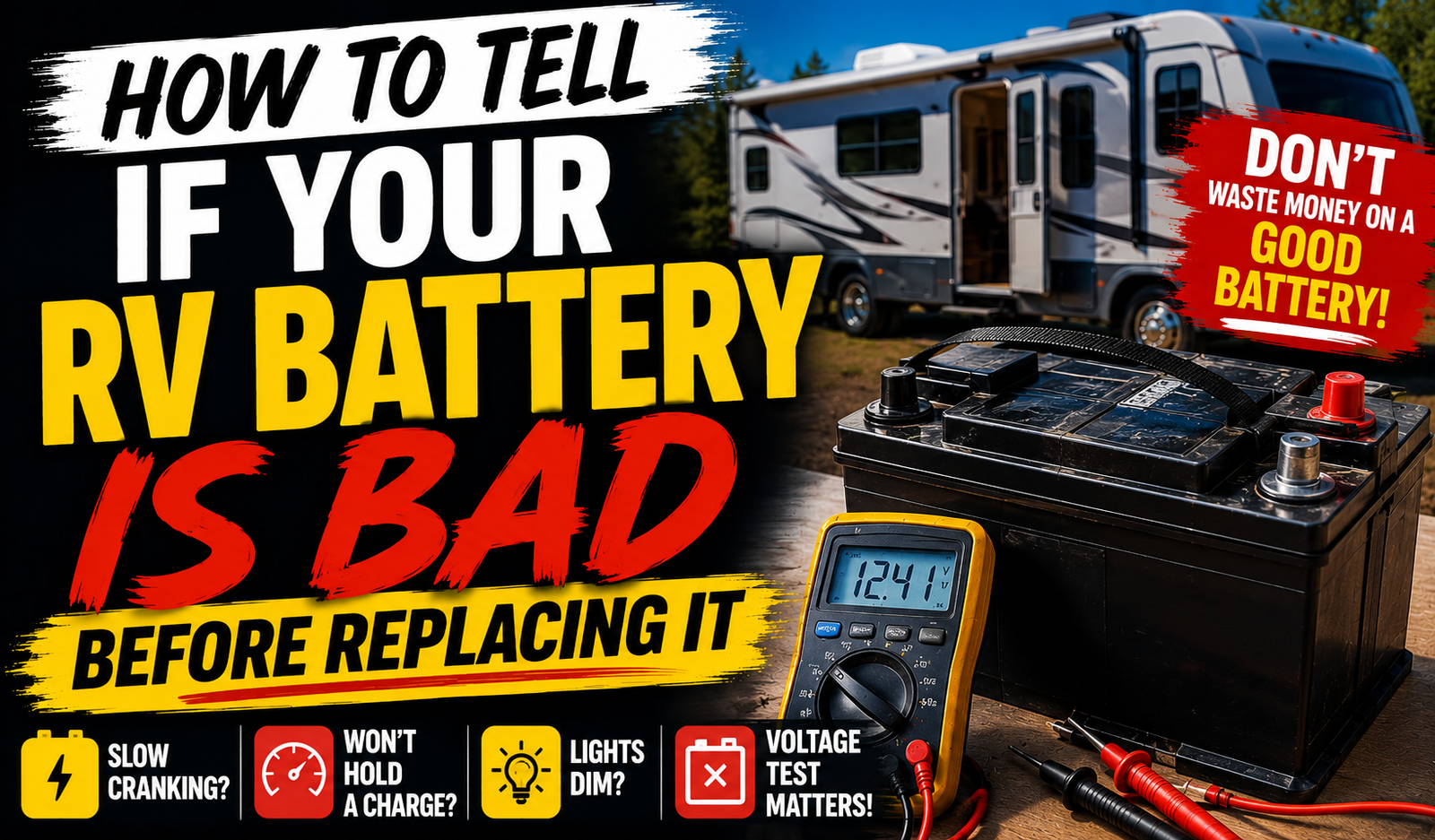
Low Battery Voltage Still Belongs in the Conversation
Even though the furnace is lighting, I don’t completely forget about the 12-volt system.
The blower depends on it.
If battery voltage gets low enough that blower speed falls, airflow can suffer.
That can cause all kinds of furnace behavior that looks like a propane problem when the real issue begins with electrical supply.
This is especially worth checking if the furnace behaves normally while we’re plugged into shore power but starts acting strange after hours of running from the house battery.
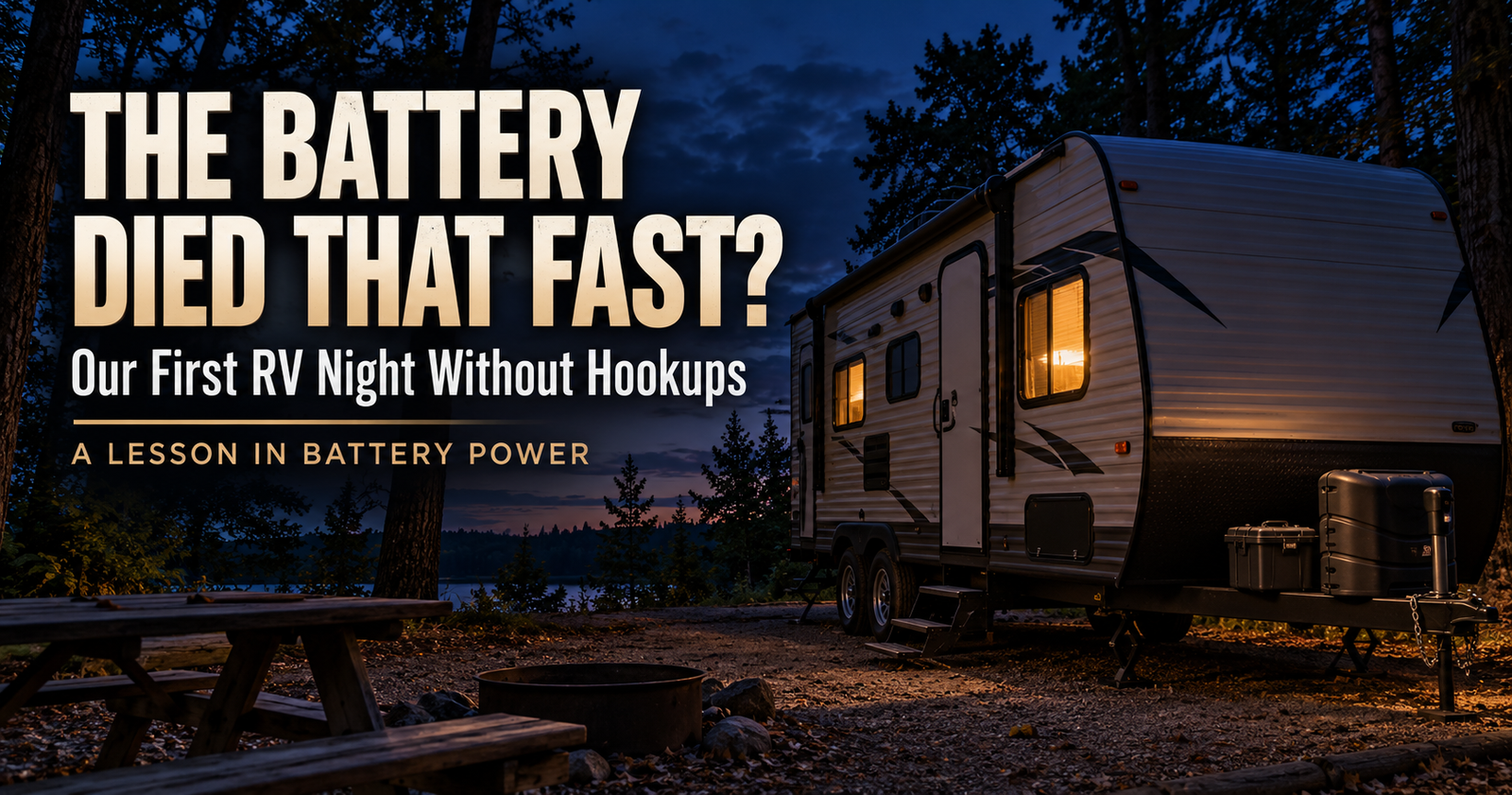
We’ve already learned firsthand how quickly overnight furnace use can contribute to an RV battery dropping while camping without hookups.
The propane makes the heat.
The battery still matters.
I Wouldn’t Bypass the High-Limit Switch
If a safety switch is shutting the burner down because the furnace is overheating, bypassing that switch isn’t fixing the furnace.
It’s removing the thing preventing excessive temperature.
Same goes for the other furnace safety devices.
I understand the temptation when it’s cold outside and you’re desperate for heat.
But that’s exactly when I don’t want to turn a heating problem into a fire or carbon-monoxide problem.
If the easy airflow checks don’t reveal anything and the furnace continues overheating, that’s where I’d rather have the furnace properly diagnosed.
The Pattern Tells Me More Than “It Shuts Off”
That’s really what I learned from this one.
I wouldn’t Google:
RV furnace keeps shutting off
and immediately start replacing whatever part gets mentioned most often.
I’d watch one complete cycle.
Blower starts.
Ignition happens.
Burner lights.
Warm air arrives.
Then what?
It dies almost immediately
I’d investigate flame sensing and ignition confirmation.
It heats for several minutes and repeatedly shuts down
I’d investigate airflow, return-air restriction, ducts, registers, and high-limit operation.
It shuts off when the camper reaches the thermostat setting
That might simply be normal operation.
It works on shore power but acts up on battery
I’d check 12-volt voltage and blower performance.
Those observations cost nothing.
And they narrow the problem considerably.
I’m Learning to Let the Camper Tell Me What Already Works
That’s becoming one of my favorite ways to troubleshoot anything in an RV.
Don’t only focus on what failed.
Look at what successfully happened before the failure.
The furnace started.
Good.
Blower ran.
Good.
Ignition succeeded.
Good.
We got heat.
Good.
Now the problem happens.
That means we’ve already eliminated a bunch of earlier possibilities.
Instead of starting from:
Our furnace is broken.
I’m starting from:
Our furnace works until this exact point.
That’s a much smaller problem to solve.
And if I hear ours fire up, produce good heat, and then repeatedly shut itself down after only a few minutes, the first thing I’m doing isn’t ordering a control board.
I’m opening the vents, clearing the return air, feeling the airflow, and watching exactly how long the furnace runs.
Sometimes the most useful clue isn’t that the furnace stopped.
It’s everything the furnace successfully did before it stopped.
Written by Caleb Warren
Caleb Warren writes about RV furnaces, campground systems, batteries, water, and the little camper problems that become much easier once you pay attention to exactly when they happen for CamperAnswers.com. His articles focus on narrowing a problem from the symptom first instead of replacing parts until something finally works.