
Some camping mistakes are obvious about three seconds after you make them.
Others don’t seem like mistakes at all until you’re standing outside the camper at 11:30 at night with a flashlight in your mouth wondering why something that worked perfectly six hours ago suddenly doesn’t.
Those are the ones that stick with me.
I’ve become much less interested in having the fanciest camping setup and much more interested in avoiding the handful of stupid little problems that can turn an otherwise good trip into work.
These are seven RV camping mistakes I’d rather not learn twice.
1. Assuming the Battery Is Fine Because It Says Full
This one fooled me because “full” sounds pretty convincing.
If I charge a phone to 100%, I expect a full battery.
RV batteries aren’t always that simple.
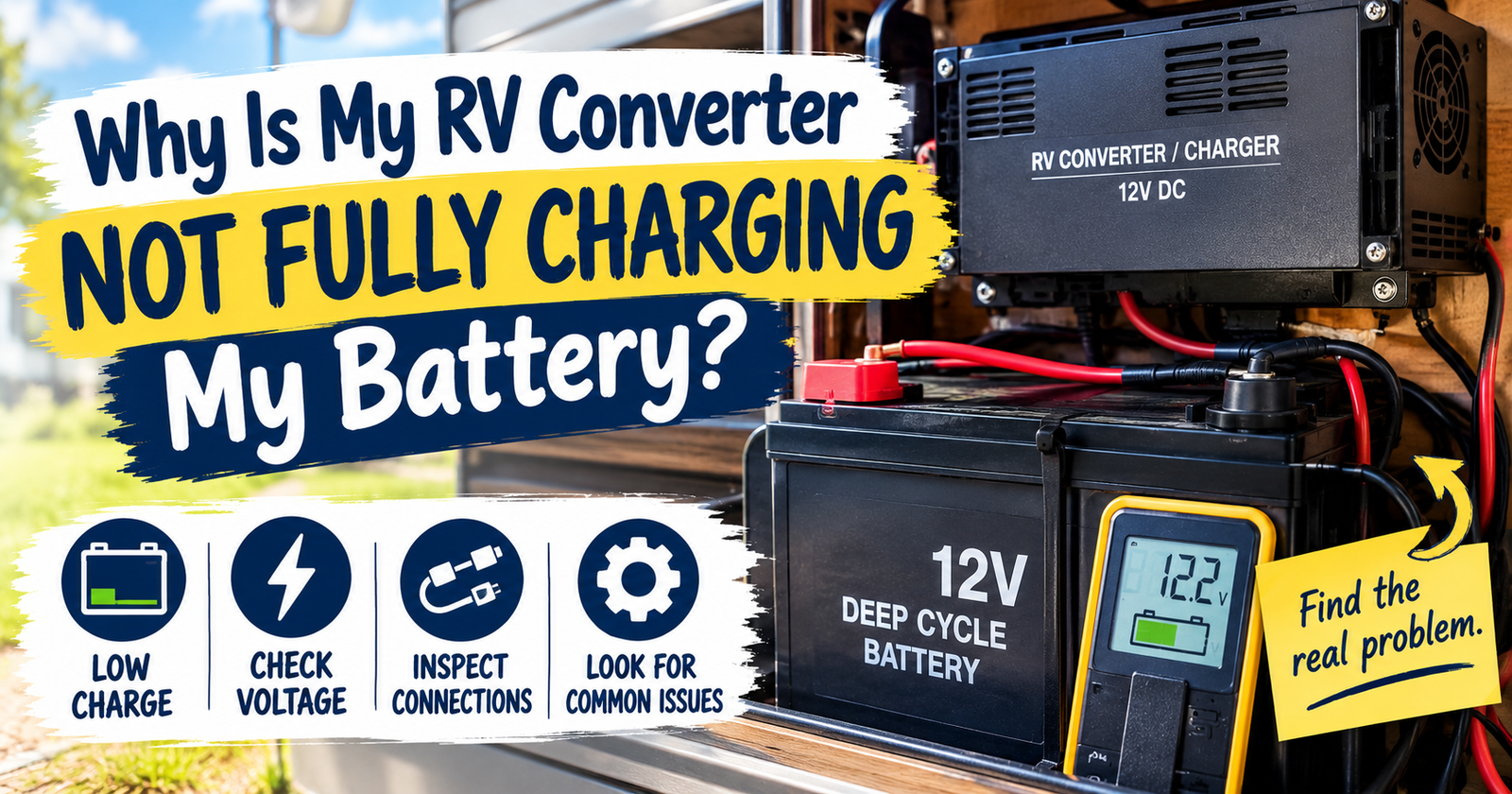
A weak battery can reach a voltage that looks encouraging and then fall flat surprisingly quickly once you actually put a load on it.
And even a perfectly healthy battery only contains so much usable energy.
Lights, the water pump, furnace blower, control boards and all those little background loads start taking bites out of it as soon as you’re away from shore power.
I learned that lesson pretty clearly during our first night camping without hookups.
Now I care less about seeing the word FULL and more about knowing the battery is healthy and understanding roughly what we’re asking it to power.
2. Using the Lights to Decide Whether Shore Power Is Working
This one seems ridiculous after you understand RV electricity.
The ceiling lights work.
Therefore the camper has power.
Right?
Not necessarily.
Most of those lights are running from the 12-volt side of the camper. The house battery can keep them going even if campground shore power disappears.
Meanwhile, the microwave can be dead.
Regular outlets can be dead.
The air conditioner can be dead.
And you’re standing there looking at a perfectly bright ceiling light thinking the pedestal must be fine.

That’s exactly what made the night our camper lost shore power while the lights kept working so confusing.
Now I’d check something I know requires AC power before deciding the campground connection is actually working.

3. Plugging Into a Campground Pedestal and Trusting It Immediately
I used to think of campground electricity almost like plugging something into the wall at home.
There’s the outlet.
Plug it in.
Done.
I’ve changed my mind about that.
Every campground pedestal is somebody else’s electrical equipment. I don’t know how old it is, how many RVs have abused the receptacle, whether a connection is loose, or what the voltage is doing on a packed summer afternoon.
Now I’d rather have electrical protection between that unknown pedestal and the camper.

A good EMS can catch considerably more than a dramatic surge, which is why I eventually came around to using an RV surge protector or electrical management system.
I’d also look at the receptacle before plugging in.
If it’s burned, melted or obviously damaged, I’m not volunteering my camper to test whether it’s still okay.
4. Thinking an Adapter Gives Me More Electricity
This is such an easy mental trap.
You’ve got a 50 amp pedestal.
Your camper is 30 amp.
You use the adapter.
Now you’re plugged into 50 amps.
So you’ve got more power, right?
Nope.
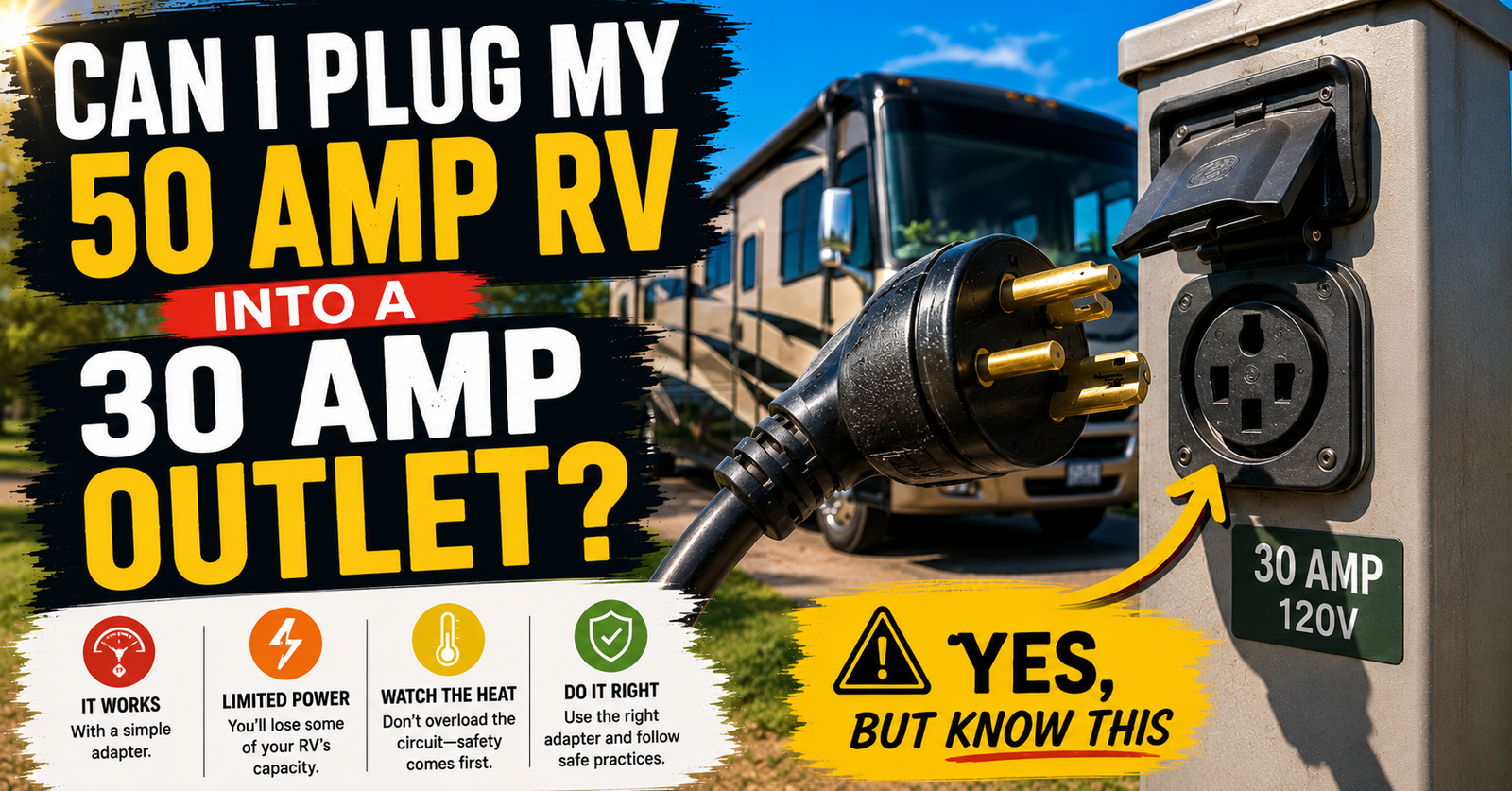
The adapter made the connection possible. It didn’t rebuild the camper’s electrical system.
The opposite situation can be even more noticeable. Plug a big 50 amp RV into 30 amp service and suddenly you’ve got far less total power available than the camper normally expects.
That’s when somebody runs the air conditioner, microwave, electric water heater and coffee maker and wonders why the breaker gives up.
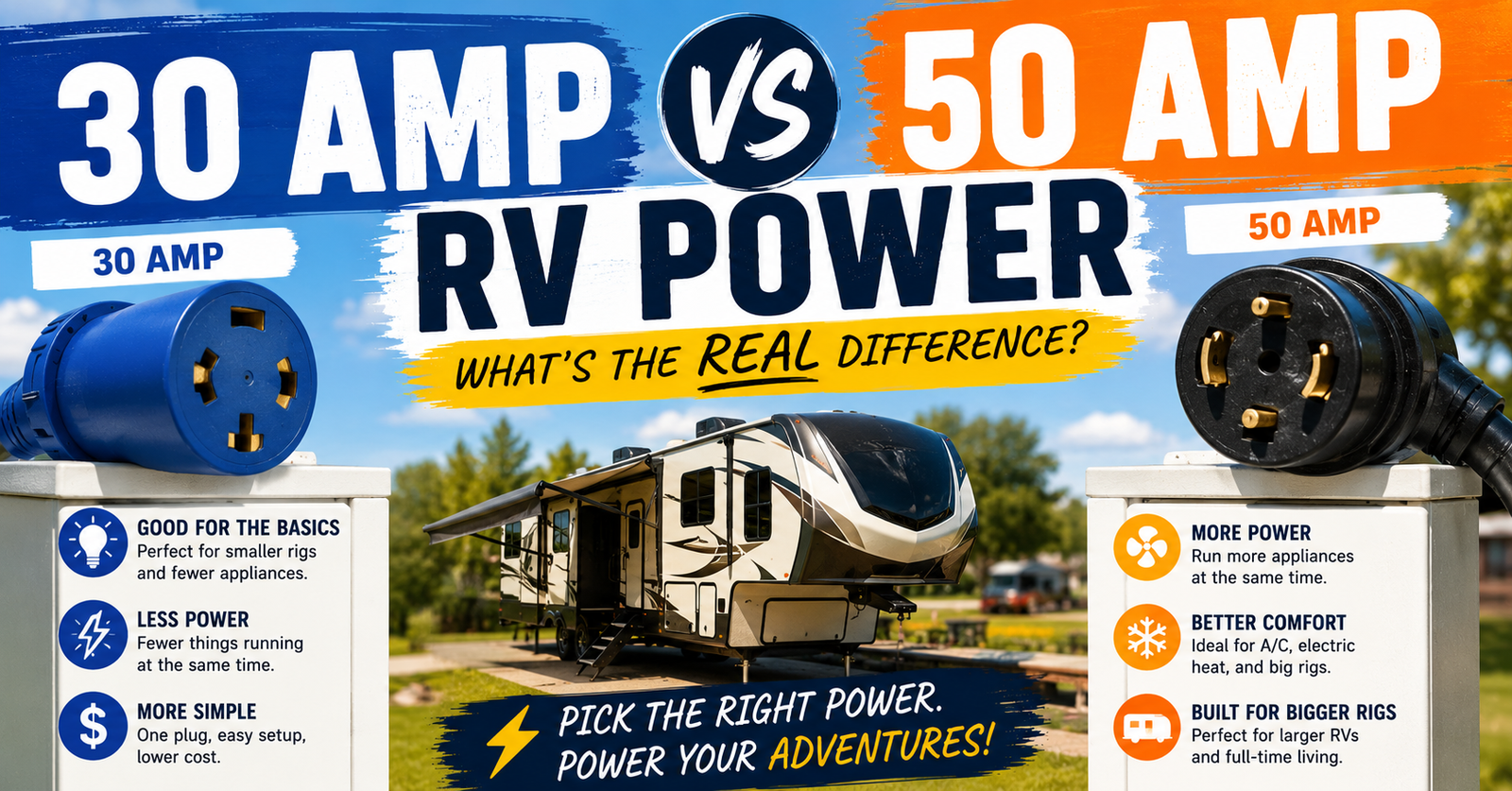
Our 30 amp vs 50 amp RV explanation finally made this simple for me.
Adapters change plugs. They don’t manufacture electricity.
That’s the sentence I’d remember.
5. Hooking Up Campground Water Without Thinking About Pressure
Water seems like the easy hookup.
Electrical pedestal? Pay attention.
Sewer? Definitely pay attention.
Water?
Screw the hose on and go.
Except campground water pressure isn’t identical everywhere.
That’s why a pressure regulator belongs in the setup rather than assuming every spigot is automatically perfect for RV plumbing.
I also want to make sure I’m connecting to the city-water inlet, not blindly attaching a hose to whichever fitting looks right.
That’s not some imaginary beginner mistake either. Hooking water to the wrong place can create a surprisingly bad afternoon.
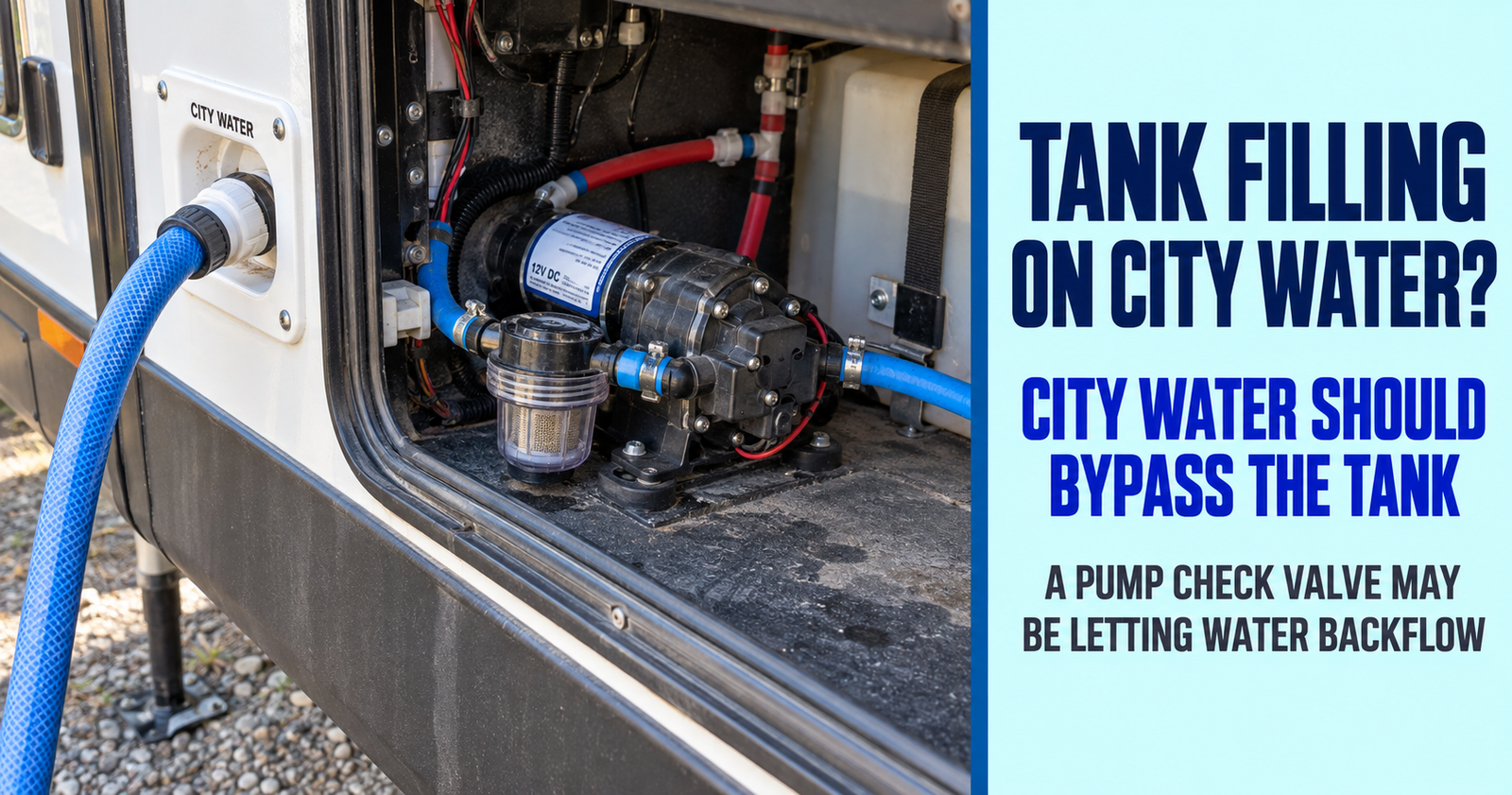
And now that we’ve already seen what happens when an RV fresh water tank starts filling while connected to city water, I’m paying attention anytime the fresh-tank level changes when it shouldn’t.
Water going somewhere unexpected is worth investigating before it becomes water damage.
6. Ignoring a Plug or Adapter That’s Getting Hot
This is one I wouldn’t rationalize anymore.
There’s warm.
Then there’s:
Why is this thing so freaking hot?
Those aren’t the same condition.
If one shore-power connection is noticeably hotter than everything around it, I want to know why.
Maybe the campground receptacle is worn.
Maybe the connection is loose.
Maybe the adapter is damaged.
Maybe the plug itself has been overheated before.
A breaker doesn’t necessarily have to trip just because one bad connection is generating heat.
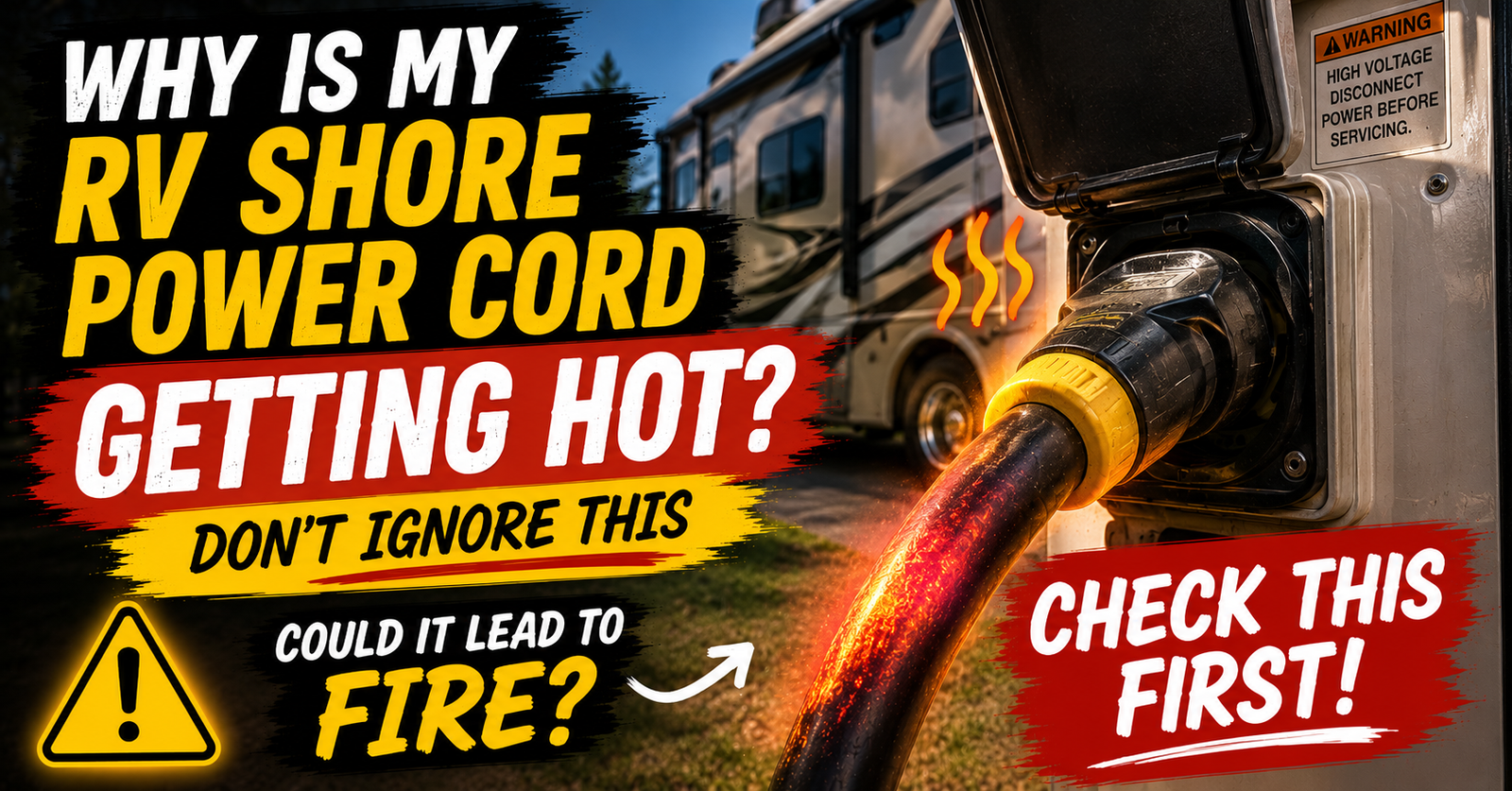
That’s why I wouldn’t keep using an RV shore-power cord that’s getting dangerously hot and convince myself it’s normal because the air conditioner still runs.
Melting plastic isn’t a camping quirk.
7. Waiting Until the Trip to Learn How the Camper Works
This might be the biggest one.
The campsite is a terrible place to discover where your converter is.
Or which outlet contains the GFCI reset.
Or what the battery disconnect actually disconnects.
Or whether the water pump works.
Or which adapter you need.
Or whether the fresh tank gauge is remotely accurate.
Or where the main breaker panel is hidden.
I don’t think you need to memorize an RV service manual before going camping.
But I’d absolutely spend an evening at home using the camper.
Unplug shore power and see what still works.
Plug it back in.
Find the breaker panel.
Find the water pump.
Find the GFCI.
Look at the battery.
Figure out whether the camper is 30 or 50 amp.
Run water from the fresh tank.
Learn where the drains are.
Basically, make home the place where you ask the dumb questions.
Because there aren’t really dumb questions when you’re learning a camper.
There are just questions that are considerably easier to answer in your driveway than they are at midnight in campsite 47.
The Stuff I Carry Matters Less Than the Stuff I Understand
I still like having the right gear.
Adapter.
Electrical protection.
Water regulator.
Basic tools.
Flashlight.
Spare fuses.
All the normal stuff.
But the more time I spend around campers, the more I think understanding the basic systems is worth more than carrying a storage compartment full of gadgets.
If the microwave dies but the ceiling lights stay on, I want to know what that tells me.
If the fresh tank mysteriously gets fuller while we’re on city water, I want to know that’s not normal.
If the battery goes dead overnight, I want to think about what actually used the energy before buying another battery.
If a breaker keeps tripping, I want to know whether I’m overloading the hookup or dealing with something that needs repair.
That’s what makes the next trip easier.
You don’t stop having camper problems.
You just stop looking at every little problem like the RV has suddenly lost its mind.
And that’s probably the biggest camping lesson I’d rather learn from somebody else’s bad night than learn again during one of mine.
Written by Caleb Warren
Caleb Warren writes about real-world RV ownership, campsite mistakes, camper systems, batteries, water, and the things that usually make sense only after they go wrong for CamperAnswers.com. He focuses on practical lessons that help RV owners understand their campers before a small mistake turns into the story everybody hears around the next campfire.