
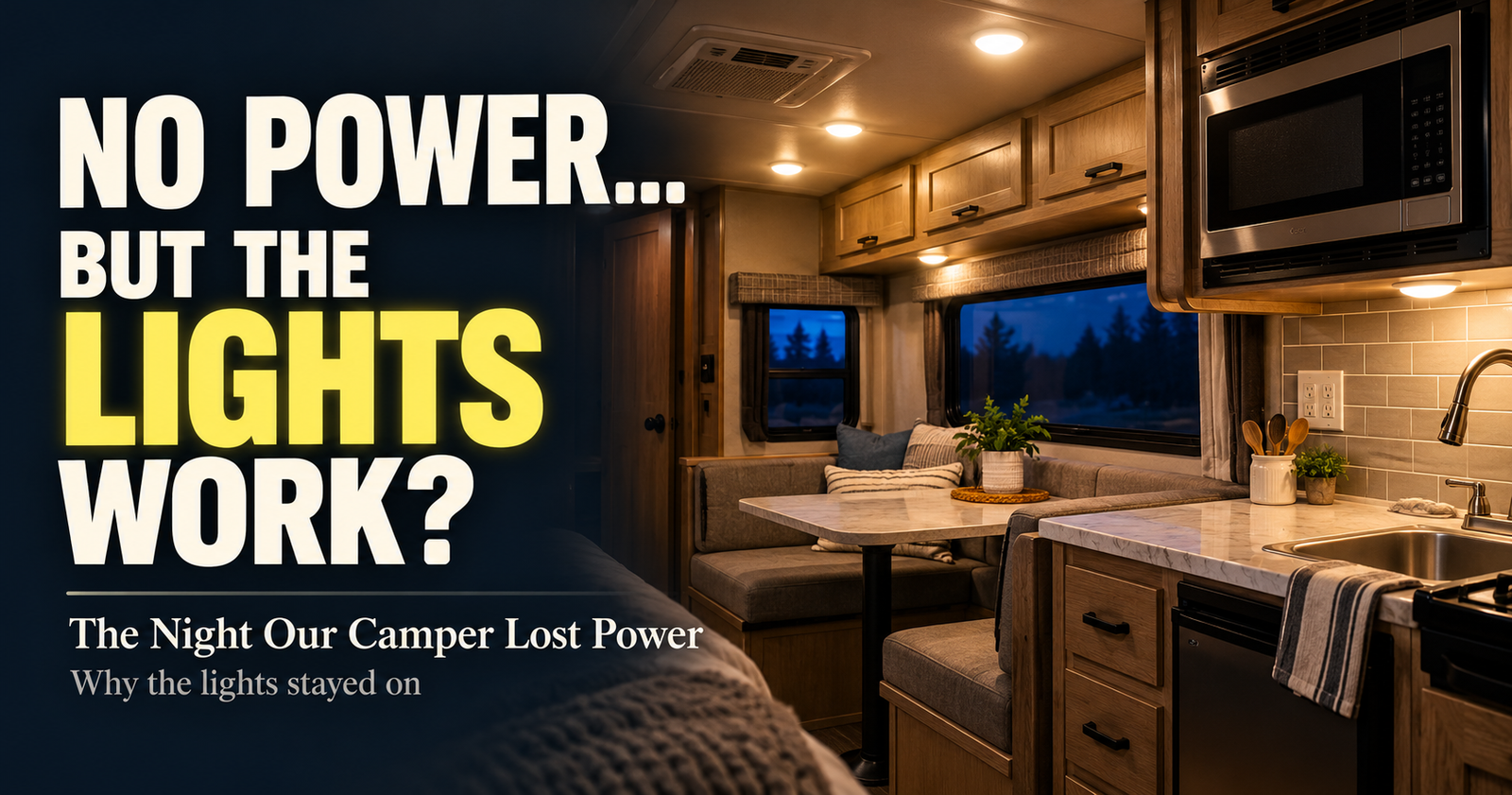
The microwave was what finally tipped me off.
Its little clock was completely black.
I tried an outlet. Nothing. Tried another one. Still nothing.
Then I looked up at the ceiling lights, which were glowing like absolutely nothing was wrong.
That was the confusing part.
How could our camper have lost power when the lights were clearly still working?
It turned out nothing particularly mysterious was happening. I just hadn’t fully appreciated that an RV basically has two electrical worlds living under the same roof.
We’d lost shore power.
The battery was quietly covering for it.
The Working Lights Fooled Me
This is probably the easiest mistake to make when you’re still learning a camper.
Most RV ceiling lights operate from the 12-volt DC system.
Your house battery can power them without campground electricity.
The water pump is another good example. It normally runs on 12 volts too.
So our lights and pump working didn’t prove we still had shore power.
They proved we still had battery power.
The dead microwave and outlets were telling the other half of the story.
Those needed 120-volt AC power, and ours had disappeared.
Once I understood that, the whole situation suddenly made sense.
I Should Have Gone Straight to the Pedestal
Instead, I walked around inside trying things.
Light switch.
Outlet.
Another outlet.
Microwave.
Water pump.
Basically the electrical equivalent of kicking tires.
What I’d do now is much simpler.
If my regular AC equipment suddenly dies while the 12-volt equipment keeps working, I start at the source.
I check the campground pedestal breaker, electrical management system if I’m using one, adapters, shore cord, and connections.
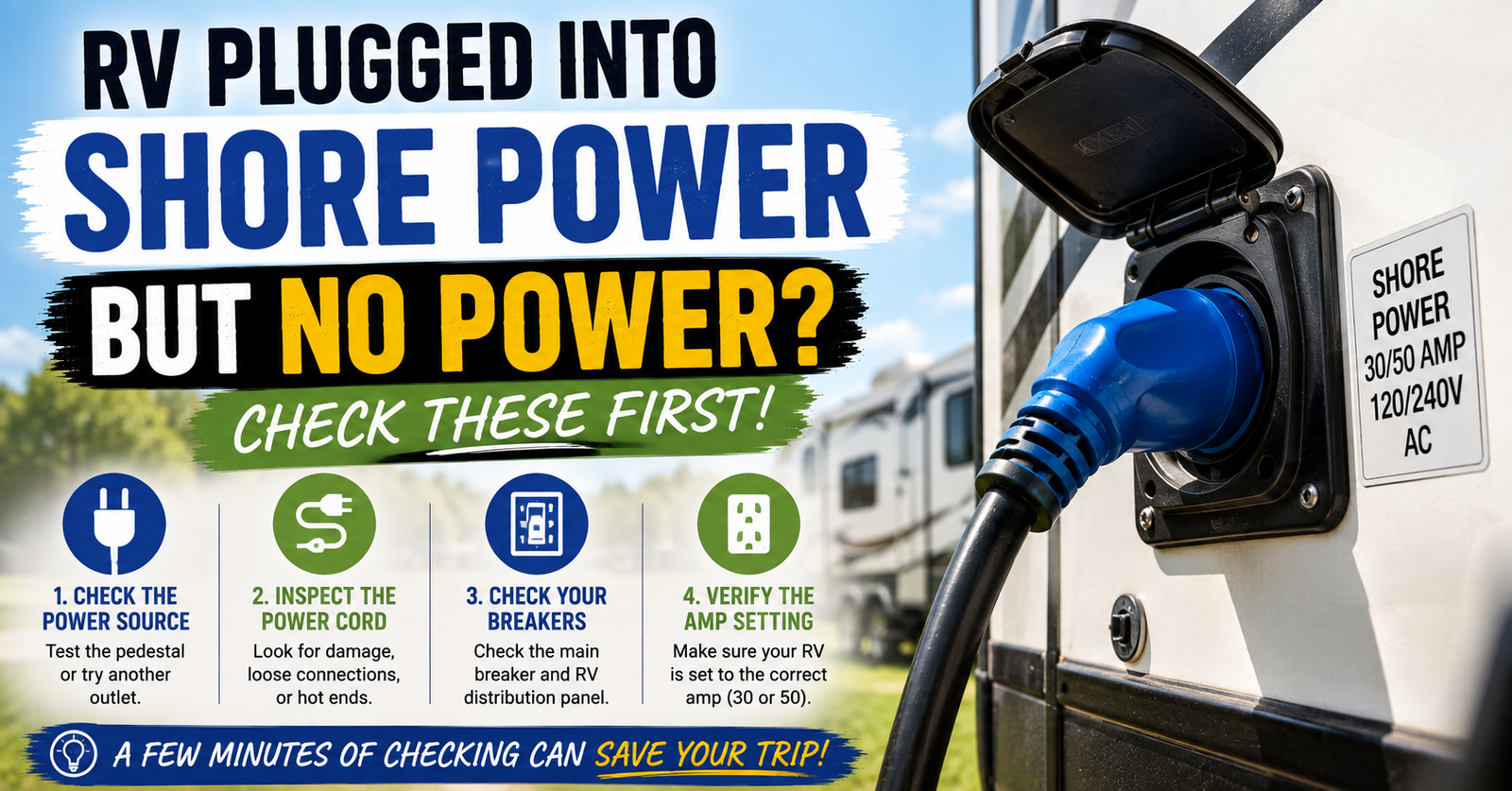
That’s the same source-to-camper approach I use in our full guide for an RV that’s plugged into shore power but has no power.
The big lesson was simple:
A shore cord being plugged in doesn’t prove electricity is actually reaching the RV.
The Battery Was Doing More Than I Realized
Here’s where this can sneak up on you.
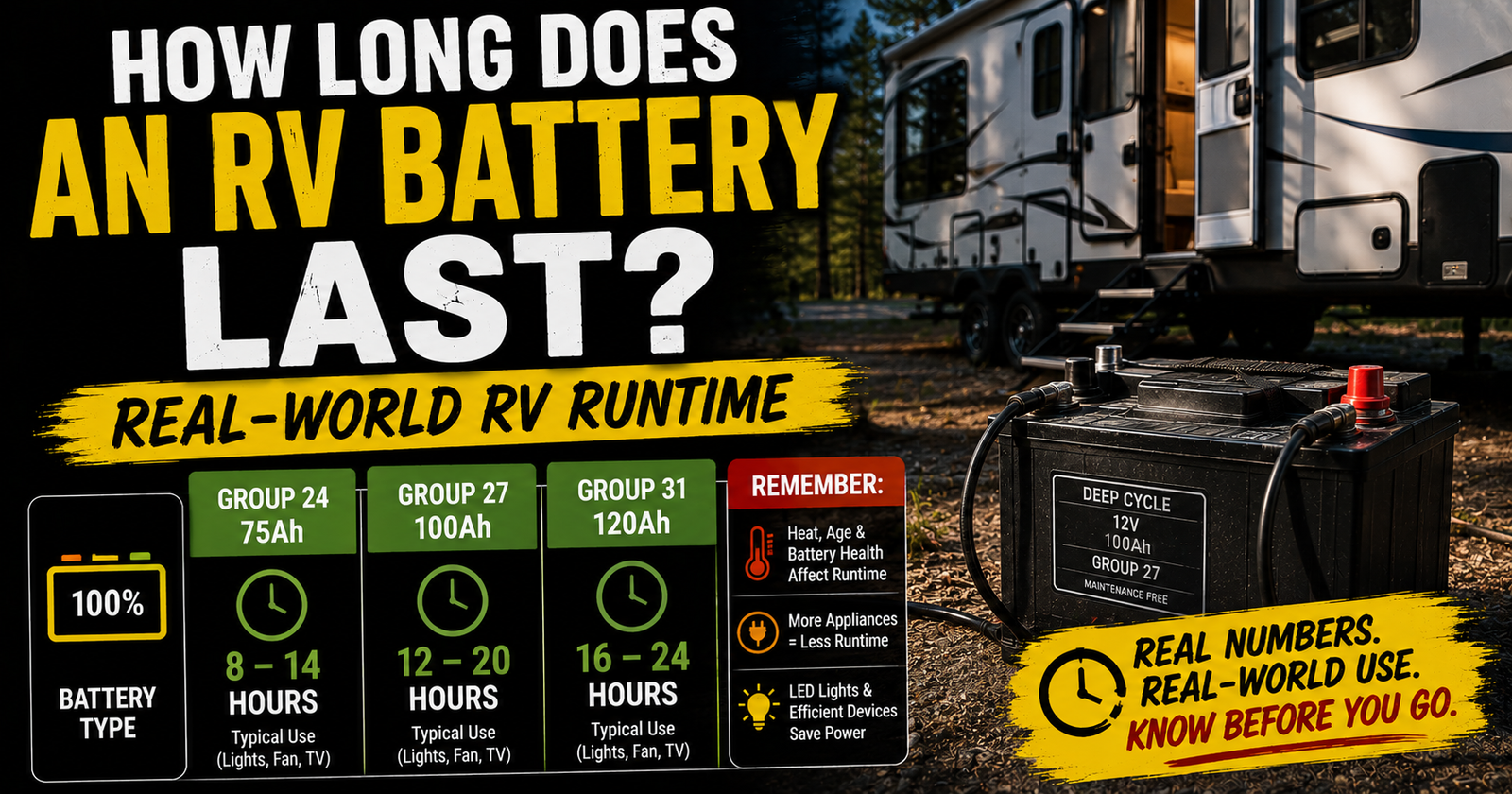
If your battery is reasonably charged, losing shore power doesn’t necessarily create an immediate emergency.
The lights continue working.
Water pump works.
Various controls and 12-volt equipment keep doing their jobs.
You might go quite a while without realizing anything happened.
But now the battery is supplying energy without the normal shore-power charging source replacing it.
That’s where the converter comes into the story.
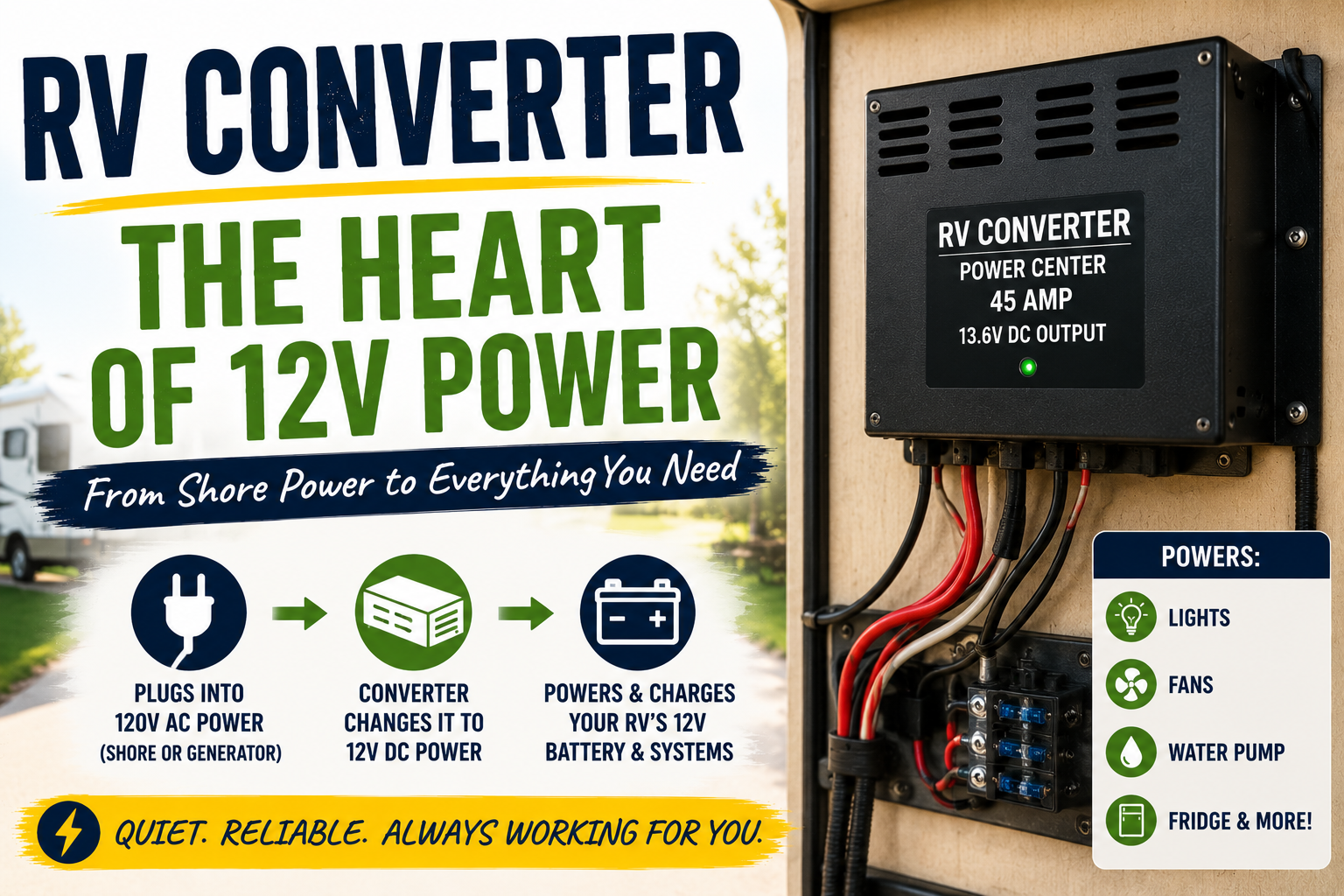
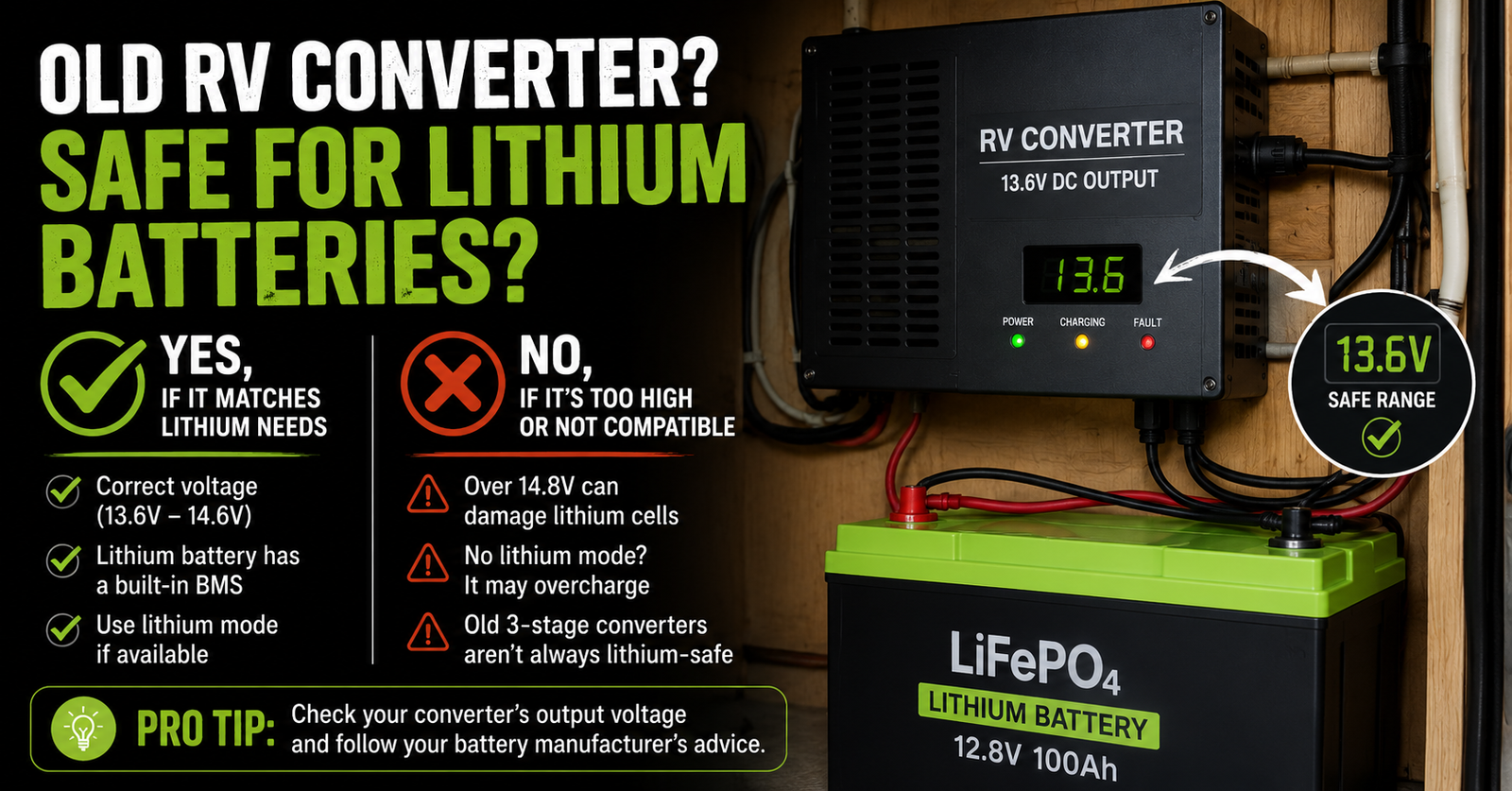
When shore power is available, the converter uses incoming AC electricity to supply DC power and charge the house battery. If shore power disappears, the converter normally loses the AC source it needs.
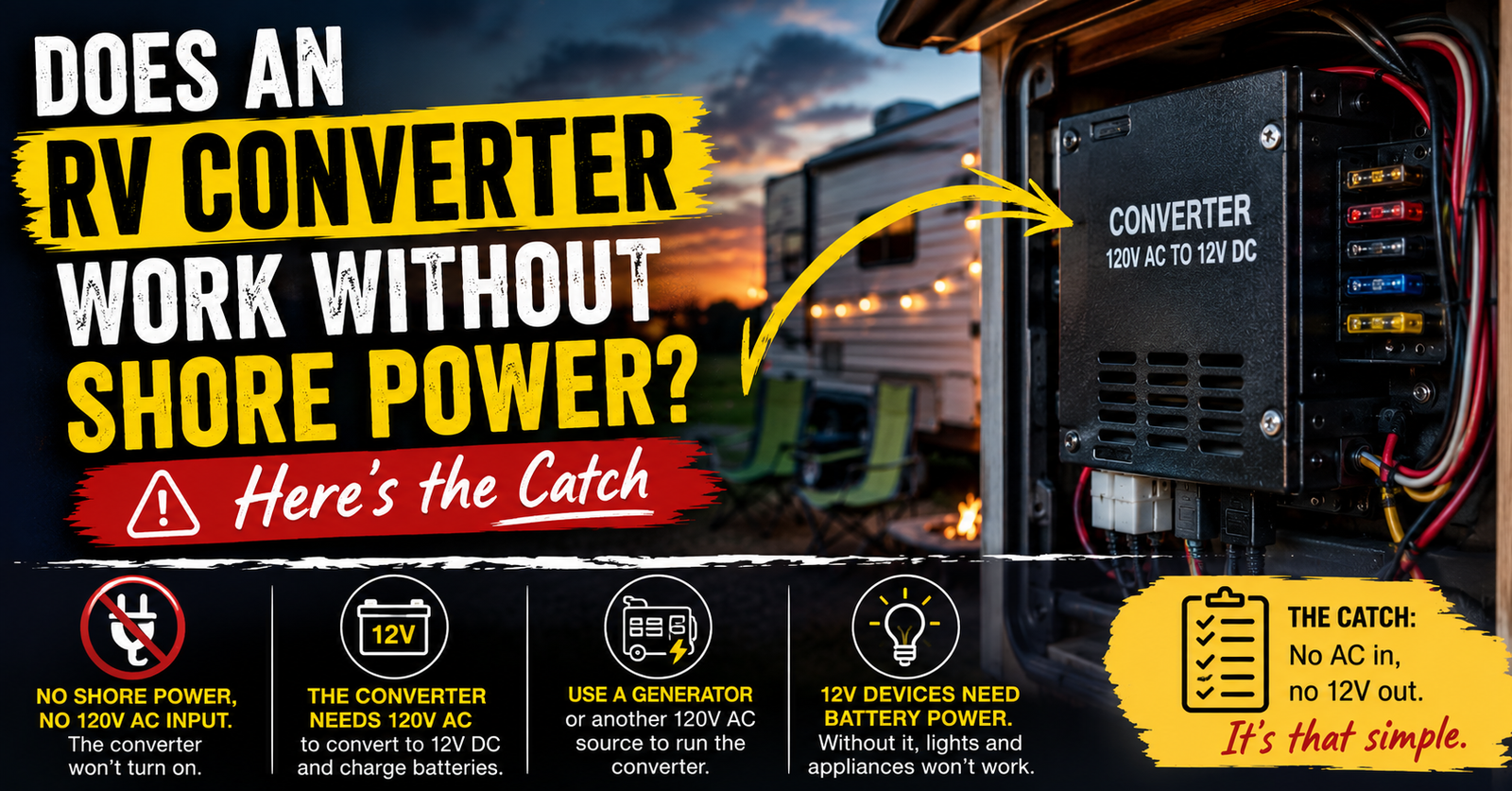
Our guide explaining whether an RV converter works without shore power goes into the technical side.
That night gave me the simpler version:
Shore power quit. The converter couldn’t keep charging. The battery took over.
That’s How One Problem Can Turn Into Two
This is the part I’d watch closely now.
Imagine shore power goes out at 9 PM and you don’t notice.
You continue using lights.
The water pump runs.
The furnace cycles through the night.
Various small 12-volt loads keep drawing power.
Then you wake up at 4 AM and the lights are dim.
Now it looks like you’ve got a battery problem.
You might even start thinking the battery suddenly failed.
Maybe it didn’t.
Maybe it spent seven hours running the camper because you unknowingly lost shore power.

That’s why context matters so much when diagnosing an RV battery that keeps going dead.
I want to know when it died and what the camper was doing beforehand.
The Microwave Became My Favorite Quick Clue
Not because there’s anything special about a microwave.
It was just an obvious AC appliance in this camper.
If its display was lit, I knew AC power was reaching that circuit.
If it was completely dark while the ceiling lights worked, I immediately knew I needed to investigate further.
You can use other known AC equipment in your particular RV the same way.
Just don’t assume a working ceiling light proves campground power is good.
That’s the mistake I made.
What If the Outlets Work but the Battery Is Still Dying?
That’s a completely different situation.
If the microwave works, outlets work, air conditioner works, and other AC equipment operates normally, you’ve clearly got shore power entering the camper.
If the battery is still getting weaker, now I’d start looking harder at the charging side.
Is the converter working?
Is it reaching the battery?
Is the battery disconnect involved?
Is there a fuse or wiring problem?
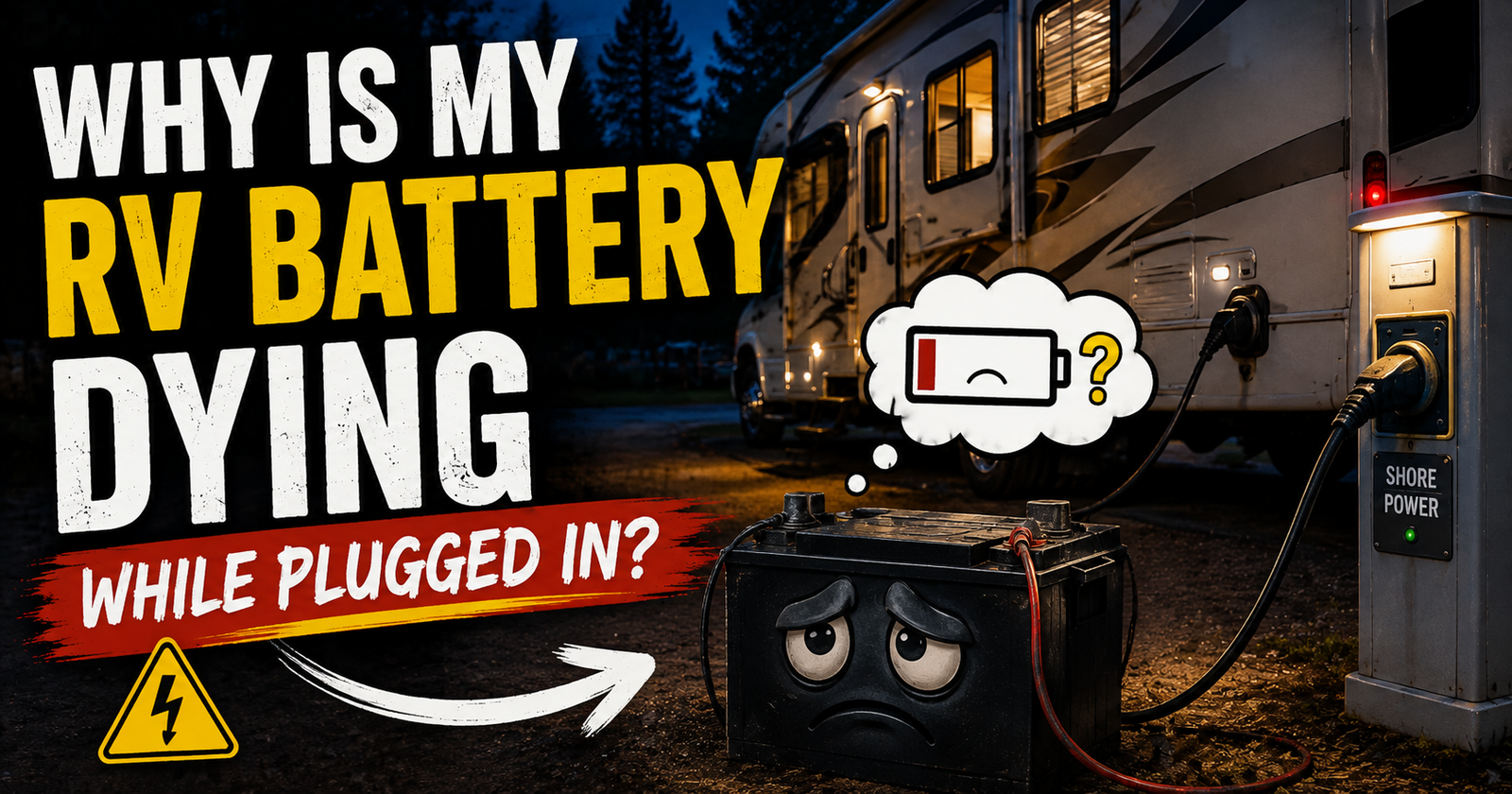
We’ve already covered why an RV battery can die even while plugged in because that’s a very different problem from simply losing campground electricity.
Same eventual symptom.
Different cause.
I Also Learned Not to Keep Resetting a Breaker
If a pedestal or RV breaker tripped because we simply overloaded the electrical service, reducing the load and properly resetting it may solve the immediate problem.
But if I reset a breaker and it immediately trips again, I’m done playing the reset game.
There’s a reason it’s opening.
That’s especially important on 30 amp service, where it’s surprisingly easy to overload the available power by stacking the air conditioner, microwave, electric water heater, coffee maker, and other big loads.
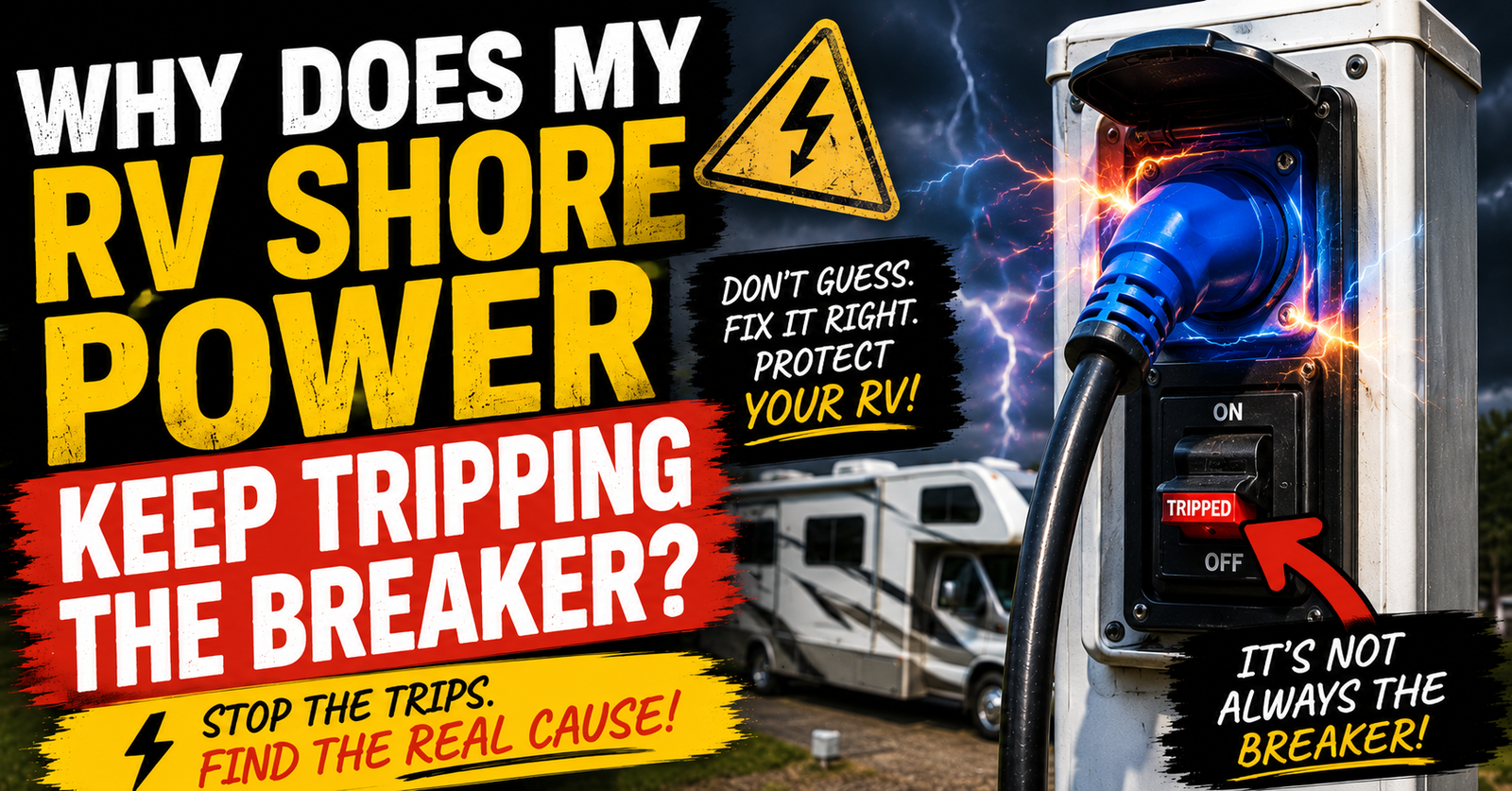
Our RV shore-power breaker troubleshooting guide goes through that problem separately.
The lesson I keep coming back to is that when something fails matters.
An EMS Can Make the RV Go Dark on Purpose
There’s another situation I’d understand much better now.
A good electrical management system may intentionally disconnect the RV if campground power becomes unsafe.
Low voltage.
High voltage.
Open neutral.
Open ground.
Another wiring problem.
So if the AC side suddenly disappears but the battery-powered equipment remains alive, I’d check the EMS display before assuming something inside the camper broke.

That’s one reason I like using proper electrical protection on an RV.
Sometimes losing shore power is exactly what you want the protection device to make happen.
The Battery Becomes a Clock Once Shore Power Is Gone
Once I know shore power isn’t coming back immediately, my thinking changes.
How much battery do we have?
Is it cold enough that the furnace will run all night?
Do we have solar?
Generator?
Another charging option?
How long can we reasonably continue?
I learned that lesson even more clearly during our first night camping without hookups.
A battery isn’t an endless backup power source.
It’s stored energy.
Once shore power disappears, the clock starts.
Now I Look at What Works and What Doesn’t
That’s probably the most useful thing I took from the whole experience.
Instead of saying:
“The camper lost power.”
I ask:
What lost power?
Do the ceiling lights work?
Does the water pump work?
Does the microwave work?
Do the regular outlets work?
Did a GFCI trip?
Did a breaker trip?
Is the EMS showing an error?
Those details turn one giant confusing electrical problem into a much smaller one.
If the 12-volt equipment works but the AC equipment doesn’t, I’ve already learned something important.
If AC works but the battery isn’t charging, I’ve learned something else.
If only a handful of outlets are dead, that’s another path entirely.
The Camper Wasn’t Half Broken
That’s what I would’ve thought before understanding it.
Half the stuff works.
Half doesn’t.
Something must be seriously screwed up.
Instead, the camper was actually demonstrating how its electrical systems are designed to work.
The AC source disappeared.
The battery continued supplying the DC side.
The lights weren’t lying to me.
I was asking them the wrong question.
Now, if the microwave suddenly goes black while the ceiling lights keep glowing, I’m not standing there wondering how the camper somehow has electricity and doesn’t have electricity at the same time.
I’m heading toward the shore-power connection.
And I’m checking it before that helpful little house battery spends the rest of the night pretending nothing happened.
Written by Caleb Warren
Caleb Warren writes about real-world RV ownership, campground problems, batteries, water systems, and the little camping mishaps that usually teach the biggest lessons for CamperAnswers.com. He focuses on turning confusing moments at the campsite into practical things RV owners can recognize the next time something doesn’t work the way they expected.