

You pull into your campsite, open the electrical pedestal, and immediately notice a problem. Your camper has that familiar three-prong 30 amp plug, but the hookup available at your site is 50 amp.
My first thought the first time I understood what a 50 amp RV hookup can supply was pretty reasonable: If I plug my little 30 amp camper into that monster, isn’t it going to send way too much electricity into my RV?
Thankfully, that’s not how it works.
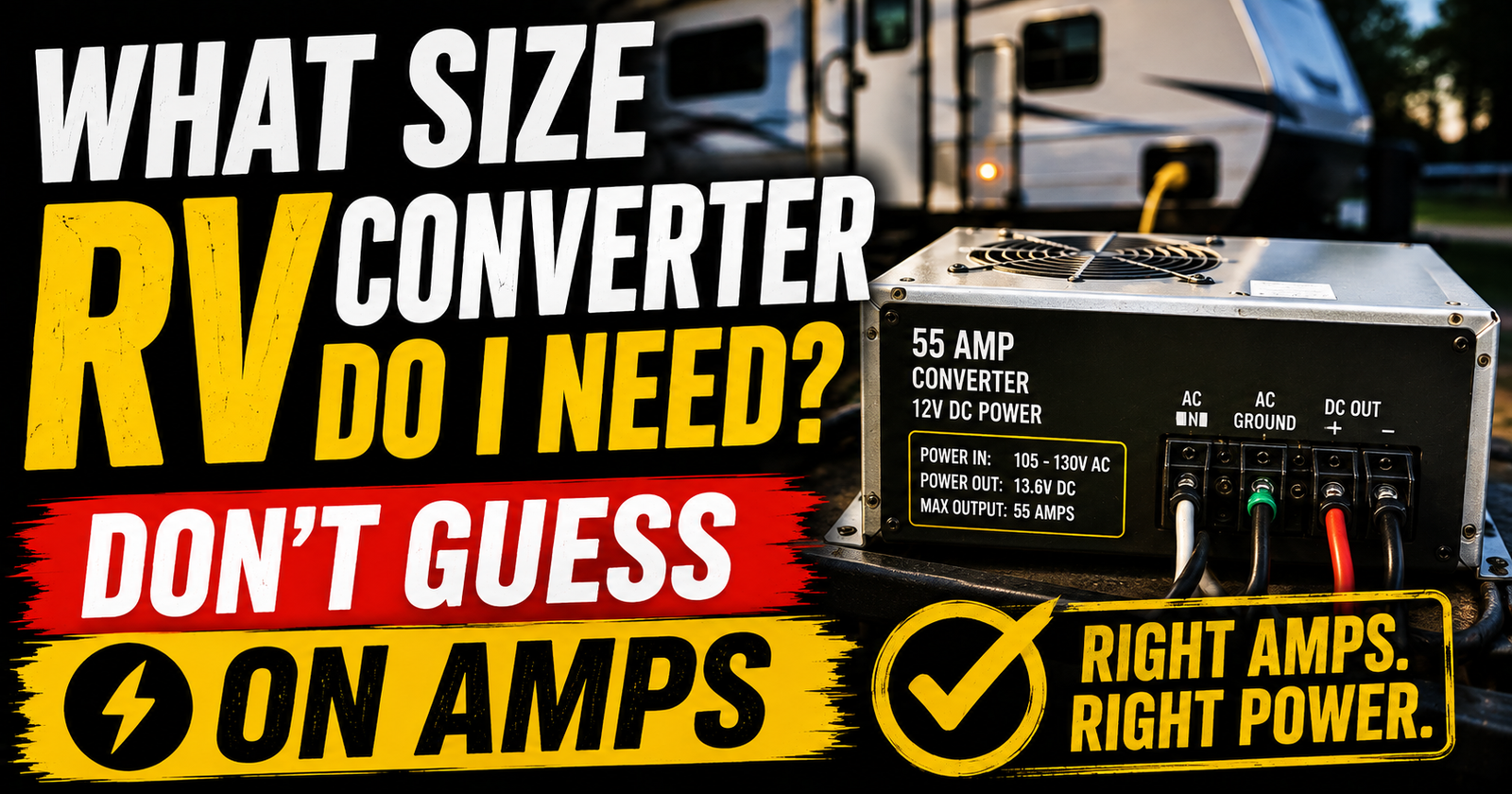
Yes, you can plug a 30 amp RV into a 50 amp campground outlet as long as you use the correct 50 amp male to 30 amp female RV adapter. Your camper does not suddenly receive 50 amps, and it does not become a 50 amp RV. Its own 30 amp electrical system still limits how much current it can use. The distinction becomes more intuitive after reviewing what shore power actually means in an RV and the way the RV’s own electrical system controls the incoming supply.
This is a completely normal RV hookup situation, and carrying the right adapter can save you from arriving at a perfectly good campsite and discovering you can’t connect your shore cord.
What Adapter Do I Need for a 30 Amp RV on a 50 Amp Outlet?
You need an RV adapter with:
50 amp male end → 30 amp female end
The four-prong 50 amp male side plugs into the campground pedestal.
Your camper’s three-prong 30 amp shore-power plug connects to the 30 amp female side of the adapter.
You’ll commonly hear these called:
50-to-30 RV adapters
or
30 amp RV to 50 amp pedestal adapters
I personally think the easiest way to avoid buying the wrong one is to ignore the confusing naming for a second and picture what you’re physically trying to connect.
The campground has a 50 amp receptacle, so the adapter needs a 50 amp male plug.
Your camper cord has a 30 amp male plug, so the adapter needs a 30 amp female receptacle.
That’s it.
These adapters are specifically made for connecting a 30 amp RV power cord to a 50 amp campground hookup.
Will a 50 Amp Outlet Fry My 30 Amp Camper?
No, not simply because the pedestal is capable of supplying 50 amp service.
This is probably the biggest fear people have about using the adapter.
A power source doesn’t force its entire available amperage through everything connected to it.
Your RV draws the electrical current its loads demand, up to the limits of its electrical system and protection.
Think about an ordinary household outlet.
A circuit might be capable of supplying 15 or 20 amps, but plugging a little phone charger into it doesn’t force 20 amps through your phone.
The electrical load draws what it needs.
The same basic idea applies here.
Your 30 amp RV doesn’t suddenly start consuming 50 amps just because the campground connection is capable of supplying more.
Your 30 Amp Main Breaker Is Still 30 Amps
This is the part that makes the situation easier to understand.
Plugging into a 50 amp pedestal doesn’t replace the main breaker inside your camper.
Your RV is still a 30 amp RV.
That means you’re still working with roughly:
120 volts × 30 amps = 3,600 watts
of usable capacity through the RV’s 30 amp service.
The adapter doesn’t turn that into 12,000 watts.
It simply lets your 30 amp RV connect to a different campground receptacle.
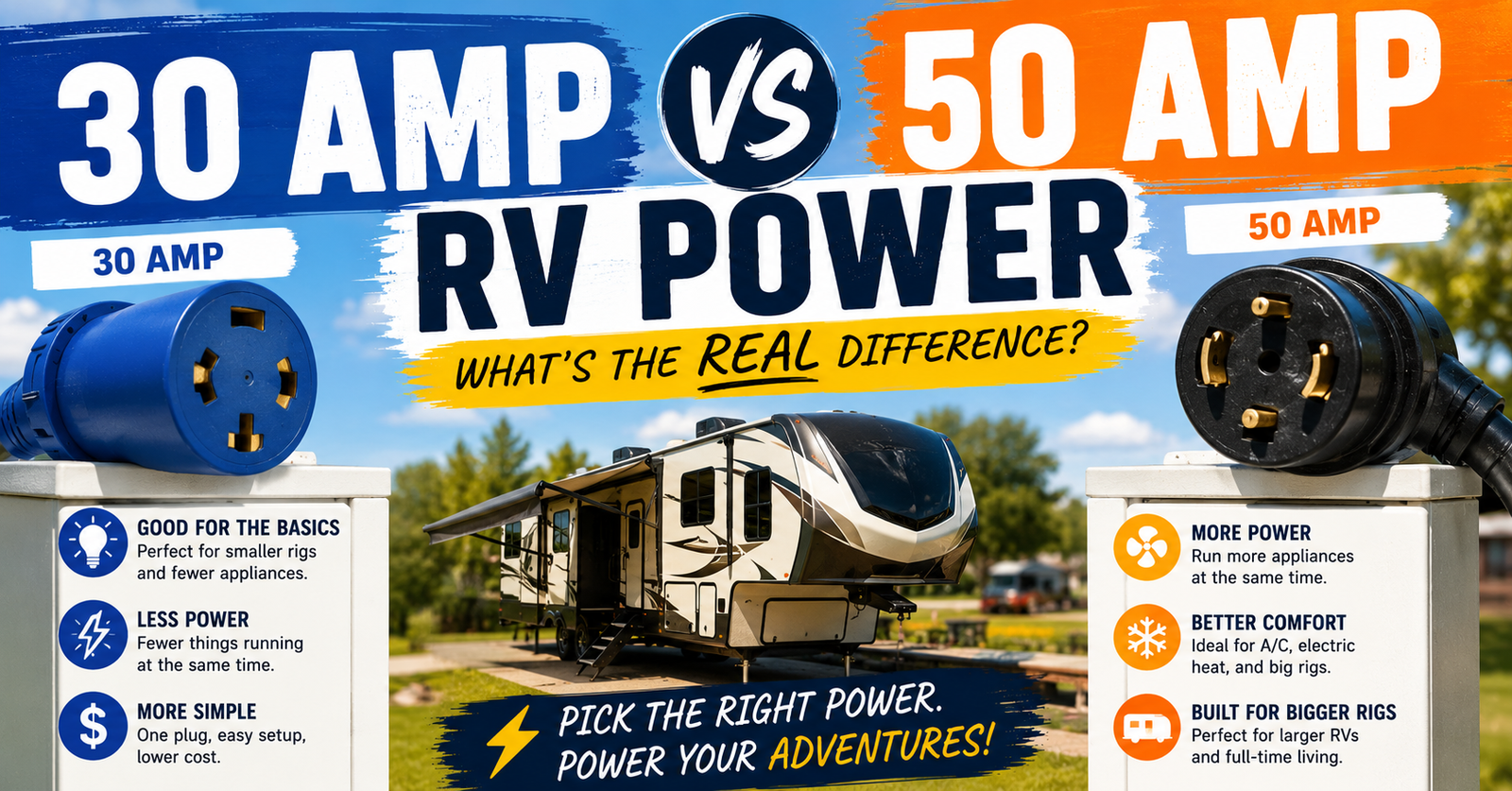
If you want the full explanation for why the numbers are so different, our 30 amp vs 50 amp RV power guide breaks down both electrical systems without getting buried in electrician terminology.
Why Doesn’t the 50 Amp Pedestal Send 240 Volts Into My 30 Amp RV?
This is another understandable concern.
A standard 50 amp RV connection has two 120-volt hot legs, and there is 240 volts measured from one hot leg to the other.
Your 30 amp RV, however, needs 120-volt service.
A properly designed RV 50-to-30 adapter uses the appropriate connections so your 30 amp RV receives the 120-volt supply it was designed to use.
You’re not simply jamming four conductors into three and hoping for the best.
That’s why I specifically want an adapter intended for RV 50 amp to RV 30 amp service.
What Happens to the Other Hot Leg?
This is one of those questions that starts making sense once you’ve seen how 50 amp RV service works.
Your 30 amp camper only uses one 120-volt hot supply.
The adapter is designed to provide the connections the 30 amp RV needs.
The camper doesn’t suddenly gain a second electrical leg just because the campground pedestal has one available.
And again, that means you don’t gain the enormous electrical capacity of a true 50 amp RV.
You still have your normal 30 amp camper.
You’re just feeding it from a compatible portion of the available 50 amp service through the proper adapter.
Can I Run More Appliances Because I’m Plugged Into 50 Amp?
No.
This is where people sometimes misunderstand what the adapter accomplishes.
Let’s say you normally have to be careful about running:
Air conditioner
Microwave
Electric water heater
Coffee maker
Hair dryer
all at once.
Plugging your 30 amp RV into a 50 amp pedestal doesn’t remove that limitation.
Your RV’s main electrical system is still designed around 30 amp service.
You’re still limited to approximately 3,600 watts before you’re pushing against that 30 amp capacity.
Etrailer specifically notes that a 30 amp RV remains limited to 30 amps even when it’s connected to a 50 amp receptacle.
So What’s the Advantage of Using a 50 Amp Outlet?
Availability.
That’s really the reason.
Maybe the campground pedestal’s 30 amp receptacle is unavailable.
Maybe the site only provides 50 amp service.
Maybe there’s a problem with the 30 amp receptacle and campground staff directs you to use the 50 amp connection.
With the adapter in your storage compartment, you’re not stuck.
You can connect your 30 amp RV to the 50 amp hookup and use your camper normally within its existing 30 amp limits.
It’s flexibility, not an electrical upgrade.
Is It Better to Use the 30 Amp Outlet When Both Are Available?
If I have a healthy, properly functioning 30 amp RV receptacle available for my 30 amp camper, that’s the straightforward connection I’d normally use.
No adapter needed.
Camper plug directly into campground receptacle.
But I wouldn’t be afraid of using the 50 amp receptacle with the proper adapter when there’s a reason to.
The fact that it’s labeled 50 amps doesn’t make it inherently dangerous to your 30 amp camper.
The adapter exists specifically for this situation.
What If the Campground’s 30 Amp Outlet Looks Burned?
Now things get more interesting.
Campground pedestal receptacles live a hard life.
Think about how many RVers plug into and unplug from them.
Connections wear.
Contacts can loosen.
Plugs get inserted under load.
Weather gets involved.
If I open a pedestal and find a 30 amp receptacle that’s visibly burned, melted, cracked, or badly damaged, I’m not plugging into it just because it matches my camper.
I’d contact the campground.
If campground staff confirms the 50 amp receptacle is usable, a proper adapter may give you another option.
But I wouldn’t independently decide that an obviously damaged pedestal is fine as long as I find another hole to plug into. Electrical damage deserves attention.
Should I Use a Dogbone Adapter or a Solid Plug Adapter?
Both styles exist.
A solid adapter is basically one compact piece.
A dogbone adapter has a short section of heavy cable between the two ends.
For regular RV use, I generally prefer the dogbone style.
It gives the connection some flexibility and doesn’t leave one large, rigid stack of plugs hanging directly from the pedestal receptacle.
That’s particularly nice when you’re also using electrical protection equipment.
The adapter itself should be properly rated for RV use and built for the connection you’re making.
Dogbone-style 50 amp male to 30 amp female adapters are readily available specifically for this purpose.
Do I Need a Special 50 Amp Shore Cord?
Not if your 30 amp RV already has its normal 30 amp shore-power cord and you’re simply adapting it to the campground pedestal.
The usual setup is:
50 amp campground receptacle
↓
50-to-30 RV adapter
↓
Your existing 30 amp RV shore cord
↓
Camper
There’s no reason to replace the camper’s entire 30 amp electrical system just because you’re staying at a campsite with a 50 amp receptacle.
Can I Use My 30 Amp Surge Protector?
This deserves some thought because there are different ways RV owners arrange their electrical protection equipment.
Your camper is still a 30 amp RV.

So if you’re using a portable 30 amp RV electrical protection device that’s designed for your RV’s service, the adapter allows you to connect that 30 amp equipment into the adapted setup as appropriate for the device. Before choosing that equipment, see how portable RV shore-power protection differs from basic surge protection.
What I don’t want people doing is blindly stacking random adapters and electrical equipment together without understanding what each part is rated to handle.
Follow the instructions for your particular surge protector or electrical management system.
We’ll also be giving RV surge protection its own article in this shore-power cluster because there’s a big difference between a basic surge protector and equipment that actively monitors campground power conditions.
Should I Turn the Pedestal Breaker Off Before Plugging In?
Yes, that’s how I prefer to make the connection.
With the appropriate pedestal breaker off, connect your adapter and shore cord securely.
Then turn the breaker on.
When disconnecting, turn the pedestal breaker off first and then unplug.
That avoids intentionally making or breaking the connection while the RV is pulling a substantial load.
It’s also a good habit to turn off major RV loads before connecting or disconnecting shore power.
Check the Adapter for Heat
Any time you’re adding another electrical connection, I like paying attention to it.
After you’ve been connected and running significant loads, carefully check whether the plug and adapter are becoming abnormally hot.
A little warmth isn’t automatically a problem.
Very hot is different.
A poor connection creates resistance, and resistance creates heat.
If you find:
Melting
Burn marks
A strong electrical smell
Discoloration
A plug that’s extremely hot
I’d stop using that connection and investigate.
Don’t treat a hot adapter as something that just comes with RV camping.
Cheap Adapters Aren’t Where I Try to Save Three Dollars
I’m pretty practical about RV gear.
I don’t think everything with “RV” printed on the package needs to cost a fortune.
But a shore-power adapter can carry a substantial electrical load for hours at a time.
This isn’t where I want the flimsiest mystery adapter I can find.
I’d look for heavy-duty construction, good molded connections, weather resistance, secure-fitting contacts, and appropriate electrical ratings.
A 50-to-30 dogbone adapter built specifically for RV service is inexpensive enough that I don’t see much reason to improvise.
Can I Leave the Adapter Outside in the Rain?
RV shore-power equipment is obviously built with outdoor campground use in mind, but that doesn’t mean I want electrical connections sitting unnecessarily in standing water or being abused by weather.
Keep connections positioned appropriately.
Use equipment designed for outdoor RV service.
Make sure plugs are fully seated.
Don’t wrap a questionable connection in ten layers of plastic and assume you’ve engineered a waterproof electrical system.
And if a pedestal itself looks damaged or unsafe, involve campground staff.
What If I Plug In and My RV Still Has No Power?
Don’t assume the adapter is automatically the problem.
Follow the electrical path.
Check the campground breaker.
Check your connections.
Check your surge protector or EMS if equipped.
Check the shore cord.
Check the RV’s main breaker.
Determine whether the entire AC system is dead or only certain circuits.
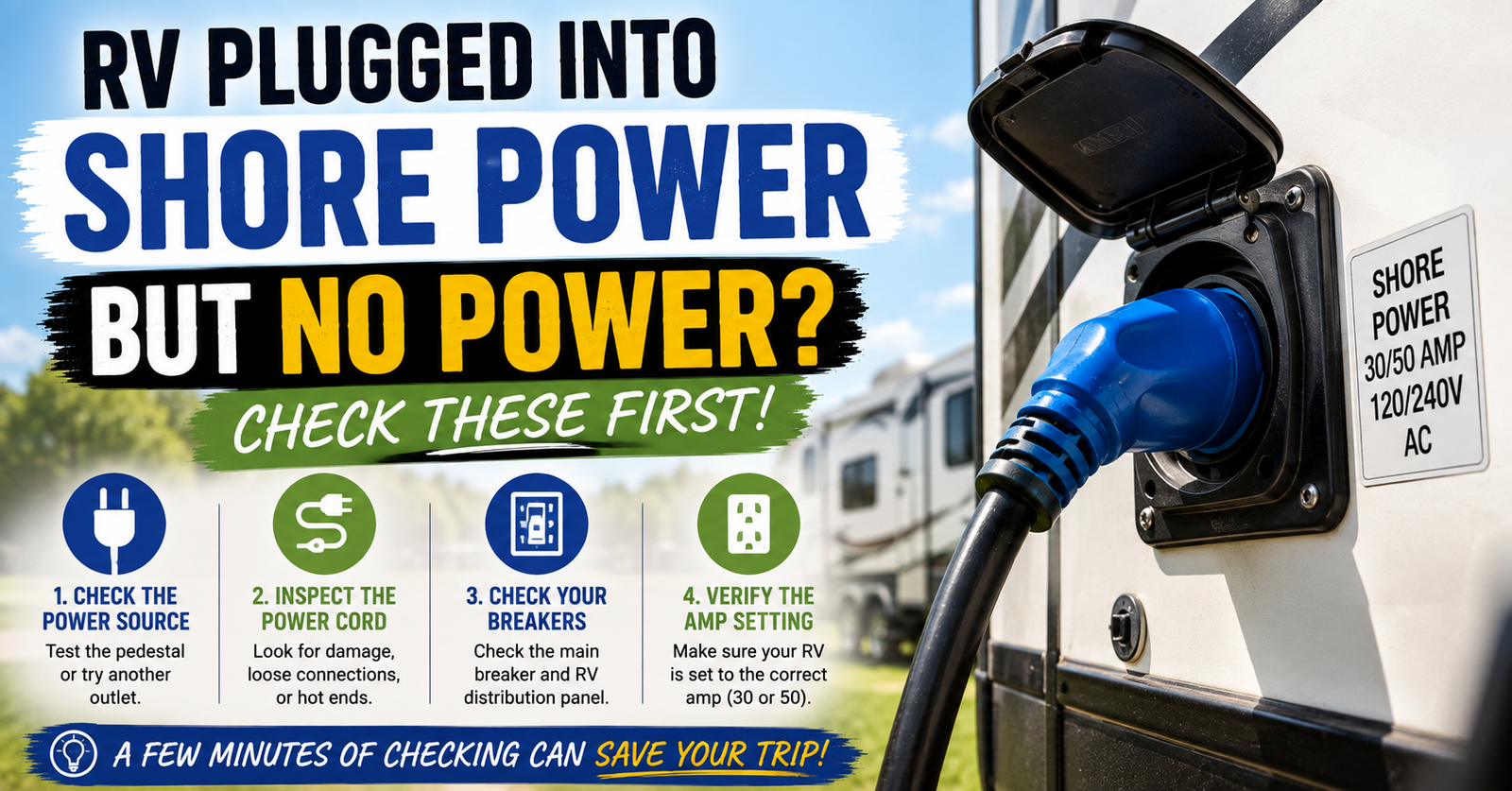
We just built a complete troubleshooting guide for an RV that’s plugged into shore power but has no power, and I’d use that rather than repeating the entire diagnostic process here.
The adapter is only one piece of that path.
Can a Bad Adapter Cause No Power?
Absolutely.
Adapters can fail.
Connections can loosen.
Internal conductors can be damaged.
Contacts can overheat.
If your camper works perfectly when plugged directly into a proper 30 amp receptacle but repeatedly loses power when using a particular adapter on known-good 50 amp service, that adapter deserves investigation.
That’s why carrying a decent adapter and occasionally inspecting it is worth doing.
Can a Bad Adapter Cause Low Voltage?
A damaged or high-resistance connection can contribute to voltage drop under load.
That’s another reason excessive heat and discoloration matter.
But low campground voltage can have causes farther upstream too.
If you’re seeing abnormal voltage, don’t automatically blame the dogbone.
We have a dedicated shore-power voltage article coming in this cluster because knowing what’s normal at the pedestal and what isn’t deserves its own explanation.
What If the 50 Amp Pedestal Breaker Trips?
First ask what happened immediately before it tripped.
If you’re running your normal 30 amp camper through a proper adapter, the RV’s own 30 amp main breaker should still limit the camper’s normal overall load.
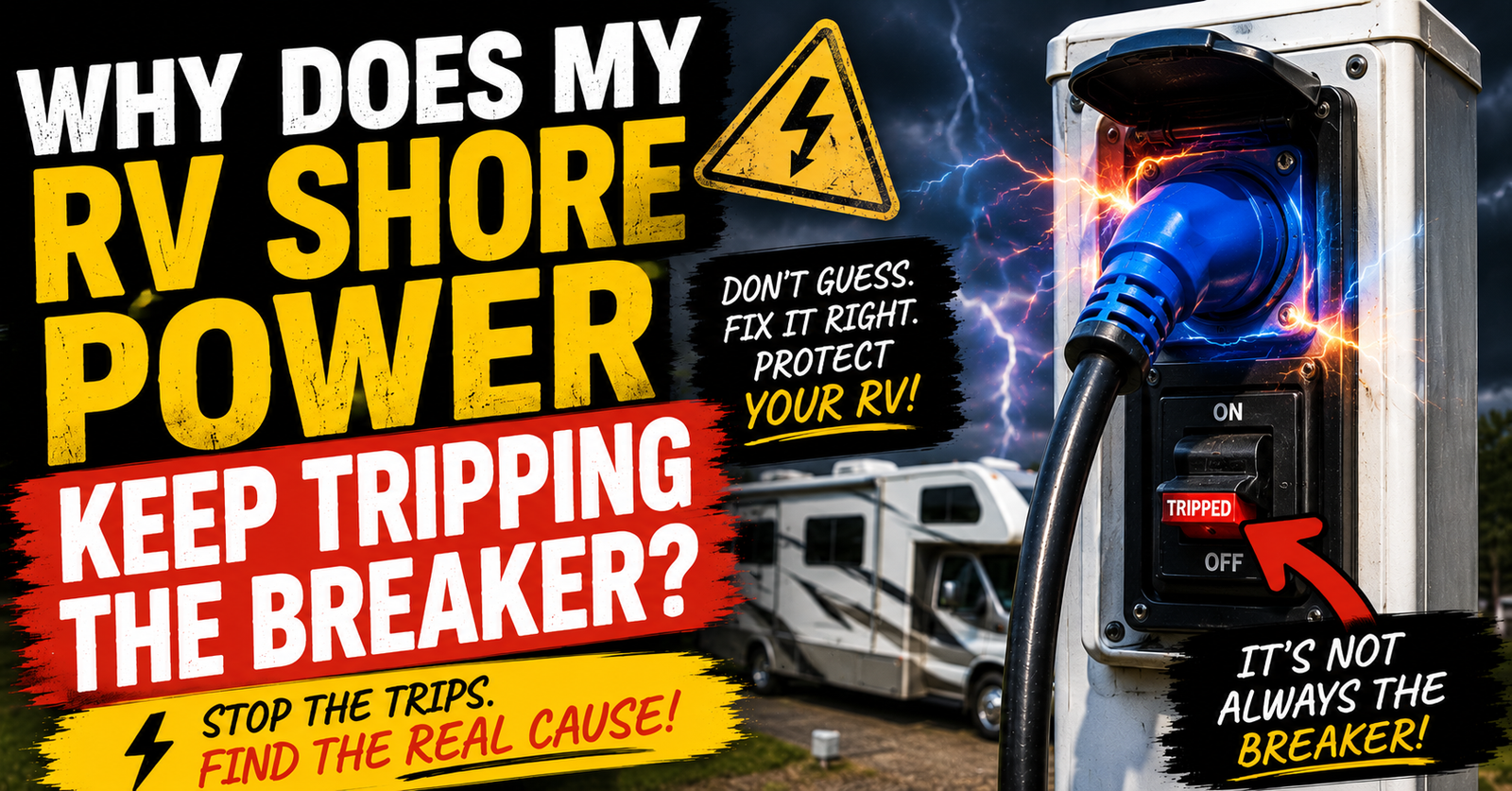
But electrical faults, damaged equipment, pedestal problems, or other abnormal conditions can still trip protection. For a more methodical way to separate those possibilities, see what causes RV shore-power trips.
I wouldn’t repeatedly reset a breaker that immediately trips.
A breaker that’s opening again and again is telling you to find the problem.
Is a 50-to-30 Adapter the Same as a 30-to-50 Adapter?
This naming drives me crazy because different people describe adapters from different directions.
Someone may call it a:
50-to-30
because the campground is 50 and the RV is 30.
Someone else may describe the camper first.
That’s why I don’t buy based only on the wording.
For the situation in this article, physically verify that you have:
50 amp male plug for the pedestal
and
30 amp female receptacle for your camper’s shore cord.
That removes the ambiguity.
Don’t Accidentally Buy the Opposite Adapter
The opposite situation is also extremely common.
Someone has a 50 amp RV but the campground only has a 30 amp receptacle.
That requires the opposite configuration.
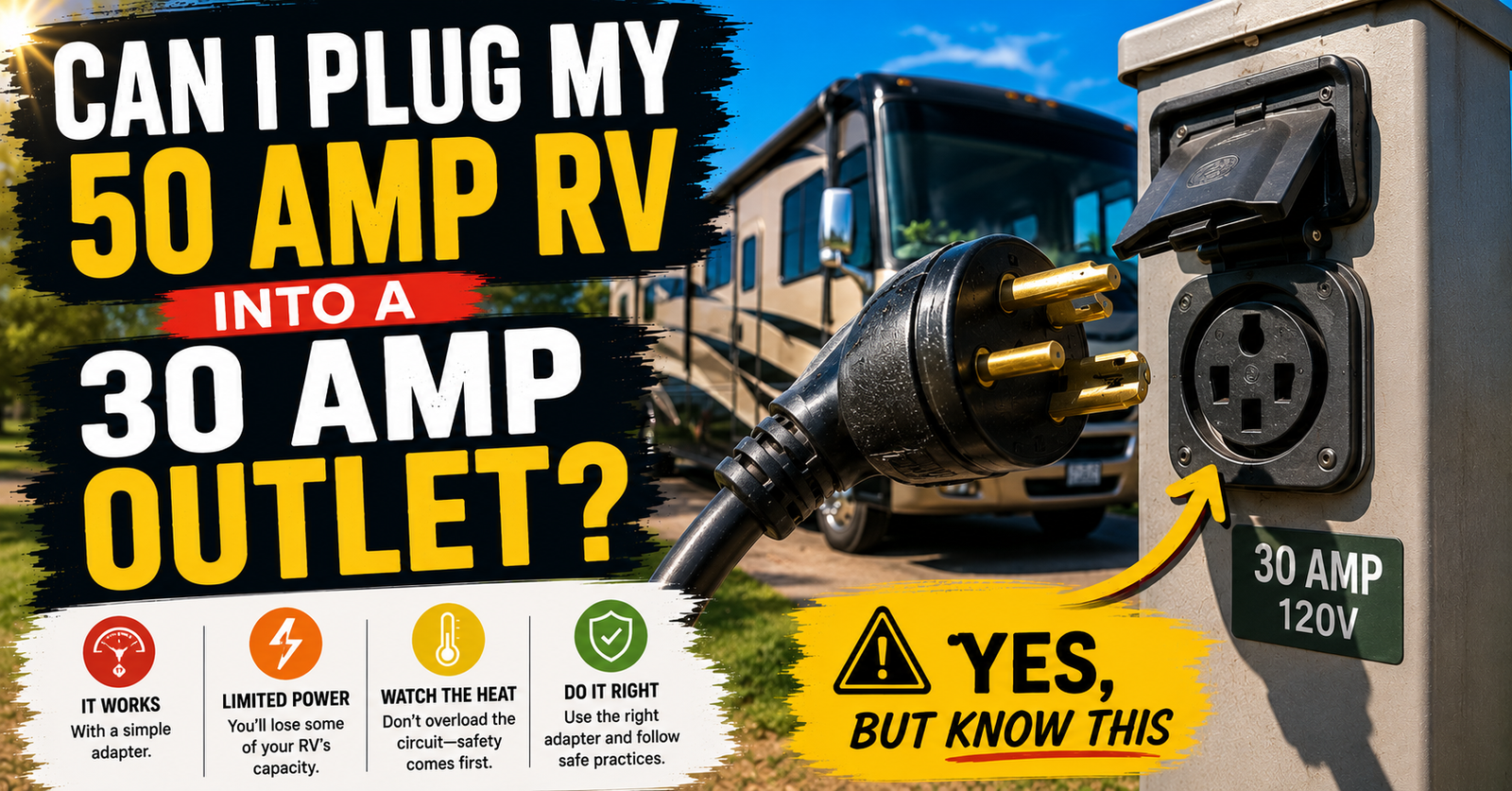
And electrically, that situation is more restrictive because the large 50 amp RV now has access to only the power available from 30 amp service. The reverse hookup is explained in this guide to using a 50 amp RV on 30 amp service, including why the larger RV remains limited by the 30-amp connection.
We’re covering that separately rather than cramming both questions into one article because the practical limitations are different.
Can I Use a 50 Amp Campsite With a 30 Amp Travel Trailer?
Yes.
Travel trailer, fifth wheel, motorhome, toy hauler, pop-up, or another RV type isn’t the important distinction here.
What matters is the electrical service the RV is designed to accept.
If your camper has 30 amp RV service and the campsite has a proper 50 amp RV receptacle, the correct adapter lets you make the connection.
Can I Use the 50 Amp Outlet Every Time I Camp?
If that’s the appropriate available connection and you’re using proper equipment, yes.
There’s nothing that says the 50 amp receptacle is only for emergencies.
Your 30 amp RV still operates as a 30 amp RV.
But if there’s a good 30 amp receptacle right beside it, I personally don’t see a reason to introduce another adapter into the connection just for fun.
Simple is good when simple works.
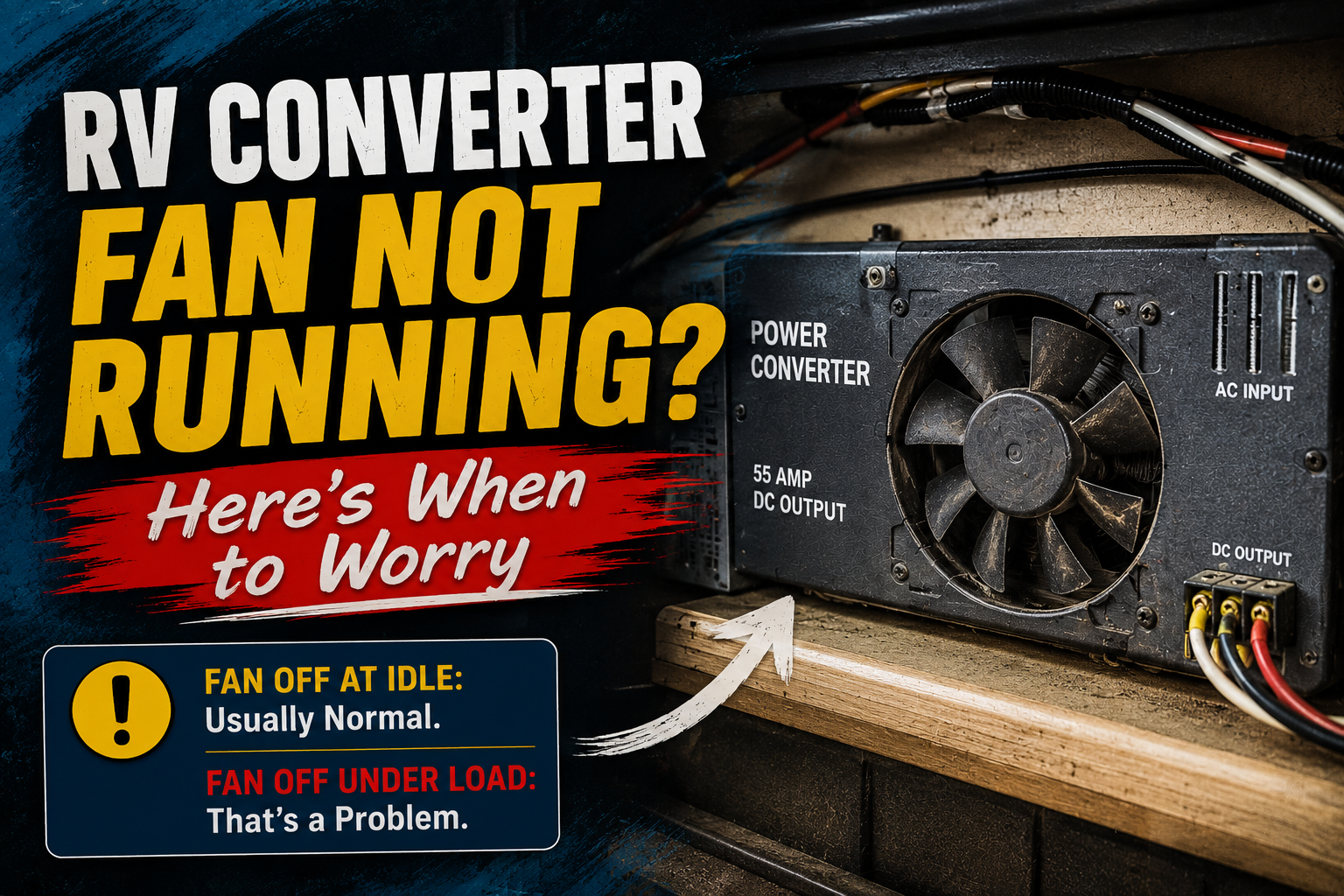
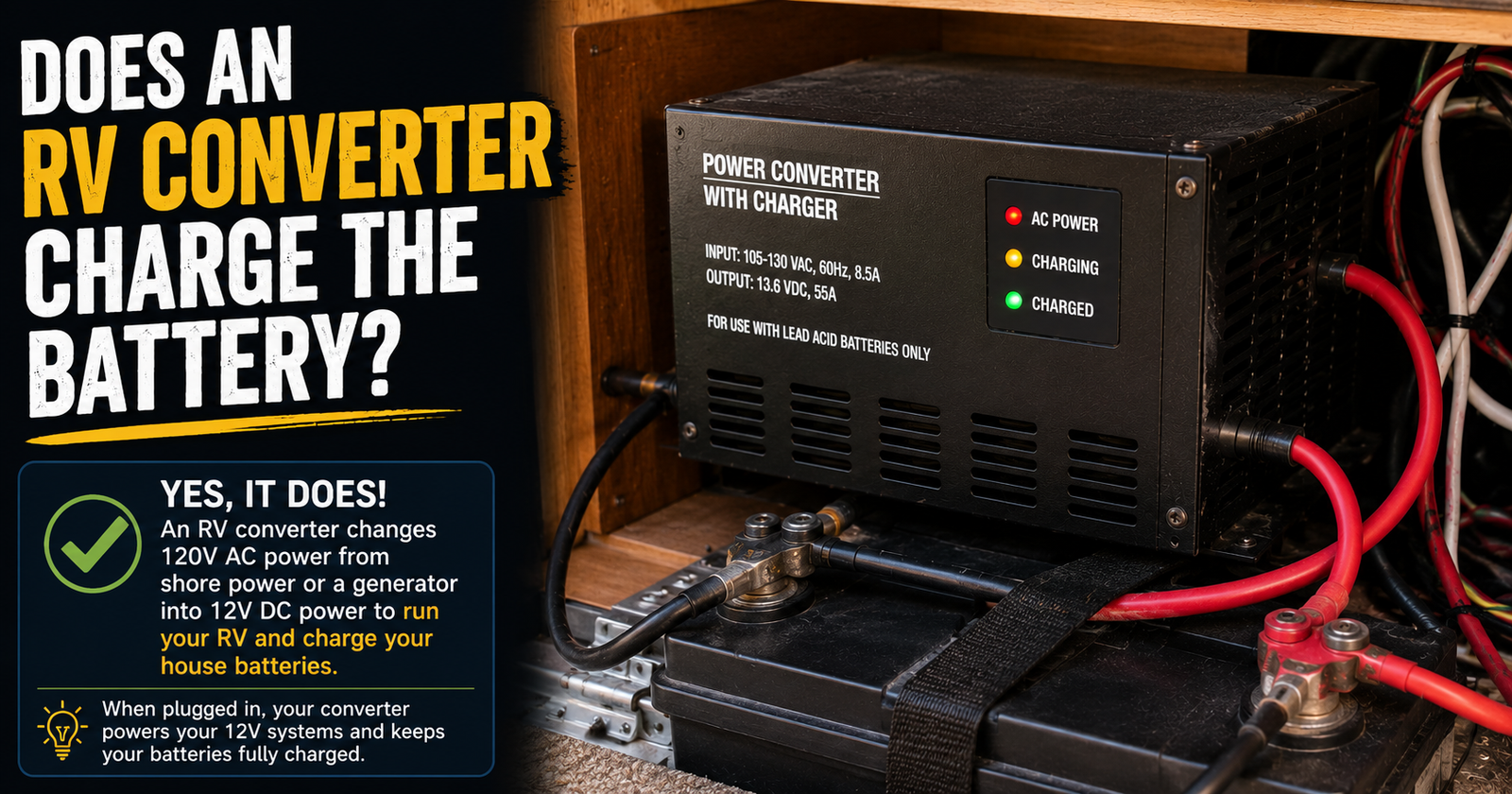
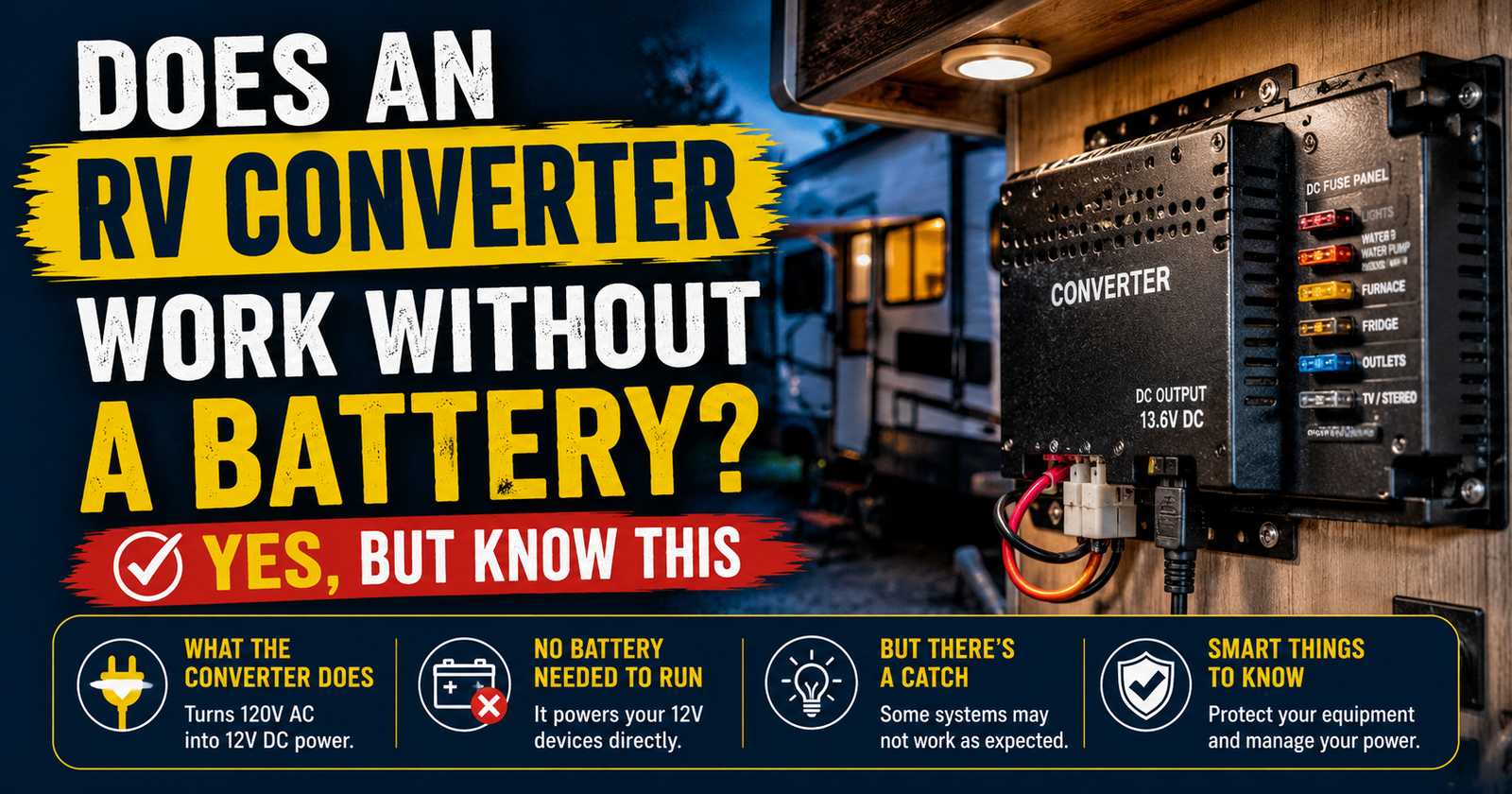
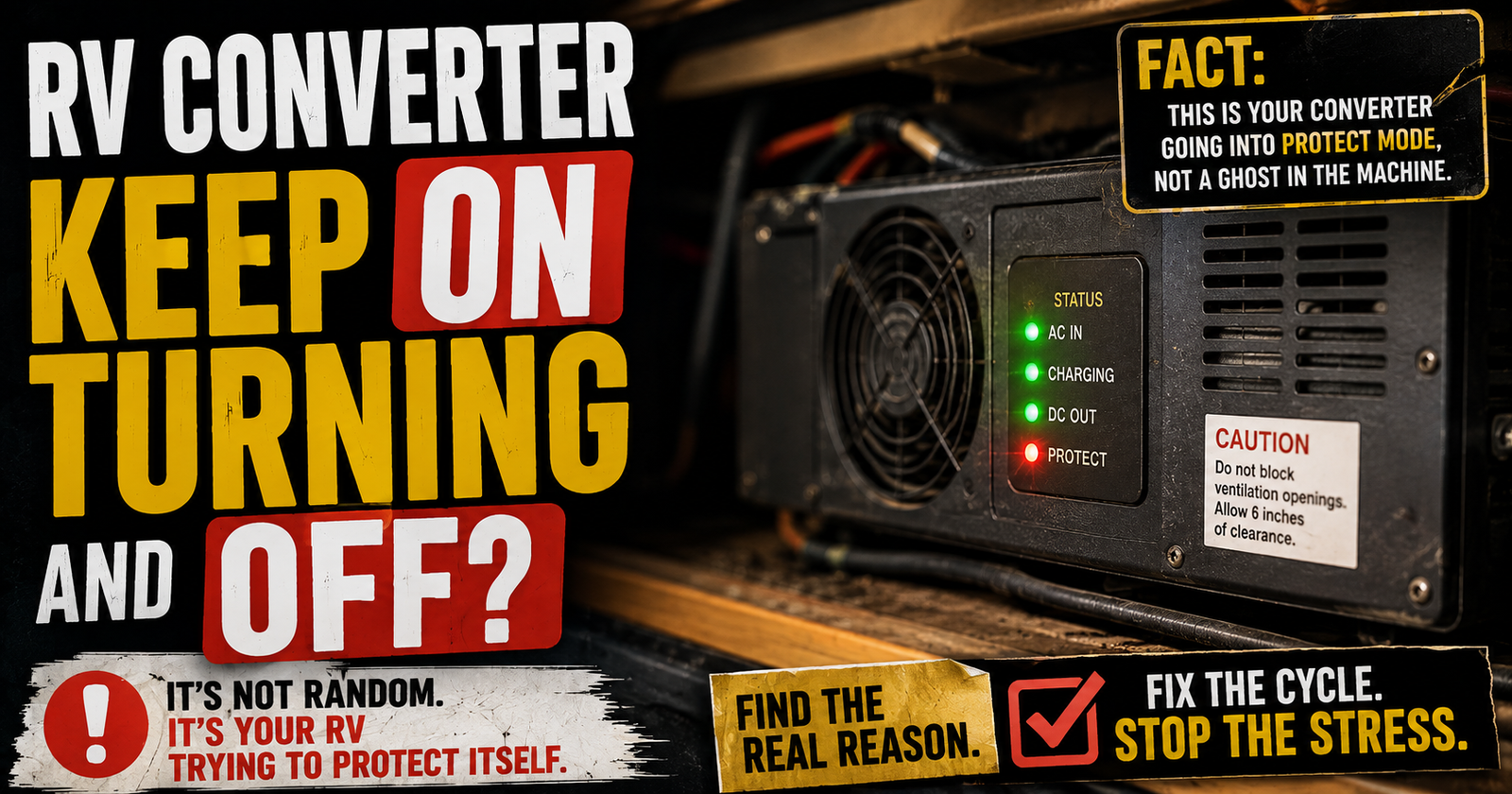
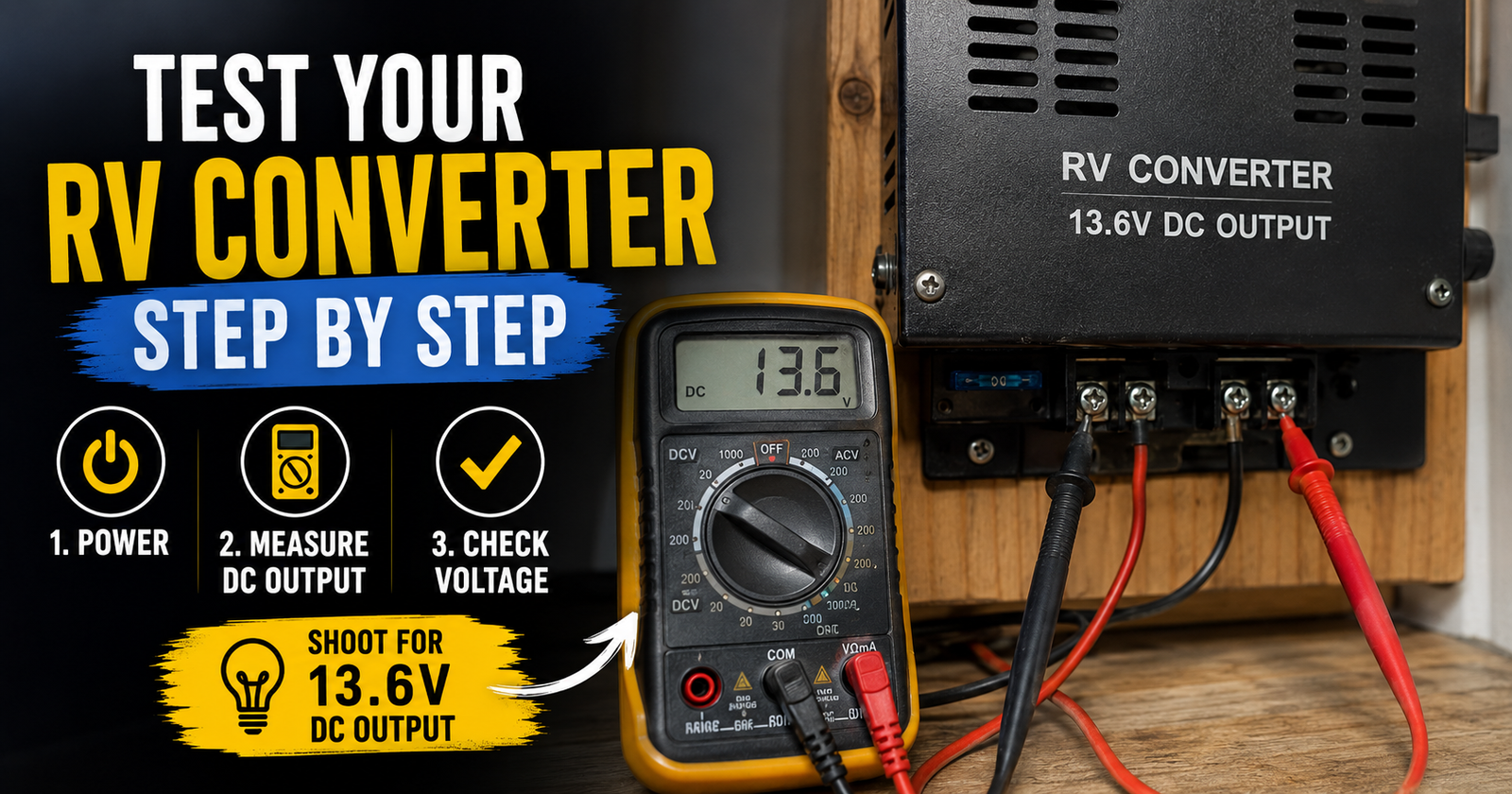
Does My RV Converter Care That I’m Plugged Into 50 Amp?
Not in the way you might think.
Your converter doesn’t suddenly receive some massive 50 amp charging supply.
The RV’s AC distribution system supplies the converter according to how the camper was designed.
The converter then changes AC electricity into DC electricity for the RV’s 12-volt system and battery charging.
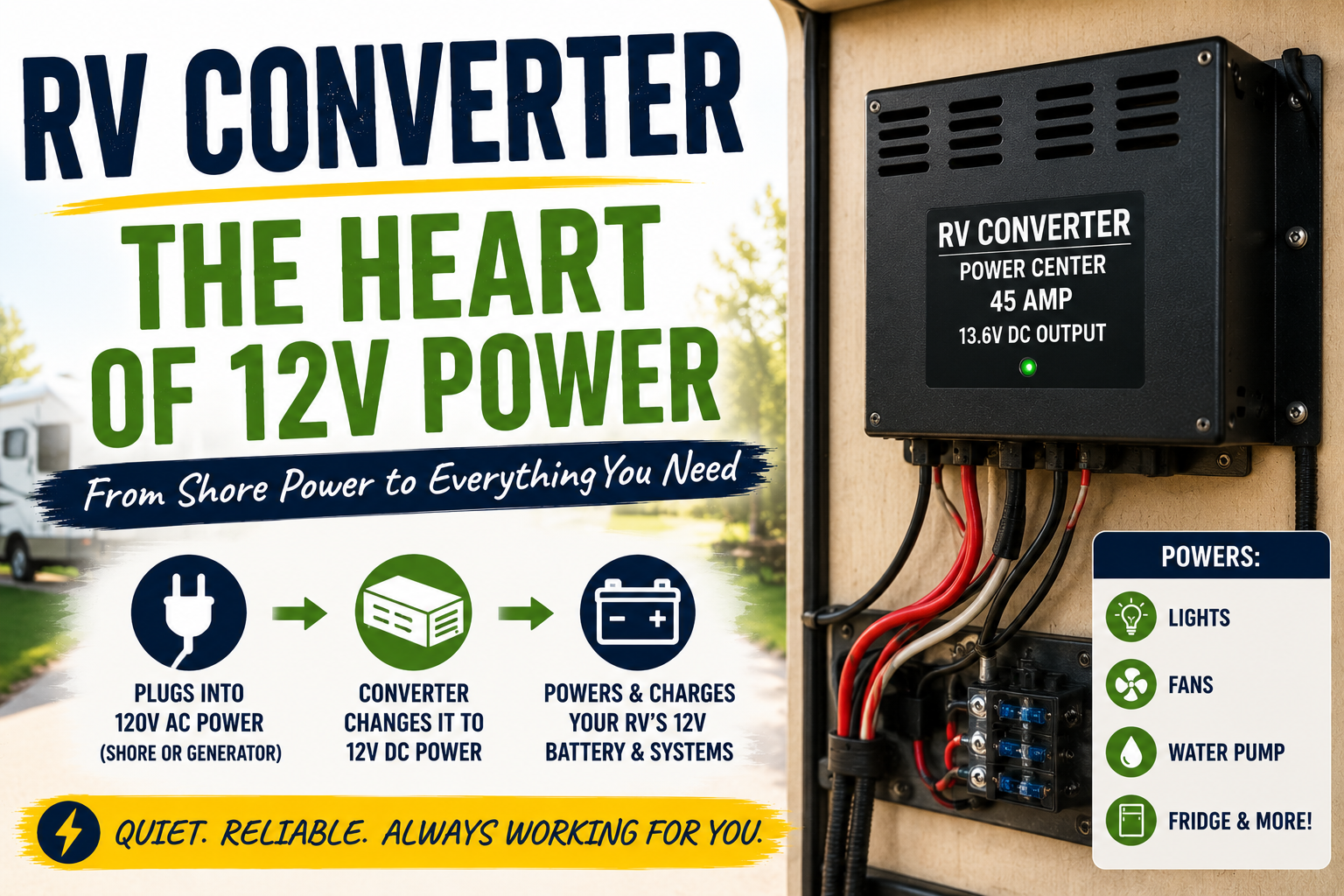
If you’ve been following our electrical series, this is where understanding what the RV converter actually does helps keep shore-power amperage separate from battery charging amperage.
They’re related electrical systems, but they’re not the same number.
Will My Battery Charge Faster on a 50 Amp Pedestal?
Not simply because you’ve plugged your 30 amp RV into 50 amp service.
Your battery charging rate is determined by things such as:
Converter/charger capability
Battery chemistry
Battery state of charge
Battery capacity
Wiring
Charging profile
Temperature and equipment design
The 50 amp campground connection doesn’t magically make a 30 amp RV converter twice as powerful.
Your camper is still operating through its normal electrical system.
What About Air Conditioning?
Your air conditioner doesn’t know that there’s a 50 amp receptacle outside.
It sees the power delivered through the RV’s electrical system.

If your 30 amp camper could normally run its air conditioner on proper 30 amp shore power, it can normally do the same when properly connected through a 50-to-30 adapter. If some receptacles still have power after that connection is made, proper RV shore power covers the checks for tracing the remaining dead outlets.
But you still have the same overall 30 amp limitation.
So don’t suddenly run every high-draw appliance simultaneously because you see “50A” written on the campground pedestal.
What If the Campsite Has Both 30 and 50 Amp Connections?
Use the appropriate 30 amp connection if it’s in good condition.
That’s the simplest arrangement.
If there’s a legitimate reason you need to use the 50 amp receptacle, that’s when your adapter becomes useful.
This is exactly why I like keeping one in the camper.
You may rarely need it.
But when you arrive somewhere and need it, you’ll be pretty happy it’s sitting in the storage compartment.
The One Mistake I Really Don’t Want You Making
Don’t confuse an RV 30 amp connection with other 30 amp electrical receptacles.
Your RV’s typical 30 amp TT-30 connection is a 120-volt RV connection.
A household dryer receptacle may look vaguely similar to somebody unfamiliar with electrical plugs, but it can be a completely different configuration and electrical service.
Etrailer specifically warns that a 30 amp RV TT-30 and a 30 amp dryer receptacle aren’t interchangeable and that connecting an RV incorrectly can cause major electrical damage.
If you’re having a dedicated RV hookup installed at home, make sure the electrician knows you’re asking for a proper 120-volt TT-30 RV receptacle.
“Install me a 30 amp outlet” isn’t specific enough.
What I Would Keep in a 30 Amp Camper
If I owned a 30 amp RV and traveled regularly, a good 50 amp male to 30 amp female dogbone would stay in the camper.
Not because I expect to use it every trip.
Because campground hookups aren’t always exactly what you expect.
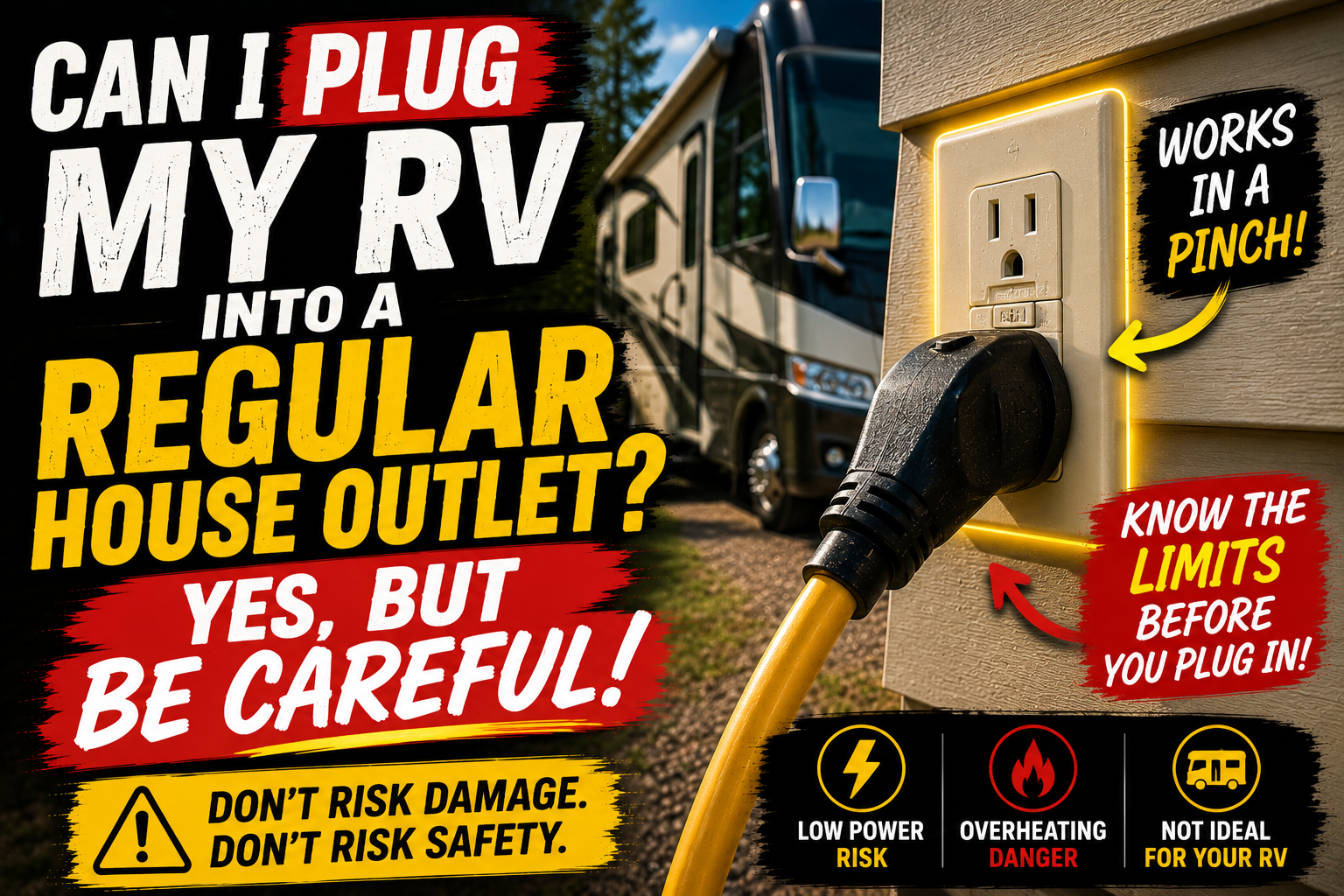
It’s a small, relatively inexpensive piece of equipment that gives you another way to connect when proper 50 amp service is available but a usable 30 amp receptacle isn’t. A household outlet is another option, with important limits explained in another way to connect an RV.
And once you understand what’s actually happening electrically, there’s really nothing mysterious about it.
The 50 amp pedestal makes more power available. Your 30 amp RV simply doesn’t take all of it.
The adapter gives your camper the compatible 120-volt connection it needs, while the camper remains protected and limited by its own 30 amp electrical system.
So if you arrive at your campsite with a 30 amp RV and find a 50 amp hookup, you don’t have to pack everything back up.
Grab the proper RV adapter, make sure the pedestal and connections are in good condition, plug in correctly, and camp.
Your 30 amp RV is still a 30 amp RV.
It just happens to be borrowing power from a bigger outlet.
Written by Evan Mercer
Evan Mercer writes about RV electrical systems, campground hookups, batteries, converters, and practical camper troubleshooting for CamperAnswers.com. He focuses on explaining the confusing parts of RV ownership in plain English so campers can understand what they’re connecting before they plug it in.